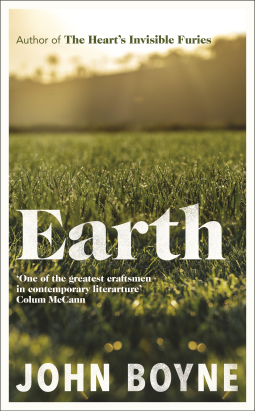
Earth by John Boyne

Earth is the second in John Boyne’s new quartet of novellas named after the four elements. I enjoyed the first book, Water, so I was looking forward to this one and it didn’t disappoint. Although the two books (and presumably Fire and Air as well) are loosely linked, they are completely separate stories and you don’t need to read them in order. If you have already read Water, you may remember Evan Keogh, the teenage boy we last saw leaving his home on a small Irish island in search of a new life in England. Earth is Evan’s story.

Evan has had a talent for football from an early age, but his true passion is for painting and on his arrival in London he hopes to pursue a career as an artist. After a series of rejections he is forced to accept that he’s unlikely to achieve his dream and with his money running out he reluctantly decides that he will have to use his football skills after all. The book begins with Evan, now twenty-two and a famous footballer, preparing to stand trial for sexual assault. Robbie, his friend and teammate, is accused of rape and Evan has been charged as an accessory for filming the incident on his phone.

For such a short book (under 200 pages), Boyne manages to create a multi-layered story covering a range of important – and often uncomfortable – topics. Much of Evan’s story is told in flashbacks as he remembers his childhood, his strained relationship with his father and his growing awareness of his sexuality (Evan is gay, which can make life difficult both in his small Irish community and in the world of professional football). When he arrives in London he is taken advantage of by an older man who pushes him into work as a male escort, which has disastrous results for Evan. This is what leads to Evan’s decision to become a footballer, despite his dislike of the sport – and again I thought it was interesting to see how Boyne explores the idea of someone achieving huge success in a profession that they don’t enjoy and don’t respect, as well as the various ways in which young men cope with suddenly attaining a level of fame that they’re not really prepared for.

The trial is also a main focus of the book and I found it increasingly frustrating and infuriating to see how the victim was treated in court. I hoped Evan would do the right thing and not just try to protect his friend, but Boyne keeps us doubting him throughout the novel and I’m not going to tell you whether I got the outcome I wanted. Obviously there have been many real life cases of women making allegations of sexual assault against famous people and the courtroom scenes are all the more disturbing because you can easily imagine them happening.

Like ‘water’ in the previous book, Boyne works the element of earth into the story in several different ways, from the soil of Evan’s island home to the ground beneath his feet that is so important to his sport. Of the two, I think I preferred Water but both are powerful books and I’m now looking forward to Fire, coming in November of this year.

Thanks to Doubleday for providing a copy of this book for review via NetGalley.
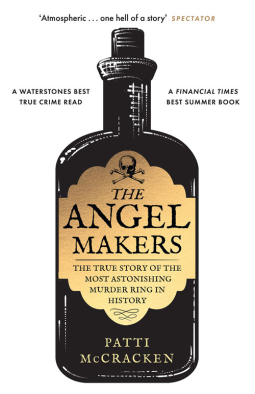
The Angel Makers by Patti McCracken

I don’t read a lot of true crime, but the title, cover and blurb of this one all intrigued me. Subtitled The True Story of the Most Astonishing Murder Ring in History, the book narrates in dramatic detail the tale of a group of serial killers in a Hungarian village who murdered over a hundred men during a fifteen year period. The killers were all women and their ringleader was a midwife known as Auntie Suzy.

The village of Nagyrév, a farming community in central Hungary, may seem an unlikely centre of crime, but actually it’s easy to understand why the events described in the book happened where and when they did. The murders took place between 1914 and 1929, a time when Hungary was in a state of political turmoil and preoccupied with war and its aftermath. The government didn’t have the money or resources to look into reports of suspicious deaths in a small rural village. Not only did Nagyrév have no police presence, but also no doctor, meaning that Auntie Suzy, with her limited medical knowledge, was the person to whom everyone turned for help with their own and their family members’ health problems. This put Suzy in a position of power, made stronger by the fact that she was the one who dictated to the clerk the causes of death to be put on the death certificates.

Auntie Suzy’s method was poisoning; she would soak sheets of flypaper in water to leave a residue of arsenic which could then be fed to the victim in small doses until they eventually became ill and died. Women came to buy bottles of Suzy’s potion for all sorts of reasons: maybe they had an abusive husband, an unwanted child they couldn’t feed or an elderly father they’d become tired of and wanted dead. Suzy herself would sometimes have reasons for wanting the murder to take place – if a wealthy woman was widowed, for example, she would then be free to marry Suzy’s own son, or perhaps a house would become vacant that Suzy could take for herself.

In The Angel Makers, Patti McCracken tells the story of Auntie Suzy and the other female poisoners of Nagyrév in a style that is as easy to read as fiction. In fact, the whole book feels much more like a novel than a work of non-fiction; I liked this as it made it easy to get to know the characters and follow what was happening, but it wasn’t what I’d expected and it may not appeal to readers who prefer their non-fiction to be more formal and academic. There’s a section of notes at the end of the book and a bibliography, but apart from occasional extracts from newspaper articles or other documents, McCracken doesn’t interrupt the flow of the story to provide any commentary of her own. She has also anglicised the names of most of the people in the book – Auntie Suzy’s real name was Zsuzsanna Fazekas.

One thing that struck me about this case was how easily the crimes could have been stopped and the culprits brought to justice, yet they were allowed to continue for many years because the authorities either didn’t have the resources to investigate or just didn’t seem interested. The poisonings were an open secret in Nagyrév and Suzy and the other women grew more and more confident over time, hardly bothering to cover up their actions. You can feel sorry for some of the women, pushed into arranged marriages at a time when divorce was not an option, but others were committing murder for cruel or petty reasons. Suzy, as the ringleader, was particularly complacent and unrepentant about the deaths she was causing and her behaviour is quite chilling to read about. However, McCracken seemed to have an obsession with Suzy’s weight; the constant descriptions of her chubby hands, fat feet and waddling walk quickly became very repetitive and unnecessary.

The Angel Makers is a fascinating story and I would probably recommend it to people who have enjoyed Kate Summerscale’s books such as The Suspicions of Mr Whicher, although the informal style won’t be to everyone’s taste. Despite some flaws I found it entertaining and informative and feel that I’ve not only gained some knowledge of a very unusual ring of criminals but also some insights into life in Hungary between the wars and the various elements that enabled crimes like these to take place.

Thanks to Mudlark for providing a copy of this book for review via NetGalley.

Lord Edgware Dies by Agatha Christie

This year’s Read Christie challenge has a ‘Through the Decades’ theme and this quarter we’re reading books from the 1930s. My choice for May is Christie’s 1933 Poirot mystery Lord Edgware Dies (published in the US as Thirteen at Dinner).

The novel is narrated by Poirot’s friend, Captain Hastings – a nice surprise as I tend to love the Hastings books and hadn’t realised he was in this one. At the beginning of the book, Poirot and Hastings are visiting the theatre to watch a performance by the American impressionist Carlotta Adams, known for her impersonations of famous people such as the actress Jane Wilkinson. After the show, they are approached by Jane Wilkinson herself, who asks for Poirot’s help in obtaining a divorce from her husband, Lord Edgware. The actress desperately wants to marry the wealthy Duke of Merton and tells Poirot that if Edgware won’t agree to a divorce, she’s just going to have to kill him!

When Lord Edgware is indeed found dead in his own home, having been stabbed in the neck, Jane Wilkinson appears to be the obvious suspect – after all, she was seen entering the house that evening and everyone knew that she wanted her husband dead. However, Edgware had already agreed to a divorce earlier that day, taking away Jane’s motive. And Jane had spent the whole of that evening at a dinner party with twelve other guests, all of whom can provide her with an alibi. Was Jane really in two places at once – or was it Carlotta Adams who entered Lord Edgware’s house in disguise?

This is a very enjoyable Poirot novel with a clever solution, although I don’t think it’s an absolute favourite as I found it a little bit lacking in atmosphere. The whole story takes place in London and we don’t see much of Poirot actually going out in search of clues – instead he sits and waits for the clues to come to him, much to the frustration of Hastings who wishes Poirot would take a more active role in solving the mystery, like their old friend Inspector Japp:

Poirot replied that he preferred to solve it sitting at home.

“But you can’t do that, Poirot.”

“Not entirely, it is true.”

“What I mean is, we are doing nothing! Japp is doing everything.”

“Which suits me admirably.”

“It doesn’t suit me at all. I want you to be doing things.”

“So I am.”

“What are you doing?”

“Waiting.”

Of course, Poirot is the one who correctly identifies the murderer while Japp, as usual, jumps to the wrong conclusions. I also failed to solve the mystery; although I did guess part of the solution very early on, I allowed myself to get distracted by the red herrings, of which there are many!

What I particularly loved about this book was the relationship between Poirot and Hastings and the way they work so well together, with some chance remarks of Hastings’ inadvertently pointing Poirot in the direction of important clues. Having the novel narrated by Hastings means the reader gets to hear Poirot discussing possible theories with him and sharing his thought processes, which I find more enjoyable than the books where we have no idea what Poirot has been thinking until the end. It also means that we only see the various suspects and witnesses from Hastings’ perspective; Jane Wilkinson, for example, presents herself in public as so silly and vacant that we know there must be more to her than meets the eye. Jane is a great character and Jenny Driver, Carlotta Adams’ friend who owns a fashionable London hat shop, was another favourite.

I’m hoping to read another 1930s Christie novel in June, then for July-September we move on to the 40s and 50s!

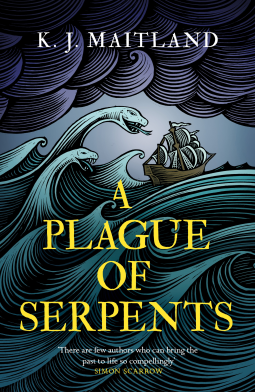
A Plague of Serpents by KJ Maitland

This is the fourth and final book in the Daniel Pursglove series by KJ Maitland (who has also published under the name Karen Maitland). Although I’ve done my best to avoid spoilers in this review, I wouldn’t recommend starting with this book anyway; the plots are complex and there are lots of characters to keep track of, so this is a series that should really be read in order, beginning with The Drowned City and moving on to Traitor in the Ice and Rivers of Treason.

This fourth novel, A Plague of Serpents, is set in the spring of 1608. It’s been three years since the Gunpowder Plot of 1605, a failed attempt on the life of King James I of England and VI of Scotland by Catholic conspirators. One of the escaped conspirators, a man known only as Spero Pettingar, remains unidentified and uncaptured, but Daniel Pursglove is still on his trail. The King’s man, Charles FitzAlan, who released Pursglove from Newgate Prison on the condition that he would hunt down Spero Pettingar in return, is growing impatient; the longer Pettingar remains on the loose, the longer the King’s life remains at risk.

In search of answers, Daniel infiltrates a secret group of Catholics known as the Serpents who are plotting another assassination attempt. However, he has also become aware of a second group, the Wyverns, who are planning to use the Serpents as pawns and then seize control of the throne for themselves. To make things even more dangerous for Daniel, there are people within both factions who know too much about him and are prepared to threaten and blackmail him to get what they want.

Unlike the previous three novels, which took us to Bristol, Sussex and Yorkshire respectively, this one is set in London and while floods, frosts and thaws played a big part in those three books, the natural environment is less significant in this one. Instead of extreme weather conditions, this time the public have an outbreak of plague to deal with. I’ve always found the plague an interesting topic to read about, even more so since our own recent pandemic, but it doesn’t actually form a very big part of the book despite the title and prologue which made me think otherwise! Other than that, Maitland does her usual excellent job of creating an immersive and believable 17th century world. Rather than breaking the flow of the story to explain the meanings of terms and phrases, she saves these for a glossary at the end of the book, so if you want to know what a bene-feaker is, what a palterer does or what a cracknel tastes like, you’ll have your chance to find out.

The characters in the novel are a mixture of real and fictional; some, like Robert Cecil, are well known historical figures, but others are more obscure – I was surprised to find that the brothel-keeper Donna Britannica Hollandia really existed! With this being the last in the series, the storylines for the characters who have been with us for several books are wrapped up in one way or another and I was pleased to see that my theory about one particular character was proved correct.

Although I did enjoy A Plague of Serpents, I felt that it, like the earlier books, was far more complicated than it really needed to be. With several different groups of conspirators and others at court working with or against each other for their own purposes, it was difficult at times to remember who was on which side and who knew what. Otherwise, this was a perfect ending to the series and I will be interested to see whether Maitland continues to write historical mysteries/thrillers like these or goes back to the kind of standalone historical novels she wrote earlier in her career.

Thanks to Headline Review for providing a copy of this book for review via NetGalley.
Book 17/50 for the Historical Fiction Reading Challenge 2024

The Household by Stacey Halls

Urania Cottage in Shepherd’s Bush, London, was a home for ‘fallen women’ founded in 1846 by Charles Dickens and Angela Burdett-Coutts. Their vision was to provide a safe place for young women to rehabilitate after serving prison sentences or working on the streets as prostitutes. At Urania Cottage they would receive an education and the opportunity to train as domestic servants, enabling them to start new, more respectable lives overseas. In her latest novel, The Household, Stacey Halls imagines the stories of some of these women.

During the period covered in the novel, there are many young women staying at Urania Cottage, but Halls chooses to focus on two of them. One is Martha who, while trying to rebuild her own life at the cottage, is also worrying about her sister, Emily, who has disappeared. As Martha grows more desperate about Emily, she is driven to make a decision she may later regret. The other is Josephine, who had expected a close friend to accompany her to Urania Cottage. When the friend never arrives, Josephine must decide whether to continue participating in the scheme or leave in search of happiness elsewhere.

Dickens himself is mentioned now and then but always stays in the background, never becoming an actual character in the novel. Angela Burdett-Coutts, on the other hand, has a much larger role. We meet Angela as a woman in her early thirties who several years earlier inherited a fortune from her banker grandfather, making her one of England’s wealthiest people. She is becoming known as a philanthropist and Urania Cottage is one of her first big projects.

Angela’s privileged lifestyle means she struggles to truly understand the needs of the women at the cottage, but she and Dickens both enter into the project with the best intentions. However, despite Angela’s wealth and position she still has problems of her own to deal with – such as being stalked by Richard Dunn. She had thought she was safe from Dunn when he was sent to prison for four years, but now he’s been released early and is on her trail again. As I read, I wondered whether this was a fictitious storyline, but I looked it up and found that, yes, Richard Dunn was a real person and did obsessively pursue Angela Burdett-Coutts as described in the book. It seems that other parts of the novel I had assumed were invented were also based on historical fact; after finishing the book I was interested to learn that many of the incidents described as happening at Urania Cottage were taken from Dickens’ letters to Angela and even inspired his own David Copperfield.

The Household is fascinating in many ways, yet it’s probably my least favourite of Stacey Halls’ books. The separate stories of Angela, Josephine and Martha never quite blend together properly and give the novel a disjointed feel. I found the first half very slow and although there’s a twist towards the end that I hadn’t seen coming, it happens too late to really change the way I felt about the book overall. Still, I’m pleased to have had the opportunity to learn about life at Urania Cottage and will look forward to whatever Stacey Halls writes next.

Thanks to Manilla Press for providing a copy of this book for review via NetGalley.

Book 16/50 for the Historical Fiction Reading Challenge 2024

Historical Musings #85: An update for May

It’s been a few months since my last Historical Musings post, so I thought I’d start by taking a look at what’s going on in the world of historical fiction and then give an update on my own current reading.

~

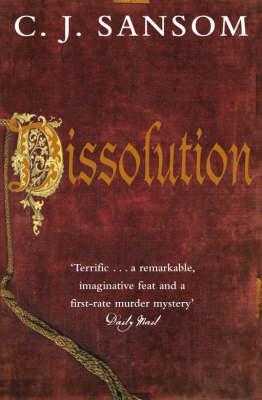
First, like many readers, I was very sorry to hear the news of CJ Sansom’s death at the end of April. Sansom’s Shardlake series set in Tudor England is one of my favourite historical mystery series and I would highly recommend it to anyone who hasn’t yet discovered it (try to start with the first book, Dissolution, if you can). Sansom recreates the feel and atmosphere of the period better than almost any author I can think of. It’s particularly sad that his death came just days before the new TV adaptation of Shardlake was shown on Disney+. I still haven’t got round to reading Tombland, the final book in the series, but I’m pleased that I still have it to look forward to now that I know there won’t be another one.

FictionFan has posted a lovely tribute to Sansom on her blog here.

~

You may have already seen my post on the Walter Scott Prize for Historical Fiction shortlist, which was announced on 1st May, but if you missed it here are the six shortlisted titles:

The New Life by Tom Crewe
Hungry Ghosts by Kevin Jared Hosein
My Father’s House by Joseph O’Connor
In the Upper Country by Kai Thomas
Absolutely and Forever by Rose Tremain
The House of Doors by Tan Twan Eng

I’ve now read three of these books, My Father’s House, Hungry Ghosts and The House of Doors, although I haven’t had time to review the last two yet. So far my favourite is My Father’s House but I’m hoping to read at least one more before the prize is announced in June.

~

Apart from my Walter Scott Prize reading, my most recent historical fiction reads include The Household by Stacey Halls, a book about Urania Cottage, a home for fallen women founded by Charles Dickens and Angela Burdett-Coutts, and A Court of Betrayal by Anne O’Brien, the story of Johane de Geneville, the wife of Roger Mortimer. I’ve also just finished a fascinating work of historical non-fiction – The Black Count by Tom Reiss, a biography of the father of one of my favourite classic authors, Alexandre Dumas. Again, I’m behind with my reviews but will be posting my thoughts on all of these as soon as I can!

I haven’t forgotten that one of my reading resolutions for 2024 was to read more historical fiction in translation. I got off to a good start, reading Shūsaku Endō’s Silence (translated from Japanese by William Johnston) in January and then Angharad Price’s The Life of Rebecca Jones (translated from Welsh by Lloyd Jones) in March, but sadly I haven’t read any more since then and I’m in need of inspiration! Book Riot’s new list of 8 of the Best Translated Historical Fiction Novels looks worth exploring, but I would love to hear your recommendations as well.

~

Have you read any good historical fiction recently?

Close to Death by Anthony Horowitz

At some point in our lives, many of us will have to deal with the problem of difficult neighbours. Loud music and late-night parties, badly-behaved children, disputes over parking and damage caused by cats and dogs are all things that can make life stressful – but most of us wouldn’t resort to murder as a solution. However, that is exactly what seems to have happened at Riverview Close, a street of six large, luxurious houses in an affluent area of London.

The residents of Riverview Close include a doctor, a dentist, a retired lawyer, a chess grandmaster and two former nuns, all of whom have been getting on well together and leading peaceful lives. Everything changes with the arrival of Giles Kenworthy and his family, who are noisy and inconsiderate and succeed in annoying everyone else in the Close. When the residents learn that the Kenworthys are planning to cut down a beautiful tree and build a new swimming pool in its place, they decide to hold a meeting to discuss the situation – but a few weeks later the problem is solved anyway, as Giles is found dead, having been shot with a crossbow.

Five years later, author Anthony Horowitz (who uses himself as a character in his own novels) is looking for a subject for his new book. His previous four have been accounts of mysteries he has investigated alongside the private detective Daniel Hawthorne, but it seems there are no new mysteries to solve – and his publisher is putting pressure on him to start writing. Anthony decides to write about one of Hawthorne’s older cases instead, which happens to be the murder of Giles Kenworthy. Hawthorne agrees to share the details of the investigation with him, but warns him that the ending isn’t very satisfactory.

With large sections of the book set in the past and written in the third person from the perspectives of the residents of Riverview Close, this means Horowitz himself plays a much smaller part in this novel than he did in the earlier books in the series (the first one is The Word is Murder, if you’re wondering). Although I love these books, I know there are a lot of readers who find it irritating and egotistical of Horowitz to use himself as a character, but I think that would be less of a problem with this particular novel.

Because we see less of Anthony, there’s also less time spent on his interactions with Hawthorne, which is a shame as that’s one of my favourite things about this series. I had hoped to learn more about Hawthorne as each book has been slowly adding to our understanding of his character and background, but there aren’t really any major revelations about him in this instalment. There are lots of other interesting characters to get to know, though, including the members of the various households that make up Riverview Close; I particularly enjoyed meeting the two old ladies, May and Phyllis, who used to be nuns but now own a tea shop/book shop that sounds like a great place to visit!

They did not stock any modern, violent crime novels, especially ones that contained bad language. A casual reader looking for Harlan Coben, Shari Lapena, Ian Rankin or even James M. Cain (The Postman Always Rings Twice) would have to continue down the hill to Waterstones at the corner. What they specialised in – exclusively – was cosy crime.

They also stocked a range of gifts that were all crime-related, including the Agatha Christie tea towel May had used to wipe her hands. Other novelties included a Sherlock Holmes magnifying glass, Midsomer Murders mugs and T-shirts, Cluedo jigsaw puzzles and a box of assorted chocolates marked ‘POISONED’, a tribute to the great novel by Anthony Berkeley.

The mystery itself is an interesting one as all of the suspects have the same motive – Giles Kenworthy’s selfish, inconsiderate behaviour – and although I was convinced I had guessed the culprit correctly, it turned out I was wrong. I did wonder why Horowitz (the character) didn’t just look up the solution to the murder on the internet rather than waiting for Hawthorne to tell him the story bit by bit and getting frustrated about not knowing the ending, but that’s just a minor quibble. I’ll look forward to the next book in this series, assuming that there’s going to be one, but I’ll also continue to hope for a new book in the Magpie Murders series!

Thanks to Century for providing a copy of this book for review via NetGalley.