Spell the Month in Books: January – The newest additions

I don’t take part in Spell the Month in Books (hosted by Reviews From the Stacks) every month but the theme for January appealed to me so I decided to join in. The rules are very simple – spell the current month using the first letter of book titles, excluding articles such as ‘the’ and ‘a’ as needed. This month’s theme is New, which can be interpreted in several ways.

I’ve decided to go with the book most recently added to my TBR for each letter. The books themselves are not necessarily ‘new’ – some of them were published many years ago – but they are all relatively new to my shelves. Descriptions are from Goodreads.

~

JJohn Halifax, Gentleman by Dinah Maria Mulock Craik (1856)
Acquired October 2019

“Like Charles Dickens’ beloved David Copperfield, John Halifax is an orphan, determined to make his success through honest hard work. He becomes an apprentice to Abel Fletcher, a tanner and a Quaker, and is soon befriended by Abel’s invalid son, Phineas, who chronicles John’s success in business and love, rising from the humblest of origins to the pinnacle of wealth made possible by England’s Industrial Revolution.

Dinah Maria Mulock Craik explores the sweeping transformation wrought by this revolutionary technological age, including the rise of the middle class and its impact on the social, economic, and political makeup of the nation as it moved from the eighteenth to the nineteenth century.”

AAbove Suspicion by Helen MacInnes (1941)
Acquired October 2022

“It is the summer of 1939. A young Oxford don, Richard Myles and his wife Frances are about to leave for their usual long vacation on the continent. At the request of a Foreign Office friend of Richard’s they agree to serve as messengers to a man who has been involved in rescue work and anti-Nazi espionage, a man who now seems to have gone missing. Their qualifications? Next to nothing except for Richard’s superb memory and the fact that they look so very innocent. Across a continent on the brink of war from Paris to Innsbruck and beyond Richard and Francis travel ever deeper into danger.”

NNews of the Dead by James Robertson (2021)
Acquired October 2022

“Deep in the mountains of north-east Scotland lies Glen Conach, a place of secrets and memories, fable and history. In particular, it holds the stories of three different eras, separated by centuries yet linked by location, by an ancient manuscript and by echoes that travel across time.

In ancient Pictland, the Christian hermit Conach contemplates God and nature, performs miracles and prepares himself for sacrifice. Long after his death, legends about him are set down by an unknown hand in the Book of Conach. Generations later, in the early nineteenth century, self-promoting antiquarian Charles Kirkliston Gibb is drawn to the Glen, and into the big house at the heart of its fragile community. In the present day, young Lachie whispers to Maja of a ghost he thinks he has seen. Reflecting on her long life, Maja believes him, for she is haunted by ghosts of her own.”

UThe Undertaking by Audrey Magee (2014)
Acquired March 2022

“Desperate to escape the Eastern front, Peter Faber, an ordinary German soldier, marries Katharina Spinell, a woman he has never met; it is a marriage of convenience that promises ‘honeymoon’ leave for him and a pension for her should he die on the front. With ten days’ leave secured, Peter visits his new wife in Berlin; both are surprised by the attraction that develops between them.

When Peter returns to the horror of the front, it is only the dream of Katharina that sustains him as he approaches Stalingrad. Back in Berlin, Katharina, goaded on by her desperate and delusional parents, ruthlessly works her way into the Nazi party hierarchy, wedding herself, her young husband and their unborn child to the regime. But when the tide of war turns and Berlin falls, Peter and Katharina, ordinary people stained with their small share of an extraordinary guilt, find their simple dream of family increasingly hard to hold on to…”

AArrest the Bishop? by Winifred Peck (1949)
Acquired October 2022

“He caught the back of a chair, staggered and groaned. There was a heavy crash and fall, and the parson lay motionless and livid, while lilies from a vase fell, like a wreath, across his chest. The Rev. Ulder, everyone agreed, was the parish priest from hell. In addition to tales of drunkenness and embezzlement, the repellent cleric had recently added blackmail to his list of depravities. There was scandal in the district, plenty of it, and Ulder had the facts. Until, that is, a liberal helping of morphia, served to him in the Bishop’s Palace, silenced the insufferable priest – for good.

Was it the Bishop himself who delivered the fatal dose? Was it Soames, the less-than-model butler? Or one of a host of other inmates and guests in the house that night, with motives of their own to put Ulder out of the way? Young Dick Marlin, ex-military intelligence and now a Church deacon, finds himself assisting Chief Constable Mack investigate murder most irreverent.”

RThe Rose in Spring by Eleanor Fairburn (1971)
Acquired November 2022

“Cecily Neville, dubbed the ‘Rose of Raby’, is ten years old when she is betrothed to her childhood love, Richard Plantagenet, Duke of York. Little does she know that their union is one to change Britain’s history for centuries to come, and that she will become a powerful matriarch in her own right.

Beautiful, courageous and intelligent, Cecily carves out her place at her husband’s side as they navigate the increasingly difficult political sphere of 15th century Europe, rocked by the actions of Jeanne d’Arc in France. With wit and sensitivity, The Rose in Spring is a unique perspective of a previously overlooked figure in history, and the first in a quartet dedicated to the Wars of the Roses.”

YYours Cheerfully by AJ Pearce (2021)
Acquired August 2021

“London, November 1941. Following the departure of the formidable Henrietta Bird from Woman’s Friend magazine, things are looking up for Emmeline Lake as she takes on the challenge of becoming a young wartime advice columnist. Her relationship with boyfriend Charles (now stationed back in the UK) is blossoming, while Emmy’s best friend Bunty, still reeling from the very worst of the Blitz, is bravely looking to the future. Together, the friends are determined to Make a Go of It.

When the Ministry of Information calls on Britain’s women’s magazines to help recruit desperately needed female workers to the war effort, Emmy is thrilled to be asked to step up and help. But when she and Bunty meet a young woman who shows them the very real challenges that women war workers face, Emmy must tackle a life-changing dilemma between doing her duty and standing by her friends.”

~

Have you read any of these books? Which do you think I should read first?

The Witch’s Daughter by Imogen Edwards-Jones

“I have been enamoured of this country and this city for so long. The Venice of the north. How I have loved every golden dome, every frozen canal, every ballet, every concert, every wonderful person I have ever met. This country takes your soul, it takes it away and it doesn’t ever give it back.”

Imogen Edwards-Jones’ new novel, The Witch’s Daughter, is the sequel to 2018’s The Witches of St Petersburg, but I don’t think it’s essential to read them in order. The first book tells the story of Princesses Militza and Stana of Montenegro, who marry into the Russian aristocracy and introduce Rasputin to the Romanov court. This one begins with the murder of Rasputin, then moves on to follow Militza’s daughter, Nadezhda, throughout the Russian Revolution.

As the novel opens in December 1916, Tsar Nicholas II is preoccupied with Russia’s involvement in World War I when news breaks out in Petrograd of Rasputin’s murder. However, the war is soon going to be the least of the Tsar’s troubles because Rasputin has left behind a letter predicting the death and destruction of Nicholas himself and the entire Romanov family. As unrest and violence breaks out on the streets of Petrograd, it seems that the prophecy is starting to come true and Princess Nadezhda finds herself caught up in it all.

Unlike the first book, which took as its premise the idea that Militza and Stana were ‘witches’ who believe they have conjured up Rasputin through black magic, this one – despite the title – involves almost no magic at all. It could be misleading for those who pick it up specifically hoping for a story about witchcraft, but I preferred the more serious tone of this book. I can’t tell you whether everything that happens is historically accurate or not, because I don’t know – the Russian Revolution is not a period I’ve ever studied or read very much about – but I think it works well as a general overview of the situation and the feeling of the Russian people towards the Romanovs and the aristocracy. Edwards-Jones doesn’t shy away from describing the violence and brutality as tensions boil over on the streets and simple demands for ‘peace, land and bread’ spiral into a larger revolutionary movement.

Although the focus is on Nadezhda’s family, and the sequence of events that lead them to flee St Petersburg for the relative safety of the Crimea, The Witch’s Daughter has a large number of other characters and they are all listed at the front of the book in case you have trouble keeping track of the relationships between the various Princes and Princesses, Grand Dukes and Grand Duchesses. The character who interested me the most, however, was Bertie Stopford, a British antiques and art dealer who has some sort of unspecified connection with the War Office and engages in some spying and smuggling on behalf of his friend, the Grand Duchess Vladimir. Bertie was a real person, although I don’t think I’ve read about him before; he seems to have led a very eventful life and is the author of an anonymously published memoir, The Russian Diary of an Englishman: Petrograd 1915–1917, which I’m sure must be fascinating.

I’m not expecting a third book in this series as everything seemed to be tied up nicely at the end, but I’m pleased to have had the opportunity to learn a little bit about Nadezhda and her family.

Thanks to Aria for providing a copy of this book for review via NetGalley.

Six Degrees of Separation: From Tomorrow and Tomorrow and Tomorrow to The Loving Spirit

It’s the first Saturday of the month – and of 2024 – which means it’s time for another Six Degrees of Separation, hosted by Kate of Books are my Favourite and Best. The idea is that Kate chooses a book to use as a starting point and then we have to link it to six other books of our choice to form a chain. A book doesn’t have to be connected to all of the others on the list – only to the one next to it in the chain.
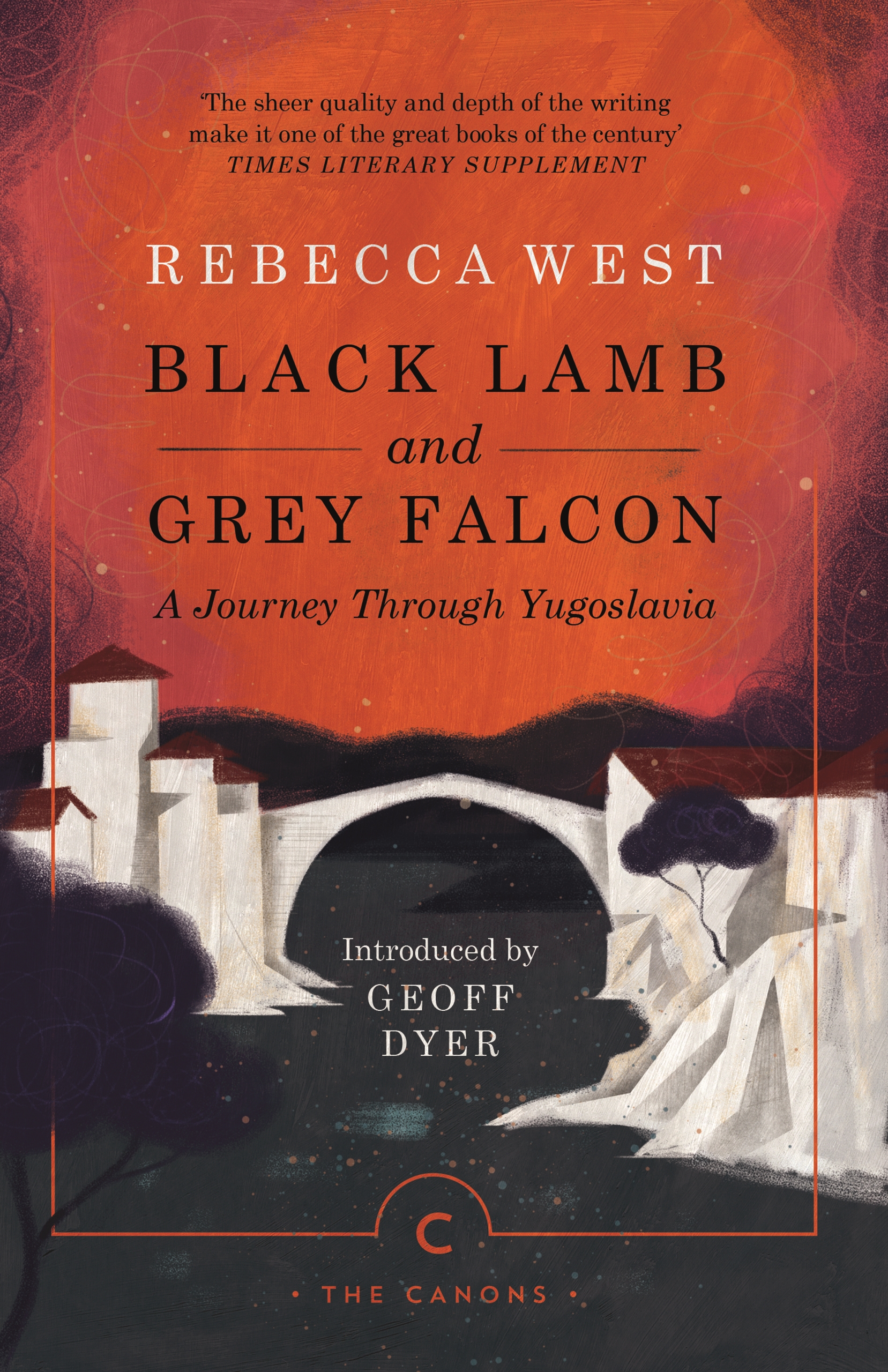
This month we’re starting with Tomorrow and Tomorrow and Tomorrow by Gabrielle Zevin. I haven’t read it, but here’s what it’s about:

When Sam catches sight of Sadie at a crowded train station one morning he is catapulted straight back to childhood, and the hours they spent immersed in playing games.

Their spark is instantly reignited and sets off a creative collaboration that will make them superstars. It is the 90s, and anything is possible.

What comes next is a decades-long tale of friendship and rivalry, fame and art, betrayal and tragedy, perfect worlds and imperfect ones. And, above all, our need to connect: to be loved and to love.

The title of the Zevin novel is a line from one of the most famous soliloquies in Shakespeare’s Macbeth: “Tomorrow, and tomorrow, and tomorrow, Creeps in this petty pace from day to day, To the last syllable of recorded time.” In Elizabeth Bailey’s For One More Tomorrow (1), Sadie Grey is directing a production of Macbeth when she discovers that she has somehow conjured up the ghost of Macbeth himself…and he is not at all happy with the way he is being portrayed.

I didn’t immediately notice that as well as the Macbeth and ‘Tomorrow’ connections, both the Zevin and Bailey novels feature a character whose name is Sadie! So does At the Edge of the Orchard by Tracy Chevalier (2), although this is a completely different kind of novel, set in the 1830s and following the story of a family who are trying to establish an orchard in the Black Swamp region of Ohio.

I learned a lot about trees and apples from the Chevalier book – more than I knew I needed to know! Another book that features apples, but in a very different way, is For the Most Beautiful by Emily Hauser (3). This novel, the first in a trilogy inspired by the ‘golden apples’ from Greek mythology, is a retelling of the Trojan War from the perspectives of two female characters, Krisayis and Briseis. The other two books in the trilogy focus on Atalanta (For the Winner) and Hippolyta (For the Immortal).

The word ‘beautiful’ also appears in the title of Your Beautiful Lies by Louise Douglas (4), a novel set in a small mining town in Yorkshire during the miners’ strike of 1984. A crime takes place – a woman is murdered on the moors – but although the book does have a strong mystery element, I described it in my review as “difficult to classify as belonging to a particular genre, being a mixture of crime, romance, suspense and domestic drama”.

Mining also features heavily in the plot of Ross Poldark (5), the first book in Winston Graham’s Poldark series. Set in 18th century Cornwall, it begins with Ross returning home after a long absence to find that his father has died and the woman he loves is marrying his cousin. The rest of the book follows Ross as he tries to restore the family estate and open a new copper mine. I read this book in 2015 when a new adaptation was being shown on the BBC, but although I enjoyed it and intended to continue with the rest of the series, I still haven’t picked up the second book.

An author who is closely associated with Cornwall is Daphne du Maurier. Many of her novels are set there, but the one I’ve chosen to finish my chain is The Loving Spirit (6). Published in 1931 when she was just twenty-four years old, this was du Maurier’s first novel and tells the story of four generations of the Coombe family, who live in a fictional shipbuilding town on the Cornish coast. Although it’s not as strong as her later novels, I still enjoyed it. The title is taken from an Emily Brontë poem, Self-Interrogation, which provides a link back to the beginning of this chain – books with titles inspired by another author’s work.

~

And that’s my chain for this month! My links have included: The word ‘tomorrow’, Macbeth, the name Sadie, apples, the word ‘beautiful’, mining and Cornwall.

In February we’ll be starting with the book we finished with this month – which for me is The Loving Spirit.

The Long Shadow by Celia Fremlin

With its snowy cover welcoming us to ‘The Nightmare Christmas Holiday’, I wondered if I had left it too late to read this book and should have waited for December to come around again, but I needn’t have worried – there’s actually very little mention of Christmas and the cover is clearly just a marketing device by the publisher. It worked perfectly for me as an early January read and has helped my 2024 get off to a great start. It’s not really surprising that I enjoyed it as Fremlin’s earlier novel, Uncle Paul, was one of the best books I read last year.

First published in 1975, The Long Shadow opens two months after Imogen Barnicott’s husband, Ivor, is killed in a car accident. As a renowned Professor of Classics, Ivor’s death causes an outpouring of grief from students, academics and colleagues from around the world – in fact, Ivor seems to be mourned more by people who barely knew him than by members of his own family. Imogen’s own feelings certainly appear to be mixed; she can’t help reflecting on how much Ivor would have loved the attention that comes with being dead and how annoyed he must be that he’s not around to enjoy it! While she misses Ivor’s presence around the house, she also welcomes having the freedom to do whatever she wants at last. However, this freedom is very short-lived because, as Christmas approaches, her adult stepchildren descend upon the house with their partners and children in tow, as does one of Ivor’s ex-wives, who has just arrived from Bermuda.

Imogen just wants to move on with her life, but that’s going to be difficult with so many uninvited guests. And when she receives a late night telephone call from a stranger accusing her of Ivor’s murder, it seems that someone else is determined to stop her from moving on as well. As New Year comes and goes, there are more unexplained incidents: one of Ivor’s books is found open on the arm of his chair, the grandchildren insist they’ve seen a ‘wizard’ in Grandpa’s room…and Imogen’s anonymous caller refuses to leave her alone. Does Imogen know more about her husband’s death than she’s prepared to admit?

The Long Shadow is a slower paced book than Uncle Paul and although there’s plenty of dark humour, it’s not quite as funny either. However, like Uncle Paul, it has a wonderfully unsettling atmosphere and a sense of increasing suspense and tension. Fremlin does an excellent job of making the reader question everything we are being told. Is Imogen being completely honest with us or could she be an unreliable narrator? Is there a logical explanation for what is happening or a supernatural one? And is Ivor even really dead? Fremlin leads our thoughts in first one direction and then another until we’re not really sure what to think or believe.

Although there are elements of mystery, this is not really a ‘crime novel’ – we don’t even know whether a crime has actually been committed; ‘psychological thriller’ is a better description, but even then it’s not a conventional thriller either. What it is more than anything is an examination of widowhood, the process of grieving and all the little complexities that follow a death in the family. Imogen finds it particularly difficult to cope because she isn’t given the space to mourn alone; not only does she have letters of condolence to answer from all corners of the globe (How he would have loved to watch the letters pouring in, day after day, by every post, in their tens and in their dozens, each one a tribute to himself…), she also has her neighbour Edith constantly regaling her with tales of her own late husband, Darling Desmond, as well as a house full of lodgers and family members all outstaying their welcome.

The plot becomes quite gripping towards the end, when it seems that the truth is about to be revealed – but although we do get answers to most of our questions, the final sentence provides one last, surprising twist! I’m glad I picked such an enjoyable book to start the year with and I see my library has The Hours Before Dawn, so I could be tempted to read more Celia Fremlin soon.

2024 Reading Resolutions

Happy New Year! I hope your 2024 reading gets off to a good start. As I do every January, I have listed below some reading resolutions for the year ahead. I don’t do very well with numerical targets and goals or anything that restricts my reading choices too much, so these are just some loose plans to help shape my year of reading.

Read Christie 2024
I will be taking part in the Read Christie challenge again and this year’s theme is Agatha Christie: Through the Decades. Each quarter will focus on a different decade – 20s, 30s, 40s/50s and 60s/70s. The aim of the challenge is to read one book every month, but you can read as many or as few as you like. For the 1920s, the only unread Christies I have are The Secret of Chimneys, The Seven Dials Mystery and The Big Four, plus the short story collection Poirot Investigates, so I will be reading at least one or two of those between January and March.

Historical Fiction Reading Challenge
I’ll also be taking part in the Historical Fiction Reading Challenge (see my sign-up post here) with the aim of reading 50 historical fiction novels in 2024. I participate in this every year and usually complete it very easily, so I’m going to make it slightly more ‘challenging’ this time by trying to focus on historical fiction in translation. As I’ve said, I don’t really like setting targets, but I’ll aim for 10 out of the 50 books and see how I do. I already have several translated historical novels on the TBR, including the final two books in Maurice Druon’s Les Rois maudits series, which I think would be a good place to start and I’m also considering the new translation of Sigrid Undset’s Olav Audunssøn.

Classics Club list
There are currently eight books remaining on my Classics Club list, so I’m hoping I can finish the list in the first half of the year. It should be manageable as most of the books are short! I’m already starting to put a new list together – there are still so many classics I want to read.

Re-reads
Every year I say I’m going to do some re-reading, but usually never actually get round to it. In 2023, I managed to re-read one book – The Scapegoat by Daphne du Maurier – but there are lots of other old favourites on my shelves that I want to read again as well. Maybe 2024 will be the year!

Reading the Walter Scott Prize
I really need to start making some progress with my Reading the Walter Scott Prize project. I only managed to read three of the seven books on the 2023 shortlist, so still have the other four to catch up with, as well as several more books from the previous years’ shortlists that I haven’t read yet. I’ve already discovered lots of great new books and authors through following this particular prize and am looking forward to discovering more.

Otherwise, I just want 2024 to be a year of reading whatever I want to read, whenever I want to read it – and hopefully getting through more of the books that are already on my shelves rather than acquiring more. My ultimate resolution, as always, is to make every book I read a potential book of the year!

~

What about you? Do you have any reading resolutions or plans for 2024?

My Commonplace Book: December 2023

For the last time this year…

A selection of quotes and pictures to represent December’s reading:

commonplace book
noun
a book into which notable extracts from other works are copied for personal use.

~

They repaired and reused everything: nothing was ever thrown away…They shared with their neighbours and pooled their resources. They looked after other families’ children and old folk to enable each other to work and earn. This was what it meant to have community; it was also what it meant to be oppressed in your own country. When tangible things were so sparse, you had at least to leave people their pride and their dreams, their religion and their sultan.

The Black Crescent by Jane Johnson (2023)

~

A diamond has many facets: hold it with me facing you and you can see one facet, I another, but they’re both on the same stone. It’s the angle-of-sight question. There may be a third or a fourth angle we know nothing about, meanwhile we both feel something, you aversion, I attraction. That’s a starting-point.

A Footman for the Peacock by Rachel Ferguson (1940)

~

‘Besides, we take pride in our traditions, no matter how ridiculous. Indeed, the more absurd the tradition, the more it is cherished.’

‘That makes no sense.’

‘Rationality, being a recent invention, is not widely embraced,’ Eleanor said with a smile.

A Lady to Treasure by Marianne Ratcliffe (2023)

~

She thought, how little we know other people, no matter how closely we share our lives. There he is, that stick-in-the-mud who’s never wanted to try anything new, but some hidden part of him has broken open, some adventurous part of him I never knew was there, and maybe he didn’t either.

Restless Dolly Maunder by Kate Grenville (2023)

~

“You see, Miss Furnivall, there isn’t only one kind of love, the kind between men and women. There are many different kinds – so many! And unless you can find the kind that you were created for, you won’t be satisfied here below. You will not.”

A Pink Front Door by Stella Gibbons (1959)

~

Princess Nadezhda Petrovna of Russia with her brother, Prince Roman Petrovich of Russia

‘Nothing breaks like a heart,’ said Stana, patting her sister on the knee. ‘But nothing mends like it either.’

The Witch’s Daughter by Imogen Edwards-Jones (2023)

~

“I hope no one will imagine I’m mocking at detective-story devices. In point of fact, I dote on them. But so long as criminals take them for a model, the police are going to have a very easy time; because, like the wretched Judith, your genuinely murderous addict will dig his cunning and complicated pits for the investigators, only, in the upshot, to fall head first into one of them himself.”

We Know You’re Busy Writing… by Edmund Crispin (2023)

~

Favourite book read in December:

A Pink Front Door and A Lady to Treasure

Authors read for the first time in December:

Kate Grenville

Places visited in my December reading:

Morocco, England, Australia, Russia

~

Reading notes: I didn’t finish as many books in December as I’d hoped, but I’ve also been immersed in two very thick books which are taking a long time to get through, so that’s my excuse! I’m pleased that I managed to read two books for Dean Street December and I’m also almost up to date with reviewing all of my 2023 reads, with only two reviews left to post in January.

Tomorrow I’ll be posting my reading resolutions for 2024, but meanwhile I’d like to wish you all a Happy New Year!

My favourite books of 2023

I know 2023 is not quite over yet, but with only a few days remaining I think it’s safe to post my books of the year list now. I’ve enjoyed putting this post together, looking back over the last twelve months and picking out some favourites. This hasn’t been a particularly great year of reading for me; it got off to a good start, but for various reasons my reading slowed down in the middle of the year and I struggled to get back on track. However, I’ve still read some great books in 2023 and here they are, in no particular order:

~

The Square of Sevens by Laura Shepherd-Robinson (2023)

From my review: “It’s not really possible for me to say much more about the story without spoiling it, but if I tell you it includes family secrets, disputed inheritances, stolen documents, and lots of surprising twists and turns you’ll get the idea! It’s very entertaining, with the feel of a Charles Dickens novel at times, and I was often reminded of Charles Palliser’s The Quincunx (another great Dickensian novel with an inheritance at the heart of the plot).”

Random Harvest by James Hilton (1941)

From my review: “This book wasn’t quite what I’d expected; I thought it was going to be more of a romance, but although it does have a very moving love story at its heart, there’s much more to Random Harvest than that. It can be considered an anti-war novel, with it’s theme of loss that runs through the story from beginning to end – not just the obvious loss of memory, but also lost opportunities, lost or broken relationships, lost innocence and, on a wider scale, a way of life that has been lost forever as the world moves on from one war and heads straight for another.”

The Empty World by D.E. Stevenson (1936)

From my review: “It’s sad that The Empty World seems to have been almost forgotten and has never received the attention or acclaim of other dystopian novels. Maybe it was just too different from Stevenson’s other work to appeal to her existing readers while her reputation as an author of gentle, domestic fiction may have led to the book being overlooked by science fiction fans. I loved it anyway and found it a fascinating, thought provoking read.”

Uncle Paul by Celia Fremlin (1959)

From my review: “I know they say never to judge a book by its cover, but I have to confess, the cover is what made me want to read this book before I even knew what it was about! Luckily, the story lived up to the cover and you can expect to see Uncle Paul on my books of the year list in December, without a doubt.”

The Black Spectacles by John Dickson Carr (1939)

From my review: “By the time Fell is brought into the story, most of the clues are in place, but Elliot and the local Sodbury Cross police have failed to interpret them correctly. I’m not surprised they were struggling, because this is a very clever mystery with lots of twists and turns and an ingenious solution. I certainly couldn’t solve it and had to wait for Fell to explain it all, which he does bit by bit as each piece of the puzzle falls into place.”

The Bird in the Tree by Elizabeth Goudge (1940)

From my review: “Goudge’s descriptive writing is always beautiful and in this novel she brings the fictional Hampshire village of Fairhaven to life with details of local customs, history and legends, basing it on the real village of Buckler’s Hard on the banks of the Beaulieu River. She makes the setting feel almost dreamlike, especially as there are a few elements of the story that are nearly, but not quite, supernatural.”

The Whispering Muse by Laura Purcell (2023)

From my review: “It certainly sounded good – a Gothic novel set in the theatres of Victorian London – and I wasn’t disappointed at all. I was gripped from start to finish…I loved the insights we are given into what goes on behind the scenes and the descriptions of Lilith’s powerful stage performances are so vivid I could almost imagine I was watching them from a seat in the front row.”

The Scapegoat by Daphne du Maurier (1957)

This was a re-read for me and the second time it has appeared on my books of the year list!

From my review: “And as always with a du Maurier novel, you can expect beautiful descriptions, a strong sense of place and interesting, if not necessarily very likeable, characters…It really is a fascinating novel and still one of my favourites by du Maurier. Now I just need to find time to revisit some of her others!”

The Wolves of Willoughby Chase by Joan Aiken (1962)

From my review: “Now that I’ve read this book I can see why it is considered a children’s classic and has been so popular with generations of younger readers over the years. It has an exciting plot, child protagonists to relate to, kindly adult characters to love and villainous ones to hate, and an atmospheric setting with snowy, icy landscapes and packs of wolves roaming the countryside…I thoroughly enjoyed this book and just wish I hadn’t come to it so late!”

The Other Side of Mrs Wood by Lucy Barker (2023)

From my review: “The Other Side of Mrs Wood is Lucy Barker’s debut novel and a very enjoyable one! It took me a few chapters to get into the story as the beginning was quite slow, but by the middle of the book I had been completely drawn in… this is not really a book that tackles a lot of deep issues and I enjoyed it primarily for its entertainment value. However, that doesn’t mean it’s a silly, frothy book in any way – it’s well written, evocative of the Victorian era, and I learned a huge amount about the 19th century fascination with spiritualism.”

The New Magdalen by Wilkie Collins (1873)

From my review: “Wilkie Collins was known for his sensation novels, a genre that takes elements of Gothic melodrama and places them in an ordinary, often domestic setting…The New Magdalen is less sensational than some of his others, but still falls firmly into the genre so you can expect a very entertaining novel. I’ve always found Collins’ writing to be the most readable of all the Victorians and that, in addition to this being a relatively short book for a 19th century classic, makes it a gripping and surprisingly quick read.”

~

And that’s my list for this year! What did you enjoy reading in 2023?