Six Degrees of Separation: From The Loving Spirit to Endless Night

It’s the first Saturday of the month which means it’s time for another Six Degrees of Separation, hosted by Kate of Books are my Favourite and Best. The idea is that Kate chooses a book to use as a starting point and then we have to link it to six other books of our choice to form a chain. A book doesn’t have to be connected to all of the others on the list – only to the one next to it in the chain.

This month we are each starting with either the book with which we finished last month’s chain or the last book we read. My January chain finished with The Loving Spirit by Daphne du Maurier, so I’m going to use that as my starting point. The novel was published in 1931 and was du Maurier’s first. Here’s what I said in my review:

The Loving Spirit is a family saga spanning four generations of the Coombe family. It begins in 1830 with the story of Janet Coombe, a passionate young woman who is forced to abandon her dreams of going to sea when she marries and settles down to start a family with her husband, a boat builder. We then move forward through the decades, ending one hundred years later in the 1930s. Along the way we meet Janet’s son, Joseph, her grandson, Christopher, and finally her great-granddaughter, Jennifer. The book is divided into four parts, one devoted to each of the main characters, but I won’t go into any plot details here as each story has its own set of dramas and surprises which I’ll leave you to discover for yourself.

The Loving Spirit takes its title from an Emily Brontë poem, Self-Interrogation:

“Alas! The countless links are strong,
That bind us to our clay;
The loving spirit lingers long,
And would not pass away!”
.

Another book with a title taken from a poem (in this case Rudyard Kipling’s A Smuggler’s Song) is Watch the Wall, My Darling by Jane Aiken Hodge (1), a Gothic suspense novel set during the Napoleonic Wars. I described it in my review as a tale of “smugglers, soldiers and spies, a crumbling abbey believed to be haunted, family secrets and an inheritance to be decided”.

The plot of Alex Preston’s Winchelsea (2) also features smuggling. Our heroine’s adoptive father is murdered by a gang of smugglers in the East Sussex town of Winchelsea and she and her brother set out to take revenge. The book is set in the 1740s and includes a subplot involving the Jacobites and Bonnie Prince Charlie.

The Masqueraders by Georgette Heyer (3) also takes place just after the Jacobite Rising of 1745. This was one of the first Heyer novels I read and although I’ve read better ones since, it still holds a special place in my heart. I loved the Georgian setting, the characters and the entertaining plot.

The idea of ‘masqueraders’ leads logically to The Man in the Iron Mask by Alexandre Dumas (4). This is the final volume in Dumas’ d’Artagnan series, which began with The Three Musketeers, and revolves around a plot involving a man imprisoned in the Bastille who bears a striking resemblance to the King of France. I always enjoy Dumas and this is one of the stronger novels in the series.

A book which shares a word in the title is The Iron King by Maurice Druon (5), the first book in Druon’s series Les Rois maudits (The Accursed Kings). The series tells the story of Philip IV of France and his descendants, a line of kings “cursed to the thirteenth generation” by the Grand Master of the Knights Templar, whom Philip sent to burn at the stake. I still have the last two books in the series to read – hopefully this year!

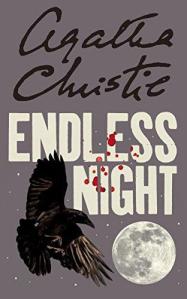
Another book which features a curse as part of the plot is Agatha Christie’s Endless Night (6). And the title of the book is also taken from a poem, bringing the chain full circle! The poem this time is William Blake’s Auguries of Innocence:

“Every Night and every Morn
Some to Misery are born.
Every Morn and every Night
Some are born to Sweet Delight.
Some are born to Sweet Delight,
Some are born to Endless Night.”

~

And that’s my chain for this month! My links have included: titles taken from poems, smugglers, Jacobites, masked men, the word ‘iron’ and curses.

In March we’ll be starting with Tom Lake by Ann Patchett.

My Commonplace Book: January 2024

A selection of quotes and pictures to represent January’s reading:

commonplace book
noun
a book into which notable extracts from other works are copied for personal use.

~

Or is it, perhaps, the case that the weeks, and the months, and the years are all the time adding, by stealth, and little by little, every bit as much to a memory as they take away? Until, at last, the things that didn’t happen have grown like moss over the things that did; a soft green cushion on which the mind can rest at last?

The Long Shadow by Celia Fremlin (1975)

~

Man is a strange being. He always has a feeling somewhere in his heart that whatever the danger he will pull through. It’s just like when on a rainy day you imagine the faint rays of the sun shining on a distant hill.

Silence by Shūsaku Endō (1966)

~

‘My last mistress, sir, said that if you give your attention to something beautiful, it will tell you a secret. I think if you’re used to seeing something and know what it is, you might forget that it’s beautiful – not see it at all.’

The Beholders by Hester Musson (2024)

~

Lochleven Castle, Scotland

Like a weaver sorting through threads, she groups the colours: moss green, pale lichen green, the flash of yellow flowers high up on the hills, the inky waters and silver reflections, the blue of the sky – bright blue. A painter’s blue. The colour of spring. She remembers the pink sky the morning they arrived at Lochleven, the castle a dark silhouette reflected on the loch’s surface, like an underwater fortress.

The Tower by Flora Carr (2024)

~

Men don’t want to be brothers – they may someday, but they don’t now. My belief in the brotherhood of man died the day I arrived in London last week, when I observed the people standing in a Tube train resolutely refuse to move up and make room for those who entered. You won’t turn people into angels by appealing to their better natures just yet awhile – but by judicious force you can coerce them into behaving more or less decently to one another to go on with.

The Secret of Chimneys by Agatha Christie (1925)

~

‘There are moments in history when entire empires, whole branches of the future, rest precariously on the words of a single person. Usually, they’re not even aware of it. They don’t have time to plan, or consider. They simply open their mouths and speak, and the universe takes on a new pattern.’

The Last Murder at the End of the World by Stuart Turton (2024)

~

‘In the absence of an explanation, suspicion festers and people find that they need someone to blame.’

The Spendthrift and the Swallow by Ambrose Parry (2023)

~

12th century wall-painting of St Cuthbert in Durham Cathedral

We must tell the stories of our time so that tomorrow’s children receive them, then pass them on like scrolls in bottles sent down the river.

Cuddy by Benjamin Myers (2023)

~

It’s when you least expect it that sorrow returns, like a thief who steals joy.

The Fox Wife by Yangsze Choo (2024)

~

Women have always been the same throughout the Ages, when every girl becomes, in her turn, the modern girl. Her conduct is not dependent on any period, but on her disposition. It is only the popular definition of morality, and the general acceptance or rejection of any breach, which is topical.

Fear Stalks the Village by Ethel Lina White (1932)

~

Favourite books read in January:

The Long Shadow and Silence

Authors read for the first time in January:

Shūsaku Endō, Hester Musson, Flora Carr, Benjamin Myers

Places visited in my January reading:

England, Japan, Scotland, Greece, China

~

January reading notes: My reading for 2024 got off to a good start in January; I’m particularly pleased that I managed to fit in a book for the Japanese Literature Challenge (Silence), as reading more books in translation is one of my resolutions for this year. In February I need to read my book for the recent Classics Club Spin, which is Thomas Hardy’s The Trumpet Major, and I’m also hoping to join in with #ReadIndies, hosted by Karen and Lizzy.

How was your January? Do you have any plans for your February reading?

Top Ten Tuesday: Authors I discovered in 2023

This week’s topic for Top Ten Tuesday (hosted by That Artsy Reader Girl) is “New-to-Me Authors I Discovered in 2023”. There were lots of authors I tried for the first time last year, but the ten I’m listing below are all authors whose books I enjoyed and would consider reading again.

1. Edgar Rice Burroughs – His more famous books have never really appealed to me, but The Efficiency Expert was recommended to me and it was very entertaining.

2. E.C.R. Lorac – I’m not sure whether Death of an Author was really the best Lorac to start with, as I liked it but didn’t love it. I hope to try another one soon!

3. Helen Scarlett – I enjoyed The Lodger for its portrayal of London in the aftermath of World War I and must try Scarlett’s previous novel at some point.

4. Geoffrey Household – A man goes on the run after a failed assassination attempt in Household’s 1939 novel, Rogue Male. An interesting read, but I’m not sure if any of his other books appeal.

5. Dolores Hitchens – I read The Cat Saw Murder, a Rachel Murdock mystery, for Mallika’s Reading the Meow week and would like to read some of the others in that series.

6. Ursula BloomWonder Cruise was my first Ursula Bloom book; it seems she was a very prolific author, so I have lots more to look forward to.

7. Patricia Highsmith – Having meant to try something by Patricia Highsmith for years, I finally read her classic psychological thriller Strangers on a Train in 2023!

8. J.B. PriestleyBenighted, Priestley’s 1927 novel, was a creepy and unsettling read, perfect for October!

9. Kate GrenvilleRestless Dolly Maunder, based on the story of Grenville’s own grandmother, was an interesting look at life in Australia in the early 20th century.

10. Rebecca Netley – I enjoyed The Black Feathers, a Gothic novel set in Victorian England, and I would like to read Netley’s previous book, The Whistling, now.

~

Have you read any of these authors? Which new (or new-to-you) authors did you discover last year?

Fear Stalks the Village by Ethel Lina White

The village was beautiful. It was enfolded in a hollow of the Downs, and wrapped up snugly — first, in a floral shawl of gardens, and then, in a great green shawl of fields. Lilies and lavender grew in abundance. Bees clustered over sweet-scented herbs with the hum of a myriad spinning-wheels.

With its Tudor cottages and cobbled streets, the village depicted in Ethel Lina White’s 1932 novel seems at first sight to be an idyllic place to live. There’s no poverty or unemployment, an endless round of tea parties and tennis games, and once settled there, people find that they never want to leave. Joan Brook is a relative newcomer to the village, having arrived to take up a position as companion to Lady d’Arcy, and she has already fallen under its spell.

When a novelist friend from London comes to visit, she entertains herself and Joan by imagining the secret scandals taking place behind closed doors. Perhaps the village doctor is poisoning his wife, she says, and the saintly Miss Asprey is bullying her companion; the Rector is leading a double life, and Miss Julia Corner, President of the local Temperance Society, is a secret drinker. The visit is a brief one and the friend soon returns to London, but when the inhabitants of the village begin to receive anonymous poison pen letters, it seems that the scenarios she had imagined were not so far from the truth after all.

Fear Stalks the Village is an unusual crime novel; although there are several deaths, it is not a murder mystery and the plot revolves entirely around finding out who is writing the spiteful letters threatening to expose the private lives of the villagers. Other reviews compare it to The Moving Finger by Agatha Christie, but as I haven’t read that one yet it reminded me most of Henrietta Clandon’s Good by Stealth. There’s lots of witty, satirical humour and a large cast of strongly drawn characters, all of whom appear at first to be happy, well-adjusted people…until the letters begin to arrive. The question the novel raises is whether the cracks have always been there beneath the surface or whether they have been created by the letters and the suspicion and anxiety they cause.

The mystery is quite a clever one, with some red herrings to throw us off the track, and I didn’t guess who was sending the letters. However, it took me a while to get into this book as the pace is quite slow and, despite the title, I didn’t feel that there was any real sense of fear or menace. Still, this is the second book I’ve read by Ethel Lina White, the first being The Wheel Spins (the book on which Alfred Hitchcock’s The Lady Vanishes is based) and I think it’s my favourite of the two – probably because with the other book I couldn’t help comparing it unfavourably to the film, which I love! I would be happy to try more of her books so let me know if there are any you would recommend.

The Spendthrift and the Swallow by Ambrose Parry

I loved the first four novels in Ambrose Parry’s Raven and Fisher mystery series and although there doesn’t currently seem to be any news of a fifth, I was pleased to come across this digital short story available free for Kindle. It fits into the series chronologically between the third and fourth books but if you come to it late, as I did, it doesn’t matter at all as it works as a standalone story.

Ambrose Parry is a pseudonym used by the crime author Chris Brookmyre and his wife Dr Marisa Haetzman, a consultant anaesthetist. Marisa’s knowledge is crucial to the series, which is set against the backdrop of the medical world of 19th century Edinburgh. Our two main characters are Dr Will Raven, assistant to the renowned Scottish obstetrician Dr James Simpson, and Sarah Fisher, who also assists at Simpson’s clinic but is struggling to find a way to achieve her own dream of becoming a doctor. Each book in the series features a mystery to be solved, as well as details of Victorian medical procedures and treatments.

The Spendthrift and the Swallow is only 52 pages long, including a preview for Voices of the Dead, and can easily be read in about twenty minutes. The story is set in January 1853 and we follow Will and Sarah as they investigate the death of one of Dr Simpson’s patients, Cora Carlton, the wife of an entrepreneur. The circumstances of Cora’s sudden death could raise questions over the doctor’s medical abilities, so Will and Sarah hope to uncover the truth quickly enough to save his reputation. Meanwhile, Simpson has begun experimenting with the increasingly popular science of mesmerism and places a loud and difficult patient under hypnosis with startling results. I was interested to read in the author’s note at the end of the book that both of these incidents were based on real historical cases.

If you’re new to the Raven and Fisher books, reading this story first wouldn’t be a problem as it doesn’t really spoil anything from the main series and it’s a satisfying mystery in its own right. However, it’s too short for any character development or any background information to help you understand the relationship between Sarah and Will and what has happened to them up to this point. My recommendation is to start with the first full-length novel, The Way of all Flesh. For existing Parry readers, though, this is an entertaining little book and provides an introduction to the mesmerism storyline that will play such a big part in Voices of the Dead.

Book 3/50 for the Historical Fiction Reading Challenge 2024

Classics Club Spin #36: The Result

The result of the latest Classics Club Spin has been revealed today.

The idea of the Spin was to list twenty books from my Classics Club list, number them 1 to 20, and the number announced by the Classics Club represents the book I have to read before 3rd March 2024. The number that has been selected is…

20

And this means the book I need to read is…

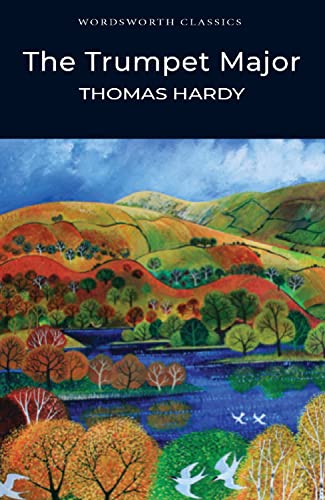
The Trumpet Major by Thomas Hardy

Thomas Hardy’s only historical novel, The Trumpet Major is set in Wessex during the Napoleonic Wars. Hardy skilfully immerses us in the life of the day, making us feel the impact of historical events on the immemorial local way of life – the glamour of the coming of George III and his soldiery, fears of the press-gang and invasion, and the effect of distant but momentous events like the Battle of Trafalgar.

He interweaves a compelling, bitter-sweet romantic love story of the rivalry of two brothers for the hand of the heroine Anne Garland, played out against the loves of a lively gallery of other characters. While there are elements of sadness and even tragedy, The Trumpet-Major shows Hardy’s skills of story-telling, characterisation and description in a novel of vitality, comedy and warmth.

~

This wasn’t one I was particularly hoping for – I would have liked something shorter and lighter – but I always love Hardy, so I’m not unhappy with this result!

Have you read this book? What did you think of it?

The Beholders by Hester Musson

‘Beauty is in the eye of the beholder’ and the cover of this debut novel by Hester Musson is certainly a beautiful thing to behold.

We begin in June 1878 with Clara Gethin on trial at London’s Old Bailey for the murder of her own child, whose body has been pulled from the River Thames. As the wife of a highly respected politician who has provided evidence against her, things look very bleak for Clara, but there’s one person who believes – or at least wants to believe – in her innocence. This is Harriet Watkins, her lady’s maid and the only friend she has in the world.

We then go back several months to Harriet’s arrival in Clara’s household following the death of her previous employer. Her mother wants her to return home to marry her fiancé, but Harriet isn’t at all convinced that William is the man she wants to spend her life with, so instead she accepts a new position as housemaid at Finton Hall, the Gethins’ Hertfordshire estate. When Harriet begins her new job, she quickly senses that something is very wrong at Finton Hall. The housekeeper is hostile and unwelcoming, the footman seems to be hiding secrets, and the master, although largely absent, casts a shadow over the entire household. Harriet makes an effort to befriend her new mistress and is rewarded with promotion to lady’s maid, but she is concerned by Clara’s lack of affection for her baby son and her habit of dismissing servants seemingly on a whim.

The story unfolds through the pages of Harriet’s diary as she gives her account of her early days at Finton Hall and the things she experiences and observes there. The diary entries are long and detailed – sometimes more detailed than they really need to be – but otherwise the format is a good way to convey Harriet’s growing sense of unease as she learns more about what is really going on within the Gethin household. However, I think I’ve read too many similar books recently, because I found it easy to guess what was happening and wasn’t surprised at all when it was revealed. It also seemed to take far too long to reach that point – the first half of the book consists of a lot of very slow build-up and there were times when I struggled to stay engaged.

The pace picks up in the second half as the action finally moves outside the confines of the house and we learn more about the fate of Clara Gethin’s baby. This part of the book felt more original and I was less able to predict what was going to happen; I also liked the romantic storyline which developed towards the end – although it felt slightly rushed, the love interest was not the person I’d expected earlier in the book and I was glad the author hadn’t gone in that direction. Overall, I think my feelings about The Beholders are more positive than negative; I just wish it hadn’t taken so long for the plot to emerge!

Thanks to Fourth Estate for providing a copy of this book for review via NetGalley.

Book 2/50 for the Historical Fiction Reading Challenge 2024