Classics Club Spin #35: The result

The result of the latest Classics Club Spin has been revealed today.

The idea of the Spin was to list twenty books from my Classics Club list, number them 1 to 20, and the number announced by the Classics Club represents the book I have to read before 3rd December 2023. The number that has been selected is…

2

And this means the book I need to read is…

Nicholas Nickleby by Charles Dickens

The hero of Dickens’s flamboyantly exuberant novel, Nicholas Nickleby, is left penniless after his father’s death and forced to make his own way in the world. His adventures give Dickens the opportunity to portray an extraordinary gallery of rogues and eccentrics: Wackford Squeers, the tyrannical headmaster of Dotheboys Hall; the tragic orphan Smike, rescued by Nicholas; and the gloriously theatrical Mr and Mrs Crummle and their daughter, the ‘infant phenomenon’. Nicholas Nickleby is characterized by Dickens’s outrage at social injustice, but it also reveals his comic genius at its most unerring.

~

I’ll confess that I was hoping for one of the shorter books on my list, but I’m still quite happy with my result. It’s been a few years since I last read anything by Dickens, so I’m looking forward to this one!

Have you read this book? What did you think of it?

#1962Club – Some previous reads

1962 Club, hosted by Simon of Stuck in a Book and Karen of Kaggsy’s Bookish Ramblings, starts on Monday and we will all be reading and writing about books published in that year. It seems to have been another great year for publishing – I have previously read and reviewed six 1962 books on my blog and thought I would list them here before the week begins. If you’re looking for some last-minute ideas I can recommend all of these!

The Mirror Crack’d from Side to Side by Agatha Christie – There always seems to be at least one Christie option for every club year! In this one, Miss Marple investigates a poisoning during a party hosted by a famous actress.

The Bull from the Sea by Mary Renault – The sequel to The King Must Die, but would probably work as a standalone. The two books retell the Greek myth of Theseus.

Something Wicked This Way Comes by Ray Bradbury – A wonderfully eerie and atmospheric story in which a very unusual carnival arrives in Green Town, Illinois.

Devil Water by Anya Seton – A fascinating historical novel set in Northumberland and Virginia during the time of the Jacobite Rebellions of 1715 and 1745.

We Have Always Lived in the Castle by Shirley Jackson – A strange, unsettling novel about two sisters living in an isolated house with a tragic past.

The Moonspinners by Mary Stewart – One of my favourite Mary Stewart suspense novels, with a beautiful Greek island setting!

~

Have you read any books published in 1962? Will you be joining in with 1962 Club?

Classics Club Spin #35: My List

I wasn’t sure whether to take part in the latest Classics Club Spin as I only have nine books left to read from my Classics Club list, but I decided it would be a good way to motivate myself to pick up one of those remaining nine books and move a step closer to finishing my list at last!

If you’re not sure what a Spin is, here’s a reminder:

The rules for Spin #35:

* List any twenty books you have left to read from your Classics Club list.
* Number them from 1 to 20.
* On Sunday 15th October the Classics Club will announce a number.
* This is the book you need to read by 3rd December 2023.

And here’s my list. I’ve had to repeat all of the books at least once as I don’t have twenty left.

1. The White Guard by Mikhail Bulgakov
2. Nicholas Nickleby by Charles Dickens
3. The Silver Branch by Rosemary Sutcliff
4. Moonfleet by John Meade Falkner
5. The Black Lake by Hella S. Haasse
6. The Trumpet-Major by Thomas Hardy
7. The Elusive Pimpernel by Baroness Orczy
8. Fire from Heaven by Mary Renault
9. The End of the Affair by Graham Greene
10. The White Guard by Mikhail Bulgakov
11. Nicholas Nickleby by Charles Dickens
12. The Silver Branch by Rosemary Sutcliff
13. Moonfleet by John Meade Falkner
14. The Black Lake by Hella S. Haasse
15. The Trumpet-Major by Thomas Hardy
16. The Elusive Pimpernel by Baroness Orczy
17. Fire from Heaven by Mary Renault
18. The End of the Affair by Graham Greene
19. The Silver Branch by Rosemary Sutcliff
20. The Black Lake by Hella S. Haasse

~

I don’t mind which of these books I get as I need to read all of them soon anyway. Have you read any of them?

Six Degrees of Separation: From I Capture the Castle to The Woman in White

It’s the first Saturday of the month, which means it’s time for another Six Degrees of Separation, hosted by Kate of Books are my Favourite and Best. The idea is that Kate chooses a book to use as a starting point and then we have to link it to six other books of our choice to form a chain. A book doesn’t have to be connected to all of the others on the list – only to the one next to it in the chain.

This month we’re starting with I Capture the Castle by Dodie Smith. Usually I haven’t read the first book in these chains (and have often never even heard of them), but this is one I have read and enjoyed! Here’s what it’s about:

‘I write this sitting in the kitchen sink’ is the first line of this timeless, witty and enchanting novel about growing up.

Cassandra Mortmain lives with her bohemian and impoverished family in a crumbling castle in the middle of nowhere. Her journal records her life with her beautiful, bored sister, Rose, her fading glamorous stepmother, Topaz, her little brother Thomas and her eccentric novelist father who suffers from a financially crippling writer’s block. However, all their lives are turned upside down when the American heirs to the castle arrive and Cassandra finds herself falling in love for the first time.

The title of the Dodie Smith novel is metaphorical, but my first link is to a book about people really trying to capture a castle! Winter Siege by Ariana Franklin and Samantha Norman (1) is set in the 12th century during the Anarchy, the period of civil war when King Stephen and his cousin, the Empress Matilda, battled for the English throne. The castle being besieged in the novel is the fictional Kenniford Castle where the Empress seeks sanctuary during the war. Ariana Franklin sadly died leaving the book unfinished, so it was completed by her daughter Samantha.

I recently finished reading another book completed by the author’s child after their mother’s death: Atlas: The Story of Pa Salt by Lucinda Riley and Harry Whittaker (2). This is the last of eight books in Riley’s Seven Sisters series and Whittaker wrote it using his mother’s notes. The previous seven books tell the stories of the seven adopted daughters of Pa Salt, each named after a star in the Seven Sisters star cluster, and this final novel delves into the history of Pa Salt himself, answering some of the mysteries raised throughout the series. I haven’t posted my review yet, but it should be up soon.

Atlas is the name of a character from mythology – a Titan condemned to hold up the sky for eternity. Another book with the name of a mythological character in the title is The Labours of Hercules by Agatha Christie (3). This is a collection of short stories featuring Christie’s famous detective Hercule Poirot. He investigates twelve different cases in this collection, each one loosely inspired by one of the twelve Labours of Hercules.

The Christie book was published in 1947 and so was Prince of Foxes (4), Samuel Shellabarger’s classic historical adventure novel. Set in Renaissance Italy, it’s the story of Andrea Orsini, who is given the task of negotiating a marriage between Alfonso d’Este and Lucrezia Borgia. I described it in my review as a book involving “battles, duels, clever disguises, last-minute escapes, sieges, miracles and all sorts of trickery and deception”. I loved it, but still haven’t read any of Shellabarger’s other books.

Now from a book with ‘foxes’ in the title to an author with the same animal in her name! The Somnambulist by Essie Fox (5) is an atmospheric Gothic novel set in Victorian England, featuring a large country house, family secrets and intrigue, ghostly occurrences and, as the title suggests, a theme of sleepwalking, both literal and metaphorical. The title is a reference to the 1871 painting The Somnambulist by John Everett Millais.

The Millais painting, which depicts a woman in a long white nightgown, is thought to have been inspired by The Woman in White by Wilkie Collins (6), which was published more than ten years earlier. I love Collins’ books and this classic Victorian sensation novel is one of my favourites (tied with Armadale). Who can forget his wonderful heroine Marian Halcombe, the sinister Count Fosco, and that eerie meeting between Walter Hartright and the mysterious ‘woman in white’ on a lonely London road?

~

And that’s my chain for October! My links have included: capturing castles, parent and child writing teams, titles featuring mythological characters, books published in 1947, the word ‘fox’ and Millais’ The Somnambulist.

In November we’ll be starting with Western Lane by Chetna Maroo.

Night Train to Marrakech by Dinah Jefferies

Night Train to Marrakech is the third and final book in Dinah Jefferies’ Daughters of War trilogy, but if you haven’t read the previous two books that shouldn’t be a problem as I think this one would also work well as a standalone. While Daughters of War and The Hidden Palace followed the stories of the three Baudin sisters, Hélène, Élise and Florence, during World War II, this third novel moves forward to the 1960s to focus on Élise’s daughter, Vicky.

In July 1966, Vicky Baudin arrives in Morocco to visit her grandmother for the first time. Having lost her father during the war, Vicky has only recently discovered that his mother, Clemence, is still alive and living in the mountains outside Marrakech. Vicky has just received a diploma in fashion design from a London art college, so this seems like a good time to travel abroad before beginning a postgraduate course in Paris. As her train arrives at Marrakech station, Vicky is looking forward to getting to know Clemence – and is determined to find a way to meet her hero, the French designer Yves Saint Laurent, who also lives in Marrakech.

In her mountain home, the Kasbah du Paradis, Clemence is awaiting her long-lost granddaughter’s arrival with mixed emotions. Vicky will want to know why she played no part in her son’s life and Clemence doesn’t feel ready to explain. However, she’s forced to confront the memories she’s tried so hard to forget when a man from her past reappears, threatening to reveal her secrets. Meanwhile, Vicky and her cousin Bea also stumble into trouble when they become witnesses to a crime.

Night Train to Marrakech has a much stronger thriller element than the previous two books, which I found quite surprising. The novel is set against a backdrop of rising political tensions – a few months before the novel begins, the Moroccan revolutionary Mehdi Ben Barka is abducted in Paris (a real life incident) – and although this doesn’t form a large part of the plot, it does give a sense of the danger for two young women who unintentionally become mixed up in a situation they don’t fully understand. The descriptions of Morocco itself – the scenery, the buildings, the food, the sounds and smells – are also beautifully done.

The three sisters from the first two books (Vicky’s mother, Élise, and her two aunts, Hélène and Florence) do eventually make an appearance in this one, but I was disappointed that we don’t see very much of them. This is very much Vicky’s story and Clemence’s, and although having two completely new characters to get to know so late in the trilogy unsettled me slightly, I did warm to them later in the book. I found Clemence in particular an intriguing character as she seems so cold and secretive at first but as more and more of her story unfolds, the reason for this becomes clear and by the end of the book I had gained a lot of respect and sympathy for her.

I didn’t enjoy this book as much as Daughters of War and The Hidden Palace – as the third in a trilogy I would have preferred it to be more closely linked with the first two books rather than moving on to the next generation – but the gripping plot and evocative setting still made it worthwhile. As for whether or not Vicky achieves her dream of meeting Yves Saint Laurent, you’ll have to read the book to find out!

Thanks to HarperCollins for providing a copy of this book for review via NetGalley.
This is book 40/50 for the 2023 Historical Fiction Reading Challenge.

Top Ten Tuesday: Revisiting my Reading Resolutions

This week’s topic for Top Ten Tuesday (hosted by That Artsy Reader Girl) is “Reading Goals I Still Want to Accomplish Before the End of the Year”.

In January I made a list of some reading resolutions for the year ahead, so I thought I would return to them here and see how I’m progressing. There are only seven, so this is not a full top ten list this week!

~

1. Finish my Classics Club list.
At the start of this year I had sixteen books remaining on my Classics Club list. I had hoped to read all of them during 2023, but as usual I’ve been distracted by other books and so far have only read seven of them, leaving nine still on the list. I’m planning to read at least some of the others before the end of the year, but I think this is one goal that won’t be complete until 2024.

2. Re-read some old favourites.
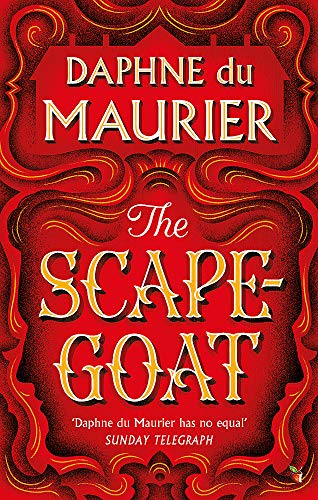
I’ve only managed one re-read this year – The Scapegoat by Daphne du Maurier – but it was one I particularly enjoyed as I wasn’t sure I’d interpreted things correctly the first time I read it. I really need to find time for more re-reads!

3. Resist the temptations of NetGalley.
At the start of January, the number of books I had waiting on my NetGalley shelf was down to single figures for the first time in years. I’ve been making an effort this year to be more restrained and request fewer books, but my reading slowed down for a while in the summer so the number on the shelf has slowly built up again. They are all books I really want to read, though, which is the most important thing.

4. Make some progress with my Reading the Walter Scott Prize project.
Unfortunately, I haven’t made much progress with this at all! I’ve read three books from this year’s Walter Scott Prize shortlist, but there were seven on the list so I still have the others to catch up with. I also still have lots of books to read from the previous years’ shortlists – I haven’t even managed to read last year’s winner yet!

5. Continue with some of the series and trilogies I’ve started and never finished!
I’ve had some success with this goal, finishing Robin Hobb’s Fitz and the Fool Trilogy and picking up the next books in Naomi Novik’s Temeraire series and Patrick O’Brian’s Aubrey/Maturin series. On the other hand, I’ve also started two more trilogies – the Eliot Chronicles by Elizabeth Goudge and the Fionavar Tapestry by Guy Gavriel Kay. Who knows when I’ll get round to finishing them!

6. Take part in the Historical Fiction Reading Challenge and Read Christie 2023.
I’m doing very well with the Historical Fiction Challenge, which isn’t surprising as it’s my favourite genre. My target for the year was 50 books (‘Prehistoric’ level) and I’ve read 39 with almost three months still to go. For Read Christie 2023, I joined in with the monthly reads in January, February, April, May, August and September. I’m happy with that as I hadn’t planned to participate every month – I love Christie, but twelve books a year by the same author can be too much. I have Endless Night lined up for November, but not sure yet whether I’ll read anything for October or December.

7. Make every book I read a potential book of the year.
This is always the ultimate goal of every reader, surely? Of course I haven’t achieved it and have been disappointed in some of the books I’ve chosen to read during 2023, but I’ll stay optimistic and hope I find some more books of the year in the remaining three months!

~

Did you make any reading resolutions in January – and if so, are you sticking to them? What are you hoping to accomplish with your reading before the end of the year?

My Commonplace Book: September 2023

A selection of quotes and pictures to represent September’s reading:

commonplace book
noun
a book into which notable extracts from other works are copied for personal use.

~

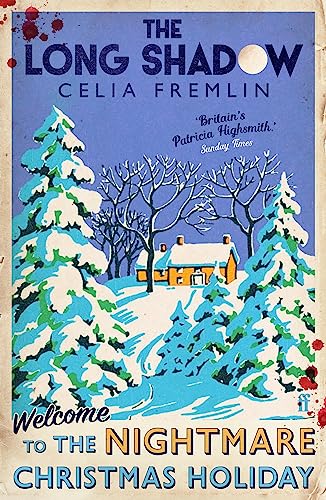
But it does not do to laugh, however softly, when you are alone. Laughter calls for answering laughter; and when there is none, it is not like silence, but more like a very special kind of sound. A sound that must be listened for, attended to, with every faculty suddenly alert.

Uncle Paul by Celia Fremlin (1959)

~

There’s nothing as exciting as a fresh new start when the page is blank and the future is all for the making!

The Appeal by Janice Hallett (2021)

~

The meeting of Francis I and Henry VIII at the Field of the Cloth of Gold in 1520

It was growing dark now. How the years had flown. He had not always been a prisoner of this unwieldy, diseased body. He had been a golden youth; he had known glory upon glory. The world had celebrated him. He had thought himself immortal. How God makes fools of Man…

Henry VIII: The Heart and the Crown by Alison Weir (2023)

~

“It is only that I dislike the whole notion of subordination. The corporal lurks in almost every bosom, and each man tends to use authority when he has it, thus destroying his natural relationship with his fellows, a disastrous state of affairs for both sides. Do away with subordination and you do away with tyranny…”

The Ionian Mission by Patrick O’Brian (1981)

~

‘But to me the great interest of a case is not in material clues, like a bright little puzzle-box with all the pieces numbered and of a different colour. No! To me it lies in the human mind, the human behaviour: if you like, the human soul.’

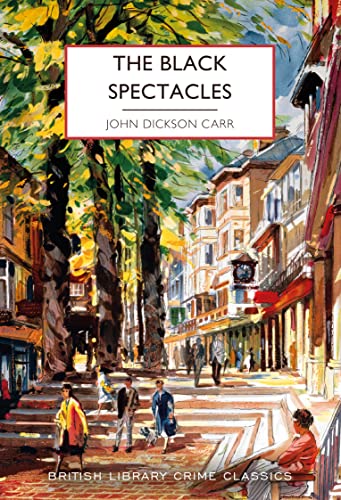
He Who Whispers by John Dickson Carr (1946)

~

The Coloured Triclinium, Petra

“The illusion that freedom is the prerogative of one’s own particular race is fairly widespread. Dr Gerard was wiser. He knew that no race, no country and no individual could be described as free. But he also knew that there were different degrees of bondage.”

Appointment with Death by Agatha Christie (1938)

~

We’re all a collection of stories, she had thought afterwards. Some good, some not so good. The question was, how did you allow a new story in, when just one of your stories already took up too much space?

Night Train to Marrakech by Dinah Jefferies (2023)

~

‘The world will be very different,’ said Mr. Femm, slowly, ‘when all the people have been cleared out of it, and not before. Men and women do not change. Their silly antics are always the same. There will always be a few clever ones, who can see a yard or two in front of their noses, and a host of fools who can see nothing, who are all befuddled, who pride themselves on being virtuous because they are incompetent or short-sighted.’

Benighted by J.B. Priestley (1927)

~

Favourite books read in September:

Uncle Paul and Appointment with Death

Authors read for the first time in September:

Celia Fremlin, J.B. Priestley

Places visited in my September reading:

England, Israel, Jordan, Greece, Morocco

~

Reading notes: This was another good month of reading for me, although I didn’t manage to get to everything I had hoped to read. I was pleased to add some different countries to this year’s ‘places visited’ and the two new authors I read this month (Fremlin and Priestley) are both authors I would like to explore further. As we move into October, I’m looking forward to 1962 Club, hosted by Kaggsy’s Bookish Ramblings and Stuck in a Book, but otherwise I’m enjoying just reading whatever I want to read, whenever I want to read it!

How was your September? Do you have any plans for your October reading?