2024 Reading Resolutions

Happy New Year! I hope your 2024 reading gets off to a good start. As I do every January, I have listed below some reading resolutions for the year ahead. I don’t do very well with numerical targets and goals or anything that restricts my reading choices too much, so these are just some loose plans to help shape my year of reading.

Read Christie 2024
I will be taking part in the Read Christie challenge again and this year’s theme is Agatha Christie: Through the Decades. Each quarter will focus on a different decade – 20s, 30s, 40s/50s and 60s/70s. The aim of the challenge is to read one book every month, but you can read as many or as few as you like. For the 1920s, the only unread Christies I have are The Secret of Chimneys, The Seven Dials Mystery and The Big Four, plus the short story collection Poirot Investigates, so I will be reading at least one or two of those between January and March.

Historical Fiction Reading Challenge
I’ll also be taking part in the Historical Fiction Reading Challenge (see my sign-up post here) with the aim of reading 50 historical fiction novels in 2024. I participate in this every year and usually complete it very easily, so I’m going to make it slightly more ‘challenging’ this time by trying to focus on historical fiction in translation. As I’ve said, I don’t really like setting targets, but I’ll aim for 10 out of the 50 books and see how I do. I already have several translated historical novels on the TBR, including the final two books in Maurice Druon’s Les Rois maudits series, which I think would be a good place to start and I’m also considering the new translation of Sigrid Undset’s Olav Audunssøn.

Classics Club list
There are currently eight books remaining on my Classics Club list, so I’m hoping I can finish the list in the first half of the year. It should be manageable as most of the books are short! I’m already starting to put a new list together – there are still so many classics I want to read.

Re-reads
Every year I say I’m going to do some re-reading, but usually never actually get round to it. In 2023, I managed to re-read one book – The Scapegoat by Daphne du Maurier – but there are lots of other old favourites on my shelves that I want to read again as well. Maybe 2024 will be the year!

Reading the Walter Scott Prize
I really need to start making some progress with my Reading the Walter Scott Prize project. I only managed to read three of the seven books on the 2023 shortlist, so still have the other four to catch up with, as well as several more books from the previous years’ shortlists that I haven’t read yet. I’ve already discovered lots of great new books and authors through following this particular prize and am looking forward to discovering more.

Otherwise, I just want 2024 to be a year of reading whatever I want to read, whenever I want to read it – and hopefully getting through more of the books that are already on my shelves rather than acquiring more. My ultimate resolution, as always, is to make every book I read a potential book of the year!

~

What about you? Do you have any reading resolutions or plans for 2024?

My Commonplace Book: December 2023

For the last time this year…

A selection of quotes and pictures to represent December’s reading:

commonplace book
noun
a book into which notable extracts from other works are copied for personal use.

~

They repaired and reused everything: nothing was ever thrown away…They shared with their neighbours and pooled their resources. They looked after other families’ children and old folk to enable each other to work and earn. This was what it meant to have community; it was also what it meant to be oppressed in your own country. When tangible things were so sparse, you had at least to leave people their pride and their dreams, their religion and their sultan.

The Black Crescent by Jane Johnson (2023)

~

A diamond has many facets: hold it with me facing you and you can see one facet, I another, but they’re both on the same stone. It’s the angle-of-sight question. There may be a third or a fourth angle we know nothing about, meanwhile we both feel something, you aversion, I attraction. That’s a starting-point.

A Footman for the Peacock by Rachel Ferguson (1940)

~

‘Besides, we take pride in our traditions, no matter how ridiculous. Indeed, the more absurd the tradition, the more it is cherished.’

‘That makes no sense.’

‘Rationality, being a recent invention, is not widely embraced,’ Eleanor said with a smile.

A Lady to Treasure by Marianne Ratcliffe (2023)

~

She thought, how little we know other people, no matter how closely we share our lives. There he is, that stick-in-the-mud who’s never wanted to try anything new, but some hidden part of him has broken open, some adventurous part of him I never knew was there, and maybe he didn’t either.

Restless Dolly Maunder by Kate Grenville (2023)

~

“You see, Miss Furnivall, there isn’t only one kind of love, the kind between men and women. There are many different kinds – so many! And unless you can find the kind that you were created for, you won’t be satisfied here below. You will not.”

A Pink Front Door by Stella Gibbons (1959)

~

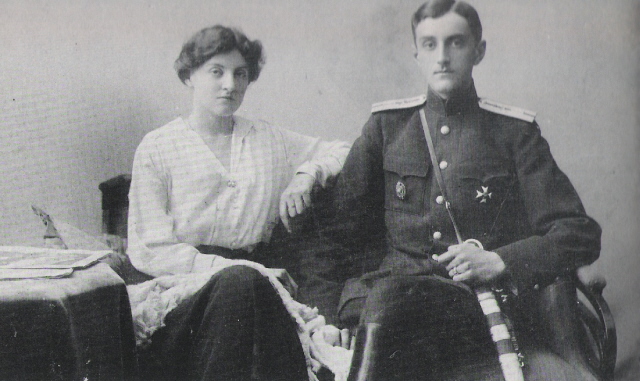
Princess Nadezhda Petrovna of Russia with her brother, Prince Roman Petrovich of Russia

‘Nothing breaks like a heart,’ said Stana, patting her sister on the knee. ‘But nothing mends like it either.’

The Witch’s Daughter by Imogen Edwards-Jones (2023)

~

“I hope no one will imagine I’m mocking at detective-story devices. In point of fact, I dote on them. But so long as criminals take them for a model, the police are going to have a very easy time; because, like the wretched Judith, your genuinely murderous addict will dig his cunning and complicated pits for the investigators, only, in the upshot, to fall head first into one of them himself.”

We Know You’re Busy Writing… by Edmund Crispin (2023)

~

Favourite book read in December:

A Pink Front Door and A Lady to Treasure

Authors read for the first time in December:

Kate Grenville

Places visited in my December reading:

Morocco, England, Australia, Russia

~

Reading notes: I didn’t finish as many books in December as I’d hoped, but I’ve also been immersed in two very thick books which are taking a long time to get through, so that’s my excuse! I’m pleased that I managed to read two books for Dean Street December and I’m also almost up to date with reviewing all of my 2023 reads, with only two reviews left to post in January.

Tomorrow I’ll be posting my reading resolutions for 2024, but meanwhile I’d like to wish you all a Happy New Year!

My favourite books of 2023

I know 2023 is not quite over yet, but with only a few days remaining I think it’s safe to post my books of the year list now. I’ve enjoyed putting this post together, looking back over the last twelve months and picking out some favourites. This hasn’t been a particularly great year of reading for me; it got off to a good start, but for various reasons my reading slowed down in the middle of the year and I struggled to get back on track. However, I’ve still read some great books in 2023 and here they are, in no particular order:

~

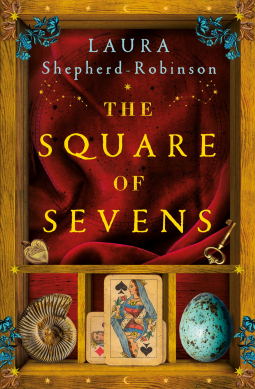
The Square of Sevens by Laura Shepherd-Robinson (2023)

From my review: “It’s not really possible for me to say much more about the story without spoiling it, but if I tell you it includes family secrets, disputed inheritances, stolen documents, and lots of surprising twists and turns you’ll get the idea! It’s very entertaining, with the feel of a Charles Dickens novel at times, and I was often reminded of Charles Palliser’s The Quincunx (another great Dickensian novel with an inheritance at the heart of the plot).”

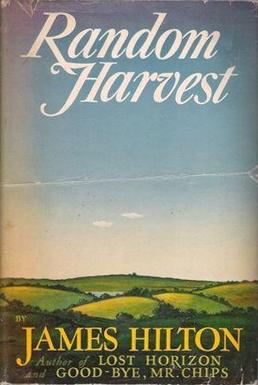
Random Harvest by James Hilton (1941)

From my review: “This book wasn’t quite what I’d expected; I thought it was going to be more of a romance, but although it does have a very moving love story at its heart, there’s much more to Random Harvest than that. It can be considered an anti-war novel, with it’s theme of loss that runs through the story from beginning to end – not just the obvious loss of memory, but also lost opportunities, lost or broken relationships, lost innocence and, on a wider scale, a way of life that has been lost forever as the world moves on from one war and heads straight for another.”

The Empty World by D.E. Stevenson (1936)

From my review: “It’s sad that The Empty World seems to have been almost forgotten and has never received the attention or acclaim of other dystopian novels. Maybe it was just too different from Stevenson’s other work to appeal to her existing readers while her reputation as an author of gentle, domestic fiction may have led to the book being overlooked by science fiction fans. I loved it anyway and found it a fascinating, thought provoking read.”

Uncle Paul by Celia Fremlin (1959)

From my review: “I know they say never to judge a book by its cover, but I have to confess, the cover is what made me want to read this book before I even knew what it was about! Luckily, the story lived up to the cover and you can expect to see Uncle Paul on my books of the year list in December, without a doubt.”

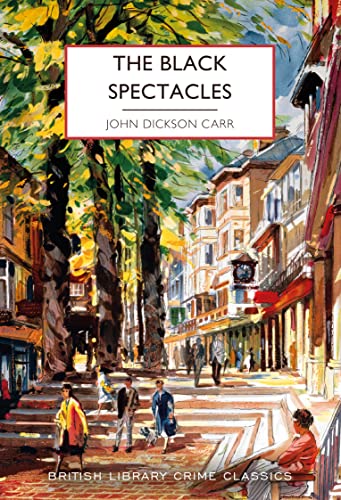
The Black Spectacles by John Dickson Carr (1939)

From my review: “By the time Fell is brought into the story, most of the clues are in place, but Elliot and the local Sodbury Cross police have failed to interpret them correctly. I’m not surprised they were struggling, because this is a very clever mystery with lots of twists and turns and an ingenious solution. I certainly couldn’t solve it and had to wait for Fell to explain it all, which he does bit by bit as each piece of the puzzle falls into place.”

The Bird in the Tree by Elizabeth Goudge (1940)

From my review: “Goudge’s descriptive writing is always beautiful and in this novel she brings the fictional Hampshire village of Fairhaven to life with details of local customs, history and legends, basing it on the real village of Buckler’s Hard on the banks of the Beaulieu River. She makes the setting feel almost dreamlike, especially as there are a few elements of the story that are nearly, but not quite, supernatural.”

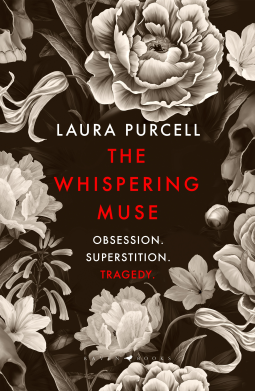
The Whispering Muse by Laura Purcell (2023)

From my review: “It certainly sounded good – a Gothic novel set in the theatres of Victorian London – and I wasn’t disappointed at all. I was gripped from start to finish…I loved the insights we are given into what goes on behind the scenes and the descriptions of Lilith’s powerful stage performances are so vivid I could almost imagine I was watching them from a seat in the front row.”

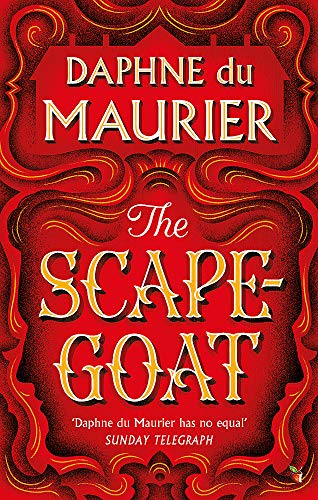
The Scapegoat by Daphne du Maurier (1957)

This was a re-read for me and the second time it has appeared on my books of the year list!

From my review: “And as always with a du Maurier novel, you can expect beautiful descriptions, a strong sense of place and interesting, if not necessarily very likeable, characters…It really is a fascinating novel and still one of my favourites by du Maurier. Now I just need to find time to revisit some of her others!”

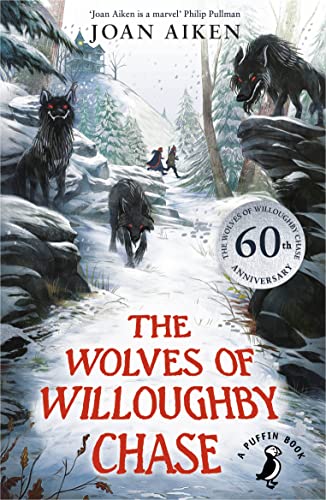
The Wolves of Willoughby Chase by Joan Aiken (1962)

From my review: “Now that I’ve read this book I can see why it is considered a children’s classic and has been so popular with generations of younger readers over the years. It has an exciting plot, child protagonists to relate to, kindly adult characters to love and villainous ones to hate, and an atmospheric setting with snowy, icy landscapes and packs of wolves roaming the countryside…I thoroughly enjoyed this book and just wish I hadn’t come to it so late!”

The Other Side of Mrs Wood by Lucy Barker (2023)

From my review: “The Other Side of Mrs Wood is Lucy Barker’s debut novel and a very enjoyable one! It took me a few chapters to get into the story as the beginning was quite slow, but by the middle of the book I had been completely drawn in… this is not really a book that tackles a lot of deep issues and I enjoyed it primarily for its entertainment value. However, that doesn’t mean it’s a silly, frothy book in any way – it’s well written, evocative of the Victorian era, and I learned a huge amount about the 19th century fascination with spiritualism.”

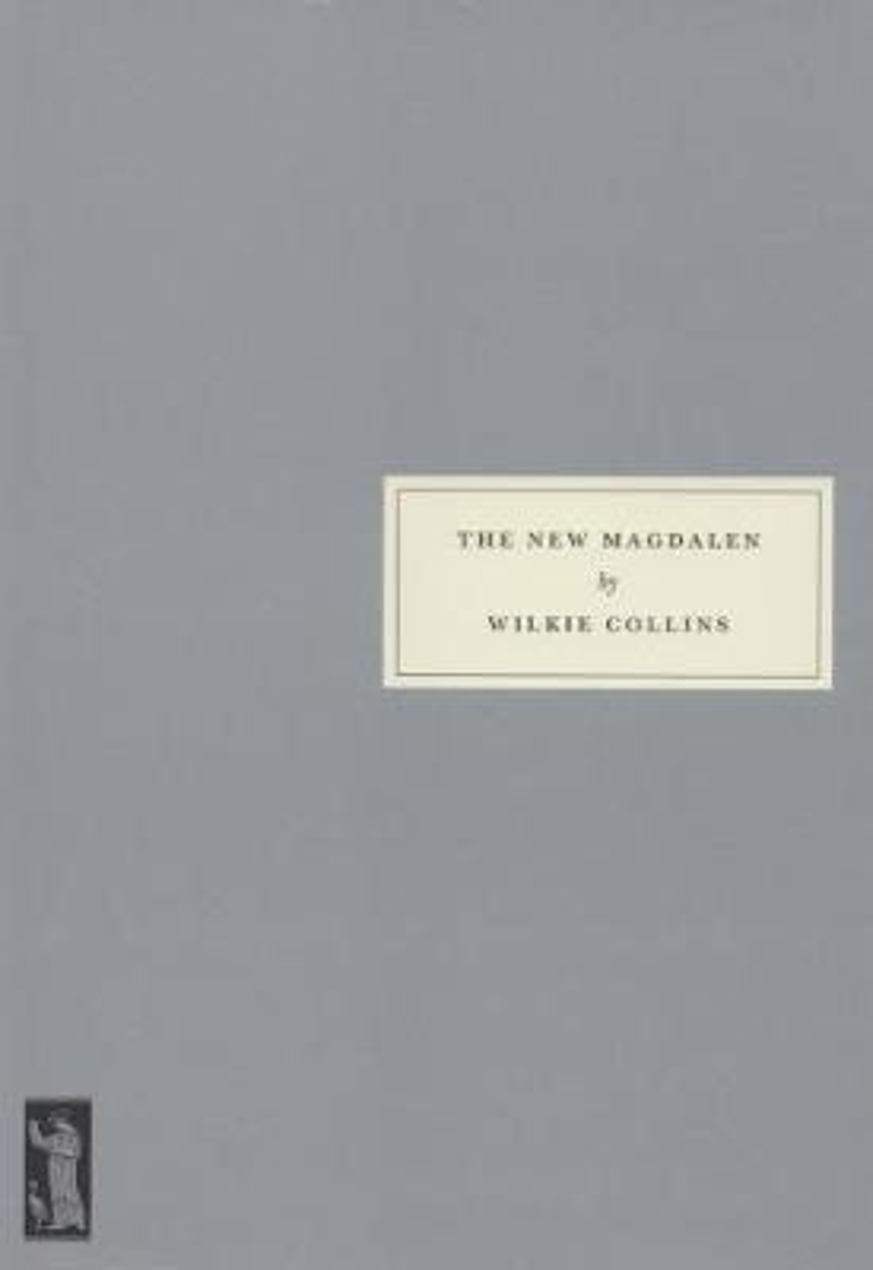
The New Magdalen by Wilkie Collins (1873)

From my review: “Wilkie Collins was known for his sensation novels, a genre that takes elements of Gothic melodrama and places them in an ordinary, often domestic setting…The New Magdalen is less sensational than some of his others, but still falls firmly into the genre so you can expect a very entertaining novel. I’ve always found Collins’ writing to be the most readable of all the Victorians and that, in addition to this being a relatively short book for a 19th century classic, makes it a gripping and surprisingly quick read.”

~

And that’s my list for this year! What did you enjoy reading in 2023?

Historical Fiction Reading Challenge: Looking back at 2023 and forward to 2024!

I don’t take part in many year-long reading challenges as I prefer to just join in with shorter reading events these days. However, there is one that I like to participate in every year – and that is the Historical Fiction Reading Challenge, hosted by Marg at The Intrepid Reader. This is not really much of a ‘challenge’ for me as I read a lot of historical fiction anyway, but I still enjoy linking my reviews to the monthly challenge posts, seeing what other participants are reading and discovering new historical fiction novels and bloggers. This year, Marg has also been posting monthly statistics so we can see which books and authors are proving particularly popular.

Before I post the details of the 2024 challenge, I want to look back at what I achieved in 2023.

I had signed up at the ‘Prehistoric’ level, which meant reading 50+ historical fiction novels during the year. I managed to read 51 (I’m probably not going to finish any more before the end of the month) and here they are, with links to reviews where available:

1. The Giant, O’Brien by Hilary Mantel
2. A Marriage of Fortune by Anne O’Brien
3. My Father’s House by Joseph O’Connor
4. For Thy Great Pain Have Mercy on My Little Pain by Victoria MacKenzie
5. The Whispering Muse by Laura Purcell
6. Weyward by Emilia Hart
7. Lady MacBethad by Isabelle Schuler
8. The Shadows of London by Andrew Taylor
9. The Lodger by Helen Scarlett
10. These Days by Lucy Caldwell
11. The Secrets of Hartwood Hall by Katie Lumsden
12. The Spanish Bride by Georgette Heyer
13. Rivers of Treason by KJ Maitland
14. Prize Women by Caroline Lea
15. Homecoming by Kate Morton
16. The Ghost Theatre by Mat Osman
17. Music in the Dark by Sally Magnusson
18. Farewell, the Tranquil Mind by RF Delderfield
19. The Stolen Crown by Carol McGrath
20. The Sun Walks Down by Fiona McFarlane
21. Savage Beasts by Rani Selvarajah
22. The Last Lifeboat by Hazel Gaynor
23. Voices of the Dead by Ambrose Parry
24. The Square of Sevens by Laura Shepherd-Robinson
25. The Other Side of Mrs Wood by Lucy Barker
26. The Housekeepers by Alex Hay
27. The Graces by Siobhan MacGowan
28. The Witching Tide by Margaret Meyer
29. Disobedient by Elizabeth Fremantle
30. Death Comes as the End by Agatha Christie
31. The Orchid Hour by Nancy Bilyeau
32. Fair Rosaline by Natasha Solomons
33. The House with the Golden Door by Elodie Harper
34. Throne of Jade by Naomi Novik
35. Learned by Heart by Emma Donoghue
36. A Song for Summer by Eva Ibbotson
37. A Lady’s Guide to Scandal by Sophie Irwin
38. The Ionian Mission by Patrick O’Brian
39. Henry VIII: The Heart and the Crown by Alison Weir
40. Night Train to Marrakech by Dinah Jefferies
41. The Wolves of Willoughby Chase by Joan Aiken
42. The Nonesuch by Georgette Heyer
43. Once a Monster by Robert Dinsdale
44. Scarlet Town by Leonora Nattrass
45. The Wayward Sisters by Kate Hodges
46. The Water Child by Mathew West
47. The Black Feathers by Rebecca Netley
48. The Murder Wheel by Tom Mead
49. The Black Crescent by Jane Johnson
50. Restless Dolly Maunder by Kate Grenville
51. The Witch’s Daughter by Imogen Edwards-Jones (review to follow)

Here are the rules for the 2024 challenge, taken from Marg’s blog:

Everyone can participate! If you don’t have a blog you can post a link to your review if it’s posted on Goodreads, Facebook, or Amazon, or you can add your book title and thoughts in the comment section if you wish.

Any sub-genre of historical fiction is accepted (Historical Romance, Historical Mystery, Historical Fantasy, Young Adult, History/Non-Fiction, etc.)

During the following 12 months you can choose one of the different reading levels:

20th Century Reader – 2 books
Victorian Reader – 5 books
Renaissance Reader – 10 books
Medieval – 15 books
Ancient History – 25 books
Prehistoric – 50+ books

You can sign up for the challenge here. I will be aiming for Prehistoric again in 2024.

Let me know if you’re planning to take part too!

Merry Christmas!

Just a quick post to wish a Merry Christmas to those who celebrate it – and for those who don’t, I hope you have a lovely day anyway!

Thank you to everyone who has read, liked or commented on my reviews throughout the year. It’s very much appreciated! Have a great Christmas and I’ll be back soon with one or two more posts before the end of the month.

A Pink Front Door by Stella Gibbons

My second book for this year’s Dean Street December, hosted by Liz at Adventures in Reading, Running and Working from Home, is Stella Gibbons’ 1959 novel A Pink Front Door. I didn’t love the only other Gibbons book I’ve read, Cold Comfort Farm – I know I’m in the minority, but I just didn’t find it as funny as everyone says it is – so I wanted to give her another chance. I’m pleased to report that I enjoyed this one much more.

The house with the pink front door is home to Daisy and James Muir and their baby son (whom Daisy always refers to as James Too). Daisy is one of those people everyone turns to when they are in need of help and who enjoys trying to solve their problems for them. In post-war London these problems often involve housing and the novel opens with Daisy finding new lodgings for Tibbs, an Eastern European refugee who is struggling to settle into a new life, and Molly Raymond, a young woman who keeps embarrassing herself by chasing after unsuitable men. However, when Daisy’s old university friend, Don, tells her that he is also searching for somewhere to live with his wife and three young children, this proves to be much more of a challenge. Daisy knows that Mrs Cavendish has the whole top floor of her house available to rent, but will that snobbish woman agree to share her home with people who are ‘not her sort’?

The novel shifts between the perspectives of some of the characters mentioned above and also several others, including Daisy’s elderly aunts, Marcia and Ella, who have lived together for many years since neither of their lives went quite the way they had expected when they were younger. Through the stories of Marcia and Ella, Gibbons explores some of the issues facing older unmarried women, as well as the different but equally frustrating ones faced by younger, married women – Don’s wife Katy, for example, who has a degree in chemistry which she is unable to use because she’s now looking after three children and being treated like a servant by Mrs Cavendish in return for the use of her spare rooms.

For most of the book, the plot moves along at a slow, steady pace; I would describe this as much more of a character-driven novel and I did enjoy getting to know all of the characters, even the unpleasant ones. There’s some drama later on when Daisy’s long-suffering husband begins to lose patience with being neglected all the time and decides to take drastic action – and then another dramatic development right at the end of the book which was unexpected and, in my opinion, unnecessary. Still, I got on with A Pink Front Door better than I did with the much more popular Cold Comfort Farm. I’m glad I decided to try Stella Gibbons again and am looking forward to reading more of her work now.

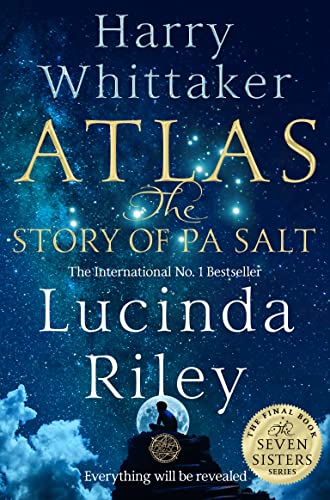
Atlas: The Story of Pa Salt by Lucinda Riley and Harry Whittaker

In 2014, Lucinda Riley published The Seven Sisters, the first of a seven book series, with each book telling the story of one of the seven daughters of a mysterious billionaire they know only as Pa Salt. Six of the girls were adopted by Pa Salt as babies and although they came from different countries and cultures, they all grew up together at Atlantis, Pa’s beautiful estate by Lake Geneva in Switzerland. They are each named after one of the stars in the Pleiades, or ‘Seven Sisters’, star cluster – Maia, Alycone (Ally), Asterope (Star), Celaeno (CeCe), Taygete (Tiggy) and Electra D’Aplièse. The seventh sister, Merope, was never brought home to Atlantis and we found out why in the seventh book of the series, The Missing Sister.

Shortly after the publication of The Missing Sister in 2021 came the sad news that Lucinda Riley had died following a long battle with cancer…and then the happier news that she had been planning an eighth book about the D’Aplièse family and had left her notes with her son, Harry Whittaker, to be completed after her death. Atlas: The Story of Pa Salt is the result. This book should definitely be read after the other seven, but I think I’ve managed to review it here without spoiling anything, so if you’re new to the series it’s safe to read on!

Most of the earlier books in the series started in the same way, with the D’Aplièse sisters mourning the death of Pa Salt in 2007 and learning that he had left each of them a set of clues to point them in the direction of their biological parents. Each novel would then focus on one sister as she traced her family history and discovered her own heritage. In Atlas: The Story of Pa Salt, it’s now 2008 and all of the sisters and their partners have gathered on board Pa’s yacht, the Titan, to sail out into the Aegean to mark the anniversary of his death. However, Pa’s lawyer, Georg Hoffman, has one more surprise for them – a copy of Pa Salt’s diary, intended to be read by his daughters after his death.

The novel alternates between the modern day storyline set on the Titan and the story that unfolds through the diary of a little boy called Atlas who is found sheltering under a hedge in a Paris garden one day in 1928, starving and exhausted. He is taken in by the kind-hearted Landowski family who provide him with a home and an education, but it is not until many years later that he is able to begin to open up about the traumas of his past and his fear that he is still being pursued by a man who wants to kill him. It is this fear that eventually leads him to leave Paris and flee once again, but he quickly discovers that nowhere is safe and his pursuer will manage to track him down no matter where he hides. As he takes refuge in first one country then another, Atlas forms friendships with the ancestors of the girls he will later come to adopt and who will know him as their beloved Pa Salt.

This is a book where a lot of suspension of disbelief is necessary, from the number of characters with names that are ridiculous anagrams from Greek myth – including Atlas Tanit (Titan) and his enemy Kreeg Eszu (Greek Zeus), whose parents happen to be Cronus and Rhea – to the idea that so many people with connections to Pa Salt have babies in need of adoption. The events that lead to his adoptions of Electra and CeCe are particularly hard to believe. The earlier books in the series are also scattered with metaphors, symbolism and coincidences, but they are much more heavy-handed in this book. Still, I managed to overlook those things because at this stage of the series I just wanted to know how everything would be resolved and whether the theories I had been forming about Pa Salt and the other characters were correct.

I’m not sure exactly how much input Lucinda Riley and Harry Whittaker each had into this book, but I do think Whittaker does a good job of capturing his mother’s writing style; there are only a few occasions where it feels obvious that it’s not the same author, mainly where the dialogue between the sisters doesn’t feel quite right. I don’t want to be too critical, though, because we’re lucky to have this book at all and I’m sure it must have been a difficult task for Harry. Although there are some plot holes and some questions that aren’t answered very satisfactorily, overall I was impressed by how well all the separate threads from the previous seven books are brought together in this one. My only real complaint is that there wasn’t a happier ending for one particular character. Anyone who reads this book will know who I mean!

Have you read any books completed by a different author after the original author’s death? What did you think?