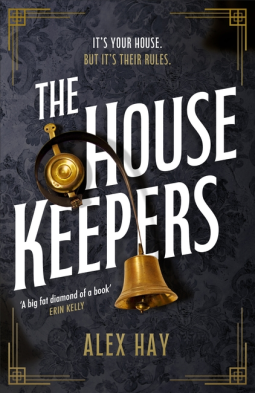
The Housekeepers by Alex Hay

It’s June 1905 and plans are underway for a ball at the grandest house on London’s Park Lane. Miss de Vries, who has recently inherited the house from her millionaire father, has decided to throw the party of the season to launch herself into society and find a suitable husband. However, someone else also sees the night of the ball as a great opportunity – an opportunity for revenge. She is Mrs King, the former housekeeper, who was dismissed from her job just a few weeks earlier and is now planning a daring heist. On the night of the Park Lane ball, she and a group of other carefully recruited servants will strip the house of its treasures – its artworks, books, furniture, silverware, even the carpets – and Miss de Vries and her guests won’t notice a thing until it’s too late. But will this plan work or will the housekeepers be caught in the act?

The Housekeepers is Alex Hay’s debut novel and I found it an entertaining read. It was fascinating to see how carefully Mrs King and her accomplices plan the heist – preparing inventories of each room, taking measurements, identifying escape routes and making sure nothing is left to chance! Despite their detailed planning, there are still some factors outside their control and a lot of things that could go wrong, so there’s plenty of suspense as we wait to see whether or not they will succeed. As the novel progresses and we learn more about what has been going on behind the doors of the Park Lane house, I found I didn’t have much sympathy for Miss de Vries and was definitely rooting for the servants!

The heist is Mrs King’s idea, but I thought some of the other women she enlists were more interesting characters. These include Mrs Bone, who runs a criminal network but seems to have a moral code of her own, the actress Hephzibah and the two trapeze artist sisters referred to as Jane-one and Jane-two. There’s also Winnie, who held the position of housekeeper before Mrs King, and Alice the sewing maid who is befriended by Miss de Vries and faces a battle with her conscience. I felt that too many characters were introduced too quickly at the beginning of the book, which made things confusing for a while, but I eventually managed to keep them all straight in my mind.

The novel is also an interesting exploration of the class system and the injustice of some people being born into a life of privilege while others are not. In his author’s note, Alex Hay describes the satisfaction of imagining the servants trying to claim some of that privilege for themselves! However, Miss de Vries herself is looked down upon by the people she most wants to impress because she had a father who made his fortune through diamond mining rather than inheriting wealth passed down through the generations.

I thought The Housekeepers was fun to read and with its period setting, portrayal of life above and below stairs, and vividly described heist sequences, I could easily imagine a BBC adaptation. As a first novel it’s quite impressive and I’ll certainly be looking out for more from Alex Hay!

Thanks to Headline Review for providing a copy of this book for review via NetGalley.
This is book 26/50 read for the 2023 Historical Fiction Reading Challenge.
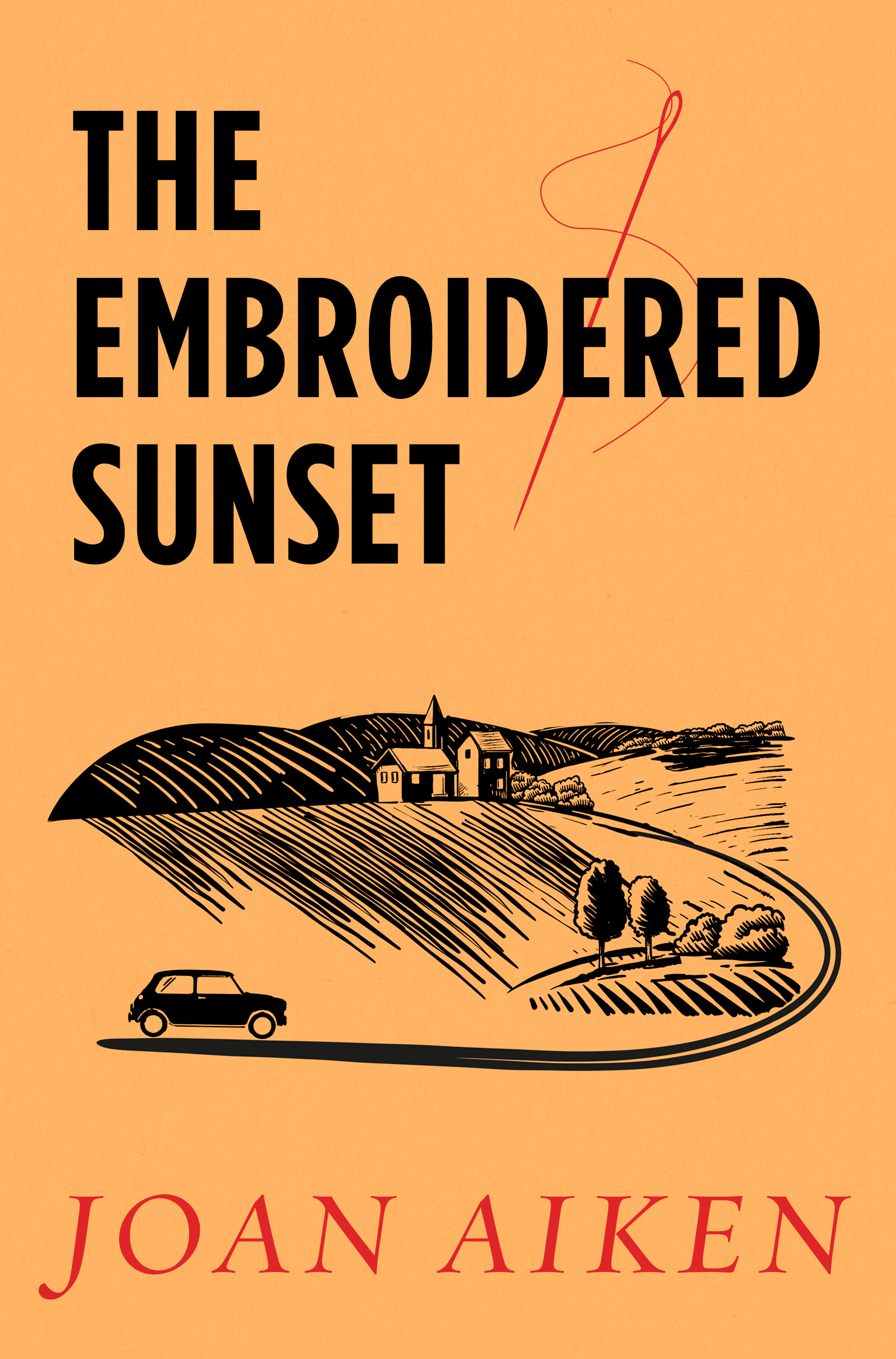
The Embroidered Sunset by Joan Aiken

This is the second of Joan Aiken’s contemporary suspense novels I’ve read; I enjoyed The Butterfly Picnic which I read last year, but I found the plot very bizarre and I was curious to see whether this one would be the same. Well, I can tell you that it’s maybe not quite as over-the-top, but it does come close!

First published in 1970, The Embroidered Sunset begins by introducing us to Lucy Culpepper, a young Englishwoman who has been raised in America by her Uncle Wilbie and Aunt Rose following her parents’ deaths. Lucy is a talented musician who dreams of being taught by the renowned pianist Max Benovek, but her hopes are shattered when Uncle Wilbie confesses that he has spent her inheritance and there’s no money left to pay a piano teacher.

Cleaning the attic later that day, Lucy discovers some beautiful embroidered biblical pictures, the work of Wilbie’s Aunt Fennel who lives in England and used to write regularly, but hasn’t been heard from for a long time. Reminded of the pictures, Wilbie comes up with a plan: if Lucy goes to England and obtains more of Aunt Fennel’s pictures, he will pay her a commission for each one she locates and she can spend the money on piano lessons. While there, she can also try to find Aunt Fennel herself – if the old lady is still alive, that is.

If The Butterfly Picnic felt like a homage to Mary Stewart, this one is packed with references to the Brontës. As well as being set in Yorkshire, there’s a Thrushcross Grange and a Wildfell Hall and even a Colonel Linton and a Cathy Earnshaw, while another character refers to Lucy as Lucy Snowe, the heroine of Villette. However, that’s where the Brontë similarities end; this book has a lively, contemporary feel (for 1970) and while there are some elements that could probably be described as Gothic – an abandoned house, an escaped prisoner, rainy weather – they are woven very lightly into the plot.

I really enjoyed the first half of the novel, with Lucy arriving in Aunt Fennel’s small Yorkshire village, getting to know the eccentric residents and searching for her missing relative. When Lucy does eventually find the old lady, she can’t even be sure whether she really is Aunt Fennel or somebody else, and Aiken keeps us questioning this for the entire book, in a way that I thought was very cleverly done. I felt that the plot lost its way slightly in the second half and the ending seemed to come out of nowhere, with a very surprising fate for one main character and a romance that certainly wasn’t resolved as I’d expected. Still, this is an entertaining novel and perfect escapism, if that’s what you’re looking for!

My favourite Aiken novel so far is still Castle Barebane, but I’ll continue to explore her other books and am hoping to read The Wolves of Willoughby Chase soon.

This is book 3/20 of my 20 Books of Summer 2023

Six Degrees of Separation: From Time Shelter to Beauvallet

It’s the first Saturday of the month, which means it’s time for another Six Degrees of Separation, hosted by Kate of Books are my Favourite and Best. The idea is that Kate chooses a book to use as a starting point and then we have to link it to six other books of our choice to form a chain. A book doesn’t have to be connected to all of the others on the list – only to the one next to it in the chain.

This month we’re starting with the winner of the International Booker Prize, Time Shelter by Georgi Gospodinov and translated by Angela Rodel. This is not a book I’ve read, but here’s what it’s about:

In Time Shelter, an enigmatic flâneur named Gaustine opens a ‘clinic for the past’ that offers a promising treatment for Alzheimer’s sufferers: each floor reproduces a decade in minute detail, transporting patients back in time. As Gaustine’s assistant, the unnamed narrator is tasked with collecting the flotsam and jetsam of the past, from 1960s furniture and 1940s shirt buttons to scents and even afternoon light. But as the rooms become more convincing, an increasing number of healthy people seek out the clinic as a ‘time shelter’, hoping to escape from the horrors of our present – a development that results in an unexpected conundrum when the past begins to invade the present.

Georgi Gospodinov is a Bulgarian author, so I’m using Bulgaria as my first link. Elizabeth Kostova is an American author but her husband is Bulgarian and she obviously knows the country well, using it as the setting for her third novel, The Shadow Land (1). The novel follows a young American woman who is visiting Sofia and accidentally finds herself in the possession of an urn containing the ashes of a stranger and engraved with the name Stoyan Lazarov. She then sets out on a journey across Bulgaria in search of Stoyan’s family so that she can return the ashes.

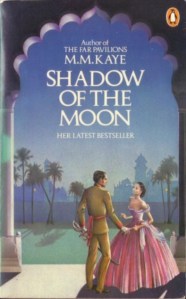
Another book with the word ‘shadow’ in the title is Shadow of the Moon by M.M. Kaye (2), first published in 1957. I loved this book, although I didn’t find it quite as strong as her later novel, The Far Pavilions. Both books are set in India, where Kaye was born and lived for several years, but this one focuses on the Sepoy Mutiny of 1857 in which our heroine, Winter de Ballesteros, becomes entangled when she travels to Lunjore to join her fiancé. Kaye is one of my favourite authors; her descriptive writing is so beautiful and she seems to have a real understanding of all the historical incidents she writes about.

Zemindar by Valerie Fitzgerald (3) is also set before and during the Sepoy Mutiny and is another book I enjoyed. It follows the story of Laura Hewitt, who comes to India as her newly married cousin’s companion and finds herself caught up in the events leading to the Siege of Lucknow. Again, I loved the descriptions of India, as well as the relationship between the central characters, Laura and Oliver Erskine (the zemindar of the title), and the authentic 19th century writing style.

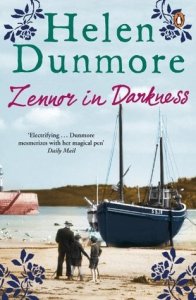
There are not many books whose title starts with a ‘Z’, but Zennor in Darkness by Helen Dunmore (4) is one of them! Zennor is the name of a village on the coast of Cornwall where the author DH Lawrence lived for a while during the First World War and the novel is part wartime love story and part reimagining of Lawrence’s time in Zennor. However, I felt that these two separate elements didn’t blend together very well and although I did enjoy the portrayal of life in a small village during the war, this is not one of my favourite Helen Dunmore books.

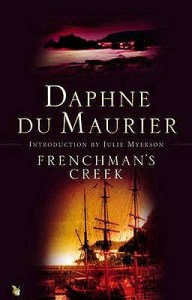
An author who will forever be associated with Cornwall is Daphne du Maurier. She spent most of her adult life there and it provided the setting for many of her novels, including Rebecca, The House on the Strand, and the one I’m using as my next link – Frenchman’s Creek (5). Du Maurier’s novels usually have a very strong sense of place and this one is no exception. I particularly loved the scene where our heroine, Dona St Columb, walks through the woods near her home and discovers a pirate ship hiding in a creek.

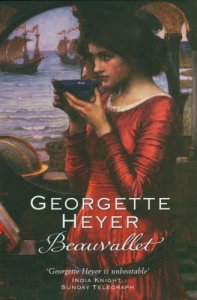
I can think of several other books featuring pirates, but the one I’m going to link to here to end my chain is Beauvallet by Georgette Heyer (6). This 1929 novel is set in Elizabethan England and Spain, so has a different feel from Heyer’s more famous Regency and Georgian novels, but I enjoyed it just as much. The pirate, Sir Nicholas Beauvallet, is a wonderful character and the plot is great fun – perfect escapism!

~

And that’s my chain for July. My links have included Bulgaria, the word ‘shadow’, the Sepoy Mutiny, book titles beginning with Z, Cornwall and pirates

In August we’ll be starting with Romantic Comedy by Curtis Sittenfeld.

My Commonplace Book: June 2023

A selection of quotes to represent June’s reading:

commonplace book
noun
a book into which notable extracts from other works are copied for personal use.

~

“I rather like being a detective,” she said with modesty. “You see, I’ve been to see so many murder mysteries, in the movies, but I’ve never had a – er – chance at the real thing. It’s gruesome” – she refrained from looking at Mayhew – “but fascinating. Fascinating.”

The Cat Saw Murder by Dolores Hitchens (1939)

~

“Are kings, soldiers, and diplomatists exceptions to the general rule of humanity? Not they! I tell you seriously, if the newspapers of Europe had one and all decided not to take the smallest notice in print of the war between France and Germany, it is my firm conviction the war would have come to an end for want of encouragement long since. Let the pen cease to advertise the sword, and I, for one, can see the result. No report — no fighting.”

“Your views have the merit of perfect novelty, ma’am,” said Horace. “Would you object to see them in the newspapers?”

The New Magdalen by Wilkie Collins (1873)

~

Mairéad raised her hands. ‘Whichever or whatever. Catholic. Protestant. Hindu, Sikh, Jew. We don’t recognise such fabrications, such man-made labels here. Simply cloaks we wear. Cloaks that conceal our natural form and hide the truth. That we are all born from the one universal energy, draw from the one breath of life.’

The Graces by Siobhan MacGowan (2023)

~

‘Well, it is so, isn’t it?’ said Benovek. ‘What ought to be free and running in you is tied up in a knot. And that is because of this strong hate, which is using up nearly all of your energy. As for love, where is it? You have the capacity, no doubt; anybody who can hate can love also…hate is no good, it is a self-destructive emotion.’

The Embroidered Sunset by Joan Aiken (1970)

~

Favourite book read in June:

The New Magdalen

Authors read for the first time in June:

Dolores Hitchens

Places visited in my June reading:

England, France, America, Ireland

~

Reading notes: This was another slow month of reading for me, but at least the four books that I finished were all from my 20 Books of Summer list so I do still have a chance of completing the list by the end of August, although it’s not very likely! One of my books also counted towards Reading the Meow and I was pleased to be able to take part in that event. Coming up in July, Jo at The Book Jotter will be hosting Six in Six, something I enjoy participating in every year as it’s a great way to look back on our first six months of reading. See Jo’s post for the full details!

How was June for you? What are you planning to read in July?

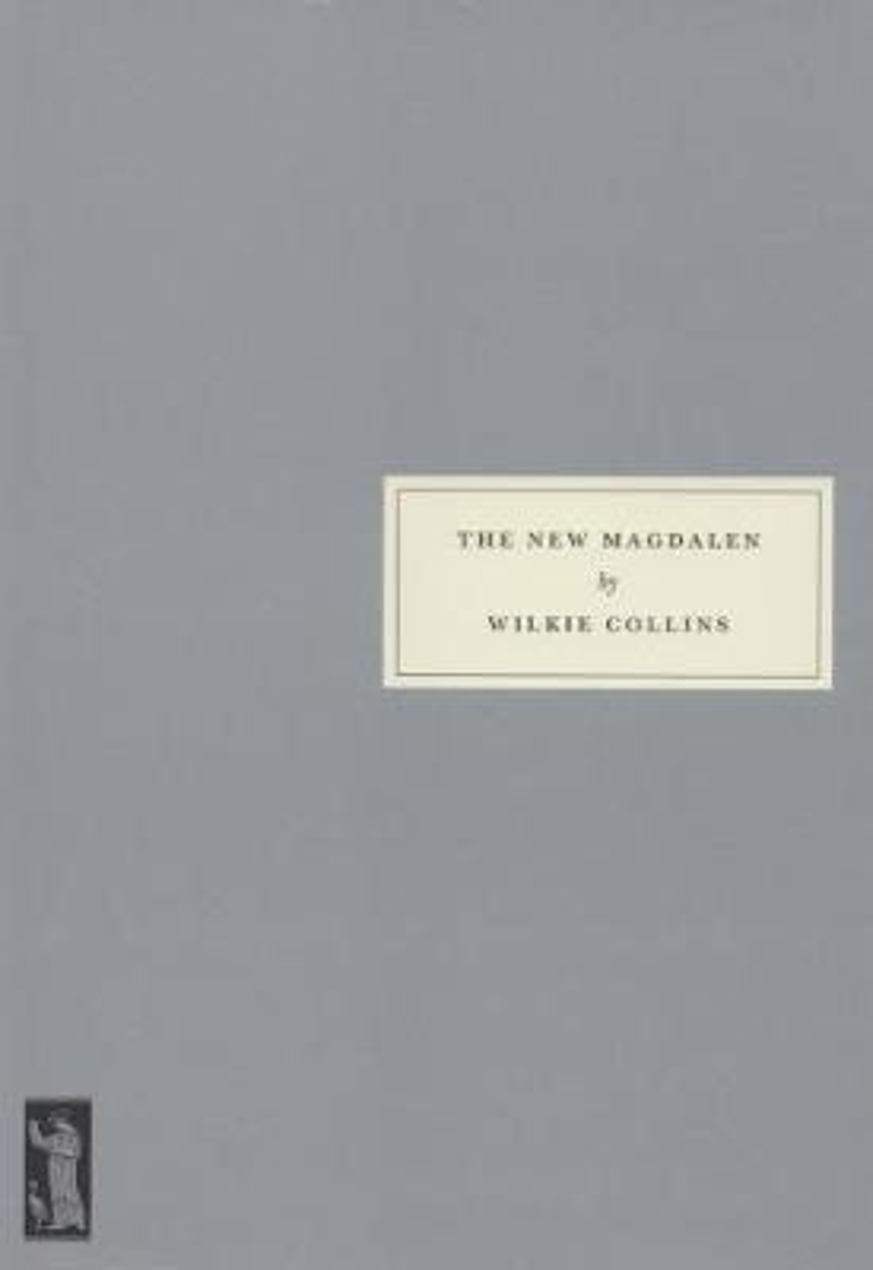
The New Magdalen by Wilkie Collins

Wilkie Collins is one of my favourite Victorian authors, but I feel that I haven’t featured him very often on my blog – probably because I read so many of his books pre-blog, including all of his most famous ones (and I don’t re-read very often these days). Even so, there are still some that I haven’t read yet and I was intrigued when I noticed a few years ago that The New Magdalen was being reprinted by Persephone Books, as they’re a publisher associated more with women authors (although there are a small number of Persephones by male authors as well). It has taken me a while to get round to reading it, so I decided to put it on my 20 Books of Summer list to make sure it didn’t linger on my TBR any longer.

First published in 1873, the novel opens during the Franco-Prussian War in a small cottage in France where Mercy Merrick is working as a Red Cross nurse. As the Germany army draws closer, Mercy has taken shelter in the cottage to nurse some wounded French soldiers and has been joined by another young woman, Grace Roseberry. Grace is on her way to England following the death of her father in Rome; she has spent most of her life in Canada and doesn’t know anybody in England, but she is carrying a letter of introduction from her father to a Lady Janet Roy, a wealthy woman whom she hopes will employ her as a lady’s companion. Grace shares this information with Mercy, who in turn tells Grace her own story – that she is a ‘fallen woman’ who has had a difficult past, eventually ending up in a women’s refuge before volunteering as a nurse.

As the two women talk, the cottage suddenly comes under fire from the advancing army and receives a direct hit from a shell. Grace is badly wounded and is declared dead by a French surgeon. Finding herself alone with Grace’s lifeless body, it occurs to Mercy that she could take Grace’s papers, dress herself in Grace’s clothes and present herself to Lady Janet Roy under the name Grace Roseberry. Desperate to escape from her own troubled past and start a new life, Mercy is unable to resist the temptation and goes through with the plan. It proves to be a huge success and soon Mercy is living as Lady Janet’s adopted daughter and even receives a marriage proposal. Before the marriage can take place, however, Mercy makes a shocking discovery – it seems that the real Grace Roseberry may still be alive and looking for revenge!

Wilkie Collins was known for his sensation novels, a genre that takes elements of Gothic melodrama and places them in an ordinary, often domestic setting. His books typically feature family secrets, disputed inheritances, intercepted letters, stolen jewels, mistaken identities and amazing coincidences. The New Magdalen is less sensational than some of his others, but still falls firmly into the genre so you can expect a very entertaining novel. I’ve always found Collins’ writing to be the most readable of all the Victorians and that, in addition to this being a relatively short book for a 19th century classic, makes it a gripping and surprisingly quick read.

I can see why Persephone chose to add this book to their collection as Collins does write such strong and sympathetic female characters and with Mercy’s story he highlights some of the injustices women faced in Victorian society (and in some ways still do today). I think my favourite Collins novels will always be The Woman in White and Armadale, but this is still a great book and would probably be a good introduction to his work if you didn’t want to commit to a longer one.

This is book 2/20 of my 20 Books of Summer 2023 and book 40/50 from my second Classics Club list.

The Other Side of Mrs Wood by Lucy Barker

Mrs Wood is the most successful medium in Victorian London. Together with her assistant, Miss Newman, she hosts spectacular séances that have made her the talk of the town and brought the rich and famous to her door requesting private consultations. Of course, Mrs Wood can’t really communicate with spirits, but she doesn’t feel too guilty about what she’s doing – after all, a widow has to make a living somehow and this is the work she’s been raised to do. Recently, however, things have started going wrong. There are reports from America of mediums promising to materialise full spirits and although Mrs Wood disapproves of such things, she worries that her own more traditional shows are losing their spark. When she hears the unmistakable sound of a yawn during one of her séances, she knows she has to take action.

The answer to Mrs Wood’s problems arrives in the form of sixteen-year-old Emmie Finch, who wants nothing more than to become a medium. Impressed by the girl’s talent and enthusiasm, Mrs Wood agrees to take her on as an apprentice. Miss Finch is an instant hit with Mrs Wood’s friends and clients, but is she really the sweet, innocent young woman she appears to be or has Mrs Wood made a big mistake?

The Other Side of Mrs Wood is Lucy Barker’s debut novel and a very enjoyable one! It took me a few chapters to get into the story as the beginning was quite slow, but by the middle of the book I had been completely drawn in. At first I wasn’t sure whether I liked Mrs Wood, but I quickly warmed to her. It was nice to have an older, more mature heroine, who is starting to worry about greying hair and aching bones, has already been married and divorced before the story begins and is devoting herself to her career rather than looking for romance. The beautiful young Emmie Finch, on the other hand, is portrayed as the novel’s villain, but whether she really is trying to cause trouble or whether it’s all in Mrs Wood’s mind is something you’ll have to read the book to find out!

Apart from a subplot featuring Mrs Wood’s assistant Miss Newman, who is involved in the early women’s rights movement, this is not really a book that tackles a lot of deep issues and I enjoyed it primarily for its entertainment value. However, that doesn’t mean it’s a silly, frothy book in any way – it’s well written, evocative of the Victorian era, and I learned a huge amount about the 19th century fascination with spiritualism. It was interesting to read about the techniques used by mediums to produce dramatic effects, the etiquette of hosting a meeting of the Circle, and the preparations that go into holding a Grand Séance. What I found particularly intriguing was that although Mrs Wood, like her rival mediums, lives in fear of being caught out and exposed, she doesn’t actually view herself as a fraud or a con artist. She believes she is using her skills to bring comfort to other people and although she has no qualms over using trickery to ‘apport’ (transport using spiritual means) small objects and even herself, she feels that materialising full spirits is a step too far!

The Other Side of Mrs Wood was fun to read (except when I became infuriated by the actions of certain characters!) but I can’t agree with the publisher’s description of the book as an ‘irresistible historical comedy’. It was amusing in places but not particularly funny and definitely not what I would call a comedy. Misleading description aside, it’s an impressive first novel with a great twist at the end and I’m already looking forward to Lucy Barker’s next book.

Thanks to Fourth Estate for providing a copy of this book for review via NetGalley.

This is book 25/50 read for the 2023 Historical Fiction Reading Challenge.

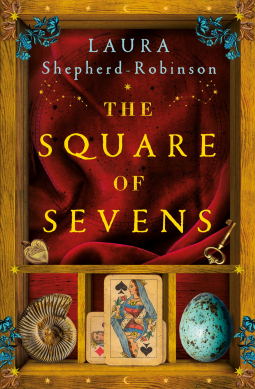
The Square of Sevens by Laura Shepherd-Robinson

Laura Shepherd-Robinson’s books are getting better and better! This one will be on my books of the year list in December, without a doubt.

A standalone novel set in the first half of the 18th century, The Square of Sevens is the story of Red, the daughter of a Cornish fortune teller or ‘cunning-man’. Red can’t remember her mother and has spent the first seven years of her life moving from village to village with her father, telling fortunes using an ancient method of cartomancy known as the Square of Sevens. They need to keep on the move, her father says, to avoid being caught by enemies who wish them harm.

Life changes abruptly for Red when her father dies of a sudden illness and she becomes the ward of a respectable gentleman, Mr Antrobus. Going to live with him in his elegant home in Bath, Red finds herself thrust into society for the first time. Raised by Mr Antrobus and his kindly housekeeper, she settles into her new life while entertaining the people of Bath by reading their cards for them. It’s through her gift for card-reading that Red crosses paths with the wealthy De Lacy family, whom she believes hold the key to the secrets of her own past. And so a sequence of events are set in motion that take Red from Bath to London’s Bartholomew Fair and a grand house in Devon in search of answers.

It’s not really possible for me to say much more about the story without spoiling it, but if I tell you it includes family secrets, disputed inheritances, stolen documents, and lots of surprising twists and turns you’ll get the idea! It’s very entertaining, with the feel of a Charles Dickens novel at times, and I was often reminded of Charles Palliser’s The Quincunx (another great Dickensian novel with an inheritance at the heart of the plot).

I found Red a very engaging narrator; I initially had a lot of sympathy for her, as she struggles to uncover the secrets of her family background and find her place in the world, while others around her try to prevent her from learning the truth at all costs. However, I soon discovered that Red can be just as ruthless herself and is not above doing some plotting and scheming of her own in order to get what she wants. As she tells us at one point in the novel, If you’d wanted a saint, then you should have read a different book. There are plenty of other interesting and memorable characters to get to know – I was particularly intrigued by Lazarus Darke – and what makes the book so fascinating to read is that we can never be quite sure who can be trusted and who can’t.

The ‘Square of Sevens’ method of card reading was described in an 1897 book by Edward Irenaeus Stevenson and Shepherd-Robinson incorporates it throughout the novel. Red tells the fortunes of many of the characters she meets and the fortune-telling theme is carried further with each chapter heading including a picture of a playing card and an interpretation of that card’s meaning. Reading the author’s note at the end of the book, a lot of thought went into choosing the correct card for each chapter and I feel a bit guilty that I didn’t always pick up on the significance of that choice.

If you’ve read and enjoyed Laura Shepherd-Robinson’s two previous novels, the Georgian mysteries Blood and Sugar and Daughters of Night, I’m sure you’ll enjoy this book too – I think it’s even better. If you’re yet to try any of her books then this would be a great place to start!

Thanks to Mantle for providing a copy of this book for review via NetGalley.

This is book 24/50 read for the 2023 Historical Fiction Reading Challenge.