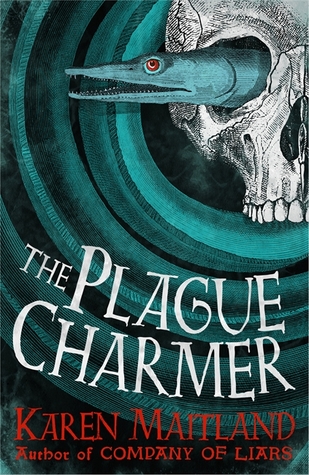
The Plague Charmer by Karen Maitland

the-plague-charmer The village of Porlock Weir appears to be under a curse. Janiveer, a woman rescued from the sea following an eclipse of the sun, has warned the villagers that plague is approaching and that only she can save them – for a price. It’s a price that nobody is willing to pay, but it’s not long before the disease reaches their small coastal community and there are some in the village who begin to wonder whether they have made the right choice. The year is 1361 and the horrors of the Great Pestilence of thirteen years before are still fresh in people’s minds.

In The Plague Charmer, Karen Maitland tells the story of Porlock Weir through the eyes of several different characters: Will, a dwarf; Matilda, devoted to her religion; Christina, who has given birth in secret at nearby Porlock Manor; and Sara, a mother trying to protect her two young sons. It’s a complex plot; each of these characters, and others, have storylines of their own, but they all come together to form a dark and magical mixture of myth, folklore and legend, love, murder, religious relics and secret cults.

There were so many things to like about The Plague Charmer. I particularly loved the setting – a little fishing village on the Exmoor coast – and learning about the lives of the people who lived there, steeped in tradition and superstition. It was interesting to watch the people of Porlock Weir deal with the arrival of the plague at a time when so little was understood about the causes of illness and death, a time when even a natural phenomenon such as an eclipse caused panic and terror. Whether or not Janiveer really possessed magical powers, it was easy to see how she was able to take advantage of the fears of the villagers to manipulate the situation to serve her own ends.

Although I can’t really say that I liked any of the characters, I did enjoy getting to know them all, especially Will, the ‘fake dwarf’. Not a natural dwarf, but one created by his master in a most horrific way, to be sold for the entertainment of rich noblemen. Due to his size and the treatment he has been forced to endure, Will looks at the world differently from the other villagers and is in the unusual position of being not quite ‘one of them’ but not quite an outsider either. He’s a great character and one of only a few in the novel who behaved with decency and humanity. I couldn’t help thinking, though, that there were too many characters and too many subplots (one in particular, involving Sara’s sons, Luke and Hob, added very little to the overall story, in my opinion). I found the constant switching between viewpoints distracting and would have preferred to have spent longer following one character before moving on to the next.

Getting back to the positives, I enjoyed reading the author’s Historical Notes at the end of the book. These provided an opportunity to learn more about the background to the story and some of the people and places that are mentioned (most of the characters are fictional, but a few, such as Sir Nigel Loring of Porlock Manor, are based on real historical figures). I was also pleased to discover that we are given the answers to the intriguing riddles found in the headings of Will’s chapters. Some of them were easy to guess, but others had left me baffled!

Finally, I should probably leave you with a word of warning. Like the other Karen Maitland books I’ve read (The Vanishing Witch and The Raven’s Head), this is a very dark story and can be quite gruesome at times; you need to be prepared for bad things happening to the people of Porlock Weir, and that includes the children. It’s not a book for the faint-hearted, but it’s certainly a fascinating and atmospheric one.

Thanks to Headline for providing a copy of this book for review.
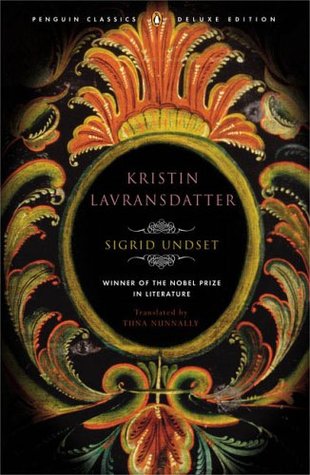
Kristin Lavransdatter by Sigrid Undset

Kristin Lavransdatter I have always loved long books, the sort you can bury yourself in for weeks, becoming immersed in a fully-formed fictional world and getting to know characters who, by the time you reach the final page, feel almost like personal friends. Kristin Lavransdatter, though, is more than just a ‘long’ book – it’s a very long book! With over 1,100 pages in the edition I read, it’s similar in length to classics like War and Peace, Don Quixote and Les Miserables and left me with a similar mixture of feelings on finishing: a sense of achievement at making it to the end; sadness at having to say goodbye to Kristin and her family; and, I have to admit, relief at finally being able to move on to something else. I enjoyed Kristin Lavransdatter – loved it at times – but it’s not always an easy book to read, for reasons which I’ll explain below.

So far I have been describing this as a ‘book’, but in fact Sigrid Undset originally wrote three individual books about Kristin – The Wreath (first published in 1920), The Wife (1921) and The Cross (1922) – which have been combined into one volume in this Penguin Classics edition. It’s still possible to buy them separately (and it would probably seem less daunting that way) but they don’t stand alone very well at all and really do feel like three sections of a longer novel. After finishing the first part I moved straight on to the second and then the third and I was glad I took this approach otherwise I would probably have lost track of what was happening.

Set in the 14th century, Kristin Lavransdatter is, unsurprisingly, the story of Kristin, daughter of Lavrans. We first meet Kristin as a young girl growing up on her parents’ manor at Jorundgaard in Sil, a rural area of Norway. A good, honourable, hard-working man, Lavrans gains respect and admiration wherever he goes and he and Kristin are very close. His wife, Ragnfrid, however, has never fully recovered from the loss of three young sons and as a result her relationships with both Lavrans and Kristin are strained.

Early in the novel, Kristin is betrothed to the quiet, reliable Simon Darre, whose family own a neighbouring estate. She has no reason to dislike Simon, but she feels nothing for him and longs to experience the sort of passion her own parents’ marriage lacks. Her chance comes when she meets and falls in love with Erlend Nikulausson, a man who is handsome, charming and romantic – in other words, everything Simon isn’t. Kristin knows that this is the husband she has been dreaming of and even the knowledge that he has been excommunicated by the church for living with another man’s wife doesn’t change her mind. When Simon finds out about Erlend he agrees to break off the betrothal, but it takes a lot longer for Kristin to persuade Lavrans and Ragnfrid – so long that by the time she is eventually allowed to marry Erlend she is already pregnant with his child.

In case you’re thinking I’ve given away too much of the plot, all of the above happens in The Wreath alone. The other two parts of the book – The Wife and The Cross – explore the consequences of Kristin’s decision to marry Erlend rather than Simon. And the consequences are varied and far-reaching, affecting not only Kristin herself but everyone else around her. It’s a sad and tragic story and this is one of the reasons why, as I mentioned earlier, this is not the easiest of books to read. Whether it’s a death, an illness or an accident, a murder, an act of betrayal or an unhappy marriage, each and every character is subjected to a relentless stream of misery.

My heart ached for Kristin as she discovered that the man she had married was not all that she had hoped he would be – not a hero but a flawed human being – and that making their relationship work was going to be difficult. However, I also had some sympathy for Erlend; he is not a bad man but he is sometimes a weak one, with a tendency to act before he thinks and with none of the skills necessary to manage a farm and household effectively. He makes mistakes and has to live with those mistakes, but so does Kristin and I thought it was unfair of her to place so much of the blame on him. I also felt sorry for their young children, for Simon (who ended up being one of my favourite characters) and for Kristin’s sister, Ramborg. As I said, this is not a happy story for anyone!

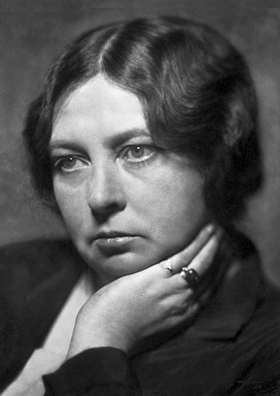
Sigrid Undset (1882-1949)

Sigrid Undset (1882-1949)

As we accompany Kristin on her journey through life, we are also given a lot of information on the history and politics of the period. This becomes increasingly important as Erlend finds himself embroiled in a plot against the king and, I have to admit, I found some of this difficult to follow. If I read the book again (as I’m sure I will want to at some point in the future) I’ll have to concentrate more on that aspect of the story. Of more interest to me was the portrayal of daily life in the valleys and mountains of medieval Norway, a way of life strongly influenced by the Catholic Church, but also steeped in superstition and folklore. The publication of Kristin Lavransdatter led to Sigrid Undset being awarded the 1928 Nobel Prize in Literature “principally for her powerful descriptions of Northern life during the Middle Ages”.

Finally, I should mention that Kristin Lavransdatter was originally written in Norwegian. The English translation I read was a recent one by Tiina Nunnally and I had no problems with it; I thought it was very clear and readable. I’ve heard that the earlier translation from the 1920s by Charles Archer and JS Scott is not as accessible, so I’m happy that I made the right choice.

Kristin Lavransdatter was the book selected for me in the Classics Club Spin back in March – and it kept me busy until June! Now I’m looking forward to starting my next Spin book: Prince of Foxes by Samuel Shellabarger.

The People’s Queen by Vanora Bennett

The Peoples Queen They say you should never judge a book by its cover and in the case of The People’s Queen, I have found that to be very true. The image on the cover of this particular book gives the impression that this is a typical ‘royal court’ novel, maybe similar to the sort of book you might expect from Philippa Gregory. If you take away the cover, the novel itself – written in third person present tense and with a focus on politics, money and trade rather than love and romance – feels much more like Hilary Mantel’s Wolf Hall.

Our heroine, if it’s possible to call her that, is Alice Perrers, most famous for being a mistress of England’s King Edward III (who reigned from 1327 to 1377). Alice was never a queen and, as far as I can tell, was never popular with the people either, so I’m not sure where the title of the novel comes from – other than that she was a woman from a humble background who rose to a position of power. I have read fictional portrayals of Alice before, but only as a secondary character, so I was curious to see how she would fare as the protagonist of her own story.

The People’s Queen is structured around the medieval concept of the Wheel of Fortune. As the novel opens, Alice is riding at the top of the wheel, at the height of her power and influence. During her rise, Alice has made a lot of enemies…but also some friends, including the poet Geoffrey Chaucer, who has gained a new position as comptroller of customs for the Port of London under Alice’s patronage. It is said that pride comes before a fall, however, and Alice’s fortunes are about to change.

Aware that the King is starting to grow old and infirm and won’t be around forever, Alice begins to make plans for the future. Knowing that she will lose his financial support when he dies, she enters into an unscrupulous business venture, confident that nobody will discover what she has been doing. Eventually, of course, Alice’s schemes start to fall apart as the Wheel of Fortune begins to turn again.

Alice’s story takes place during an interesting and eventful period of English history: the novel incorporates the Black Death and the Peasants’ Revolt and features characters such as John of Gaunt, the Black Prince, Katherine Swynford and Wat Tyler. Somehow, though, Vanora Bennett manages to make a potentially fascinating story feel boring and passionless. I mentioned a similarity to Hilary Mantel, but the similarity is in the style of writing only. Where Wolf Hall is a compelling and enjoyable novel, The People’s Queen just isn’t, at least not in my opinion. Not being particularly interested in economic history, I thought there was too much time spent discussing taxes, budgets, loans and interest rates. I was also disappointed in the lack of medieval atmosphere; I think the author was trying to draw parallels with modern life and modern politics, but I felt that this came at the expense of creating a sense of time and place.

I do think Bennett does a good job of making Alice a complex, well-rounded character. She is shown to be greedy, ambitious and manipulative, as well as intelligent and shrewd…but she also has a softer, more vulnerable side, and it can’t be denied that she does provide some happiness and comfort to Edward. The way in which she becomes involved with Wat Tyler and the Peasants’ Revolt appears to be completely fictional and does not feel convincing, but I liked the portrayal of her friendship with Geoffrey Chaucer (which forms a major part of the story). There is some historical basis for this as they did know each other and Alice is believed by some historians to be the inspiration for the Wife of Bath in Chaucer’s Canterbury Tales. Despite finding Alice an interesting character, though, I didn’t feel any sort of connection with her. I didn’t expect to actually like her, but it was disappointing to find that I didn’t care at all what happened to her.

I haven’t given up on Vanora Bennett yet because I did like Midnight in St Petersburg a lot more than this book and I also still have Queen of Silks on my shelf to be read. I’ll hope for a better experience with that one!

Kingdom by Robyn Young

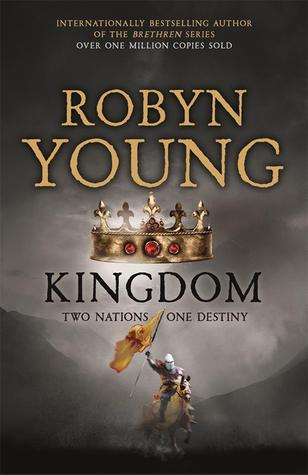
Kingdom After reading Renegade earlier this year (the second of Robyn Young’s three novels on Robert the Bruce), I decided to move quickly on to the third and final volume, Kingdom. Having had my interest piqued in this period of Scottish history, I wanted to read The Scottish Chiefs by Jane Porter and possibly Nigel Tranter’s Bruce trilogy – but it made sense to finish with this trilogy first to avoid confusion!

Kingdom continues Robert’s story, picking up where Renegade left off. It’s 1306 and Robert Bruce has been crowned King of Scots at last, the other claimants to the throne now either dead or in exile. His dream has finally been achieved – and yet he is still unable to rule in peace. King Edward I of England, who feels he has been betrayed by Robert once too often, is unwilling to give up control of Scotland and sends Aymer de Valence, Earl of Pembroke, north at the head of an army. Just a few months after his coronation, Robert is defeated by Valence at Methven Wood and is forced to flee. Eight years of conflict will follow, ending in 1314 at the Battle of Bannockburn – and if you don’t know what happens at Bannockburn, then I’ll leave you to find out for yourself.

I enjoyed Kingdom more than Renegade, but not as much as the first book, Insurrection. This one is a bit too heavy on the battle scenes for my taste, although that’s understandable as the period covered – 1306 to 1314 – was, as I’ve mentioned above, a time of constant conflict, with Robert and his men caught up in a long series of sieges, raids, battles and skirmishes. It’s also quite a sad book, as Robert’s friends and family pay a heavy price to enable Robert to fulfil his destiny. Some face execution, some are imprisoned and others suffer the indignity of being caged like animals. There’s cruelty on both sides, but also compassion and that’s one of the things I’ve noted throughout this trilogy: that the situation is not just portrayed as a case of Scotland good and England bad or vice versa. In fact, Robert faces not just opposition from Edward and the English but also from Scottish rivals and rebels, all of whom ensure that his path to the throne will not be an easy one.

Robert himself is a more sympathetic character in this novel than in the previous two. I found him difficult to warm to before – although that was partly a result of all the treachery and betrayal he was involved in, as well as the lack of time he had to spend with his wife and daughter – but it seems that with his coronation has come a new maturity and sense of responsibility. He is still a slightly bland character, though; I prefer my heroes to be more charismatic! I actually thought some of the other characters were far more interesting than Robert – Alexander Seton, for example, a nobleman from East Lothian who finds his loyalties torn between his country and his family.

I was sorry to see the last of Edward I, who had been the driving force behind much of what happened in the first two and a half books. He is succeeded by his son, Edward II, who lacks his father’s military and leadership skills and is a less worthy opponent for Robert. But while I can’t say that I liked either of the Edwards, the real villain in Kingdom is Aymer de Valence. Apparently, though, the historical Valence was not exactly as he is portrayed in this trilogy; Robyn Young admits in her author’s note that she hasn’t been very fair to him and that he probably doesn’t deserve to be seen as villainous at all. I would like to give a word of praise to Robyn Young for her author’s notes, by the way – they are much more comprehensive than most.

I have enjoyed reading this trilogy, especially as I previously had only a very basic idea of the history involved, which meant that most of Robert Bruce’s story was new and unfamiliar to me. Now I’m looking forward to exploring the period further!

Renegade by Robyn Young

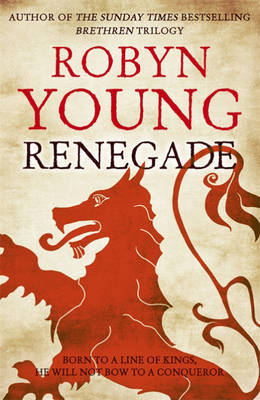
Renegade One of the reasons I love reading historical fiction is that it gives me an opportunity to learn about historical people and events that I might otherwise have gone through life knowing little or nothing about. I would probably never have thought of picking up a non-fiction book on Robert the Bruce, so I’m pleased to have been introduced to him in fictional form in this trilogy of novels by Robyn Young.

The first book, Insurrection, which I read in 2014 and loved, took us through Robert’s early years, explaining the origins of his claim to the Scottish throne, his family’s rivalries with the other contenders, the Balliols and the Comyns, and how he entered the service of Edward I of England after John Balliol was made King of Scotland. I immediately bought a copy of the second book, Renegade, so that I could find out how Robert’s story would continue, but I struggled to get into it and put the book aside until a few weeks ago, when I felt ready to have another attempt.

Renegade begins in the year 1300 with Robert Bruce in exile in Ireland, having betrayed the English and set his sights on taking the throne of Scotland. He intends to search for the Staff of St Malachy, one of four legendary relics, and use it to bargain with King Edward, but things don’t go according to plan and Robert is forced to take a different approach. Swearing loyalty to Edward again, Robert must convince the English that he has turned his back on Scotland once and for all…while secretly biding his time and waiting for a chance to launch his campaign for the Scottish crown.

I think my initial problem with this book was due to the fact that it opens with the search for the Staff of St Malachy and I tend to find ‘hunting for hidden relics’ stories quite tedious and over-used in historical fiction. However, once I got past the first few chapters this storyline was pushed into the background and I started to find the book much more enjoyable (although I still think Insurrection was the better of the two).

Robert himself is still not a character I particularly care for, which is maybe not surprising as his path to the throne is built around treachery and betrayal, but I did have sympathy for the position he found himself in and the difficult choices he had to make. I felt sorry for his friend, Humphrey de Bohun – one of the few characters in the trilogy that I do like – when it became obvious that he too was going to be deceived by Robert for a second time. As in the previous novel, the women in Robert’s life have only small roles to play, but I enjoyed the brief glimpses we are given of his wife, Elizabeth de Burgh, and daughter, Marjorie, and I was sorry that Robert seems to have so little time for them both. Isabel Comyn, Countess of Buchan, is another intriguing female character and I’m hoping we’ll find out what happens to her in the final novel – although I suspect it won’t be good.

Also in this book we learn the fate of William Wallace, who has been lying low since the Battle of Falkirk, trying to avoid being captured. Meanwhile, in England, the ageing King Edward is looking to his son – Edward, Prince of Wales – to carry on his work once he is gone, but the prince seems more interested in his friendship with Piers Gaveston and it is already obvious that he is not going to be the ruler or the military leader his father is. The period in which Renegade is set is a time of conflict and conquest, which means Robyn Young devotes a lot of pages to battles, sieges and ambushes. I’m not really a lover of battle scenes but these were easy enough to follow and understand, as well as being detailed and, as far as I could tell, quite accurate. I was interested to find that the trebuchet Warwolf which Edward is having built during the novel really existed and was used in the Siege of Stirling Castle just as Young describes in the book.

I’m now looking forward to reading the final part of the trilogy, Kingdom, and would like to do so as soon as possible, because Robyn Young has a new novel set in Renaissance Europe coming out later this year.

The Poisoned Crown by Maurice Druon

The Accursed Kings has it all. Iron kings and strangled queens, battles and betrayals, lies and lust, deception, family rivalries, the curse of the Templars, babies switched at birth, she-wolves, sin and swords, the doom of a great dynasty…and all of it (well, most of it) straight from the pages of history.

This is how the author George R.R. Martin has described Maurice Druon’s series of French historical novels, the inspiration behind his own Game of Thrones. The Accursed Kings (Les Rois Maudits) consists of seven books, all published between 1955 and 1977 and all available in English translations. The Poisoned Crown (Les Poisons de la Couronne) is the third in the series, continuing the story from The Iron King and The Strangled Queen.

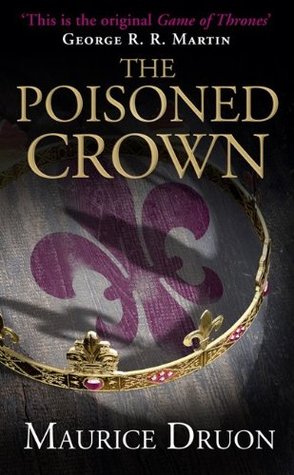
The Poisoned Crown It’s 1315 and Louis X (known as le Hutin, the Quarreller) is on the throne of France. As the son of the late Philip the Fair, whose line was cursed ‘to the thirteenth generation’, Louis’ reign will be short and troubled. In the previous novel we saw the demise of his first wife, Marguerite of Burgundy. Now a second marriage has been arranged – with the beautiful Clémence of Hungary, who arrives in France after a terrible sea voyage and quickly wins the hearts of those around her with her kindness, generosity and religious devotion. All that remains is for Clémence to provide the king with heirs and secure the succession to the throne.

In some ways it seems that the presence of Clémence is making Louis a better person, but in others he is still proving to be cruel, weak and incompetent. A war against Flanders ends disastrously, he is unable to deal with the impact of famine and he fails to listen to good advice, being too easily influenced by his unscrupulous uncle, Charles of Valois. Meanwhile, trouble is brewing again between the king’s cousin, Robert of Artois, and Robert’s great-aunt Mahaut, who are still fighting over the lands they each regard as their own. Eventually the barons of Artois begin to rise against Mahaut, bringing the king into the dispute and setting a chain of events into motion which could bring about the end of Louis’ reign.

Three books into this series, I’m still enjoying it, but The Poisoned Crown is probably my least favourite so far. It feels like a bridging novel, leading us from the previous two volumes into the remainder of the series, rather than a satisfying story in itself. There’s less action in this one and too much focus, at least in my opinion, on the conflict between Robert of Artois and the Countess Mahaut. Still, there were plenty of things that I did like and the history is as fascinating as ever; I previously had almost no knowledge of what was happening in France during this period, so I’m really learning a lot from these novels.

Not everything in The Accursed Kings is based strictly on historical fact, though. One of the subplots which is largely fictional involves the Lombard banker, Spinello Tolomei, and his young nephew, Guccio Baglioni. Guccio’s romance with the impoverished noblewoman Marie de Cressay moves on a step in this book, although Druon goes on to spoil things for us by informing us of what the next ten years will have in store for them. One thing I find quite annoying about Druon’s writing is his habit of constantly telling us what is going to happen next. Of course, when you don’t know the history, even the titles of some of these books are spoilers in themselves!

The Poisoned Crown ends abruptly, but the scene is set for the fourth book in the series, The Royal Succession.

The Viper of Milan by Marjorie Bowen

Marjorie Bowen was a new discovery for me towards the end of last year. Born Margaret Gabrielle Vere Campbell, she wrote more than one hundred and fifty books under several pseudonyms, covering a variety of genres from historical fiction and romance to supernatural horror, crime fiction and biography. Having enjoyed Dickon, her fictional account of the life of Richard III, I decided not to wait too long to try another of her books.

The Viper of Milan The Viper of Milan, originally published in 1906, was Bowen’s first novel and a favourite book of the author Graham Greene. This reissue by Endeavour Press includes an introduction by Greene (I recommend reading it at the end to avoid spoilers) in which he explains how Bowen influenced his own early attempts at writing. The Viper of Milan, he says, taught him that human nature is “not black and white but black and grey”.

The novel is set in Lombardy in the middle of the 14th century and follows a battle for power between Gian Galeazzo Maria Visconti, Duke of Milan, and Mastino della Scala, Duke of Verona. As the story opens, in 1360, Visconti is busy expanding his territories and forging alliances; he has forced della Scala out of Verona and taken his wife, Isotta d’Este of Ferrara, as a hostage. It seems that nobody can stop Visconti in his relentless conquest of northern Italy – nobody apart from della Scala, who vows to regain his lost lands and release Isotta from captivity.

Meanwhile, Visconti’s sister Valentine has problems of her own: her brother has arranged a marriage for her with the Duke of Orleans, while the man she really loves has been imprisoned in a deserted villa outside the city and is slowly starving to death. Another young lady, Graziosa, who lives with her artist father by the western gate of Milan, is also in love – but is her lover really as he seems?

As you can probably tell from my summary of the plot, The Viper of Milan is a dark tale of treachery, trickery and betrayal. I was amazed to learn that Marjorie Bowen was only sixteen years old when she wrote it. Apparently it was rejected by several publishers who considered it an inappropriate novel for such a young woman to have written. What interests me more than the darkness of the story, though, is – as Graham Greene said – Bowen’s view of the ambiguities of human nature. The Duke of Milan, a clever, patient and shrewd man, is also a cruel and brutal one, ruling through fear and violence. In contrast, the Duke of Verona is honest, honourable and trusting, inspiring respect and admiration in those who follow him. It’s only when he discovers that doing the right thing doesn’t always pay that he begins to wonder whether it’s worth continuing to stick to his morals.

After reading Dickon, I thought I had an idea of what to expect from Bowen’s writing, but I found The Viper of Milan to be very different in style and tone. The archaic language which felt slightly unnatural in Dickon suited this book perfectly, with its more melodramatic and gothic feel. This is an ideal read for people who, like myself, enjoy reading authors like Alexandre Dumas and Rafael Sabatini (in fact, Sabatini’s Bellarion is a very similar novel, set in the same part of Italy at about the same time).

If you do choose to read this book, I should warn you that the historical background to the story is not particularly accurate. Some of the characters have the names of real historical figures, but the plot is fictional and many of the things that happen have no basis in history. Having said that, the novel does capture perfectly the atmosphere of early Renaissance Italy with its warring city states and is a wonderfully entertaining story in its own right. There are some beautifully written descriptions of the Lombardy region too. If this sounds like your sort of book, then I would highly recommend The Viper of Milan. If not, Marjorie Bowen does seem to have been a very versatile author, so maybe one of her other books would be of more interest. I will be reading more of them, so I’ll let you know what I discover!