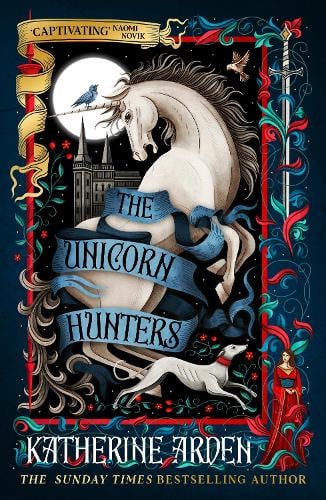
The Unicorn Hunters by Katherine Arden

This was one of my most anticipated new releases of the year, having loved first Katherine Arden’s Winternight trilogy and then her standalone novel, The Warm Hands of Ghosts. The Unicorn Hunters promised the same blend of history, fantasy and folklore and sounded just as fascinating.

The novel is set in 15th century Brittany, at that time an independent duchy. Following the death of Duke Francis II, his daughter, Anne, has succeeded him as Duchess of Brittany. She believes she will be able to govern Brittany well and had promised her father she would never allow it to be conquered, but naturally a land ruled by a young, unmarried woman quickly comes under threat from other, more powerful nations. Determined to avoid a union with France at all costs, Anne secretly marries Maximilian of Austria by proxy but as she waits for her new husband to join her in Brittany, Charles VIII of France and his forces draw closer to the duchy.

As a delaying tactic, Anne suggests a unicorn hunt in the enchanted forest of Brocéliande. She’s sure the king and his men will be unable to resist the temptation of capturing a magical beast – and according to legend, a unicorn can only be tamed by a virgin, which means Anne should be able to avoid being forced into marriage with Charles until Maximilian arrives and her secret can be revealed. No one is really expecting to see a unicorn – until one emerges from the trees and allows Anne to take a lock of its mane. With Anne under increasing pressure to agree to the French marriage, it seems there could be a way to save Brittany after all, but it will mean delving further into the world of magic.

I really enjoyed The Unicorn Hunters, although I found it a bit uneven. The first half is mainly concerned with the politics of Brittany and France, with only a few fantasy elements: the brief appearance of the unicorn, whom we don’t see again until later; the role of diviners who use dice, wine or beetles to spy on rival courts and coloured cloths to communicate what they’ve learned; and a man who stumbles out of the Lost Lands, a sinister realm that borders the forest of Brocéliande and is inhabited by korrigans (Breton fairies or spirits). I was reminded very much of Guy Gavriel Kay’s books, which are mostly set in thinly disguised worlds based on real countries and real historical periods and have subtle supernatural touches. In the second half of this novel, though, the fantasy elements become much stronger as Anne and her friends and enemies move in and out of the Lost Lands.

I liked Anne as a character, but I should point out that the Anne of Brittany in this book is not quite the same as the historical one and her story follows a different path, so be aware that you aren’t learning the ‘real history’ here. For example, the real Anne was eleven when she succeeded to the duchy, but Katherine Arden’s Anne is an adult. Other characters, such as Louis of Orléans and Anne’s sister Isabeau, have also had large parts of their stories altered – and Charles VIII’s sister, Anne of France, is renamed Marguerite to avoid confusion. Arden explains some of her choices in an author’s note at the end of the book, although I wonder whether it would have been more sensible to have just changed the names of all of the people and places, like Kay does, and set the book in an entirely alternate version of history.

Something I really loved about this book is the way so many aspects of Breton myth and legend are incorporated into the story: the mythical lost city of Kêr-Is, swallowed up by the sea in the Bay of Douarnenez; the presence of the korrigans and the anaon (spirits of the dead); the ancient forest of Brocéliande, associated with Merlin and the Arthurian legends; and of course, the unicorn – but unicorns obviously appear in the myths of other cultures as well. The real Anne of Brittany does actually have a connection with unicorns as it has been speculated that she commissioned the famous set of tapestries known as The Unicorn Tapestries, although this has never been proven.

I preferred the earlier sections of the book as I felt there was a definite shift in tone and pace in the second half, but I’m sure other readers will have the opposite preference depending on whether you like your fiction to be more grounded in history and politics or more fantasy-heavy. The Winternight books are still my favourites by Katherine Arden (start with The Bear and the Nightingale and read all three in order) but this was enjoyable as well and I’ll be looking out for her next book.

Thanks to Random House UK/Century for providing a copy of this book for review via NetGalley.
Book 3/20 of 20 Books of Summer

The House of Seymour by Joanna Hickson

I’ve enjoyed some of Joanna Hickson’s previous historical fiction novels, so I was looking forward to reading her latest one, The House of Seymour, which is the first in a new trilogy. Sadly, I found it disappointing and I probably won’t be continuing with the next two books, but there were still enough things to like that I don’t feel I’ve wasted my time.

This book is not about Henry VIII’s wife Jane Seymour as you might expect, but her ancestors – specifically her great-great-grandmother, Isabel Williams, and her husband, John Seymour. We first meet Isabel, the daughter of a wealthy merchant, in 1424 when she becomes betrothed to John, the ambitious Lord of Wolf Hall in Savernake Forest, Wiltshire. From very early in their marriage, it becomes clear that their relationship is not going to be a happy one. John is a cruel and ruthless man preoccupied with political advancement and winning the support of the Duke of Gloucester, protector of the young king, Henry VI.

Isabel finds some solace in her relationship with John’s young cousin Edmund, a much kinder man than her husband, and also a new friendship with Jess, a shepherdess who has been forced to leave her home near the village of Avebury. Jess and a farm hand, Addy (Adhelm), had taken shelter from a storm in the Long Barrow – an ancient burial chamber – only for Addy to disappear without trace. Accused of witchcraft, Jess takes refuge at Easton Priory where she meets Isabel and is given a position in her household.

The narrative is divided mainly between Isabel and Jess, although we also occasionally see things from the perspective of John and other characters. The voices and attitudes of both women felt too modern for my taste – I prefer to feel fully immersed in the period when I read historical fiction – so I couldn’t quite manage to believe in them as convincing 15th century people. As my blogging friend Jessica of The Bookworm Chronicles explains in her review, even using the name Jess is an anachronism.

I did love the setting – or rather settings, as there are two main ones. The first is Wolf Hall, or Wulfhall to use the spelling of the time, which becomes home to Isabel’s family after John inherits the wardenship of Savernake Forest. The other is Avebury, an atmospheric place with its Neolithic stone circles, ancient barrows and monuments. Although the characters do sometimes cross paths with members of the royal court, most of the book takes place in these two settings and the surrounding areas so the focus is mostly on Isabel’s household and Jess and her family. The problem here is that none of the characters really came to life for me and most of them lacked depth. The book as a whole felt a lot lighter and less substantial than Hickson’s other recent ones.

Although I didn’t enjoy this book as much as I would have liked, it was still good to learn a little bit about the Seymour family and their history. I’m probably not going to read the second book when it comes out, but I’ll be interested to hear whether it’s stronger than this one.

Thanks to HarperCollins for providing a copy of this book for review via NetGalley.

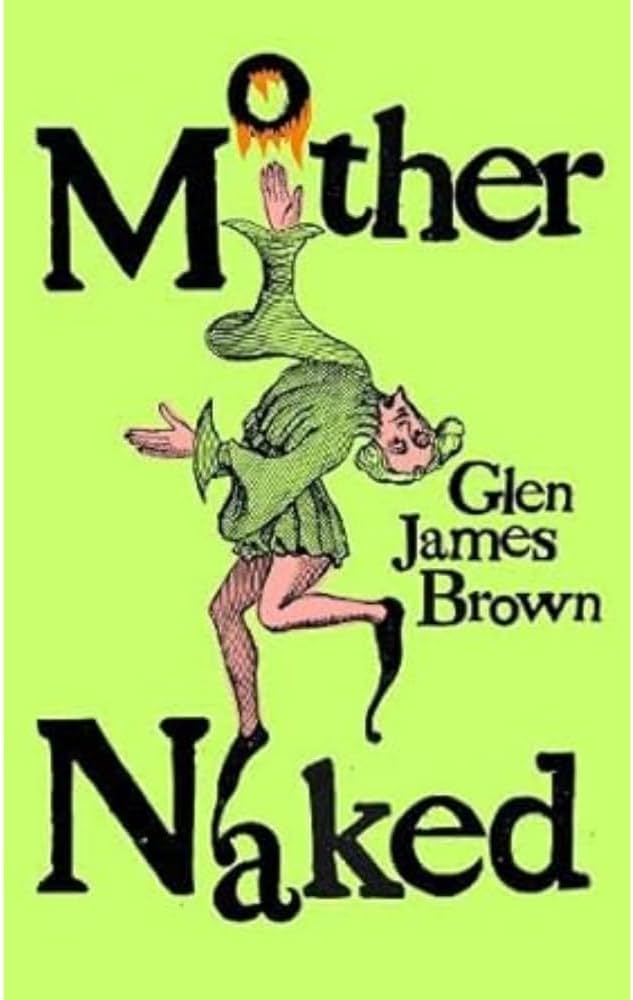
Mother Naked by Glen James Brown

Durham Cathedral’s records show that the smallest amount paid to an entertainer was the one groat (four pence) received by Modyr Nakett, who performed there in 1433-34. Modyr Nakett – Mother Naked in the Middle English used at the time – was a gleeman, or wandering minstrel, but nothing else is known about him or his performance. In this novel, longlisted for the Walter Scott Prize for Historical Fiction, Glen James Brown imagines Mother Naked’s story.

The whole novel is written in the form of a monologue delivered by Mother Naked in front of an audience of some of Durham’s most powerful men. He begins by promising them the tale of the Fell Wraith, a ghostly monster who laid waste to the village of Segerston (now called Sacriston), destroying the crops, burning down the manor house and killing the villagers. However, it becomes clear that what he really wants to tell is more than just a simple ghost story and that the legend of the Wraith is rooted in reality. He goes off on several tangents and at times it’s not clear to his audience (or to the reader) what significance any of these digressions have. It all comes together in the end, though, and we’re left in no doubt as to the purpose of Mother Naked’s tale!

Most of Mother’s story is set in Segerston in 1396 and deals with a feud between two local families, the Paynes and the Deepsloughs. Both families are villeins – serfs who are able to own land, but are also expected to work on their lord’s land for no payment, which greatly restricts the time they can spend tending their own crops. This is one of several reasons why anger and frustration with the feudal system has been spreading throughout the country, as shown by the Peasants’ Revolt just a few years earlier. The story Mother tells illustrates the unfairness of this system, the various hardships and challenges faced by the different classes of peasant and the privileges held by those higher up such as the reeve, the bailiff and the lord.

As he builds towards the story of the Fell Wraith, Mother talks about other myths and legends, such as the Woodwose (or ‘wild man of the woods’). He also discusses his own childhood and his relationship with a fellow gleeman, Pearl Eye, who starts him on his path to becoming an entertainer. I won’t tell you Mother’s real identity, though, as it would spoil the story!

Those of you who are regular readers of my blog will know that I dislike the way so many modern authors are choosing not to use quotation marks to indicate speech. I’ve said that I always find it irritating, but this book seems to be the exception to the rule. There are no quotation marks, but dialogue is put in italics which at least makes it easier to see that someone is speaking – and as the entire novel is presented as one long speech, it makes sense not to use internal speech marks as well. Brown also writes in a sort of pseudo-medieval language and I thought this would be distracting at first, but it actually works very well.

The combination of the language, the setting and the level of research makes the book feel very authentic and believable. I could easily imagine I was sitting in the hall at Durham Cathedral listening to Mother Naked’s story! This book is a good example of why I like to follow the Walter Scott Prize, as I don’t think I would have come across this one otherwise. The shortlist is due to be announced next week.

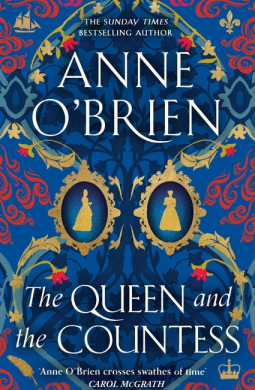
The Queen and the Countess by Anne O’Brien

I’ve been looking forward to reading Anne O’Brien’s new novel as it’s set in one of my favourite periods of history, the Wars of the Roses. O’Brien has written about this period before, from the perspectives of Anne Neville in Virgin Widow (which I haven’t read) and Cecily Neville in The Queen’s Rival, but this book is slightly different because it focuses on not just one woman but two: Margaret of Anjou, wife of Henry VI, and Anne Beauchamp, Countess of Warwick.

The two women take it in turns to narrate their story, alternating chapter by chapter throughout the book and beginning in 1458 with the Loveday Parade – a procession through London intended to promote peace between York and Lancaster, the two feuding branches of the royal House of Plantagenet. In the parade, Queen Margaret walks hand-in-hand with the powerful Duke of York, while Anne watches her husband, Richard, Earl of Warwick, walk with his rival nobleman, the Duke of Exeter. The peace is very short-lived, however, and the following year York and Lancaster are at war again.

As the mental health of the Lancastrian king, Henry VI, goes into decline and he gradually retreats from real life into a world of prayer, Margaret does her best to rule in his place, aiming to keep the throne safe for Prince Edward, their young son. When Margaret’s army is defeated in battle and Warwick helps to put the Yorkist heir, Edward IV, on the throne, it seems that her life is in ruins, but it’s not long before Warwick falls out of favour with the new king and comes to her ready to form a new alliance with Lancaster. Meanwhile, Anne stays loyal to her husband throughout all of this but, with no real influence over his decisions, she can only hope that he’s picked the right side this time…

I was intrigued by O’Brien’s decision to pair Margaret of Anjou’s story with the Countess of Warwick’s in this book. There are so many other interesting women from this period – Margaret Beaufort, the mother of Henry Tudor; Edward IV’s wife Elizabeth Woodville and her mother Jacquetta, to name a few – it seemed like a bit of an arbitrary choice to put these two together, but as I read on and saw the shape the novel was starting to take it did make sense. Margaret and Anne are at first on opposite sides of the conflict, then on the same side, but in the difficult position of never fully being able to trust each other, which is an interesting dynamic for O’Brien to explore. Although they are two very different women, there are some parallels between them which begin to emerge as the novel progresses.

This is an eventful and dramatic period of history, so there’s always something happening in the novel – a battle to be fought, a marriage to be negotiated, a plan for invasion to be put into place. Using two narrators rather than one gives O’Brien a wider scope instead of being limited to one character’s personal experiences. However, the two threads of the story come together now and then through a series of fictional letters sent between Margaret and Anne. I’ve no idea if they really corresponded or not (I don’t think there’s any evidence of it, and if they ever did, I doubt it would have been as often as depicted in the book) but it’s a nice touch and makes the lives of the two characters feel less separate and disconnected.

The narrative voices of the two women sound almost identical, so I had to pay attention to the section headings, otherwise it sometimes took me a few paragraphs to decide which of them was narrating. Margaret of Anjou never really seems to be portrayed in a very positive light and she’s not very likeable here either, but I could at least have some sympathy for her. She was in a very challenging situation, trying to hold onto the throne for Lancaster with a husband who didn’t understand what was going on and who was by now completely incapable of ruling. Anne is a much easier character to like, but then, she doesn’t have the difficult decisions to make that Margaret does. Things aren’t easy for Anne either, though, as her fate is determined by the actions of her husband, Warwick, and while she does involve herself in politics to a degree, she has very little say in the course her life will follow.

This is ultimately quite a sad story – anyone familiar with the Wars of the Roses will know what happens to Margaret, her husband and her son, and how Anne’s later life plays out (at one point she’s declared legally dead while still alive in order to settle an inheritance dispute) – but I enjoyed reading it. It was nice to see some links to O’Brien’s previous novel, A Court of Betrayal, whose heroine, Johane de Geneville, was an ancestor of Anne Beauchamp’s – something I wasn’t aware of until I started reading this book and Anne mentioned her great-great-grandmother! I’ll look forward to O’Brien’s next book, whatever it may be, but I should probably try to find time to go back and read the earlier ones that I’ve missed as well.

Thanks to Orion for providing a copy of this book for review via NetGalley.

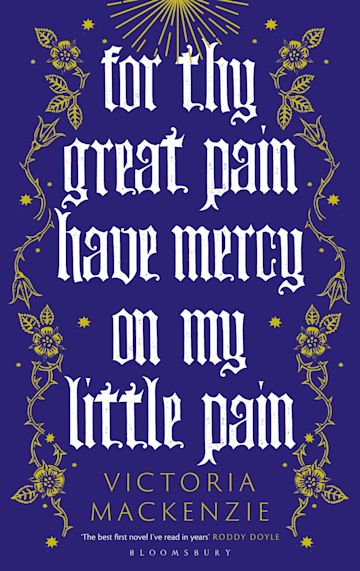
For Thy Great Pain Have Mercy on My Little Pain by Victoria MacKenzie

I had thought I was ready for the life of an anchoress. I had wanted to prolong each moment of my life, to get closer to experiencing time as God experiences it: not the instantly dissolving moment, but something larger and more encompassing. A stillness that doesn’t pass as soon as you think yourself into it.

Victoria MacKenzie’s new novella, For Thy Great Pain Have Mercy on My Little Pain, is set in Norfolk in 1413 and imagines a meeting between two real-life women: Julian of Norwich and Margery Kempe. If these names are familiar to you, you’ll know that they were both English mystics of the medieval period and were also both authors. Julian’s Revelations of Divine Love is thought to be the first English work we can be sure was written by a woman, while Margery’s The Book of Margery Kempe is considered to be the first autobiography in the English language.

The stories of the two women only converge towards the end of the book in a meeting which did take place according to Margery herself in The Book of Margery Kempe, but maybe not exactly as it is described here. Victoria MacKenzie recreates the events leading up to their encounter and the sort of conversation they may have had, but before reaching that point she explores the backgrounds of both women, with the perspective alternating between Margery and Julian as they follow very different paths through life.

Little is known of the real Julian’s early life, but MacKenzie suggests here that she may have lost her family to an outbreak of plague and that this, along with an illness during which she experienced visions or ‘shewings’ of Christ, influenced her decision to become an anchoress, secluded in a cell for twenty-three years. Margery, in contrast, doesn’t lock herself away, but remains in the secular world, a wife and mother of fourteen. Like Julian, she begins to have religious visions, but while Julian’s faith is personal and private, Margery prays, weeps and preaches in public, drawing attention to herself and leading to accusations of heresy.

This is Victoria MacKenzie’s debut novel and I admire her for writing something so unusual and original, but although I did like it, I couldn’t quite manage to love it. I found the structure and pacing very unbalanced, with the first section, telling the two separate tales in parallel, being by far the longest and the actual meeting at Julian’s cell being dealt with in just a few pages near the end. Maybe if I was a more religious person myself I would have appreciated this book more, but I could still find a lot to interest me in this story of two medieval women whose different personalities and different journeys through life shape the nature of their relationships with God and each other.

Thanks to Bloomsbury Publishing for providing a copy of this book for review via NetGalley.
This is book 4/50 read for the 2023 Historical Fiction Reading Challenge.

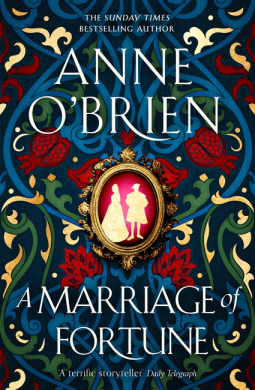
A Marriage of Fortune by Anne O’Brien

This sequel to The Royal Game continues the story of the Paston family. The Pastons were an influential Norfolk family during the 15th century and left behind a collection of private correspondence, known as the Paston Letters, which are a valuable source of information on life in England at this time. In this novel and her previous one, Anne O’Brien brings the story of the Pastons to life, using their letters to provide the outline of the plot. You could read this book as a standalone if you wanted to, but I would recommend reading both in order if you can.

A Marriage of Fortune is again narrated by several of the Paston women. First there’s Margaret Mautby Paston, now a widow with seven children. Her eldest son, Sir John, is now head of the family following the death of his father, but Margaret still takes an active part in managing the household, arranging the marriages of her younger children and continuing the ongoing feud against the Duke of Norfolk over the ownership of Caister Castle. Margaret’s priority is seeing that the Pastons continue to rise through the ranks of society, so she is furious when her eldest daughter Margery announces that she is in love with the family bailiff, Richard Calle. She refuses to allow a marriage between the two, but is unprepared for the lengths to which Margery is prepared to go.

The relationship between Margaret and Margery is very sad to read about. Margery is another of our narrators, which means we get to know exactly how she feels about her mother’s refusal to accept her love for Richard and the family estrangement that occurs as a result. Margaret believes that a daughter’s first duty should be to her parents and that Margery has no right to consider her own happiness, but there’s always a sense that she might come to regret taking this stance and we are kept wondering whether mother and daughter will be reconciled in the end.

We also hear from Margaret’s sister-in-law, Elizabeth Paston Poynings, whose husband has been killed fighting on the Yorkist side at the Second Battle of St Alban’s, leaving her a widow with a young son. Like Margaret, Elizabeth has found herself facing a struggle to hold on to her late husband’s estates, which are being claimed by the powerful Percy family. A fourth narrator is Anne Haute, cousin of Elizabeth Woodville, Edward IV’s queen. Anne is betrothed to Margaret’s son, Sir John Paston, but with the rapidly changing political situation in England – Edward IV on the throne one minute, Henry VI the next – it seems that Sir John is reluctant to either make the marriage official or release her from it. I had a lot of sympathy for poor Anne when she begins to discover that she’s wasted years of her life on a man who clearly doesn’t really love her.

I enjoyed A Marriage of Fortune; this is one of my favourite periods to read about, but I still haven’t read the original Paston Letters or Helen Castor’s non-fiction account of them, Blood and Roses, despite having had the latter on my TBR pile for several years now. This was maybe a good thing as far as this novel was concerned, as it meant that although I was familiar with the historical background – the kings and queens, the battles and rebellions – I didn’t know the personal stories of the individual Paston family members, so I never knew what was going to happen to them next. However, I do think this novel, like the first one, was slightly too long, with a lot of information packed into it. It may have been better to have focused on fewer characters; Elizabeth Poynings’ story, in particular, felt very separate from the others and could possibly have been left out.

I’m not sure whether there will be a third book on the Pastons or whether Anne O’Brien will be moving on to something else now. Either way, she always chooses interesting historical women to write about so I know it will be worth looking forward to.

Thanks to Orion for providing a copy of this book for review via NetGalley.
This is book 2/50 read for the 2023 Historical Fiction Reading Challenge.

Hawker and the King’s Jewel by Ethan Bale

The Wars of the Roses is one of my favourite periods of history to read about and I’m always looking out for new books, both fiction and non-fiction, that explore the key events, colourful figures and controversial mysteries of this fascinating era.

Ethan Bale’s new novel, Hawker and the King’s Jewel, begins just before the Battle of Bosworth in August 1485 with King Richard III summoning his loyal knight, Sir John Hawker, to send him on one last mission. Richard possesses a valuable jewel, one of the legendary Tears of Byzantium, and he wants Hawker to return it to its previous owner, the Doge of Venice. He also has another request to make of Hawker – to take care of his illegitimate son, Sir Giles Ellingham, who is unaware of his true parentage. Hawker promises to carry out both tasks, but when Richard falls in battle and Henry Tudor takes the crown, the situation becomes much more dangerous. Not only are those who supported Richard now seen as traitors, but Sir Giles could become a focus for both Tudor and Yorkist conspiracies.

The action moves from Bosworth to Flanders and then on to Venice, where most of the story unfolds. Hawker is accompanied by his young squire and a small band of mercenary soldiers, so you can expect some battle scenes, as well as smaller-scale fights and skirmishes (including the mock battles known as battagliola, staged on the bridges of medieval Venice). I was concerned at first that there would be too much of this in the book for my taste, but that wasn’t the case and there were plenty of other things to hold my interest – some political intrigue, a fascinating theory to explain the disappearance of the Princes in the Tower, and even a touch of romance as we discover that Hawker has been in Venice before and left a lover behind there.

Although Sir John Hawker is the main character, the other men who make up his little band become more fully developed as the book progresses. I found one of them particularly intriguing as his motives for remaining with Hawker’s company seem to change continuously as he reassesses the political situation and tries to decide whether loyalty or betrayal will be more to his advantage. There’s also an interesting female character – a Hungarian noblewoman with her eye on the jewel Hawker is carrying – and her storyline helps to carry the novel through to its conclusion.

It seems that this is the first book in a planned series, Swords of the White Rose. I’ll be looking out for the next one.

Thanks to Canelo Adventure for providing a copy of this book for review.

This is book 48/50 read for the Historical Fiction Reading Challenge 2022.