Alathea by Pamela Belle

alathea A few years ago, I read the first two books in Pamela Belle’s Heron series, The Moon in the Water and The Chains of Fate. I loved them but because I didn’t have a copy of the third novel ready to start immediately, I never moved on with the series. The books have recently been reissued by Endeavour Press and I’m pleased to have finally had an opportunity to read the next Heron novel, Alathea (originally published in 1985).

Alathea is the eldest daughter of Francis and Thomazine Heron, whose stories are told in the previous two novels. Although Francis and Thomazine do appear in this book, the focus is firmly on Alathea, which means it wouldn’t be absolutely necessary to have read the first two books before this one. I would still recommend starting at the beginning, though; I think you will get more out of the story if you understand Alathea’s family background and the relationships between the characters.

The novel opens in 1660. Charles II has just been restored to the throne and thousands of Royalists exiled after the recent Civil War are on their way back to England – amongst them Simon Heron, whose return means that Alathea and her family must move out of the Herons’ Suffolk estate of Goldhayes and go back to Ashcott in Oxfordshire. It is there that Alathea meets a boy called John Wilmot for the first time – but it will be several years before their paths cross again.

At the age of eleven, Alathea’s talent for drawing is becoming apparent, and she already has dreams of building a successful career for herself as an artist. Her dreams move a step closer to reality when her parents send Alathea to live with her Aunt Lucy in London in the hope of separating her from her jealous half-brother, Kit. Here Alathea has the opportunity to study with the famous female artist, Mary Beale, and as the years go by she begins to establish herself as a portrait painter.

It is through her painting that Alathea is brought back into contact with John Wilmot, better known as the notorious Earl of Rochester. An attraction quickly forms between the two of them, but Rochester is not the only man interested in our heroine; Jasper, the son of Thomazine’s dearest friend, has decided Alathea is the woman he wants to marry, while Kit is also growing increasingly obsessed with his beautiful half-sister. Will any of them succeed? With Alathea reluctant to sacrifice her independence, she will need to find a way to reconcile her personal life with the career for which she has worked so hard.

I’m actually glad that I waited a while before reading Alathea; I think if I’d read it straight after The Chains of Fate, I would have been disappointed that there wasn’t more of Thomazine and Francis, but allowing some time to pass meant that I was able to enjoy Alathea’s story in its own right. And it is an enjoyable story. Although there are some sad moments and some dramatic ones, there’s also plenty of humour (in particular, I’m thinking of a certain scene involving a dinner party and Rochester’s pet monkey). I’m sure Rochester must have been a fascinating character to write about; I’ve read about him once or twice before, but never in as much detail and never in a way that made him feel so human.

There are some beautiful descriptions of the countryside surrounding Ashcott and Goldhayes, as well as of life in Restoration London – the section set during the Great Fire stood out for me as being particularly vivid. I also loved the way some of Rochester’s poetry is incorporated into the story, and the painting of his famous portrait, complete with monkey. What I found most interesting, though, was the portrayal of a young woman trying to make her own way in a male-dominated world, at a time when it was not at all common or very socially acceptable for a woman to earn a living as an artist.

I didn’t like this book quite as much as The Moon in the Water and The Chains of Fate which I think was simply because I loved following the ups and downs of the romance between Thomazine and Francis, so was more emotionally invested in their story than I was in Alathea’s. I still thought Alathea was a great book and I’m hoping to read Pamela Belle’s other series, Wintercombe, this year too.
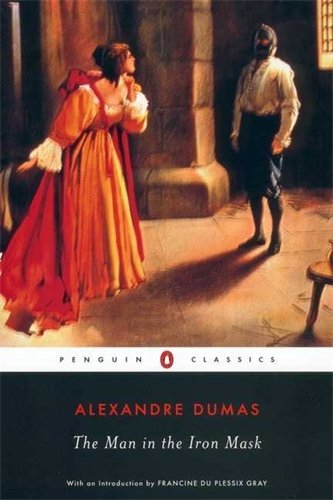
The Man in the Iron Mask by Alexandre Dumas

the-man-in-the-iron-mask I had considered starting 2017 by posting some reading plans and resolutions but, to be honest, after failing to keep most of last year’s, I don’t want to make any for this year. I do have one goal for 2017, though: I would like every book I read to be a potential book of the year. That’s unrealistic, I know, but it’s something to keep in mind when I’m choosing which books to read and when I’m deciding whether or not it’s worth continuing with a book I’m not enjoying. And I’m already off to a great start with my first January read – The Red Sphinx by Alexandre Dumas! I’m looking forward to telling you about that one after I’ve finished reading it, but in the meantime here are my thoughts on another Dumas novel I read just before Christmas.

The Man in the Iron Mask is the last book in the d’Artagnan series which began with The Three Musketeers and continued with Twenty Years After, The Vicomte de Bragelonne and Louise de la Vallière. The final three in the series were originally published as one novel, which must have been enormous; it’s easy to see why most publishers now split it into separate volumes! I think most people probably just go straight from The Three Musketeers to The Man in the Iron Mask – after all, they are the two best known and the most often filmed of the d’Artagnan stories – but I don’t regret having taken the time to read the ones in between. I did enjoy them all, particularly Twenty Years After, and it meant that I went into this, the final book, with the background knowledge I needed to be able to get straight into the story.

Unlike The Vicomte and Louise, which deal mainly with the political and romantic intrigues of various members of the 17th century French court, in The Man in the Iron Mask, the focus returns to d’Artagnan and his three friends, Athos, Porthos and Aramis. The first half of the novel revolves around Aramis and a plot involving a man imprisoned in the Bastille who bears a striking resemblance to the King of France. I won’t say too much about this as I wouldn’t want to spoil the story for future readers, but suffice it to say that things don’t go exactly as according to plan and both Aramis and Porthos (who, as usual, has become implicated in the schemes of others while blissfully unaware of what is really going on) find themselves in trouble.

We then catch up with Raoul, the young Vicomte de Bragelonne, who is trying to come to terms with the discovery that his beloved Louise de la Vallière is now the mistress of Louis XIV. Devastated by the loss of Louise, Raoul agrees to accompany the Duc de Beaufort on an expedition to Africa. How will his father, Athos, cope in his absence? D’Artagnan, meanwhile, has remained loyal to the king and for much of this novel he is caught up in the final power struggle between the two rival finance ministers, Fouquet and Colbert. When his duties bring him into conflict with Aramis and Porthos, however, d’Artagnan must find a way to serve his king without betraying his friends.

This is a much more exciting, action-packed book than the two preceding ones. The actual ‘man in the iron mask’ has a relatively small role to play but the plot has serious consequences which are explored throughout the remainder of the novel as we follow our old friends, the musketeers, to the end of their careers. I was pleased to see so much more of d’Artagnan and his friends than we did in the last two books, but I was disappointed by the lack of scenes with all four together (it was the relationship between the four of them, in my opinion, that made the first Musketeers novel such a joy to read) and that Athos’ storyline seemed to barely intersect with the others. Athos was my favourite character in the original Musketeers book and I really dislike the direction Dumas took him in throughout the later books in the series, particularly after Raoul became more prominent in the story. It’s funny that Aramis, my least favourite, ended up being the character I found the most interesting!

Towards the end, The Man in the Iron Mask also becomes a very sad book; after spending so much time with these characters – literally thousands of pages over the last few years – I didn’t want to have to say goodbye to any of them. Dumas ties things up very neatly in the final chapters…a bit too neatly for me; I would have preferred a happier ending with more left to the imagination! Still, I did enjoy this book and was delighted to discover that Dumas had written yet another, often forgotten, sequel to The Three Musketeers. It’s called The Red Sphinx and is being made available in a new English translation this month. I’m reading it now and am pleased to say that so far it’s definitely living up to my expectations!

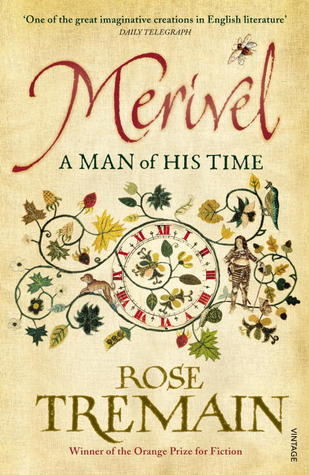
Merivel: A Man of His Time by Rose Tremain

merivel I wasn’t planning to read Merivel so soon after finishing Rose Tremain’s Restoration, but when I saw a copy on the library shelf a few days later, I couldn’t resist bringing it home so I could catch up with Robert Merivel again and see how he was getting on. I didn’t expect this book to be as good as Restoration, as sequels written many years later often aren’t, so I was surprised to find that I actually preferred this one. Looking at other reviews, I can see that I’m in the minority with that opinion, but I think the reason I liked this book better was because I liked Merivel himself better.

At the beginning of Merivel, our narrator, Robert Merivel, is back at his Norfolk estate of Bidnold, where he returned at the end of Restoration. It’s 1683 and sixteen years have gone by since we last saw him; he’s now a middle-aged man, very aware that time is slipping away and bringing changes to himself and the people around him. His faithful servant, Will, is getting old and is struggling to carry out his duties, while his little girl, Margaret, is now a young lady and planning to spend Christmas in Cornwall with friends. Facing the prospect of being left at home alone, Merivel decides to make the most of the time remaining to him and sets off to Versailles – with a letter of introduction from his friend, King Charles II – in the hope of finding some excitement and intellectual stimulation.

Unfortunately, Versailles fails to live up to Merivel’s expectations; he finds little to admire at the French court and it’s not long before he’s on his way home to England. Apart from a brief romance with an attractive botanist, Louise, and an invitation to visit her at her father’s estate in Switzerland, the only thing Merivel has to show for his time in France is a large bear called Clarendon whom he has rescued from captivity and brought back to Norfolk. On arriving at Bidnold, however, Merivel discovers that he has more to worry about than Louise and his bear: his daughter, Margaret, is seriously ill and requires all of his skills as a physician if she is to survive.

Although there are some humorous scenes in this book, I found this quite a sad and sombre novel, especially in comparison to the liveliness of Restoration. The passing of time is a major theme (it’s no coincidence that Merivel shares lodgings in France with a clockmaker) and there’s always a sense that things are coming to an end, that Will, Merivel – and even the King – won’t live forever. Merivel is not so much searching for his place in the world as he was in the previous book, but trying to understand himself and come to terms with his own nature. He still gets things wrong sometimes, he still makes some poor decisions, and has a tendency to neglect the things that are most important, but he also has a good heart and I found him completely endearing! I remember thinking he was a very frustrating character in Restoration, but in this book I had more patience with him because I could see that he was doing his best.

Merivel is a book with many layers, giving the reader a lot to think about. Even the headings of the four sections – The Great Enormity, The Great Captivity, The Great Consolation and The Great Transition – have a significance which is worth considering. But this is also a very entertaining novel. The pace is quite leisurely, but there’s always something happening: a duel, an encounter with highwaymen, an illness, or a visit from the King. The mood of the late 17th century is captured beautifully; Tremain even gives some of the nouns capital letters to enhance the feeling of authenticity, something which I thought might be irritating at first but which, after a few pages, I decided I liked.

The ending, when it came, was not entirely unexpected, but I was still a bit surprised because I think a lot of authors would have chosen to end Merivel’s story in a different, happier way. Considering the themes of this novel, though, I thought it was the perfect conclusion. I loved revisiting Merivel’s world and I would definitely recommend this book to anyone who has read and enjoyed Restoration. It could probably be read as a standalone but I think you’ll get more out of it if you’ve been following Merivel’s story from the beginning.

This book also counts towards my Reading the Walter Scott Prize project. It was shortlisted in 2013.

Lady on the Coin by Margaret Campbell Barnes

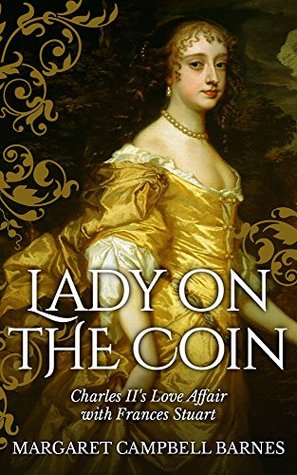
lady-on-the-coin One of the many things I enjoy about reading historical fiction is seeing how different authors choose to interpret the same historical events and people. This is the second novel I’ve read about Frances Stuart, one of the prominent figures at the court of Charles II, and as I remembered being disappointed in Marci Jefferson’s Girl on the Golden Coin, I was curious to find out how Margaret Campbell Barnes had approached the same subject in this novel from 1963.

Lady on the Coin opens with Frances Stuart (or Stewart, but I have gone with the spelling used by Barnes) and her family in exile in Paris where they have been living since the Royalists were defeated in England’s recent civil war. In 1660, the monarchy is finally restored and Charles II, to whom Frances is distantly related, takes the throne. After saying goodbye to her close friend, Henrietta – Charles’ beloved sister, ‘Minette’ – who has married the brother of Louis XIV of France, Frances returns to England to join the household of the new queen, Catherine of Braganza.

With her appealing combination of beauty, enthusiasm and youthful innocence, Frances soon finds herself with many friends and admirers at court, and Charles himself is one of them. Although she enjoys the attention, Frances has no desire to hurt Catherine, so she does her best to resist the King’s attempts to make her his mistress. As she comes under more and more pressure to agree to his demands, a rumour begins to circulate that he is planning to make her his wife should anything happen to Catherine. A chance of escape arrives when she falls in love with the King’s cousin, the Duke of Richmond and Lennox, but there will be more obstacles to overcome before they can find happiness together.

I found this book better written and more satisfying than Marci Jefferson’s. Although the two are very similar in terms of plot (I suppose there’s a limit as to how much could be written about Frances Stuart, after all), I felt that Margaret Campbell Barnes did a much better job of forming a compelling story from the material available and giving her characters depth. Frances is portrayed as frivolous and immature, but she also has a kind heart and I couldn’t help liking her, as did most of the people around her. I say ‘most’ because her popularity at court earns Frances some enemies as well as friends and puts her at the mercy of those who wish to manipulate her for their own ends, such as Barbara Palmer, Lady Castlemaine, the King’s mistress of many years.

Later in the novel, when Frances’ relationship with Lennox begins to develop and she has some important decisions to make, we see a stronger, more serious side to her character. I don’t know enough about the real Frances or Lennox to be able to say whether their relationship has been romanticised here, but I expect it probably has; he is described, by his own admission, as a gambler and heavy drinker, but these problems seem to be brushed aside very easily once he and Frances get together. I did find their romance quite moving, though, and much more interesting to read about than the King and his mistresses!

Frances Stuart’s story is played out during an eventful period of history, but important events such as the plague, the Great Fire of London and the Anglo-Dutch Wars seem to pass by in the background without having much of an effect on the life of our heroine. It’s probably true that Frances would have been very insulated from the outside world by her position at court, but I would still have liked a better balance between her personal story and the wider history of the period in general.

Now, you may be wondering why the title of the book refers to the ‘lady on the coin’. Well, one of Frances Stuart’s claims to fame is that she was apparently the model for Britannia, appearing on a commemorative medal produced after the war with the Dutch and then on various British coins until as recently as 2006.

Lady on the Coin is the second book I’ve read by Margaret Campbell Barnes; the first was Mary of Carisbrooke, which told the story of Charles I’s imprisonment in Carisbrooke Castle on the Isle of Wight. I’m sure I’ll be reading more of her books and the next logical choice is With All My Heart, her novel about Catherine of Braganza.

I received a copy of this book via NetGalley for review.

Restoration by Rose Tremain

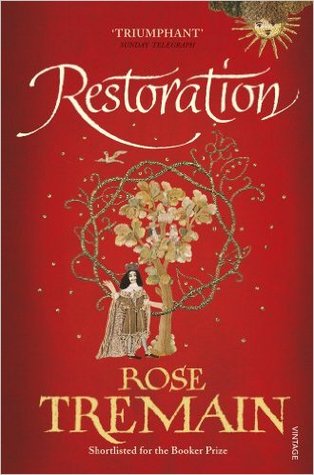
Restoration Rose Tremain is a new author for me, but I’ve been meaning to try one of her books for a long time. Her 1989 novel Restoration seemed like my sort of book and knowing that I need to read the sequel, Merivel: A Man of His Time, for my Walter Scott Prize project gave me the motivation to pick it up and start reading. It also counts towards my Ten from the TBR project, which has been sadly neglected this year!

Restoration is set in 17th century England in the years following the restoration of the monarchy; the title refers not just to the time period but also to the personal restoration of a man’s self-respect and his place in the world. That man is Robert Merivel, a glovemaker’s son and trained physician who, near the beginning of the novel, obtains a position at the court of Charles II as surgeon to the king’s spaniels. Merivel is quickly swept away by the fun and frivolity of the court, making himself popular by playing the fool and entertaining the king.

It’s not long, however, before the king comes to Merivel with a request for help. Charles requires a husband for one of his mistresses, Celia Clemence – someone who will be a husband in name only, giving Celia a form of respectability while the king continues his affair with her. Merivel agrees to marry her and at first is delighted with the country estate in Norfolk which he is given as part of the deal. Everything is going well until Celia comes to join him there and Merivel discovers that he is falling in love with his wife…something he has been strictly forbidden to do.

Restoration is narrated by Robert Merivel himself and I found him both a fascinating and a frustrating character, more anti-hero than hero. Irresponsible and immature, you get the impression he is stumbling through life from one disaster to another, with no clear purpose in sight – and yet, despite his flaws and his failures, you can’t help feeling for him as he falls out of favour with the king. While I can’t say that I actually liked Merivel, he is an engaging narrator and his story is told with such an appealing mixture of humour and sensitivity that I was captivated by him and hoped that he would find a way to restore his fortunes.

Rose Tremain’s lively writing style perfectly suits the time period in which the novel is set. I always enjoy reading about the 1660s and I liked the contrast here between the descriptions of Merivel’s life as a country gentleman, his adventures at court and his time practising medicine in London. Merivel is in London during the Plague and the Great Fire, which are both vividly recreated. However, there is a long section in the middle of the book set in an asylum run by Merivel’s Quaker friend, Pearce, and I found my attention starting to wander during these chapters. I could see the importance of this section to the plot and to Merivel’s personal development, but I struggled to feel any interest in the new characters we meet at the asylum and I thought the whole episode went on for far too long.

Overall, though, I was impressed with this book and with my first experience of Rose Tremain’s writing. I’ll be interested to see how Robert’s story continues in Merivel, which I’m hoping to start soon.

Louise de la Vallière by Alexandre Dumas

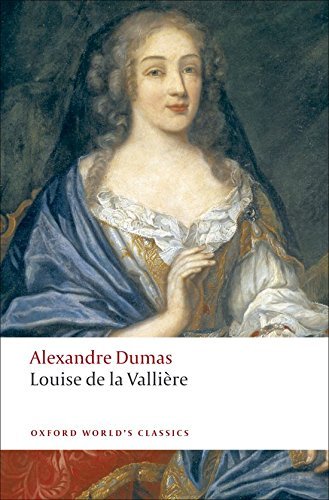
Louise de la Valliere Louise de la Vallière is the fourth book (or in some cases, the fifth – more on that later) in the series of d’Artagnan novels which began with The Three Musketeers. Looking at other readers’ reviews, this seems to be one of the least popular books in the series and I can understand why, even though I did enjoy it.

In Louise de la Vallière, the story is picked up directly where the previous book, The Vicomte de Bragelonne, ended and follows all the romance and intrigue of the court of Louis XIV. As the novel opens, the king’s brother, Philippe (known as Monsieur), has just married Charles II’s sister, Henrietta of England (Madame). An instant attraction has formed between the king and his new sister-in-law, so to avert suspicion they decide that Louis will pretend to turn his attentions to Louise de la Vallière, Madame’s young lady-in-waiting. Things don’t go exactly according to plan, however, and the king and Louise end up really falling in love with each other, breaking the heart of poor Raoul, the Vicomte of Bragelonne, who was hoping to marry Louise.

Apart from a few brief scenes here and there, there’s an almost total absence in Louise de la Vallière of the swashbuckling action and adventure which formed such a large part of the earlier volumes of the series. This could be disappointing if you’re expecting more of the same, but I do think the antics of Louis’ court are fun to read too. It’s amusing to watch the king’s desperate attempts to steal some time alone with Louise – passing letters hidden in handkerchiefs, climbing ladders to reach her window and installing secret staircases in her room!

What does all of this have to do with d’Artagnan, you may be asking? Well, the answer is – very little. He does appear from time to time, but this is not really his story. We don’t see much of Athos or Porthos either, although what we do see assures us that they are still the same characters we know and love: Athos is still noble and honourable, while Porthos is still the gentle giant, as good-natured and trusting as ever. I didn’t care for Aramis in this book, though – he’s preoccupied with a mysterious prisoner in the Bastille and when we do see him, he’s plotting and scheming, reluctant to confide in his fellow musketeers. His storyline ends on a cliffhanger which has left me wanting to start The Man in the Iron Mask as soon as possible!

Now, a note on the structure of this series. The first two books are The Three Musketeers and Twenty Years After, which I have written about in previous posts. The third book was originally intended to be one very long novel, but most publishers now split it into three: The Vicomte de Bragelonne, then Louise de la Vallière and finally The Man in the Iron Mask. Some versions (such as the free Project Gutenberg ebooks – see the notes here), split the chapters differently, including an extra volume, Ten Years Later, between The Vicomte and Louise. Be sure to check the editions you’re reading or you could miss part of the story.

This may not have been my favourite Musketeer novel, then, but I did still find a lot to like about it and can’t wait to finish the series with The Man in the Iron Mask.

Dora Greenwell McChesney’s Civil War

Rupert by the Grace of God I have not just one book but two to tell you about today. Dora Greenwell McChesney is an author from the late 19th/early 20th century whose work I discovered a few months ago when I read her Richard III novel from 1913, The Confession of Richard Plantagenet. I love reading about Richard III, but I also enjoy reading about the English Civil War, so when I spotted reissues of two of her Civil War novels on NetGalley recently I was curious to see what they were like.

Rupert, by the Grace of God, originally published in 1899, was the first one I read. I was attracted to this book by the title; it refers, of course, to Prince Rupert of the Rhine, nephew of Charles I and commander of the Royalist cavalry. When I read a biography of Rupert earlier in the year, I said that I was interested in reading more about him (and was given a few suggestions in the comments, which I will get around to reading eventually – I promise!) so that was definitely part of the appeal of this particular novel for me.

The story is narrated by Will Fortescue, a young man who has defied his father to join the Royalist army. Taking refuge in a church to hide from enemy soldiers one day, Will finds an unusual golden coin on the floor and picks it up, unaware that in doing so he is changing the whole course of his life. The coin is recognised by Cosmas, an elderly man whom some say is a wizard, and Will finds himself drawn into a secret plot to put Rupert on the throne in place of Charles. Rupert himself, however, is loyal to his king and wants no part in such a treacherous scheme!

There were parts of this novel that I enjoyed, but it wasn’t really what I’d been expecting. Being part historical adventure novel and part gothic melodrama, it was entertaining at times, but I have to admit, I can see why it was allowed to go out of print for so long. I was interested in Will Fortescue’s personal story and in his involvement in the battles and key moments of the Civil War, but there was too much focus on secret conspiracies and black magic rituals for my taste and after a few chapters I felt my attention starting to wander.

Cornet Strong of Iretons Horse The second McChesney novel I read was Cornet Strong of Ireton’s Horse, published several years later in 1903. This is a different sort of story, concentrating on the relationship between two soldiers within the Parliamentarian army: Nathan Standish, a young captain, and Reuben Strong, who is promoted to the rank of cornet after capturing Prince Rupert’s banner. Throughout the novel, Strong and Standish cross paths on several occasions with a young Irish Cavalier, Roy O’Neil, and his sister, Eileen.

Strong is a dedicated, inflexible person who believes very strongly in carrying out God’s work. When another character tells him “we are all somewhat more than mere engines of soldiership,” Strong answers “I am no more! I am a sword, a sword tempered to this work and to no other use.” Standish is a more likeable character and plays such a prominent part in the story, I wondered, at least for a while, why the author had chosen to put Strong’s name in the title.

Of these two books, I preferred Cornet Strong. Although it was still quite reliant on coincidences, chance encounters and last-minute escapes, it felt like a more ‘serious’ historical novel, telling a more straightforward story. Instead of the magic and mystery of Rupert, by the Grace of God, this one deals with battles, military campaigns and army life. Again, though, I never really felt fully absorbed – not until near the end, when something was revealed which made me think differently about everything I’d read up to that point.

Dora Greenwell McChesney’s writing style won’t appeal to everyone – the language used in her dialogue is archaic and her prose in general feels old-fashioned, even for books published in 1899 and 1903. These two novels haven’t won a place on my list of favourite Civil War books, but they were interesting in parts and were fairly quick reads, particularly the shorter Cornet Strong, so I did find them worth reading.