The Poisoners by Marjorie Bowen

The Poisoners I have read several novels by Marjorie Bowen this year and this is one of my favourites so far. First published in 1936, The Poisoners originally appeared under one of her other pseudonyms, George Preedy, and now that I’ve read it I can see why she chose to use a different name for this one. Although this book, like the others I’ve read, is set in the past, it is more of a mystery/thriller which should appeal to readers of vintage crime as well as to fans of historical fiction.

The story takes place in 17th century Paris during the reign of the Sun King, Louis XIV, and revolves around a famous murder scandal known as L’affaire des poisons (Affair of the poisons). Our hero is Charles Desgrez, newly arrived in Paris with his wife, Solange, to take up a position as Lieutenant of Police and keen to make a name for himself. At the beginning of the novel, the couple are attending a party for Solange’s birthday, when one of the guests – the Widow Bosse, a supplier of perfumes – drunkenly boasts of becoming rich by helping wives to become widows. “I’ve only got three more poisonings to do and I shall be a very wealthy woman,” she says.

To satisfy his curiosity, Desgrez asks Solange to visit the Widow in disguise, posing as a wife unhappy with her husband – and he is shocked by what he learns. Reporting his findings to the Chief of Police, M. de la Reynie, the two begin to investigate and gradually discover that the network of poisoners operating in Paris is much larger and more sophisticated than they could ever have imagined. To complicate things further, some of the people involved are closely connected to the Sun King himself – so Desgrez and de la Reynie must find a way to bring the criminals to justice while avoiding the publicity the King would prefer to avoid.

The Affair of the Poisons is a dark and fascinating episode in Parisian history. I’ve read about it before, in The Oracle Glass by Judith Merkle Riley, and it was good to revisit the same subject from a different angle. As far as I can tell, Bowen’s novel sticks to the basic historical facts of The Affair, with the addition of a few fictional characters and plot developments. The result is an atmospheric and suspenseful crime novel featuring fortune tellers and spies, counterfeiters and apothecaries, an empty house which hides sinister secrets, mysterious letters marked with the sign of a pink carnation, and a society thought to be involved in black magic.

The plot is excellent – fast-paced and exciting – but there’s not a lot to say about the characters in The Poisoners. Many of them are based on real historical figures, such as the king’s mistress, Madame de Montespan, and the notorious poisoner, La Voisin. Although they are all interesting to read about, none of them are developed in any great depth. I enjoyed reading about the work of the police officers in the novel (I hadn’t realised the French police were so well organised in the 17th century, which is something Bowen talks about in her author’s note) and I did like Charles and Solange Desgrez, but they are not the sort of characters who stay in your thoughts after finishing the book. This is a novel you would read for the plot rather than the characters, and maybe this is one of the differences between the books which were originally published under the Marjorie Bowen and George Preedy names.

If you’ve read anything by Marjorie Bowen (or any of Margaret Gabrielle Vere Campbell’s other pseudonyms) I’d love to hear what you thought!

The Rider of the White Horse by Rosemary Sutcliff

The Rider of the White Horse Rosemary Sutcliff is an author I’ve been meaning to read for years, having heard only good things about her work. I wasn’t planning to start with this particular book (The Eagle of the Ninth and Sword at Sunset are the ones which have been recommended to me most often) but as I had the opportunity to read The Rider of the White Horse via NetGalley and have been enjoying other books set in the same time period recently, I thought I would give it a try.

Many of Rosemary Sutcliff’s books were written for younger readers, but this is one of her adult novels, published in 1959. The ‘rider’ of the title is Sir Thomas Fairfax, also known as Black Tom, commander-in-chief of the Parliamentarian army during the English Civil War, and the ‘white horse’ refers to his stallion, White Surrey. Sutcliff’s novel tells Fairfax’s story, from the events leading up to the conflict, to his exploits on the battlefield and the formation of the New Model Army. But this is also the story of Anne Fairfax, the devoted wife who – along with their daughter, Little Moll – follows her husband to war.

Written largely from Anne’s perspective, The Rider of the White Horse is a moving portrayal of the relationship between husband and wife. It’s not so much a sweeping romance as a quiet, poignant tale of a woman with a passionate love for a man whom she knows does not – and probably never will – feel the same way about her. Despite this, Anne wants to be there for Thomas whenever he needs her; she wants to help in any way she can. Following him on campaign, travelling from one town to another, a lot of time is spent anxiously awaiting news of Thomas, but Anne also has adventures of her own – including one episode in which she is captured by the Royalist commander, Lord Newcastle.

NPG D27098; Thomas Fairfax, 3rd Baron Fairfax of Cameron possiby by Francis Engleheart, after Edward Bower As for Thomas Fairfax himself, I have to admit that he’s someone I previously knew very little about. Although I’ve read other books (both fiction and non-fiction) about the Civil War, Fairfax tends to be overshadowed by Oliver Cromwell. In this novel, he comes across as a decent, humble, honourable man who loves his daughter and – even if he is unable to return her feelings – appreciates and respects his wife. He is portrayed very sympathetically, which I hadn’t really expected as from the little I’d read about him I had picked up a more negative impression. Of course, that could be partly because I tend to be drawn more to the Royalist side anyway (not for any good reason, I have to confess, but purely because from a fictional point of view, they seem more colourful and interesting). I have no idea how accurate this portrait of Thomas is – or how much of Anne’s story is based on fact – but I did like this version of both characters.

I’ve never been a fan of battle scenes as I often find them boring and difficult to follow. There are several in this novel and while I could see that they were detailed and well-written, they didn’t interest me as much as the domestic and family scenes. Luckily for me, there are plenty of these too. What I’ll remember most, though, is the character of Anne and her love for a man who is simply not able to give her what she wants, cherishing each moment of happiness, however brief and fleeting…“You could not hold a winged thing; you could not even perfectly remember it afterwards, for that, too, was a kind of holding.”

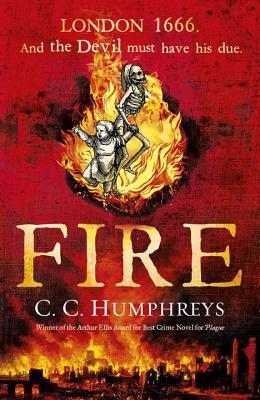
Fire by C. C. Humphreys

Fire 1666 is famous for being the year of the Great Fire of London. For the religious sect known as the Fifth Monarchists it was also the year in which they believed the monarchy would be overthrown, clearing the way for the kingdom of Jesus. These two events form the basis of C.C. Humphreys’ new novel, Fire, a sequel to Plague, which I read in 2014. Don’t worry if you haven’t had the opportunity to read Plague yet – you will still be able to understand and enjoy Fire, which works as an exciting historical thriller in its own right as well as being a sequel.

As the novel opens we are reacquainted with our old friends, Captain Coke, a reformed highwayman, and Pitman, a ‘thief-taker’. These two men fought on opposite sides in the recent Civil War, but have now formed an unlikely partnership to fight crime in the London area. With Charles II the target of a plot by the Fifth Monarchists, Coke and Pitman have been given the task of foiling the attempt on the king’s life. Assisted by Dickon, a young homeless boy rescued by Coke from a life on the streets, the pair begin to investigate, determined to save the king even if it means putting their own lives in danger.

It’s not only themselves they need to worry about, of course. Pitman is a married man with children, while Coke’s lover, the actress Sarah Chalker, is pregnant. Acting is not considered a suitable career for a respectable woman, but Sarah enjoys it and relies on it as a source of income. Unable to work because of her pregnancy, Sarah is left alone and penniless when Coke finds himself the victim of a cruel betrayal. And then, in the early hours of a September morning, a fire breaks out at Thomas Farriner’s bakery on Pudding Lane…

Fire is an enjoyable read and a fascinating journey through 17th century London life. I’ll have to be honest and say that it’s maybe not the deepest or most literary of historical novels but, like Plague, it’s entertaining and fun to read. Before I started reading I had been afraid that it might be too similar to another book I read earlier this year – The Ashes of London by Andrew Taylor – which is also set during the Great Fire of London and features a plot by the Fifth Monarchists, but the two books are actually completely different.

This is an action-packed novel, taking us to a variety of different settings. We visit the theatre for a production of Hamlet, we find out what conditions were like for those unlucky men pressed into the navy against their will, and we see inside a debtors’ prison, where women and children live in squalor praying that their fortunes will change soon. A map is provided at the front of the book to help us locate each of the London sites mentioned in the story and to show how the fire spreads and progresses day by day.

Something that surprised me about this novel is that the Great Fire itself doesn’t start until we are more than halfway through the book. Instead, Humphreys spends most of the novel setting the scene, moving the characters into place, so that by the time the fire breaks out we are already emotionally invested in the story and are desperate to find out whether our heroes and heroines can find their way out of the dangerous situations they are in.

If C.C. Humphreys brings some of these characters back for a third adventure, I would love to read it; otherwise I’ll investigate his earlier books – I’ve already read Vlad: The Last Confession, but some of his others look interesting too.

Thanks to Century for providing a copy of this book for review.

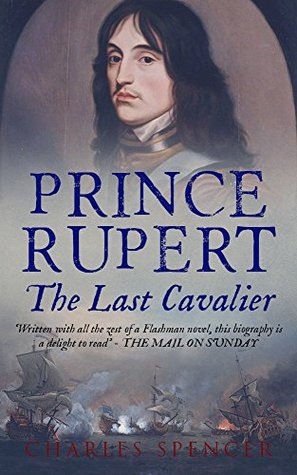
Prince Rupert: The Last Cavalier by Charles Spencer

Prince Rupert As someone who prefers to learn through fiction, I often struggle to find the motivation to start reading a long non-fiction book, especially one by an author I’ve never tried before. I’ve had this one on my Kindle since last year waiting until it was the right time to read it – and that time came a couple of weeks ago after I read The White Witch by Elizabeth Goudge, a novel in which one of the main characters fights alongside Prince Rupert in the English Civil War. Rupert has a relatively minor role in that novel, and in others that I’ve read, but I thought it would be interesting to find out more about him.

Prince Rupert of the Rhine, as he is usually known, was born in Prague in 1619. His mother, Elizabeth, was the sister of King Charles I of England, while his father, Frederick, was the Elector Palatine and – briefly – the King of Bohemia. When Frederick lost his crown to the Habsburg Emperor, his wife and young children were forced to flee Prague and take refuge in The Hague. Growing up in exile, Rupert gained military experience in the Thirty Years War before coming to England and joining his uncle, Charles I, at the beginning of the Civil War.

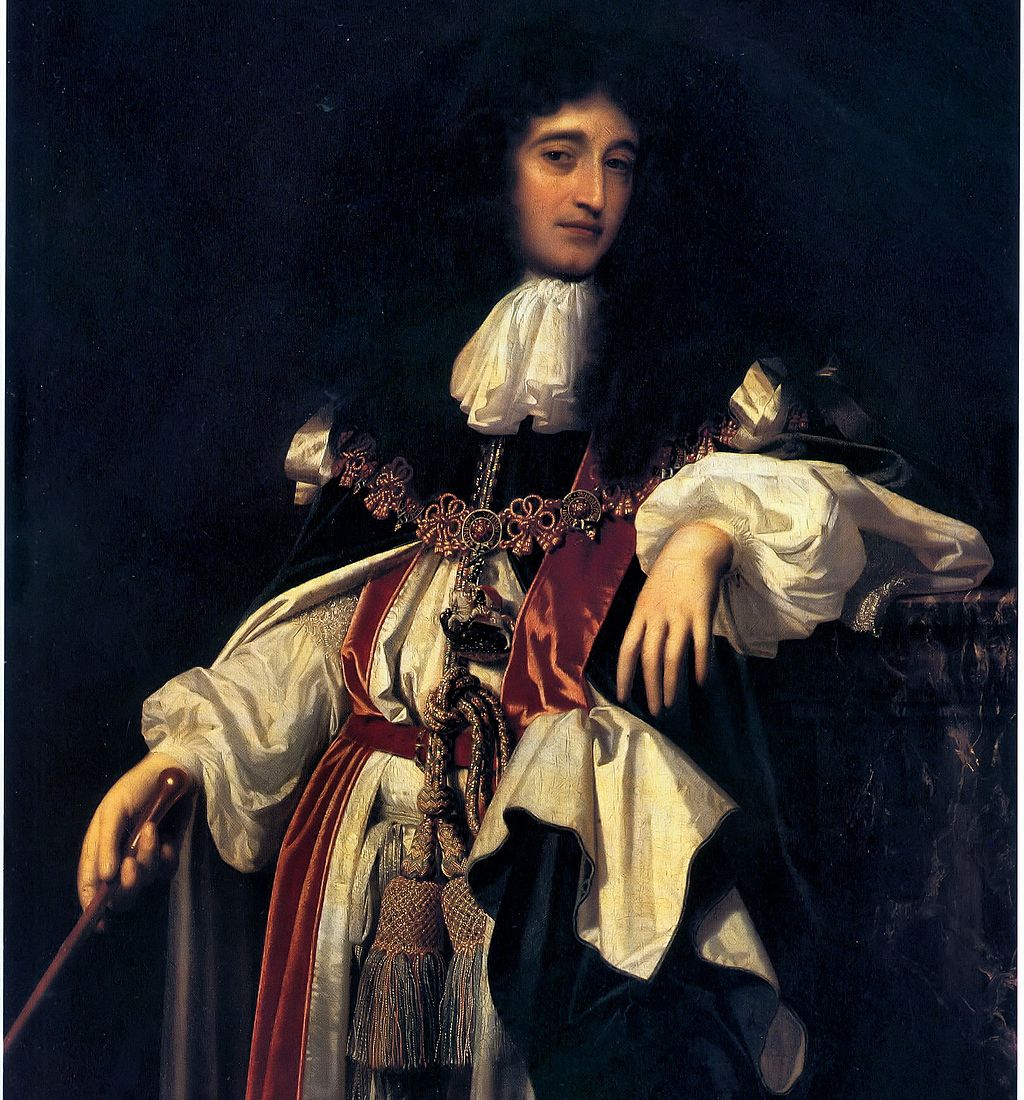
As the commander of the Royalist cavalry, Rupert was one of the most colourful characters of the Civil War. When most of us think of a ‘cavalier’ we probably form a mental image of someone very like Prince Rupert: young, tall and handsome, with long, flowing hair and dressed in the latest court fashions. To the Parliamentarians, however, the cavaliers were villains, guilty of theft, rape, drunkenness and all sorts of debauchery. As the most iconic of the cavaliers, and the King’s most famous general, Rupert was the main target of enemy propaganda – he was even accused of witchcraft and his beloved white poodle, Boye, was suspected of being his familiar.

Rupert Earlier in the conflict, Rupert led the Royalists to some impressive victories, before suffering defeats at Marston Moor and Naseby. While Charles Spencer’s portrayal of Rupert is generally very favourable, I do think he does a good job here of showing why the Royalist cause ultimately failed and why rivalries and divisions between Rupert and his fellow commanders, as well as some very poor decisions, contributed to their downfall. Spencer does seem to like and admire Rupert (which must be an advantage when writing historical biography) but at the same time, he is aware of Rupert’s negative points and not just his positive ones.

The Civil War years only take up about a third of the book, but Prince Rupert’s military career continued after his part in the war ended. After being banished from England in 1646, he became a Royalist pirate, attacking Parliament’s shipping in the Caribbean. Then, following the Restoration of his cousin, Charles II, in 1660, he returned to England and fought in the Second and Third Anglo-Dutch Wars as a senior naval commander. Both of these episodes of the Prince’s life are given a lot of attention in this book, as are his final years (he died in 1682).

I thoroughly enjoyed this fascinating biography – Charles Spencer’s writing is clear and easy to follow, and I even found the descriptions of battle tactics and military strategies compelling, which is unusual for me! The only time I thought it began to drag a little bit was during the naval sections (I always seem to struggle with books set at sea, which I accept is usually my fault rather than the authors’).

What I found particularly interesting was the information on Rupert’s other accomplishments away from his army and navy career: his scientific work and the part he played in the founding of the Royal Society; his role in the development of the mezzotint printing technique; and his governorship of the Hudson’s Bay Company (Rupert’s Land in Canada was named after him). I wasn’t aware of any of this and hadn’t appreciated just how much Prince Rupert had achieved in his lifetime.

I would be happy to read more non-fiction by Charles Spencer but I’m not sure that any of his other books really appeal to me. He is the younger brother of the late Princess Diana (something I didn’t know when I first started reading) and most of his work seems to be concerned with his family history. If anyone has read any other books on Prince Rupert, though – either fiction or non-fiction – I would love some suggestions.

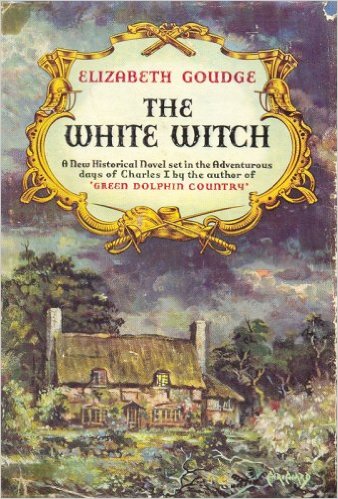
Elizabeth Goudge Day: The White Witch

The White Witch A year ago I read The Child from the Sea as part of Lory of The Emerald City Book Review’s birthday celebrations for Elizabeth Goudge. This year, Lory is hosting another day devoted to the same author and this seemed like a good time to read my second book by Goudge. There were plenty to choose from – some historical and some contemporary, some for adults and some for children – but I decided on The White Witch. I loved The Child from the Sea, which was set in the seventeenth century and told the story of Lucy Walters, a mistress of Charles II, so as The White Witch is set in the same period the chances were good that I would love this book too – and I did.

The English Civil War forms the historical backdrop to the story, but the focus of the novel is on the inhabitants of a small Oxfordshire village and the ways in which their lives are touched by the greater changes taking place in the country as a whole. The ‘white witch’ of the title is Froniga, a healer and herbalist who has family ties with both the Puritan household of Robert Haslewood, the village squire, and with the band of Romany gypsies who camp nearby. Caught between both of these worlds while fully belonging to neither, Froniga is the character around whom all the others revolve.

Froniga is a fascinating character, but there were others whose stories interested me too, particularly Francis Leyland, the secretive stranger who offers to paint a portrait of Haslewood’s two young children, and the mysterious Yoben, who is in love with Froniga. There’s a ‘black witch’ too – and a parson who tries to save her soul – and a vengeful gypsy woman who causes trouble wherever she goes. Whether Parliamentarian or Royalist, Puritan or Catholic, nobleman or gypsy, in the hands of Elizabeth Goudge each of these characters becomes a well-rounded, believable human being – a person we can sympathise with even if we don’t necessarily agree with their views or their choices.

In this novel, the conflicts that take place in an individual’s heart or soul are as important as those which take place on the battlefield, though we do get to see some military action as several of our characters become involved in the major battles and events of the Civil War. But what I loved most about this book were the details of daily village life in the seventeenth century, the beautiful descriptions of the English countryside, and the undercurrents of magic, mystery and mythology which run throughout the story.

The White Witch, although never boring, has a slow pace and – as it was originally published in 1958 – it is written in a style which may not appeal to readers who prefer more modern historical novels and as with The Child from the Sea, there are strong religious and spiritual elements. I love Goudge’s writing style, though; it’s warm and gentle and comforting. I’m looking forward to working through the rest of her novels…and would like to thank Lory for introducing me to her work!

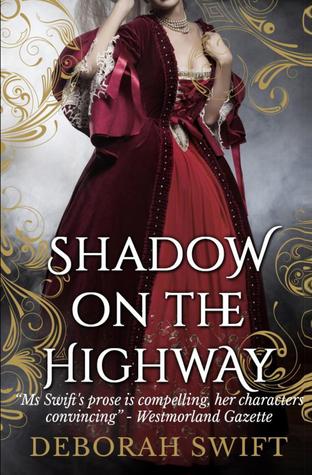
Shadow on the Highway by Deborah Swift

Shadow on the Highway Since reading Katherine Clements’ The Silvered Heart last year, I have been interested in reading more about Lady Katherine Fanshawe (or Ferrers), the seventeenth century highwaywoman known in legend as ‘the Wicked Lady’. On discovering that Deborah Swift had written a trilogy of novels about Lady Katherine, I had made a note to look out for the first one, Shadow on the Highway, so I was delighted to be offered a copy by Endeavour Press after signing up for their Virtual Historical Festival (taking place next week, 18-22 April).

Shadow on the Highway is aimed at young adults but can be enjoyed by readers of all ages; I certainly enjoyed it and thought it had a lot to offer an adult reader, as well as being a good choice for teenagers who are just starting to get into historical fiction. The story is set during the English Civil War and Deborah Swift does a good job of describing the history and politics of the period in a way that is easy to understand.

The novel is narrated by Abigail Chaplin, a young deaf girl who lost her hearing as a result of childhood measles. The Chaplin family has fallen on hard times and Abigail finds herself sent to work as a maid at Markyate Manor, home to Lady Katherine Fanshawe, a young woman not much older than Abigail herself. Katherine sees little of her husband, Thomas, and lives in fear of her hated stepfather, Sir Simon, who can be brutal, violent and controlling, so she quickly comes to value Abigail as a friend as well as a maid.

Desperate to escape from the manor for a while, Katherine persuades Abigail to help her dress as a servant and walk into the village with her so she can see how other people live. By chance she meets Ralph Chaplin, Abigail’s brother, while still in disguise and the two are instantly drawn to one another. This puts Abigail in a difficult position: should she tell Ralph that ‘Kate’ the servant is not what she appears to be? To make things worse, the Fanshawes are a Royalist household whereas the Chaplins are Parliamentarians. And then there’s the matter of the pistols Abigail has found inside Katherine’s writing desk and the worrying tales of a ‘Silent Highwayman’ holding up coaches on the London Road.

I found Shadow on the Highway a quick and entertaining read, although I was slightly disappointed that there wasn’t more actual action on the highway. Instead, the focus is on the family at Markyate Manor, the romance between Ralph and Katherine, and Abigail’s own personal story. It took me a while to warm to Katherine, but I liked Abigail from the beginning. Her deafness adds another intriguing angle to the story; as Deborah Swift explains in her Historical Note, the seventeenth century was a time of great advances in methods of communication for deaf people, including the beginnings of sign language.

As this is the second novel I’ve read featuring Lady Katherine, it was noticeable that Shadow on the Highway differs from The Silvered Heart in many ways. Although both books are based on the same legend, there are several different versions of that legend, leaving plenty of scope for an author to use her imagination. In particular, almost nothing is known of Katherine’s lover, except that the name Ralph or Rafe Chaplin is usually associated with the legends. In this novel, Deborah Swift creates an interesting story surrounding Ralph, making him a Digger – a member of a Protestant movement who believed in equality for all and who took their name from the fact that they attempted to settle and farm on common land:

“They’ll not stop us,” Ralph said. “Right is on our side. How far down do they own this land?” He grabbed up a handful of wet earth, showed it round in front of us. “To here? Or further down to where our spades reach? Does a mole recognise these boundaries? No, he can go where he wishes on God’s land. Are we less than a mole? We who are made in God’s likeness? No. We will persevere.”

The second book in the trilogy, Spirit of the Highway, is written from the perspective of Ralph rather than Abigail, which should be interesting. I’m looking forward to reading it – as well as the third book, when it becomes available.

God and the Wedding Dress by Marjorie Bowen

the-1938-club After the success of last year’s 1924 Club, Karen (of Kaggsy’s Bookish Ramblings) and Simon (of Stuck in a Book) are back with The 1938 Club, the idea being that bloggers read and review books published in 1938, building up a picture of the literary scene in that year. I found lots of possibilities – 1938 seems to have been a particularly great year for literature – but I knew I was only going to have time to read one of them. Luckily the book that I decided on turned out to be a good choice for me.

The intriguingly titled God and the Wedding Dress is set in the seventeenth century in the village of Eyam in England’s Peak District. William Mompesson, the new Rector of Eyam, has recently arrived in the village with his wife, Kate, their two young children and Kate’s sister, Bessie, but the family are finding it difficult to adjust to their new life. They have all been used to luxury and comfort, but Mompesson’s new position requires them to live within their means, avoiding unnecessary extravagance. With Bessie’s marriage to the wealthy John Corbyn quickly approaching, however, the women are determined to make it a day to remember and so they send to London for a beautiful – and very expensive – dress.

God and the Wedding Dress Unfortunately, both women are unaware that with plague sweeping across London, Mompesson has been advised not to have any contact with people or items coming from the capital. By the time the Rector hears about the wedding dress, it’s too late: it has already been delivered to the tailor, the box has been opened, and the tailor’s apprentice is about to die a rapid and unpleasant death. It seems that the plague has arrived in Eyam.

What follows is a story which is both depressing and inspiring; the story of a small community working together in the face of unimaginable horrors, making sacrifices for the good of others which will have deadly consequences for themselves. It’s also a true story, based on the real events of 1665/66 (it’s not the only novel to have tackled this subject – Geraldine Brooks’ Year of Wonders is also set in Eyam, although I haven’t read that one yet). Eyam itself really exists and is known today as ‘the Plague Village’, while many of the characters, including William Mompesson, were real people too.

Although we do change perspective from time to time, most of the story is told from Mompesson’s point of view, which I thought was the right decision. Mompesson, like his wife and sister-in-law, likes the finer things in life, but also has a desire to live the way his parishioners expect the Rector of Eyam to live. He is in conflict with himself, but also with the people around him. At first he views the villagers as little more than pagans, trusting to spells and charms to protect them from the plague. He finds it difficult to gain their respect and it is only when he joins forces with Thomas Stanley, the former Puritan minister of Eyam who was appointed during the time of Oliver Cromwell and who lost his position following the restoration of the monarchy, that Mompesson really begins to feel part of the community.

In her foreword, Marjorie Bowen states that there are many different types of historical novel and ‘this author has tried most of them’ which may sound conceited until you look at the very long and impressive list of books she wrote! I have read three of them in recent months (the other two being Dickon, a fictional biography of Richard III, and The Viper of Milan, a wonderful story set in Renaissance Italy) and I can say that the three I’ve read are all quite different in subject, style and tone. This is a quieter, more reflective novel, as much about a man’s inner struggles as it is about the history surrounding him.

I enjoyed God and the Wedding Dress, although it is obviously not the most cheerful of novels and not one to read if you need all of your characters to have a happy ending. It’s a fascinating story, though, and an important one because I think the sacrifice made by the people of Eyam deserves to be remembered.

~

Other 1938 books previously reviewed on this blog:

Princes in the Land by Joanna Cannan
Miss Pettigrew Lives for a Day by Winifred Watson