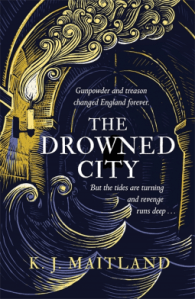
The Drowned City by KJ Maitland

I had already been drawn to The Drowned City, the first in a new series of historical mysteries set in the 17th century, before it dawned on me that KJ Maitland was Karen Maitland, an author whose books I’ve enjoyed in the past. All the more reason to want to read it, then!

In January 1606, exactly a year after the execution of the conspirators who tried to blow up Parliament in the failed Gunpowder Plot, a towering wave sweeps up the Bristol Channel, leaving a scene of devastation. Whole families are drowned, buildings are swept away and farmland is destroyed. As the survivors try to come to terms with what has happened, rumours begin to arise. Some say the wave was summoned by witches, others that it was God’s way of taking revenge for the executions. The King’s most trusted adviser, Charles FitzAlan, fears that it’s all part of another Catholic conspiracy and decides to send someone to Bristol to investigate. Luckily, he knows just the man for the job…

That man is Daniel Pursglove, currently languishing in Newgate Prison awaiting what seems to be certain death. Daniel’s particular background and skills have brought him to FitzAlan’s attention and when he is offered his freedom in return for carrying out some investigations in Bristol, he jumps at the chance. Arriving in the city, Daniel begins his search for the missing Catholic conspirator known as Spero Pettingar, but almost immediately finds himself caught up in another mystery – a series of murders. Are they all part of the same plot or is something else going on in the flooded city?

Like Maitland’s earlier novels, this is a dark and atmospheric story with an interesting historical setting. I’ve never read anything about the Bristol Channel Floods of 1607 (or 1606; Maitland uses the old Julian calendar rather than the Gregorian), so that was something completely new for me. The descriptions of the devastated city in the aftermath of the wave are vivid and even quite eerie and almost otherworldly. It’s always refreshing to read historical novels with a setting other than London, and the flooded Bristol, in a superstitious age when natural disasters were often attributed to witchcraft or messages from heaven, was the perfect choice for this particular story.

Although there a few real historical characters in the book, notably Robert Cecil, most are fictional. Daniel Pursglove, the central character in this and presumably the rest of the series, intrigued me as we know so little about him at first. What is his background? How did he come to be a prisoner? What are the special talents that make him so suitable for this task? As the story unfolds, so does our understanding of Daniel and gradually some of our questions are answered. I’m sure we’ll be learning more about him in future books.

Where this book was less successful, in my opinion, was with the mystery element; once Daniel arrives in Bristol the plot takes off in so many different directions I kept forgetting what his original purpose was in going there. Had it been shorter and more tightly focused, I think I would have enjoyed it much more; instead, I found myself struggling to keep track of what was happening at times. Still, this is a promising start to a new series and I’m definitely interested in reading the second book.

Thanks to Headline for providing a review copy of this book via NetGalley.

Book 16/50 read for the 2021 Historical Fiction Reading Challenge

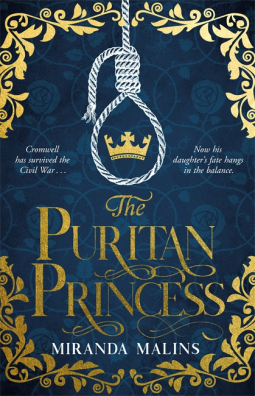
The Puritan Princess by Miranda Malins

As someone who reads a lot of historical fiction, it’s always nice to come across books featuring historical figures I’ve never read about before. The Puritan Princess, Miranda Malins’ debut novel, tells the story of Frances Cromwell, youngest daughter of Oliver Cromwell. Despite the title, Frances never actually became a princess, but the book covers the period from 1657 to 1658 when this looked as though it could be a possibility.

Following years of civil war and the execution of King Charles I, Oliver Cromwell has been named Lord Protector of the Commonwealth of England, Scotland and Ireland…but for some of his supporters, this is not enough. In 1657, Parliament offers him the crown, leaving Cromwell facing a dilemma. On the one hand, accepting might bring about stability, which is what Parliament hopes, but on the other, having recently been involved in abolishing the monarchy, he is reluctant to become monarch himself. History tells us that he will eventually turn the offer down, but while it is under consideration Frances wonders what his decision will mean for her and what implications it could have for her marriage. Frances is in love with the young courtier Robert Rich, whose father supported the opposite side in the recent civil war; they already face difficulties in persuading Cromwell to allow them to marry and any change in Frances’ status could make it even less likely.

As well as her relationship with Robert, the relationships Frances has with her sisters also form an important part of the story. Her eldest sisters, Bridget and Elizabeth are much older; they reached adulthood before their father rose to power and can remember a different way of life; Mary, though, is only a year older than Frances and the two are very close, to the extent that Mary is prepared to sacrifice her own happiness for her sister’s sake. Less attention is given to Cromwell’s sons, but they do appear in the novel now and then – Richard, who will succeed his father as Lord Protector, and Henry, who is Lord Deputy of Ireland.

Oliver Cromwell himself is shown in a much more positive light than usual. Seen through his daughter’s eyes, he is depicted as a loving father and husband, fond of art, music and hunting – very different from the image most people have of the strict Puritan opposed to all forms of enjoyment. However, although it’s good to see a different side of Cromwell, because the story is narrated by Frances and she is clearly biased in favour of her father, I don’t think it’s a very balanced portrayal.

I found the first half of the book slightly slow and repetitive as it is mainly concerned with whether or not Frances will marry Robert Rich and whether or not Cromwell will accept the crown, but I’m glad I kept going as the plot does become more gripping later on. I previously knew very little about the final years of Cromwell’s Protectorate and, as I’ve said, I had never read about Frances until now, so I do feel that I’ve learned something new from The Puritan Princess and I’m already looking forward to Miranda Malins’ next book.

Book 15/50 read for the 2021 Historical Fiction Reading Challenge.
Mini-reviews: Ashes; A Net for Small Fishes; The Lost Diary of Venice

Although I usually devote an entire post on my blog to every book I read, sometimes I find that I have very little to say. That’s not always necessarily a reflection on the quality of the book or how much I enjoyed it, but more an inability to put into words my thoughts about a particular book and an awareness that if I don’t just write something soon I will never get round to reviewing it at all! Three of my recent reads fall into that category, so here are a few paragraphs about each of them:

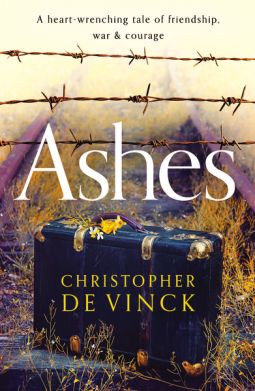
The first is Ashes by Christopher de Vinck, a novel set in Belgium during World War II. Simone Lyon, the daughter of a major general in the Belgian army, meets Hava Daniels while volunteering with the Red Cross in 1939 and despite their different backgrounds – Hava’s family are Jews from Poland – the two become close friends. In those innocent days at the beginning of the war, the girls believe their country will remain safe and neutral, untouched by the horrors starting to sweep across the rest of Europe. Less than a year later, Brussels is under German occupation and Hava and Simone become caught up in everything they’d hoped to avoid.

I found this a moving portrayal of friendship and loyalty, although I struggled to believe that Simone and Hava were really supposed to be eighteen years old as they felt a lot younger than that to me – in fact, I thought the whole story and the way in which it was written felt more like YA fiction than adult. Not a problem, but not what I’d expected! It was interesting to read about the Holocaust from a Belgian perspective and the quotes from politicians, news articles and Nazi propaganda which begin every chapter help to put everything into historical context, but the story was not quite as harrowing as books on this topic usually are. Maybe that was due to the pacing, as a lot more time is spent on building up Hava and Simone’s friendship than on describing the events that follow the Nazi invasion. Overall, this was a worthwhile read, but just didn’t have the sort of depth I prefer in a novel.

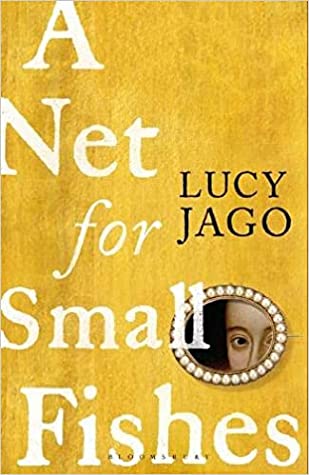
A Net for Small Fishes by Lucy Jago is set much earlier, in Jacobean England, and tells the story of the real life Thomas Overbury Scandal from the perspective of Anne Turner, one of the people involved in the crime. Anne, the wife of a London physician, is also a businesswoman in her own right, holding the patent for yellow starch for collars and ruffs. Early in the novel, she becomes dresser and companion to Frances Howard, the young Countess of Essex – and when Frances falls in love with Robert Carr, the king’s favourite, it is Anne to whom she turns for help. Frances wants to marry Robert, but his friend Sir Thomas Overbury stands in their way; if only she and Anne could somehow get rid of him!

I think I would probably have enjoyed this book more if I hadn’t already read several other versions of the Overbury story, most recently EC Fremantle’s The Poison Bed and Rafael Sabatini’s The Minion. Being familiar with the story in advance took away the suspense and what was left wasn’t really enough to hold my attention. The choice of Anne as narrator, while interesting from the point of view of showing us how an ordinary citizen of the time might have viewed royalty and courtiers, took us further from the action, often leaving a sense that all the excitement was happening elsewhere. I also found Anne’s habit of referring to Frances as ‘Frankie’ very irritating as I didn’t think that name was in common use in the early 17th century. This book just wasn’t for me, but most of the other reviews I’ve seen are much more positive than mine! I do like the title, which is a reference to ‘small fishes’ being caught in the net of justice while the larger fish swim away.

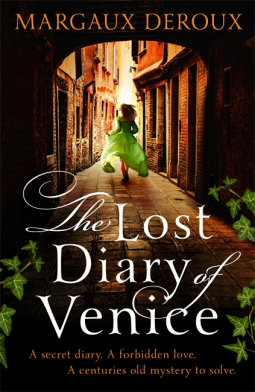
The Lost Diary of Venice by Margaux DeRoux is a dual timeline novel; the present day narrative follows Rose, an expert in book restoration from Connecticut, and the historical one is set in Renaissance Italy. The connection between the two comes when William, an artist, brings a 16th century manuscript into Rose’s bookshop. Rose quickly discovers that the document is a palimpsest, where one set of words has been written over another which has been scraped away. On the surface it is a treatise on art by the great Italian painter Giovanni Lomazzo, but it’s the hidden diary entries and sketches underneath that really intrigue Rose and William.

It’s often the case that when a novel is set in two time periods, I like one much more than the other; with this novel, however, I didn’t find either of them very compelling. The book is well written, with some beautiful descriptions of Venice in the historical sections, but I didn’t feel any emotional connection to any of the characters. Rose’s relationship with the married William didn’t interest me and I was unmoved by Giovanni’s romance with the courtesan Chiara too (although I did have some sympathy for Giovanni as he discovered that he was losing his sight, a terrible thing for an artist to have to come to terms with). I also loved the glimpses we are given of the political situation in Venice at that time, the conflict between the Venetians and the Ottoman Empire, and the events taking place in Cyprus ahead of the Battle of Lepanto. I wished more time had been spent on all of this, as every time I started to become gripped by what was happening, the chapter ended and we switched back to the modern day story. This is not a book I can say I particularly enjoyed, but I’m pleased I was at least able to learn something from it.

Have you read any of these? If so, let me know what you thought.

Book 10, 11 and 12/50 read for the 2021 Historical Fiction Reading Challenge.
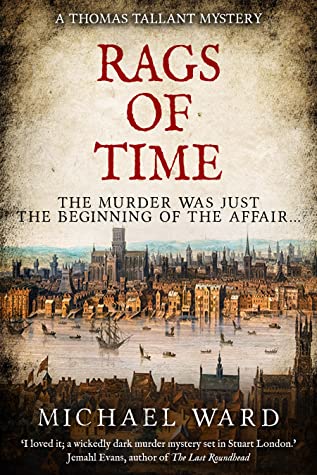
Rags of Time by Michael Ward

I love a good historical mystery, so I’m pleased to have had the opportunity to read Rags of Time, the first in a new series set in the 17th century during the final years of the reign of Charles I. Based on how much I enjoyed this book, I will certainly be looking out for the next one.

The story begins in 1639 with Tom Tallant, a young spice merchant, returning to London from India only to find that he has become implicated in a murder investigation. Wool merchant Sir Joseph Venell has been found dead in a meadow near his home in Kensington and it seems that Tom is the main suspect. Then another murder takes place, this time in the Tallant household, casting further suspicion on Tom. In order to clear his name, Tom must try to identify the real murderer – and for that he will need the help of Elizabeth Seymour, an intelligent and unusual young woman with an interest in astronomy and an addiction to gambling.

“The murder was just the beginning of the affair”, it says on the front cover of the book, and that is quite true because although Rags of Time at first appears to be a straightforward murder mystery, it soon becomes apparent that the murder is only one aspect of the story and for a while takes second place to an equally fascinating subplot involving a printing press and the distribution of seditious pamphlets. Remember that this is all taking place during an eventful and turbulent period of history, a time of tension between King and Parliament and unrest on the streets:

‘Each day and week we suffer treasonable talk on the street, attacks on our churches, seditious street-preachers, scandalous pamphlets on every corner and finally this…mutinous gangs of Apprentice Boys!’

I loved the recreation of 17th century London; there’s such a strong sense of time and place (without becoming overly descriptive) and with so much going on it’s the perfect backdrop for Tom’s adventures. Yet one of my favourite parts of the story relates to something taking place overseas – the ‘tulip mania’ sweeping Amsterdam in the 1630s and the notion of windhandel, or ‘trading in promises’.

As for the mystery itself, once everything starts to come together towards the end of the book, there are plenty of twists and turns and when the solution was revealed I was completely taken by surprise! I think there were probably a few clues but I didn’t pick up on them and didn’t guess either the culprit or how and why the murders were carried out. Although most of the focus of the novel is on Tom, I was pleased to see that Elizabeth also contributes to the solving of the mystery; I wasn’t sure I would like her at first and it took me a little while to warm to her, but I think she’s a character with a lot of potential, as is Tom himself. I hope to meet them both again soon!

Thanks to the author for providing a copy of this book for review.

Book 4/50 read for the Historical Fiction Reading Challenge.

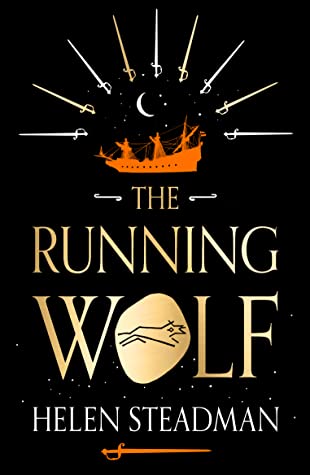
The Running Wolf by Helen Steadman

I enjoyed Helen Steadman’s Widdershins, a novel about the Newcastle Witch Trials of 1650, but her new book The Running Wolf sounded even more intriguing as it’s set partly in Shotley Bridge, which is just a few miles away from where I live. The novel begins, however, in Solingen, Germany in 1687, where master swordmaker Hermann Mohll is about to make a life-changing decision. Along with several other Solingen swordmakers, Hermann is planning to leave Germany and settle with his family in the North East of England in search of more work and better opportunities.

Arriving in Shotley Bridge, Hermann is kept busy making swords to sell to the English, while his wife Katrin, daughter Liesl and mother Anna – accompanied by Griselda, the one-eared dog – try to adjust to their new lives. The story of the Mohll family alternates with another storyline, set a few years later in the winter of 1703-4 and narrated by Robert Tipstaff, the unpleasant and corrupt keeper of Morpeth Gaol. December is usually a quiet month for Tipstaff, but this year is different; a German smuggler has been captured and brought to Morpeth, but who is he and why is the powerful Earl of Nottingham taking such an interest in him? Could he be a threat to the reign of Queen Anne?

Although Hermann Mohll and some of the other characters are loosely based on real people and the novel is inspired by real historical events, the story Helen Steadman weaves around Hermann and his family is fictional. The book may be set hundreds of years ago, but with themes including immigration, identity and trade, it all feels very relevant. I enjoyed watching the Mohll family and the rest of the group from Solingen settling into their new home and trying to find the right balance between holding on to their German customs and traditions and adopting the way of life of their new English neighbours. While Liesl is keen to learn to speak English and to make friends with the local children, Katrin finds it much more difficult to adjust, having been forced to leave her own mother behind in Solingen. As for Hermann himself, he has moments of doubt and times when he wonders whether he has made the right decision.

The Morpeth chapters, being set several years later, confused me slightly at first, but I soon started to see how the two threads of the novel were linked, although I was still kept in suspense wondering exactly how they would come together and what had led to the situation Tipstaff was describing. These chapters are shorter than the others and add some variety, not just with the change of narrator but also with the difference in writing style and the use of dialect.

The Running Wolf is a fascinating book. When you read a lot of historical fiction, as I do, it’s always nice to come across a subject you’ve never read about before and to be left feeling that you’ve learned something new. I could tell that Helen Steadman had thoroughly researched the lives of the Shotley Bridge swordmakers and I wasn’t surprised to read in the acknowledgments that she had carried out swordmaking training as part of her research, which explains the detailed and believable descriptions of Hermann’s work. As well as being an entertaining story, this was also an educational one for me!

Thanks to the author and Impress Books for providing a copy of this book for review.

The Tenth Gift by Jane Johnson

When we think about slavery it’s not usually the capture and sale of white Europeans that comes to mind, but that is the topic at the heart of Jane Johnson’s The Tenth Gift. In August 1625, a church in Mount’s Bay, Cornwall was raided by Barbary pirates who took sixty men, women and children into captivity to be sold at the slave markets of Morocco. In The Tenth Gift, Johnson imagines the story of one of these captives – a young woman called Catherine Anne Tregenna.

When we first meet Catherine, or Cat as she is known, she is working as a lady’s maid at a large manor house in Cornwall. A marriage has been arranged for her with her cousin, Robert Bolitho, but Cat wants more out of life. Her skills with a needle have won her a commission from the Countess of Salisbury and she dreams of joining a guild and becoming a master embroiderer, even if she has to leave Cornwall to do it. However, she is soon to travel further from Cornwall than she could ever have imagined. Abducted from church by Barbary corsairs along with her friends, family and neighbours, Cat finds herself on a ship heading towards North Africa, her fate to be decided by the corsair captain.

But Cat’s is not the only story to be told in this novel. In the present day, we meet Julia Lovat, a woman who has been having an affair with Michael, her best friend’s husband, a seven-year relationship which has just come to an end. As a parting gift, Michael gives her an old book of embroidery patterns, but when Julia opens the book she is confronted by something unusual – a series of diary entries written in the margins by someone called Cat who lived in the seventeenth century. Julia is soon engrossed in reading about Cat’s ordeal, but it is only when she visits Morocco herself that she is able to put together all the pieces of Cat’s story.

I found a lot to enjoy in The Tenth Gift, which isn’t surprising as I’ve previously enjoyed two of Jane Johnson’s other Moroccan novels, The Sultan’s Wife and Court of Lions. She writes so vividly about Morocco, describing all of the sounds, sights and smells with a vibrancy that really brings the setting to life. Her depiction of seventeenth century Cornwall is equally well done and it’s obvious that she knows both places very well. The two storylines – past and present – fit together perfectly and the links between them don’t feel too contrived, although there are some supernatural undertones, particularly towards the end, that I thought seemed unnecessary.

I liked Cat and found her story fascinating but, as happens so often with these dual timeframe novels, I thought the present day one was much weaker. I never really managed to warm to Julia and didn’t have much sympathy for her relationship problems; I did become more invested in her story once she arrived in Morocco, but I think the book would have worked better as a straight historical novel without the modern day sections. Cat’s adventures are so interesting and I appreciated the way Jane Johnson tries to give an explanation for why the corsairs behaved the way they did and explores both the similarities and differences between Christian and Islamic cultures.

If you do read this book and enjoy it, you might also enjoy The Sealwoman’s Gift by Sally Magnusson, which deals with a different pirate raid, this time on Iceland’s Westman Islands in 1627, or The Sea-Hawk by Rafael Sabatini, a wonderfully entertaining novel which also takes us from Cornwall to the Barbary Coast.

Thanks to Head of Zeus for providing a copy of this book for review via NetGalley.

The Devil and the Dark Water by Stuart Turton – #RIPXV

I loved Stuart Turton’s first novel, The Seven Deaths of Evelyn Hardcastle, which I thought was one of the most original and unusual mystery novels I’ve ever read, so I had high hopes for his new book, The Devil and the Dark Water. However, although this is another complex and cleverly plotted novel, it has a very different structure, setting and feel, and didn’t impress me as much as the previous book did.

The Devil and the Dark Water opens in 1634 in Batavia (now Jakarta, Indonesia), an outpost of the United East India Company. The Dutch ship Saardam is about to set sail for Amsterdam, carrying a cargo of spices, a mysterious object known as The Folly – and a prisoner, Sammy Pipps, the world’s greatest detective. Nobody knows what crime Sammy is supposed to have committed, but his friend and bodyguard, Lieutenant Arent Hayes, has vowed to protect him during the journey and to prove him innocent if possible. As the passengers and crew prepare to embark, a leper wrapped in blood-stained rags appears on the dock and has time to place a curse on the ship before his body is consumed by flames.

The curse appears to set in motion a chain of eerie, unexplained events which begin to occur as soon as the ship sails out to sea. Is the Saardam really being haunted by the devil, Old Tom, or is a human being behind these sinister occurrences? With Sammy locked in a cell, it falls to Arent to investigate…but he is not the only person on the ship who is trying to solve the mystery. Sara Wessel, wife of the Governor General, is also determined to uncover the truth, with the help of her daughter, Lia, and her husband’s mistress, Creesjie.

This is a wonderfully atmospheric book, with a real sense of evil and foreboding, beginning in the first chapter with the leper’s curse – ‘Know that my master sails aboard the Saardam. He is the lord of hidden things; all desperate and dark things…’ – and continuing to build throughout the novel, with strange symbols appearing on the sails, a lantern that shines out at sea where no lantern should be, stories of witchfinders and burning villages, and a series of ‘unholy miracles’. I found it genuinely spooky and although the plot itself seemed to move along very slowly at times (I read it on my Kindle and hadn’t really appreciated what a long book it was), the atmosphere more than made up for it. The revelations at the end of the book also took me by surprise; I’d had my suspicions about one of the characters, but I certainly didn’t guess everything correctly!

There were things I liked, then, but the main problem I had with the book was that I never at any point felt fully immersed in the seventeenth century. There’s no real attempt to use language appropriate to the period, Sara and Lia are both modern women with modern attitudes, and the depiction of Sammy Pipps as a sort of Sherlock Holmes character whose cases had been written about (by Arent) for all the world to read seemed completely implausible. To be fair, Stuart Turton acknowledges in an author’s note at the end of the book that he ‘did his research, then threw away the bits that hindered the story’, but I personally prefer a story set in the past to actually feel historical – otherwise, why bother setting it in the past at all? If you’re not too bothered about historical accuracy and are just looking for a dark and atmospheric mystery novel, I’m sure you’ll find a lot to enjoy here, but I don’t think I was the right reader for this book.

Thanks to Raven Books for providing a copy of this book for review via NetGalley.

I am counting this book towards this year’s R.I.P. Challenge.