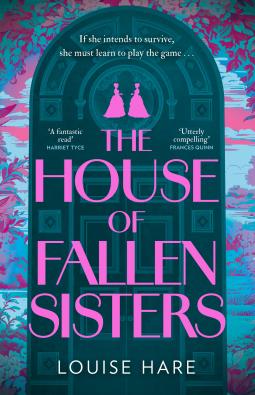
 Louise Hare has written several historical novels set in various periods, but this is the first one I’ve read. I’ll probably be looking for her others as I enjoyed this one – it has an interesting setting and an engaging heroine and it explores a little-known episode from British history.
It’s December 1765 and Sukey Maynard is running away from home – home being Mrs Macauley’s brothel in Covent Garden. It used to be her mother’s place of work, until she died when Sukey was very young, and since then Sukey has been cared for by Mrs Macauley and her family. Now that she’s fourteen, her virginity is about to be auctioned off to the highest bidder and she’s decided to flee rather than stay and go through with it. Before she gets very far, she encounters a young man who has been badly beaten and wounded, and she helps him reach a doctor, who agrees to treat him. However, this delay means that Sukey finds herself captured and taken back to Mrs Macauley.
The rest of the novel follows Sukey after she returns to the brothel and prepares to face whatever life has in store for her. At first her position is better than she expected as she catches the eye of a wealthy client whom she hopes will become her ‘keeper’, but what will she do if he changes his mind? The lives of Sukey and the other girls in Mrs Macauley’s establishment are difficult, uncertain and often unpleasant, but Hare shows us how even in the bleakest of circumstances, small acts of friendship and kindness can make a big difference. Although Sukey makes some enemies, she also makes some good friends and I enjoyed watching her various relationships develop.
There’s a mystery element to the story, which unfolds as young women begin to go missing, both from Mrs Macauley’s house and from the surrounding area, thought to have been lured away by a mysterious figure known only as the Piper. We find out what’s happening to the women earlier than I expected, but this allows Hare to take the story in some interesting directions as Sukey and her friends look for revenge.
Another subplot revolves around Jonathan Strong, the young man Sukey rescues after he is beaten almost to death. Strong really existed and his story is a fascinating one as he was a slave whose owner brought him to London from Barbados and he became the subject of an important legal case regarding slavery and the abolitionist movement in Britain. Sukey herself is mixed race, which gives her an added interest in his fate, and she and her friends try to help Jonathan in any way they can throughout the book. William Sharp, the doctor who treats him, and his brother Granville Sharp are also real people. This is the first time I’ve read a novel in which the Sharps and Jonathan Strong appear, so I found that aspect of the story fascinating.
Although I’ve read other novels about women in Sukey’s position (I highly recommend Michel Faber’s The Crimson Petal and the White and Elodie Harper’s The Wolf Den), the addition of the Jonathan Strong storyline made this one well worth reading as well. The book is published in the UK tomorrow, 12th February.
Thanks to HQ for providing a copy of this book for review via NetGalley.




 She Reads Novels