Written in My Own Heart’s Blood by Diana Gabaldon

Written in my Own Heart's Blood Diana Gabaldon seems to polarise readers like no other author. It’s rare to find anyone who has read one of her novels and didn’t feel strongly about it one way or the other! I do completely understand the reasons why people would dislike her writing, but I admit that I’ve always loved her Outlander series, at least until the last couple of books. I think I was about eighteen when I read Gabaldon’s first novel – Cross Stitch as it was called here in the UK, and I immediately went on to read the next three books (there were only four in the series then). Since then I’ve read each new book as it was published. The seventh volume, An Echo in the Bone (which happens to be the very first book I reviewed on this blog in 2009), left me feeling a bit disappointed, but sadly this new one has disappointed me even more, especially after a five year wait.

In some respects I think Gabaldon has improved as a writer over the course of the series, but the later books just don’t compare to the earlier ones in any of the other ways that matter to me – in plot, structure, characterisation or emotional impact. I’m not sure whether it’s just that my tastes have changed over the years, but I think the shift in narrative structure from being mainly narrated by one character in the first person to being told from multiple perspectives might also have something to do with it. And then there’s the fact that while the earlier novels are set mostly in Scotland during the 1745 Jacobite Rising and its aftermath, the later ones are set during the American Revolution, a period I’m not as interested in. Whatever the reason, these books are starting to lose their appeal for me. I’ll still be following the series to its end, though – I’ve invested far too much time in it to stop now!

Anyway, on with my thoughts on Written in My Own Heart’s Blood. This review is as spoiler-free as I could make it but as it refers to the eighth book in a series you may prefer not to read any further until you’ve caught up with the first seven books. At this point I should say that if you’re not already familiar with this series, then you really need to start at the beginning or you’ll get hopelessly confused!

If you remember, the previous book, An Echo in the Bone, ended on more than one cliffhanger and thankfully Written in My Own Heart’s Blood picks up immediately where Echo left off. There are two main threads to the novel. First, we follow Jamie, Claire and their assorted friends and family members who are all now based in Philadelphia. The year is 1778 and we are in the middle of the Revolution, with all the dangers and complications that brings. In the novel’s other strand, we return to Lallybroch in Scotland to catch up with Brianna and Roger who are having some exciting adventures of their own.

I really wanted to love this book but unfortunately I experienced a lot of the same problems with this one that I had with Echo. Both books seem to be dominated by characters and storylines from Gabaldon’s spin-off Lord John series – and I gave up on that series after two books. Ideally, I would have preferred the Lord John characters to stay in the Lord John books and the main Outlander series to concentrate on Jamie, Claire and the other characters we already know and love, such as Fergus and Marsali and their children or Ian Murray and Jenny. It seemed strange to me, for example, that we see so little in this book of Jenny interacting with Ian, the son she hasn’t seen for years, yet so much time is devoted to a search for Lord John’s nephew, Ben, a character who I can’t even remember being mentioned in previous books.

I don’t want to sound completely negative, because the good parts of Written in My Own Heart’s Blood are very good, but overall I thought the book lacked focus and because there are so many different storylines all running parallel with each other, it was inevitable that I would struggle to care about them all, particularly the ones dealing with characters I don’t really like. Many of the things that happen in the book feel superfluous and seem to have no real purpose other than to make a very long book even longer: a storyline involving two young girls William takes under his protection, an operation Claire performs on a slave with an unpleasant medical condition, and the death of a character which I found totally unnecessary.

The military aspect of the book was another problem for me, but I’ll admit that my lack of knowledge of this period of American history is probably to blame. I couldn’t keep track of the various Generals and Colonels and which side they were on, and whenever Claire met a presumably famous historical figure of the period I didn’t feel the excitement I was obviously intended to feel. My fault, though, not the author’s.

On the other hand, I thought Roger and Brianna’s parts of the book were fantastic! It was great to meet characters I’d never expected to meet again. These sections were much more compelling than the rest of the book, something I never thought I would say! While I’ve always liked Roger I could never quite warm to Bree and have often been impatient with the amount of time devoted to them in some of the previous books – but not this time. I was disappointed that only two out of the novel’s nine parts follow Roger and Bree and their children…I didn’t want their story to come to an end.

So, I’ve been left with very mixed feelings about this book and am sorry I’ve had to post a less than glowing review of a book by an author I used to consider one of my favourites. I did love the final few pages, though, because what I had been desperately hoping would happen did happen! If I didn’t already know that there’s going to be a book nine I think I would have been happy for this to have been the end of the series, even though there are still some storylines left unresolved. Based on past experience, I suspect we’ll have to wait four or five years to read the ninth, and probably final, book. I’m sure I’ll be reading it, despite my problems with this one, and am hoping for a satisfying conclusion to the series.
Ace, King, Knave by Maria McCann

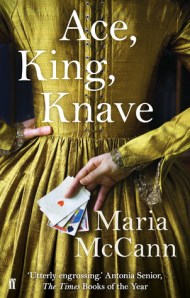
Ace King Knave In Ace, King, Knave, Maria McCann takes us on a journey into the heart of 18th century London and introduces us to two very different women.

Quiet, plain and suffering from what her parents call ‘a little weakness’, Sophia Buller is thrilled when she receives a proposal of marriage from the handsome, charismatic Edmund Zedland. Leaving the Buller family estate behind, Sophia accompanies her new husband to Bath and then to London, but quickly discovers that married life is not quite as she’d hoped. Disappointed to find that their new house is in a disreputable area of town and that Edmund spends a lot of his time away from home collecting debts, Sophia is left feeling unhappy and disillusioned, with only the servants for company.

Betsy-Ann Blore is a woman of an entirely different background and social class. A former prostitute, she now makes her living from selling gin and stolen goods, while her partner, Sam Shiner, has gone into the ‘resurrection’ business with Betsy-Ann’s brother, Harry. Sam’s new career has made him feel miserable, dirty and increasingly dependent on drink, leaving Betsy-Ann dreaming of how life used to be – and maybe could be again – with her previous lover, the cardsharp Ned Hartry.

Two different women living different lives…but could Sophia and Betsy-Ann have more in common than you might think? Ace, King, Knave is a very entertaining and enjoyable novel set in a world of fraud and deception, where nothing is as it seems and outward appearances can be very misleading. Although the two storylines are kept separate from each other at first, there is a connection between the two – a connection which becomes obvious to the reader long before either Sophia or Betsy-Ann discovers the truth about the men they love.

While neither of these women’s lives bears any resemblance to my 21st century life, I initially found it easiest to empathise with Sophia, thrown into a bewildering situation which she is completely unprepared and unequipped to deal with. Sophia compares herself once or twice with Clarissa Harlowe (from Samuel Richardson’s Clarissa) and I thought this was a good comparison, although her story is not exactly the same as Clarissa’s. Betsy-Ann, though, is a stronger character – not surprisingly, as she’s had to learn to survive in a dangerous world of thieves, pickpockets, gamblers and grave robbers – and she quickly became my favourite of the two. Sophia and Betsy-Ann are the novel’s two main viewpoint characters, but some of the story is also told from the perspective of the Zedlands’ young black servant, Fortunate , or Titus as he is renamed. At first I thought these sections of the book felt a bit superfluous, other than to give us an idea of how unpleasant life was for a black person in 18th century London, but by the end of the novel I understood Fortunate’s significance to the story.

Sophia’s narrative and Betsy-Ann’s each have a distinct feel and the author has chosen language appropriate to each woman’s upbringing and social position. Betsy-Ann, Sam Shiner and the other inhabitants of London’s underworld use a style of 18th century slang known as ‘cant’. This slang is very like the ‘flash’ used in Lyndsay Faye’s Timothy Wilde mysteries and also has some similarities to the language found in Georgette Heyer’s Georgian and Regency novels, so I already understood some of the words and phrases. I still found myself constantly turning to the glossary at the back of the book, though, as there were a lot of words I wouldn’t have known otherwise (an ‘autem mort’, for example, is a wife and ‘Romeville’ is a nickname for London). The more refined Sophia and her friends use occasional French expressions such as comme il faut and partie de plaisir and while these are still in use today, they are listed in the glossary too if you need help translating them.

This is Maria McCann’s third novel and although I still haven’t got round to her first, As Meat Loves Salt, I did read her second, The Wilding, which is set just after the end of the English Civil War. This novel, Ace, King, Knave has quite a different feel, as well as having a very different setting, and I enjoyed it a lot more than The Wilding. It reminded me of the Victorian sensation novels I love, despite being set in a slightly earlier time period, and also of novels such as Sarah Waters’ Fingersmith. The only thing that disappointed me was the ending; I had expected a more revenge-oriented conclusion to the novel and I think that would have been more satisfying than the ending we actually got. Other than that, I loved this book and now I must go back and read As Meat Loves Salt!

Empress of the Night by Eva Stachniak

Empress of the Night This is a follow up novel to The Winter Palace, a novel about Russia’s Catherine the Great which I read in 2012. I remember having a few problems with The Winter Palace so I wasn’t sure whether to read this book or not, but I do love Russian historical fiction and in the end I couldn’t resist. Looking back at my review of The Winter Palace, which was narrated by a fictional character, Varvara, I had said that I would have preferred a book written from Catherine’s perspective. That is exactly what Eva Stachniak has done in Empress of the Night, so I was interested to see whether that would help me to enjoy this book more than the first.

The novel has an unusual structure, beginning on the final day of Catherine’s life in 1796. She has just suffered from a stroke and in the hours that follow she looks back on her life in the form of flashbacks and memories. Occasionally we return to the present to see how Catherine and the people around her are trying to deal with what has happened. By the time she takes her last breath we have watched the whole of Catherine’s story unfold, from her early days in Russia at the court of the Empress Elizabeth to the final years of her own reign.

Although this is the second of Eva Stachniak’s Catherine the Great books, the two could be read in either order (for this reason the publishers are describing it as a ‘follow up’ rather than a ‘sequel’). For anyone who hasn’t yet read The Winter Palace, this book (or the first part of it, anyway) covers some of the same events, including the young Catherine’s arrival in Russia as the Princess Sophie of Anhalt-Zerbst, intended bride of the Empress Elizabeth’s nephew, Peter, and her relationship with her friend and spy, Varvara. If you have already read The Winter Palace, however, you are seeing everything from a different perspective this time.

Catherine the Great was a fascinating woman but she is not someone I’ve read about in any depth before and this meant that I really learned a lot from this book. But while major events such as Russia’s war with the Ottoman Empire, the Pugachev Revolt and the creation of the Legislative Commission are discussed, Catherine devotes much more time to remembering her relationships with her various lovers. And there are a lot of them! Her marriage to Peter III was not a happy one and ended with his assassination in 1762 after which Catherine succeeded him to the throne. She was romantically involved with many other men, including Serge Saltykov, Stanislaw Poniatowski (the future king of Poland), Grigory Orlov, and her favourite lover, Grigory Potemkin.

More interesting than the love affairs, for me at least, were the descriptions of Catherine’s family life. It was so sad that her son, Paul, was taken from her by the Empress Elizabeth and allowed to spend very little time with his mother so that in later life he is somebody she barely knows and doesn’t like. But Catherine has warm, loving relationships with several of her grandchildren, particularly Alexander and Alexandrine.

Empress of the Night - UK cover The style of the writing in this book seemed to me to be very different from The Winter Palace – it’s very fragmented and probably what you could describe as ‘stream-of-consciousness’. The disjointed narrative meant that at first I struggled to really get into the story and connect with Catherine, but on reflection I can see that a woman who had just had a stroke and knew that she was dying probably would be confused and incoherent. It would have been nice to have been given some dates, though, because I found it difficult to measure the passing of time and would have liked to have had some idea of when various events were taking place and of how old Catherine was.

I didn’t find this a particularly ‘easy’ read because of the way the narrative jumped around and I think maybe The Winter Palace is my favourite of the two books after all, but I did enjoy learning more about this important and powerful woman.

~

Empress of the Night is available now published by Bantam in the US or by Traverse Press as an ebook only in the UK. Both covers are pictured above. I received a copy for review from Bantam via NetGalley.

The Firebird by Susanna Kearsley

The Firebird Nicola Marter has a special talent, but it’s one that she doesn’t like to admit to – by touching an object she is able to see the history of the other people who have held that same object in the past. When a woman brings a wooden carving of a Russian firebird into the art gallery where Nicola works, asking for a valuation, Nicola is faced with a dilemma. The woman claims that the firebird was given to one of her ancestors by Empress Catherine of Russia and when Nicola holds the carving in her hands she knows that this is the truth, but unless she can find a way to prove it the carving is worth nothing.

Nicola decides to find out all she can about the history of the firebird but as her own psychic abilities are not strong enough, she enlists the help of an old boyfriend, Rob McMorran. Rob shares her special gift of psychometry, but while Nicola tries to keep hers a secret, Rob is happy for everyone to know about his powers. This difference in attitude is the reason they ended their relationship several years earlier, but Nicola knows that Rob is the only person who can help her now. Together they trace the path of the firebird from Slains Castle in Scotland to a convent in Belgium and finally to eighteenth century St Petersburg, and along the way they unravel the story of a young girl called Anna and learn how the Empress’s wooden firebird came to be in her possession.

This book surprised me because based solely on the synopsis, I’d expected to be learning about Russian history, but instead the focus is on Scottish history, particularly the Jacobites (the supporters of the deposed King James VII of Scotland – and II of England – and his heirs). I’ve read other historical fiction novels about the Jacobite Risings and always find it a sad subject to read about; the Jacobites were so devoted to their cause and so hopeful of success, but we know that all their efforts would only end in tragic failure. Yet somehow, in all my previous reading about the Jacobites, I had missed the fact that as well as looking to France and Spain for support, there was also a community of Jacobites working in Russia. It was interesting to read the author’s note at the end of the book and find out a bit more about the historical aspects of the story, including which of the eighteenth century characters really existed and which were fictional.

I often see Susanna Kearsley compared to Mary Stewart and in this book, the telepathic connection between Nicola and Rob reminded me of the one between Bryony and her secret lover in Stewart’s Touch Not the Cat, who could also read each other’s minds and communicate without words – though of course Nicola and Rob have the additional ability of being able to see into the past and watch the actions of people who lived many years ago. I loved following Anna’s story (especially in the earlier chapters set in Scotland and Ypres) but I also enjoyed the contemporary storyline and the interactions between Rob and Nicola. The transitions from one time period to another were smooth and natural and I thought the balance between the two felt right.

The Firebird is a sequel to Sophia’s Secret (or The Winter Sea depending on which country you’re in) and the character of Rob has also appeared in another Kearsley book, The Shadowy Horses. I haven’t read either of those two books yet, though that didn’t seem to be a problem as we are given all the background information we need early in the novel. I’m still looking forward to going back and reading them both, even if I’ve done things in the wrong order!

She Rises by Kate Worsley

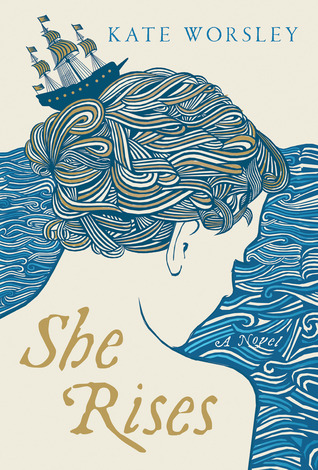
She Rises She Rises begins in 1740 when Louise Fletcher, a young dairymaid from Essex, is offered a position as lady’s maid in a sea captain’s house in Harwich. Louise has never been more than a few miles away from home, so arriving at the Handleys’ prosperous household in the busy port town is like entering a different world. As Louise settles into her new job and gets to know her selfish, spoiled young mistress Rebecca Handley, she also decides to see if she can find out what happened to her brother, Luke, who went away to sea and has never been seen or heard from again.

In the other main thread of the story we learn how Luke was pressed into the Royal Navy from a tavern in Harwich and found himself taken aboard the warship, the Essex. Luke has never been on a ship this size before and soon discovers that life at sea is harsh and dangerous. Things improve when he is befriended by an older, more experienced seaman, Nick Stavenger, but still Luke wants nothing more than to escape and get back home to the girl he loves.

Louise’s story and Luke’s are told in alternating chapters and both narratives have a distinctive voice and style of their own. Luke’s is in the present tense and is filled with nautical terminology and slang; Louise’s is addressed to a mysterious ‘you’ – though we don’t have to wait long before we learn who ‘you’ is. Having finished the book, I think I can see why Kate Worsley chose to write the story in this way, but I’m not a fan of unusual or experimental writing styles in general and couldn’t help thinking that it made the book harder to read than it really needed to be!

The book was so atmospheric, though! The chapters set at sea felt realistic and gave me a good idea of how hard life could be for a pressed man in the navy, though as usual I struggled with all the references to mizen yards, main-topsails and other seafaring terms. But the descriptions of eighteenth century Harwich were particularly vivid: the labyrinths of dark alleys and smugglers’ tunnels, the smell of fish, the sailors standing in tavern doorways, the way the streets become flooded with sea water when the tide rises.

So, there were some aspects of this book that I loved and others that I didn’t like very much. I found it too slow at the beginning, but when Louise’s and Luke’s stories finally come together, the effect is amazing. I had been starting to get impatient, wondering how the two of them would be linked, but when it happened it was definitely worth waiting for! Things that had confused me earlier suddenly made perfect sense and some of the revelations in the final section of the book made me want to go back and read earlier chapters again.

She Rises reminded me of Sarah Waters, particularly Tipping the Velvet, due to the way both authors deal with themes such as gender and identity within a historical setting – so I wasn’t surprised to read that Sarah Waters was Kate Worsley’s mentor. As a first novel this was a very clever and ambitious book and although I had too many problems with it to be able to say that I loved it, I will be hoping for more books from Kate Worsley in the future.

Sir Percy Leads the Band by Baroness Emmuska Orczy

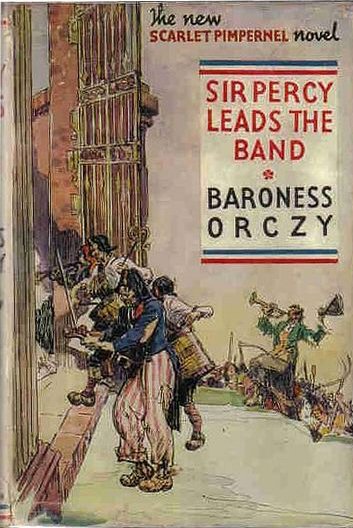
Sir Percy Leads the Band This is one of the many sequels to Baroness Orczy’s classic historical adventure novel, The Scarlet Pimpernel. The story is again set during the French Revolution and at the beginning of the novel, in January 1793, King Louis XVI of France – now known simply as Louis Capet – has been found guilty of ‘conspiring against liberty’.

With their former king sentenced to death it’s a dangerous time for the French aristocracy, and Sir Percy Blakeney and his men are in France to help the La Rodière family avoid the guillotine. Knowing that his old enemy Chauvelin will be determined to track him down, a disguise is necessary – so Sir Percy becomes the fiddle-playing leader of a disreputable band of musicians entertaining crowds of revolutionaries in a tavern near the Château de la Rodière. This means Percy and the League of the Scarlet Pimpernel are ideally placed to be able to protect the family when the mob decides to attack the Château…but could someone within the League be about to betray their plans?

After reading (and loving) The Scarlet Pimpernel last year, I wanted to try another book in the series. I wasn’t sure which one to choose as I’ve seen a few different recommended reading orders, but I decided on this one as it is set immediately after the events of The Scarlet Pimpernel. I enjoyed it but it wasn’t as good as the original book. With all the action taking place in France, this means we don’t see anything of Sir Percy’s wife, Marguerite, which I thought was a bit disappointing as their relationship had formed such a big part of the story in The Scarlet Pimpernel. Marguerite was not a particularly strong character but I connected with her more than I did with either of the two female characters in this book, Blanche Levet or Cécile de la Rodière.

We do spend a lot of time with the other men of the League of the Scarlet Pimpernel. I remembered some of them from the previous book – Lord Anthony Dewhurst, Sir Andrew Ffoulkes and Lord Hastings – but there was also one who was new to me, St John Devinne. From the start it seems that Devinne is distrusted by everyone except Sir Percy and as Percy has previously proved to be so good at judging people and situations, the reader is made to wonder who is right and who is wrong. A lot of the novel’s tension and suspense comes from waiting to see whether he is going to betray Percy and the rest of the League.

Sir Percy Leads the Band was entertaining enough but I didn’t think it was anything very special and there’s really not a lot more I can say about it! Although I didn’t like it as much as The Scarlet Pimpernel it won’t deter me from trying some of the other books in the series at some point. Maybe those of you who are Scarlet Pimpernel fans can tell me whether it’s best to continue reading the series chronologically or if there’s another order you would recommend.

The Scent of Death by Andrew Taylor

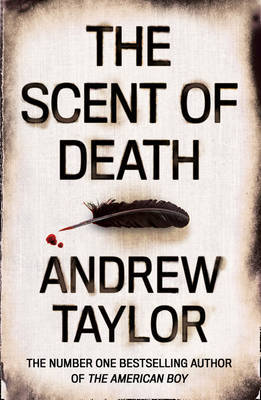
The Scent of Death I’ve been looking forward to reading this book, having enjoyed some of Andrew Taylor’s previous novels, including The American Boy (An Unpardonable Crime in the US), so I was pleased to find that The Scent of Death was a similar type of historical mystery, though set in a different time and place.

The story begins in 1778, during the American War of Independence. Our narrator, Edward Savill, is an English clerk who has been sent to Manhattan (an area still under British rule at that time) to investigate the compensation claims of Loyalists who have been dispossessed of their property. Before Savill’s ship even arrives in the port, he sees a dead body being lifted out of the water. Soon another body is discovered – the body of Mr Pickett, a man who has connections with the Wintours, the family Savill will be staying with during his time in New York.

While Savill worries about the people he has left behind in England – his cold, distant wife and his beloved daughter – he also finds himself becoming embroiled in the lives of the Wintour family. As he gets to know Judge Wintour, his invalid wife and his beautiful daughter-in-law Arabella, whose husband is missing in action after the Battle of Saratoga, he starts to suspect they are covering up some secrets. Who killed Mr Pickett and why? Whose is the child Savill hears crying in the night? And what is the mysterious ‘box of curiosities’ he has heard so much about?

One of the things I like about Andrew Taylor’s historical novels is that he makes a real effort to use language appropriate to the time period throughout both the dialogue and the narration. I read a lot of historical fiction and there are a surprising number of authors who make no attempt to do this at all; there are very few who do it as convincingly as Taylor. He doesn’t use any jarring modern words or phrases and it all adds to the atmosphere and authenticity of the story, so that I could almost believe Edward Savill really was an 18th century English gentleman narrating his adventures to us. Remembering that this novel is set in the 1770s, we are also given a range of different opinions on slavery rather than the author just projecting 21st century views onto all of his characters, which would have been unrealistic.

As with Taylor’s other novels, you can never be sure which characters can and can’t be trusted. From Mr Townley and his clerk, Mr Noak, who nursed Savill through his seasickness on the long voyage from England, to the enigmatic Arabella Wintour herself, some of these people turn out to be friends and others enemies. I didn’t actually like any of them apart from Savill himself, but that wasn’t a problem at all – I’m sure we weren’t supposed to like them and were intended instead to get a feel for the hostility and suspicion Savill encountered everywhere he went.

The vivid, atmospheric settings are another strong point of Taylor’s novels. I don’t have much knowledge of the American Revolutionary War and Taylor does such a great job of portraying life in New York during this period: the variety of different people, including soldiers, spies, refugees and slaves, who had made the city their home; the overwhelming heat of summer and the intense cold of winter; and all the danger and intrigue of a city at war. Savill’s investigations take him into the heart of Canvas Town, an area of slums where many of the city’s criminal gangs have settled after it was destroyed by fire, and also away from New York, to the ruins of Arabella’s family plantation, Mount George.

But this was not a perfect book: while parts of it were exciting and absorbing (especially Savill’s journey into the dangerous, lawless ‘Debatable Ground’) and the short chapters made it easy to keep reading, the story moved forward very slowly and at almost 500 pages it felt too long – although admittedly it would be hard to see what could have been taken out. I did enjoy it, though, and while I did come close to solving the mystery, there were still some surprises and plot twists towards the end of the book. So, this was not my favourite Andrew Taylor book and unlike The American Boy will not be one of my books of the year, but it was definitely still worth reading and I hope it’s true that we are going to meet Edward Savill again in a future novel.