Clarissa Group Read: March update

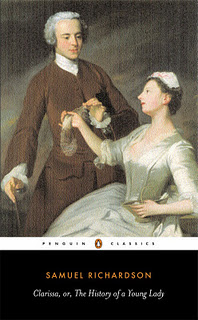
I’m taking part in a year-long group read of Clarissa by Samuel Richardson hosted by JoAnn and Terri. The story is told in the form of 537 letters, the first being dated 10th January and the last 18th December. The idea of reading Clarissa over an entire year is so that the letters can be read on or close to the dates mentioned in the book.

This is my first post on Clarissa since I started reading the book in January – I didn’t post an update in February as I wasn’t very far into the book at that point and felt I didn’t really have much to say about it. Following the group read schedule of reading the letters on or around the correct dates, January and February were lighter months in terms of the number of letters we needed to read (11 in total for those two months); March was much more intense (61 letters) and it didn’t surprise me at all that I soon found myself falling behind. This time last week I was starting to despair of ever making any progress with this book and was wondering whether I really wanted to continue with it – however, I decided to make a big effort to get caught up and I managed to finish the March letters this morning.

Like the January and February letters most of this month’s letters have been between our title character, Clarissa Harlowe, and her friend Anna Howe. Despite the fact that I’m now 3 months and 72 letters into the novel very little has actually happened in terms of plot advancement. Clarissa’s family are determined to keep her away from Lovelace and to force her to marry Mr Solmes, but Clarissa is equally determined not to marry him. It’s all getting very repetitive, with various members of the family pleading with her, commanding her or trying to bully her into doing as they request, and Clarissa refusing to give in to their demands. I was beginning to get impatient, wondering when Lovelace would eventually appear – and we finally heard from him in Letter 31.

Although Lovelace hasn’t yet done anything too bad (other than bribing one of the Harlowe’s servants to spy for him) it’s obvious that he really is going to be the villain Clarissa’s family and friends have suggested he is. He claims to love Clarissa, but it seems that he’s more interested in getting revenge on her family. I was interested to read Samuel Richardson’s footnote where he felt the need to explain some of Lovelace’s motives, as he was apparently disappointed that so many of his readers liked Lovelace and had been misinterpreting his letters. Personally I don’t there’s a single character in this novel that I actually like – though I do have sympathy with the position Clarissa is in and am very glad I’m not living in the eighteenth century!

After Lovelace’s appearance I thought the plot might start to move forward at last, but after Letter 72 things are still the same. The repetitiveness is very effective in showing how Clarissa is running out of options and how hopeless her situation is, but at the moment I feel as if the story is just going round in circles. I’m now ready to start reading the April letters and although I’m feeling much more positive about the book than I was a couple of weeks ago, I hope something is going to happen soon!
Clarissa Group Read: My thoughts so far

Throughout 2012 I’m taking part in the group read of Samuel Richardson’s Clarissa, hosted by JoAnn of Lakeside Musing and Terri of Tip of the Iceberg. I probably won’t be posting an update every month but I thought it would be a good idea to at least post at the beginning, at the end and a few times in between.

For those of you not familiar with Clarissa, the book was published in 1748 and has over 1500 pages. The story is told in the form of 537 letters, the first being dated 10th January and the last 18th December. The idea of reading Clarissa over an entire year is so that the letters can be read on or close to the dates mentioned in the book.

January’s letters form a series of correspondence between Clarissa Harlowe and her best friend Anna Howe. In the first letter we learn that Clarissa and her family are involved in some kind of scandal and Anna wants her friend to tell her the truth about what has happened. Clarissa then replies to Anna with an account of the events that followed her family’s introduction to Mr Lovelace. At first Mr Lovelace had been interested in Clarissa’s sister, Arabella, before turning his attentions to Clarissa herself. It seems that Clarissa’s entire family disapprove of Lovelace, particularly after her brother James gets into a fight with him and is wounded. In the last of the January letters Clarissa has been given permission to visit Anna and stay with her for a few days.

I love the concept of reading each letter on the correct date, but I’ll admit I haven’t been sticking exactly to the schedule. I’m concerned that although January and February have a manageable number of letters (6 in January and 5 in February) some of the other months have a lot more to read (61 letters in March, for example). I don’t want to fall behind later in the year so I’ve been reading slightly ahead of schedule to make sure that doesn’t happen. I know this isn’t quite the idea of the group read but I think it’s the only way I’m going to have time to read the whole book before the end of December.

As I didn’t already have a copy of Clarissa I considered buying the paperback for the readalong, but in the end I downloaded the Kindle edition of the book, which is divided into 9 volumes. There are a couple of advantages to this, I think. I know from my experience of reading other books with 1000+ pages that they can be physically difficult to hold, so at least I don’t have that problem with the ebook version. And it also seems less daunting somehow to be reading 9 separate shorter volumes instead of one thick book.

I was expecting Clarissa to be a difficult book to understand as I haven’t read a lot of 18th century literature, but I actually haven’t had too much of a problem with the language. I wouldn’t describe it as an easy read and I certainly haven’t understood every word, as there are some that are no longer in use or that had different meanings in the 18th century, but I’m trying not to worry about that as long as I can still follow what’s happening. I’m enjoying the story so far and looking forward to continuing with it throughout the rest of the year!

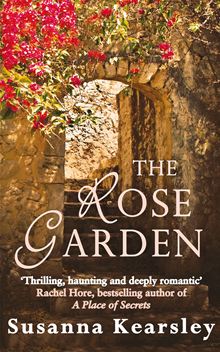
The Rose Garden by Susanna Kearsley

Following the death of her sister Katrina, Eva Ward leaves her home in Los Angeles and travels to England to scatter Katrina’s ashes. Eva knows that of everywhere in the world the place that held the most special memories for her sister was Cornwall, where the two of them had spent many happy days visiting Trelowarth, the home of their childhood friends, the Halletts. As well as scattering the ashes, Eva is looking forward to spending time with Mark and Susan Hallett again and helping them think of ways to attract tourists to the new tea room at Trelowarth. What she hasn’t expected is to find herself slipping back and forth in time between the present day and the eighteenth century, a world of Jacobites, smugglers – and a man called Daniel Butler.

I had never read anything by Susanna Kearsley until now, but she was one of those authors I was sure I would like – and now that I’ve read The Rose Garden I’m pleased to have been proved right! I love novels where time travel forms part of the plot and it’s always interesting to see the different methods authors come up with to explain how and why it happens. In this book I thought the author handled the transitions between past and present very well, in a way that reminded me of Daphne du Maurier’s The House on the Strand (which is also set in Cornwall). I also couldn’t help thinking of Diana Gabaldon’s time travel novels, due to the idea of a modern day woman finding herself in the eighteenth century and in the middle of a Jacobite rebellion. But it wouldn’t be fair to describe The Rose Garden as a copy of any other novel because it’s different enough from anything else that I’ve read to be a great book in its own right.

Eva meets some interesting characters in both time periods, though the most memorable are probably the ones she gets to know in the eighteenth century: Daniel Butler, his brother Jack, and their Irish friend, Fergal. It would have been nice to have seen more of Eva’s conversations with Daniel and Fergal though, as this would have helped make their characters feel more fully developed. And in the present day, I would have liked to have spent more time with Claire (Mark and Susan’s stepmother). I suppose there was a limit to how much the author could include, but I did feel there was the potential for this book to be even better than it already was.

I also loved the Cornish setting – it provided the perfect backdrop for both the historical and contemporary periods of the story. I enjoyed reading about Eva’s adventures in both periods and because the two threads of the story were woven together so closely I found them equally interesting. And later in the book the plot took a turn that I hadn’t expected, which was a nice surprise.

I’m sure I’ll be reading more books by Susanna Kearsley soon – I just need to decide which one to try next!

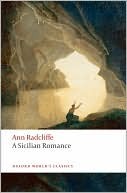
Classics Circuit: A Sicilian Romance by Ann Radcliffe

A Sicilian Romance is a gothic novel first published more than two hundred years ago, in 1790. Set in the late sixteenth century, it’s the story of two sisters, Julia and Emilia, the daughters of the fifth marquis of Mazzini. After the death of the girls’ mother, the marquis marries again and as his second wife prefers to spend her time in Naples, he leaves his daughters living alone in his ancient castle in Sicily with only the servants for company. When their father returns to the island and informs Julia that he has arranged a marriage for her, she rebels against his choice of husband, putting her life in danger. Meanwhile several of the castle’s inhabitants report hearing strange noises and seeing mysterious lights shining in an abandoned part of the building. Is the castle haunted?

This is not the first Ann Radcliffe novel I’ve read; I had previously enjoyed both The Mysteries of Udolpho and The Italian, so when I saw that the theme of the latest Classics Circuit tour was the early gothic novel, I decided to try another Radcliffe book. This one was shorter and less satisfying than the other two I’ve read, but in a lot of ways it was very similar. All of her books are perfect examples of gothic literature and have everything you would expect from a gothic novel: An old castle with crumbling staircases and dark, dusty chambers, locked doors, family secrets, lonely monasteries, bandits, shipwrecks, dungeons and underground tunnels, thunder and lightning, and almost anything else you can think of.

I’ve found that reading early gothic novels requires a different approach to normal. You need to be prepared for lots of melodrama and it’s necessary to completely suspend disbelief because in reality nobody would ever find themselves in the situations Radcliffe’s characters find themselves in. I hope not anyway! The characters also tend not to be as well developed as you would expect in a more modern novel and are usually portrayed as either completely good or completely evil. A Sicilian Romance features two beautiful heroines, a brave, handsome nobleman, and a wicked stepmother, among other stereotypes. The storyline is predictable and relies heavily on coincidences, last-minute escapes and other typical plot devices found in this type of book. It’s almost impossible to take these books seriously, but if you can accept them for what they are, they can be fun to read.

I should also mention that there are some beautifully written descriptions of the Sicilian scenery (although there’s not as much descriptive writing as in The Mysteries of Udolpho, which made this book easier to read and much faster-paced). I enjoyed this book but I think The Italian is still my favourite Radcliffe novel.

Visit the Classics Circuit blog to discover more early gothic literature.

Devil Water by Anya Seton

Several years ago I had the pleasure of discovering Anya Seton’s historical fiction novels. The first one I read was Katherine, the story of Katherine Swynford and John of Gaunt, quickly followed by Green Darkness, Avalon and The Winthrop Woman. After that I moved on to other authors and never got round to reading Seton’s other novels. And so I was pleased to come across one I hadn’t read, Devil Water, in the library. This book was originally published in 1962 and the story takes place during the Jacobite Rebellions of 1715 and 1745.

Devil’s Water is the name of the river that flows past Dilston, a village in Northumberland in the north east of England. In the early 18th century, when Anya Seton’s novel begins, Dilston is home to the Radcliffe family. James Radcliffe, the 3rd Earl of Derwentwater, and his younger brother, Charles, are descendants of King Charles II and were both real historical figures.

The first half of the book concentrates on the life of Charles Radcliffe and his secret marriage to a working-class Northumberland girl, Meg Snowdon, with whom he has a daughter, Jenny. Both Charles and his brother, the Earl, are Catholics and Jacobites (supporters of the Catholic James Stuart who is living in exile in France while his half-sister, the Protestant Queen Anne, reigns in his place). In 1715 the Radcliffes join the Jacobite Rising in an attempt to put James, who they consider their rightful king, on the throne. When the rebellion ends in defeat, Charles escapes to France and leaves Jenny to be raised in London by his friend, Lady Betty Lee. Throughout the second half of the book the focus is on Jenny’s adventures which take her across the Atlantic to the plantations of colonial Virginia in search of Rob Wilson, the man she loves.

This book was particularly interesting to me as I’m from the north east of England myself. There are very few novels set in this part of the country so it was nice to read about places that I’m familiar with. I appreciated the effort Seton made to reproduce various local dialects, depending on whether a character comes from Northumberland, London, Scotland, Ireland, Virginia or elsewhere. Although the northern dialects didn’t always seem quite right to me, it wasn’t a bad attempt and it gave the book a more authentic feel. And the characters never sounded too modern or used language that felt out of place either.

Although I knew absolutely nothing about the Radcliffes before reading Devil Water, you can always trust that an Anya Seton novel would have been well researched and as historically accurate as she could make it, while bearing in mind that it’s still fiction and not everything that happens in the book will be completely factual. This book includes two author’s notes at the beginning and end in which she details the research she carried out and explains which parts of the story are likely to be true. There are also some useful maps and family trees which I found myself referring to occasionally. Don’t worry though, because the book is easy enough to read and doesn’t feel like a history lesson at all.

So, I loved the settings and the time period (I’ve read historical fiction about the Jacobites before and it always makes me feel sad, knowing what the outcome will be) but I did have one or two problems with the book. I thought it was much longer than it needed to be and seemed to take forever to read; the pacing didn’t feel right either – some parts of the book dragged and there were some big jumps forward in time, often leaving gaps of ten years. But the main thing that prevented me from really loving this book was that some of the characters were very difficult to like. I never managed to feel any connection to Charles and was more interested in his brother, the Earl of Derwentwater. And another character, who I had just started to warm to, does something really unforgivable that completely changed my impression of them. I did like Jenny (and a few of the minor characters, such as Betty Lee) but because the people around her were so unlikeable, the story didn’t have the emotional impact on me that it might otherwise have done.

Have you read any other Anya Seton books that I haven’t read yet? Which ones would you recommend?

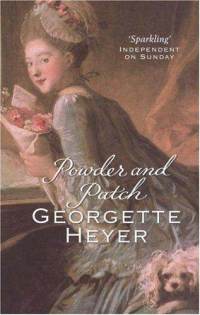
Powder and Patch by Georgette Heyer

Philip Jettan has grown up in the country on his family estate and has never shown any interest in fashionable society. As he grows older he falls in love with his childhood friend and neighbour, Cleone Charteris, but Cleone is unimpressed by Philip’s simple country ways and makes it clear she’s looking for a man with better manners and nicer clothes. And so, with the help of his Uncle Tom, Philip goes to Paris to learn how to be a gentleman…but when ‘le petite Philippe’ returns wearing powder and patches, writing French poetry and fighting duels, Cleone starts to wish she could have the old Philip back.

Powder and Patch is a very early Georgette Heyer novel and in my opinion not an example of her best work. If this had been my first experience of Heyer I think I would have been disappointed, but because I’ve read and enjoyed some of her other novels I’m prepared to accept that I’ll come across the occasional book that’s not as good. And having read some of her later books, it was interesting to see an early indication of her storytelling ability and talent for witty dialogue. There’s a lot of humour in the story but I didn’t find it as amusing as it was obviously intended to be – although I have to say, the final few chapters were quite funny and redeemed the book for me.

None of the characters in this book seemed to have much depth, with Cleone being particularly silly, especially in comparison to some of the stronger, more complex heroines in the other Heyer books I’ve read. I found it difficult to warm to her from the start because I thought Philip was fine the way he was: sincere, honest and reliable, and Cleone’s inability to accept him made me feel annoyed with her. The moral of the story is obvious: that outward appearances can be deceiving and it’s what’s inside that counts.

This book is set in the Georgian era, rather than the Regency period which Heyer is more famous for, and this gives the story a slightly different feel, although I don’t personally have any preference for one period over the other. I should point out that if you’re like me and have only a very basic knowledge of the French language (or none at all) be warned that there are a lot of French phrases scattered throughout the book, including an entire poem written in French. I don’t think it actually affected my understanding of the plot at all but I did keep wondering if I might be missing something.

Powder and Patch is a short novel but just the right length really because I don’t think the plot would have been strong enough to sustain a longer book. I found it a very quick and easy read which kept me entertained for a while, but definitely the weakest of the Heyer novels I’ve read so far.

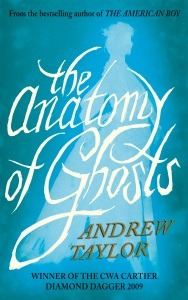
The Anatomy of Ghosts by Andrew Taylor

The Anatomy of Ghosts is an entertaining historical mystery set in and around Cambridge University in the late 18th century. I should read historical mysteries more often because I almost always enjoy them – and this one was no exception.

When London bookseller John Holdsworth’s son is drowned in a tragic accident, his wife insists that their little boy is communicating with them from the spirit world. Holdsworth doesn’t agree and is so disgusted by his wife’s claims that he decides to write a book in which he attempts to prove that ghosts don’t exist. The title of Holdworth’s book is The Anatomy of Ghosts and it soon brings him to the attention of Lady Anne Oldershaw. Her son, Frank, has suffered a nervous breakdown after apparently seeing the ghost of a friend’s wife, Mrs Whichcote, at Jerusalem College, Cambridge. Holdsworth agrees to help Frank – and at the same time he begins to uncover the truth behind what really happened to Mrs Whichcote.

This is the first book I’ve read by Andrew Taylor and I really liked his writing style – it’s detailed yet flows nicely and is easy to read. Some might find the book too slow to begin with, but it does pick up pace. Something that really impressed me about Taylor’s writing was the way he managed to bring his settings so vibrantly to life. Whether he was describing John Holdsworth pushing his barrow of old books through the bustling streets of 18th century London or a couple of students in their caps and gowns strolling through the quiet courtyards and gardens of Cambridge, the sounds, sights and even the smells are incredibly vivid. As a historical novel, though, I think it would have benefited from a few points of reference to anchor the story in the 1700s, as it did at times feel more like the Victorian period to me.

The characters, unfortunately, were not the most likeable of people. In fact, I didn’t like any of them, not even Holdsworth, but it didn’t matter too much – the strength of this book was definitely its plot rather than its characters. And I’ve been left intrigued about what was actually in John Holdsworth’s book, The Anatomy of Ghosts. It would have been a nice addition to the story if we could have read a few excerpts!

Are Andrew Taylor’s other books as good as this one?