The Big Four by Agatha Christie

The November theme for the Read Christie 2025 challenge is spies. I’ve already read the recommended book, Cat Among the Pigeons, and most of the suggested alternatives – I don’t want to read Postern of Fate yet as it’s the final Tommy and Tuppence book and I’m working through that series in order – so I looked for one I hadn’t read that featured international intrigue and espionage. The Big Four seemed suitable but I was a bit wary about reading it as it seems to have a bad reputation. I needn’t have worried, though, because although it’s clearly not one of her better books, I still enjoyed it!

The novel is narrated by Arthur Hastings, which is always a good thing – I love Hastings! – and he plays a big part in the story, having adventures of his own, not just as narrator and sidekick to Poirot. The book begins with a man arriving unexpectedly in Poirot’s doorway, appearing feverish and exhausted. Unable to speak, he writes the number 4 several times on a sheet of paper, and when he recovers he explains that he was referring to an international crime ring consisting of the Chinese mastermind Li Chang Yen, an American, a Frenchwoman and a mysterious fourth person known only as ‘the Destroyer’. Together they form the Big Four, a group trying to cause global unrest so that they can take over the world.

The rest of the book takes the format of a series of loosely connected episodes, as Poirot, with the help of Hastings, tries to identify the other three members of the Big Four. Of course, with their own spies and agents in every corner of the world, the Big Four know that Poirot and Hastings are on their trail and set various traps for them, some of which they fall into and some they don’t. Poirot attempts to set traps of his own, but although he manages to identify the American and the Frenchwoman fairly quickly, Number Four proves much more elusive.

I found The Big Four more entertaining than I expected, considering that Christie herself described it as “a rotten book”. It’s understandable why she would feel that way as the book was published in 1927, during a time when Christie was struggling financially and emotionally and had disappeared from her home for several days. She felt she had to force herself to complete this book and the next one, The Mystery of the Blue Train. This also explains the episodic nature of the book, because it was based on twelve previously published short stories which Christie reworked into a full-length novel rather than trying to come up with a completely original idea while she wasn’t in the right frame of mind to do so.

Despite the book’s origins and its silly, far-fetched plot, I think it’s better than some of her later thrillers, such as Destination Unknown, but I can see why it’s not well regarded and it certainly doesn’t feel like a typical Poirot novel. As I’ve said, though, it has Hastings in it, which is always a bonus, and we also get to meet – sort of – Poirot’s twin brother, Achille! It was a fun, undemanding read for me in this busy month of November, but probably not one I’ll want to revisit.

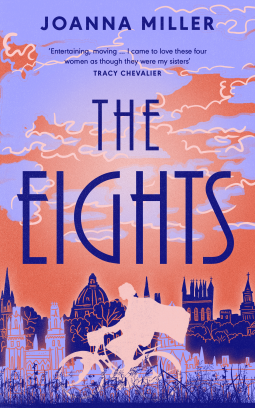
The Eights by Joanna Miller

Although women had been able to study at Oxford University since the 19th century, October 1920 marked the first time they were able to matriculate (or be formally admitted). In her new novel, The Eights, Joanna Miller imagines the stories of four fictional women who were part of this historic moment.

Beatrice Sparks, Theodora Greenwood, Marianne Grey and Ottoline Wallace-Kerr refer to themselves as the Eights because they occupy the four rooms on corridor eight of St Hugh’s, one of the Oxford colleges that is admitting female students. They also each have a name with eight letters, something which pleases Otto, who is a mathematician and loves the number eight. Otto’s family and friends, who are wealthy socialites, are surprised by her decision to study for a degree rather than concentrate on making a good marriage, but Otto is desperate to prove herself after feeling that she failed as a VAD nurse during the war.

Beatrice is the daughter of a suffragette and has grown up in the shadow of her formidable, overbearing mother. For her, university means independence, freedom and a chance to lead her own life at last. Theodora – known as Dora – is also grateful for the opportunity she has been given, but at the same time she feels a sense of guilt knowing that her brother, who was killed in the war, was supposed to be the one to go to Oxford. Dora also lost her fiancé in the war and she’s still struggling to come to terms with both tragedies. The final member of the Eights is Marianne, the quiet, clever daughter of a widowed vicar. Marianne seems to have led a sheltered life compared to some of the other girls at St Hugh’s, but she has a secret that she’s determined to keep hidden.

The Eights describes the experiences of these four young women during their first year at Oxford. There’s not really an overarching plot – more a series of episodes – but I didn’t have a problem with that as I was so absorbed in the lives of the four main characters. My favourite was probably Marianne, but I liked and admired all of them and enjoyed watching their friendships develop over the course of the year. The women all face a different set of challenges and struggle with self-doubt – about fitting in, coping with the work or living up to expectations – and it was good to see them grow in confidence and overcome some of the obstacles in their way. I liked the use of flashbacks to provide background information about each woman and the very different paths they followed that led them to Oxford.

Obviously I wasn’t at Oxford in 1920, so I have no idea how accurate the book is – all I can say is that the setting feels very authentic and it’s clear that Joanna Miller has done her research. She weaves historical detail throughout the novel, often beginning chapters with a real newspaper excerpt or a set of university rules and regulations (which illustrate the double standards in the way male and female students were treated). There’s a glossary at the end, as some readers may be unfamiliar with the academic terms used in the book, many of which are unique to Oxford. There are also some cameo appearances from real-life authors Vera Brittain and Winifred Holtby, who are attending Somerville College, one of Oxford’s other women’s colleges.

My only real criticism is that I found Marianne’s secret far too easy to guess and would have preferred to have been surprised by it, like the other students were. Otherwise, I really enjoyed this book and loved getting to know the Eights. It would be good to meet them again when they return for their second year at Oxford!

Thanks to Fig Tree for providing a copy of this book for review via NetGalley.
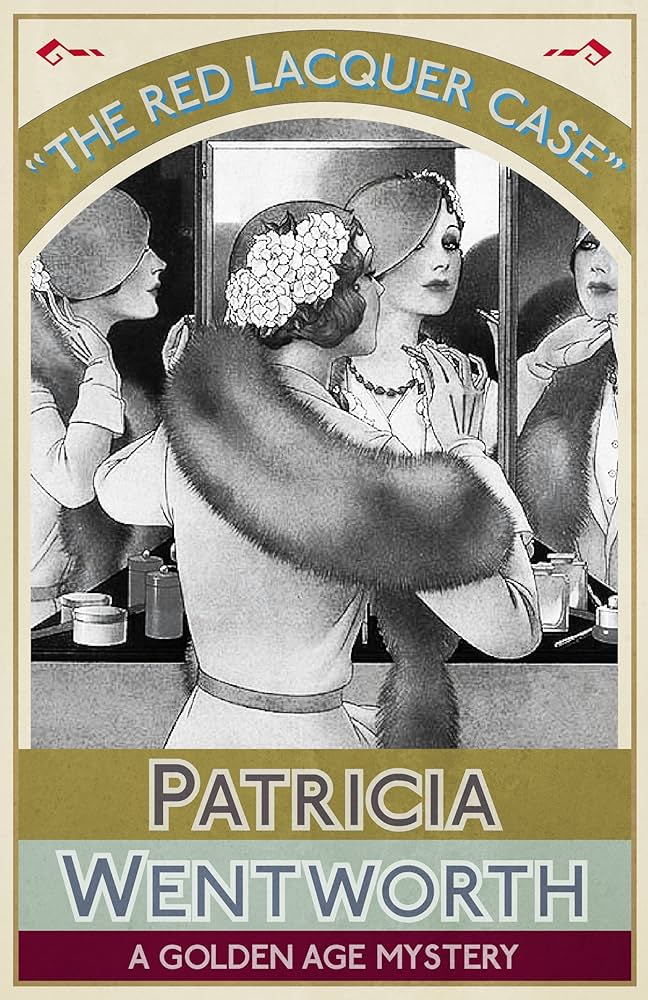
The Red Lacquer Case by Patricia Wentworth – #DeanStreetDecember24

This month, Liz at Adventures in Reading, Running and Working from Home is hosting another Dean Street Press December. I have several books published by DSP that I would like to read but I decided to start with this one, a standalone Patricia Wentworth novel from 1924. I really enjoyed it, so it was a good choice!

The Red Lacquer Case is a spy thriller and like many books of its type it’s probably best not to take it too seriously. Accept it for what it is, though, and it’s great fun. Our heroine is Sally Meredith who, as the novel opens, is listening to her uncle, the scientist Fritzi Lasalle, telling her about a formula he has developed for a potentially dangerous new gas. Lasalle has become paranoid about the formula falling into enemy hands, so he has locked it inside a red lacquer case which has a secret opening mechanism. After showing Sally how it works, he explains that an attempt to open it in any other way will release acid into the case, destroying the contents.

During the night, Lasalle walks out of the house and disappears, leaving behind a note for Sally telling her that the red lacquer case is hidden on a bookshelf. When she goes to look for it, however, she discovers that it’s been stolen. It seems that Lasalle’s worst fears have come to pass and enemy agents now have the case – but they don’t know how to open it and for that they’ll need Sally’s help.

The rest of the novel follows Sally as she tries to evade the enemy, who are determined to capture her and force her to open the case. Unfortunately, although she’s a brave, plucky heroine (thankfully the complete opposite of the infuriating Loveday Leigh in Fool Errant, the only other Wentworth novel I’ve read), she’s too trusting and unobservant and walks straight into every trap set for her. It makes the plot more exciting, I suppose, but it’s also quite frustrating. It’s one of those books where you keep wishing you could jump into the story for a moment and shout “No! Don’t do it!”

Sally has some help from Bill Armitage, a former love interest who now works for the War Office and coincidentally also happens to be on the trail of Uncle Fritzi’s secret formula. He’s not as much help as he could have been, however, because he and Sally spend most of the book embroiled in a series of misunderstandings, being caught out by fake telegrams and other deceptions used by the enemy agents. Luckily for Sally, she find some unlikely allies at the enemy hideout, including a temperamental Polish violinist who conveniently falls in love with her and an elderly aunt who’s completely unaware that she’s sharing her house with spies.

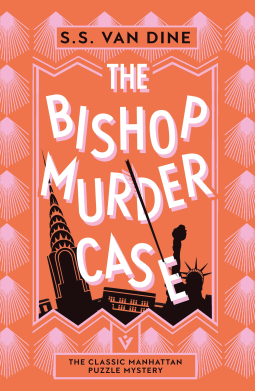
I think you can probably see why I’ve said this isn’t a book to be taken seriously! It’s great escapism, though, and very entertaining. Just be aware that it’s not really the ‘Golden Age mystery’ the cover indicates, as there’s very little mystery involved (although there is a twist at the end, which I didn’t see coming but should probably have guessed). I’m looking forward to reading more of the Patricia Wentworth books available from Dean Street Press!

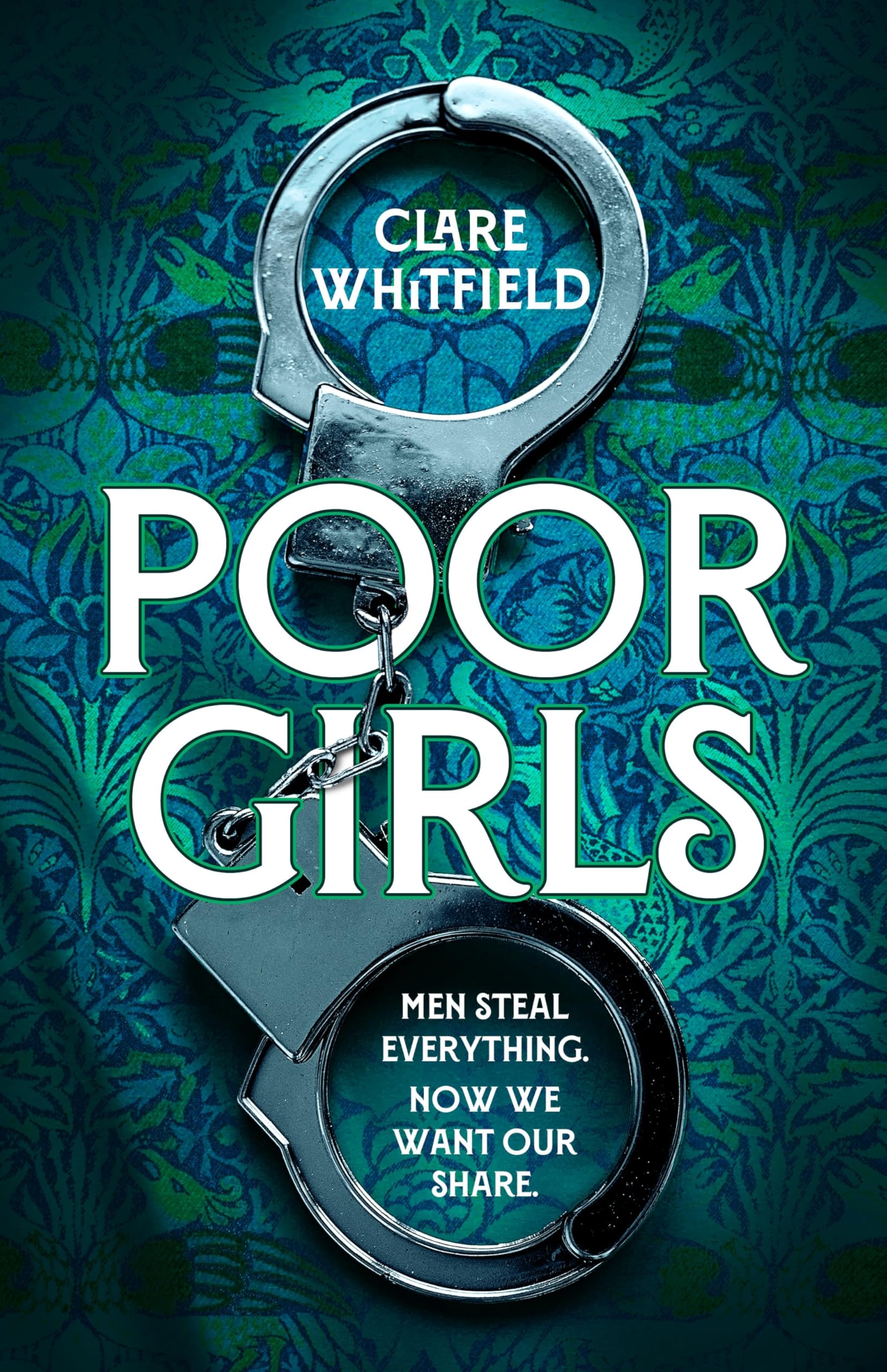
Poor Girls by Clare Whitfield

It’s 1922 and Eleanor Mackridge, like many women, is finding it difficult to adjust to ‘normal life’ now that the war has ended. Compared to working in a munitions factory and feeling that she was doing something important for her country, her new job waitressing at a Brighton hotel is dull and boring. Marriage could offer an escape route, but that doesn’t sound very appealing either, so when Eleanor crosses paths with a member of the all-female crime gang, the Forty Elephants, the temptation to join them is too strong to resist.

Now known as Nell, she moves to London where she is assigned to a cell – a group of four gang members who live and work together – and begins her education in the art of theft. Soon she knows how to steal expensive furs and jewels from London’s grandest department stores, how to conceal her loot in hidden pockets and, most importantly, how to avoid being arrested. Although her conscience troubles her at first, she soon learns to love her new life and her new friends. But what will Nell’s family say when they discover what she is doing? And what will happen if her luck runs out and she gets caught?

Poor Girls is an enjoyable, fast paced novel rooted in historical fact. I wasn’t aware until I finished the book and read the author’s note that the Forty Elephants really existed (the name comes from the Elephant and Castle area of London, where they were based). Although the gang leader, Alice Diamond – known as Queen Alice – was a real person, Nell Mackridge seems to be a fictional character. However, through the stories of Nell and her friends, Whitfield explores some of the factors that may have driven young women like them to turn to a life of crime.

It was fascinating to see how the gang operated and to watch Nell learning all the tricks of the trade – all the cons, deceptions and disguises she needed to be able to avoid detection. Interestingly, women had an advantage when it came to shoplifting as store security were reluctant to stop and search female customers. Also, all those layers of clothing they wore were useful for hiding stolen goods! The success of their operations depended on working together as a team, so trust was necessary between the members of each cell and Nell formed strong bonds with Effie, Lily and Charlie, her partners in crime.

I did have one or two minor criticisms of the book: I felt that the characters of Nell’s three friends could have been more clearly defined – Charlie and Lily, in particular, seemed interchangeable – and there were times when the language felt more 2020s than 1920s. Otherwise, this was a very entertaining novel with a plot not quite like any other I’ve read. I also liked the fact that, although crime is obviously not something we should admire or find glamorous and Whitfield does make the consequences clear, at the same time she isn’t trying to push a moral message onto the reader. The ending of the book isn’t quite what you would expect either, but it’s probably more realistic that way.

It seems that Alice Diamond and the Forty Elephants have been the subject of several recent novels and there’s a non-fiction book available as well. I’m not sure how I’ve missed them all, but will investigate them now. I would also like to read Clare Whitfield’s earlier novel, People of Abandoned Character.

Thanks to the publisher for making a copy of this book available for review via The Pigeonhole.

Book 51 for the Historical Fiction Reading Challenge 2024

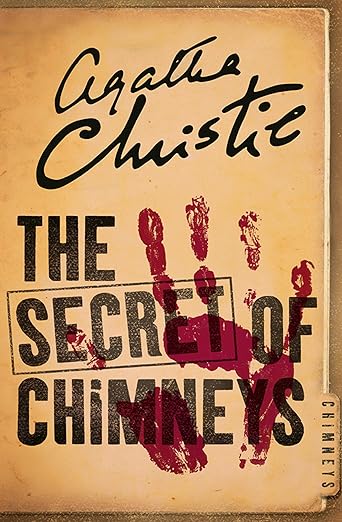
The Secret of Chimneys by Agatha Christie

I’m taking part in Read Christie again this year and the theme for 2024 is Agatha Christie: Through the Decades. Each quarter will focus on a different decade or decades – 20s, 30s, 40s/50s and 60s/70s. For my January read, I have chosen The Secret of Chimneys, which was published in 1925.

The Secret of Chimneys is the first of five novels featuring Superintendent Battle and is more of a thriller than a traditional murder mystery. I usually enjoy the lighter, more adventurous feel of Christie’s thrillers and although this one hasn’t turned out to be a favourite, I did find it very enjoyable. It involves political intrigue in the fictitious Balkan country of Herzoslovakia where attempts are under way to restore the monarchy.

The novel begins in Africa, where Anthony Cade is working as a tour guide when he meets an old friend, James McGrath, in Bulawayo. Anthony agrees to carry out two important tasks for McGrath – firstly, to deliver the manuscript of a memoir written by Count Stylptitch of Herzoslovakia to a London publisher, and secondly, to return a packet of letters to a woman who is being blackmailed. As soon as he arrives in England, however, he discovers that there are other people interested in both the manuscript and the letters, and they will stop at nothing – including murder – to get what they want.

Most of the action takes place at Chimneys, a country estate belonging to Lord Caterham, who invites Anthony to attend a house party at the request of George Lomax, a politician hoping to get his hands on the Stylptitch memoir. With a large and varied group of people gathered at Chimneys – including a beautiful widow, a French governess, a representative from a British oil syndicate and an American collector of rare books – there’s no shortage of suspects when a murder occurs and Superintendent Battle is called in to investigate.

As I’ve said, this is not just a straightforward murder mystery and Christie throws all sorts of things into the plot, from treasure hunts and coded letters to secret societies and international jewel thieves. It’s fun to read, but does need some suspension of disbelief! You also need to be prepared for a lot of racist language, which isn’t unexpected in a Christie novel – or many other 1920s novels – but it seems more excessive in this particular book, maybe because of the large number of characters of other nationalities and races. Other than that, this is an entertaining, fast paced read, written in a light and humorous style that reminded me of PG Wodehouse.

Although Anthony Cade seems to do a lot of the detecting in this book, Battle himself has a larger role than in some of the others in which he appears. He’s certainly no Poirot or Miss Marple, being rather stolid and unimaginative, with what is described as an ‘expressionless face’, but he gets on with his job quietly and unobtrusively and plays a small but important part in the final solving of the mystery. Did I solve it myself? Well, yes and no. I guessed the identity of the jewel thief, King Victor, but there were other revelations that took me by surprise.

This was a good start to a new year of Christie reading! Next month I’m hoping to read The Seven Dials Mystery, another 1920s novel which features some of the same characters.

Where All Good Flappers Go: Essential Stories of the Jazz Age – edited by David M. Earle

I’ve never considered myself to be a fan of Jazz Age fiction – but, to be fair, I’ve read very little of it, other than a few F. Scott Fitzgerald novels. When I saw that Pushkin Press had put together this collection of Jazz Age short stories, I thought it would be a good opportunity to branch out and try some new authors from that era.

This edition begins with an introduction discussing the changes following WWI that led to the birth of the ‘flapper’ as women pursued social and sexual equality, then a short 1925 essay by Zelda Fitzgerald, What Became of the Flappers?. In this essay, Fitzgerald attempts to give her own definition of what a flapper is, before revealing what she believes will happen to them in the end:

The best flapper is reticent emotionally and courageous morally. You always know what she thinks, but she does all her feeling alone. These are two characteristics which will bring social intercourse to a more charming and sophisticated level. I believe in the flapper as an artist in her particular field, the art of being – being young, being lovely, being an object.

The essay is followed by twelve short stories, most of which were originally published in various periodicals between 1920 and 1932. Apart from F. Scott Fitzgerald, all of the other authors were new to me; I had at least heard of a few of them, such as Zora Neale Hurston, Anita Loos and Dorothy Parker, but was unfamiliar with the rest. The Fitzgerald story is Bernice Bobs Her Hair, which stands out as one of the best in the book, but I expect a lot of people will have read that one so I’m going to focus on some of the less well known stories instead.

My favourite story is probably Night Club by Katharine Brush, which describes a typical night at a New York club through the eyes of Mrs Brady, who works there as a maid. Mrs Brady’s job involves looking after a dressing room, where young women come to reapply their make-up throughout the evening, therefore she gets to hear a lot of scandalous gossip involving affairs and proposals. In the world of the flapper, however, these dramas have become so commonplace that Mrs Brady is more interested in the ‘real life’ stories in her magazine!

Another I particularly enjoyed is Dawn Powell’s Not the Marrying Kind, about Aileen, who is not the kind of girl men want to marry – unlike Joan who has always known she will marry and has a ‘hope chest’ of linen ready and waiting for her special day. Then there’s Gertrude Schalk’s The Chicago Kid, in which a chorus girl at the Yellow Parrot cabaret elopes with a millionaire, which inspires Flora, a black girl from Chicago to set out to do the same. I liked the twist at the end of this one!

Despite all dealing with the common theme of the flapper lifestyle, the stories in this collection are quite diverse and include contributions by male authors and black authors, so we see things from a range of different perspectives. Rudolph Fisher’s Common Meter describes a battle-of-the-bands contest between two jazz band leaders trying to win the affections of a beautiful woman, while Viña Delmar’s Thou Shalt Not Killjoy is written in the style of a Biblical parody. I can’t claim to have enjoyed all of the stories – Dorothy Parker’s The Mantle of Whistler, a story written mostly in dialogue as a satire on the flirtatious language used by the flappers, was particularly disappointing, considering she is one of the more famous authors in the collection.

Stories by Dana Ames, John Watts and Guy Gilpatric make up the rest of the book and although, as I’ve said, I found this collection a real mixed bag, it’s always good to try something different and it was an entertaining read overall.

Thanks to Pushkin Press for providing a copy of this book for review via NetGalley.

Benighted by J.B. Priestley

This is the first book I’ve read by J.B. Priestley and a great choice for this time of year. Published in 1927, it was filmed as The Old Dark House in 1935, although I don’t think I’ve seen it so can’t comment on how similar or different it is from the book.

The novel begins as married couple Philip and Margaret Waverton, accompanied by their friend Roger Penderel, get caught in a storm as they try to drive home through the Welsh countryside one night. The rain is torrential and with the roads starting to become impassable, they decide to seek shelter in an old, crumbling mansion, the only house they can see for miles around. It doesn’t look very inviting…

It was the house itself that was so quiet. Driving up like this, you expected a bustle, shadows hurrying across the blinds, curtains lifted, doors flung open. But so far this house hadn’t given the slightest sign in spite of its lighted windows. It seemed strangely turned in upon itself, showing nothing but a blank face in the night. You could hardly imagine that great front door ever being opened at all.

The door is eventually opened by a huge, silent butler and as the trio step inside their sense of unease continues to grow. The house is home to the Femms – the strange and nervous Horace and his fanatically religious sister, Rebecca. The Femms reluctantly allow them to stay for the night, but it quickly becomes obvious to the visitors that they’re unlikely to get much sleep in such an eerie, unwelcoming house. After a while, they are joined by two more people looking for shelter – Sir William Porterhouse, a wealthy businessman, and Gladys du Cane, a chorus girl. The rest of the novel describes the unpleasant, frightening experiences the five guests undergo during their night in the Femm household. It seems that there are other members of the Femm family who haven’t made an appearance yet – and when they do, the guests begin to wish they had stayed outside in the storm after all!

Benighted is a short, quick read and one that I enjoyed, with a few reservations. By the standards of modern horror novels it’s quite tame – I would describe it as creepy and unsettling rather than terrifying – but as a book from the 1920s, it has clearly had a huge influence on what Orrin Grey in the introduction describes as the ‘old dark house’ subgenre. There’s nothing supernatural going on in the novel; the creepiness comes entirely from the portrayal of the odd, sinister characters, the descriptions of the dark, desolate house and the mystery surrounding a locked door upstairs and what lies behind it. I was intrigued to learn that the Addams Family creator, Charles Addams, drew the illustrations for the opening sequence of a 1963 remake of The Old Dark House, because there are some unmistakable similarities between the Addams and Femm families!

Perhaps the real horrors being described in Benighted are the effects of the First World War, which ended less than ten years before the book was published. Priestley himself is quoted as saying that the novel’s characters are “forms of postwar pessimism pretending to be people”. This leads to some long passages in which Priestley explores the mental states of the characters and how they are affected by their night in the Femm house, most notably Roger Penderel who has experienced various traumas during the war, including the loss of his brother at the Battle of Passchendaele, and has been left disillusioned and cynical. These passages added depth to the novel, but at the same time I felt that they slowed down the pace of the plot and pulled me out of the story. In the end, this book didn’t quite work for me either as a horror novel or a psychological study, but it was still an interesting read and has definitely piqued my interest in reading more books by Priestley.