Rogue Male by Geoffrey Household

Geoffrey Household’s 1939 novel, Rogue Male, was the book selected for me in the recent Classics Club Spin. Not knowing much about it, I had added it to my Classics Club list after seeing it included in The Guardian’s Top 10 novels of the 1930s. It sounded very like The Thirty-Nine Steps by John Buchan, which I thought was fun, if a bit repetitive, but while there are definitely some similarities, I found Rogue Male a more satisfying book.

The novel opens in 1938 just after our narrator has been caught aiming a gun at the dictator of an unspecified European country. Despite insisting that he wasn’t planning to pull the trigger and was just enjoying the thrill of ‘hunting the biggest game on earth’, the narrator is tortured and thrown over a cliff, where he is left to die. Somehow, he survives and manages to make his way back to London. On his arrival, he discovers that agents of the dictator he’d tried to shoot have followed him to England. Staying in London is obviously now out of the question, so he heads for the Dorset countryside where he is sure his pursuers will never be able to find him.

The identity of the protagonist’s target is kept carefully hidden, with very few clues throughout the novel, but it’s not difficult to guess who it was supposed to be and Household later confirmed that it was Hitler. As the book was published just before the start of World War II, it’s easy to see why he decided to be vague about it. His reasons for also leaving the narrator unnamed are less clear, but it does add an extra layer of mystery to the novel; while the narrator hides himself from the enemy agents, he also reveals very little of himself to the reader, leaving us wondering who he really is and what his true motives were for carrying out the assassination attempt.

For such a short book (around 200 pages), there’s a lot of plot packed between its covers and the tension builds as we wait to see whether he can continue to evade his pursuers. There’s a sinister villain, Major Quive-Smith who, like everything and everyone else in the book, is shrouded in mystery: we don’t know his nationality, his background or who he represents – all we do know is that he’s determined to force a confession from the narrator that the British government was behind the assassination attempt, something the narrator continues to deny even while his real motives are slow to emerge. Yet although I did enjoy the book, I still felt that there was something missing. The vagueness of it all, and the guarded and secretive nature of the protagonist, made it difficult for me to care what happened to him on an emotional level and this meant I found the story slightly less thrilling than I would have liked.

This book was adapted for film in 1941, under the title Man Hunt, and again as a BBC adaptation, Rogue Male, in 1976. The BBC version stars Peter O’Toole, with Alastair Sim as the Earl (a character who doesn’t appear in the book). It’s on YouTube and definitely worth watching. I’ve also discovered there’s a sequel to this novel called Rogue Justice, published much later in 1982, which is more open about the target being Hitler. I’m not sure if I want to read that one as the reviews aren’t very positive, but it seems Household was quite a prolific author, with more than twenty books published for adults and young adults, so I’ll see if any of his others appeal.

This is book 37/50 read from my second Classics Club list.

The Empty World by D.E. Stevenson

Did you know that D.E. Stevenson had written a post-apocalyptic novel? I didn’t, until I read the description of this one and was intrigued by how different it sounded from her usual light romances and family sagas. First published in 1936, it’s available in ebook format from independent publisher Lume Books. I’m not sure whether ebooks count towards Karen and Lizzy’s #ReadIndies month, but this book seems to be currently out of print in physical form.

The Empty World begins with historical novelist Jane Forrest and her secretary, Maisie, boarding a flight from New York to London. Jane is prepared for a turbulent journey, but she and the other passengers are alarmed when a particularly violent electrical storm seems to knock them off course and cut off communication with the world below. Finally managing to land in Glasgow, the passengers and crew immediately sense that something is horribly wrong – the airport is eerily deserted and nobody comes to meet the plane. And it’s not just the airport…the city of Glasgow itself also appears to be completely empty of people, animals, birds and any other form of life. Eventually, Jane and her companions are forced to face the possibility that they could be the only human beings left in the whole world.

I don’t want to go into the plot in too much more detail as part of the enjoyment of reading this book was first in wondering what had happened to destroy life on earth and then in wondering how Jane and the other survivors would react. It would be nice to think that if a disaster threw you together with a random group of people you would all work together and cooperate, but of course that’s not what happens here and divisions and tensions within the group are apparent from the start. Some of these are romantic tensions, due to there being seventeen men in the group and only five women. Others arise from different views over how their new society should be run and whether everyone should be allowed to be part of it.

It seemed at first that the whole book would be written from Jane’s perspective and I did find her a likeable heroine, but we also get to know the other people who survived the disaster – thirteen passengers and nine crew members – and some of them go off and have adventures of their own as the novel progresses. As well as Jane and her secretary, these include newspaper proprietor Sir Richard Barton, who becomes the de facto leader of the group, Hollywood actress Iris Bright and her bullying manager, two elderly spinster sisters, and an assortment of pilots and engineers.

A few pages into the book, it began to occur to me that something didn’t feel quite right. I eventually looked back at the first page and discovered that although the book was published in 1936, the story is actually set in 1973, Stevenson’s future. That obviously hadn’t registered with me when I first started reading, although the description of a transatlantic flight only taking twelve hours should have told me it wasn’t the 1930s! To be fair, the setting is only vaguely futuristic and overall it does feel much more like the 30s than the 70s.

I don’t read a lot of post-apocalyptic fiction, but Stevenson seems to explore most of the issues that are usually raised in this kind of novel. Why did some people survive and not others? How should they go about rebuilding their lives and how will each survivor fit into the new community that begins to emerge from the ruins? Which ideas, inventions and customs of the former civilisation are worth preserving and which should be consigned to history? Money, for example, no longer has any meaning when you can walk into an abandoned shop and take whatever you need.

I loved the eerie atmosphere Stevenson creates as she describes a world without life, with inanimate objects frozen in place exactly as they were when the catastrophe struck. Trying to travel anywhere is an ordeal as the roads are blocked with crashed or stationary vehicles (although I don’t think Stevenson had fully appreciated how much busier the roads would have become between the 1930s and 1970s – and can you imagine how bad this problem would be in 2023!). I found it particularly poignant when three members of the party take a small plane and fly to Europe, only to find that the places they’d always dreamed of visiting – Rome and Venice, for example – have completely lost their magic now they are devoid of life. At least you can have the museums and galleries all to yourself!

It’s sad that The Empty World seems to have been almost forgotten and has never received the attention or acclaim of other dystopian novels. Maybe it was just too different from Stevenson’s other work to appeal to her existing readers while her reputation as an author of gentle, domestic fiction may have led to the book being overlooked by science fiction fans. I loved it anyway and found it a fascinating, thought provoking read. I would definitely recommend trying it if you can get hold of it – if you need it in physical format, used copies seem to be quite rare and expensive but maybe you’ll be lucky. The book has also been published in the US under the title of A World in Spell.

Death of an Author by E.C.R. Lorac – #ReadIndies

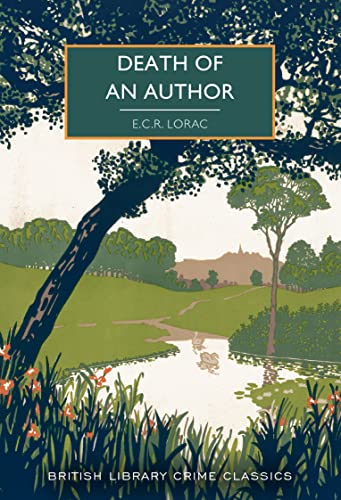
E.C.R. Lorac’s Death of an Author, first published in 1935, begins with the novelist Michael Ashe persuading his publisher to arrange a dinner party so that he can meet another of their authors, the crime writer Vivian Lestrange. Despite being famously secretive and reclusive, Lestrange accepts the invitation – but to Ashe’s surprise, a young woman arrives at the party rather than the man he had expected. Vivian, of course, could be either a man’s name or a woman’s, and Lestrange seems amused by Ashe’s assumptions. She engages Ashe in a debate on gender equality and whether it’s possible to tell a man’s writing from a woman’s – and naturally, she comes out of the argument on top.

Three months later, the same young woman approaches the police to report a crime and introduces herself as Eleanor Clarke, secretary to the author Vivian Lestrange. She admits that Lestrange really is a man, although she has impersonated him at parties a few times for fun. Her reason for contacting the police is that Mr Lestrange has disappeared along with his housekeeper, Mrs Fife, and Eleanor is unable to gain entry to his house, her place of work. She is concerned about him and wants the police to investigate. Inspector Bond, however, is convinced that Eleanor herself is Vivian Lestrange and that some sort of deception is taking place. His Scotland Yard colleague, Inspector Warner, on the other hand, believes what Eleanor has told them and accepts that she and Lestrange are two separate people. But which of them is correct – and if Eleanor is telling the truth, what has happened to the real Vivian Lestrange?

This is the first book I’ve read by Lorac, although I’ve been intending to try one for a long time as I know she’s one of the most popular authors in the British Library Crime Classics series. It was maybe not the best one to start with (it has just been reprinted in January, and I would imagine the British Library have been publishing her stronger books first), but I found it enjoyable enough, with one or two reservations. It certainly has a fascinating plot, with the police trying to investigate a crime without being sure who the victim is or even whether a crime has been committed at all. It was interesting to watch the two detectives, Warner and Bond, working together to come up with different possible scenarios and trying to decide which was the most likely.

As an author who wrote under her initials (her real name was Edith Caroline Rivett) and other pseudonyms including Carol Carnac (Lorac is Carol backwards), the arguments Eleanor Clarke makes to defend women’s writing and to refute the assumption that only men could write a certain kind of book must have been close to Lorac’s own heart. And yet, the way the story develops after this seems to contradict some of the points that were being made at the beginning and I was left feeling slightly confused as to what Lorac was actually trying to say.

Although I couldn’t quite manage to love this one, it was still an entertaining read and I’m sure I’ll try more of Lorac’s books. I know some of you have read a lot of them, so I would like to hear which ones you would recommend!

I’m counting this towards #ReadIndies, a month celebrating books from independent publishers hosted by Kaggsy’s Bookish Ramblings and Lizzy’s Literary Life.

Cards on the Table by Agatha Christie

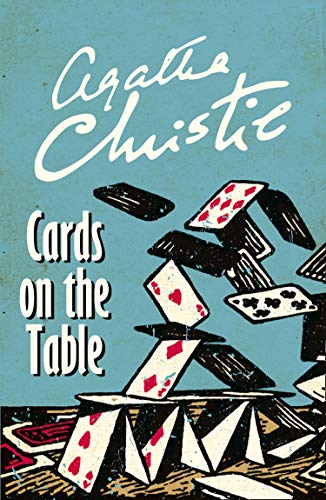
A new year means the start of a new Agatha Christie challenge! Read Christie 2023 is hosted by the official Agatha Christie site and this year the focus is on methods and motives. The theme for January is jealousy and the chosen book is Sad Cypress. However, I read that one quite recently so I’ve gone with one of the alternative suggestions for this month, Cards on the Table.

Published in 1936, this is a Poirot novel, but it also features three of Christie’s other recurring characters, all of whom work together to solve the mystery. They are Superintendent Battle, the Scotland Yard detective; former Army officer and intelligence agent, Colonel Race; and Ariadne Oliver, the famous crime author. All three, along with Poirot, are invited to a dinner party hosted by Mr Shaitana, a wealthy man known as a collector of rare objects. He tells Poirot that he will also be inviting a collection of criminals – four people he believes have committed murder but never been caught.

During the party, the eight guests divide into two groups and sit down to play bridge. Several hours later, Mr Shaitana, who wasn’t participating, is found dead in his chair by the fire – stabbed with a small dagger by one of his guests while the others were engrossed in their game. The four sleuths can obviously be ruled out, but any one of the other four could be the murderer. To get to the truth, Poirot and his friends must investigate the background of each suspect to see whether Shaitana was correct and each of them had already killed before.

Cards on the Table begins with a foreword in which Christie explains that unlike most crime novels where the least likely suspect is usually the culprit, this book has four suspects who are all equally likely. They have all (allegedly) committed murder in the past, so all have a motive – fear that Shaitana will expose their previous crimes to the other guests. There’s Dr Roberts, who may or may not have been responsible for the death of at least one of his patients; Major Despard, whose expedition to the Amazon is shrouded in mystery; young Anne Meredith, who tries to cover up her reasons for leaving a previous job; and Mrs Lorrimer, an expert bridge player whose secrets prove particularly difficult to unearth. I suspected all of them at various points, but every time I thought I’d worked it out, Christie threw another twist into the story and I had to think again!

I loved the idea of having four different detectives working together in the same novel (it’s a shame Miss Marple and Tommy and Tuppence hadn’t been invited to the party too!) and each of them has a chance to contribute to the solving of the mystery. Colonel Race has a disappointingly small part, but we see a lot of Battle and Mrs Oliver – who is often described as a self-parody of Christie herself and provides an opportunity to comment on the writing of detective novels. Of course, it’s Poirot who correctly identifies the murderer in the end!

I enjoyed this book, but I think I would have enjoyed it even more if I’d had more knowledge of bridge, which is a game I don’t play and don’t really understand. Part of Poirot’s investigation revolves around the score cards and an analysis of each suspect’s playing style, so this meant very little to me. Luckily, though, it’s not completely essential to be able to follow all of this and there are other clues to piece together as well.

February’s Read Christie theme is ‘a blunt object’ and the group read will be Partners in Crime, which again is a book I’ve already read. I’ll wait until they reveal the alternative choices for the month and see if any appeal to me.

Wild Strawberries by Angela Thirkell

Wild Strawberries is the second book in Angela Thirkell’s Barsetshire series and the book chosen for me in the last Classics Club Spin. I had mixed feelings about the first book, High Rising, which I read nearly two years ago, but still wanted to try this one as I knew it was about a different set of characters and I thought I might get on better with it.

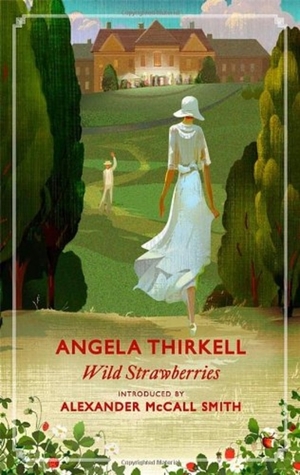
Published in 1934, this book introduces us to the Leslie family who live at Rushwater, their estate in West Barsetshire. The family consists of Henry Leslie and his absentminded wife, Lady Emily, their two sons John and David, and their daughter Agnes, who is married to Robert Graham and has three young children. There was also another son, the eldest, who died in the Great War, and his sixteen-year-old son Martin is now the heir to Rushwater and lives with his grandparents. As the novel opens, Robert Graham has gone to South America on business so Agnes and the children are spending the summer with the Leslies and so is a niece of Robert’s, Mary Preston.

This probably all sounds straightforward enough to you, but for some reason it took me ages to remember who was who and I wished I had drawn a family tree at the beginning! Anyway, once I started to settle into the story and get to know the characters, I found it quite enjoyable. The plot mainly revolves around Mary Preston and the question of which of the Leslie men she’ll marry – David or John. David, the younger brother, is charming but selfish and thoughtless (he promises to bring Mary the ‘wild strawberries’ of the title, then forgets them), while John is quiet, kind and considerate. I knew which of them I wanted her to choose but Thirkell keeps us in suspense until the end of the book!

There’s also a subplot involving a French family, the Boulles, who move into the vicarage for the summer. Keen for Martin to improve his French, the Leslies arrange for him to study with the Boulles’ children, but instead he becomes involved in a plot to restore the French monarchy. Meanwhile, the lovely but irritating Agnes spends the entire book fussing over her children, and Mr Holt, an acquaintance of Lady Emily’s who talks about nothing but gardens and his titled friends, keeps imposing himself on the family, oblivious to the fact that nobody wants him there.

I enjoyed this book once I got into it; although it doesn’t have much more substance than High Rising, I found it funnier and can see now why people praise Thirkell for her humour and wit. There are also touches of poignancy when the Leslies remember their lost son, killed in the war, and when John, who is a widower, grieves for Gay, his late wife. Some of the characters, such as Mr Holt and the Boulles, are clearly there for comedy purposes, but the family themselves, annoying as some of them were, felt realistic to me. I liked John and Martin, while I found Mary’s infatuation with David, who treats her carelessly, frustrating but all too believable. I should mention, though, that there are a few instances of racism, mainly in the first half of the book, that even though I’m used to it in books of this era, I found more jarring than I normally would.

I still haven’t been completely won over by Angela Thirkell but I liked this better than the first book and will probably continue with the series at some point. However, the third book is about Tony, the teenage boy from High Rising whom I found almost unbearable, so I don’t know what I’ll think of that one!

This is book 35/50 read from my second Classics Club list.

Rhododendron Pie by Margery Sharp – #DeanStreetDecember

This month, Liz of Adventures in Reading, Running and Working from Home is hosting Dean Street Press December. Margery Sharp’s first novel, Rhododendron Pie, had been out of print for years and was notoriously difficult to find before being reprinted by Dean Street Press in 2021. As I’ve previously enjoyed some of her other books I decided to read it for this month’s event.

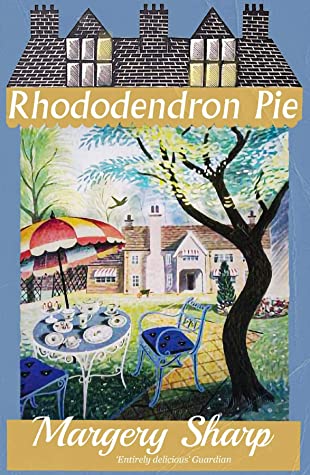
First published in 1930, Rhododendron Pie is the story of Ann Laventie, who grows up in the Sussex countryside with her parents and two older siblings. The Laventies are a wealthy and accomplished family who consider themselves intellectual, artistic and refined; their neighbours, however, see them as cold and snobbish. Ann herself doesn’t fit in with the rest of the family – unlike her brother Dick, a sculptor, and sister Elizabeth, a writer, she hasn’t yet discovered where her own talents lie and doesn’t believe herself to be special or superior in any way. The more time she spends with the Gayfords, the large, cheerful, down-to-earth family who live nearby, the more she becomes aware of how different her own home life is.

The title of the book refers to the tradition in the Laventie household of presenting the children with birthday pies filled not with fruit but with inedible flowers. Aesthetically beautifully and appreciated by the rest of the family, but not by Ann:

“Every year she has hoped against hope, and every year the lovely inedible petals have cheated her. For she has a fundamental, instinctive conviction that they are out of place. Flowers are beautiful in gardens…and in houses, of course…but in a pie you want fruit. Apples. Hot and fragrant and faintly pink, with lots of juice…and cloves. She wished there had been apples in her pie.”

Although Ann loves her family and admires their intellectual brilliance, it’s her secret longing for the ordinary, conventional things in life that drives the story forward. When Dick and Elizabeth move to London and Ann goes to visit them there, her knowledge and experience of the world widens and she becomes more aware of what she really wants and what will make her happy.

It took me a while to get into this book, but once I did it was very enjoyable. I loved Ann and found it interesting to watch the internal conflict play out between her true nature and the values and prejudices that have been instilled into her as a result of her upbringing. Although there’s some romance in the book – Ann has two very different love interests and it’s quite easy to predict which one she’ll choose! – it never really becomes the main focus and is just one aspect of the story, along with the exploration of intellectual snobbery, the class system and the difficulties of finding your place in the world.

As I’d hoped, this was a good choice for Dean Street December and I’ll see if I have time for another book before the end of the month.

The Mysterious Mr Badman by W.F. Harvey

The British Library are doing a great job of bringing the work of obscure or long-forgotten authors back into print with their Crime Classics series and William Fryer Harvey is another. Better known for his horror stories such as The Beast with Five Fingers and August Heat, he also wrote a crime novel, The Mysterious Mr Badman, which was originally published in 1934. I was immediately drawn to this book not just by the title, but also the subtitle, A Yorkshire Bibliomystery!

As Martin Edwards points out in the introduction, this must be the only crime novel with a blanket manufacturer as the protagonist. His name is Athelstan Digby and as the novel opens he is visiting his nephew in the Yorkshire village of Keldstone. One day he offers to take charge of the village bookshop so the bookseller and his wife can go to a funeral. Digby is expecting a quiet, uneventful afternoon so he is amazed when three men separately enter the shop within the space of a few hours, all asking for a copy of the same book: Bunyan’s Life and Death of Mr Badman. Digby is unable to find this book on the shelves, but when a boy arrives at the shop later that day with a pile of old books to sell – including Mr Badman – he becomes even more suspicious. What is going on – and why is that particular book so important?

This is a short novel, so I won’t go into the plot in much more detail…except to say that it’s great fun. There are murders, incriminating letters, political conspiracies, a touch of romance and a lot of humour! With character names like Athelstan Digby, Euphemia Upstart, Olaf Wake and Kitchener Lilywhite, you can see that it’s not a book to be taken entirely seriously, but at the same time it’s a clever, interesting and well written novel and one of the most enjoyable I’ve read from the British Library Crime Classics series for a while. Just be aware that it’s more of a thriller than a conventional detective novel; the mystery is actually solved quite early in the book and the significance of Mr Badman and the identity of the villain are revealed much sooner than you would expect. The fun is in watching Digby team up with his nephew Jim Pickering and Jim’s love interest Diana Conyers to try to decide what they should do with the information they’ve obtained.

As always when I read mysteries written in this period, I was struck by not only how much more difficult some aspects of crime-solving were in those days (no internet, no DNA testing) but also how much easier other aspects were. It was far simpler to trace a particular car when there were so few of them on the roads and everyone would notice an unfamiliar one driving through their village. I really enjoyed watching Digby, Jim and Diana investigate the mystery using the methods available to them in the 1930s, even if they occasionally walk straight into traps that are quite obvious to anyone who reads a lot of Golden Age crime fiction! I also loved the Yorkshire setting, although not all of the novel is set there.

Although, as I’ve said, Harvey is better known as a horror writer, it seems that the character of Digby previously appeared in a book of short stories, The Misadventures of Athelstan Digby. I hope that one will become available as a BLCC book soon too.