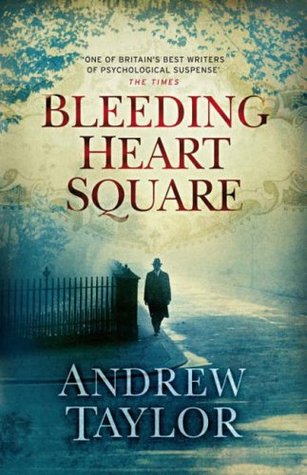
Bleeding Heart Square by Andrew Taylor

Andrew Taylor is one of my favourite authors of historical mysteries and after reading his latest one, The Fire Court, earlier this year, I remembered that I still had Bleeding Heart Square to read.

The novel opens in London in 1934 with Lydia Langstone, stepdaughter of the wealthy Lord Cassington, walking out on her violent and brutal husband. Armed with her copy of Virginia Woolf’s A Room of One’s Own, Lydia heads straight for Bleeding Heart Square, home to her father, Captain Ingleby-Lewis. The Captain isn’t entirely respectable and neither is the address, but Lydia doesn’t care – she just needs somewhere to stay until she can build a new, independent life for herself.

Another new resident of Bleeding Heart Square is Rory Wentwood, a young man who has recently returned from India to find that his girlfriend, Fenella, is no longer interested in marrying him. Rory still cares about Fenella, though, and when he hears about the disappearance of her aunt, Philippa Penhow, several years earlier, he decides to uncover the truth. The house at Bleeding Heart Square had belonged to Miss Penhow until she signed it over to the current owner, Joseph Serridge, before supposedly going to live in America. Rory has his doubts and has taken a room in the house so that he can investigate further.

When a number of foul-smelling parcels addressed to Mr Serridge begin to arrive at Bleeding Heart Square, the residents are both disgusted and intrigued. The packages contain rotten hearts neatly wrapped in brown paper and are obviously intended as a message to Mr Serridge – but who is sending them and why? What really happened to Philippa Penhow? And why is a policeman watching the house? Lydia teams up with Rory to try to find the answers, while doing her best to avoid her abusive husband.

Bleeding Heart Square is a mystery novel, but it is also a fascinating portrayal of life in 1930s London, with a particular focus on the rise of the fascism movement in Britain. One of the most memorable scenes in the book involves a meeting of the British Union of Fascists which descends into chaos when a few brave voices dare to question the party’s policies and are forcibly removed by Oswald Mosley’s black-shirted supporters. I found this aspect of the book interesting because of course with World War II on the horizon, fascism would soon become forever associated with Hitler and Mussolini and not something decent people would want to be part of – but here we see respectable people taking Mosley’s views seriously and considering giving him their support. It’s frightening to think of how different things could have been, and also still frighteningly relevant today.

Despite the 1930s setting, however, I thought the plot and the characters seemed much more suited to the Victorian period – there was a definite Dickens influence and in fact Bleeding Heart Yard appears in Little Dorrit. If you removed the fascism storyline, the rest of the novel could easily have been set in the 19th century; I was taken by surprise every time somebody got into a car as I felt it should have been a horse and carriage!

I liked both Lydia and Rory and found their personal stories so interesting that the central mystery felt almost secondary – although I was intrigued from the start by the brief diary entries and the comments by an unknown narrator that open every chapter. What will we learn from the diary and who is the narrator talking to? The ending of the book, in which the truth is revealed, was unexpected, but maybe there were clues from the beginning if I had been paying more attention!

Bleeding Heart Square isn’t my favourite of Andrew Taylor’s books – that would be The American Boy – but I did enjoy it and now that I’ve read all of his historical mysteries I’m wondering which of his other books I might like. Any recommendations are welcome!

This book counts towards the R.I.P. XIII challenge (category: mystery).
I am also counting it towards the What’s In a Name? challenge – a book with a shape in the title.
Harriet by Elizabeth Jenkins: A book for the Persephone Readathon

Jessie at Dwell in Possibility is hosting another of her Persephone Readathons this week and as I am also taking part in this year’s R.I.P. Challenge, I decided to read a book that would count towards both. Harriet, first published in 1934, is based on a real life crime which took place in 1877 and is a much darker story than you would usually find between the dove-grey covers of a Persephone book.

Harriet Woodhouse, the thirty-three-year-old title character, is referred to in the novel as ‘a natural’ – someone whom, today, we would probably describe as having learning difficulties. Her use of language – both written and spoken – is sometimes not quite right, she can appear to be insensitive and she is often slow to understand what people really mean. Mrs Ogilvy, her mother, is very loving and protective towards her daughter and although Harriet still lives at home, she encourages her to be as independent as possible and to visit family and friends now and then. It is while visiting her cousins, the Hoppners, that Harriet is introduced to Lewis Oman. Lewis is the brother of Elizabeth Hoppner’s husband, Patrick, and it is through this family connection that Lewis has heard that Harriet is in possession of a small fortune and due to inherit more on the death of an aunt.

When Lewis asks Harriet to marry him, his motives are very obvious to the reader: he is only interested in her money and feels nothing for Harriet herself. Mrs Ogilvy is horrified, but as her daughter is an adult she finds that there is nothing she can do to prevent the marriage, especially as Harriet thinks Lewis is charming and wonderful and believes everything he tells her. The wedding goes ahead and, having achieved his goal, Lewis quickly tires of his new wife, sending her to live in the country with Elizabeth and Patrick.

From this point, the story becomes very disturbing with Harriet completely isolated and cut off from the people who love her and care about her. Her treatment at the hands of Lewis and Patrick, and Elizabeth and her younger sister Alice, is quite painful to read about, particularly as their acts of cruelty are rarely described explicitly – instead, we are left to draw our own conclusions from the hints we are given. It is not quite clear whether the Omans and Hoppners had set out to treat Harriet so horribly or whether they just see her as an inconvenience, not worth paying any attention to, and so the neglect happens almost by accident. Either way, it’s cruel and inhumane and the complete lack of compassion displayed by these four people is shocking.

Something that struck me while I was reading was that we never really get into Harriet’s head and never know what she is thinking or feeling. We see her only through the eyes of other people, as a nuisance to be ignored and kept out of the way, or in the case of Mrs Ogilvy, a beloved and vulnerable daughter whom she is powerless to help. The one person who could possibly have done something to help is Clara, the young maid who works for Elizabeth and Patrick – she knows something is not right, she knows Harriet is in danger, and yet still she does nothing. I found this very frustrating and I had to keep reminding myself that Clara was only a teenager, probably afraid of losing her job, and that Elizabeth Jenkins was constrained by the historical facts of the case – if somebody had intervened when I wanted them to, it could have changed the whole outcome of the story.

It was interesting after finishing the book to look up the details of the real Harriet and what happened to her – it seems that Elizabeth Jenkins has kept the same first names of the characters, but changed the surnames, while most of the other basic facts are correct. It doesn’t feel right to say that I enjoyed this book, but I did find it a fascinating and gripping read, as well as a very sad and harrowing one. Knowing that it is based on a true story makes it even more poignant.

This is my third book read for the R.I.P. XIII Challenge (category: suspense/thriller)

Are you taking part in the Persephone Readathon? What have you been reading?

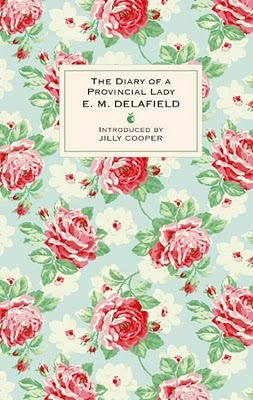
Diary of a Provincial Lady by E M Delafield

Today would have been E M Delafield’s birthday – and she is the next author to be featured in Jane at Beyond Eden Rock’s Birthday Book of Underappreciated Lady Authors. I wasn’t planning to join in with this one but, during last weekend’s Mini Persephone Readathon, having finished Monica Dickens’ The Winds of Heaven, I wanted something else to read and remembered that Diary of a Provincial Lady is also published by Persephone. My copy is not the dove-grey Persephone edition, but I was still pleased to have found a book that would count for both the Readathon and today’s celebrations!

Diary of a Provincial Lady, first published in 1930, is exactly what you would expect from the title: a novel written in the form of the diary of a ‘Provincial Lady’. The Lady, whose name we never learn, lives with her husband Robert in a village in the south of England. Their young son, Robin, is away at school much of the time, but there is also a daughter, Vicky, who is educated at home by Mademoiselle, her French governess. Several more servants, including a temperamental cook and a series of dissatisfied parlourmaids, complete the household.

The Provincial Lady’s days are always busy and varied. As well as being responsible for managing the servants, there are tea parties and garden fetes to attend, dinners to host and visitors to entertain – including the formidable and snobbish Lady Boxe, and Our Vicar’s Wife who, once she arrives, often forgets to leave again! The Provincial Lady records all of these things in her diary over a period of about a year, writing in short, concise sentences interspersed with notes, queries and memos to herself.

I have been putting off reading Diary of a Provincial Lady for a long time, because I wasn’t convinced that it sounded like my sort of book, but I was actually very pleasantly surprised. One of the things that surprised me was how often I found I was able to relate to the Provincial Lady and her problems. In fact, I think a lot of the situations she describes are things that most of us would probably identify with…saying something stupid and then wondering why on earth we said it; pretending we understand what somebody is talking about and then being caught out later in the conversation; agreeing to do something and immediately wishing we hadn’t!

I couldn’t relate to everything, of course. The Lady’s lifestyle is entirely different from my own – I don’t have servants to worry about, for example, and if I found myself in financial trouble my solution wouldn’t be to buy myself some expensive new dresses then go off to the South of France for a holiday. I can appreciate, though, that she belonged to a certain time and a certain class and that her position in society meant that she was expected to behave in a particular way.

I was also surprised by how funny the book was! A sense of humour is often a personal, individual thing and sometimes when someone else says that a book is hilarious I’m disappointed when I don’t find it very funny at all (and I’m sure this probably happens the other way around too). But the Provincial Lady’s observations are so witty and the things that happen to her are so amusing I couldn’t help but laugh.

I am aware that there are more books in the Provincial Lady series. A question to those who have read them – are they as good as this one or is there another E M Delafield book you think I should read instead?

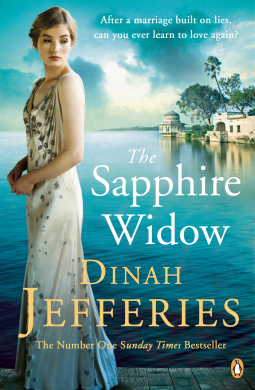
The Sapphire Widow by Dinah Jefferies

I love Dinah Jefferies’ books; they always have such interesting settings. So far they have taken me to 1950s French Indochina (The Silk Merchant’s Daughter), Malaya during the Emergency of 1955 (The Separation) and 1920s Ceylon (The Tea Planter’s Wife). Her new novel, The Sapphire Widow, takes us back to Ceylon again but the story this time is quite different.

It’s 1935 and Louisa Reeve is grieving for her stillborn daughter, one of several miscarriages and stillbirths she has suffered over the years. She should be able to rely on her husband Elliot for support, but Elliot has become withdrawn and distant, spending more and more of his time visiting a nearby cinnamon plantation in which he says he has bought shares. When he tells her about his latest business venture – converting an old Print House into a shop trading in jewels and spices – Louisa feels more optimistic. It will be something they can work on together – and if they could only have another child, surely their marriage will survive.

Sadly, Louisa will never know what the future might have held for the two of them, because Elliot is killed in a tragic accident. Before she has even begun to come to terms with losing him, she makes a series of shocking discoveries that leave her questioning whether she ever really knew her husband at all. Hoping to find answers at Cinnamon Hills, she only uncovers more lies and secrets, but when she meets Leo, the plantation owner, and a little boy called Conor, she begins to find the strength to move on.

I think The Sapphire Widow could be my favourite of the four Dinah Jefferies novels I’ve read. It was lovely to return to Sri Lanka (or Ceylon, as it was then) and a nice surprise to be reacquainted with characters from The Tea Planter’s Wife, which I hadn’t expected! Although this book doesn’t explore the history and politics of 1920s/30s Ceylon in the way that the earlier book did, it doesn’t really need to because this is a different type of story. Unlike Gwen in The Tea Planter’s Wife, Louisa doesn’t have the same level of interaction with people of different backgrounds and beliefs; her story revolves around Elliot’s lies, her constant battles with her mother-in-law Irene, and the relationships that are beginning to form with Leo and with Conor.

This doesn’t mean that the setting is any less wonderful, of course! Dinah Jefferies writes so beautifully about Ceylon, bringing each location to life as the action moves between the coastal city of Galle, the capital Colombo and the cinnamon plantation where Leo lives. The characters are great too. I loved Louisa and really admired her patience with the interfering Irene, for whom Elliot can do no wrong and Louisa can do no right. I was glad that Louisa had a good friend in her sister-in-law Margo, who helps her through this difficult time despite the problems she is experiencing in her own personal life.

I really enjoyed The Sapphire Widow and will look forward to whatever Dinah Jefferies writes next. Meanwhile, I need to go back and read Before the Rains, her novel set in India in the 1930s. I’m not sure how I still haven’t read that one!

Thanks to Penguin for providing a copy of this book for review via NetGalley.

Margery Allingham writing as Maxwell March: The Man of Dangerous Secrets

Margery Allingham is probably one of the best known of the Golden Age crime authors but I’d had no idea that she had also written several thrillers under the name of Maxwell March until I came across this one, recently reissued along with two others by Ipso Books. I didn’t know what to expect from it, but I’m pleased to say that I thoroughly enjoyed it – and I’m sure Margery Allingham must have enjoyed writing it too!

Originally published in 1933 as Other Man’s Danger, the novel opens by introducing us to Robin Grey, the ‘man of dangerous secrets’, a detective who holds an unofficial position with the government. On a secret mission for the Foreign Office at Waterloo Station late one night, he witnesses a young man being pushed onto the tracks and manages to save him. The next day, he is visited by Jennifer Fern, the victim’s girlfriend, who begs him to look into the murder attempt as her previous two fiancés had died under suspicious circumstances and she’s sure it can’t possibly be a coincidence. Jennifer suggests that she and Robin pretend to be engaged and then wait for the unseen enemy to make the next move, but will Robin agree to this – and if so, what will happen?

The story then becomes more and more exciting and convoluted, so I’m not going to say anything else about the plot…except that it includes all of the following: murder, blackmail, kidnappings and car chases; hidden documents, clever disguises and secret conspiracies; a beautiful heiress, a sinister doctor and an escaped prisoner. I suppose you couldn’t describe it as great literature, but it’s certainly great fun to read, with a similar feel to Agatha Christie’s thriller They Came to Baghdad. It’s a real page-turner and I wished I hadn’t started reading it during a busy working week, as I think it would have been better read in one or two large chunks.

There’s not much in the way of character development, but I think that’s often the case with this sort of book. Robin is potentially an interesting character, but I couldn’t help thinking he was a bit careless for a man in a position of such responsibility. He’s too trusting, too quick to confide in people, gets himself into some dangerous situations which I felt could have been avoided and allows his judgement to be clouded by his feelings for a certain young woman…as his colleague Inspector Whybrow says, “I’ve never known a detective yet who could do his work when he was in love”.

As for the mystery itself, we are given enough hints to guess at least part of the solution, although the identity of the criminal mastermind is not as easy to work out. The final revelations are not very plausible and I couldn’t believe that the criminal could really have done what he/she is described as doing (sorry for being vague) but considering the tone of the rest of the novel I hadn’t really expected a realistic ending anyway!

This was a quick, entertaining and highly enjoyable read. The Albert Campion mysteries must have been the books Allingham really wanted to write, but I’m still sorry that she only wrote three as Maxwell March. I will definitely be reading the other two, Rogues’ Holiday and The Devil and Her Son.

Thanks to Ipso Books for providing a copy of this book for review via NetGalley.

This is book #4 for the R.I.P XII challenge.

Hamlet, Revenge! by Michael Innes

My first experience of Michael Innes’ writing came earlier this year when I read one of his short stories in the British Library Crime Classics anthology, Miraculous Mysteries. I knew I wanted to read more of his work, so I was was delighted to have an opportunity to read Hamlet, Revenge! via NetGalley.

Published in 1937, this is the second in his series of detective novels featuring Inspector John Appleby. However, Appleby doesn’t appear until the second section of the novel – the first part is devoted to setting the scene and introducing the very large cast of characters. As with many Golden Age mysteries, the action takes place in an English country house – in this case, Scamnum Court, which has been home to the Dukes of Horton for centuries. The novel opens with friends and acquaintances of the family beginning to arrive at Scamnum to take part in an amateur production of Shakespeare’s Hamlet. When one of the guests is murdered during the performance, Appleby is called in to investigate.

This is a wonderfully complex mystery, even more so because Appleby doesn’t know exactly what type of crime has been committed. The murdered man was an important statesman whose death could have serious implications for the government, giving rise to fears that spies are operating at Scamnum Court. On the other hand, a series of revenge-themed messages received by the victim and several other guests indicate that this could be a crime of a more personal nature.

Mild curiosity ran round the table.

‘Yes. I had a telegram at the House just before coming down here. Just two words.’

This time Lord Auldearn spoke: ‘Two words?’

‘Hamlet, revenge!’

With a long list of potential suspects – we are told that there are more than thirty people involved in the play in some way – Appleby is kept busy trying to establish alibis and uncover motives, while avoiding the red herrings that are thrown in his way.

After a slightly overwhelming start (due to the number of characters and the detailed background information on Scamnum Court), once Appleby arrives on the scene and begins his inquiries the pace picks up and the story becomes quite gripping. It’s the sort of mystery I love: one with plenty of clues and several possible solutions – although of course only one is correct, and we have to wait until the end of the novel before everything is revealed. It’s also a very erudite and literary mystery; as well as lots of discussion and analysis of Hamlet, there are also a number of other literary allusions and references. If you know your Shakespeare you will probably get more out of the novel, but if not, don’t worry as it isn’t completely essential.

Although this is described as an Appleby novel, much of the story is actually written from the perspective of one of the other characters, Giles Gott, an academic who also writes crime novels under a pseudonym. As Michael Innes himself is a pseudonym (he also wrote using his real name of J.I.M. Stewart), I wondered whether Gott was a way for Innes to project some of his own personality into the story. There seems to be a previous friendship between the characters of Appleby and Gott, whom I have found out also appears in the first book in the series which I haven’t read yet; I don’t know whether he is in any of the others.

I really enjoyed Hamlet, Revenge! and am looking forward to reading more by Michael Innes.

This is book #1 for the R.I.P XII challenge.

The Light Years by Elizabeth Jane Howard

This is the first of the five volumes which form The Cazalet Chronicles, Elizabeth Jane Howard’s series about an upper-middle class English family and how their lives are affected by World War II. Everyone seemed to be reading these books a year or two ago (if they hadn’t already read them at the time of publication), so I’m coming to them late as usual!

First published in 1990, The Light Years opens in the summer of 1937 with three generations of the Cazalet family gathering at Home Place, the Sussex home of ‘the Brig’, now an elderly man but still in charge of the family business, and his wife, affectionately known as ‘the Duchy’. The Brig and the Duchy have three sons; two of these, Hugh and Edward, work in the business and are able to provide comfortable lifestyles for their wives and children, but the third brother, Rupert, has chosen a different path in life – as an artist who is yet to find any success, he is struggling financially, much to the disappointment of his second wife, the beautiful and much younger Zoe. There is also a sister, Rachel, who is unmarried but, unknown to the rest of the family, in love with her friend, a woman called Sid.

After being introduced to each of the Cazalets, their spouses, children, servants and friends, we then jump forward a year to 1938 when the same people – and several more – are beginning to gather together again. On the surface it looks like being another idyllic summer of relaxing in the garden, playing tennis and board games and visiting the beach, but in reality, few if any of the characters are truly happy. There are cracks appearing in Rupert and Zoe’s marriage, and in Edward and Villy’s, Rachel dreads being separated from Sid, and the children face a series of dramas ranging from chickenpox and the loss of beloved pets to the fear of being sent away to school. Meanwhile, the approaching war casts a shadow over everything, as the possibility of conflict with Germany, which at first seemed so remote, begins to look more and more likely.

I didn’t get off to a very good start with this book; it took me a while to get into it, but I think part of the problem was that with so many characters, and the perspective switching from one to the other every few pages, it made it difficult to find someone to identify with and focus on. Somewhere around the middle of the book, though, things changed. I felt that I was starting to get to know some of the characters at last, and to feel sympathy for the situations they were in. I went from wondering whether to continue reading to knowing that I would not only be finishing this book, but almost certainly reading the second one, Marking Time, as well!

I particularly enjoyed spending time with the younger generation of the family. The relationships, friendships and rivalries between three of the girls – Louise, Polly and Clary – and three of the boys – Teddy, Simon and Christopher – were very well written and I’m looking forward to seeing them continue to develop as they grow up. Sometimes when you read a novel with child characters, it feels as though the author has forgotten what it was like to be a child; that was not the case in this book – I felt that Elizabeth Jane Howard had remembered exactly how a child’s mind works and the things that are important to them.

I did end up feeling very positive about this book overall and can understand now why so many people love this series so much. The last thing I need at the moment is to be adding four more long novels to my TBR, but I think I’ll have to as I can’t imagine not finding out what happens next to the Cazalets!