Margery Sharp Day: The Nutmeg Tree

One of the things I love about book blogging is being introduced to authors I would otherwise never have thought about reading. Margery Sharp is one of those authors. Jane at Beyond Eden Rock hosted a celebration of Margery’s work on her birthday (25th January) last year but I wasn’t able to take part, so I was pleased to see that she was doing it again this year. Not knowing much about any of her books, I picked her 1937 novel The Nutmeg Tree, which I hoped would be a good place to start.

And it was a good place to start! I found it a light, entertaining and witty story with a main character I loved. Her name is Julia (“by marriage Mrs. Packett, by courtesy Mrs. Macdermot”) and as the novel opens, she is in the bath singing the Marseillaise while men from the Bayswater Hire Furniture Company are removing her furniture. The reason for this is that she needs money for a journey to France to visit her daughter, Susan. Susan was the product of Julia’s brief marriage to a soldier who was killed in action, and being young and keen to pursue a career as an actress, Julia had left her daughter to be raised by her in-laws. Now, after nearly twenty years, Susan has sent a letter to her mother, begging her to come to visit the family in France. She wants to get married, she says, “and Grandmother objects”.

Reunited with her daughter after such a long absence, Julia finds that Susan is very different from herself: sensible, reliable and with strong principles. However, when she meets Bryan, the man Susan intends to marry, Julia immediately knows he is one of “her sort”. She is sure he won’t make Susan happy, so she has a decision to make. Should she support the marriage or oppose it? To make things worse, Bryan also recognises Julia as a kindred spirit. Will he expose her true character to her in-laws, to whom she has been trying to pass herself off as a respectable lady?

I wasn’t sure at first whether Julia would be a character I was going to like, but I did warm to her very quickly and enjoyed reading about her exploits as she stumbled from one disaster to another. She has such a mixture of qualities, some good and some bad: she can be irresponsible and often acts without thinking, but she’s also warm, friendly and fun-loving. She may have made mistakes in the past (and continues to make them in the present) but her heart is in the right place and she tries so hard to be ‘good’ that it’s easy to forgive her. I ended up loving Julia, though I couldn’t help but wonder what readers in 1937 would have thought of her!

Julia is the star of the story, but some of the other characters are wonderful too, particularly Susan’s grandmother who is convinced that Julia is going to open a cake-shop (and even starts collecting recipes on her behalf), and Sir William, Susan’s guardian, who is also visiting the family and with whom Julia finds herself falling in love. I desperately wanted Julia and Sir William to get the happy ending they deserved, though I’m not going to tell you whether that happens or not, of course! I did think the ending seemed quite abrupt, which I found slightly disappointing at first, but on reflection it was probably the best way the story could have ended.

I’m so pleased that my first experience of Margery Sharp’s work has been a good one and I’m sure I’ll be reading more of her books in the future.
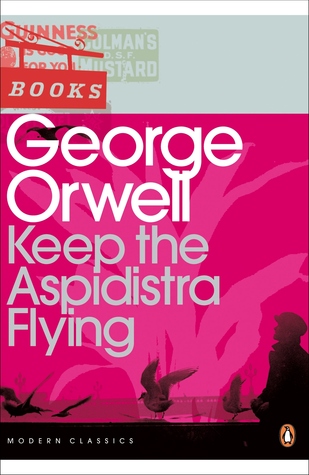
Keep the Aspidistra Flying by George Orwell

Keep the Aspidistra Flying For a long time I only associated George Orwell with Animal Farm and 1984 and it never occurred to me to look into what else he may have written…until last year when I read Coming Up for Air and was surprised by how much I enjoyed it. I wanted to read more of his books, so a few weeks ago I picked up his 1936 novel Keep the Aspidistra Flying.

Keep the Aspidistra Flying is the story of Gordon Comstock, a struggling poet who gives up a secure job at an advertising agency to escape from what he calls “worship of the Money God”. Determined not to live a life ruled by money and capitalism, Gordon takes a poorly-paid job in a bookshop in the hope that this will free his soul and allow him to concentrate on his poetry. In reality, all that happens is that he finds himself living in a squalid lodging house with no money for food or cigarettes, unable to afford to go out with his friends or his girlfriend, and failing to make any progress with his masterpiece, London Pleasures.

Even as he begins to feel disillusioned and depressed, Gordon still insists that he is doing the right thing and refuses to even consider going back to his old, well-paid job. In the corner of his room he keeps an aspidistra, a house plant popular in the 1930s, which he views as a symbol of the middle-class respectability and conformity he is trying to avoid. Eventually, though, he receives some unexpected news that will force him to make an important decision about his future and to decide what is most important to him.

Gordon is the sort of character some readers will be able to identify with while others will find him completely infuriating! I did have some sympathy for him at first; I admired his principles and could understand his desire to escape from convention and the worship of money. But as the story progressed, I found him more and more frustrating (my sympathies quickly shifted to his long-suffering girlfriend, Rosemary). Far from freeing himself of money-dependency, he was more obsessed with it than anyone else in the novel, blaming every negative thing that happened in his life on his lack of money. The world is full of people doing jobs they would rather not be doing just so that they can make ends meet; I couldn’t feel sorry for someone who was choosing to impose poverty on himself while taking money from his hardworking sister, knowing that he would never pay it back.

I don’t know much about George Orwell as a person, but I guessed that parts of Gordon Comstock’s story were probably autobiographical and I confirmed this when I turned back to read the introduction after finishing the book. I also discovered that Orwell himself didn’t rate this novel very highly and I do certainly think it was the weakest of the four books of his that I’ve read so far – although I did still enjoy it. As well as telling Gordon’s personal story, Orwell also paints a vivid picture of life in 1930s London and I really liked this aspect of the book – and I loved the opening chapter in which Gordon describes the customers who come into the bookshop where he works.

I still have two of Orwell’s novels left to read as well as his non-fiction; I’m looking forward to reading more of his work, especially Down and Out in Paris and London and The Road to Wigan Pier.

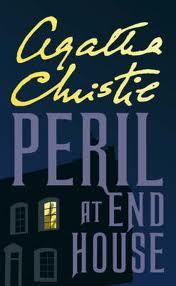
Peril at End House by Agatha Christie

Peril at End House I love Agatha Christie’s books but although there are still a lot that I haven’t read, I find that it works better for me to space them out and read other things in between. It’s been almost a year since the last Christie novel I read, so last week I decided it was time to read another one. This one, Peril at End House, is an early Poirot mystery, published in 1932.

At the beginning of the novel, Hercule Poirot and his friend, Captain Hastings, are taking a holiday in the seaside resort of St Loo. If they were hoping for a peaceful, relaxing break, though, they are about to be disappointed. Taking a walk outside their hotel, they meet a young woman called Nick who lives nearby at End House. As they stand chatting to Nick, she swats away what she thinks is a wasp – and then finds a hole in the brim of her hat and a bullet lying on the ground. Poirot is concerned, especially when she tells him of three other occasions when she has narrowly escaped death in the last few days, but Nick herself appears less worried – she can’t imagine why anybody would want her dead and insists that the incidents must just be accidents.

Poirot resolves to do everything he can to keep Nick safe from harm while he investigates, but it seems that his efforts are in vain as the murder attempts continue. Meanwhile, he uncovers a number of suspects among Nick’s friends and family ranging from her closest living relative, Charles Vyse, and her best friend, Frederica Rice, to her housekeeper Ellen and her Australian lodgers, Mr and Mrs Croft. And as more information comes to light, Poirot discovers that there may in fact be a very good reason for the attempts on Nick’s life.

As I approached the halfway point in this book, I was thinking that this was a very average Poirot novel – not a particularly notable entry in the series at all. I shouldn’t have been so quick to judge because there were some great twists and turns towards the end and the mystery ended up being a much more complex and clever one than I had thought at first.

When I wrote about the last Poirot novel I read – Cat Among the Pigeons – I remarked that that particular book was unusual because Poirot didn’t appear until near the end. This one is the opposite, as Poirot is there in the middle of the action right from the first page and we are plunged straight into the mystery, with little time spent on setting the scene or providing background. Like several of the other early Poirot novels, Captain Hastings narrates the story, which I like because although we don’t actually get inside Poirot’s head, he does at least explain some of his thought processes to Hastings as he goes along.

As so often happens when I read Agatha Christie, I did actually guess the correct solution (or part of it, anyway) very early in the book – and then dismissed the idea as the plot developed and red herrings were dropped into the story, leading me off the scent. The reader is given all the information needed to be able to identify the murderer and their motives, but it’s easy to overlook one or two of the most important clues. Even Poirot himself missed those clues too, which made me feel better about it!

This is not a favourite Poirot novel, but I did enjoy it. Have you read this one? Did you manage to solve the mystery or did you allow Christie to lead you in the wrong direction?

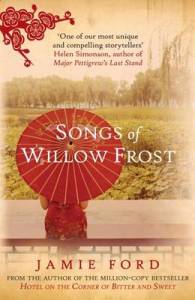
Songs of Willow Frost by Jamie Ford

Songs of Willow Frost William Eng has spent the last five years of his life in the care of the nuns at Seattle’s Sacred Heart Orphanage. It’s 1934 and living conditions at the orphanage are very poor, particularly for William who is Chinese-American and considered inferior to most of the other children. But William is not at all sure that he is actually an orphan – although he has never known his father, the last time he saw his mother she was being carried out of their apartment by a doctor, promising that she’d be coming back soon.

On William’s twelfth birthday he and the other boys are taken to see a film as a special treat and William becomes convinced that one of the actresses he sees on the screen, Willow Frost, is his mother. With the help of his best friend, a blind girl called Charlotte, he sets out to find Willow Frost in the hope that she can answer the question that has been troubling him for five years – what can lead a mother to abandon her child?

Having loved Jamie Ford’s previous novel, Hotel on the Corner of Bitter and Sweet, I was looking forward to reading this one. If anything, this book was even more ‘bitter and sweet’ than the first! At times it was so sad that I wasn’t sure if I could bear to continue reading, but even while my heart was breaking for William and his mother it was obvious that they loved each other and that gave me a glimmer of hope. I wanted them to find the happiness they deserved and that was what kept me turning the pages.

Although we begin in 1934 with William in search of Willow Frost, at least half of the novel is actually set several years earlier in 1921 and follows the story of the young Willow – or Liu Song as she was originally known. It was the 1921 section of the story that I found particularly upsetting to read; being Chinese, a woman and unmarried, life is not easy for Liu Song and it seems that every bad thing that could possibly happen to her does happen. While her stepfather, Uncle Leo, is the villain of the book, I was equally furious with the attitude of a social worker who supposedly had William’s best interests at heart but was clearly only concerned with punishing his mother for what she claimed was immoral behaviour.

Despite the overwhelming sadness, I enjoyed Songs of Willow Frost. There are some great descriptions of Seattle in the 1920s and 1930s and we are given some fascinating insights into the city’s Chinese community and the lives of people struggling to survive during the Depression. I didn’t find this book quite as satisfying as Hotel on the Corner of Bitter and Sweet and there were one or two aspects of the plot that didn’t resolve the way I would have liked them to but overall I thought this was a wonderfully poignant and moving story.

Thanks to Lovereading for the review copy

Little Man, What Now? by Hans Fallada

Little Man What Now I know it’s only the middle of January and it’s ridiculously early to start talking about books of the year but I’ll be very surprised if this one is not on my list in December! I loved every minute of this funny and charming yet dark and poignant German novel from 1932.

Johannes Pinneberg (Sonny) and Emma Morschel (Lammchen) are a young German couple in their early twenties. After discovering that Lammchen is pregnant they get married and move into their first rented home together in the town of Ducherow. As they await the birth of their child (who they think of as The Shrimp), Sonny and Lammchen struggle to get by in the harsh economic conditions of 1930s Germany.

When Sonny loses his job (because his employer has discovered that he is married and no longer free to marry his daughter), he and Lammchen are forced to move to Berlin in search of work and cheaper accommodation. The trouble is, in times of high unemployment and widespread poverty, jobs are not easy to find and rents are high (and the situation isn’t helped by Sonny’s impulsive decision to surprise Lammchen with the expensive dressing-table she’d set her heart on, or Lammchen, suffering from cravings, eating all the salmon on her way home with the shopping). But while others around them lie, cheat and think only of themselves, the honest, hard-working Pinnebergs are determined to survive and to create a happy, safe environment for their new baby.

It was such a relief to find that I loved this book, as I’ve had mixed experiences with Hans Fallada’s novels in the past. Alone in Berlin, which I read in 2011, remains one of my favourite books that I’ve read since I started blogging, but the next one I picked up, A Small Circus, was a huge disappointment and put me off wanting to try any more of his books. I was hesitant to start reading Little Man, What Now? but I’m so glad I did because the problems I had with A Small Circus – the translation, the unlikeable characters, the unfamiliar politics and the fact that most of the novel was written in the form of dialogue – were not problems at all with this book. I was happy with the translation (though I wish I was able to read it in its original German), the Pinnebergs were both lovely, the politics stayed in the background and there was a good mixture of dialogue, action and description.

The book was originally published in 1932 in German as Kleiner Mann, was nun? and a successful film version followed. It’s easy to see why it was so popular, as according to the Afterword, 42% of German workers were unemployed in 1932 (compared with 22% in Britain) and many people would have been able to identify with Lammchen and Sonny. The book still feels relevant today, with many countries around the world suffering high unemployment in recent years. In 1930s Germany, the resulting poverty opened the way for the National Socialist and Communist parties. Yet the novel is far less political and far more domestic than I thought it would be at first.

As Sonny moves from job to job he meets people from a range of different backgrounds and religious or political beliefs, but he doesn’t side with or against any of them; his biggest concerns are for his wife and unborn child. This is not a story that deals with the bigger issues of the time, but about the immediate day to day struggles that ordinary people faced. Sonny is the ‘little man’ of the title, aware that he is only one of millions in the same position, but what sustains him throughout his ordeals is his love for Lammchen and his knowledge that however hard things may be he is still lucky in so many ways.

I liked both of the Pinnebergs from the beginning. I couldn’t help thinking how rare it is that we actually get to read a book about the daily lives of a couple who are happily married, rather than a book that deals with the breakdown of a marriage or one that ends with the wedding rather than beginning with it, as this one does. Sonny and Lammchen are a husband and wife who really love each other, who discuss things together and make decisions as equals. Their story feels completely realistic and the problems they face are the same problems that many young married couples will face: managing their money, finding somewhere to live, worrying about their jobs and preparing for the arrival of their first child. There’s an innocence about Lammchen and Sonny that makes them completely endearing and I think it would be almost impossible to read this book and not fall in love with them both!

While this book is available for Kindle, it seems that paperback and hardback copies of this particular Fallada title are harder to find. If you do have the opportunity to read it I hope you’ll enjoy this glimpse of 1930s German life as much as I did.

Coming Up for Air by George Orwell

Coming Up for Air I think I need to start this post with an apology to George Orwell because like many people, I read Animal Farm and Nineteen Eighty-Four as a teenager and assumed I’d read everything by Orwell that was worth reading. I was obviously wrong because Coming Up for Air is a great book, though very different from his two most famous novels. In a way, though, I’m glad I’ve waited until now to read it because I’m not sure I would have appreciated it as much when I was younger.

Coming Up for Air was published in 1939 and tells the story of George Bowling, a forty-five-year-old insurance salesman who is bored with his dreary, middle-class existence. Married with two children, George’s biggest worries are his mortgage, his weight and the risk of losing his job, but with Europe on the brink of war he knows that the monotony of his life could be about to change. On the day that he receives a new set of false teeth, George takes a trip into London where he sees a poster that triggers memories of his childhood and Lower Binfield, the small, peaceful town where he grew up. George is tempted to return to Lower Binfield for the first time in years, but if he goes back now, what will he find?

Based on the other two books I’ve read, this is not really the type of book I would have expected from George Orwell. However, there are some similarities with Nineteen Eighty-Four in Orwell’s surprisingly accurate predictions of the future. Reading this book gave me an eerie feeling, knowing that it was being written just before the beginning of the Second World War, when the author could have had no real knowledge of what was to come, yet anticipating the changes that would soon be upon the nation.

“I can feel it happening. I can see the war that’s coming and I can see the after-war, the food-queues and the secret police and the loudspeakers telling you what to think. And I’m not even exceptional in this. There are millions of others like me.”

My favourite part of the book was the long section in the middle where George looks back on his childhood in Lower Binfield at the turn of the century. This whole section is a lovely nostalgic portrait of an England that is now gone forever…that had already gone by 1939, destroyed by the First World War.

“1913! My God! 1913! The stillness, the green water, the rushing of the weir! It’ll never come again. I don’t mean that 1913 will never come again. I mean the feeling inside you, the feeling of not being in a hurry and not being frightened, the feeling you’ve either had and don’t need to be told about, or haven’t had and won’t ever have the chance to learn.”

The novel doesn’t have a lot of plot, but that wasn’t a problem; I didn’t find it slow at all. There’s not much dialogue either, as we spend the whole book inside George’s head with his thoughts and memories. Despite this, I found the book completely engrossing. The only time I got bored was with George’s long and enthusiastic description of fishing, his favourite hobby until the age of fifteen. But even this was steeped in nostalgia:

“The very idea of sitting all day under a willow tree beside a quiet pool — and being able to find a quiet pool to sit beside — belongs to the time before the war, before the radio, before aeroplanes, before Hitler.”

George’s actions and opinions are not always very admirable and his views on the women in his life leave a lot to be desired, but despite his flaws, I couldn’t actually dislike him. He’s so ordinary; not a hero, but a real human being with good points and bad points. He has a wryly funny, self-deprecating narrative style which saves the book from becoming too depressing, though overall I found this a sad and poignant story rather than a humorous one. I don’t know much about Orwell’s own life, but I’m sure this book must have been autobiographical to some extent.

I loved Coming Up for Air and will certainly consider trying another of Orwell’s books.

The Herbalist by Niamh Boyce

The Herbalist by Niamh Boyce The Herbalist is set in a small unnamed town in Ireland in the 1930s and tells the story of four women whose lives are affected by the arrival of a stranger – a travelling herbalist who appears from nowhere one day and begins selling his lotions and tonics in the marketplace. Nobody knows anything about the herbalist or his history and initially they are suspicious, but slowly he starts to cast a spell over the women of the town, including sixteen-year-old Emily. Lonely and vulnerable after losing her mother, Emily convinces herself that she and the herbalist are in love, but when she makes a shocking discovery she finds herself with a difficult decision to make.

Another of our main characters is Carmel, who runs a small shop in the town. Having suffered a recent tragedy, Carmel is depressed and insecure and she feels that the only person who understands is the herbalist. Her brother, a teacher, suggests she should find an assistant to help her in the shop and recommends a former student, Sarah, for the job – but how will Carmel react to Sarah’s arrival?

We also follow Sarah, who is having problems of her own. The night before she leaves home to start her new job, her beloved aunt Mai throws a party for her and something that happens at that party will have a big impact on Sarah’s future. Finally, there’s Aggie, a ‘woman of ill repute’ and a fortune-teller. Aggie is an outsider, but through watching and listening to what is going on around her she seems to know more about the herbalist than anyone else in the town. The stories of Emily, Carmel and Sarah are told in alternating chapters, with occasional contributions from Aggie, and gradually the truth about the herbalist is revealed.

I was very impressed with this book and found it hard to believe that it’s Niamh Boyce’s first novel! The writing is beautiful, the setting and the characters feel completely believable and the story itself is fascinating – inspired by true events, according to the author’s note at the front of the book.

Something I found particularly intriguing was the fact that two of the women’s stories are told in the third person (Carmel’s and Sarah’s) and two in the first person (Emily’s and – in question and answer format – Aggie’s). The only problem with this was that while Emily and Aggie both have distinctive narrative voices of their own, the other two feel very similar. One way in which the use of multiple viewpoints works very well in this novel, though, is that it allows us an opportunity to see things from the perspectives of women from different social backgrounds whose lives are confined by the class system of their small, narrow-minded community.

The herbalist himself remains a mysterious, shadowy figure and although he is at the centre of everything that is happening throughout the novel, the focus is always on the female characters and the various ordeals they are going through. I should mention that this is not a happy story and really delves deeply into the darker side of life in 1930s Ireland. I would like to be able to tell you more about some of the issues the book raises, but then I would be giving away the herbalist’s secrets!

I loved The Herbalist and hope there will be more books from Niamh Boyce in the future.

I received a copy of this book from Penguin Ireland for review.