The Christmas Clue by Nicola Upson – #NovNov25

I’m sure most of us are familiar with the board game Cluedo (or Clue, if you’re in America), but do you know who invented it? I didn’t, but thanks to Nicola Upson’s new novel, The Christmas Clue, I now know that it was invented in the 1940s by Anthony and Elva Pratt, a married couple from Birmingham. Upson tells the story of the game’s creation while also imagining a fictional murder mystery for the couple to solve.

It’s Christmas 1943 and Anthony and Elva are on their way to the Tudor Close Hotel in Rottingdean on the south coast of England. Although he’s currently working in a weapons factory, Anthony is a pianist and before the war he and Elva regularly provided entertainment for hotels, both of the musical sort and also hosting murder mystery events. They’ve been invited to host one of these at the Tudor Close over the Christmas weekend but, on arriving at the hotel, they quickly discover that the war has made things more challenging than usual – there are no actors available to play the various roles in the game and interact with the guests, so the Pratts are going to have to come up with a new format.

Before the game even begins, however, the couple find themselves with a real mystery to investigate. Stopping at their old friend Miss Silver’s shop in the town to collect a box of cigars for Anthony’s Christmas present, they discover Miss Silver’s body in the storeroom apparently beaten to death. The dead woman’s sister works at the Tudor Close and as Anthony and Elva look for more connections, they start to suspect that the killer could be one of the guests staying at the hotel.

The Christmas Clue is a very short book (novella length at 140 pages), but despite its shortness, Upson manages to create a satisfying murder mystery – I found some of the developments a bit far-fetched, but it was fun to read overall, despite taking a darker turn towards the end. I liked the hotel setting, although Elva and Anthony find it very different from their memories of visiting before the war: shortages of staff, no money for decent Christmas decorations, and a group of Canadian soldiers billeted nearby.

I’ve learned some interesting little facts about the game of Cluedo, both from the book itself and from feeling inspired to look things up while reading. For example, the name Cluedo is a pun on Ludo, another popular board game – which is less well known in America (though Parcheesi is similar) and that’s why the name was simplified to Clue. If Elva and Anthony had their way, it would have been called Murder at Tudor Close and was originally supposed to include additional rooms, weapons and characters. Elva was a talented artist and designed the artwork for the board.

This is the first book I’ve read by Nicola Upson, mainly because most of her other novels are mysteries where the sleuth is the real life author Josephine Tey. I’ve never felt entirely comfortable with the recent trend for using real people as detectives – and of course, Upson is doing the same in this book with Anthony and Elva Pratt. I wondered how the Pratts’ family might feel about it, so I was pleased to read Upson’s acknowledgments at the end where she says she has been in contact with Anthony and Elva’s daughter, Marcia Lewis, who gave her best wishes to the project. I think she can certainly be happy with the way her parents are portrayed in this book – they seem like a really lovely couple!

Thanks to Faber & Faber for providing a copy of this book for review via NetGalley.

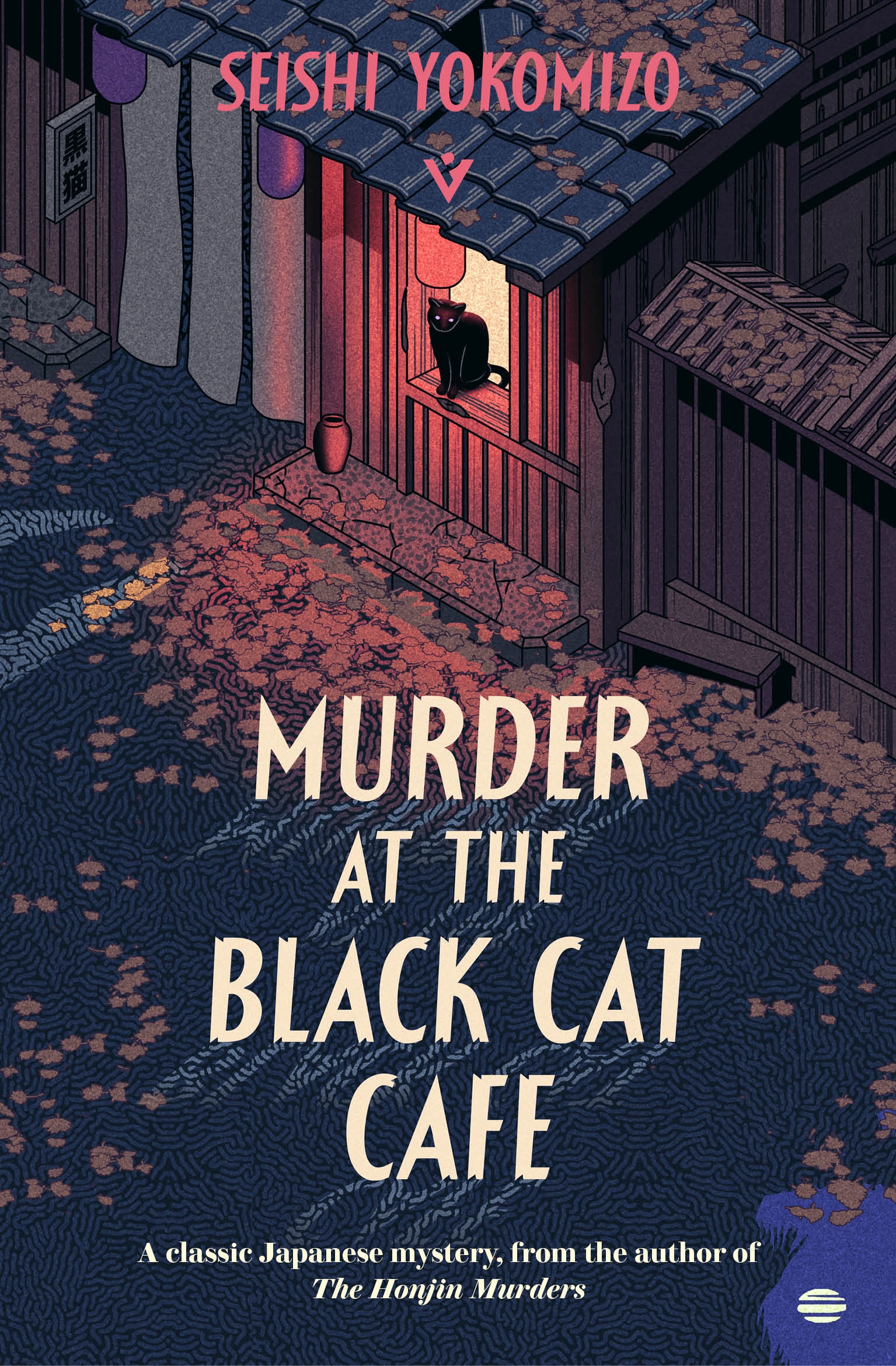
Murder at the Black Cat Cafe by Seishi Yokomizo

Translated by Bryan Karetnyk

Over the last few years, Pushkin Press have been publishing Seishi Yokomizo’s Kosuke Kindaichi mysteries in new English translations. This is the latest, but I found it different from the previous ones in several ways.

First, where the other books are full-length novels, Murder at the Black Cat Cafe is a novella (this edition also includes another short story, Why Did the Well Wheel Creak?, to make the book more substantial). Yokomizo’s detective, Kosuke Kindaichi, plays a prominent role in the first story, but a very small one in the second – in fact, I wouldn’t really call that one a Kindaichi mystery at all as he only appears right at the end. Both stories belong to the type Yokomizo refers to in the prologue as ‘faceless corpse’ mysteries – in other words, where the murder victim has had their face destroyed so they can’t be identified.

The other main difference is in the setting. Usually the Kindaichi mysteries are set in rural Japan – a small village, a country house, a remote island – but Murder at the Black Cat Cafe has a city setting: Tokyo’s red-light district, an area known as the Pink Labyrinth. First published in 1947, the story takes place just after the war and begins with a policeman on patrol discovering the faceless body of a woman in the garden of the Black Cat Cafe, an establishment owned until very recently by the Itojimas, who have just sold it and moved away. Beside the corpse is the body of a black cat, which has also been killed. It’s assumed that the cat is the famous mascot of the Cafe – until the Cafe’s black cat emerges alive and well. Where did the other cat come from and who is the dead woman?

I enjoyed the post-war urban setting, but with the second story, Why Did the Well Wheel Creak?, we are back on more familiar ground with a family living in a remote village. The patriarch, Daizaburo, has two sons – one legitimate and one illegitimate – who are almost identical apart from their eyes. When both young men go to war and only one returns alive, having lost both eyes, questions begin to be asked. Is this man who he says he is or could he be pretending to be his brother?

Both of these stories, then, feature mistaken or stolen identities and people who may or may not be impostors and both have enough twists and turns to keep the reader guessing until the truth is revealed. The first one was probably the stronger mystery, but I did enjoy the second one as well and liked the way the story unfolded through letters sent from a sister to her brother. I’m already looking forward to the next Kindaichi book, She Walks at Night, coming next year.

Thanks to Pushkin Vertigo for providing a copy of this book for review via NetGalley.
Book 2 for RIP XX

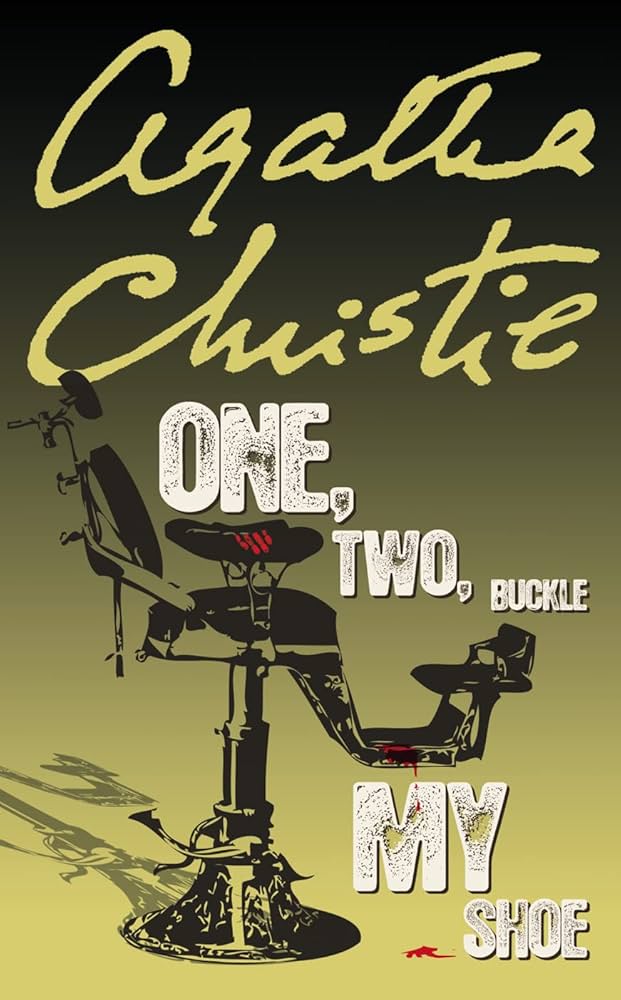
One, Two, Buckle My Shoe by Agatha Christie

This month’s theme for the Read Christie challenge is ‘medical professionals’ and One, Two, Buckle My Shoe is the perfect choice as it begins with the murder – or could it be suicide? – of a dentist. His name is Mr Morley of Queen Charlotte Street, London, and our old friend Hercule Poirot just happens to be attending an appointment on the day of Morley’s death. It seems that Poirot has a fear of visiting the dentist, but despite being nervous and preoccupied he still has his powers of observation and notices a young man in the waiting room who ‘looks like a murderer’. Learning of Mr Morley’s death later that day, however, it seems that the young man is not the only suspect. All of the patients who attended appointments in the hours before the body was discovered are under suspicion, along with the dentist’s family and servants.

Poirot works with Chief Inspector Japp of Scotland Yard in the early stages of the investigation, but when Japp uncovers information to suggest that Morley’s death was a suicide, Poirot is not satisfied. Too many things don’t make sense. Why, for example, did Morley’s secretary receive a fake telegram summoning her to an aunt in Somerset, ensuring that she would be absent from work on the day of the death? Poirot decides to continue investigating on his own, but it’s only when he begins to question whether he’s fallen into a trap that he is able to solve the mystery.

One, Two, Buckle My Shoe was published in 1940 and was the final Poirot novel to feature Inspector Japp. I do like the books where Poirot has someone else to work with and discuss some of his theories with, whether that’s Japp or (preferably) Captain Hastings. It’s also one of several Christie novels with titles based on nursery rhymes (Hickory Dickory Dock, Five Little Pigs and A Pocket Full of Rye are some of the others). Christie uses lines from the One, Two, Buckle My Shoe rhyme as the chapter titles and each line has some relevance to the events of the story – for example, in the first chapter we see a buckle fall off a woman’s shoe as she steps out of a car, although we won’t understand the significance of that until much later.

Published during the war, there are strong themes of political and financial instability and people with different views of how the world should move forward. One of the suspects, Alistair Blunt, is a prominent banker; another, Howard Raikes, is a political activist from America; and a third, Mr Barnes, worked for the Secret Service. However, this is only one part of the story and the book never becomes excessively concerned with politics. There are other suspects and other clues and motives as well and although I couldn’t solve the mystery myself, I enjoyed seeing Poirot explain it all in the denouement!

The Read Christie theme for September is ‘religious figures’ and the recommended title is At Bertram’s Hotel, which I’ve read relatively recently. I’ll wait to see what other options they suggest before deciding if I’ll take part.

Book 19/20 for 20 Books of Summer 2025.

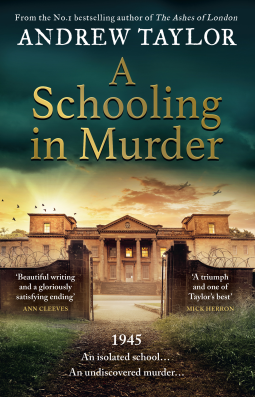
A Schooling in Murder by Andrew Taylor

I love Andrew Taylor’s books and over the last few years I’ve been enjoying his Marwood and Lovett series, set in the 17th century in the aftermath of the Great Fire of London. His new novel, A Schooling in Murder, is not part of the series and leaves that setting behind entirely, taking us instead to the 1940s and a girls’ school near the border of England and Wales.

The novel has a very unusual narrator and when I sat down to write this review I wondered if it would be possible to avoid giving away too much about her. However, the publisher’s own blurb reveals her secret, as do most of the other reviews I’ve seen (and to be fair, she tells us herself in the first chapter anyway): Annabel Warnock is a ghost. In life, she was a teacher at Monkshill Park School for Girls, until being pushed into the river from the Maiden’s Leap, a clifftop viewing point on the Gothick Walk, part of the school grounds. Who pushed her? Annabel doesn’t know, but she’s determined to find out.

As a ghost, Annabel is able to move freely around Monkshill Park – although places she never visited while alive are inaccessible to her – but she can’t be seen or heard by anyone else. This naturally makes investigating her murder very difficult, especially as her colleagues don’t even know she’s dead since her body was never washed up. It seems that the only person who can help is Alec Shaw, Annabel’s replacement – referred to simply as a ‘Visiting Tutor’ to appease parents worried about the school employing a man to teach their girls. Although she can’t speak directly to Alec, Annabel finds a very imaginative way to communicate with him, which was one of my favourite aspects of the book!

As well as the mystery element of the book, we also learn a lot about life in a 1940s girls’ boarding school. Andrew Taylor does a good job of portraying the rivalries and complex relationships that form when groups of teenage girls – and groups of teachers – are living together in a close-knit community. There are occasional references to the war, which is in its closing stages as the book begins in May 1945, but Monkshill Park feels largely sheltered from the outside world, so although the war touches the lives of the characters in various ways it doesn’t form a big part of the story.

The descriptions of the school and its landscape are very detailed, so I was interested to read in Taylor’s author’s note that he based it on Piercefield, a now ruined house and estate near Chepstow in Wales, and that in its fictional guise of Monkshill Park it also formed the setting for his earlier novel, The American Boy. I should have remembered that as The American Boy is my favourite of all the Andrew Taylor books I’ve read!

Although it was interesting to watch a victim trying to solve their own murder, I felt that there was a distance between the characters and the reader, which I suppose is inevitable when your narrator can only watch and observe rather than interact directly with the people around her. Maybe because we’re only seeing them from Annabel’s unique perspective, most of the characters also seem particularly unpleasant! Possibly for these reasons, I didn’t enjoy this quite as much as some of Taylor’s other books, but it was imaginative and different and I’m looking forward to whatever he writes next.

Thanks to Hemlock Press for providing a copy of this book for review via NetGalley.

Book 3/20 for 20 Books of Summer 2025.

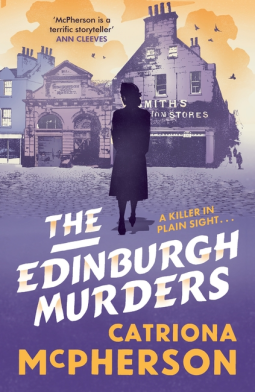
The Edinburgh Murders by Catriona McPherson

This is the second book in Catriona McPherson’s new mystery series set in 1940s Edinburgh, but if you haven’t read the first one (In Place of Fear) it shouldn’t be a problem as both books also work as standalone novels. Those of you who have read In Place of Fear will remember that it introduced us to Helen Crowther, a welfare officer (formally a ‘medical almoner’) in the newly formed National Health Service. This second novel again follows Helen as she carries out her duties for the NHS and becomes embroiled in another mystery.

The novel opens with Helen taking a patient to the public bath house on Caledonian Crescent. As she helps the woman to wash herself, they become aware of a disturbance in one of the men’s cubicles. A man has been found boiled to death in a bath of scalding hot water – but how? Why would he continue to lie there as the water got hotter and hotter? And how could it have reached such a high temperature anyway? Even more worrying for Helen is the fact that she has spotted her father, Mack, at the baths, but when she speaks to him at home later, he tries to deny that he was there. As the bodies of more men are found around Edinburgh, all killed in equally unusual, gruesome ways, Helen becomes convinced that her father knows more about the deaths than he’s admitting to.

When I reviewed In Place of Fear, I mentioned that the mystery only formed a small part of the book, with more focus being on the historical element and the work of an almoner in the NHS. This book is the opposite – the mystery is much stronger, with the first murder discovered in the opening chapter and several more following soon after. The murders are carried out using imaginative methods and are obviously linked in some way, so Helen needs to decide exactly what the link is in order to identify the killer. It’s quite a dark book, but although the descriptions of the murders are unpleasant, they’re not too gory or graphic.

As with the first novel, there’s a great sense of time and place, bringing the atmosphere of Edinburgh’s Fountainbridge area to life. McPherson uses a lot of dialect and there’s a glossary at the front for those readers who need help with the Scottish words and phrases. I found that there was less time spent describing Helen’s welfare work, though, which was one of the things I thought was particularly interesting in the first novel. Still, I enjoyed meeting her again, as well as the other recurring characters such as the two doctors she works for and her younger sister, known as Teenie. There’s also the beginnings of a possible romance for Helen with her friend Billy, who works at the morgue and helps her investigate the mystery and I’ll look forward to seeing how this develops in the next book.

I still haven’t read any of Catriona McPherson’s other novels, although she seems to have written a lot of them! I should probably investigate while I’m waiting for a third Helen Crowther book.

Thanks to Hodder & Stoughton for providing a copy of this book for review via NetGalley.
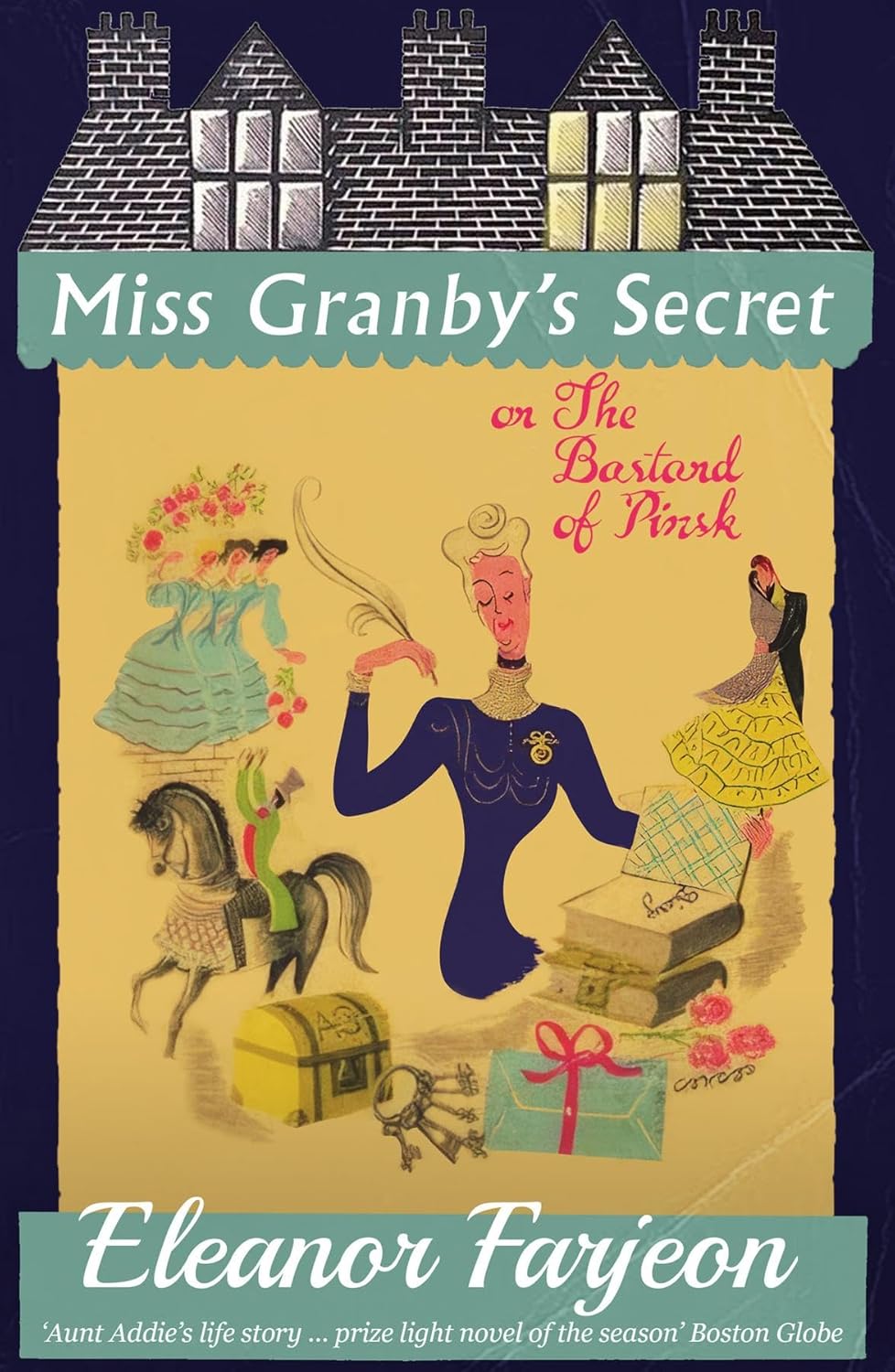
Miss Granby’s Secret: or The Bastard of Pinsk by Eleanor Farjeon

Like many readers who have previously enjoyed books published by Dean Street Press, I was pleased to hear recently that they were continuing with their Furrowed Middlebrow imprint, after a period when the future had looked uncertain. Miss Granby’s Secret: or The Bastard of Pinsk is the first new book since that announcement was made. First published in 1941, it was written by Eleanor Farjeon and this edition also includes an introduction by Elizabeth Crawford.

The novel opens with the death of Miss Adelaide Granby in 1912. Miss Granby had been a prolific and very successful author, publishing forty-nine romance novels and gaining a large readership, but to her great-niece Pamela, she was always just Aunt Addie. Pamela, who considers herself a ‘modern woman’, has long suspected that Addie, who never married, didn’t understand the facts of life – in fact, Addie always insisted that she didn’t want to know, as it would affect the innocence of her writing. When a large, elaborate wreath is delivered to the funeral, then, accompanied by a romantic poem and a card inscribed “from Stanislaw”, Pamela is intrigued by the idea that Addie must once have had a love interest after all.

Pamela has inherited Aunt Addie’s house and her collection of papers, which includes letters, diaries and the unpublished manuscript of her first novel, written when she was just sixteen. This novel is entitled The Bastard of Pinsk (it seems from Addie’s notes that she believes a bastard is “a very noble Hero of Royal Blood”). As Pamela reads the documents she looks for clues to the identity of Stanislaw and wonders if it will be possible to track him down.

The text of The Bastard of Pinsk is included in its entirety, forming a story-within-a-story. Incorporating lots of tropes of the Romantic or Gothic novel, it’s both ridiculous and quite amusing, mainly because Adelaide Granby clearly doesn’t understand the words she’s using or what they imply. Although it was fun for a while, I started to get impatient to go back to the main story, but I’m sure for other readers it will be their favourite part of the book! I can see why the full story was included, though, as some of the things the young Addie writes about have parallels with her own life.

I enjoyed Pamela’s parts of the book and seeing the mystery of Addie’s relationship with Stanislaw unfold and overall I found it a lovely, entertaining read. A good choice for the revival of this imprint!

Thanks to the publisher for providing a copy of this book for review.

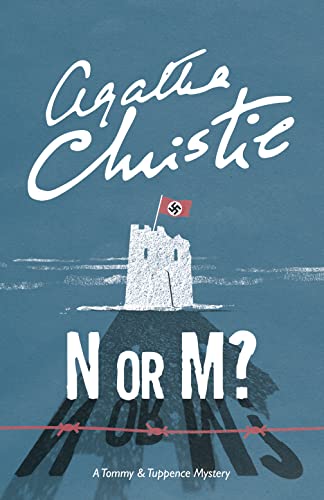
N or M? by Agatha Christie

This month – and in August and September – the Read Christie challenge is moving on to books published in the 1940s and 1950s. I have several unread Christies from those decades to choose from, but I decided to start with N or M?, a Tommy and Tuppence novel from 1941. I enjoyed the first two T&T books, The Secret Adversary and Partners in Crime, and this is the third in the series.

I think this is a series best read in order as, unlike Poirot and Miss Marple, Tommy and Tuppence age almost in real time; they were in their early twenties in 1922’s The Secret Adversary and when we join them at the beginning of N or M? they are over forty. Their advancing age has become a source of frustration to them now that the world is at war and it seems that they are too old to make any meaningful contribution. Then, Mr Grant, a secret agent, arrives with an intriguing proposition for Tommy. He must travel undercover on behalf of the Secret Service to a boarding house on the south coast of England in search of two German spies, one male and one female, known only by the initials N and M. The mission must be kept secret from everyone, including Tuppence, who is told that Tommy is being sent to Scotland to take up a boring office job. However, Tuppence is already one step ahead and determined not to miss out on the excitement!

N or M? is more of a thriller/espionage novel rather than a traditional detective novel, which made a nice change from my last two Read Christie selections, which have both been Poirot mysteries. One of the good things about diving into Christie’s books more or less at random as I have been doing over the last few years is that there’s enough variety within her body of work that you never really get bored. However, there’s still a mystery to be solved here – the mystery of the true identities of N and M – and plenty of clues to look out for. I found it very easy to identify one of the spies (and was frustrated that Tommy and Tuppence didn’t work it out as quickly as I did), but I didn’t guess the other one so there were still some surprises in store for me.

With most of the novel being set in and around the Sans Souci boarding house, this means all of the suspects are together in one place, giving Tommy and Tuppence plenty of opportunities to observe them. The most obvious is Carl von Deinim, a German refugee and research chemist, but is he too obvious? The other guests include a larger than life Irishwoman, a retired Major, an invalid and his wife, and a young mother with her two-year-old daughter. Literally anybody could be a spy and Christie does a great job of capturing the sense of danger, mistrust and paranoia. I was quite worried for Tommy and Tuppence at times, even though I knew they must survive as there are more books in the series!

I’ve found that the other Christie novels I’ve read that were published during this same time period barely mention the war, if at all, so it was unusual to find one in which the war is such a central part of the plot and affects the lives of the characters in so many ways. I really enjoyed it and am looking forward to reading the next Tommy and Tuppence book, By the Pricking of My Thumbs – although not just yet, as it’s published in 1968 and we’ll be staying in the 40s and 50s for the next two months.

This is book 11/20 of my 20 Books of Summer 2024.