A Pink Front Door by Stella Gibbons

My second book for this year’s Dean Street December, hosted by Liz at Adventures in Reading, Running and Working from Home, is Stella Gibbons’ 1959 novel A Pink Front Door. I didn’t love the only other Gibbons book I’ve read, Cold Comfort Farm – I know I’m in the minority, but I just didn’t find it as funny as everyone says it is – so I wanted to give her another chance. I’m pleased to report that I enjoyed this one much more.

The house with the pink front door is home to Daisy and James Muir and their baby son (whom Daisy always refers to as James Too). Daisy is one of those people everyone turns to when they are in need of help and who enjoys trying to solve their problems for them. In post-war London these problems often involve housing and the novel opens with Daisy finding new lodgings for Tibbs, an Eastern European refugee who is struggling to settle into a new life, and Molly Raymond, a young woman who keeps embarrassing herself by chasing after unsuitable men. However, when Daisy’s old university friend, Don, tells her that he is also searching for somewhere to live with his wife and three young children, this proves to be much more of a challenge. Daisy knows that Mrs Cavendish has the whole top floor of her house available to rent, but will that snobbish woman agree to share her home with people who are ‘not her sort’?

The novel shifts between the perspectives of some of the characters mentioned above and also several others, including Daisy’s elderly aunts, Marcia and Ella, who have lived together for many years since neither of their lives went quite the way they had expected when they were younger. Through the stories of Marcia and Ella, Gibbons explores some of the issues facing older unmarried women, as well as the different but equally frustrating ones faced by younger, married women – Don’s wife Katy, for example, who has a degree in chemistry which she is unable to use because she’s now looking after three children and being treated like a servant by Mrs Cavendish in return for the use of her spare rooms.

For most of the book, the plot moves along at a slow, steady pace; I would describe this as much more of a character-driven novel and I did enjoy getting to know all of the characters, even the unpleasant ones. There’s some drama later on when Daisy’s long-suffering husband begins to lose patience with being neglected all the time and decides to take drastic action – and then another dramatic development right at the end of the book which was unexpected and, in my opinion, unnecessary. Still, I got on with A Pink Front Door better than I did with the much more popular Cold Comfort Farm. I’m glad I decided to try Stella Gibbons again and am looking forward to reading more of her work now.

The Black Crescent by Jane Johnson

Jane Johnson is a British author who has set several of her novels in Morocco, her husband’s country, with each book exploring a different period in Morocco’s history. The Black Crescent is set in the 1950s, during the time of the French protectorate, when support for Moroccan independence was building momentum.

Our narrator, Hamou Badi, grows up in the remote mountain village of Tiziane, a place where the people still cling to ancient traditions and superstitions. Due to the lines on his hands, Hamou himself is said to be a ‘zouhry’, a legendary figure blessed by a djinn and capable of locating treasure and detecting sources of water. However, it is not treasure that eleven-year-old Hamou finds one day in 1939, but the body of a woman, hidden amongst the palm trees by a dried up riverbed. The lack of interest shown by the French authorities in trying to solve this murder leads to Hamou’s decision to become a police officer and ensure that future victims of crime are given the justice they deserve.

Several years later, in 1955, we rejoin Hamou in Casablanca, where he is now working for the Sûreté, the police force of the French colonialists who are still ruling the country. Hamou takes his job seriously, trying to maintain law and order on the streets of Casablanca, but he quickly discovers that many of his fellow Moroccans see him as a traitor and someone not to be trusted. As the independence movement continues to gather force, Hamou finds himself caught between the two sides and must decide which is most important to him – loyalty to his country or to the employer who pays his wages.

The Black Crescent is a fascinating novel, particularly as I previously had such limited knowledge of French-ruled Morocco. I knew nothing about the work of the Istiqlal (independence) Party or the tensions and unrest following France’s exile of Sultan Mohammed V in 1953. Hamou is the perfect choice of narrator, with one foot in both worlds, showing us that there are good and bad people on both sides. Johnson has clearly researched this period thoroughly (she provides a list of her sources in her author’s note) and writes with an understanding and sympathy for the aims of the Moroccans in attempting to overthrow their French occupiers, but without condoning the violence used by some groups such as the ‘Black Crescent’ of the title.

Hamou is portrayed as an honourable, kind-hearted man trying to navigate his way through a difficult situation and I found him easy to like. He also has a love interest – a young woman he meets in Casablanca – but it only plays a small part in the book and I was just as captivated by the relationship he forms with Madani, the little black cat he rescues and adopts. The book did feel very slow-paced and took much longer to read than I’d expected based on the length, but it held my interest throughout and I learned a lot from it. I wish I’d known there was a glossary at the end of the book, but I was able to understand most of the Moroccan terms from the context anyway, so that wasn’t too much of a problem!

I think The Sultan’s Wife, set in 17th century Morocco, is still my favourite Jane Johnson book so far, but there are three of her earlier novels I haven’t read yet, so that could change!

Thanks to Head of Zeus for providing a copy of this book for review via NetGalley.

This is book 49/50 for the 2023 Historical Fiction Reading Challenge.

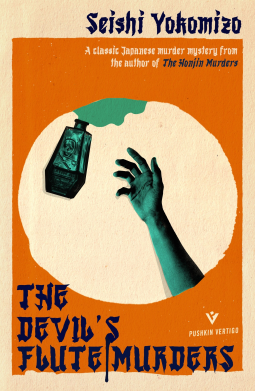
The Devil’s Flute Murders by Seishi Yokomizo (tr. Jim Rion)

The Devil’s Flute Murders, first published in Japanese in 1953, is the fifth of Seishi Yokomizo’s detective novels to be made available in new English translations by Pushkin Press. I’ve now read all five of them and enjoyed some more than others; I think this is one of the best, along with The Inugami Curse and The Honjin Murders.

In this book, set in 1947, Yokomizo’s dishevelled, nervous, stammering detective, Kosuke Kindaichi, is approached by a young woman who wants him to investigate the disappearance of her father, Hidesuke Tsubaki. Tsubaki, who had been a viscount until the recent abolition of the Japanese aristocracy, was found dead in the woods several weeks after leaving his family home, but although his daughter Mineko was the one to identify the body, she now has reason to believe he isn’t dead at all. There have been sightings of a man closely resembling Tsubaki in the grounds of the family estate and sounds of the haunting flute playing for which he was famous in his lifetime.

That evening, Kindaichi is invited to a séance at the Tsubaki home, which has been arranged by the viscount’s widow in the hope of discovering whether her husband is alive or dead. At the end of the event, a recording of Tsubaki’s final composition, The Devil Comes and Plays His Flute, begins to play by itself – and next morning, Kindaichi hears the news that another family member has been found dead in a locked room during the night. Who is responsible for the murder? Is the viscount’s ghost really haunting the family estate? And what is the meaning of the strange symbol found at the scene of the crime?

Yokomizo’s plots are always clever and fascinating and don’t rely quite as heavily on complex puzzle-solving as some of the books I’ve read by other Japanese classic crime authors. Understanding the relationships between the characters, their family secrets and their personalities and motives is just as important as working out how the crimes were committed. I guessed who the culprit was but didn’t know why they did it – I’m not sure if it would have been possible to know until the backstory of each character was revealed, but maybe I missed some clues.

Something else I like about this series is the insight the books offer into life in Japan during the post-WWII years. In The Devil’s Flute Murders the shadow cast by the war is particularly strong. There are mentions of food shortages, problems with electricity supplies and overcrowded, unreliable public transport. The new constitution drafted by the Allies during the occupation of Japan is the reason why Tsubaki and other members of the nobility have lost their titles, while bombed out houses and damage from fire has led to Tsubaki’s extended family all coming to live on the former viscount’s estate, bringing them together in one place for the events of the novel to play out.

This is the first book in the series to be translated by Jim Rion (the others have been translated by Louise Heal Kawai, Bryan Karetnyk and Yumiko Yamazaki). I think all of the translators have done a good job and I haven’t noticed any real differences in quality or readability between the different translations. My only problem with this one came when Kindaichi’s investigations take him from the Tsubaki home in Tokyo to Awaji Island near Kobe in the west and I found the way Rion chooses to write the western accent slightly odd and jarring. Of course, I appreciate how difficult it must be to capture nuances of accent and dialect in a translation!

I’m already looking forward to the next Kindaichi mystery, The Little Sparrow Murders, which is due to be published next May and sounds just as intriguing as the others.

Thanks to Pushkin Vertigo for providing a copy of this book for review via NetGalley.

Uncle Paul by Celia Fremlin

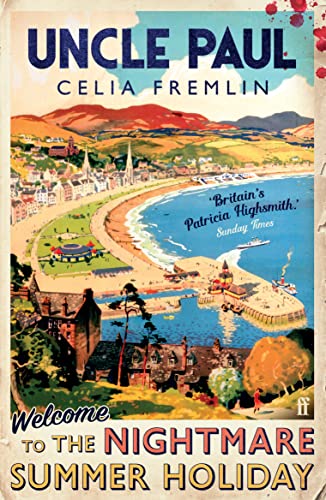
I know they say never to judge a book by its cover, but I have to confess, the cover is what made me want to read this book before I even knew what it was about! Luckily, the story lived up to the cover and you can expect to see Uncle Paul on my books of the year list in December, without a doubt.

First published in 1959, this is a recent reissue by Faber. It’s Celia Fremlin’s second novel but the first I’ve read and I was delighted to find that she wrote fifteen more. If any of them are even half as good as this one then I have some great reading ahead of me!

Uncle Paul is written from the perspective of Meg, the youngest of three sisters but in many ways the most mature. She is leading her own independent life in London with a job, a flat and a new boyfriend, Freddy, a pianist who is both charming and secretive. The novel opens with Meg receiving a telegram from her older sister Isabel, who is spending the summer holidays in a caravan at the seaside with her family. Isabel is concerned about their half-sister Mildred, who is twenty years older and helped to bring them up as children. Mildred has left her husband and come to stay at a nearby cottage – the same cottage where she spent her honeymoon with her first husband, Paul, fifteen years earlier.

Meg and Isabel had been very young at the time of Mildred’s marriage to Paul – they knew him as ‘Uncle Paul’ – but they remember the scandal that occurred when it emerged that he was guilty of both bigamy and attempted murder. Paul was given a long prison sentence after Mildred went to the police, but she is convinced that he has now been released and is coming to take his revenge. Believing that her sisters are panicking about nothing, Meg sets off for the coast intending to tell them to stop being foolish, but when she finds herself spending the night at Mildred’s cottage listening to footsteps moving around in the dark she begins to wonder whether Uncle Paul really has come back after all.

Uncle Paul is an excellent psychological thriller, but I think what I actually loved most about it was the setting – the portrayal of a typical British seaside holiday in the 1950s. Fremlin does a great job of bringing to life Isabel’s rickety caravan, trips to the beach and walks along the pier, the challenges of keeping children amused on a wet day and the friendships that inevitably begin to form with the other guests – in this case, the gallant old Captain Cockerill and a mother with her son, Cedric, an irritating little boy who thinks he knows everything (and often does). The characters are all very well drawn, even the minor ones like these, but I found the three sisters particularly interesting, with their very different personalities: the sensible, level-headed Meg who, despite being the youngest, is the one the others rely on to take control of every situation; the rich, dramatic and often irrational Mildred (her decision to stay on her own in an isolated cottage where she could easily be found by Paul being one example of her illogical behaviour); and the nervous, anxious Isabel, the sort of person who worries about anything and everything.

The psychological elements of the story are very well done, so that we can never be quite sure whether the strange occurrences and the noises in the middle of the night are real or just a figment of our characters’ imaginations. Even when one alarming incident is proven to have an innocent explanation, the suspense begins to build all over again, convincing us that this time Meg and her sisters really are in danger! Similarly, Fremlin creates enough mystery around the characters of Isabel’s husband and Meg’s boyfriend that neither we nor Isabel and Meg themselves know whether they really are who they claim to be.

Having been kept guessing all the way through this wonderful novel, I found the ending both unexpected and clever. Definitely one of my favourite books of the year so far and I can’t wait to try another one by Celia Fremlin.

Strangers on a Train by Patricia Highsmith

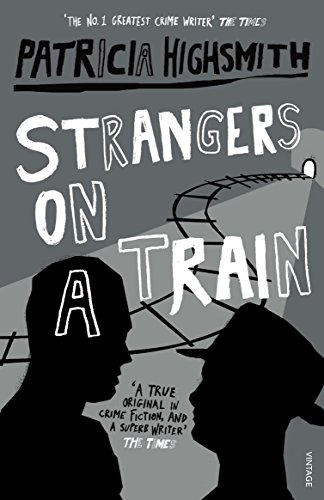
Patricia Highsmith’s 1950 novel Strangers on a Train begins, as you might expect, with two strangers meeting on a train. One is Guy Haines, an aspiring architect who is on his way home to Metcalf, Texas to see his wife, Miriam, from whom he’s been separated for the last three years. Guy is hoping to secure a divorce from Miriam so that he can start a new life with Anne, the woman he loves. Although Miriam has so far been reluctant to agree to a divorce, she is now pregnant with another man’s child and Guy is optimistic that this will be a chance for both of them to move on.

The other stranger is Charles Bruno, a young man from a wealthy Long Island family. After falling into conversation on the train, Bruno invites Guy to come and eat with him in his private dining compartment. Guy doesn’t particularly like his new companion, but soon finds himself telling Bruno about his troubles with Miriam. In turn, Bruno confesses that he hates his father – and then makes a shocking suggestion. If Bruno were to kill Miriam on Guy’s behalf, there would be nothing to link him to the crime. Guy could then kill Bruno’s father and again there would be no motive and no connection. Two perfect murders! Horrified, Guy refuses to have anything to do with the plan and when the train reaches his destination he leaves Bruno behind, hoping he’ll never see him again. However, when Miriam is later found dead, Guy quickly begins to suspect the truth. Has Bruno gone ahead with the plan – and is he waiting for Guy to uphold his side of the bargain?

This is the first book I’ve read by Patricia Highsmith; I thought it would be a good idea to start with one of her most famous novels and this one proved to be a great choice. It reminded me very much of In a Lonely Place by Dorothy B. Hughes, another classic psychological thriller I read recently. Although I didn’t love this one quite as much, I did still enjoy it very much and found it a real page-turner, despite the fact that Highsmith often slows down the pace to concentrate on exploring the thought processes of Bruno and Guy as they each try to deal with the situation in their own way.

The novel is written from the perspectives of both men and although they are both interesting characters, Highsmith doesn’t make it easy for us to like either of them, particular the spoiled, immature and constantly drunk Bruno. We can have some sympathy for Guy at first, as he tries to resist getting involved in Bruno’s schemes, but he has his resolve gradually worn away as he comes under more and more pressure to carry out the murder and in turn becomes less likeable as the story progresses. The secondary characters are less well drawn – Anne and Miriam never fully come to life and we don’t get to know the other potential murder victim, Bruno’s father, at all, which lessens the emotional impact of the book. From a psychological point of view, however, I found this a fascinating novel.

If you’ve read any other Patricia Highsmith books, please tell me which one you think I should read next!

This is book 11/20 of my 20 Books of Summer 2023

It’s also book 41/50 from my second Classics Club list.

The Scapegoat by Daphne du Maurier (re-read) – #DDMReadingWeek

This week HeavenAli is hosting another of her Daphne du Maurier Reading Weeks, assisted by Liz who is collecting the links this year. As you may know, du Maurier is one of my favourite authors; I have now read all of her novels and short story collections at least once and some of her non-fiction (I attempted to rank them all in this post, just for fun). For this year’s Reading Week I’ve decided to re-read her 1957 novel The Scapegoat, which is one I particularly loved when I first read it back in 2011 (here’s my original review). I’ve wanted to read it again ever since, not just because I enjoyed it so much, but also because I formed a theory about what was actually happening in the book and I was curious to see whether I would feel the same way on a second read. I’ll discuss this later in this post, but don’t worry – I’ll include a spoiler warning for those of you who haven’t read the book yet.

The novel opens in Le Mans where our narrator, John, an English academic, is on holiday. When he meets a man who looks and sounds just like him at the station, he feels an instant connection with him and after spending the evening drinking and talking, he accompanies the other man back to his hotel room. He learns that his new friend is a French count, Jean de Gué, and that they have something else in common – they are both depressed and dissatisfied with life, John because he is lonely and has no family, Jean because he has a large family, all of whom are causing him problems. As the night wears on, John falls into a drunken stupor and when he wakes up the next day his companion has disappeared, taking all of John’s clothes and possessions with him and leaving his own in their place.

When Jean’s chauffeur arrives, ready to drive him home to his château in the French countryside, John begins to protest, explaining that there has been a mistake – but then, on an impulse, he decides to take this opportunity to leave his old life behind for a while and continue to impersonate Jean de Gué. On reaching Jean’s château, John finds that nobody suspects he is an impostor and he is able to take Jean’s place within the family. He also begins to understand why Jean had said his family life was so difficult – there are all sorts of tensions and conflicts between various members of the family and to make things worse, the de Gué glassworks is facing financial ruin. It’s up to John to put things right, if he can.

I enjoyed this read of The Scapegoat as much as my first. If you take everything at face value, of course, it requires a huge suspension of disbelief. Not only do John and Jean look completely identical, so much so that not even Jean’s mother, wife or daughter guess the truth, but they also sound exactly the same (and John’s French is so fluent that nobody suspects a thing). Is this likely? Of course not, but it provides du Maurier with her starting point for this fascinating novel and it’s perfectly possible to just accept the plot for what it is and enjoy the story. After all, it’s no more ridiculous than the book that apparently inspired this one – Anthony Hope’s The Prisoner of Zenda. And as always with a du Maurier novel, you can expect beautiful descriptions, a strong sense of place and interesting, if not necessarily very likeable, characters.

*My Scapegoat theory (includes spoilers)*

When I first read this book in 2011, I found myself beginning to wonder – what if John and Jean weren’t doubles after all? What if there was only one man, with multiple personalities (now known as dissociative identity disorder)? It makes so much more sense to me that Jean, feeling that he has made a mess of his life, has created a new identity to deal with the problems he has caused for himself. At the end of the book, when everything has been resolved, he has no further need of John and although it’s not clear exactly how much Jean has learned and how he will manage his relationships and business affairs in the future, he feels that he can now cope on his own. He tells John that he has emptied John’s bank account, sold his flat and furniture in London and resigned John’s position as university lecturer – in other words, destroyed John altogether, because John never really existed and is no longer necessary.

After finishing the book on that first occasion, I remember looking at other reviews and being surprised that almost nobody else had mentioned that any of this had occurred to them too. I accepted that I must have misunderstood the whole book; however, the Daphne du Maurier website quotes a letter written by Daphne herself regarding The Scapegoat which seems to support my interpretation. Her reference to ‘that man’s nature’ doesn’t really make sense to me if there were actually two separate men in the book.

“Every one of us has his, or her, dark side. Which is to overcome the other? This is the purpose of the book. And it ends, as you know, with the problem unsolved, except that the suggestion there, when I finished it, was that the two sides of that man’s nature had to fuse together to give birth to a third, well balanced.”

On reading the book for a second time, I have been paying closer attention and looking for subtle clues and hints. There are just three main obstacles in the way of my theory. First, there’s Jean’s dog, César, who is hostile towards John and the only member of the household who seems to sense that something is wrong. However, when Jean and John meet up again at the end of the book, Jean explains that John hasn’t been whistling to César in the correct way and this is why he hasn’t been obeying his commands. Also, during a scene in a hospital, we are told that Jean is blood group O and John is blood group A – but as it’s John himself who tells us this I don’t think it can be taken as conclusive evidence of anything. The only thing I can’t manage to explain away is that when Jean calls the château to inform John that he’s coming home, it’s a servant who answers the phone and tells John that someone wants to speak to him. If it wasn’t for this one moment, I would have been nearly convinced that I was right!

I did find plenty of things to support my theory, including the fact that, when speaking to Jean’s family for the first time, John finds that the ‘tu‘ form of French comes naturally to him, although he’s never used it before; the way John muses that Jean’s ‘inner substance was part of my nature, part of my secret self’; and in particular, the whole conversation he has with Jean’s mistress, Béla, in Chapter 12.

‘You said something a while ago about taking stock of oneself,’ I said. ‘Perhaps that’s just what I’ve been doing, over a period of time, and it came to a head that evening in Le Mans. The self I knew had failed. The only way to escape responsibility for failure was to become someone else. Let another personality take charge.’

‘The other Jean de Gué,’ she said, ‘the one who’s been hidden for so long beneath the surface gaiety and charm, I’ve often wondered if he existed. If he’s going to emerge, he’d better do so now. Time’s getting on.’

What do you think?

*End of spoilers*

Overall, after finishing my second read of the book, I think probably the way everyone else has interpreted it is the correct way, but du Maurier does like to be ambiguous and I enjoyed looking below the surface and dissecting the different layers! It really is a fascinating novel and still one of my favourites by du Maurier. Now I just need to find time to revisit some of her others!

Homecoming by Kate Morton

‘People who grow up in old houses come to understand that buildings have characters. That they have memories and secrets to tell. One must merely learn to listen, and then to comprehend, as with any language.’

The Christmas Eve of 1959 is a hot summer’s day in South Australia. Isabel Turner takes her four children out into the grounds of their Adelaide Hills home for a picnic – and this is where they are found later that day by a man delivering groceries. At first he thinks they are asleep in the sun but, sensing an unnatural stillness, he comes closer and makes the shocking discovery that the Turners are all dead. The local police are convinced that Isabel, who is believed to have been depressed, must have poisoned herself and the children, but the case is never fully solved and becomes the subject of a true crime book, As If They Were Asleep, written by American journalist Daniel Miller.

Almost sixty years later, in 2018, Jess Turner-Bridges is living in London when she receives a call from a hospital in Sydney informing her that her beloved grandmother, Nora, has had a fall and is in a serious condition. Jess hasn’t been back to Australia for years, but her grandmother is the person who raised her when her own mother was unable to, so she leaves for Sydney immediately to be by Nora’s side. Alone in Nora’s house, Jess discovers Daniel Miller’s book in her grandmother’s bedroom and is drawn into the story of the Turner Family Tragedy. Having been unaware until now of her own connection with this tragic incident, Jess is shocked by what she reads, but now that Nora is dying it seems that her chance to find out the truth could be slipping away.

Homecoming, like the other books I’ve read by Australian author Kate Morton, is deeply layered, containing stories within stories, multiple viewpoints and alternating timelines. It’s a long novel and I felt there were things that could probably have been left out without affecting the story too much – Jess’s life in London at the beginning and the backgrounds of some of the minor characters, for example – but otherwise I was completely gripped and read it much more quickly than I would usually read such a long book.

I loved the descriptions of rural Australia and the portrayal of 1950s Tambilla, the small town where the story takes place. As the title suggests, the theme of ‘homecoming’ plays an important part in the story: what it’s like to come home after a long absence and the idea of ‘home’ being not just the opposite of ‘away’ but also of ‘loneliness’. And for forty-year-old Jess, despite living in London for most of her adult life, Australia is still the place where she feels most at home.

The mystery at the heart of the novel – the deaths of Isabel Turner and her children – is not resolved until the end of the book and although the clues were all there, I didn’t pick up on them so didn’t work out what happened. However, there’s another family secret which has big implications for Jess and I found that one very easy to guess, which took away some of the fun. Maybe I’ve just read too many books like this one, but I thought it was very obvious! I did very much enjoy reading Daniel Miller’s As If They Were Asleep (not a real book, of course) which is reproduced in full, a few chapters here and there. It sheds some light on both mysteries, as well as allowing us to see the Turners and their friends and neighbours from a different perspective.

I do wonder whether this book might have worked just as well as a straightforward crime novel set in the 1950s, without the additional family secrets and the Jess and Nora storylines, but I know that’s not what Kate Morton does and probably not what her readers would expect from her! Anyway, apart from guessing the twist too soon, I did love this book and still have one or two of her earlier ones to look forward to.

Thanks to Pan Macmillan for providing a copy of this book for review via NetGalley.

This is book 15/50 read for the 2023 Historical Fiction Reading Challenge.