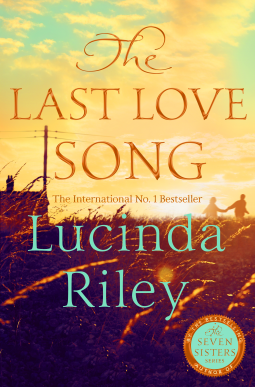
The Last Love Song by Lucinda Riley

This is a reworking of one of Lucinda Riley’s early novels, originally published as Losing You in 1997 under the name Lucinda Edmonds. After Riley’s death in 2021, her son Harry Whittaker completed her unfinished novel, Atlas, then updated another of her early books, Hidden Beauty, as The Hidden Girl. It would be interesting to know exactly how much is Whittaker’s work, but without reading the originals it’s impossible to tell.

The Last Love Song begins in 1964 in the village of Ballymore on the coast of West Cork, Ireland. When sixteen-year-old Sorcha O’Donovan goes to see a local band with her friends from school, she has no idea that her life is about to change forever. Within months she is heading for London with the lead singer, Con Daly, having been disowned by her father, who disapproves of their relationship. After a period of struggling to make ends meet while Con looks for opportunities in London’s vibrant music scene, he finally achieves stardom with his new band, The Fishermen, and he and Sorcha become rich and famous almost overnight. Of course, this doesn’t necessarily bring happiness and when Helen McCarthy, a face from both their pasts, arrives back in their lives, everything starts to go wrong.

Two decades later, preparations are being made for a huge charity concert at Wembley Stadium. The Fishermen have agreed to reform for the event, but one member is missing – Con Daly, who disappeared seventeen years ago after suffering a personal tragedy. There’s only one person who may be able to find out what happened all those years earlier; the problem is, she’s in prison…

I enjoyed this book; it was much more than just the simple romance it seemed to be at first. Although I found Sorcha slightly bland, I thought Helen McCarthy was a great character and I veered between loving and hating her at various times throughout the book. Mostly I admired her for trying to get what she wanted out of life despite things not always going her way. There’s also a crime element to the story, which becomes stronger towards the end – my biggest criticism of the book is that this part of the plot is dropped for a long section in the middle – and although I easily guessed who the culprit was, I was kept in suspense wondering when and how they would finally be caught!

What I really loved about this book, though, is the portrayal of the 60s music scene. The novel takes us step by step through every stage of the Fishermens’ rise to fame, beginning with the formation of the band and choosing of the name, their first meeting with the man who would become their manager, and the difficulties they faced in getting signed to a record label. The complex and often tense relationships between the four band members are explored and it’s difficult not to think of the Beatles, with Con and Todd in the Lennon-McCartney positions as the band’s two main songwriters, Derek as an aspiring songwriter in his own right, struggling to make himself heard, and Ian as the happy-go-lucky drummer. If you enjoyed Taylor Jenkins Reid’s Daisy Jones and the Six, I think you’ll like the musical aspect of this novel, if nothing else!

I think there are one or two more Edmonds novels that haven’t been published yet, but I haven’t seen any news on whether Harry Whittaker will be reworking them as well. Of the books already available under the Riley name, I haven’t read Hothouse Flower or The Angel Tree yet, so still have those two to look forward to. I’ve also discovered that Harry has written his own book, Orlando, coming later this year.

Thanks to Pan Macmillan for providing a copy of this book for review via NetGalley.
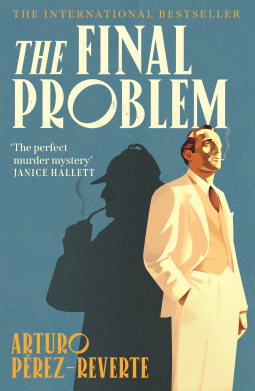
The Final Problem by Arturo Pérez-Reverte – #ReadIndies

Translated by Frances Riddle

It’s June 1960 and actor Ormond Basil has found himself trapped on the small island of Utakos, near Corfu. He has been invited to join a film director on his yacht to discuss a new project, but stormy weather means they are unable to leave the island until conditions improve. Luckily, there’s a hotel on Utakos where they and a small group of other guests and staff can take shelter until the storm has passed. However, there are no police on the island, so when one of the guests, British tourist Edith Manders, is found dead under suspicious circumstances, it’s up to the others to investigate until help can arrive.

Because Ormond Basil famously played the part of Sherlock Holmes on screen many times, he’s nominated to lead the investigation. No matter how much he explains that he’s only an actor and not really the great detective, everyone else insists that he must know more about solving mysteries than they do. And despite his protests, he does seem to know what he’s doing. With one of the other guests, Spanish crime author Paco Foxá, as his Watson, Basil begins to look for clues and question the suspects – but can he find the killer before another death takes place?

You may have guessed that Ormond Basil is closely based on the real life actor Basil Rathbone, who is for many people the quintessential Sherlock Holmes. I’ve talked before about not liking the current trend for using real people as detectives, but this is slightly different as the character is semi-fictional which gives Pérez-Reverte more scope to have him say and do things that the real Basil may not have done. He’s so obviously supposed to be Basil Rathbone, though, that it seems a bit pointless to pretend that he’s not. Either just calling him Rathbone or creating a completely fictional character would have worked better for me.

The novel is well plotted and the locked room mystery has a solution which is clever without being overly complex. With only a small number of suspects due to the setting, I thought I had guessed who the murderer was, but I was wrong and there was a nice twist towards the end that I hadn’t seen coming. For all Basil’s insistence that he’s not the real Sherlock Holmes, he does turn out to be an excellent detective, with powers of observation and deduction almost as good as the character he played for all those years!

However, I felt that there was far too much name-dropping of other famous actors and directors Basil had worked with, and too many long discussions between Basil and Foxá on the subject of Sherlock Holmes, in which both of them quote constantly from the books and adaptations. This all became a bit tedious and detracted from the mystery. I had a similar problem with the other Pérez-Reverte novel I’ve read, The Dumas Club, in which we’re bombarded with references to Alexandre Dumas’ books, so maybe this is just the way he writes.

I’m not sure if The Final Problem is going to be left as a standalone or if it’s intended as the start of a series; I don’t know if I would want to read any further adventures for Ormond Basil, but I did enjoy this one overall because of the interesting murder mystery. This edition of the novel is available from Atlantic Books, translated into English from the original Spanish by Frances Riddle. As Atlantic Books is an independent publisher, I’m counting this towards Read Indies, hosted this month by Karen of Kaggsy’s Bookish Ramblings.

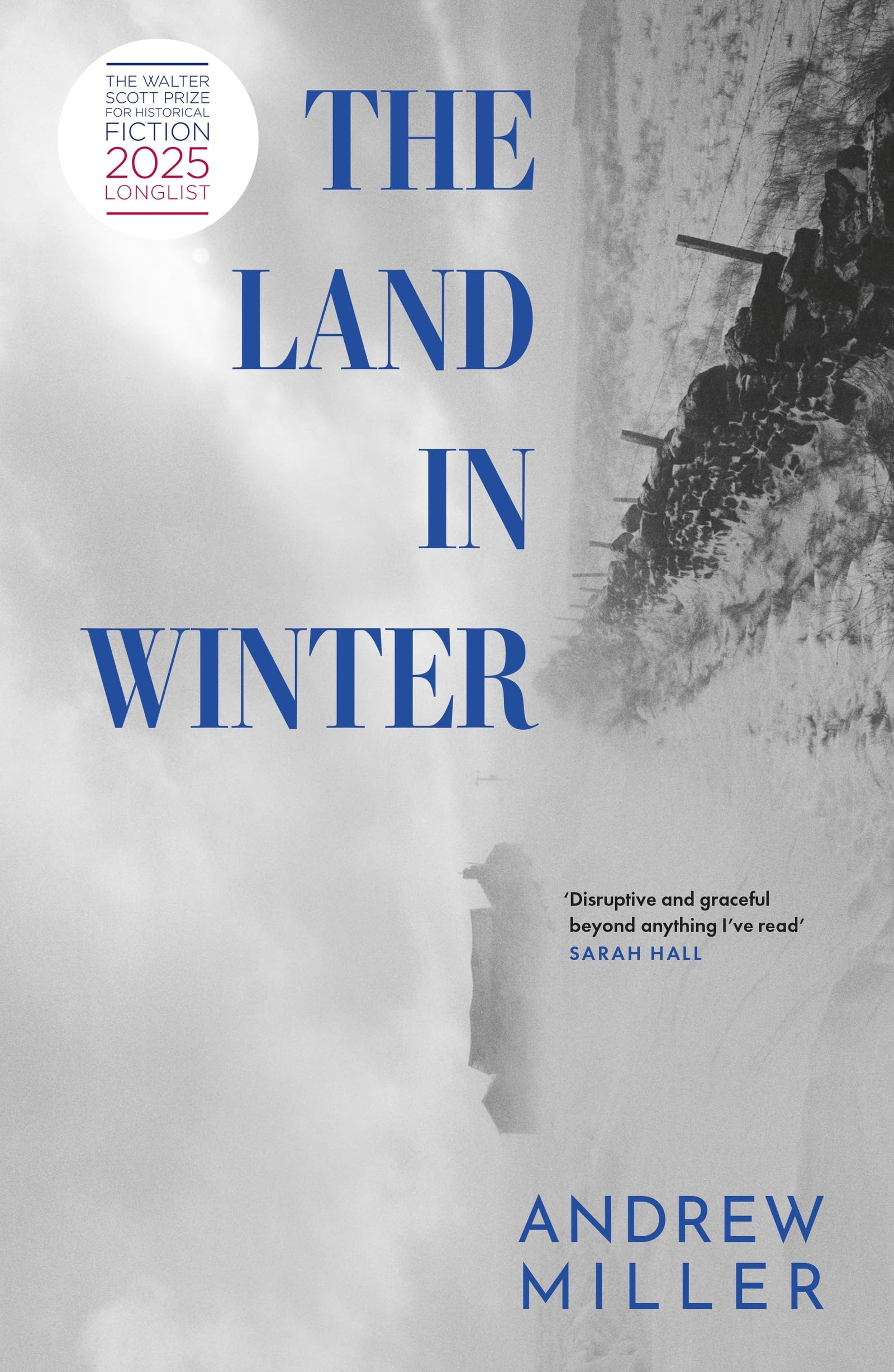
The Land in Winter by Andrew Miller

Andrew Miller’s The Land in Winter had a lot of success last year, being shortlisted for the Booker Prize and winning the Walter Scott Prize for Historical Fiction. It also appeared on a lot of people’s end of year ‘best of’ lists so I had high hopes for it, particularly as I’ve previously enjoyed two of his other books, Pure and Now We Shall Be Entirely Free.

The novel is set in the winter of 1963, one of the coldest winters on record in the UK. Beginning in late December 1962 and lasting until March, temperatures plummeted, blizzards blanketed most of the country in deep snow and rivers and lakes froze over. Against this backdrop, we see the stories of two married couples play out. Dr Eric Parry has recently moved to rural Somerset with his wife, Irene, who is pregnant. Eric is enjoying being a country doctor, but Irene is finding it hard to adapt; it’s so different from her life in London and she misses her sister, who has gone to live in America. Despite her pregnancy, she feels that she and Eric are growing apart – and she’s right to feel that way because, unknown to Irene, Eric is having an affair with one of his patients.

Bill and Rita Simmons, who live at a nearby farm, are also newly arrived in the countryside. To the disappointment of his wealthy father, who wanted him to join the family business, Bill has chosen to follow a very different path and become a dairy farmer. It’s proving to be more difficult than he expected, but he’s sure that with new ideas and investment, he’ll be able to turn things around. He just needs to convince the bank to lend him the money! His wife Rita, like Irene, is pregnant and, also like Irene, she feels lonely and out of place, so it’s probably not surprising that the two women quickly form a bond and a friendship begins to develop.

Apart from a long chapter in the middle of the book in which Irene hosts a Boxing Day party and several other key characters converge on the Parrys’ house, the main focus is on the two couples, their daily lives and the relationships between them. All four characters are believable and strongly drawn, but I think Rita is the one I found most interesting. Before marrying Bill, she had been a dancer in a Bristol nightclub, so the transition to life as a farmer’s wife in a small, quiet community is particularly difficult for her. She has started hearing voices in her head, a sign of her vulnerable, fragile mental state, but Bill isn’t able to give her the support she needs, feeling that he doesn’t truly know who his wife is and preferring to ignore her past.

Although I did enjoy following the stories of Eric and Irene, Rita and Bill, I felt that I was held at a distance for most of the book and never quite connected with the characters on an emotional level as much as I would have liked to. Maybe it was just me, or maybe it was a result of the bleak, frozen setting reflecting their troubled, isolated lives and the coldness of their marriages. Still, this is an impressive novel overall and despite not quite managing to love it I can see why it’s so highly regarded.

The Ice Palace by Tarjei Vesaas – #NovNov25

Translated by Elizabeth Rokkan

After reading my first Tarjei Vesaas book, The Birds, in September, I couldn’t wait to read more of his work. Like The Birds, The Ice Palace has recently been reissued by Pushkin Press and as it’s a very short book I decided it would be perfect for this year’s Novellas in November (hosted by Cathy of 746 Books and Rebecca of Bookish Beck).

First published in 1963, The Ice Palace is the story of two young Norwegian girls, Siss and Unn. Siss is popular, outgoing and the leader of her group of friends at school, yet when the shy, quiet Unn arrives in the village to live with her aunt, Siss is immediately drawn to this girl who seems to be her complete opposite. Soon, Unn invites her back to her house after school and Siss accepts – but when she arrives, the evening doesn’t go quite as she expected. The two girls look at each other in a mirror, then Unn persuades Siss, without explanation, that they should both undress. Unn then confesses that she has a secret, something she’s not able to tell her aunt, but she doesn’t say what it is. Uneasy and uncomfortable, Siss quickly leaves and goes home, feeling disturbed by the experience.

The next day, Unn feels embarrassed and decides not to go to school. Instead, she visits the huge frozen waterfall known as ‘the ice palace’. The last we see of her is when she enters the icy caverns behind the frozen water – she doesn’t return to school or to her aunt’s house and no one has any idea what has happened to her. As Unn’s only friend, Siss is put under pressure to tell the adults anything she knows, but Siss is still confused by her own emotions and struggling to come to terms with the whole situation.

This is a beautifully written novel and the cold, icy imagery is hauntingly atmospheric. The chapter in which Unn discovers the ice palace – ‘an enchanted world of small pinnacles, gables, frosted domes, soft curves and confused tracery’ – is particularly vivid and eerie. The book also has a lot to say about grief, loss and loneliness, exploring the impact of Unn’s disappearance on her aunt, on the community and particularly on Siss.

I did find the book very ambiguous, with a lot left open to interpretation. For example, we are never told what the secret was that Unn was trying to share with Siss and it’s not quite clear what exactly happened between the two girls the evening before Unn disappears. It’s strongly implied, of course, that their interactions have sexual connotations, although I found that a bit unsettling as the girls are only supposed to be eleven years old. I felt it would have worked better if they had been a few years older – but on the other hand, Vesaas obviously intended this to be an uncomfortable book to read, so he achieved his aim there.

Of the two Vesaas books I’ve read, I preferred The Birds as I felt a stronger connection with the main character and found his story more moving, but both are excellent. This one is also a novella, which means I’m counting it as my first read for this year’s Novellas in November!

Thanks to Pushkin Classics for providing a copy of this book for review via NetGalley.

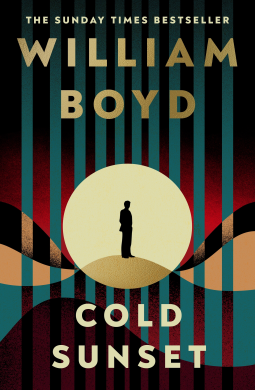
The Predicament by William Boyd

After finishing last year’s Gabriel’s Moon, I was pleased to learn that William Boyd was writing a second book about Gabriel Dax. I’ve now read it and enjoyed it even more than the first.

The Predicament begins in March 1963 with travel writer Gabriel trying to lead a peaceful life in a small East Sussex village. However, his parallel life in the world of espionage just won’t leave him alone. His Russian contact, Natalia Arkadina of the KGB, still believes he is a double agent working on behalf of Russia and has requested a meeting with him to give him his latest assignment. Meanwhile, Faith Green of MI6 has also approached him with a new mission: to go to Guatemala and interview Padre Tiago, the man expected to win the upcoming presidential election there.

Gabriel is not thrilled about getting involved in spying again, but agrees to the Guatemala plan as he’ll be able to combine the trip with some research for his new book on the world’s rivers. Unfortunately, things go badly wrong and he leaves the country in a hurry, having made himself the target of some unscrupulous people. It’s not long before he is given a new task, though – this time he must go to Germany and try to prevent an assassination attempt on President Kennedy, who is visiting West Berlin.

I don’t often choose to read spy thrillers, but one of the things I find compelling about this series is that Gabriel is such a reluctant and accidental spy. He never intended to get mixed up in international espionage and is really not very good at it! We do see him adding to his skill set in this book, though, being trained on how to lose someone who is trying to follow him and how to use everyday items as weapons. And although his Guatemala mission is disastrous, he does play a part in foiling the conspiracy to kill JFK in Berlin (I’m sure it’s not a spoiler to say that it was foiled as everyone knows that he wasn’t assassinated in Germany). Boyd does a good job of creating tension in the Berlin sections, despite it already being obvious what the outcome is going to be!

Gabriel’s Moon probably had slightly more depth, as it also featured a storyline about a childhood trauma that affected Gabriel’s mental health, but I preferred this book overall – possibly because when I read the first one I was comparing it unfavourably with Boyd’s previous and very different novel, The Romantic, which I loved. And although the mental health storyline is pushed into the background in this book, Gabriel does find himself facing some other personal predicaments: he is being accused of plagiarism by another travel author, who is not pleased that Gabriel has written about the same group of islands; his ex-girlfriend Lorraine is trying to rekindle their relationship; and Gabriel himself is continuing to struggle with his feelings for his MI6 handler, Faith Green. Faith is an enigmatic character – is she really romantically interested in Gabriel or is she just stringing him along for her own purposes?

The Predicament is an entertaining read with some fascinating settings – Guatemala on the brink of a political revolution and post-war Berlin shortly after the construction of the Berlin Wall. Throughout the book, Gabriel’s Russian contacts, Natalia and Varvara, keep pushing for him to also visit Moscow, so maybe that will finally happen in the next book! This is apparently intended to be a trilogy, so hopefully we’ll get answers to some of the other questions in the final novel too. Something to look forward to.

Thanks to Viking for providing a copy of this book for review via NetGalley.
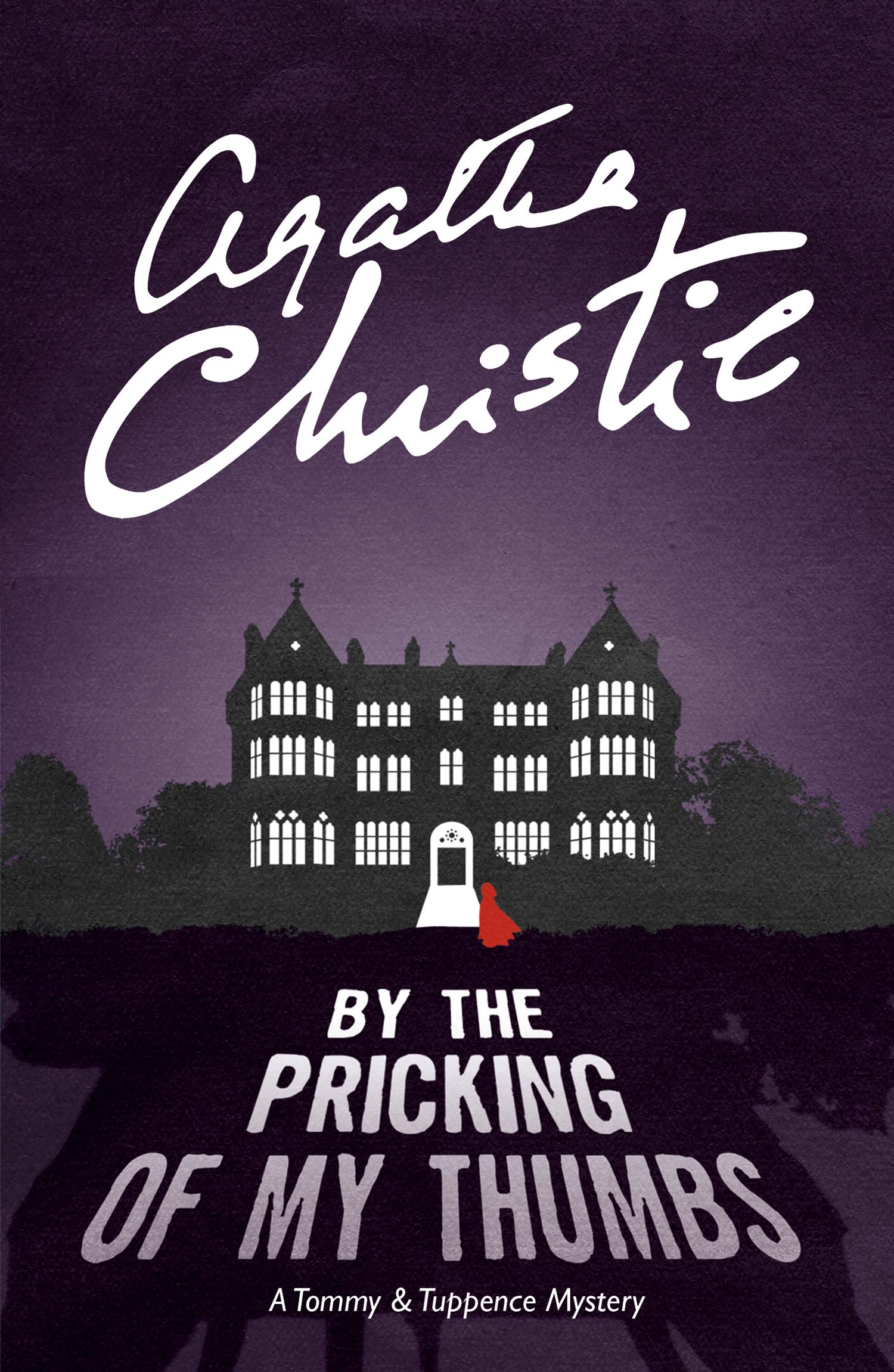
A Caribbean Mystery by Agatha Christie

This month for the Read Christie 2025 challenge, the theme is ‘amateurs’ and although I’ve read the suggested title, Crooked House, quite recently, there were some alternatives that I haven’t already read – including this one, A Caribbean Mystery. Published in 1964, it’s one of the later entries in the Miss Marple series and not one that had really appealed to me; Miss Marple belongs in St Mary Mead and it seemed incongruous to put her in a Caribbean setting! Now that I’ve read it, though, I can say that although it’s maybe not one of my absolute favourite Christie novels, I did really enjoy it.

You may be wondering why Miss Marple is in the Caribbean. Well, it seems she has been ill and her nephew Raymond has paid for her to spend some time recuperating in the sun on the island of St Honoré. Miss Marple is grateful, of course, and is enjoying the warmth and the scenery, but she’s also beginning to feel bored – every day is the same as the one before and nothing ever really seems to happen! This all changes when she falls into conversation with Major Palgrave, an elderly man staying at her hotel, who tells her a story about a man who got away with murder several times. He asks her if she wants to see a picture of a murderer but as he begins to dig out the snapshot, he suddenly stops abruptly and changes the subject as other people approach.

The next day, Major Palgrave is found dead in his room. High blood pressure is blamed, but Miss Marple is convinced he’s been murdered and that there’s some connection with the photo he was about to show her. To add to her suspicions, the photo now seems to have disappeared from the Major’s belongings. It seems likely that the murderer is one of the other guests, but which one? The most likely suspects seem to be the Dysons, Greg and Lucky, and their friends Edward and Evelyn Hillingdon, two nature loving couples who often travel together and who had been walking up the beach towards Major Palgrave as he told Miss Marple his story. But there are others who can’t be ruled out, including the Kendals, who own the hotel; Canon Prescott and his sister; and Mr Rafiel, an old man confined to a wheelchair, visiting the island with his masseur and his secretary.

I found this a very enjoyable mystery; it’s not one of Christie’s more complex plots but there’s some clever misdirection to send the reader along the wrong track. The first murder takes place early in the novel and the story continues to unfold at a steady pace after that, so it held my interest from beginning to end. Miss Marple also plays a big role, in contrast to some of the other books where we see very little of her. This time, she’s present for the entire novel, interacting with the suspects and victims and sharing her thoughts and deductions with the people she believes she can trust. As usual, people underestimate Miss Marple, dismissing her as a ‘fluffy old lady’, but in time some of them come to see that there’s far more to her than meets the eye!

Some of the characters in this book reappear or are referred to again in the later novel Nemesis, published in 1971. I read that one a few years ago, so it was nice to see how those characters were originally introduced and how Miss Marple gained her nickname ‘Nemesis’. I should probably have read the two books in the correct order as it also meant that I could quickly discount those two recurring characters as serious suspects, but it didn’t really matter. Now I’m looking forward to reading Christie’s memoir Come, Tell Me How You Live for Read Christie in July!

Book 4/20 for 20 Books of Summer 2025.

Ice by Anna Kavan

This is a strange book and I’m not sure I’ll be able to describe it adequately! It’s probably not something I would normally have chosen to read, but this new edition from Pushkin Press caught my eye and as I’ve enjoyed other books from their Classics range, I decided to try it.

Ice was first published in 1967, the last of Anna Kavan’s books to be published before her death a year later. It follows an unnamed narrator who has developed an obsession with a pale young woman with silver-white hair. The girl is also unnamed and described as delicate, glass-like and under the control of her sinister husband, who later becomes known as ‘the Warden’. Our narrator pursues her from place to place, hoping to rescue her from the Warden, occasionally catching up with her and then losing her again. There’s not much more to the plot than that – Christopher Priest in his foreword to this edition calls the novel ‘virtually plotless’ – but the book still has multiple layers that make it an interesting and worthwhile read.

First, there’s the setting. The narrator’s pursuit of the white-haired girl takes place against a backdrop of apocalyptic scenes as the planet rapidly becomes engulfed by ice. I’ve seen this referred to as an allegory of Anna Kavan’s own addiction to heroin, although I don’t know enough about her to comment on that. It could also be seen as a warning of climate change, more relevant than ever today, of course. Either way, there are some beautiful descriptive passages as Kavan writes about the coldness, the glittering snow and the giant walls of ice closing in on the girl, the narrator and the world.

Another notable thing about the novel is the way the reader (and the narrator himself) can never be quite sure of the boundaries between reality and a dreamlike or hallucinatory state. Sometimes the girl will appear seemingly from nowhere, just out of reach or about to be enclosed by the ice – only to disappear again just as suddenly, leaving us wondering whether she was ever really there at all. These shifts in reality occur repeatedly throughout the book, which is very unsettling! The Warden also never feels entirely real, but is always there as a threatening, oppressive presence; the narrator sees himself as trying to free the girl from the other man’s control, but his own infatuation with her gradually begins to feel just as disturbing.

In the foreword, Priest describes the book as ‘slipstream’, which Wikipedia defines as ‘speculative fiction that blends together science fiction, fantasy, and literary fiction, or otherwise does not remain within conventional boundaries of genre and narrative’. It’s certainly not a conventional novel and I have to be honest and say that I didn’t enjoy it as much as I’d hoped to – after the first few appearances and disappearances of the girl, I began to find it repetitive – but it’s also a unique and powerful one. The cold, icy imagery will stay with me for a long time.

Thanks to Pushkin Press Classics for providing a copy of this book for review via NetGalley.