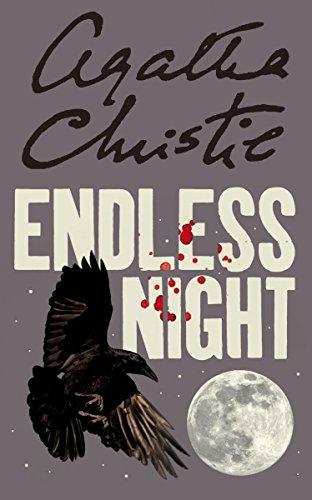
Endless Night by Agatha Christie

There are still a few weeks left in this year’s Read Christie 2023 challenge, but plans for Read Christie 2024 have already been announced! You can find out more and register for full details on the Agatha Christie website here. You don’t need to commit to reading a book every month – I just join in with any that appeal to me or that I haven’t read before.

Back to the 2023 challenge and the prompt for November is a motive: greed. Endless Night, the suggested title for this month, was first published in 1967 and is a standalone novel, not featuring Poirot, Miss Marple or any of Christie’s other famous detectives. It’s also one of only a small number of her novels to be written in the first person (apart from some of the Poirots, which are narrated by Captain Hastings). In fact, it’s really not a typical Christie novel in any way, but I still enjoyed it and apparently it was one of Agatha’s own favourites.

Many of Christie’s novels have titles inspired by nursery rhymes, poems or other works of literature. This one is taken from William Blake’s Auguries of Innocence:

“Every Night and every Morn
Some to Misery are born.
Every Morn and every Night
Some are born to Sweet Delight.
Some are born to Sweet Delight,
Some are born to Endless Night.”

Michael Rogers, our narrator, is an attractive, charming young man but one who has been jumping from one job to another with no real aim in life. When he stumbles upon an old house called The Towers – or ‘Gipsy’s Acre’ as it is known locally – and sees that it’s for sale, he dreams of buying it and settling down there, if only he could afford it. As luck would have it, he meets and falls in love with Ellie, a young American heiress, and soon the two are married and have bought the property, knocking down the old house to build a new one designed by their architect friend, Rudolf Santonix.

Unfortunately, it seems that Michael and Ellie are not destined to be happy in their new home. Gipsy’s Acre has a bad reputation and they are told by an old fortune teller, Esther Lee, that the land is cursed. As Mrs Lee continues to appear, issuing more warnings, Michael wonders whether there really is a curse or if the old woman is trying to drive them away. Then there’s Ellie’s friend and companion, Greta Andersen, who moves in with them when Ellie injures her ankle. Ellie is very close to Greta, but Michael complains that she’s too controlling and has too much influence over his wife.

Christie continues to build tension and suspense in this way until a murder eventually takes place, late in the book. With no detective to investigate the crime and with only Michael’s impression of the other characters to base our opinions on, it’s a difficult mystery to solve. I was convinced I knew who the murderer was, but I wasn’t even close and was completely taken by surprise when the truth was revealed. Although I’m not planning to do it at the moment, I think it would be fascinating to read it again and see how I managed to miss the clues entirely.

I don’t think this ranks as one of my absolute favourites by Christie because I did find it a bit slow in the middle, but that unexpected ending made up for it. I also think it’s one of the most atmospheric of her books, with a real sense of unease and foreboding. I’m not sure yet whether I’ll be able to fit next month’s Read Christie book into my December reading, but I’m definitely signing up again for 2024!

The Progress of a Crime by Julian Symons

Remember, remember, the Fifth of November,
Gunpowder, treason and plot,
I see no reason why gunpowder treason,
Should ever be forgot

It’s the fifth of November today, so no better time to review one of my recent reads, Julian Symons’ The Progress of a Crime, first published in 1960 and subtitled A Fireworks Night Mystery. For those not in the UK or familiar with British culture, this is the night when people traditionally light bonfires and set off fireworks to mark the anniversary of when Guy Fawkes was caught preparing to blow up Parliament with gunpowder in 1605. The Progress of a Crime, the first book I’ve read by Julian Symons, deals with a murder committed at a Bonfire Night celebration.

Hugh Bennett, reporter with the Gazette, has been covering a news story in the village of Far Wether on November the fifth and decides to stay on to watch the lighting of the bonfire on the village green. However, he witnesses more than just a fire that evening when a gang of youths arrive and begin throwing fireworks and causing a disturbance. Things escalate and a man is stabbed to death, but although there are many witnesses, in the darkness nobody is able to say with any certainty which of the boys was the culprit.

All of the group are arrested and questioned, but two quickly emerge as the most likely suspects: the leader, Jack ‘King’ Garney, and his most faithful friend, Leslie Gardner. There’s enough evidence to bring the two to trial and Hugh Bennett is drawn into the investigations due to both his role as a local journalist and as a witness to the crime. Hugh has his own opinions on what happened in Far Wether that night, but when he begins to fall in love with Jill Gardner, Leslie’s sister, things become more complicated.

The Progress of a Crime is an interesting portrayal of society in the early 1960s, but will probably disappoint anyone looking for a more conventional mystery novel. There’s very little suspense and not much actual ‘detecting’ as there are only really two suspects and we know who they are from the beginning. The most exciting part of the book comes in the second half when Garney and Gardner stand trial and we are given some insights into the preparations for the court case, the cross examining of the witnesses and the tensions between family members as they worry over what will happen in court.

According to Martin Edwards’ introduction, Symons took his inspiration for this novel from a real crime, and the book as a whole does feel realistic and gritty. It explores a range of topics including the causes and consequences of juvenile crime, the methods of extracting information used by the police, and the role of the press in reporting on the investigations and maybe even influencing the outcome. This British Library Crime Classics edition also features a short story by Symons, The Tigers of Subtopia, which has obviously been selected for inclusion because it covers similar themes. I can’t really say that I enjoyed either the novel or the short story as I found them quite bleak and depressing, with some very unlikeable characters, but they are interesting from a social history perspective and I would be happy to read some of Symons’ other books.

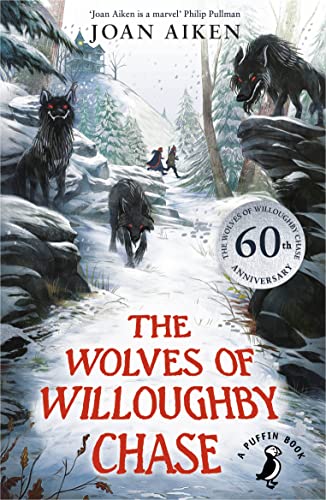
The Wolves of Willoughby Chase by Joan Aiken – #1962Club

I’ve read and enjoyed several of Joan Aiken’s adult novels over the last few years – my favourite so far is Castle Barebane – but until now I’ve never read the book for which she’s most famous, The Wolves of Willoughby Chase. It was first published in 1962, which makes it a perfect choice for this week’s 1962 Club hosted by Simon and Karen.

This is obviously a book aimed at younger readers and I’m sure I would have loved it if I’d read it as a child; however, I was pleased to find that it also has a lot to offer an adult reader. I’m definitely planning to continue with the next book in the series.

The Wolves of Willoughby Chase is set in England in an alternate history where the Stuarts are still on the throne in the 19th century. It’s 1832, early in the reign of King James III, and a tunnel between Dover and Calais has recently been completed, allowing the migration of a large number of wolves from Europe. In reality, of course, the Channel Tunnel wouldn’t open until 1994, so Joan Aiken really was ahead of her time – although obviously the idea had existed in theory for much longer! Other than the tunnel and the presence of wolves, the world described in this book doesn’t seem very different from the real world of 1832, but I’m assuming the alternate history element becomes more significant later in the series.

Being a children’s book, the story is told from the perspectives of two children – Bonnie and Sylvia Green. Sylvia, an orphan, lives in London with her elderly Aunt Jane, but at the beginning of the novel she travels north by train to Willoughby Chase to stay with her cousin Bonnie. Bonnie’s parents, Sir Willoughby and Lady Green, are going abroad for health reasons and have engaged a governess, Miss Letitia Slighcarp, to take care of the children while they are away.

Left alone with Miss Slighcarp, the girls discover that their new governess is not what she claims to be and has another motive for coming to Willoughby Chase. Soon Bonnie and Sylvia are sent off to a horrible school for orphans run by the cruel Gertrude Brisket. Hungry and miserable, they begin to plan a daring escape, but will they succeed – and if so, where will they go? Will their friend, Simon the goose-boy, be able to help them? And what exactly is Miss Slighcarp planning to do now that she is in full control of Willoughby Chase?

Now that I’ve read this book I can see why it is considered a children’s classic and has been so popular with generations of younger readers over the years. It has an exciting plot, child protagonists to relate to, kindly adult characters to love and villainous ones to hate, and an atmospheric setting with snowy, icy landscapes and packs of wolves roaming the countryside. Speaking of the wolves, they play a big part in two memorable scenes near the beginning of the book, but are barely mentioned after that as the human ‘wolves’ come to the forefront of the story instead. The influence of Victorian literature on Aiken’s writing is also very obvious, from the Dickensian names of the characters – Letitia Slighcarp, Josiah Grimshaw, Mr Gripe, Mr Wilderness – to the portrayal of Mrs Brisket’s school, surely inspired by Lowood School in Jane Eyre.

I thoroughly enjoyed this book and just wish I hadn’t come to it so late! I’m already looking forward to reading the second one in the series, Black Hearts in Battersea.

This is book 41/50 for the 2023 Historical Fiction Reading Challenge.

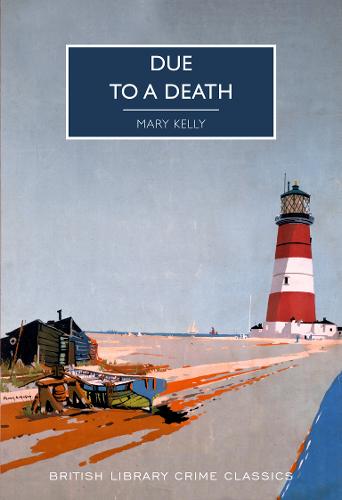
Due to a Death by Mary Kelly – #1962Club

This week Karen of Kaggsy’s Bookish Ramblings and Simon of Stuck in a Book are hosting another of their club weeks, where we all read and write about books published in the same year. This time, the year is 1962 and what a great year for publishing it has turned out to be! There were lots of tempting books to choose from, but I decided to start with one from the British Library Crime Classics series by an author who is new to me: Mary Kelly.

Due to a Death is a very different kind of BLCC book; it’s not really a detective novel, not really a thriller, not a country house or locked room mystery – not even much of a mystery at all. Although there is an element of crime, I would describe this more as a character study and an exploration of the lives of women in a small community in the early 1960s.

Our narrator, Agnes, lives in Gunfleet, a fictional village in the marshlands of Kent. Agnes used to be a teacher but her marriage to Tom meant she was no longer expected to work. It’s not a very happy or satisfying marriage and Tom, who works in a museum, spends most of his free time with his friends, Ian (who is also his stepbrother) and Tubby. Agnes appears to have no friends of her own so Tubby, Ian, and their wives Carole and Helen (whom she doesn’t particularly get along with), form her entire social circle. When Hedley Nicholson, a newcomer to the village, joins their little group he seems to sense that Agnes is lonely and bored and begins to spend more and more time with her, teaching her to drive – something she hopes will provide independence and freedom.

In the opening chapter, we learn that the body of a young woman has been found in the marshes. The rest of the novel is then told in the form of a flashback as Agnes sits in a church, thinking back over the events of the summer. The identity of the dead woman and her connection with the other characters is slowly revealed, but the focus of the book is always on Agnes and her relationships with Hedley, Tom, Ian and Tubby. It’s an interesting study of how, despite living in a small, claustrophobic community where everybody knows everybody else’s business, it’s still possible to feel isolated and alone.

I was very impressed with this book and although it has a slow pace, I found it difficult to put down. However, everything about it is relentlessly bleak, from the desolate marshland setting to the dreary lives of the characters and the tragic motive behind the young woman’s death. I liked it but, as I’ve said, it’s not a typical crime novel, so be prepared!

I hope to have at least one more 1962 review for you later in the week. Meanwhile, here’s my list of other 1962 books previously read and reviewed on my blog.

Night Train to Marrakech by Dinah Jefferies

Night Train to Marrakech is the third and final book in Dinah Jefferies’ Daughters of War trilogy, but if you haven’t read the previous two books that shouldn’t be a problem as I think this one would also work well as a standalone. While Daughters of War and The Hidden Palace followed the stories of the three Baudin sisters, Hélène, Élise and Florence, during World War II, this third novel moves forward to the 1960s to focus on Élise’s daughter, Vicky.

In July 1966, Vicky Baudin arrives in Morocco to visit her grandmother for the first time. Having lost her father during the war, Vicky has only recently discovered that his mother, Clemence, is still alive and living in the mountains outside Marrakech. Vicky has just received a diploma in fashion design from a London art college, so this seems like a good time to travel abroad before beginning a postgraduate course in Paris. As her train arrives at Marrakech station, Vicky is looking forward to getting to know Clemence – and is determined to find a way to meet her hero, the French designer Yves Saint Laurent, who also lives in Marrakech.

In her mountain home, the Kasbah du Paradis, Clemence is awaiting her long-lost granddaughter’s arrival with mixed emotions. Vicky will want to know why she played no part in her son’s life and Clemence doesn’t feel ready to explain. However, she’s forced to confront the memories she’s tried so hard to forget when a man from her past reappears, threatening to reveal her secrets. Meanwhile, Vicky and her cousin Bea also stumble into trouble when they become witnesses to a crime.

Night Train to Marrakech has a much stronger thriller element than the previous two books, which I found quite surprising. The novel is set against a backdrop of rising political tensions – a few months before the novel begins, the Moroccan revolutionary Mehdi Ben Barka is abducted in Paris (a real life incident) – and although this doesn’t form a large part of the plot, it does give a sense of the danger for two young women who unintentionally become mixed up in a situation they don’t fully understand. The descriptions of Morocco itself – the scenery, the buildings, the food, the sounds and smells – are also beautifully done.

The three sisters from the first two books (Vicky’s mother, Élise, and her two aunts, Hélène and Florence) do eventually make an appearance in this one, but I was disappointed that we don’t see very much of them. This is very much Vicky’s story and Clemence’s, and although having two completely new characters to get to know so late in the trilogy unsettled me slightly, I did warm to them later in the book. I found Clemence in particular an intriguing character as she seems so cold and secretive at first but as more and more of her story unfolds, the reason for this becomes clear and by the end of the book I had gained a lot of respect and sympathy for her.

I didn’t enjoy this book as much as Daughters of War and The Hidden Palace – as the third in a trilogy I would have preferred it to be more closely linked with the first two books rather than moving on to the next generation – but the gripping plot and evocative setting still made it worthwhile. As for whether or not Vicky achieves her dream of meeting Yves Saint Laurent, you’ll have to read the book to find out!

Thanks to HarperCollins for providing a copy of this book for review via NetGalley.

This is book 40/50 for the 2023 Historical Fiction Reading Challenge.

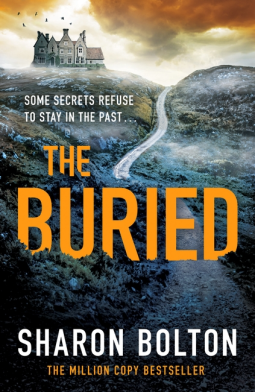
The Buried by Sharon Bolton

Two new Sharon Bolton books in one year! I loved The Dark, the latest in Bolton’s Lacey Flint series, which was published in the spring – and now, with The Buried, she returns to her Florence Lovelady series. I’ve been waiting for this sequel since I read The Craftsman in 2018 and had almost given up hope of it ever appearing, but here it is at last. It was definitely worth the wait!

The Buried begins in the summer of 1999, with Florence Lovelady visiting Larry Glassbrook in prison. Florence, now a senior police officer with the London Met, was responsible for Larry’s conviction thirty years earlier for the murder of three teenagers in Sabden, Lancashire. Now the remains of four more children have been discovered and Florence is confused. Are these more of Larry’s victims or are the remains more recent, meaning that the real killer is still on the loose? Also, the bodies were found in the grounds of Black Moss Manor Children’s Home, which Florence had helped to close down in 1969 after finding evidence of neglect and cruelty. What does this mean and how can she discover the identity of the children?

Soon after Florence’s visit, Larry Glassbrook dies of cancer and preparations are made for his funeral. His daughter Cassie returns to Sabden after a long absence and immediately sets her sights on John Donnelly, whom she loved as a teenager and who is now a married man with children. Cassie herself has become a successful songwriter, but she has never quite managed to put the past behind her and still has questions about some of the things that happened in Sabden thirty years ago.

The first section of the book alternates between Florence and Cassie during the build up to Larry’s funeral and I have to admit, I felt very confused. I found that I’d forgotten most of The Craftsman and I kept coming across references to people and events I couldn’t remember at all. Who was Marigold? What was Florence’s involvement with Black Moss Manor? I had no memories of those things at all, but they were obviously important. Then I discovered that I wasn’t supposed to remember them as they didn’t actually form part of the plot of The Craftsman. I just needed to be patient because the second section of the novel takes us back to 1969 and my questions about Marigold and Black Moss Manor were answered. The shifting timelines with various parts of this book set both before and after the events of The Craftsman means it works as both a sequel and, in a way, a prequel.

The 1969 storyline (which forms the main part of the novel) is excellent – Sharon Bolton at her best. I was completely gripped by Florence’s investigations into the allegations of abuse at the children’s home and the obstacles she faces in trying to get anybody to take her concerns seriously. The 1960s setting allows Bolton to explore the sexism and misogyny Florence faces as she tries to do her work; the other police officers are exclusively male – local men from Sabden who resent Florence’s university education, southern accent and the fact that she is a woman doing what they consider a man’s job. Meanwhile, we get to know Sally Glassbrook, Cassie’s mother, who is struggling to cope after Larry’s arrest and imprisonment. As the family of a convicted murderer, Sally and her daughters are in a vulnerable position and find themselves having to fend off the unwanted attentions of Roy Greenwood, Larry’s former business partner.

Finally, I need to mention the supernatural elements! The way The Craftsman ended made me think these were going to be a major part of the second book, but things didn’t go quite as far in that direction as I’d expected and the crimes committed are all very human ones. We do see more of the coven of witches who are operating in Sabden (Pendle Hill, site of the famous 17th century witch trials, casts its shadow over the town), the influence of the mysterious and sinister group known as the Craftsmen, and Florence’s own seeming ability to communicate with the dead, but I didn’t think these elements dominated the story too much. However, they are there and won’t appeal to everyone. I would say these books are closer in tone to Bolton’s early standalones such as Sacrifice and Awakening than they are to the Lacey Flint novels or her other recent thrillers.

I loved this book once I managed to get back into the story, but I would definitely recommend reading The Craftsman first – or re-reading it if, like me, you read it several years ago and can’t remember the details.

Thanks to Orion for providing a copy of this book for review via NetGalley.

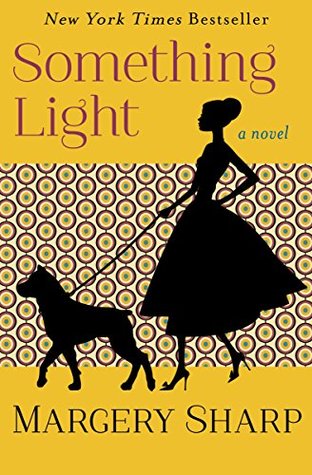
Something Light by Margery Sharp

This was one of the books from my 20 Books of Summer list, which I did actually read before the September deadline although I didn’t manage to post my review in time. First published in 1960, as the title suggests, it’s a light read.

Our heroine, Louisa Datchett, is a thirty-year-old single woman who lives alone in a tiny London flat – so tiny that she can ‘turn on a tap, fill a kettle, light a gas ring and reach down the coffee tin, all without moving her feet’. Louisa has never married, but that doesn’t mean she doesn’t like men – she does like them and has plenty of male friends, all of whom have a habit of coming to her with their problems. In fact, she’s been so busy solving men’s problems that she has barely had time to think about herself – and there certainly hasn’t been time for any romance in her life.

Being a ‘modern’ woman, Louisa hasn’t previously felt that having a husband was in any way essential and has established a career for herself as a dog photographer. This unusual job has provided lots of interesting opportunities for Louisa, but she’s finding that it’s not a reliable way of paying the rent! One morning, having bought an extra yogurt from the milkman for the starving musician next door and worried about her friend, Hugo, who has bronchitis, it occurs to Louisa that it would be nice to have someone taking care of her for a change!

The rest of the book follows Louisa’s attempts to find a husband, each one more disastrous than the one before. First she sets her sights on Freddy Pennon, a wealthy older man whom she met the previous year in Cannes while photographing an Italian film star’s poodles. When this ends in failure, she decides that perhaps a steady, dependable man would be a better option – or maybe a widowed family man looking for a stepmother for his children. Fortunately, Louisa has enough sense to see that none of these relationships are likely to work…but just as she gives up hope of ever meeting a suitable husband, one appears where she had least expected to find him!

Louisa could be seen as quite a contradictory character; on the one hand she is an independent and capable woman who lives on her own and supports herself financially through work, while on the other she sets herself the old-fashioned goal of finding a husband no matter what. It also seems a bit unfair on the men she targets, who have no idea that they are being lined up for marriage. However, she goes about this in such a good-natured way, making sure nobody gets hurt by her actions, that you can’t help liking her and hoping she’ll get what she wants in the end.

The overall story is quite predictable and I could easily predict who Louisa would end up with as soon as he made his first appearance, but each separate episode in the novel has its own little twist, which keeps things interesting. This isn’t one of my favourite Margery Sharp books (so far that would be Britannia Mews or The Flowering Thorn) but it’s an entertaining read and sometimes ‘something light’ is just what you need.