The Venice Train by Georges Simenon (trans. Ros Schwartz)

This is one of Georges Simenon’s many psychological thrillers, which he described as romans durs or ‘hard novels’. I’ve read two of his others – The Man from London and The Strangers in the House – and have enjoyed both, so was looking forward to reading this one. First published in 1965 as Le Train de Venise, it has just been reissued by Penguin Classics in a new English translation by Ros Schwartz.

The novel begins with Justin Calmar boarding a train in Venice to return to his home in Paris after a family holiday. His wife and two young children will follow in a few days’ time. During the journey, another passenger engages Justin in conversation and he finds himself agreeing to deliver a briefcase to an address in Lausanne when the train stops at the station there. However, things don’t go according to plan and Justin ends up returning to Paris with the case still in his possession. Unable to resist the temptation, he breaks the locks and looks inside…and what he finds there will change his life forever.

I won’t say too much more about the plot because I wouldn’t want to spoil the suspense of wondering what is inside the case and what Justin will decide to do with it. This is a very short book (176 pages in the paperback version) and for the first half, the tension builds and builds. It would have made a perfect Alfred Hitchcock film! It’s not a crime novel, however, so don’t go into it expecting one; the mystery is never fully explained or resolved, it ends abruptly and we are left with lots of unanswered questions. The events on the train are simply a starting point for Simenon to explore the psychological effects on Justin Calmar as he battles with nerves, guilt and paranoia, lying to his wife and his friends and finding that each lie leads to another.

The second half of the book isn’t quite as strong as the first and I do wish we’d had answers to at least some of those questions, but this is a fascinating and compelling story – my favourite by Georges Simenon so far.

Although I was slightly disappointed that only the first few pages of the book are actually set in Venice – the rest either on the train or in Paris – I wasn’t too disappointed because Paris is, of course, a great setting as well. And as Thyme for Tea and Readerbuzz are hosting their annual Paris in July event this month, the timing couldn’t be better!

Thanks to Penguin Classics for providing a copy of this book for review via NetGalley.
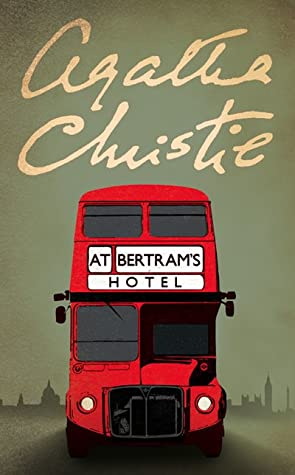
At Bertram’s Hotel by Agatha Christie

July’s theme for Read Christie 2022 is ‘a story which takes place on holiday’; I didn’t take part in last month’s read as I’d already read the suggested title (Murder in Mesopotamia), but decided to join in this month with At Bertram’s Hotel.

This late Christie novel, first published in 1965, begins with Miss Marple arriving for a two-week stay at Bertram’s Hotel in London courtesy of her nephew who thought she might like to get away from the village of St Mary Mead for a while. The hotel is one that Miss Marple remembers fondly from her youth and, having heard that it has changed very little over the years, she is looking forward to staying there again. However, it turns out not to be quite the relaxing break she expected; first an elderly hotel guest, Canon Pennyfather, goes missing, then Miss Marple’s attention is drawn to the unusual behaviour of two more guests – the notorious Lady Sedgwick and her estranged teenage daughter, Elvira. It seems that something is not quite right about Bertram’s Hotel, but can Miss Marple help the police to discover exactly what is going on?

I enjoyed this book, although I don’t think it’s one of Christie’s best. There’s no central mystery to be solved – there’s the murder of a minor character which takes place late in the novel, but otherwise we hear about crimes that have happened ‘off the page’ rather than witnessing them ourselves. The sequence of events surrounding the disappearance of the absentminded Canon Pennyfather was fascinating, but again more of a subplot than the main focus of the story. What we do get is a growing sense of unease and a feeling that something is wrong without knowing precisely what it is.

I loved the portrayal of Bertram’s Hotel, which at first appears to be a quaint, old-fashioned establishment that has deliberately tried to preserve its Edwardian charm with the sort of atmosphere, furnishings and food that will appeal to a certain age and class of guest. As the story progresses, Miss Marple’s pleasure at finding the hotel just as she remembered it turns gradually to disappointment as she discovers that you can never really go back and that things don’t stay the same forever, no matter how much you want them to.

Sadly, Miss Marple herself doesn’t have a very big role to play in this novel. Chief Inspector Davy – known as ‘Father’ because he’s close to retirement age – is the person responsible for carrying out the investigations and we see more of him than we do of Miss Marple. However, as usual, she is the one who provides the vital clues and observations that enable the crimes to be solved and the culprits to be caught.

August’s Read Christie theme is a book ‘set in a hot climate’, if anyone wants to join in!

This is book 8/20 from my 20 Books of Summer list.

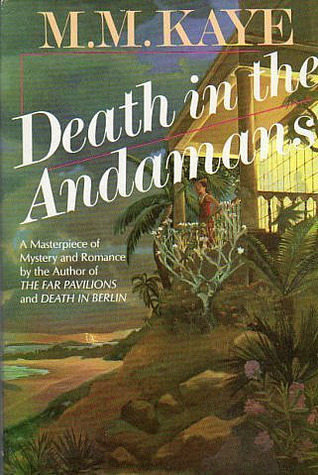
Death in the Andamans by M. M. Kaye

This is the sixth and final book in M.M. Kaye’s Death In… series. I’ve now read all of them and although this one, Death in the Andamans, is not my favourite it’s another that I’ve enjoyed. If you’re new to these books, don’t worry about reading them in order – they are all completely separate, standalone novels, the only connection between them being that they’re all murder mysteries featuring a young female protagonist and set in countries the author had personally visited.

Copper Randall is working as a typist in a London office when she receives an unexpected inheritance from an uncle and decides to spend some of the money on a visit to the Andaman Islands in the Indian Ocean. Her friend, Valerie Masson, is the stepdaughter of the Chief Commissioner there and has invited Copper to stay with them at Government House on Ross Island, the administrative capital of the Andamans (at this time, the Andamans, like the rest of India, are still under British control). Copper arrives just in time for Christmas and, on Christmas Eve, attends a picnic with the other British people on the island – a community which includes Valerie’s fiancé Charles and his friend Nick, who has become Copper’s own love interest.

As the picnic breaks up and the group begin to return home, some by road and some by boat, they are caught in a sudden, violent storm. One of the party is swept overboard and presumed drowned, but as the others reach the safety of Government House and take shelter there, they start to wonder whether it really was an accidental death. Cut off from the rest of the islands by the weather, Copper and her friends must try to identify the murderer before they have a chance to kill again.

There are plenty of suspects, the most obvious being the dead man’s cousin, who stands to inherit his coconut plantation if no will is found. But of course, there are other people who also had the opportunity, although their motives are less clear. There are lots of clues, lots of red herrings and lots of creeping around in the middle of the night listening to footsteps and creaking floorboards (this sort of scene seems to be a speciality of Kaye’s, appearing several times in almost every book in the series!). I didn’t solve the mystery, although the culprit was one of several people I had suspected throughout the novel. Once the villain was revealed, though, I felt that the conclusion was too drawn-out with various characters taking turns to give explanations and tie up loose ends.

Like most of the other Death In… books, this one provides a snapshot of the British Empire in its final days, although she doesn’t really explore the local politics or the effects of colonialism here the way she does in Death in Kashmir or Death in Kenya. You do have to put up with some of the attitudes of the time – the sense of entitlement, the dismissal of the local people as superstitious and uneducated, as well as some sexism with Copper and Valerie’s two boyfriends, Nick and Charles, determined to keep the women out of danger. Charles also has an irritating habit of speaking like someone from a PG Wodehouse novel (deliberately – we are told that he’s been modelling his conversation on the books he’s found in the library, ‘an institution that would appear to have been last stocked during the frivolous twenties by a fervent admirer of such characters as Bertie Wooster’.).

However, the descriptions of the Andaman Islands are beautiful: the breeze ‘whispering through the mango trees’, the ‘tall, feathery clusters of bamboo’, the beach with its ‘clear, glassy water that shivered to a lace of foam about the dark shelves of rock’. Kaye really excels at creating a strong sense of place – I think only Daphne du Maurier and Mary Stewart are as good! The way she describes the approach of the storm, with its torrential rain and hurricane-force winds is particularly dramatic.

In her author’s note, Kaye describes how she came to write this novel; it was inspired by a visit to the Andamans in the 1930s, when her friend’s father was posted there as Chief Commissioner (the character of Valerie is clearly based on the friend). However, due to the outbreak of World War II, the book didn’t get published until 1960 – originally under the title of Night on the Island and then again in 1985 as Death in the Andamans. This explains why the novel feels much older than the publication date would suggest.

Not the best book in the series, then, but still an entertaining read.

This is book 3/20 from my 20 Books of Summer list.

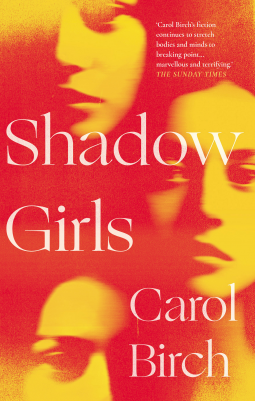
Shadow Girls by Carol Birch

Having enjoyed two of Carol Birch’s earlier novels – Orphans of the Carnival and the Booker Prize nominated Jamrach’s Menagerie – I decided to try her new book, Shadow Girls. I enjoyed this one too, but it’s a very strange novel and not quite what I’d expected!

From the blurb, I had thought this was going to be a ghost story, but for the first half of the book at least, it’s much more of a ‘school story’. Our narrator, Sally, is a fifteen-year-old girl growing up in 1960s Manchester and the time and place are vividly evoked with references to the music, films, fashion and culture of the decade woven into the narrative. Like most girls her age, then and now, Sally’s life revolves around schoolwork and spending time with her friends and her boyfriend, and this is the focus of the first section of the book. Through Sally’s eyes we get to know her best friend, Pamela, a rebellious troublemaker nobody else likes, and their ‘enemy’ Sylvia Rose, a girl from a posh background who is a talented classical singer. She also describes her feelings for Rob, her first serious boyfriend, whom she is starting to have doubts about.

The supernatural element of the story isn’t introduced until surprisingly late in the novel, when Sally has a mysterious encounter with Sylvia that will haunt her for the rest of her life. The pace picks up from this point and it does become the ghost story I had expected – in fact, it’s quite a creepy one, particularly as, like many good ghost stories, it’s never completely clear which of Sally’s experiences are real and which are in her mind.

Despite not much happening for half of the book, I found it all very absorbing and was pulled into Sally’s world from the first page. I’m not sure whether so much build up was really necessary, but I enjoyed it anyway and found the book so difficult to put down that I ended up reading most of it in one day. Now I’m interested in reading Carol Birch’s previous ghost story, Cold Boy’s Wood. Has anyone read that one – or any of her other books?

Thanks to Head of Zeus for providing a copy of this book for review via NetGalley.

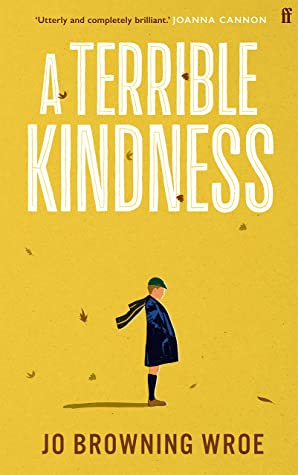
A Terrible Kindness by Jo Browning Wroe

The Welsh village of Aberfan is a place many of us associate with the 1966 mining disaster where a landslide of coal waste collapsed onto the village school, killing 116 children and 28 adults. Among the many volunteers who arrived in Aberfan to help deal with the aftermath of the tragedy were several hundred embalmers. A Terrible Kindness imagines the story of one of these embalmers, the fictional William Lavery.

William is just nineteen years old and newly qualified when the disaster happens, but he works tirelessly alongside older and more experienced embalmers to help identify and tend to the bodies of the victims. Not surprisingly, this will have a profound effect on him and leave him psychologically damaged for years to come. It also brings back memories of other traumatic moments that occurred earlier in William’s life – including one particular incident that led to the breakdown of his relationship with his mother. This incident is only hinted at throughout the book and it’s not until the final chapters that we find out what happened.

The Aberfan disaster is something that is still within living memory for a lot of people, so it’s important that authors handle things like this with care and sensitivity – and I think Jo Browning Wroe does this very well. These scenes are naturally very sad and moving, but also filled me with admiration for these people who voluntarily carried out such an unpleasant, difficult but essential task. However, Aberfan is only the starting point for William’s story and apart from two or three chapters, the rest of the book is set elsewhere.

A lot of time is spent on William’s years as a young chorister at a choir school in Cambridge, the friendships he made there and the events that made him abandon his promising singing career and go into the family embalming business instead. The complex relationships between William, his mother, his uncle and his uncle’s partner are also explored and this is the real focus of the book rather than what happened at Aberfan. I did have a lot of sympathy for William, who was clearly struggling, but I wished he had been able to get help and find a way to move on rather than making life so unhappy for himself and his loved ones for so many years. His mother, Evelyn, also frustrated me with her inability to consider other people as well as herself and I felt that the revelation of the incident that caused her estrangement from William was a bit of an anticlimax.

I think the inclusion of the Aberfan storyline will draw a lot of readers to this book, but will also put other readers off and I do wonder whether a fictional tragedy would have served the purpose of the plot just as well. As an exploration of grief and forgiveness, though, it’s an excellent read and an impressive first novel by Jo Browning Wroe.

Thanks to Pigeonhole for the opportunity to read this book.

This is book 2/50 read for the Historical Fiction Reading Challenge 2022.

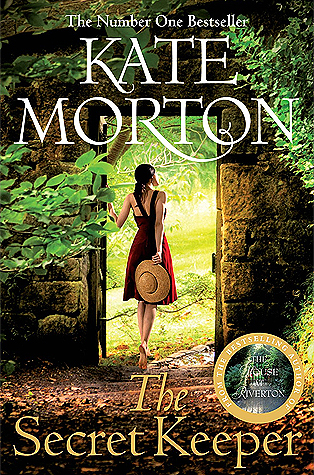
The Secret Keeper by Kate Morton

There are many events taking place in the book blogging calendar this month and AusReading Month hosted by Brona’s Books is one of them. I have a few books by Australian authors waiting to be read, but I decided to read one that has been waiting a long time: Kate Morton’s 2012 novel, The Secret Keeper. I’ve previously read three books by Morton and had mixed experiences with them; I loved The Forgotten Garden but was slightly disappointed in both The Distant Hours and The Clockmaker’s Daughter, so wasn’t sure whether I wanted to bother with this one. I’m pleased I did, because I enjoyed it much more than I expected to.

Like Morton’s other books, The Secret Keeper is set in multiple time periods. It begins in 1961, with sixteen-year-old Laurel Nicolson hiding in a wooden tree house during a family celebration. Laurel just wants some time alone to think, but this means that, from her position in the tree, she is able to see a strange man approaching the Nicolson farmhouse – and is witness to a violent crime involving her mother, Dorothy. We then jump forward fifty years to 2011, when the Nicolsons are gathering at their childhood home for Dorothy’s ninetieth birthday. Laurel, now a successful actress, is still haunted by what she saw on that long ago day and decides that, with Dorothy in poor health, she needs to find out what really happened before her mother dies and takes her secrets with her.

As Laurel begins to investigate her mother’s past, the novel moves back and forth between 2011 and 1940s London where the young Dorothy is looking forward to marrying war photographer Jimmy as soon as their financial situation improves. Dorothy has also made a new friend (or so she thinks): the beautiful, wealthy Vivien, who lives in the house opposite. But when she is betrayed by Vivien, Dorothy puts together a plan of revenge – with unexpected and tragic results.

As is usually the case when I read books set in more than one time period, it was the historical one I enjoyed the most. The present day story was interesting – I enjoyed Laurel’s interactions with her younger brother Gerry, who helps her to uncover the truth about their mother – but I felt that it was effectively just a frame for the much more compelling story of Dorothy, Jimmy and Vivien. I was surprised by how absorbed I became in these parts of the novel, considering that I found Dorothy a particularly unpleasant and irritating character! I did like Jimmy, was intrigued by Vivien and loved the wartime setting, especially as things build to a climax during the London Blitz.

Somewhere in the second half of the book I started to have some suspicions regarding Laurel’s mother and the secrets she was hiding, but this came late enough that it didn’t spoil my enjoyment of the story and I was pleased to find that my guess was correct. Of Kate Morton’s other books, I only have The House at Riverton and The Lake House left to read. Which should I read first?

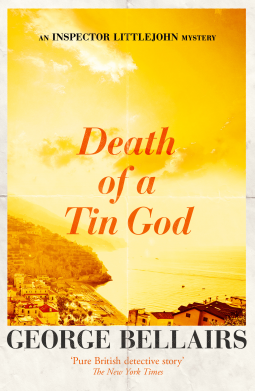
Death of a Tin God by George Bellairs

This is the fourth book I’ve read from George Bellairs’ Inspector Littlejohn series and although I haven’t been reading them in order, it doesn’t seem to matter at all. Each novel works as a standalone mystery and there’s very little focus on Littlejohn’s personal life so you can easily jump around from an early book to a later one and back again without feeling that you’ve missed anything important.

Death of a Tin God was first published in 1961 and begins with Thomas Littlejohn (now a Superintendent rather than an Inspector) flying from Dublin to the Isle of Man to visit his friend, Caesar Kinrade, the Archdeacon of Man. Littlejohn is looking forward to a quiet break, but his arrival coincides with the death of Hal Vale, a Hollywood star who has been filming on the island. Hal is found electrocuted in the bath in his hotel room and the circumstances suggest that it was not an accident. Littlejohn finds himself assisting the local police with their investigations and as the mystery deepens, he travels to the South of France to look for the answers.

I enjoyed this book but found the solution a bit predictable as the murderer turned out to be the person I had suspected from the beginning. There were some clever twists and red herrings along the way that did put some doubt into my mind, but I still wasn’t at all surprised when the truth was revealed. However, I very rarely manage to solve a mystery before the detective does, so I don’t mind too much when it occasionally happens! And I do like spending time with Littlejohn and watching him carry out his investigations; he’s not the most memorable of fictional detectives, but that means the focus stays firmly on the plot without his own personality getting in the way. His usual sidekick Sergeant Cromwell is absent for most of the book, but instead he teams up with Inspector Knell of the Manx police and Inspector Dorange in Nice who I believe are also recurring characters in the series and have good working relationships with Littlejohn.

One of the things I’ve loved about the other Bellairs novels I’ve read is the way he creates such a strong cast of supporting characters and suspects. In Dead March for Penelope Blow and A Knife for Harry Dodd in particular, there are some very colourful, larger than life characters who could almost have jumped straight out of the pages of a Dickens novel. In this book, I found the characterisation more bland and less interesting, but maybe that was a reflection of the shallow, vapid celebrity world Bellairs has chosen as the setting for this particular novel. Littlejohn is described several times as feeling slightly out of his depth amongst this assortment of glamorous film stars, ruthless publicity agents and millionaire bankers with yachts, so perhaps the reader is intended to feel the same.

I liked the idea of the book being set on the Isle of Man, as it’s not a common setting for mystery novels (or fiction in general), but it turned out that half of the story actually took place in Aix-en-Provence in France – and neither setting was described as vividly as I would have liked. I know Bellairs set some of the other Littlejohn books on the Isle of Man too, so maybe some of those have more local colour than this one. Although this is not one of my favourite books in the series so far, I’m still looking forward to reading more of them.

Thanks to Agora Books for providing a copy of this book for review via NetGalley.
Book 5 for R.I.P. XVI