The Nonesuch by Georgette Heyer – #1962Club

When looking for books to read for this week’s 1962 Club (hosted by Karen and Simon), I hoped there would be a Georgette Heyer I hadn’t read yet – and there was! Like Agatha Christie and Georges Simenon, you can nearly always rely on Heyer to have had at least one book published in whatever the current club year is. The Nonesuch was published in 1962 and I’ve managed to read it just in time to squeeze in my review on the final day!

A nonesuch can be defined as ‘a person or thing without equal’ and Sir Waldo Hawkridge, hero of Heyer’s novel, certainly fits that description – at least in the eyes of fashionable Regency society. Being rich, handsome, athletic and an eligible bachelor, his sudden arrival in the quiet Yorkshire village of Oversett causes quite a stir. He has recently inherited the estate of Broom Hall and has come to inspect it, accompanied by his younger cousin, Lord Lindeth. Ancilla Trent, governess to the beautiful Tiffany Wield, has already formed an opinion of the Nonesuch before she even meets him, but is surprised to find that he’s not really what she expected at all. Ancilla is quickly won over by Sir Waldo’s kindness and calm, sensible nature and he in turn is drawn to the quiet, unassuming governess. However, they are both alarmed when Lindeth seems to be falling for the charms of the lovely but spoiled Tiffany!

The Nonesuch doesn’t really have a lot of plot – unlike many of Heyer’s other novels, there are no encounters with highwaymen, no duels, no masked balls, no abductions or elopements – and the focus instead is on country life and the relationships between the two or three Yorkshire families at the heart of the story. Heyer is often compared to Jane Austen, of course, but I found this book particularly reminiscent of Pride and Prejudice. I tend to prefer her livelier, funnier stories, like The Corinthian or Sprig Muslin, but I did still enjoy following Ancilla and Sir Waldo and watching their relationship develop. Heyer does throw in a misunderstanding to stir things up, but otherwise their romance is completely believable and it’s easy to see why each would be attracted to the other.
In contrast to Ancilla Trent, whom I liked very much, Tiffany Wield is an awful character – selfish, vain, and prone to throwing tantrums when things don’t go her way. It was such a relief when it became clear that she wasn’t going to be the novel’s ‘heroine’, so I didn’t need to try to like her. And I did find myself enjoying her storyline later in the book, after Sir Waldo’s other young cousin, Laurence Calver, arrives from London and Tiffany finds she has met her match!

The Nonesuch doesn’t rank as a favourite by Heyer, but I’m still pleased I managed to fit it in for 1962 Club. I did love the rural Yorkshire setting, which made a change from the more common Regency novel settings of London or Bath.
This is book 42/50 for the 2023 Historical Fiction Reading Challenge.
The Wolves of Willoughby Chase by Joan Aiken – #1962Club

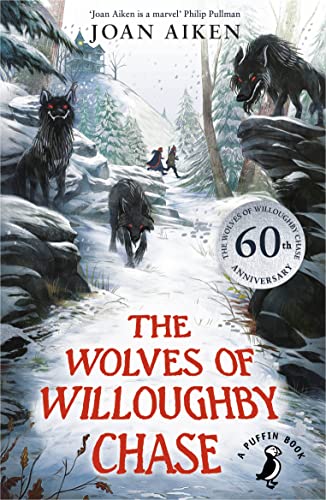
I’ve read and enjoyed several of Joan Aiken’s adult novels over the last few years – my favourite so far is Castle Barebane – but until now I’ve never read the book for which she’s most famous, The Wolves of Willoughby Chase. It was first published in 1962, which makes it a perfect choice for this week’s 1962 Club hosted by Simon and Karen.

This is obviously a book aimed at younger readers and I’m sure I would have loved it if I’d read it as a child; however, I was pleased to find that it also has a lot to offer an adult reader. I’m definitely planning to continue with the next book in the series.

The Wolves of Willoughby Chase is set in England in an alternate history where the Stuarts are still on the throne in the 19th century. It’s 1832, early in the reign of King James III, and a tunnel between Dover and Calais has recently been completed, allowing the migration of a large number of wolves from Europe. In reality, of course, the Channel Tunnel wouldn’t open until 1994, so Joan Aiken really was ahead of her time – although obviously the idea had existed in theory for much longer! Other than the tunnel and the presence of wolves, the world described in this book doesn’t seem very different from the real world of 1832, but I’m assuming the alternate history element becomes more significant later in the series.

Being a children’s book, the story is told from the perspectives of two children – Bonnie and Sylvia Green. Sylvia, an orphan, lives in London with her elderly Aunt Jane, but at the beginning of the novel she travels north by train to Willoughby Chase to stay with her cousin Bonnie. Bonnie’s parents, Sir Willoughby and Lady Green, are going abroad for health reasons and have engaged a governess, Miss Letitia Slighcarp, to take care of the children while they are away.

Left alone with Miss Slighcarp, the girls discover that their new governess is not what she claims to be and has another motive for coming to Willoughby Chase. Soon Bonnie and Sylvia are sent off to a horrible school for orphans run by the cruel Gertrude Brisket. Hungry and miserable, they begin to plan a daring escape, but will they succeed – and if so, where will they go? Will their friend, Simon the goose-boy, be able to help them? And what exactly is Miss Slighcarp planning to do now that she is in full control of Willoughby Chase?

Now that I’ve read this book I can see why it is considered a children’s classic and has been so popular with generations of younger readers over the years. It has an exciting plot, child protagonists to relate to, kindly adult characters to love and villainous ones to hate, and an atmospheric setting with snowy, icy landscapes and packs of wolves roaming the countryside. Speaking of the wolves, they play a big part in two memorable scenes near the beginning of the book, but are barely mentioned after that as the human ‘wolves’ come to the forefront of the story instead. The influence of Victorian literature on Aiken’s writing is also very obvious, from the Dickensian names of the characters – Letitia Slighcarp, Josiah Grimshaw, Mr Gripe, Mr Wilderness – to the portrayal of Mrs Brisket’s school, surely inspired by Lowood School in Jane Eyre.

I thoroughly enjoyed this book and just wish I hadn’t come to it so late! I’m already looking forward to reading the second one in the series, Black Hearts in Battersea.

This is book 41/50 for the 2023 Historical Fiction Reading Challenge.

Due to a Death by Mary Kelly – #1962Club

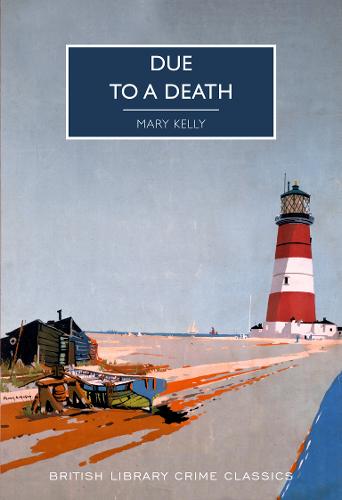
This week Karen of Kaggsy’s Bookish Ramblings and Simon of Stuck in a Book are hosting another of their club weeks, where we all read and write about books published in the same year. This time, the year is 1962 and what a great year for publishing it has turned out to be! There were lots of tempting books to choose from, but I decided to start with one from the British Library Crime Classics series by an author who is new to me: Mary Kelly.

Due to a Death is a very different kind of BLCC book; it’s not really a detective novel, not really a thriller, not a country house or locked room mystery – not even much of a mystery at all. Although there is an element of crime, I would describe this more as a character study and an exploration of the lives of women in a small community in the early 1960s.

Our narrator, Agnes, lives in Gunfleet, a fictional village in the marshlands of Kent. Agnes used to be a teacher but her marriage to Tom meant she was no longer expected to work. It’s not a very happy or satisfying marriage and Tom, who works in a museum, spends most of his free time with his friends, Ian (who is also his stepbrother) and Tubby. Agnes appears to have no friends of her own so Tubby, Ian, and their wives Carole and Helen (whom she doesn’t particularly get along with), form her entire social circle. When Hedley Nicholson, a newcomer to the village, joins their little group he seems to sense that Agnes is lonely and bored and begins to spend more and more time with her, teaching her to drive – something she hopes will provide independence and freedom.

In the opening chapter, we learn that the body of a young woman has been found in the marshes. The rest of the novel is then told in the form of a flashback as Agnes sits in a church, thinking back over the events of the summer. The identity of the dead woman and her connection with the other characters is slowly revealed, but the focus of the book is always on Agnes and her relationships with Hedley, Tom, Ian and Tubby. It’s an interesting study of how, despite living in a small, claustrophobic community where everybody knows everybody else’s business, it’s still possible to feel isolated and alone.

I was very impressed with this book and although it has a slow pace, I found it difficult to put down. However, everything about it is relentlessly bleak, from the desolate marshland setting to the dreary lives of the characters and the tragic motive behind the young woman’s death. I liked it but, as I’ve said, it’s not a typical crime novel, so be prepared!

I hope to have at least one more 1962 review for you later in the week. Meanwhile, here’s my list of other 1962 books previously read and reviewed on my blog.

#1962Club – Some previous reads

1962 Club, hosted by Simon of Stuck in a Book and Karen of Kaggsy’s Bookish Ramblings, starts on Monday and we will all be reading and writing about books published in that year. It seems to have been another great year for publishing – I have previously read and reviewed six 1962 books on my blog and thought I would list them here before the week begins. If you’re looking for some last-minute ideas I can recommend all of these!

The Mirror Crack’d from Side to Side by Agatha Christie – There always seems to be at least one Christie option for every club year! In this one, Miss Marple investigates a poisoning during a party hosted by a famous actress.

The Bull from the Sea by Mary Renault – The sequel to The King Must Die, but would probably work as a standalone. The two books retell the Greek myth of Theseus.

Something Wicked This Way Comes by Ray Bradbury – A wonderfully eerie and atmospheric story in which a very unusual carnival arrives in Green Town, Illinois.

Devil Water by Anya Seton – A fascinating historical novel set in Northumberland and Virginia during the time of the Jacobite Rebellions of 1715 and 1745.

We Have Always Lived in the Castle by Shirley Jackson – A strange, unsettling novel about two sisters living in an isolated house with a tragic past.

The Moonspinners by Mary Stewart – One of my favourite Mary Stewart suspense novels, with a beautiful Greek island setting!

~

Have you read any books published in 1962? Will you be joining in with 1962 Club?