The Quick by Lauren Owen

The Quick - Lauren Owen Well, this is going to be a difficult book to write about! At first it seemed it was going to be one of those atmospheric Victorian-style novels I love (similar to Fingersmith by Sarah Waters, The Quincunx by Charles Palliser or The Meaning of Night by Michael Cox). It begins with two children, Charlotte and James Norbury, growing up in Yorkshire in a large country house complete with fountains, statues and secret chambers. When their father dies, Charlotte continues to live on the estate with an aunt while James goes away to school and then to university.

Trying to build a career for himself in London as a poet and playwright, James is befriended by the handsome Christopher Paige who will soon come to play an important part in his life. But when tragedy strikes, James becomes embroiled with the mysterious Aegolius Club…and this is where I’ll have to stop. From this point onwards the story goes in an unexpected direction and becomes something very different from what it had originally appeared to be. I can’t even tell you what the title of the novel, The Quick, means because that in itself is a spoiler.

I’m not sure whether keeping the true nature of this book hidden is a good idea or a bad idea. On the one hand, it means it will be read by people like myself who might not have picked it up otherwise, but on the other hand they may decide not to continue reading once the truth is revealed – while people who do like this type of book could be missing out on reading it. However, the publishers have obviously tried to create an air of mystery around it, so I respect their decision and will not give anything away!

I enjoyed this book up to the big plot twist but not so much afterwards. This was not necessarily because of the twist itself, but more due to the fact that at this stage we leave James and Charlotte behind for a while and are introduced to a new set of characters. Who was this Augustus Mould whose diary I found myself reading? What about Adeline Swift who suddenly begins narrating eleven chapters into the book? These things are explained, of course, and we do learn who these people are, but it meant that when the narrative eventually switched back to Charlotte or James I had lost the connection I’d felt with those two characters at the beginning.

The way the book ended took me by surprise and now I’m wondering if there’s going to be a sequel. If so, I’ll have to decide whether I want to read it, but if not then I’ll be interested to see what Lauren Owen writes next. I did like her writing and if this book had just been the straightforward neo-Victorian novel it seemed to be at first, I think I would have loved it.

I received a review copy of this book from the publisher via NetGalley.
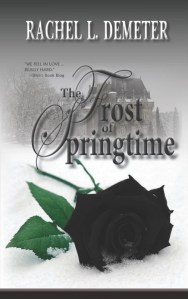
The Frost of Springtime by Rachel L. Demeter

The Frost of Springtime When I was offered the opportunity to take part in a blog tour for Rachel L. Demeter’s The Frost of Springtime, I wasn’t sure whether or not to accept. I read a lot of historical fiction novels and many of them have an element of romance, but I tend not to be drawn to books that are specifically classed as ‘historical romance’ as this one is. The setting sounded intriguing, though, so I decided to give it a try.

The Frost of Springtime is set during the Paris Commune of 1871, a brief period during which a revolutionary government ruled Paris. The novel begins with Vicomte Aleksender de Lefèvre rescuing a young girl, Sofia Rose, who has been sold into a Parisian brothel by her own mother. Sofia becomes Aleksender’s ward but she is later separated from her guardian while he goes away to fight in the Franco-Prussian War.

When Aleksender returns to Paris accompanied by his friend, Christophe Cleef, he finds that the city has been torn apart by revolution, protest and destruction. At home, too, things are changing. His father’s death has left him with new responsibilities and an altered relationship with his brother…and the little girl he saved from a life of misery and abuse has matured into a beautiful young woman of nineteen. Left scarred by his traumatic wartime experiences, Aleksender is in need of love and comfort and it seems that Sofia can provide them. But what about his wife, Elizabeth, the woman he married years earlier as part of an arranged marriage and has never loved the way he loves Sofia?

The Frost of Springtime is a dark and atmospheric story with some great descriptions of a Paris in political turmoil. Although there is certainly a strong romantic thread running through the centre of this novel, there is also quite a lot of history. In fact, there could be too much history for those who are looking purely for a love story, but for me personally the balance was about right. I had no previous knowledge of the Paris Commune and now that I’ve learned a bit about it from reading this book I would like to know more. I may have to do some further reading on the subject!

Aleksender and Sofia were both strong characters – characters I was interested in and cared about. Unless you just don’t like the idea of the age difference or a man falling in love with a girl who had been his ward, I’m sure you’ll feel the same and will be hoping for a happy ending for the two of them. However, I did also like Elizabeth and had a lot of sympathy for her as she really hadn’t done anything wrong and didn’t deserve to be treated badly. Aleksender’s behaviour sometimes disappointed me because it wasn’t always what you would expect from the hero of a romantic novel but this could be partly explained by the fact that he is suffering from what appears to be post-traumatic stress disorder caused by his experiences at war.

frostofspringtimebanner I’m glad I didn’t let my doubts about historical romance put me off reading this book as I did enjoy meeting Aleksender and Sofia and learning about such an interesting period of French history.

If you’d like to read more reviews, interviews and guest posts please see the tour schedule at Enchanted Book Promotions – and don’t forget to enter the tourwide giveaway for an Amazon gift card at this link: a Rafflecopter giveaway

Madame Bovary by Gustave Flaubert

Madame Bovary I read Madame Bovary during April as part of a readalong hosted by Juliana of Cedar Station and CJ of ebookclassics. It was a book I’d been thinking about reading for a while anyway so the announcement of the readalong couldn’t have come at a better time for me.

Madame Bovary is a French realist novel published in 1856. The title character, Emma Bovary, longs to experience the drama and excitement she has read about in romantic novels but she is unlikely to find it in her marriage to Charles Bovary, an unambitious country doctor. Charles loves his wife and is not unkind to her, but Emma finds him boring and her life dull and meaningless. After she and Charles attend a ball hosted by the Marquis d’Andervilliers, Emma becomes depressed and miserable; she has had a glimpse of a more glamorous world and it has left her even more disillusioned and dissatisfied with her own situation.

Charles wonders whether a move to a larger town will make her happy but Emma is no more content in their new home in Yonville-l’Abbaye than she was in the small village they’ve left behind. Seeking an escape from her unhappy existence, Emma has affairs and spends money she can’t afford, but as she becomes more reckless in both her romantic and financial entanglements, her life begins to spiral out of control.

It has been interesting to read the opinions of other readalong participants, because while I think we all agree that Emma’s behaviour is silly and self-destructive, the amount of sympathy we have for her seems to vary widely. Some readers can relate to Emma and admire her for doing something to try to change her life and find some happiness; other readers find her very selfish and annoying.

I’m one of those readers who didn’t like Emma at all, though I did have some pity for her, because I know there weren’t many options open to women in the 19th century, particularly those living in provincial areas, who wanted more from life than just to be a wife and mother. I can see why she may have felt that adultery was a way of escape and a way to find the passion she’d read about in books. I thought it was sad that Emma couldn’t even take any pleasure in her daughter (when Berthe is born, her first emotion is disappointment that the baby isn’t a boy). Later, when Berthe comes up to her hoping for affection Emma pushes the little girl away so that she falls and hurts herself. Poor Berthe – and life doesn’t get any better for her later in the book either.

I don’t think Charles was entirely blameless as he could have made more effort to understand his wife’s feelings and he was so naïve that he seemed completely oblivious to what was going on, but my sympathy was definitely with him and with Berthe more than with Emma. I noticed, though, that Flaubert himself seems to stay neutral throughout the novel, reporting on his characters’ thoughts and actions without actually passing judgment on them and telling us what we should think.

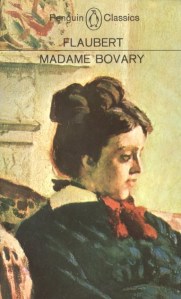
There were parts of this book that I really enjoyed, but I’ll have to be honest and say that much as I wanted to love this book I just didn’t. I think my dislike of Emma was part of the problem, but not the whole problem, as I didn’t find the writing style very engaging either. The version of Madame Bovary that I read was an older Penguin edition (pictured above) translated by Alan Russell – I had no reason for choosing this translation other than that it happened to be the one I already had on my shelf, which seemed as good a reason as any. I didn’t really have any problems with it and found it easy enough to read, but having since read that Flaubert prided himself on always searching for the perfect word, in this case it’s possible that the translation did affect my enjoyment. I didn’t like the book enough to want to read it again in a different translation to find out, though!

While this has not become a favourite classic, I’m still glad I’ve read it. If nothing else, I can now see where Mary Elizabeth Braddon’s inspiration for her novel The Doctor’s Wife came from!

Frog Music by Emma Donoghue

Frog Music This is the second book I’ve read by Emma Donoghue – the first was Room, which I enjoyed, and since then I’ve been wanting to try one of her historical fiction novels. This new one, Frog Music, is set in San Francisco in 1876 and is based on a true crime story.

Twenty-four-year-old Blanche Beunon, once a star of the Cirque d’Hiver in Paris, is now a dancer in a San Francisco burlesque club. She lives in the city’s Chinatown with her lover, Arthur Deneve, and his friend – and former partner on the flying trapeze – Ernest Girard. One week in August, two newcomers enter their little circle. One of these is P’tit, Blanche and Arthur’s baby boy, reunited with his parents after a year of separation. Blanche has rarely even thought about her baby during his absence, but now she discovers what being a mother really means.

The other new arrival is a woman called Jenny Bonnet, just released from jail after being arrested for the crime of dressing in men’s clothes. Jenny, who makes her living from catching frogs and selling them to French and Chinese restaurants, is like nobody else Blanche has ever met and makes her think differently about herself and her life. But when Jenny is shot dead, Blanche is convinced that she herself was the intended victim. Can she find the murderer before he kills again and before she loses P’tit again forever?

The real life murder case on which Frog Music is based remains an unsolved crime to this day, but the solution Donoghue provides is believable and consistent with what we have learned about the personalities and motives of the characters involved. The author also includes a detailed Afterword in which she explains which of the characters and events in the story are factual and which are purely fictional.

While there are some very unpleasant, unlikeable people in this novel, I thought the central character, Blanche, was wonderful. Her personality is a mass of contradictions: she’s tough yet vulnerable, intelligent yet naïve, self-absorbed yet sensitive. She’s such a well drawn character and felt completely real. I loved her and desperately wanted her to find some real happiness. Her story is so sad at times – I don’t want to say too much, but the circumstances surrounding the reappearance of P’tit are shocking and heartbreaking; I found that part of the book quite painful to read. As for Jenny, she remains a secretive and mysterious character throughout the novel. It is only towards the end of the book that we (and Blanche) begin to see beneath her protective outer shell and are finally given some glimpses of the real Jenny Bonnet.

The sense of time and place is very strong. I’m not sure I’ve read a book set in 1870s San Francisco before and I found it a vivid, atmospheric setting. The action takes place during both a heat wave and an epidemic of smallpox and both have an impact on Blanche’s story. Another interesting element of the novel is the role of music. Many songs and rhymes are quoted from in the book and information on each of them is given in an appendix. I thought this really added something to the story, helping to provide context and historical background. As Blanche and the other main characters are French and often use French slang, there is a glossary provided at the back of the book too, if you need help in translating any unfamiliar words.

My only criticism of this book is that the way the story is structured could cause confusion. It follows two time periods – one in Blanche’s present, describing Jenny’s murder and its consequences; the other flashing back to the beginning of their friendship a month earlier. Gradually the two storylines converge until they are only a day or two apart and at this point it becomes slightly difficult to follow the chronological sequence of events. Sometimes we are given the date, but not always, so it’s not immediately clear which thread of the story we are reading.

One other thing I should mention is that as Blanche is an exotic dancer there are some quite graphic descriptions of her work. It was maybe a bit excessive, but I could appreciate that it was all part of who Blanche is and it would have been hard to convey the realities of her life without being explicit at times.

Frog Music is not a book that will appeal to everyone (though you could say the same about any book, I suppose) but I thought it was great and having enjoyed this one and Room I’ll be looking for more of Emma Donoghue’s books soon.

The Convictions of John Delahunt by Andrew Hughes

The Convictions of John Delahunt Imagine you’re a poor student at Dublin’s Trinity College in the 1840s. You’re newly married and living with your wife in a squalid tenement, cut off from friends and family. The future looks bleak, so when the authorities at Dublin Castle suggest that you become an informer, it seems to be the perfect solution. You will be rewarded well for any information you can give them leading to a conviction…and if you could just manage to witness a few murders, your money troubles could be over!

This is the situation in which our narrator finds himself in this wonderfully moody and sinister historical crime novel, The Convictions of John Delahunt. As the novel opens, John is sitting in a prison cell awaiting his death. We’re not sure exactly what he has done, except that it appears to involve the murder of a child. As he begins to write his final testimony, we are taken back to the origins of John’s dangerous career as an informer and discover how and why this young student of natural philosophy has been sentenced to hang.

Andrew Hughes is also the author of a non-fiction book about the residents of Dublin’s Fitzwilliam Square, Lives Less Ordinary, and so he has been able to draw on his knowledge of the city’s history to make John Delahunt’s world feel authentic and real. Because of the circles in which Delahunt moves, the focus is on the darker side of society – workhouses, grave robbing, illegal abortions, rat-killing and laudanum addiction are all explored. Dublin’s streets and alleys, taverns and parks, courtrooms and drawing rooms are all vividly described and although the language the author uses is modern enough to be accessible and easy to read, it never feels out of place with the Victorian setting.

John Delahunt himself is an intriguing narrator, though not always entirely reliable. He is certainly not easy to like – one of his first actions in the book is to tell a lie to the police that leads to a friend being found guilty of a crime he didn’t commit – yet I could still feel for him when things didn’t go according to plan and when he saw his life beginning to disintegrate around him.

A large part of John’s story revolves around his relationship with his wife, Helen, who is another interesting character – although we never get to see things from her perspective as John is narrating in the first person. At first Helen seems to be on the same wavelength as her husband, attending a hanging with him and even helping him to compile a list of friends, family and neighbours to inform on. Later in the book she experiences a personal tragedy and after this she seems to undergo a change, though because we only see her through John’s eyes, her true thoughts and emotions are not very clear.

I loved this dark and atmospheric book and was completely gripped by John Delahunt’s fascinating story (based on true events, by the way). A word of advice to potential readers – don’t start reading it in your lunch break at work or in bed when you need to be up early the next day, as you may find that you really don’t want to put it down!

Thanks to the publisher for providing a review copy via NetGalley

Norah by Cynthia G. Neale

Norah Norah McCabe is a young Irish woman living in Five Points, New York City in the 1850s. Having left Ireland during the Famine to come to America as an immigrant, Norah is determined to work hard and escape a life of poverty. Her first venture is a used clothing store called A Bee in Your Bonnet which she runs with her friend, Mary, but when the purchase of an expensive dress leads to them both being implicated in a murder inquiry this proves to be an unexpected turning point in Norah’s career. Offered a job as a reporter for the Irish-American newspaper, she meets a man who introduces her to revolutionary politics – and finds herself both in love and in serious danger.

Cynthia Neale has previously written two young adult books about Norah McCabe, The Irish Dresser and Hope in New York City, which tell the story of Norah’s journey to America as a teenager and her first years in her new country. This book, subtitled The Making of an Irish-American Woman in 19th Century New York, is the author’s first adult novel and continues Norah’s story. The fact that this is actually the third Norah McCabe book probably explains why from the very first chapter Norah feels like a fully developed, three-dimensional character.

I didn’t always like Norah or agree with her decisions – she can be sharp tongued, impulsive and reluctant to take advice – but she is also ambitious, courageous and resilient. Some of the terrible situations she finds herself in could possibly have been avoided, which was frustrating, but I was pleased to find that she does learn from her mistakes and continues to mature over the course of the novel. While I’m not Irish, not an immigrant and not living in 1850s New York, I could still relate to parts of Norah’s story and enjoy watching her use her wits and intelligence to overcome the obstacles that are constantly being placed in her path.

As a work of historical fiction, the background to the novel has clearly been well researched. Life in the poorer areas of New York during this period was not easy and not always very pleasant and the author doesn’t shy away from describing the violence, corruption and prejudice that Norah encounters. But this is also a book about love, about the importance of family and friends, and about what it was like to be a woman in the 19th century – a woman with dreams and ambitions and the determination to try to make them a reality.

Although the pace was slow at the beginning of the book, there was plenty of drama in the later chapters to make up for it. I found this quite an enjoyable, inspirational read and I’m pleased to have had the chance to get to know Norah McCabe.

Norah book tour

I read Norah as part of a Virtual Book Tour organised by Fireship Press, an independent publisher of historical and nautical fiction and non-fiction. For more reviews, guest posts and giveaways please see the tour schedule.

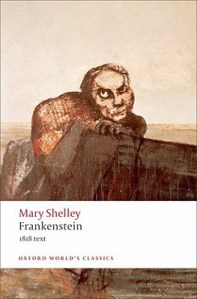
Frankenstein by Mary Shelley

Frankenstein I’ve had this book on my list for the RIP challenge for the last four years and finally, this year, I found time to read it! This was technically a re-read for me as I know I read it in when I was in my teens, but I had almost completely forgotten the story so it did feel as though I was reading it for the first time again. I also think I was maybe a bit too young to fully appreciate it the first time (I remember skipping through the ‘boring’ parts at the beginning to get to the parts with the monster).

Frankenstein, or the Modern Prometheus was written while Mary Shelley and her husband, the poet Percy Bysshe Shelley, were staying at Lake Geneva with Lord Byron and John Polidori in the summer of 1816. Shelley’s novel is said to have come about as a result of a challenge from Byron that also led to Polidori’s The Vampyre (a story that influenced Bram Stoker’s Dracula) and the beginnings of Byron’s own unfinished vampire story.

Frankenstein begins with some letters written by Arctic explorer Robert Walton to his sister in which he describes his voyage to the North Pole and how he saw a huge figure crossing the ice in a sledge pulled by dogs. Soon after this, Walton and his companions rescue another man, who is frozen and exhausted. His name is Victor Frankenstein and he tells Walton that he was trying to catch up with the giant figure they saw earlier. What follows is Victor’s story, beginning with his childhood in Geneva and his early interest in chemistry and other sciences. At university, his study of science continues and he secretly begins the construction of a human-like being which he plans to bring to life.

Victor’s experiment is a success, but after his creature is brought to life he panics and runs away, leaving the monster alone to fend for itself. The rest of the book follows Frankenstein’s nameless monster, abandoned and rejected by his creator, as he searches for acceptance and friendship. Meanwhile, Victor is convinced that he has unleashed a terrible evil upon the world and that he will have to destroy the monster before it destroys him.

Like Dracula, Frankenstein has become a part of popular culture, but most film versions of Frankenstein have very little in common with this book, so it’s still worth reading even if you think you already know the story. We probably all have an image in our mind of what Frankenstein’s monster looks like (green skin, bolt through the neck etc) but in the book, there are only a few descriptions of the monster’s physical appearance. We are told that he’s hideously ugly and much bigger than ordinary men, but he is also agile, intelligent and sensitive. The monster is also never given a name (his name is not Frankenstein, which is another common misconception) and Shelley refers to him most often as ‘the wretch’.

It’s the chapters that are told from the monster’s perspective that are the most interesting and also the most moving. Despite some of the horrific acts the monster commits, it would be difficult not to feel sympathy for him and anger towards Victor, who has created a living being and then abandoned it. The clear message of the book is that we need to think before we act and be prepared to accept responsibility for our actions. I think another thing Shelley is trying to show us is that rather than being born a monster we can become a monster because of the way we are treated by others. When we first meet Victor’s creature he is gentle and compassionate but after he is repeatedly rejected by society he begins to carry out violent, monstrous actions.

To the modern day reader there are some aspects of Frankenstein that are maybe not very satisfying or believable, such as the way the monster teaches himself to speak and to read. I would also have liked more details of the scientific methods Victor uses to create the monster and bring him to life, but I suppose that would have been beyond the scope of someone writing in the 1800s. As an early nineteenth century gothic novel, though, this is a true classic and I’m glad I took the time to re-read it.