Jude the Obscure by Thomas Hardy

Thomas Hardy really seems to be an author people either love or hate and Jude the Obscure must be the book that divides opinion more than any of his others. This is the third Hardy book I’ve read, the first two being Tess of the d’Urbervilles and A Pair of Blue Eyes and although this one didn’t have quite the same emotional impact on me that Tess did, I was still moved to tears in places.

Jude Fawley is eleven years old when he sees his schoolmaster, Mr Phillotson, leave the hamlet of Marygreen to go and study in the great city of Christminster. As a working-class boy it’s unlikely that Jude will ever be able to do the same. His only chance is to spend the next few years teaching himself Greek and Latin from books every night after going out to work through the day. Jude hopes that hard work, determination and a desire for knowledge will be enough to enable him to fulfil his dream of going to university in Christminster.

“It is a city of light,” he said to himself.

“The tree of knowledge grows there,” he added a few steps further on.

“It is a place that teachers of men spring from and go to.”

“It is what you may call a castle, manned by scholarship and religion.”

After this figure he was silent a long while, till he added:

“It would just suit me.”

What makes this so sad is that we, as readers, can see almost from the beginning that Jude is going to be disappointed. The class system in Victorian England meant it was almost impossible for someone in Jude’s position to go to university. The hopelessness of his situation becomes clear when the head of one of the Christminster colleges advises him that as a working man he should ‘remain in his own sphere and stick to his trade’. Jude’s response is to write on the college wall with a piece of chalk: “_I have understanding as well as you; I am not inferior to you: yea, who knoweth not such things as these?_”–Job xii. 3. That scene was one of many that made my heart break for Jude.

But education is not the only problem Jude faces. Following a disastrous marriage to a pig farmer’s daughter, he falls in love with his cousin, Sue Bridehead, who has also been unhappily married. Disillusioned with marriage, Jude and Sue decide to live together without marrying, but this unconventional arrangement could have tragic consequences.

I can see why this book was so controversial at the time of its publication (1895) as there are a few aspects of the story that must have been quite shocking for Victorian readers, particularly the way it challenges the way we think about Christianity and marriage. Hardy places Jude and Sue into a situation which he could use to explore England’s marriage and divorce laws as well as the problems that faced two unmarried people living together and how they could (or couldn’t) reconcile this with their religious and moral beliefs.

All of this eventually leads to a devastating tragedy which takes place towards the end of the book – anyone who has read it will know what I’m referring to and for those of you who haven’t, I can tell you it’s one of the saddest scenes you’re ever likely to read. A couple of pages before it happened I guessed (knowing Hardy) what was going to occur and yet I still wasn’t really prepared for it. One of the reasons people give for not liking Hardy is that he’s too depressing and while I can’t deny that this book is relentlessly tragic and heartbreaking, I still felt compelled to keep reading, to find out what happened next, to see what further ordeals Jude would have to face.

I can’t recommend Jude the Obscure highly enough, unless you really just don’t like this type of book. Now I need to decide which of his books I should read next…
Gillespie and I by Jane Harris

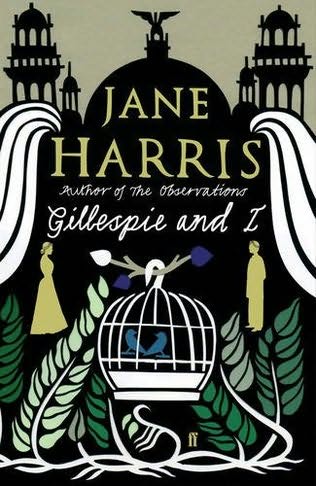
I was lucky enough to win a copy of Gillespie and I through LibraryThing Early Reviewers but even if I had paid the full price for this book I would have considered it money well spent. I thought it was brilliant. It seems I’m one of the few people not to have read the first book by Jane Harris, The Observations, and I’m not sure how I managed to miss that one as it sounds like something I would love. I’ll certainly go back and read it now that Jane Harris has been brought to my attention.

But this post is about Gillespie and I. Or, I should say, Gillespie and Harriet Baxter. We first meet Harriet in 1933 as an elderly woman looking back on her life and promising to share with us her recollections of Ned Gillespie, a talented artist who was never able to fulfil his true potential. Harriet then proceeds to tell us the story of her acquaintance with the Gillespie family, whom she met in the 1880s during a trip to Scotland to visit the International Exhibition in Glasgow. She quickly becomes a friend of Ned, his wife Annie, and the other members of the family – but then disaster strikes and the lives of Harriet and the Gillespies are thrown into turmoil.

After a leisurely start, the story soon picked up pace and became very gripping. But as well as the compelling plot there were many other things that made this book such an enjoyable read. I connected immediately with Harriet’s sharp, witty and observant narrative voice. The other characters were vibrantly drawn, though the only one who never really came to life for me was Ned himself, which was the only disappointment in an otherwise excellent book. I also loved the setting. I’ve read many, many books set in Victorian London and it made a refreshing change to read one set in Victorian Glasgow instead.

Halfway through the story something happened that made me start to question everything I’d read up to that point – and even after I’d finished the book I still had questions. I was very impressed by how cleverly Jane Harris managed to control what I believed and didn’t believe at various points in the novel. I can’t really explain what I mean without spoiling the story but suffice to say there are some stunning plot twists that leave you wondering whether things are really as they seem – and this doesn’t happen just once, but several times throughout the second half of the book. At times it even felt like a Victorian sensation novel to me, which probably explains why I enjoyed it so much! Gillespie and I has been one of my favourite reads so far this year.

Villette by Charlotte Bronte

I wanted so much to love this book. Jane Eyre is one of my all-time favourite books and although it has taken me a long time to get round to reading another Charlotte Bronte novel, I had high hopes for this one. Unfortunately, for a long time Villette just wasn’t working for me and I’m not really sure why not.

I actually read this book at the end of January and discovered too late that there was a readalong taking place in February/March. I wonder whether reading it along with other people would have helped, as there were times when I really started to lose the motivation to continue with the book. There was a point where I didn’t think I was going to be able to keep reading, but eventually things improved and I finally became immersed in the story. I ended up enjoying it, but sadly it was too late for this book to become another favourite.

Villette is the story of Lucy Snowe who, after an unspecified family tragedy, finds herself completely alone in the world. She travels to Europe on her own and starts a new life teaching English to the girls at Madame Beck’s school in the city of Villette.

I think part of my problem with the first half of the book was that it took me a long time to warm to Lucy Snowe. I didn’t like her at all at the beginning of the novel, but eventually I did begin to feel a lot more sympathetic towards her and this coincided with the point where I started to enjoy the story more. My perceptions of Lucy changed as I learned more about her and saw how badly other people treated her. She was so lonely and isolated and my heart broke for her at times. Despite her cold exterior, underneath she was a person who desperately needed love and friendship. It’s quite sad that she doesn’t make this observation until two thirds of the way through the book:

“I liked her. It is not a declaration I have often made concerning my acquaintance, in the course of this book: the reader will bear with it for once.”

Lucy is also quite secretive and often withholds important information from the reader. And throughout the early chapters, although Lucy is our narrator, we learn more about the people around her than we do about Lucy herself. She’s an intensely private person and doesn’t open up to the reader very often. But as I got to know Lucy better, I found a lot of things to admire about her – her independence, for example, and her bravery in leaving England and travelling to another country with no idea of where she would go once she got there.

There is a romantic aspect to the book, but it’s not the most passionate of romances and not love at first sight. I already knew who Lucy’s love interest was going to be because it told me on the back cover, but things developed so slowly and so subtly it might not have been immediately obvious to me otherwise. Because of this though, the relationship feels believable and real.

Apart from the length of time it took me to get into the book, there are a couple of other negative points I should mention. Firstly, I thought the racism and religious prejudice was excessive, even by the standards of Victorian literature. Lucy considers the girls at Mme Beck’s school to be inferior to English girls in every way, and she doesn’t like Catholics or the Irish much either. Also, a lot of the book is written in French. I do have a basic understanding of French and am fine with books incorporating a few French phrases but this one has whole paragraphs where I kept wondering if I was missing something crucial.

Although I did end up enjoying this book and could eventually appreciate the complexity of Lucy Snowe’s character, it still doesn’t come close to Jane Eyre in my opinion. However, I know a lot of people think Villette is the better of the two. If you’ve read them both, what do you think?

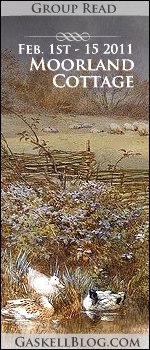
Group Read: The Moorland Cottage by Elizabeth Gaskell

Having signed up for the Elizabeth Gaskell Reading Challenge I’m intending to read some of Gaskell’s full-length novels this year, but when I saw that Katherine of Gaskell Blog was hosting a group read of the novella, The Moorland Cottage, it seemed like a perfect way to start the challenge.

The Moorland Cottage is a short but very moving and emotional story. Mrs Browne and her children, Edward and Maggie, live with their elderly servant, Nancy, in a cottage near the town of Combehurst. It’s no secret that Edward is their mother’s favourite child but while she dotes on her son, she never has a kind word for her daughter. In a big house nearby live the wealthy Mr Buxton and his gentle, loving wife. There are also two children in the Buxton household: their son, Frank, and their niece, Erminia. The Buxtons attempt to befriend the Brownes, but while they can all see the goodness in Maggie, they find it difficult to like the spoilt, selfish Edward and the cold, snobbish Mrs Browne. As the years go by and the lives of the Brownes become more and more entwined with their neighbours’, Maggie is forced to make a decision which could potentially affect the future of both families.

The Moorland Cottage shows us the ways in which boys and girls were treated differently in Victorian society and I felt so sorry for Maggie. Throughout the first few chapters my heart was breaking for her as I saw how she was constantly pushed aside in favour of her brother. It was very, very sad to see the way, as a child, she meekly accepted her mother’s cruelty. For example, when Frank Buxton brings a pony for Maggie to ride, Mrs Browne decides “to spoil the enjoyment as far as possible, by looking and speaking in a cold manner, which often chilled Maggie’s little heart, and took all the zest out of the pleasure now”. How spiteful!

Maggie is also treated badly by Edward, and again, she allows him to do so, accepting that his needs are more important than her own. It’s not until she’s older and has spent more time in the company of the Buxtons and been exposed to other ideas that she starts to become aware of her brother’s faults. In the adult Edward, we see what happens to a child who is brought up always getting their own way and not being taught the difference between right and wrong.

I loved Gaskell’s descriptions of the Brownes’ home and the surrounding scenery throughout the changing seasons. Because the book was so short these descriptive passages had to be kept fairly brief which I thought made them even more effective.

The air on the heights was so still that nothing seemed to stir. Now and then a yellow leaf came floating down from the trees, detached from no outward violence, but only because its life had reached its full limit and then ceased. Looking down on the distant sheltered woods, they were gorgeous in orange and crimson, but their splendour was felt to be the sign of the decaying and dying year. Even without an inward sorrow, there was a grand solemnity in the season which impressed the mind, and hushed it into tranquil thought.

Finally, a few words on the group read itself: I thought this book was an excellent choice for a readalong. For such a short book it contains a wealth of interesting topics and issues. At only eleven chapters I could easily have read it in one day but I found that reading it slowly meant I had a better understanding of it and got more out of the story. And Katherine’s beautifully annotated chapter summaries were very useful and helped to bring the story to life. Visit Gaskell Blog to see them for yourself!

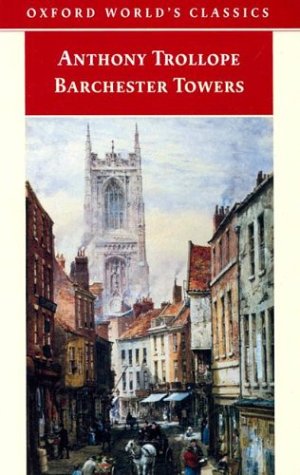
Barchester Towers by Anthony Trollope

Back in April I read my first Anthony Trollope book, The Warden, and enjoyed it so much I immediately bought a copy of Barchester Towers, the second Chronicle of Barsetshire, with the intention of going on to read the whole series. As it turned out though, other books seemed more tempting and poor Barchester Towers was pushed further and further down my tbr pile until The Classics Circuit’s Anthony Trollope Tour reminded me that it really deserved to be read as soon as possible!

Barchester Towers is set five years after the conclusion of The Warden. At the beginning of the story, the Bishop of Barchester dies, leaving a vacancy to be filled. It is expected that the Bishop’s son, Archdeacon Grantly, will take his place, but a change of government ruins his chances and newcomer Dr Proudie is appointed instead. When the new Bishop and his wife, the formidable Mrs Proudie, arrive in Barchester accompanied by their chaplain Mr Slope, Grantly becomes determined to prevent them from gaining too much power and changing the Barchester way of life.

This might not sound like a very exciting plot, and I have to admit it isn’t. Barchester Towers is a character-driven novel, and fortunately, the characterisation is excellent. Trollope’s characters are multi-faceted, complex and real; the villains are not completely evil and the heroes have their flaws. Archdeacon Grantly, for example, was portrayed quite negatively in the previous novel, but we see things more from his perspective in this book and I found that I was rooting for him against the Proudies and Slope.

Almost all of the characters are well-rounded and interesting. There’s the Signora Madeline Vesey Neroni, left crippled by her abusive Italian husband, who manages to get every man in Barchester to fall in love with her. There’s Miss Thorne, the local squire’s sister who lives in the past, dreaming of the days of knights and chivalry. And I was pleased to meet some old friends from The Warden, including my favourite characters, Mr Harding and his daughter Eleanor.

I’m not sure who I would recommend Trollope to. As far as comparisons to other Victorian authors go, I would say his style is a lot closer to George Eliot than Charles Dickens, for example. He tells his stories at a gentle, leisurely pace with some subtle humour, witty observations, and clever insights into human nature. He has a habit of talking directly to the reader and never lets us forget that we’re reading a novel, but rather than being annoying or disruptive, this style gives his writing the warm, conversational feel that I love. If you prefer stories with a lot of suspense and tension, though, you’ll be disappointed because Trollope keeps telling us in advance what is and is not going to happen, which has the effect of building an intimate and trusting relationship between the author and the reader. But even though it may seem quite obvious what the outcome of the book is going to be, the fun is in seeing how the outcome is reached.

Much as I love Trollope though, I can see that he won’t appeal to everyone – the gentle pace that I mentioned, in addition to the long descriptions and character introductions, might make the book too slow for some readers (it did take me almost 100 pages before I really got absorbed in the story). Some of his comments on gender, race and religion could also be considered offensive, although as a male Victorian author his views were probably consistent with the time period and society in which he lived. If you have read and enjoyed other Victorian writers, I would highly recommend giving Trollope a try to see what you think.

Although this one was a better book, I think I would still suggest that newcomers to this series start with The Warden. The shorter length means it’s less of a commitment if you find you don’t like Trollope’s writing style. It’s also the first in the series and although I’m sure Barchester Towers would work as a stand-alone novel, The Warden does introduce us to several of the characters and their backgrounds.

Based on the two books I’ve read so far, Trollope is quickly becoming one of my favourite Victorian authors. I definitely don’t want to let seven months go by again before I pick up another of his books! I’m already looking forward to the third Barsetshire novel, Doctor Thorne.

Anthony Trollope has been visiting my blog today as part of the Classics Circuit Anthony Trollope Tour. See this post for a list of other stops on the tour.

Final thoughts on Bleak House by Charles Dickens

I was hoping to have this review ready to post at the end of Amanda’s readalong, but as usual things didn’t go according to plan and I’m almost a week late!

I had tried to read Bleak House once or twice in the past but gave up after a few chapters, so I hoped that taking part in the readalong would give me the motivation to actually finish the book. And it did. However, I was reminded of the reasons why I had given up on the book on my previous attempts. Dickens’ writing can be very long-winded, descriptive and detailed, even in comparison to other Victorian authors, and there were many parts of the book where I really had to force myself to concentrate – particularly during the first two chapters.

The plot is so complex I’m not even going to try to write a summary, other than to say that the story revolves around a court case called Jarndyce and Jarndyce with which many of the characters are in some way involved. The action moves back and forth between the foggy streets of London and a quiet country estate in Lincolnshire. Half of the story is told by an unnamed narrator in the third person present tense, and the other half is narrated by Esther Summerson. There are some characters who appear in only one of the narratives and some who feature in both, so that the two cross and intersect from time to time.

If you’re thinking of reading Bleak House you should be aware that a huge number of characters are introduced throughout the first half of the book. As I mentioned in one of my readalong update posts, it felt as if storylines were being started then abandoned for hundreds of pages at a time. It takes a long time for the separate storylines to start coming together so you’ll need to have patience, but when they do the book becomes much more enjoyable.

Although many of the characters lacked depth, they were all different and memorable enough that I never had a problem remembering who was who. There were some that I liked (Mr Jarndyce, Inspector Bucket and George), and some that I hated (Skimpole, Smallweed and Tulkinghorn). As for Esther, she appeared to be Dickens’ portrayal of what an ideal woman should be like (i.e. perfect in every way, loved by everyone, happy to be nicknamed ‘little housewife’ and ‘Dame Durden’). But although Esther irritated me, I would probably have enjoyed the book more if it had all been told from her perspective. I found I could get more absorbed in the story while she was narrating and her chapters were much easier to follow than the others.

Bleak House has everything I would normally love in a book: an intricate plot, secrets and revelations, humour, a mystery, unusual characters. Unfortunately there was something about the book that didn’t quite work for me; I’m not sure whether it was the writing style or the narrative structure or a combination of both. But although I didn’t love it, I didn’t dislike it either and as this was only the second Dickens book I’ve read (the other being A Christmas Carol), I’ll definitely be giving him another chance.

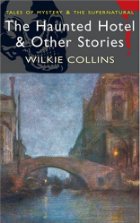
Review: The Haunted Hotel & Other Stories by Wilkie Collins

Time for one more review before the RIP challenge ends!

Having read so many of Wilkie Collins’ books and loving them all, I’m starting to worry now whenever I pick up one that I haven’t read yet, in case that’s going to be the one that disappoints me. Luckily it wasn’t this one! This collection published by Wordsworth Editions includes the novella The Haunted Hotel and eight other short stories, all with a ghostly, spooky or supernatural theme.

Part ghost story and part gothic mystery, The Haunted Hotel begins in London but soon moves to Venice, an atmospheric setting complete with dark canals and ancient palaces. At the heart of the story is the mysterious Countess Narona, who marries Lord Montbarry after he breaks off his engagement to Agnes Lockwood. When Montbarry dies in Venice soon after insuring his life for ten thousand pounds, rumours abound that the Countess may have had something to do with his death.

While I enjoyed The Haunted Hotel, I wouldn’t class it among Collins’ best work and the shortness of the story means the characters aren’t as well developed. I did love the second half of the story in which the palace where Montbarry died is converted into a hotel. There’s a very creepy sequence of events where each member of the Montbarry family who stays in the hotel feels a ghostly influence that manifests itself in a different way to each person.

You can buy The Haunted Hotel on its own, but I recommend looking for this edition because the additional short stories are well worth reading too. In every story, Collins gradually builds the suspense and draws the reader into the story. One of my favourites was Miss Jeromette and the Clergyman, a short ghost story in which the ghostly happenings are accompanied by mysterious clouds of white fog. I loved the way even though the story was quite predictable, it was still a pageturner. The same can be said about Nine O’Clock, in which a man condemned to death during the French Revolution tells his friend about a family curse. We know almost from the beginning what will happen, but the story still manages to be suspenseful.

Another favourite was A Terribly Strange Bed, an Edgar Allan Poe-like tale which creates a feeling of claustrophobia and terror as the narrator finds himself trapped in a room with a very unusual bed. Another story on a similar theme is The Dead Hand, in which a man attempts to find a room at an inn for the night, but finds that everywhere is full. When he’s eventually offered a bed in a double room, he makes a surprising discovery about the stranger who’s occupying the other bed.

I also enjoyed the final story in the book, The Devil’s Spectacles, which is about a man who is given a pair of spectacles that allow him to see the true thoughts and feelings of anyone he looks at.

I don’t generally like reading short story collections straight through from beginning to end, but I didn’t have a problem with this book. There are only eight stories (plus The Haunted Hotel) and most of them are less than twenty pages long. This was a perfect book to read in the week before Halloween.