Review: The Tenant of Wildfell Hall by Anne Bronte

Although Emily Bronte’s Wuthering Heights and Charlotte Bronte’s Jane Eyre have always been two of my favourite Victorian classics, this is the first time I’ve read anything by the youngest Bronte sister, Anne. I feel a bit guilty that it has taken me so long to get round to reading one of Anne’s books, especially as I enjoyed it almost as much as the other two books I’ve just mentioned.

Anne’s writing style is not the same as Charlotte’s or Emily’s – there’s less dramatic romanticism and poetic imagery, although she still writes with a lot of passion. She has quite a sharp style that is probably more similar to Jane Austen than to either of her sisters.

I won’t go into the plot in too much detail but The Tenant of Wildfell Hall is the story of Helen Huntingdon, a young woman who leaves her alcoholic husband and goes into hiding with her five year-old son, Arthur. Not long after arriving at Wildfell Hall she meets local farmer, Gilbert Markham, who falls in love with her. When Gilbert questions her about the rumours circulating about her in the village, she allows him to read her diary in which she had recorded the details of her unhappy marriage.

The book has an interesting structure – it’s told partly in the form of letters from Gilbert Markham to his brother-in-law Jack Halford, and partly as extracts from Helen Huntingdon’s diary. I loved the first section from Gilbert’s point of view, describing the arrival of the mysterious woman at Wildfell Hall with everyone wondering who she was and where she came from. The story probably wouldn’t have worked had it not been set in the 19th century. Today there’s nothing unusual in a single mother living alone with her little boy, but in 1828 when The Tenant of Wildfell Hall takes place, it makes her the target of gossip and scandal.

When Helen’s diary began it took me a while to get used to the change of voice and the change of pace but it soon developed into the most powerful section of the book. I didn’t particularly like Helen as I thought she was just a little bit too saintly and perfect, but she was a very strong person who defied convention to do what she thought was best for herself and her child. Her diary entries are filled with descriptions of some really despicable characters and describe scenes of drunkenness, violence, verbal and physical abuse, and adultery, which I can imagine readers in the 19th century would have been shocked by. Apparently after Anne’s death, re-publication of The Tenant of Wildfell Hall was prevented by Charlotte, who considered the choice of subject to be a big mistake. However, I would have no hesitation recommending this book to anyone who has enjoyed Emily and Charlotte’s work, as well as those of you who have never read any other Bronte books.

Note: This book counts towards the Women Unbound Reading Challenge because it portrays a woman who has the strength to leave her abusive husband and build a new life, working as an artist to support herself and her son – almost unheard of in the 19th century.

Highly Recommended

Genre: Classics/Page: 401/Publisher: Wordsworth Classics/Year: 1996 – first published 1848/Source: My own copy bought new
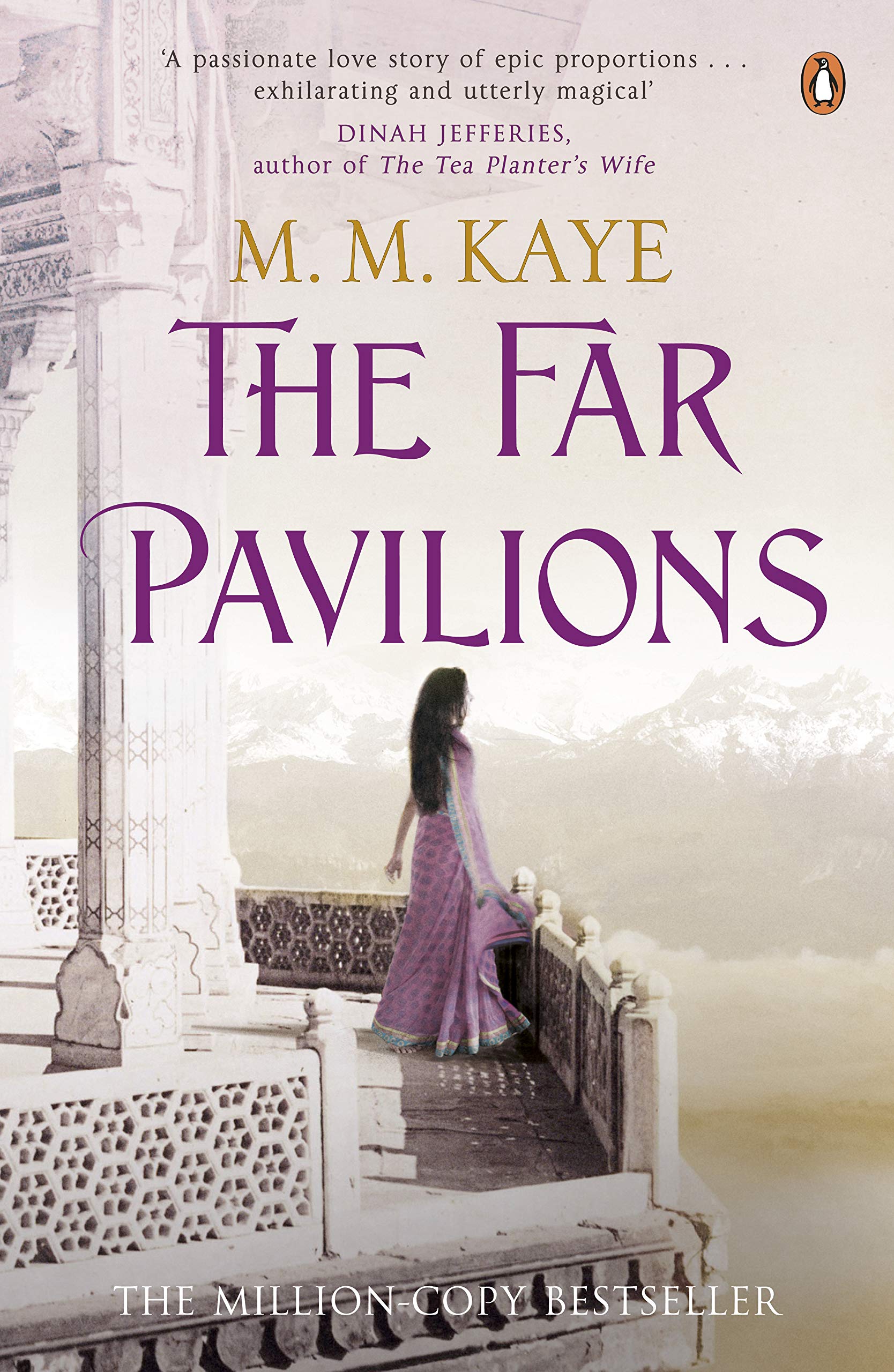
Review: The Far Pavilions by M. M. Kaye

The term ‘sweeping epic’ is used so often it’s become a cliché, but it’s actually an accurate description of The Far Pavilions. M. M. Kaye takes us on a journey across 19th century India and Afghanistan, during which we witness some of the major turning points in the history of those two countries.

Ashton Pelham-Martyn is born in India, the son of British professor Hilary Pelham-Martyn and his wife Isobel. When both of his parents die within a few years of each other, the four year-old Ash is brought up by Sita, the wife of his father’s Hindu groom, unaware that he is not actually Indian. Several years later, after Sita’s death, Ash learns the truth about his birth and is sent to school in England. Eventually he returns to India to serve in the British army, but finds that his loyalties are torn between his Indian friends and the members of his regiment. The Far Pavilions is the story of Ash’s struggle to find his identity.

At the heart of the story is a forbidden romance between Ash and the Hindu princess, Anjuli. However, that’s only one aspect of the book. Non-romance fans will enjoy the action and adventure, descriptions of military life or simply learning more about 19th century British-ruled India. Most of the battles and other historical events mentioned in the book did actually take place and several of the characters, such as Walter Hamilton and Louis Cavagnari, were real historical figures – you may find it interesting to do some research as you read.

Of all the historical fiction books I’ve read, this is one of the most detailed and well researched. Whilst reading this book I’ve learned a huge amount about 19th century British India, from the names of mountains and rivers, details of battles and mutinies, facts about Hindu and Islamic culture, right down to the various types of flora and fauna. We encounter a large number of Indian words and phrases (most are explained either directly in the text or in the glossary at the back of the book) which feels natural and adds to the authenticity of the story. M. M. Kaye spent a lot of time living in India which explains how she was able to write so convincingly about the country and its people. It’s also interesting that although the author was British, she uses various characters in the novel to explore conflicting opinions on whether British rule was a good or a bad thing for India.

At more than 950 pages it does sometimes feel as if the book will never end, but that’s not necessarily a bad thing because it’s one of those books that pulls you into the story so much that you don’t really want to reach the last page and leave behind the characters you’ve spent so much time with. However, the main storyline comes to a natural end at around page 700 and the book could easily have finished at this point in my opinion. The final 200 or so pages deal with the Second Anglo-Afghan War which is still interesting to read about but could have been the subject of a separate book.

The Far Pavilions is one of my all-time favourite historical fiction novels.

Highly Recommended

Review: A Christmas Carol by Charles Dickens

“Men’s courses will foreshadow certain ends, to which, if perservered in, they must lead,” said Scrooge. “But if the courses be departed from, the ends will change…”

A Christmas Carol is the one classic that almost everyone knows, even if they’ve never read the book. It’s the story of an old, money-obsessed miser called Ebenezer Scrooge who is given the chance of redemption one Christmas Eve when he is visited by the ghost of his deceased business partner, Jacob Marley. Marley warns Scrooge that unless he changes his ways, he will end up like Marley himself, doomed to wander the earth bound by heavy chains of his own making. During the night Scrooge is visited by three more spirits – the Ghosts of Christmas Past, Christmas Present and Christmas Yet to Come – who help him to understand that there are more important things in life than money: things such as generosity, compassion and kindness. The scenes Scrooge witnesses that Christmas Eve are to change his life forever and transform him into a different person.

A Christmas Carol is shorter and easier to read than most of Dickens’ other books and really is suitable for people of all ages. I loved it as a child and after re-reading it this week for the first time in years, I loved it as an adult too. No matter how many movies, cartoons or TV adaptations you may have seen, it’s still worth reading the book for the richness and humour of Dickens’ writing and for his wonderful descriptions and imagery. For example when describing the location of Scrooge’s home, hidden away in a gloomy yard, he says:

 “…one could scarcely help fancying it must have run there when it was a young house, playing at hide-and-seek with other houses, and have forgotten the way out again”.

There are great lines like this one throughout the entire book. I also loved his portrayal of a Victorian Christmas in 19th century London.

Although some readers might find it too sentimental at times, it’s easy to see why this book has become a timeless classic, as it is everything a good Christmas story should be – heartwarming, inspirational and with an important message for us all.

Recommended

Genre: Classics/Pages: 147/Publisher: Chancellor Press/Year: 1985 (originally published 1843)/Illustrations by Arthur Rackham/Source: My own copy

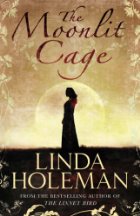
Review: The Moonlit Cage by Linda Holeman


“I have always been told I was wicked…”

This is the first book I’ve read by Linda Holeman and it was good enough to make me want to read more of her work.
I love books that help me to learn about other times and other places: in The Moonlit Cage, Holeman introduces us to life in 19th century Afghanistan. Not being an expert in Afghan history or culture, I have no idea how accurate her descriptions are, but the book seems very well-researched to me. A glossary of unfamiliar Dari and Pashto words is included at the back of the book, but I didn’t feel the need to refer to this very often as most of the words were explained as we encountered them in the text.
 
 The story is narrated by Darya, a young Afghan girl. All her life Darya has refused to conform to others’ expectations and secretly dreams of one day finding freedom. When her father’s second wife, Sulima, puts a curse on her, Darya is forced to leave her village and is sold into marriage with the son of a nomadic chief. However, when her husband learns about the curse and threatens to kill her, she runs away again. As she escapes through the Hindu Kush mountains, she meets David Ingram and begins a journey which takes her first to India and then to London.
 

I really enjoyed this book and found it difficult to put down. The first two thirds, which took place in Afghanistan and India, were fascinating, though I didn’t like the way the storyline developed after Darya’s arrival in England. The only other problem I had with the book was that while Darya was an interesting, likeable character, I found David Ingram, as the hero of the story, quite boring and two-dimensional.I admired the way Darya’s strength and courage helped her to survive all kinds of pain and abuse.

After reading the first couple of chapters I decided that this book would count towards the Women Unbound reading challenge. Throughout the entire story, Darya constantly questions why she has to behave in a certain way just because she’s a woman and challenges the belief that daughters are worthless and only sons are of value.
 
I knew nothing about this book until I found it in the library (on the “H” shelf next to Khaled Hosseini’s The Kite Runner which coincidentally is also set in Afghanistan) so I was surprised by how good it was. I would recommend it to anyone who enjoys long historical fiction novels…but you can prepare to be saddened and shocked by Darya’s story.
 
Recommended
Genre: Historical Fiction/Pages: 544/Publisher: Headline Review/Year: 2006/Source: Library book

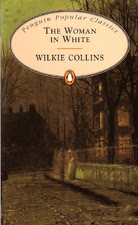
Review: The Woman in White by Wilkie Collins

There, in the middle of the broad bright high-road – there, as if it had that moment sprung out of the earth or dropped from the heaven – stood the figure of a solitary Woman, dressed from head to foot in white garments, her face bent in grave inquiry on mine, her hand pointing to the dark cloud over London, as I faced her.

I first read The Woman in White in 2006 – it was the first Wilkie Collins book I ever read and the one that turned me into a huge fan of his work. I just wish I had discovered him sooner!

The Woman in White was the most popular book of the 1860s; when it was originally serialised in Charles Dickens’ periodical All The Year Round large crowds gathered outside the newspaper offices every time the latest edition went on sale; you could buy Woman in White perfume, bonnets and shawls and dance the Woman in White waltz…and all of this was 150 years before Harry Potter!

So what is it about? I won’t go into the plot in too much detail, as I don’t want to spoil the fun for those of you who haven’t read it yet. The story begins with drawing master Walter Hartright’s meeting on a lonely London road with a mysterious woman dressed all in white who has escaped from an Asylum. The next day Walter takes up a teaching position at Limmeridge House in Cumberland where he finds that one of his students, Laura Fairlie, bears a striking resemblance to the woman in white…

The novel follows an epistolary style, meaning it is narrated by several different characters in turn, sometimes in the form of journal entries or letters. I love the way Collins gives each of his narrators a unique ‘voice’ – he really makes the characters come alive. Another thing I love about Wilkie Collins’ writing is his sense of humour…some of the scenes involving Laura’s hypochondriac uncle Mr Fairlie are hilarious!

Marian Halcombe, Laura Fairlie’s sister, is one of my favourite female characters in literature. Contrary to the usual portrayal of 19th century women, she is a brave, intelligent, courageous person who on several occasions puts herself in danger in order to protect her sister Laura. Another great character is Count Fosco. One of the most unusual and memorable villains I’ve ever encountered in any book, he’s an old, fat, opera-loving Italian completely devoted to his pet canaries and white mice. I remember being surprised when I first read the description of Fosco, as he wasn’t what I had been expecting at all!

The Woman in White is an example of the genre known as sensation fiction – including elements such as forgery, identity theft and insanity. Although it was written in the 19th century it’s as exciting and gripping as a modern day thriller – even when reading the book for the second time and knowing what was going to happen! It’s a long book (569 pages in my Penguin Popular Classics version) but there’s enough tension and suspense to keep the reader interested right through to the end.

There are some classics that are a struggle to read but you persevere with them simply because they’re classics and you feel as if you should. The Woman in White does not fall into that category – yes, it’s a classic but it’s also one of the most readable and enjoyable books I’ve ever read.

If you liked this book I would recommend you read The Moonstone, Armadale or No Name next. As I mentioned at the start of this review, I am a big fan of Wilkie Collins so you can expect to see more of my reviews of his work coming soon!

Highly Recommended

Genre: Classics – Sensation Fiction/Pages: 576 pages/Publisher: Penguin Popular Classics/Year: Originally published 1859/Source: Purchased new from Amazon.co.uk

This review is part of my Great Books series.

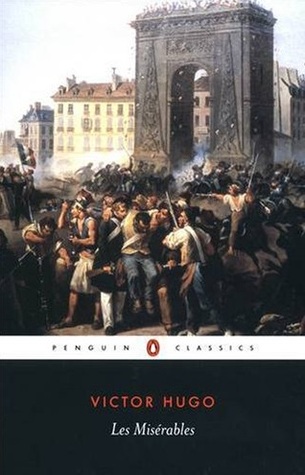
Review: Les Miserables by Victor Hugo


“…there comes a point moreover, where the unfortunate and the infamous are grouped together, merged in a single, fateful word. They are les miserables – the outcasts, the underdogs. And who is to blame? Is it not the most fallen who have most need of charity?”

How do you begin to review a book like this one? Les Miserables is one of the longest books I’ve ever read (and I’ve read a lot of long books) and as someone with very little knowledge of French history, it was also one of the most challenging. Of course, I could have bought an abridged version but I make a point of never doing this as I prefer to read a book the way the author intended.

If you’re unfamilar with the plot, here is a brief summary:

Jean Valjean has just been released from prison after nineteen years (he had been sentenced to five years for stealing a loaf of bread to feed his starving family, and then a further fourteen years for making several attempts to escape). As an ex-convict arriving in the town of Digne, Valjean finds himself rejected by everybody he approaches until the kindly Bishop Myriel takes him in and gives him shelter for the night. However, Valjean repays him by stealing his silverware. When the police catch him and take him back to the bishop’s home, the bishop tells them they’ve made a mistake – he had given the silverware to Valjean as a gift. He then tells Valjean to “never forget that you have promised me to use this silver to become an honest man”. The bishop’s simple gesture of kindness has a profound effect on Valjean, filling him with the determination to be a better person.

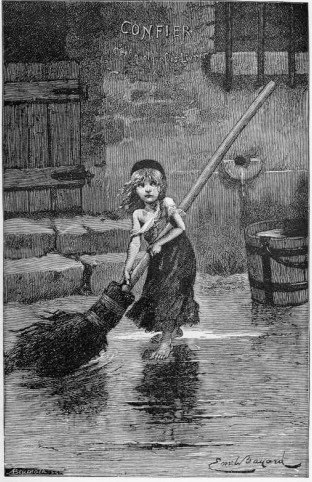
After establishing himself as a successful factory owner and becoming mayor of Montreuil-sur-Mer, Valjean promises a dying woman that he will take care of her daughter, Cosette. The rest of the book follows Valjean’s attempts to escape the investigations of Inspector Javert and to build a new life for himself and Cosette. Along the way we meet a gang of criminals, a group of revolutionary students, and a greedy innkeeper called Thenardier.

Most of the characters are very well developed and Hugo spends a considerable amount of time introducing us to them. In fact, he spends the first 50 pages of the book describing the personality of the Bishop of Digne. This is not vital to the plot and could quite easily have been shortened to just a few pages, yet it helps the reader understand why Jean Valjean was so touched by the bishop’s kindness and compassion and why it was a life changing experience for him. However, I didn’t find the characters of Marius and Cosette very interesting, despite their central roles in the book – I thought some of the secondary characters were much stronger, such as the street urchin Gavroche and the Thenardiers’ eldest daughter Eponine.

I did find my attention wandering in places because of all the lengthy digressions on the Battle of Waterloo, life in a convent, the July Revolution of 1830, the Paris sewer system etc (thankfully my edition took a couple of these out and placed at the end in an appendix). Although these pages are often interesting and informative and contain some beautiful writing, they have very little direct relevance to the plot and interrupt the flow of the story. However, this is really the only negative thing I can say about the book. It’s worth persevering through all the social commentary, politics and history to get to the actual story itself – and the wonderful, moving, thought-provoking, suspenseful story is why I loved Les Miserables.

Highly Recommended

Genre: Classic/Pages: 1232/Publisher: Penguin Classics – translated by Norman Denny/Year: 1862/Source: My own copy bought new

18th and 19th Century Women Writers Reading Challenge

I signed up for this challenge today. Here are the rules:

18th and 19th Women Writers Reading Challenge
Hosted by Becky of Becky’s Book Reviews
Minimum 2 books;
All of 2010

Read books written by women authors that were written and/or published between 1700 and 1900. Contemporary historical books set in this time period do not count towards this challenge! The challenge is to encourage you to read some classics.

Books read for this challenge (updated 8 April 2010 – I have now read enough books to satisfy the minimum requirements of the challenge)

1. The Tenant of Wildfell Hall by Anne Bronte
2. The Doctor’s Wife by Mary Elizabeth Braddon