Review: My Cousin Rachel by Daphne du Maurier


This is the second Daphne du Maurier book I have read this month.  I hope eventually I’ll have time to read all of them because so far none of her books have disappointed me.

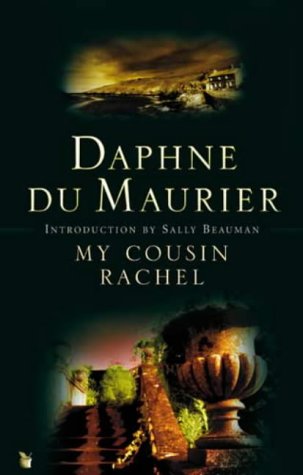
Like I’ll Never Be Young Again, which I read at the beginning of May, My Cousin Rachel is written in the first person from a male perspective. Also as in I’ll Never Be Young Again, the male narrator is a naïve, immature man who I found it difficult to sympathise with. His name is Philip Ashley, a twenty-four year old Englishman who has been raised by an older cousin, having lost both his parents at an early age. Philip and his cousin Ambrose have a very close relationship and Philip is left confused and jealous when Ambrose suddenly marries a woman he meets in Italy. This woman happens to be another cousin of theirs – their cousin Rachel.

Early in the novel, Ambrose dies and Rachel returns alone to the Ashley estate in England. At first, Philip is convinced his cousin Rachel was responsible for Ambrose’s death, but after meeting her he’s not so sure…

My Cousin Rachel is often compared with Daphne du Maurier’s most famous book, Rebecca, and although the two books are very different in many ways, I can see the reasons for the comparisons. The books share some common elements, including the estate in Cornwall (based on du Maurier’s own home, Menabilly) and the mysterious, secretive woman, but the biggest resemblance is in the atmosphere the writing conveys. Daphne du Maurier is one of the most atmospheric writers I know of. Whether she’s writing about the streets of Florence or the coast of Cornwall she always manages to convey a mood perfectly suited to the location and draws you completely into the world she has created. My Cousin Rachel has a strong feeling of foreboding, where from the beginning you know something bad is going to happen and you’re just waiting to see what it is.

Throughout the book, my opinion of Rachel was constantly changing. It was hard to form an accurate idea of what Rachel was like, as we only really saw her through Philip’s eyes and he was not a reliable narrator. Another thing that added to the vagueness and uncertainty of the story was that we were never told exactly when it was taking place. It was obvious that the book was set in the 19th century, but which decade? And what was the name of the Ashley estate? Unless I missed it, we weren’t told that either. It seems to be quite typical of Daphne du Maurier to withhold information from us in this way – after all, in Rebecca we aren’t even told the narrator’s name!

There are a lot of loose ends and questions left unanswered at the end of the book, which is something that often bothers me, but in this case I didn’t mind. I liked the way there were aspects of the story that could be interpreted in several different ways. I expect it would have been a good book to read with a group, as the ambiguity would lead to some interesting discussions and theories.

Recommended

Pages: 304/Publisher: Virago Press (Virago Modern Classics 491)/Year: 2008 (originally published 1951)/Source: Library book

Review: Tess of the D’Urbervilles by Thomas Hardy

Tess Durbeyfield’s life changes forever when her father learns that he is descended from the noble D’Urbervilles. After discovering that he has some wealthy D’Urberville relatives living nearby, Tess is sent to visit them in an attempt to improve the family’s fortunes. While there she is taken advantage of by Alec D’Urberville and returns to her parents pregnant. A few years later when she falls in love with Angel Clare, the parson’s son, she is forced to decide whether to trust Angel with the truth about her past…

It seems that people either love or hate Tess of the D’Urbervilles. Among those who hate it the main reasons for disliking it appear to be that the book was too dark and depressing, or that Tess was too passive and weak. Although I can understand these complaints, I personally fall into the group of readers who loved the book. I don’t have a problem with a story being tragic, melodramatic or depressing as long as it’s well-written. And Hardy’s writing is beautiful. With other books I am often tempted to skim through pages of descriptions of trees, fields, sunrises etc, but Hardy’s portrayal of nature and the English countryside is so poetic I wanted to read every word. Be prepared, though – you will learn more than you ever wanted to know about milking cows, threshing wheat and slicing turnips!

It’s true that Tess doesn’t stand up for herself enough – there were plenty of times when I wanted to scream at her – but I mostly felt sorry for her. She was young (sixteen I think at the start of the book), innocent, naive, and didn’t have the best family life, with a father who was often drunk.  It seemed that everything that could go wrong for her did go wrong. More than poor Tess, it was Alec d’Urberville and Angel Clare who both really infuriated me – and I actually thought Angel was worse than Alec in some respects.

The injustice of a society with different sets of rules for men and women, Christianity vs pagan symbolism, the Industrial Revolution, and the class system of Victorian England are some of the interesting topics this book covers. The only thing I didn’t like about the book was the ending – the final chapters just didn’t seem to fit with the rest of the novel.

So, if you haven’t read this book yet give it a try – you might hate it…but you might just love it like I did.

Highly Recommended

Genre: Classics/Pages: 464/Published:BBC Books (Random House)/Year: 2008 (originally published 1891)/Source: Library book

Review: The Unburied by Charles Palliser

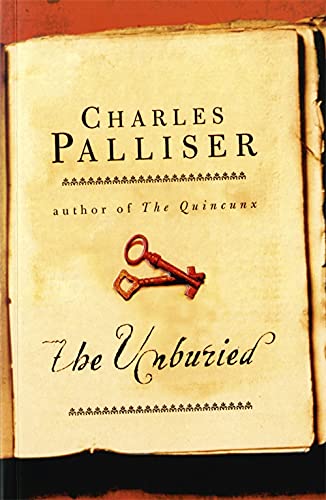
The title of this book may suggest a horror story complete with zombies and vampires, but The Unburied is actually a scholarly murder mystery which reminded me of The Name of the Rose by Umberto Eco or An Instance of the Fingerpost by Iain Pears.  I wanted to read it because a few years ago I read another Charles Palliser book, The Quincunx, which I really enjoyed.  Like The Quincunx, this one is set (mostly) in Victorian England.  It begins with a mock ‘Editor’s Foreword’ in which we are told that we are about to read an account which will throw new light on the controversial Thurchester Mystery.  This account, known as The Courtine Account, forms the bulk of the book.

Dr Edward Courtine, a historian from Cambridge University, has been invited to spend the week before Christmas with Austin Fickling, an old friend from his student days who is now teaching at a school in the cathedral city of Thurchester.  He and Austin haven’t seen each other since they parted on bad terms twenty years ago, and Courtine is eager to renew their friendship.  He also has another reason for wanting to visit Thurchester – he has been studying King Alfred the Great and has learned that an ancient manuscript detailing the events of Alfred’s reign may be available in Thurchester Library.

On the night of Courtine’s arrival he hears the story of a murder that took place in the cathedral two centuries earlier.  Courtine is fascinated, but as he begins to investigate he becomes involved in another murder mystery – and discovers Austin’s true motive for inviting him to Thurchester.

As the main narrator of the book, I found Courtine very irritating, but at the same time I felt slightly sorry for him.  For such an obviously intelligent person he was completely lacking in perception, constantly saying the wrong things, missing important clues and failing to notice people behaving suspiciously.  Sometimes he would tell us that he was beginning to form a theory or that an idea had occurred to him, but he didn’t let us know what it was.  This was good in one way, as it encouraged me to work things out for myself, but it also annoyed me because I was already finding it difficult enough to keep all the threads of the story straight.

Although the town of Thurchester and its community are vividly depicted, I didn’t find any of the characters particularly memorable.  The fact that some of them had similar names (Slattery, Sheldrick, Sisterton for example) didn’t help.  There is actually a character list at the back of the book but I was trying not to look at it in case I came across any spoilers.  As for the plot, it’s so intricate you really need to read this book in as few sittings as possible so you don’t forget any important details.  There seemed to be a constant stream of unexplained deaths and forged documents, with at least three separate mysteries from different eras all running parallel to each other – and different characters giving different versions of what may or may not have happened.   I wished I had been taking notes from the beginning.

This is a very atmospheric book with lots of gothic elements, from the freezing fog that accompanies Courtine’s arrival in Thurchester to the obligatory ‘ghost’ supposedly haunting the cathedral.  It would have been a good book to read in front of the fire on a cold winter’s night.  In spite of the slow pace the book was relatively quick to read and although it was certainly confusing, I did enjoy it, especially when the various mysteries began to unravel towards the end.  Not as good as The Quincunx, though – if you’ve never read a Charles Palliser book before, try that one first.

Genre: Historical Fiction/Mystery/Publisher: Phoenix/Pages: 389/Year: 1999/Source: My own copy purchased used

Short Story Mini-Review: An Imaginative Woman by Thomas Hardy

An Imaginative Woman by Thomas Hardy (1894)

This is the first of Thomas Hardy’s short stories that I’ve read but I would now like to read more. As you might expect from Hardy, An Imaginative Woman is well-written and descriptive but with a slightly dark and melancholy feel.

Ella Marchmill, the ‘imaginative woman’ of the title is an aspiring poet, writing under the male pseudonym of John Ivy because ‘nobody might believe in her inspiration’ if they knew she was a woman. Her husband, a gunmaker, is her exact opposite in temperament and interests. When the couple and their three children go on holiday to Solentsea in Upper Wessex, Ella becomes obsessed with the previous occupier of their lodgings – a fellow poet by the name of Robert Trewe. During their stay in Solentsea she convinces herself she has fallen in love with a man she has never even met and desperately tries to arrange a meeting with Trewe. As I don’t want to spoil the story for you I won’t reveal any more of the plot and will leave it to you to find out whether or not Ella succeeds in meeting Robert Trewe.

No, he was not a stranger! She knew his thoughts and feelings as well as she knew her own; they were, in fact, the self-same thoughts and feelings as hers, which her husband distinctly lacked; perhaps luckily for himself, considering that he had to provide for family expenses.

“He’s nearer my real self, he’s more intimate with the real me than Will is, after all, even though I’ve never seen him,” she said.

The theme of this story was actually very similar to the Mary Elizabeth Braddon novel The Doctor’s Wife which I reviewed a few weeks ago, in which a woman becomes bored with her marriage and develops an obsession with another life that exists only in her fantasies. The outcome of the two stories, however, is very different. There’s a clever plot twist at the end of An Imaginative Woman but I found the final few paragraphs a bit too harsh and cruel.

If you’d like to read this story yourself, you can find it online here.

The illustration by Arthur J. Goodman shown at the top of this post originally appeared in The Pall Mall Magazine in April 1894 and depicts Robert Trewe and Ella Marchmill – Picture courtesy of Philip V. Allingham

Have you read any of Thomas Hardy’s short stories? Which one do you think I should read next?

Review: The Warden by Anthony Trollope

Being a lover of Victorian fiction, I have wanted to read something by Anthony Trollope for a long time but didn’t know which of his books to begin with. I’ve heard a lot about The Way We Live Now and Can You Forgive Her? but I decided to go with The Warden because it’s relatively short and I thought that if I wasn’t enjoying it I’d be more likely to finish a book with 200 pages than one with 800. Luckily, this wasn’t a problem – I enjoyed the book and wouldn’t have minded if it had been longer.

In the year 1434 John Hiram established a hospital (or almshouse) in the town of Barchester where for centuries to come, twelve elderly, infirm men could live under the care of a warden. At the time when the story takes place, Septimus Harding is the current warden and whilst the amount of money given to the old men has barely changed at all over time, the warden’s income has increased to eight hundred pounds a year. When reformer John Bold decides to investigate, Harding finds himself facing a moral dilemma.

The book really made me stop and think, because none of the characters seemed to be either completely in the wrong or completely in the right.  Although it was clearly unfair that Mr. Harding was receiving so much money, I sympathised with him because as soon as the unfairness of his position was brought to his attention he became determined to do the right thing.  As for the other main characters – John Bold and Harding’s son-in-law Archdeacon Grantly – although they are on opposite sides of the debate and have very different opinions regarding the warden’s situation, Trollope presents them both as well-intentioned people with normal human flaws.  The female characters don’t play a very big role in this book, but I loved the relationship between Mr. Harding and his daughter Eleanor.

I really liked Trollope’s writing style which is elegant, insightful and witty in a gentle way.  There are a few chapters where he departs from the main storyline to spend several pages talking about politics or the media but this is a common trait of Victorian writers.  Although it was slow moving in places, Trollope managed to keep me interested from beginning to end.  I’m sure some of his other books will be better, but this one was good enough to make me want to read more of his work.

Recommended

Publisher: Penguin Classics/Year: 1984 (first published 1855)/Pages: 240/Source: My own copy bought used

Review: The Doctor’s Wife by Mary Elizabeth Braddon

Isabel Sleaford lives in a dream world filled with characters from novels by Dickens, Scott and Thackeray. She longs to break away from her boring existence as a children’s governess and live the exciting life of one of the heroines in her favourite books. When parish doctor George Gilbert proposes to her, she accepts but quickly finds that her marriage isn’t providing the drama and adventure she’s been dreaming of. George is a good man, but he’s practical, down to earth – and boring, at least in Isabel’s opinion. After meeting Roland Lansdell, the squire of Mordred Priory, she becomes even more discontented. Roland is romantic, poetic and imaginative – in other words, he’s everything that George isn’t…

This is the second Mary Elizabeth Braddon book I’ve read – the first was the book that she’s best known for today, the sensation novel Lady Audley’s Secret. Apparently The Doctor’s Wife was Braddon’s attempt at writing a more serious, literary novel, with a plot inspired by Gustave Flaubert’s Madame Bovary. The Doctor’s Wife is not very ‘sensational’ – apart from maybe the final few chapters – and although it’s interesting and compelling in a different way, if you’re expecting something similar to Lady Audley you might be slightly disappointed. At one point in the book, Braddon even tells us “this is not a sensation novel!”

The focus of The Doctor’s Wife is the development of Isabel Gilbert from a sentimental girl with her head permanently in the clouds into a sensible and mature woman. I didn’t like Isabel much at all, though I’m not really sure if I was supposed to. Throughout most of the book she was just so silly and immature – wishing that she would catch a terrible illness or some other tragedy would befall her, just so she could have some excitement in her life – although as several of the other characters pointed out, she wasn’t a bad person, just childish and foolish. It was sad that her own romantic notions and ideals were preventing her from having any chance of happiness.

I thought some of the minor characters were much more interesting and I would have liked them to have played a bigger part in the story. I particularly loved Sigismund Smith, who was a friend of both George and Isabel, and a ‘sensation author’ – probably a parody of Mary Elizabeth Braddon herself. Sigismund (whose real name is Sam) is a writer of ‘penny numbers’ – cheap, serialised adventure stories. His enthusiasm for his work and his unusual methods of researching his novels provide most of the humour in the book.

Due to Isabel’s reading, almost every page contains allusions to characters and events from various novels, plays and poems – most of which I haven’t read – so I found myself constantly having to turn to the notes at the back of the book (until I decided I could follow the story well enough without understanding all the references to Edith Dombey and Ernest Maltravers).

Overall, this was another great book from Mary Elizabeth Braddon, although not quite what I was expecting.

Highly Recommended

Genre: Classics/Pages: 431/Publisher: Oxford University Press/Year: 2008 – originally published 1864/Source: My own copy purchased new

Review: In a Far Country by Linda Holeman

Linda Holeman really deserves to be better known. Her books seem to be difficult to find outside the UK and Canada which is sad because she’s such a good writer. Last year I read The Moonlit Cage and enjoyed it so much I couldn’t wait to read another of her historical fiction novels. In a Far Country is part of a trilogy with The Linnet Bird and The Moonlit Cage, but they are all stand-alone books and can be read in any order.

In a Far Country is set in British-ruled India in the late 19th century and tells the story of Pree Fincastle, the daughter of two British missionaries living on an isolated mission near Lahore. Left alone and penniless after her parents’ tragic deaths, Pree sets off to look for her childhood friend, Kai, the only person she can turn to for help.

I found this book difficult to get into at first. Holeman spent a lot of time setting the scene and introducing us to Pree and her parents, so that the story didn’t really begin until around 150 pages into the book. From this point onwards, though, the pace picked up and I was hooked. I really liked the character of Pree. Since the book is told in the first person from her point of view, we get to experience all her emotions as she grows up at the lonely, impoverished mission house and as her life is turned upside down by the deaths of her parents.

The only criticism I have of both this book and The Moonlit Cage is that I just don’t feel enough connection to the male characters. I think Linda Holeman writes female characters much better than she does male. I found that Kai remained cold and aloof throughout the entire book and considering Pree loved and trusted him enough to turn to him when she was in trouble, I didn’t feel much warmth, passion or humour coming from him at all. This was almost exactly the same reaction I had to David Ingram in The Moonlit Cage.

However, one of Holeman’s strengths is in her wonderfully evocative and colourful descriptions of the places she’s writing about. She chooses just the right words to convey the sights, sounds and smells of India. If you had never read a book set in India before, this would probably be a good introduction.

Despite the length of this book, it was surprisingly quick to read. Perfect if you’re looking for a big, heartbreaking historical fiction novel to lose yourself in for a few days.

Highly Recommended

Genre: Historical Fiction/Pages: 640/Publisher: Headline Review/Year: 2008/Source: My own copy bought used