A Classics Challenge – February: Joe Gargery

This year I am taking part in a Classics Challenge hosted by Katherine of November’s Autumn. The goal is to read seven classics in 2012 and every month, Katherine will be posting a prompt to help us discuss the book we are reading.

The novel I’m currently reading for the challenge is Great Expectations by Charles Dickens and this month Katherine is asking us to answer some questions about a character from the book we are reading. As you would expect from any Dickens novel there are plenty of memorable characters in Great Expectations to choose from – Miss Havisham, Pip, Estella, Mr Jaggers, Abel Magwitch and many others – but the character I’ve decided to write about is one of my favourites, Joe Gargery.

Level 1
What phrases has the author used to introduce this character? What are your first impressions of them? Find a portrait or photograph that closely embodies how you imagine them.

Joe is the brother-in-law of the novel’s narrator, Pip, and one of the biggest influences on his early life. Joe and his wife (Pip’s sister, referred to throughout the novel as Mrs Joe Gargery) have brought Pip up since he was orphaned as a child. Mrs Joe is a hard, overbearing woman who is often cruel to Pip, but Joe is a kind and loving father figure.

Here is our first introduction to Joe, as seen through Pip’s eyes:

Joe was a fair man, with curls of flaxen hair on each side of his smooth face, and with eyes of such a very undecided blue that they seemed to have somehow got mixed with their own whites. He was a mild, good-natured, sweet-tempered, easy-going, foolish, dear fellow – a sort of Hercules in strength, and also in weakness.

Level 2
How has the character changed? Has your opinion of them altered? Are there aspects of their character you aspire to? or hope never to be? What are their strengths and faults? Do you find them believable? If not, how could they have been molded so? Would you want to meet them?

I haven’t finished the book yet but based on what I’ve read so far, Joe doesn’t really change over the course of the book and my opinion of him hasn’t altered. The thing that does change is the way Pip views him. After Pip meets Miss Havisham and Estella he starts to feel ashamed of Joe because of his lack of education and refinement. Joe doesn’t have much interest in money, property or any of the other things that are so important to most of the other characters in the novel – he seems happy with his simple way of life and doesn’t have any ‘great expectations’, unlike Pip.

Who are your favourite characters from Great Expectations? What do you think of Joe Gargery?
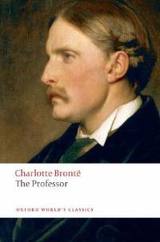
The Professor by Charlotte Brontë

The Professor was Charlotte Brontë’s first novel. She was unable to find a publisher for it during her lifetime and it was eventually published posthumously in 1857. Like Jane Eyre and Villette, this book is written in the first person, but with one difference – the narrator is a man. This is interesting as it shows us Charlotte’s views on how a man would think and behave and what his feelings towards women might be.

The narrator’s name is William Crimsworth, and at the beginning of the novel he is starting a new job as a clerk, working for his brother Edward, a rich mill-owner. However, William finds Edward impossible to get along with – he’s cruel and cold-hearted and treats William badly. Finding himself out of work again, William takes the advice of another businessman, Mr Hunsden, and goes to Belgium to teach English at a boys’ school in Brussels. Here he becomes involved with two very different women: one is Zoraide Reuter, the headmistress of the neighbouring girls’ school, and the other is a poor friendless student-teacher, Frances Henri.

This is the third book I’ve read by Charlotte Brontë. I first read Jane Eyre when I was a teenager and it immediately became one of my favourite books, but I didn’t begin to explore her other work until just last year, when I read Villette. Villette, like this book, is set at a school in Brussels and in many ways is a very similar story to The Professor, but with a female narrator and a more complex, layered plot. In both The Professor and Villette, Charlotte was able to draw on her own personal experience of teaching and studying in Brussels. This is obvious both in her descriptions of the city and in the way she could write so knowledgeably about education and the relationship between teachers and pupils.

What I love about Charlotte Brontë’s writing, as I mentioned in my earlier post on the author, is the way she writes about feelings and emotions. In The Professor she perfectly captures the loneliness and isolation a man might feel on arriving in an unfamiliar country with no money and without a friend in the world.

William is not as sympathetic a character as he should be though, due to Charlotte Brontë expressing some of her own views and prejudices through his narration. There’s a lot of racism and anti-Catholicism throughout this story, particularly when William is describing the girls in the school, making assumptions about them based on their nationality and considering them inferior to Protestant English girls. I’m sure it’s not a coincidence that the scheming, manipulative Zoraide Reuter is Catholic, while the quiet, honest Frances is Protestant (and half-English). Even allowing for the fact that the book was written in the 19th century, some of these passages were uncomfortable to read. And because I could never really warm to William’s character, I didn’t find this book as moving as I might have done otherwise.

Brontë also includes a lot of French dialogue in this novel, which it is assumed that the reader can understand. Some editions of the book provide translations in the notes, but the French is not translated in the original text and it can be frustrating to feel that you might be missing out on something essential to the plot. Also, the constant references to ‘physiognomy’ started to really irritate me (physiognomy is the concept of judging a person’s character based on their appearance). The word seemed to appear on almost every page, whenever William met someone new!

I know I’m probably giving the impression that I didn’t enjoy this book, but that’s not true. Charlotte Brontë’s writing is beautiful and for that reason alone I would say this book is definitely worth reading. Just don’t choose this one as a first introduction to Charlotte’s work – my recommendation would be to start with Jane Eyre and then move on to Villette before deciding whether to try The Professor. I can’t comment on her other book, Shirley, as I still haven’t read that one – maybe later in the year!

A Classics Challenge – January: Charlotte Brontë

This year I am taking part in a Classics Challenge hosted by Katherine of November’s Autumn. The goal is to read seven classics in 2012 and on the 4th day of every month, Katherine will be posting a prompt to help us discuss the book we are reading.

The first book I’ve chosen to read for the challenge is The Professor by Charlotte Brontë. I’m almost halfway through the book and have been enjoying it so far. I’ll be posting my thoughts about the book itself after I’ve finished reading it, but for this month’s prompt, Katherine is asking us to focus on the author – in this case, Charlotte Brontë.

There are three different levels of participation this month depending on how far into the book we are, and I feel I’ve read enough of The Professor to answer the questions for all three levels.

Level 1
Who is the author? What do they look like? When were they born? Where did they live? What does their handwriting look like? What are some of the other novels they’ve written? What is an interesting and random fact about their life?

Charlotte Brontë

Charlotte was born in Thornton, Yorkshire on April 21, 1816, the third of the six children of Reverend Patrick Brontë and his wife Maria Branwell Brontë.

The Brontë Parsonage Museum

The Brontë family lived at Haworth Parsonage, now the Brontë Parsonage Museum.

Charlotte Brontë is the author of four novels: Jane Eyre, one of my favourite classics, Villette, which I read last year, The Professor, and Shirley. I am reading The Professor now and will hopefully have time for Shirley too before the end of the year.

Charlotte Brontë's signature

Here’s an interesting piece of trivia about Charlotte: A tiny manuscript of an unpublished Charlotte Brontë story was sold at auction in 2011 to a French museum. The story was written in 1830 when she was fourteen years old and each page measures only 1.4 x 2.4 inches.

Level 2
What do you think of their writing style? What do you like about it? or what would have made you more inclined to like it? Is there a particular quote that has stood out to you?

I find it hard to explain exactly what I like about Charlotte Brontë’s writing style, but I obviously like it enough to want to read all four of her books! I love the way she expresses the feelings and emotions of her characters; she chooses exactly the right words and phrases to convey their sadness, loneliness and suffering as well as their moments of happiness and love.

However, there are a few aspects of her writing that I don’t like so much. Two problems I’m having with The Professor are the overwhelming number of references to physiognomy (judging a person’s character from their appearance) and also a tendency to include a lot of French dialogue which is not translated, making it difficult for a non-French speaker to follow what’s being said. Overall, though, I do like the way she writes and am looking forward to reading the rest of this book.

Level 3
Why do you think they wrote this novel? How did their contemporaries view both the author and their novel?

The Professor was Charlotte Brontë’s first novel, although it remained unpublished until after her death. The main character, William Crimsworth, is a teacher at a school in Belgium. As Charlotte herself (like her sister Emily) had spent some time studying and teaching in Brussels, she was able to draw on her own experiences when writing this novel. It seems that The Professor wasn’t very highly regarded during Charlotte’s lifetime and she was unable to find a publisher for it, even after she began to have success with her other novels.

Have you read any of Charlotte Brontë’s novels? What do you think of her work?

Don’t forget to visit Katherine’s blog post where you can find links to other participants’ responses. We are all reading different books so a variety of different authors are being highlighted this month.

More challenges for 2012

Despite saying that I wasn’t going to sign up for any more reading challenges, here are three that I couldn’t resist.

The first is the Historical Fiction Challenge hosted by the team at Historical Tapestry. The rules are as follows:

* everyone can participate, even those who don’t have a blog.

* any kind of historical fiction is accepted (HF fantasy, HF young adult,…)

* During these following 12 months you can choose one of the different reading levels:

1. Severe Bookaholism: 20 books
2. Undoubtedly Obsessed: 15 books
3. Struggling the Addiction: 10 books
4. Daring & Curious: 5 books
5. Out of My Comfort Zone: 2 books

The challenge will run from 1 January 2012 to 31 December 2012.

I haven’t made a list of books, but I’m signing up for the Severe Bookaholism level. Historical fiction is one of my favourite genres and I don’t expect to have any problems completing this challenge!

The Classics Challenge is hosted by Katherine at November’s Autumn and the goal is to read seven classics in 2012. Here is what Katherine says about the challenge:

Instead of writing a review as you finish each book (of course, you can do that too), visit November’s Autumn on the 4th of each month from January 2012 – December 2012.

You will find a prompt, it will be general enough that no matter which Classic you’re reading or how far into it, you will be able to answer. There will be a form for everyone to link to their post. I encourage everyone to read what other participants have posted.

This challenge was announced a while ago but I didn’t sign up immediately because I wasn’t sure which classics I would want to read in 2012. Now that I’ve had time to think about it I’ve listed the following seven books which overlap with some of the Victorian reading I’m planning to do next year.

1. The Professor by Charlotte Brontë
2. Great Expectations by Charles Dickens
3. The Small House at Allington by Anthony Trollope
4. Aurora Floyd by Mary Elizabeth Braddon
5. The Mill on the Floss by George Eliot
6. The Return of the Native by Thomas Hardy
7. Wives and Daughters by Elizabeth Gaskell

I might read these in a different order, and I’m sure I’ll be reading other classics too, but all seven of these books are definitely on my list for 2012.

Finally, Risa of Breadcrumb Reads is hosting a read-along of twelve of Shakespeare’s plays throughout 2012. For every play there will be discussion posts for each Act. You can find out more and sign up at the Reading Shakespeare blog.

This is another one I’ve been thinking about for a few weeks. I do have a copy of Shakespeare’s Complete Works, most of which I still haven’t read. At the start of 2010 I had set myself a personal challenge to read some of his plays throughout the year, but I only actually managed to read one. I’m hoping that signing up for Risa’s challenge will be the motivation I need.

The schedule is as follows. I’m not sure I’ll have time for all of these, but would like to join in with at least some of them.

* January — A Midsummer Night’s Dream
* February — Macbeth
* March — Henry V
* April — Much Ado About Nothing
* May — Antony and Cleopatra
* June — Richard III
* July — As You Like It
* August — King Lear
* September — Cymbeline
* October — Twelfth Night
* November — Othello
* December — Pericles

I’m not planning to sign up for any other challenges, as in addition to these three I’ve already signed up for The Victorian Challenge and War Through the Generations. I’m looking forward to January so I can get started with all of these!