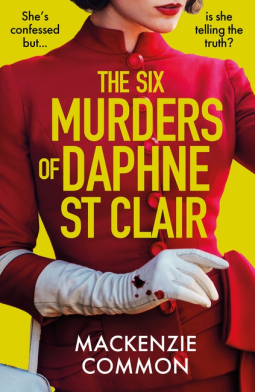
The Six Murders of Daphne St Clair by MacKenzie Common

Daphne St Clair is a ninety-year-old grandmother in poor health who lives at Coconut Grove Senior Home in Florida. Probably not anyone’s idea of a typical serial killer, but when another elderly resident is found dead in the home, Daphne calls the police and confesses to not only this murder but several more, spanning four states, two countries and seven decades. The police, Daphne’s family and the public are both shocked and intrigued – what could have made Daphne want to kill so many people? And why has she chosen to confess now, at this late stage of her life?

When the news of Daphne’s confession begins to spread, she is contacted by journalists and reporters wanting to be first to tell her story, but she turns them all down – except one. Ruth Robinson hopes to start a podcast about Daphne’s life and even has a title ready for it – The Murders of Daphne St Clair. Something draws Daphne to the younger woman and she agrees to be interviewed for the podcast, but as her story unfolds she begins to discover that there’s more to Ruth than meets the eye. Who is Ruth Robinson and what’s the real reason for the podcast?

I had never heard of MacKenzie Common (it seems she has previously written a YA mystery novel, although this is her first book for adults), but I was attracted by the elegant, eye-catching cover and the premise of a ninety-year-old serial killer who had spent her whole life literally getting away with murder! I did enjoy the book, with a few reservations which I’ll mention later in this review, but overall it was quite an entertaining read.

Daphne’s tale begins in Canada in the 1930s, where she grew up on a farm near a small town in Saskatchewan. After a difficult childhood, Daphne runs away from home at the age of sixteen and makes her way to Winnipeg, where she meets the man who will become her first victim. He’s an unpleasant, violent man and his death is more of an accident than a murder, so at this stage of the book, Daphne seems a sympathetic character. This quickly changes as Daphne’s actions become more senseless and inexcusable and she shows no repentance for what she has done. I disliked her more and more as the novel progressed, but at the same time, she’s a clever, witty narrator and her story is engaging.

The structure of the book was a problem for me. Daphne’s narrative is broken into short sections, some of which are written in her own first person perspective and some in the form of dialogue for the podcast. These are then interspersed with chapters from Ruth’s perspective as she carries out some investigations of her own into Daphne’s background and one particular murder that is of special interest to her. I felt that the switches from one character to the other happened too quickly and too often, which stopped the story from flowing as well as it could have done. On top of this, there are also frequent interruptions from true crime fans discussing the show on Reddit and speculating on who Daphne is going to kill next, and a fashion blogger on TikTok who imagines outfits Daphne may have worn at key moments in her life. I could have done without these as well, but they do illustrate the moral issues of treating criminals like celebrities.

The ending of the novel leaves an important question unanswered; we can decide for ourselves what happened (or what we would have liked to have happened) but I would have preferred to know for certain! This wasn’t a perfect book, then, but not many are and there were definitely more things I liked than disliked.

Thanks to Headline/Mountain Leopard Press for providing a copy of this book for review via NetGalley.

Love and Other Poisons by Lesley McDowell

I wasn’t sure whether to read this new novel by Lesley McDowell as I didn’t get on very well with her last one, Clairmont. Although I liked her writing, I struggled with the structure, the way it would jump from one timeline to another and the lack of context to explain characters’ backgrounds and relationships. I like to give authors a second chance, though, and this book, based on a true crime, did sound intriguing…

In 1857, Madeleine Smith is put on trial in Glasgow for the murder of her lover, Emile L’Angelier. After listening to witnesses and examining the evidence, the jury, still unable to decide whether she is guilty, give a verdict of ‘Not Proven’ and Madeleine is set free. Seventy years later, Harry Townsend, an aspiring filmmaker, believes he has tracked down the woman who used to be Madeleine Smith, now living in New York as a respectable elderly widow, Mrs Sheehy. Harry wants to interview her about Emile’s murder, but when Mrs Sheehy refuses to cooperate, Harry is forced to question whether he has got the right person after all.

We move back and forth between 1857 and 1927 throughout the book, but I found it much easier to follow the plot and understand what was going on than I did with Clairmont, which was a relief! The first few sections were interesting as they set the scene and introduced the characters, but then we settled into the 1857 period and the story of Madeleine’s relationship with Emile and my attention began to waver. There’s a lot of focus on their sexual encounters, some of which are described quite explicitly (I understood why later on), and I started to get impatient waiting for the murder to happen. It does happen eventually, of course, and I was glad I stuck with the book as I found the aftermath of the murder and Madeleine’s trial much more compelling to read about.

Although I did have some sympathy for Madeleine’s position – Emile had become very manipulative and controlling, threatening her with blackmail – I never really warmed to her as a character and I felt that she could have handled the situation differently. I also didn’t like the way she implicated not just the maid Christina, who arranged meetings and passed letters between Madeleine and Emile, but also her own twelve-year-old sister, Janet. None of the other characters in the book were very likeable either; the way Harry Townsend treated the older Madeleine was horrible and I hoped he would never get to make his film! There’s a twist in that particular storyline which I hadn’t guessed, but which seems to fit well with the historical facts.

I’ve never read about the Madeleine Smith case before, although it seems to be well documented, and I wonder whether my perception of this book would have been different if I already knew some of the details before I started to read. Anyway, it was all new to me and I was fascinated by the author’s note at the end of the book where she explained the origins of the novel – the idea was suggested to her by fellow author Emma Tennant who had wanted to work on it as a joint project before her death – and how she chose to interpret some of the historical evidence. She discusses her theory regarding the murder method and weapon (this is where the strong sexual content earlier in the novel suddenly made sense), and how she tried to piece together the clues we have regarding Madeleine’s later life after the trial.

I enjoyed this book more than I thought I would, having seen a lot of very mixed early reviews – but at the same time, I do understand some of the criticisms. Still, I found it interesting to learn about a true crime I was previously unaware of and which has inspired a large number of other novels, plays and adaptations.

Thanks to Headline/Wildfire for providing a copy of this book for review via NetGalley.

Book 11/20 for 20 Books of Summer 2025.

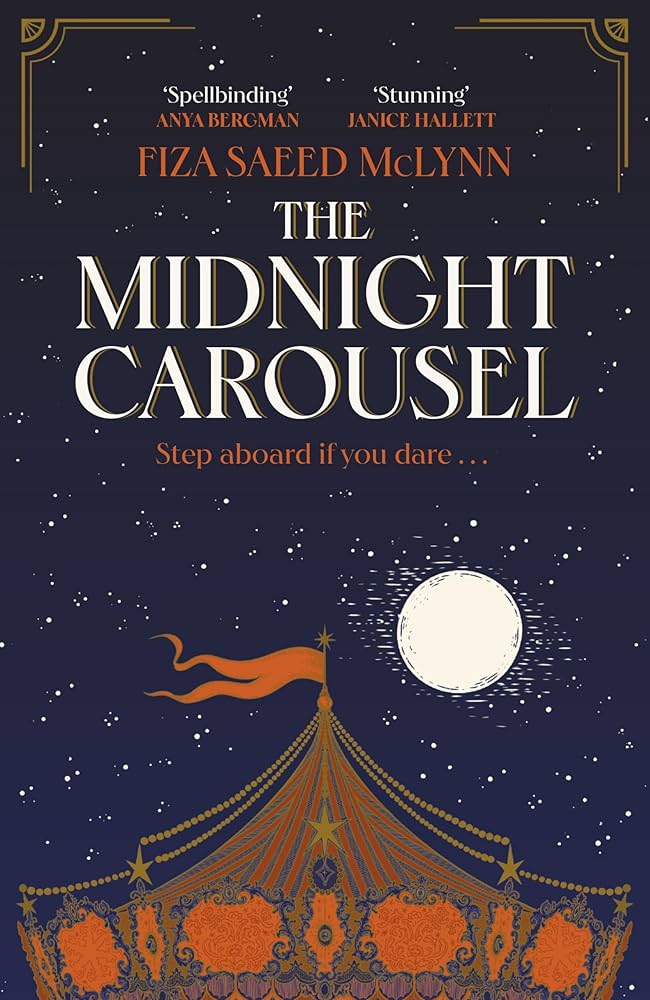
The Midnight Carousel by Fiza Saeed McLynn

Whenever you decide to read a book by an author who’s new to you, you never really know what to expect and there’s always a risk you won’t like it, particularly when it’s a debut novel like this one. Fortunately, I loved The Midnight Carousel from the beginning; it’s such an original, unusual story that I was completely captivated by it.

The carousel of the title is built in 1900 by Gilbert Cloutier for the Grand Exhibition in Paris. Gilbert is struggling to come to terms with his grief over the recent loss of his young son, so he decides to add some special features to the carousel in memory of the boy. This is the last thing he does before disappearing without trace. Over the years that follow, the carousel gains a sinister reputation when it becomes linked with further disappearances and Detective Laurent Bisset is asked to investigate. He thinks he has caught the culprit, but several years later history begins to repeat itself, leaving Laurent questioning whether he has made a terrible mistake.

Meanwhile, in England, Maisie Marlowe is being raised by abusive foster parents in Canvey Island, Essex. Maisie has no idea who her real parents are and the only things that sustain her through this miserable period of her life are her friendship with her foster brother and a picture of a beautiful carousel that she found on the beach. Eventually, an aunt comes to rescue her and takes her to live in the home of Sir Malcolm Randolph where she has just taken a job as housekeeper. Due to an unexpected sequence of events, Maisie ends up emigrating to America with Sir Malcolm where they open an amusement park in Chicago with a magnificent carousel as the star attraction – the exact same carousel as the one in Maisie’s picture and the same one that was built at Gilbert Cloutier’s factory in Paris.

When the disappearances begin again, Laurent Bisset is sure there must be a connection with the earlier incidents in France, so he travels to Chicago determined to uncover the truth this time. Here he crosses paths with Maisie, bringing the two threads of the novel together. I loved both characters and was interested in their personal stories – Maisie’s Dickensian childhood and her incredible change of fortune and Laurent’s dedication to making amends for his past mistakes – but I also enjoyed watching their relationship develop as they come together over the mystery of the carousel.

The mystery element of the book is not so much a whodunit as a howdunit. How can people be disappearing into thin air while riding the wooden jumping horses? Is the carousel itself haunted? Did Gilbert Cloutier place a curse on it? Is someone somehow snatching people from the horses without being seen? Although there were a few clues that I thought could and should have been noticed by Laurent and the police, I can also understand how they could have been missed. When we eventually get some answers, they are both clever and creepy and what I found particularly unsettling is that all through the book I never really knew whether I was reading magical realism or something with a more human explanation. The eerie atmosphere, along with the fairground setting, kept reminding me of Erin Morgenstern’s The Night Circus, but I think this is a better book.

I thoroughly enjoyed The Midnight Carousel and loved getting to know Laurent, Maisie and the secondary characters – I particularly liked Mrs Papadopoulos the dairy seller and Madame Rose the fortune-teller. I’ll certainly be putting Fiza Saeed McLynn on my list of authors to look out for in the future.

Thanks to Michael Joseph for providing a copy of this book for review via NetGalley.

The Heart in Winter by Kevin Barry – #ReadingIrelandMonth25

When I first heard about The Heart in Winter last year, despite seeing some very positive reviews I decided I wasn’t interested in reading it as it didn’t sound like my sort of book. After it was longlisted for the Walter Scott Prize earlier this year, I wondered if I’d been too quick to dismiss it and as Kevin Barry is an Irish author, I decided to try reading it for Reading Ireland Month (hosted this month by Cathy of 746 Books).

When I started reading, it seemed that my fears about it were justified. It’s a western, set in 1890s Montana, with lots of drinking, lots of swearing and lots of sex. Worse, there are no quotation marks to indicate speech, something I always dislike and find distracting. Still, I was prepared to give it a chance and persevere…

Tom Rourke is an Irishman living in Butte, Montana, where he works as a photographer’s assistant and a writer of love letters for illiterate men hoping to find wives. He’s also a drunk and an opium addict, drifting through life with no real aim or direction. Everything changes for Tom when Polly Gillespie arrives in town. Polly is newly married to an older man, Anthony Harrington, the fanatically religious captain of a copper mine. She’s already having doubts about her marriage, so when she and Tom fall in love, they decide to run away together. Stealing a horse, they head out across Montana and Idaho, hoping to make it all the way to California, but Harrington won’t let his bride escape that easily and soon a posse of gunmen are in pursuit.

Once Tom and Polly left Butte and set out on their journey, I started to feel much more engaged with the story. Although their romance was very sudden (literally love at first sight, with no time to show how their relationship developed), I still found it convincing and could easily believe that these two flawed, lonely people would form an instant connection. The narrative is split between Tom and Polly on the run and Harrington’s men who are hunting them down and although it seems that the odds are against the young lovers, I still hoped things would work out for them and they would find the happiness they deserved.

I wish I could say I loved this book the way everyone else has, but that wouldn’t be true. However, I did find a lot of things to admire in it, particularly the way Barry’s use of language brought the setting so vividly to life. There are also some very colourful supporting characters, both in Butte and among the people Tom and Polly meet on their travels. As I mentioned earlier, though, I really hate the current trend for not using punctuation correctly. If the idea is to make the prose feel more immersive, it does the exact opposite for me. Apart from that, I think I’m just not a fan of westerns in general. I did enjoy Patrick deWitt’s The Sisters Brothers, but the other westerns I’ve tried since then haven’t really worked for me, not even Days Without End by Sebastian Barry, whose work I usually love.

I won’t be at all surprised if this book is shortlisted for the Walter Scott Prize next month or even if it turns out to be the eventual winner. I just wasn’t the right reader for it, but I’m still glad I tried it and got to know Tom and Polly.

The Briar Club by Kate Quinn

Kate Quinn’s new novel, The Briar Club, begins with a murder in a Washington, D.C. boarding house on Thanksgiving, 1954. We don’t know who the victim is – that will be revealed later on – but it does seem that the killer is likely to be one of the seventeen people gathered in the kitchen waiting to be interviewed by the police. To get answers, we have to go back to the day four years earlier when Grace March arrives at Briarwood House and agrees to take the tiny apartment in the attic…

Grace is just one of several women living in the house, all of whom are hiding secrets and in some cases are not quite what they seem. There’s Nora, who works at the National Archives and is in love with a gangster; Bea, a former baseball player forced to give up her dreams; Claire, who is desperately trying to save to buy her own home; Fliss, an Englishwoman with a baby and an absent husband; unhappy, spiteful Arlene whom nobody likes; and Reka, an elderly Hungarian refugee. The novel unfolds through a series of interlinked short stories each focusing on one of these women, interspersed with chapters describing the aftermath of the Thanksgiving murder. The latter are narrated by Briarwood House itself, because the house knows better than anyone else what has been going on within its walls!

I enjoyed The Briar Club, but found some of the women’s stories much more engaging than others. Nora’s story came first and was completely gripping, which maybe raised my expectations too high for the rest of the book. By the time I reached Bea’s section in the middle, I was starting to get bored, although things did pick up again later on. Despite the brief chapters about the murder that are scattered throughout the book, I think anyone who starts to read this expecting a mystery novel or a thriller will be disappointed – but if you like character-driven novels with a slower pace it will probably be more to your taste. Speaking of taste, food and drink play a big part in the story, with each character sharing some of their recipes with us! So if you want to know how to make Bea’s ragù, Arlene’s candle salad or Claire’s potato pancakes, the instructions are all in the book (and even if you’re not a cook, I recommend skipping to the end of each recipe where you’ll find a suggestion for a suitable song to accompany the meal).

Although each woman in the house has her own individual story to tell, they all get together for weekly social gatherings in Grace’s attic room (the ‘Briar Club’ of the title) and over the years most of the women begin to form close bonds. A very different kind of relationship that also develops is between the women of the Briar Club and the two children of their landlady, Mrs Nilsson. Pete Nilsson gets a chapter of his own, but I particularly loved seeing how his younger sister, Lina, grows in confidence (and improves her baking skills) due to the friendship and support of the Briar Club. The novel also provides us with a snapshot of life in America in the early 1950s, with a focus on McCarthy and the fear of communism.

The Briar Club was an enjoyable read overall, but I would have preferred some of the women’s stories to be cut short or left out altogether. So far, The Rose Code is still my favourite of the three Kate Quinn books I’ve read (the other is The Diamond Eye).

Thanks to HarperCollins for providing a copy of this book for review via NetGalley.

This is book 16/20 of my 20 Books of Summer 2024.

Book 34/50 for the Historical Fiction Reading Challenge 2024

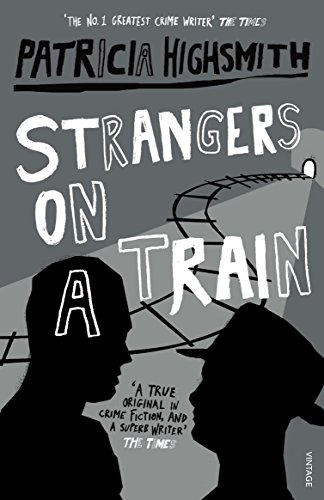
Strangers on a Train by Patricia Highsmith

Patricia Highsmith’s 1950 novel Strangers on a Train begins, as you might expect, with two strangers meeting on a train. One is Guy Haines, an aspiring architect who is on his way home to Metcalf, Texas to see his wife, Miriam, from whom he’s been separated for the last three years. Guy is hoping to secure a divorce from Miriam so that he can start a new life with Anne, the woman he loves. Although Miriam has so far been reluctant to agree to a divorce, she is now pregnant with another man’s child and Guy is optimistic that this will be a chance for both of them to move on.

The other stranger is Charles Bruno, a young man from a wealthy Long Island family. After falling into conversation on the train, Bruno invites Guy to come and eat with him in his private dining compartment. Guy doesn’t particularly like his new companion, but soon finds himself telling Bruno about his troubles with Miriam. In turn, Bruno confesses that he hates his father – and then makes a shocking suggestion. If Bruno were to kill Miriam on Guy’s behalf, there would be nothing to link him to the crime. Guy could then kill Bruno’s father and again there would be no motive and no connection. Two perfect murders! Horrified, Guy refuses to have anything to do with the plan and when the train reaches his destination he leaves Bruno behind, hoping he’ll never see him again. However, when Miriam is later found dead, Guy quickly begins to suspect the truth. Has Bruno gone ahead with the plan – and is he waiting for Guy to uphold his side of the bargain?

This is the first book I’ve read by Patricia Highsmith; I thought it would be a good idea to start with one of her most famous novels and this one proved to be a great choice. It reminded me very much of In a Lonely Place by Dorothy B. Hughes, another classic psychological thriller I read recently. Although I didn’t love this one quite as much, I did still enjoy it very much and found it a real page-turner, despite the fact that Highsmith often slows down the pace to concentrate on exploring the thought processes of Bruno and Guy as they each try to deal with the situation in their own way.

The novel is written from the perspectives of both men and although they are both interesting characters, Highsmith doesn’t make it easy for us to like either of them, particular the spoiled, immature and constantly drunk Bruno. We can have some sympathy for Guy at first, as he tries to resist getting involved in Bruno’s schemes, but he has his resolve gradually worn away as he comes under more and more pressure to carry out the murder and in turn becomes less likeable as the story progresses. The secondary characters are less well drawn – Anne and Miriam never fully come to life and we don’t get to know the other potential murder victim, Bruno’s father, at all, which lessens the emotional impact of the book. From a psychological point of view, however, I found this a fascinating novel.

If you’ve read any other Patricia Highsmith books, please tell me which one you think I should read next!

This is book 11/20 of my 20 Books of Summer 2023

It’s also book 41/50 from my second Classics Club list.

The Legend of Sleepy Hollow by Washington Irving

I’ve never read anything by Washington Irving but The Legend of Sleepy Hollow appears in an anthology of classic ghost stories I bought for my Kindle a few years ago and Halloween seemed like the perfect time of year to read it. I thought I already knew the story from the 1999 Tim Burton film but of course it turns out that it’s only very loosely based on Irving’s original work, which is often the case with adaptations. It’s also not very scary, so if horror stories make you nervous, don’t worry – this one isn’t likely to give you nightmares!

Irving begins by describing the valley of Sleepy Hollow, an old Dutch settlement in New York State steeped in legend and superstition.

A drowsy, dreamy influence seems to hang over the land, and to pervade the very atmosphere…Certain it is, the place still continues under the sway of some witching power, that holds a spell over the minds of the good people, causing them to walk in a continual reverie. They are given to all kinds of marvellous beliefs, are subject to trances and visions, and frequently see strange sights, and hear music and voices in the air.

The most famous of Sleepy Hollow’s legends involves a ghost known as the Headless Horseman, said to be a Hessian soldier who lost his head in battle and goes on a nightly ride through the Hollow in search of his missing head. When Ichabod Crane, an outsider from Connecticut arrives in the valley to take up the position of schoolmaster, he is fascinated by this story. A believer in witchcraft, Ichabod is naturally superstitious and enjoys listening to the tales of local ghosts and goblins.

Soon Ichabod sets his sights on the beautiful Katrina Van Tassel, daughter and only heir of a wealthy farmer. However, he faces stiff competition for Katrina’s hand in marriage in the form of Brom Bones, a ‘burly, roaring, roystering blade…the hero of the country round’. After being rejected by Katrina during a party at the Van Tassels’ home one night, the disappointed Ichabod rides off alone into the night – only to find that he is being pursued by a mysterious figure on horseback…

There’s not much more I can say about this story without spoiling it. It’s a short one, so if you want to read it for yourself it shouldn’t take up too much of your time. Published in 1820, it’s easy to read and to follow and although Irving’s descriptive writing provides a lot of Gothic atmosphere, it’s a fun and entertaining ghost story rather than a terrifying one. It also has a wonderfully ambiguous ending!

I’ll have to read more of Washington Irving’s stories at some point. The only other one I’m familiar with is Rip Van Winkle, but obviously he has written a lot more than that!

This is my seventh and final read for R.I.P. XVII