Review: The Professor’s House by Willa Cather

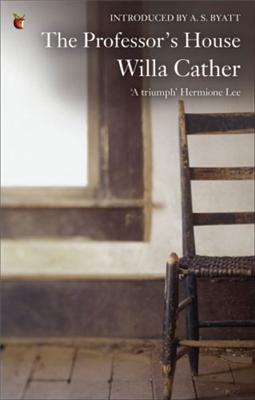
Willa Cather is an author I’ve heard a lot about but whose work I’ve never read until now.  I should probably have started with her most famous book, My Antonia, but something drew me to this one, The Professor’s House.

The Professor of the title is Godfrey St Peter, a man in his fifties, around the same age as Willa Cather was when she wrote this novel. At the beginning of the book, St Peter and his wife are preparing to move into their new home.  At the last minute the Professor decides that he doesn’t want to give up his old house just yet, so that he can continue to work in his old study and spend some time alone with his memories.

Most of the book revolves around St Peter reminiscing about his family and friends and coming to terms with the idea of leaving the past behind and embracing modern life.  At the forefront of the Professor’s thoughts is his former student Tom Outland, who had once been engaged to his daughter Rosamond. On his death in the First World War, Outland left everything he had to Rosamond – and this inheritance is causing trouble for the St Peter family.

If you prefer books with a gripping plot and lots of action you’ll want to avoid this one, as it was one of the slowest moving books I’ve ever read. I have to admit there were a few times during the first few chapters that I came close to abandoning it, but I kept reading because it was so well written. I would describe this as a calm, quiet, reflective book; one with such powerful, eloquent writing and beautiful imagery that it doesn’t really matter that not much actually happens.

The book is divided into three sections; the first and third are essentially character studies of the Professor and his family, particular his two daughters Rosamond and Kathleen and their husbands. The middle section is very different in both style and subject, as it tells in a flashback the story of Tom Outland’s life in New Mexico before he met the St Peter family. This story-within-a-story was fascinating but did feel slightly out of place, almost as if it had just been dropped at random into the middle of an entirely different book.

One of the things that stood out about Cather’s writing for me was the use of colour in her descriptions.

The grey sage-brush and the blue-grey rock around me were already in shadow, but high above me the canyon walls were dyed flame-coloured with the sunset, and the Cliff City lay in a gold haze against its dark cavern. In a few minutes, it too was grey and only the rim-rock at the top held the red light. When that was gone, I could still see the copper glow in the piñons along the edge of the top ledges. The arc of sky over the canyon was silvery blue, with its pale yellow moon, and presently stars shivered into it, like crystals dropped into perfectly clear water.

The Professor’s House is possibly a book I would appreciate more if I read it again when I’m older, as I found it difficult to identify with a fifty-two year old man looking back on his life. This was my first experience of Willa Cather and although I don’t think she’s going to be a favourite author, I will probably read more of her work at some point in the future.

Summer Reading Challenge: Second Hand Heart by Catherine Ryan Hyde

Vida is a nineteen year-old girl who suffers from a heart condition. She’s in hospital waiting for a transplant – time is running out, but before Vida can get a new heart, a potential donor needs to die. That donor turns out to be car crash victim Lorrie Buckner Bailey. When Lorrie’s grieving husband, Richard, decides to visit the girl who received his wife’s heart, Vida falls in love with him. But is it really Vida herself who loves Richard – or is it Lorrie’s heart?

I really enjoyed this book. It could easily have been a slushy, sentimental romance, but it manages to avoid that. Instead, it’s a fascinating and moving story which raises an interesting question: does cellular memory (where a transplanted organ retains the memories and characteristics of its previous owner) really exist?

The story is told in the first person, alternating between Vida and Richard. Vida’s section is in the form of a journal and she has a very intimate and conversational style, making her an engaging character. Through her journal entries we learn what it’s like to have spent your whole life preparing for death and the emotions that a person goes through on discovering that they now have a chance to live after all. After meeting Vida, Richard also begins to keep a journal and his story unfolds both through his diary entries and through his email correspondence with Vida and his mother-in-law Myra. I enjoyed watching the characters develop over the course of the book as Vida learns how to enjoy life for the first time and Richard learns how to move on with his own life following Lorrie’s death.

Although Vida and Richard are the characters we get to know best, I found the minor characters equally interesting – particularly Abigail, Vida’s worried, over-protective mother, and Esther, her elderly neighbour who survived life in a concentration camp during World War II.

The style of writing used in this book, with very simplistic or incomplete sentences, would usually irritate me – and it did at times – but it was actually perfectly suited to the story and helped give the impression that Vida and Richard were talking directly to the reader via their diaries. The writing style, together with the very short chapters, makes this a quick and easy read, despite it being quite a long book. There are some detailed descriptions of heart surgery but nothing too gory for those of you who are squeamish (Catherine Ryan Hyde says in her author’s note that she was given the rare opportunity to actually observe a heart operation whilst researching this book). Whether or not you believe in the theory of cellular memory Second Hand Heart is an interesting and thought provoking story.

I received a review copy of this book from Transworld Publishers as part of their Summer Reading Challenge.
Review: Whistling in the Dark by Tamara Allen

Whistling in the Dark is a heartwarming and poignant historical romance set in New York in the aftermath of World War I. It’s the story of two men, both damaged by the war in different ways, who are drawn together first by fate, then by friendship and finally by love.

Sutton Albright, son of a rich Kansas businessman, has just been expelled from college and, too ashamed to face his parents, travels to New York to look for work. Here he meets Jack Bailey, who is desperately trying to keep his late parents’ struggling novelty shop afloat. Jack has come up with the idea of advertising on the radio (which is still a very new invention) and is looking for someone to provide the music for his broadcasts. Well, guess who just happens to be a talented classical pianist?

This is a very well written book and Tamara Allen does a fantastic job of portraying New York City in the early 20th century. I had no problem at all in forming a mental picture of Bailey’s Emporium, Ida’s restaurant, Jack’s apartment and the other locations we visit. It was interesting to read about the early days of radio broadcasting, the emerging jazz scene, prohibition and all the little period details that the story touches upon. In Jack and Sutton – very different people in terms of both background and personality – she has also created two characters that I really liked and cared about.

The book was just the right length to allow the author to take her time developing the characters and building up the different layers of the plot, without the story dragging at all. Recommended.

Genre: Gay Historical Romance/Pages: 340/Publisher: Lethe Press/Year: 2009/Source: Won from LibraryThing Member Giveaways

Review: Lean on Pete by Willy Vlautin

I received a review copy of this book from LibraryThing Early Reviewers. Willy Vlautin is the lead singer and songwriter with the band Richmond Fontaine and Lean on Pete is his third novel. I’ve seen a lot of other reviewers comparing him to John Steinbeck, though I haven’t read enough of Steinbeck’s work to know whether that’s an accurate comparison.

Charley Thompson is a lonely fifteen year-old boy who lives with his irresponsible single father. The book begins with their arrival in Portland, Oregon, where Charley’s father has been offered a new job in a warehouse. Charley is desperate to get a job of his own so that he can earn enough money to put food on the table but the only work he can find is at the Portland Meadows race track with a disreputable horse trainer called Del. Portland Meadows has seen better days and is now home to hundreds of old, tired horses and second-rate jockeys who can’t get work anywhere else. It is here that Charley meets Lean On Pete, the racehorse who becomes his only friend and companion.

Willy Vlautin uses very simple prose with no flowery descriptions and no big words. As the story is told in the first person from the point of view of fifteen year-old Charley, this writing style is very effective – he uses the kind of language that Charley would realistically use. Despite his miserable home life, Charley comes across as quite a sensible, likeable person, and I really wanted to see him survive and be happy. I did get a bit bored with constantly being told exactly what he had to eat for every meal (usually cheeseburgers, if you’re interested), though I suppose for a teenage boy fending for himself with no money, it was probably quite important!

Almost all of the other characters we meet are drug addicts, alcoholics, or living in poverty, painting a portrait of a side of society we don’t often read about. Most of these people show Charley some kindness, but aren’t really in a position to be able to help him – Charley and Pete are completely alone in the world and there’s a constant atmosphere of sadness and loneliness that hangs over the entire book.

Lean on Pete was a big step away from the type of book I usually read, but I didn’t regret the couple of days it took me to read it.

Genre: General Fiction/Pages: 288/Publisher: Faber & Faber/Year: 2010/Source: Received from LibraryThing Early Reviewers

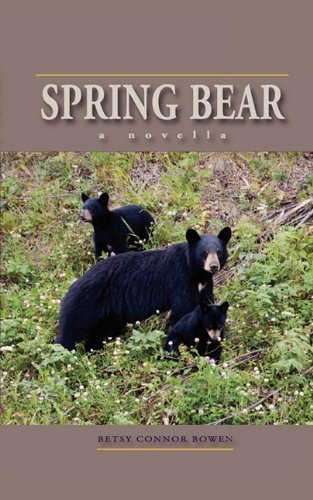
Review: Spring Bear by Betsy Connor Bowen

I received this novella from the First Reads program at Goodreads. Spring Bear is the story of a girl called Evvie Mallow who lives in the small town of Soper’s Mills, Maine. Evvie’s father suffered bad head injuries in an accident which left him unable to speak or take care of himself, and her mother has become involved with another man – Lester Darrow, a surly, aggressive man who traps bears in the woods.

Evvie dreams of going to California and escaping from the poverty and misery of her home, but when she discovers that she’s pregnant it seems that her chance of a better life has disappeared.

This self-published book is Betsy Connor Bowen’s debut novel. She has achieved what she set out to do, which is to successfully convey the atmosphere of a small town in Maine. I’ve never been to Maine, and the way of life described in the book was very different from my own – in some ways, a simpler way of life but not without its own set of problems and challenges.

Although I could sympathise with Evvie’s sad, lonely existence, I didn’t really feel any connection to any of the other characters – I would have liked to have been able to get to know them in more depth. Maybe if it had been a longer novel, there would have been more opportunity for character development, but for a quick, short read this book was quite enjoyable.

Genre: General Fiction/Pages: 96/Publisher: Lonefeather Productions/Year: 2009/Source: Won from Goodreads

Review: An Echo in the Bone by Diana Gabaldon

An Echo in the Bone is the 7th book in Diana Gabaldon’s Outlander series (or Cross Stitch as it’s known here in the UK) and takes place during the American Revolution. I’ve been following the adventures of Jamie Fraser and his time-travelling wife Claire for more than 10 years now and although this book won’t be published in the UK until 2010, I ordered it from the US Amazon site as I couldn’t wait to read it.

This review may contain spoilers if you haven’t read the previous 6 books in the series

If you haven’t read (or like me, have read but didn’t enjoy) the spin-off Lord John series, you might struggle with certain sections of this book. I would recommend reading Lord John and the Brotherhood of the Blade before beginning, as a number of characters from that book feature quite prominently in Echo. In fact, there are so many chapters (mainly in the first half of the book) devoted to Lord John, William Ransom, Percy Wainwright, Hal and Dottie, that at times this felt more like a Lord John book than an Outlander one. I do like both Lord John and William as characters though, and towards the end of the book their storylines begin to tie together with Jamie and Claire’s.

According to Diana Gabaldon, the image on the book cover is a caltrop – a weapon with four spikes each ending in a sharp point. The caltrop represents the four main storylines running simultaneously throughout the book: Jamie and Claire visiting Scotland to collect Jamie’s printing press, following the fire that destroyed their home at Fraser’s Ridge; the adventures of Jamie’s son, William, a Lieutenant in the British army; Young Ian trying to come to terms with the break-up of his marriage to Emily whilst being pursued by a vengeful old man, and Roger and Brianna following Claire and Jamie’s fate via a box of old letters.

Due to all the storylines which were taking place, the story was told from many different viewpoints – Claire, Jamie, Roger, Brianna, Young Ian, William, Lord John, Rachel Hunter (a Quaker girl who falls in love with Ian) and even one or two pages from Fergus and Jemmy’s points of view. This technique gave the book a slightly different feel to the rest of the series, though I personally preferred the style of the earlier books which were told mostly by Claire.

I know this review has so far sounded a bit negative, but there were plenty of things I loved about the book. The story was filled with bizarre coincidences and almost-forgotten characters from previous books reappearing when you least expected them, and although you had to suspend belief at times, I enjoyed this aspect of the book.

I also enjoyed the Roger and Brianna sections, as they began to read Jamie and Claire’s letters one by one in the relative safety of 20th century Lallybroch. Later in the book, though, Roger and Brianna’s story takes a more sinister turn, and they discover that they’re not quite as safe as they thought they were!

I had been looking forward to Jamie, Claire and Young Ian returning to Scotland again and being reunited with Jenny and Ian Murray – however, this didn’t happen until near the end of the book, and when they finally did get to Lallybroch, it certainly wasn’t the happy reunion I was expecting! From this point onwards, the plot suddenly started moving at a whirlwind pace. Apparently this was intentional (this section was even entitled “Reap the Whirlwind”). I think I’ll probably need to read the book again to be able to fully understand everything that was happening.

We were left with a lot of loose ends and cliffhangers, which wouldn’t be a problem if we weren’t going to have to wait another 3 or 4 years for the next book! Still, Diana Gabaldon has given us plenty to think about, as there are now an infinite number of ways in which the various storylines could progress. Although this was not my favourite in the Outlander series, I still enjoyed it and am already looking forward to Book 8!

Recommended

Genre: Historical Fiction/Pages: 820/Year: 2009/Publisher: Delacorte Press/Source: My own copy bought new