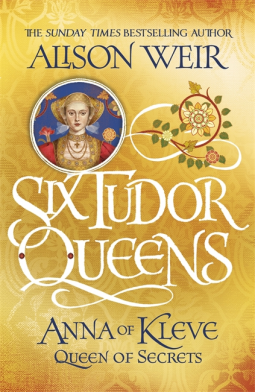
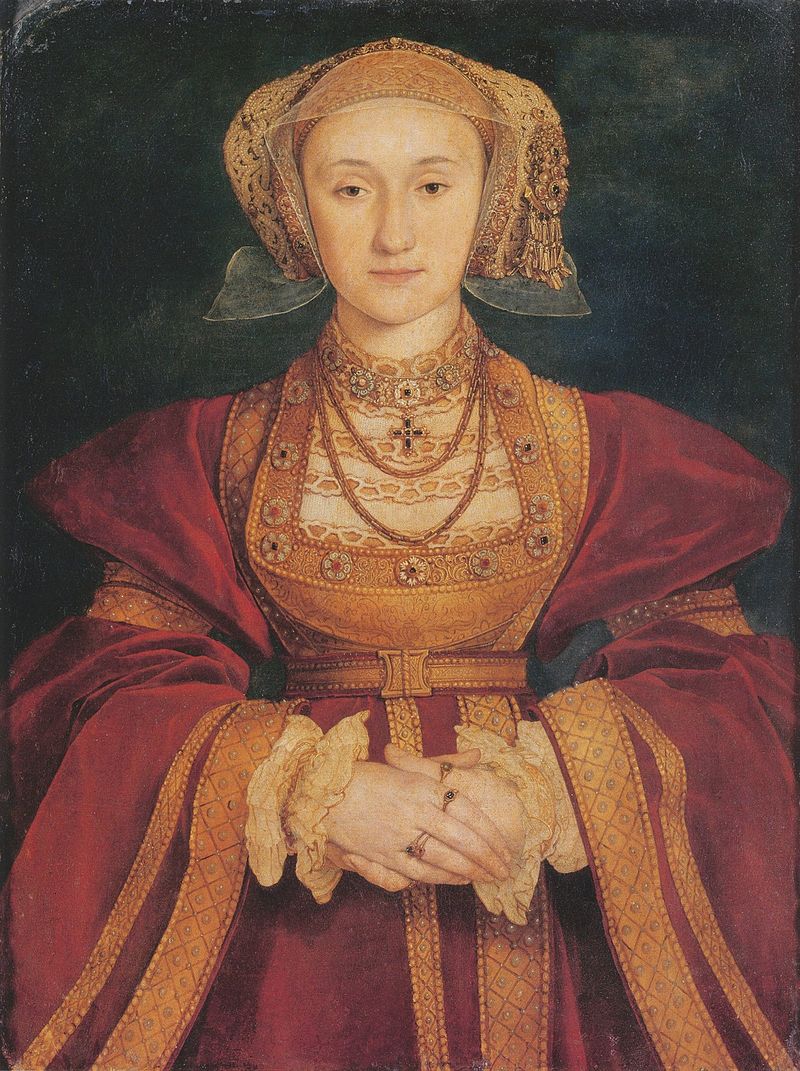
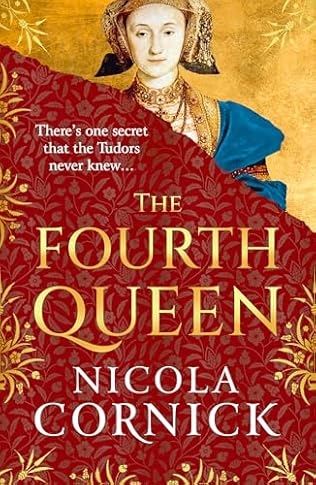
 The title of Nicola Cornick’s latest novel, The Fourth Queen, refers, as you may have guessed, to the fourth wife of Henry VIII – Anne of Cleves. However, although she does feature in the book, this is really the story of a fictional character, Marris North, the former prioress of Winterhill Priory, who loses her home and her position in 1539 due to the dissolution of the monasteries. When Marris falls in love with Sir William Sharington, the commissioner sent to oversee the closure of the priory, he finds new roles for Marris and her sisters at court in the household of the new Queen Anne (called Anna in the book). Sadly, Anna’s marriage is not a success and when she finds herself in trouble she approaches Marris for help in concealing a secret that could put them both in danger.
Like all the other Nicola Cornick novels I’ve read, this one also has a present day storyline and in this case it follows Jenna Bergin, a woman in her thirties who owns a bookshop in Wantage, not far from Winterhill Hall and the ruined priory. For as long as she can remember, Jenna has been able to remember a former life as Marris North, while her younger sister, Bree, also believes she is the reincarnation of Marris’s sister, Bridget. When Jenna learns that an archaeological dig is taking place at Winterhill, she becomes concerned that Anna’s secret is going to be uncovered after all these years – and she decides that she’ll do whatever it takes to stop that from happening.
I liked the portrayal of Anne of Cleves in this book; of all Henry VIII’s wives, she’s the one who tends to get the least attention, which is understandable as their marriage only lasted a few months before being annulled and was less dramatic than some of the others. She’s shown here as a kind-hearted, loyal, sensible woman who can also be naïve and unworldly at times. Her big secret is something that was rumoured at the time but there’s no evidence that it actually happened; if true, it could have changed history so it’s an interesting idea to explore in a novel. I also liked Marris but found her less convincing as a character as she seemed to adapt far too quickly to the loss of the priory and no longer being a nun. In case you’re wondering, Winterhill Priory never existed but is based on Lacock Abbey in Wiltshire, which really was dissolved in 1539 and bought by Sir William Sharington.
In the modern day, Jenna shares a lot of Marris’s character traits and her relationship with Bree mirrors the one between Marris and Bridget. I haven’t mentioned yet that there’s a third sister: Molly, or Rose as she was in her former life. Although Molly is aware of her reincarnation, she doesn’t embrace it the way her sisters do and when you see how her story plays out, both as her present and past self, it’s easy to understand why. There are one or two other characters who also existed in both timelines, but I won’t give any more details as I don’t want to spoil too much (although you’ll probably guess one of them almost as soon as they appear). If you’re someone who doesn’t believe in reincarnation, you’ll need to just suspend your disbelief here and not ask too many questions!
This isn’t one of my favourite Nicola Cornick books, but when you’ve read a lot of an author’s books (this is my eighth) it’s inevitable that you’ll like some more than others. I did enjoy it, particularly the historical sections, and will be looking out for her next one.
Thanks to Boldwood Books for providing a copy of this book for review via NetGalley.