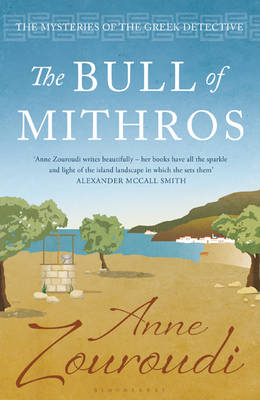
 This is the third in Anne Zouroudi’s ‘Mysteries of the Greek Detective’ series following the investigations of Hermes Diaktoros, also known as ‘the fat man’. This appears to be a series that can be read in any order – I read the sixth book, The Bull of Mithros, first and then this one and haven’t had any problems; each novel is a complete story in itself. What the books do have in common is the character of the fat man, a theme based on one of the seven deadly sins and a beautiful Greek setting.
The Doctor of Thessaly is set in Morfi, a village on one of the Greek islands. The story begins with the discovery that the village doctor, Louis Chabrol, has been blinded in an attack that took place the night before his marriage to Chrissa Kaligi, the younger of two middle-aged sisters. This crime couldn’t have happened at a worse time, as the people of Morfi and their ambitious new mayor are preparing for a visit from a government minister.
Luckily, our hero, the enigmatic Hermes Diaktoros of Athens, has just arrived in Morfi and when he learns of the attack he begins to investigate. As he moves around the village speaking to witnesses, listening to gossip and collecting evidence he starts to build up a clearer picture of what has happened – and when he eventually discovers who is responsible for the crime, he dispenses his own form of justice.
I thought this was a better book than The Bull of Mithros, though I did like them both. I loved the atmospheric setting of Morfi, a quiet Greek village untouched by tourism or modern technology (it’s not clear when these books are supposed to be set, which I’m sure is intentional – it could be any time in the second half of the 20th century) and I enjoyed meeting the people who live there. I mentioned that each of the books in this series is based around one of the seven deadly sins. This one has a theme of ‘envy’ which is very appropriate as there are many people in Morfi who could be accused of this sin, from Chrissa’s bitter and resentful sister, Noula, to the group of four jealous, spiteful men who are determined to spoil things for the new mayor.
The fat man continues to be a mysterious, elusive character. Is it a coincidence that he has the name of a Greek god? Who are the higher authorities he claims to represent? And why is he so obsessed with keeping his white tennis shoes clean? These things were as much a mystery when I read the sixth book as they were reading this third book, so unless the truth about his identity and background are going to be revealed at the end of the series it seems that we are going to be left to make up our own minds about Hermes Diaktoros. I do like him though; not only is he concerned with making criminals pay for what they have done, he also wants to help the people he meets along the way and leave the village behind in a better, happier state than when he arrived.
I will continue to read the other books in the series, though I think they are the type of books that would start to feel repetitive if read too close together so I’ll probably wait a while before starting another one!
 She Reads Novels