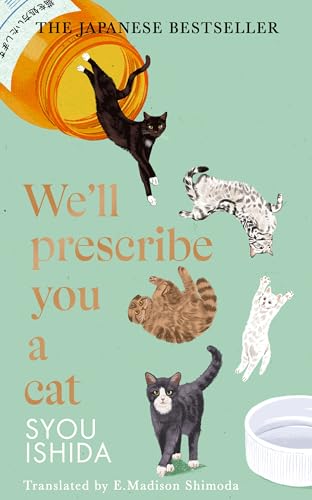
We’ll Prescribe You a Cat by Syou Ishida – #ReadingtheMeow2025

Translated by E. Madison Shimoda

Until now I seem to have avoided the current trend for Japanese novels with cute cat pictures on the cover. It wasn’t a deliberate decision to avoid them – that sort of book just doesn’t usually appeal to me. When I was looking for ideas for cat-related books to read for this year’s Reading the Meow, though, I thought this one sounded intriguing.

We’ll Prescribe You a Cat begins with Shuta Kagawa visiting the Nakagyō Kokoro Clinic for the Soul in Kyoto. Shuta’s unhappiness at work is causing him to suffer from stress and insomnia and he has decided to consult a psychiatrist. However, he quickly discovers that this is no ordinary clinic – first, it proves extremely difficult to find, hidden away down a narrow alleyway; then, instead of prescribing medication, Dr Nikké says something completely unexpected: “We’ll prescribe you a cat”. And with that, Shuta becomes the temporary owner of Bee, an eight-year-old female mixed breed – but will he manage to complete the course of ‘medication’ without any side effects and what will happen when it’s time to give the cat back?

Shuta’s story is the first of five that make up this novel, each one following a similar format with a character entering the Kokoro Clinic and, regardless of their symptoms, being prescribed a cat. The cat is a different one each time, each with his or her own personality and characteristics. Sometimes the cat is compatible with the client; sometimes it seems to cause more trouble and disruption, but in each case, when the prescription comes to an end, the person finds that their life will never be the same again.

Animal-assisted therapy is a legitimate form of therapy used by charities and mental health groups to treat a range of issues, allowing people to spend time with animals in a controlled environment. That’s what I had assumed this book would be about, so I was surprised to see Dr Nikké and his nurse, Chitose, simply handing the clients a cat in a carrier with some food and written instructions – no checks done to make sure the person had a suitable home for the cat, no questions asked about allergies or the needs of other family members. Then, at the end of the week or two week period, the cat is going to be handed back to the clinic and passed on to the next person. It seemed cruel and irresponsible. However, I quickly discovered that the book has a fantasy element – which grows stronger and more bizarre as it progresses – and I was probably taking things too seriously!
You may be wondering what the fantasy element is. Well, to begin with, the clinic itself is very unusual – sometimes it can be found and sometimes it can’t, depending on the person looking for it and how desperately they need to find it. There’s also something strange about Dr Nikké and Chitose, but I’m not going to say any more about that except that each of the five stories adds a little bit to our understanding of what is going on. Still, when I finished the book I felt that a lot of things were left unexplained or only partly answered. There’s a sequel, We’ll Prescribe You Another Cat, which will be available in English in September, but I’m not sure whether it will provide any more clarity or if it’s just another collection of similar stories. I don’t think I liked this one enough to want to read the sequel, but I did find it interesting and I enjoyed taking part in this year’s Reading the Meow with this book and Paul Gallico’s Jennie!
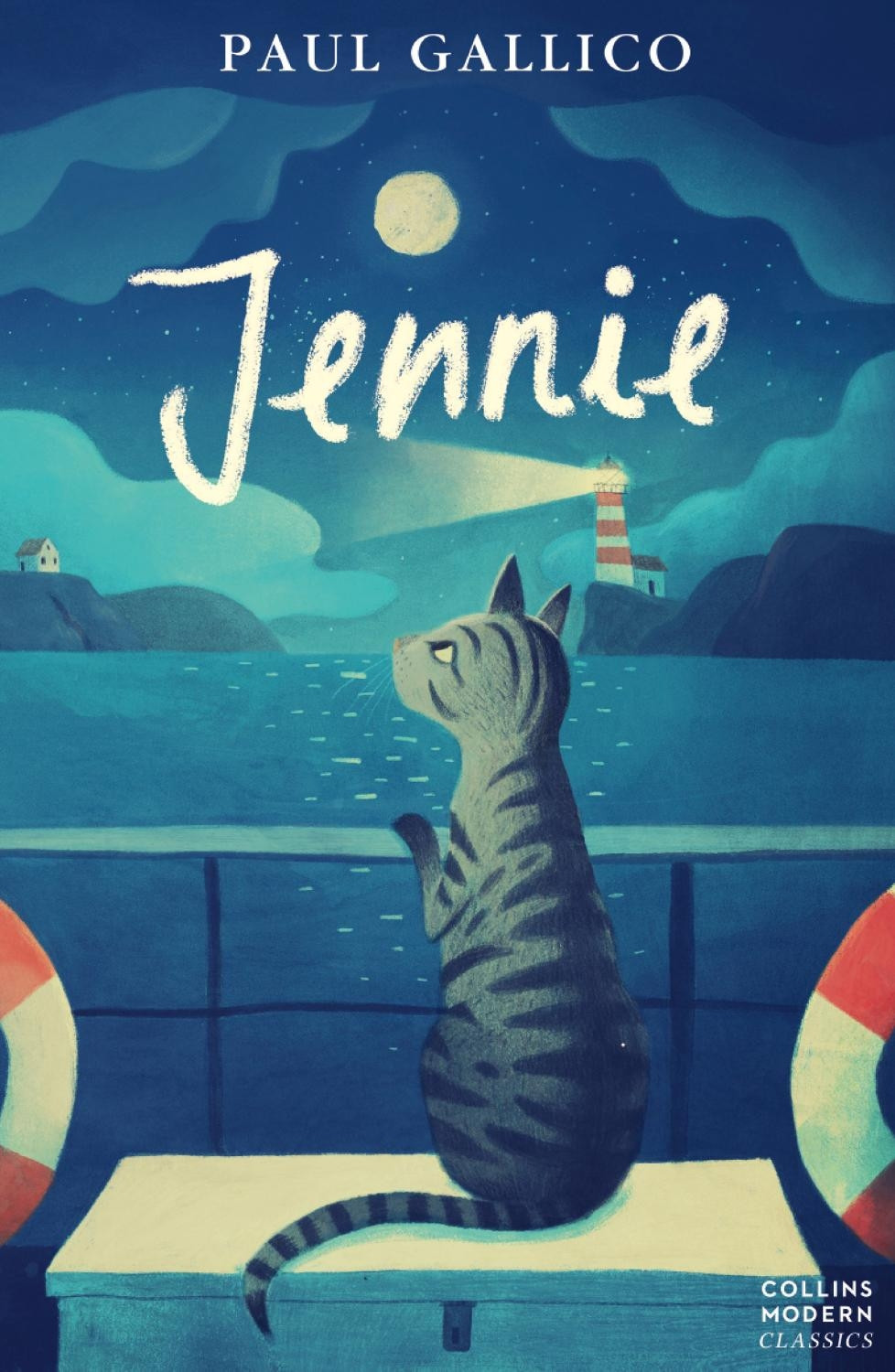

Jennie by Paul Gallico – #ReadingtheMeow2025

This week Mallika of Literary Potpourri is hosting her third annual Reading the Meow event – a celebration of cats in literature. Last year I read and loved Paul Gallico’s Thomasina, so reading one of his other cat books seemed like a good plan for this year’s event. Jennie was originally published in 1950 (and also appeared under the title of The Abandoned in the US) and like Thomasina, it’s a book aimed at children that can also be enjoyed by readers of all ages.

Peter Smith is a lonely eight-year-old boy whose father, an Army officer, is often away from home and whose mother is too busy going out with her friends to have any time for her son. Peter has always wanted a cat of his own to provide the companionship he longs for but isn’t allowed one as his nanny is afraid of them. Everything changes for Peter when he is knocked down and injured running across the road after a striped kitten. When he awakens, he finds that he has been transformed into a white cat – and is immediately thrown out of the house by Nanny.

Alone on the streets of London with the body of a cat and the mind of a boy, he encounters an aggressive yellow tomcat, Dempsey, who decides to defend his territory and leaves Peter unconscious. He is rescued by Jennie, a small kind-hearted tabby who believes Peter’s story and offers to teach him how to behave like a real cat. And so Peter finds himself having lessons on washing, lapping milk, catching mice and the important of pausing in doorways to survey his surroundings! Meanwhile, Jennie tells him her own story of how she was left behind when her owners moved away and began to live the life of a stray. She convinces him to travel to Glasgow with her – because she was born there – and this is the start of many adventures the two have together.

I’m so disappointed that I didn’t read this book as a child as I’m sure I would have loved it. I did still enjoy it as an adult but I don’t think it had the same emotional impact on me that it would have had if I’d been in the target age group. It’s a lovely story and Peter and Jennie are both very likeable, but I felt that this book didn’t have the depth and layers that Thomasina had. Having said that, there were still some moments where I felt a tear in my eye, particularly towards the end!

I loved the relationship between Peter and Jennie and the way they help each other to learn and grow. Peter is completely unprepared for life as a cat and relies on Jennie to teach him even the most basic things, but at the same time, his knowledge of how people behave and think and his ability to read and understand human speech proves very useful to Jennie. Like all good friends, Jennie and Peter have their disagreements – such as whether to accept a kind old man’s offer of a home – and on another occasion, Peter has his head turned by a pretty Siamese called Lulu, but I was sure their friendship would be strong enough to survive! The book was a little bit predictable and I guessed what would happen at the end, but maybe a younger reader wouldn’t.

This was a good choice for Reading the Meow – and also my first book for this year’s 20 Books of Summer! I’m now reading another cat-themed book which I hope to have time to review before the end of the week.

Book 1/20 for 20 Books of Summer 2025.

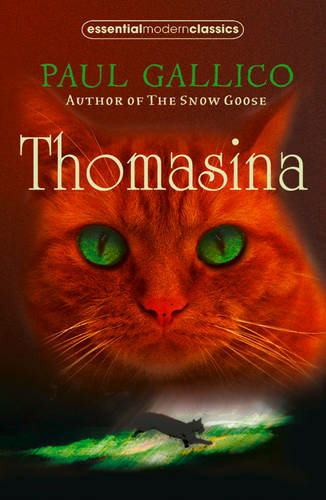
Thomasina by Paul Gallico – #ReadingtheMeow2024

When I saw that Mallika of Literary Potpourri was hosting her second Reading the Meow event this week – a celebration of cats in books – I knew exactly what I wanted to read. The Disney film The Three Lives of Thomasina was a favourite of mine as a child, but it never occurred to me to read the book on which it was based until I noticed that Lory of Entering the Enchanted Castle had read it for last year’s Reading the Meow so onto the list it went!

Published in 1957, Paul Gallico’s Thomasina is set in the fictional Scottish town of Inveranoch. Having lost his wife a few years earlier, veterinarian Andrew MacDhui has moved to the town from Glasgow and opened a surgery there, where he treats the pets of the townspeople, as well as looking after the health of the livestock on the surrounding farms. When the novel begins, MacDhui has only been living in Inveranoch for eighteen months and has already gained a reputation as a cold, bitter man who is good at his job but not mentally suited for it:

The gossips allowed that Andrew MacDhui was an honest, forthright and fair-dealing man, but, and this was the opinion of the strictly religiously inclined, a queer one to be dealing with God’s dumb creatures, since he appeared to have no love for animals, very little for man, and neither the inclination nor the time for God.

Since his wife’s death it seems that MacDhui has given what little love he still possesses to his seven-year-old daughter, Mary Ruadh, who is devoted to her ginger cat, Thomasina. When Thomasina becomes ill with a suspected meningeal infection, Mary takes her next door to her father’s surgery and begs him to save her pet’s life. Not pleased at being interrupted at his work and distracted by a difficult operation on a blind man’s dog, MacDhui tells her that Thomasina can’t be cured and orders his assistant to put the cat to sleep. Heartbroken, Mary vows never to speak to her father again and seems to really mean what she says. As the days go by and Mary’s silence continues, a desperate MacDhui pays a visit to Lori, a young woman who lives alone in the forest and is said to be a witch. Can Lori help repair the relationship between father and daughter or has too much damage been done?

Although I was already familiar with the plot, I found that this novel had far more depth than the Disney version and also a stronger religious element. There’s a lot of focus on MacDhui’s internal struggles as he tries to confront the loss of faith that has been with him since his wife died and on the efforts of Lori and the minister, Angus Peddie, to restore his belief in God and the power of love. Lori, a gentle, compassionate woman who tries to heal injured wild animals that others see as worthless, is a lovely character and reminded me a lot of Froniga in The White Witch by Elizabeth Goudge. However, I didn’t find the book overly sentimental because it’s balanced by the darker themes of loss and grief, as well as animal cruelty and its consequences for those who perpetrate it.

I’m sure younger readers will enjoy the chapters written from Thomasina’s own perspective, where she gives amusing descriptions of life in the MacDhui household, but I never really felt that I was reading a ‘children’s book’ and I think there’s enough here for readers of all ages to enjoy. Finally, without wanting to spoil too much, if you think Thomasina’s fate sounds too sad, I can assure you that her story is a happier one than you might expect.

This is book 3/20 of my 20 Books of Summer 2024.

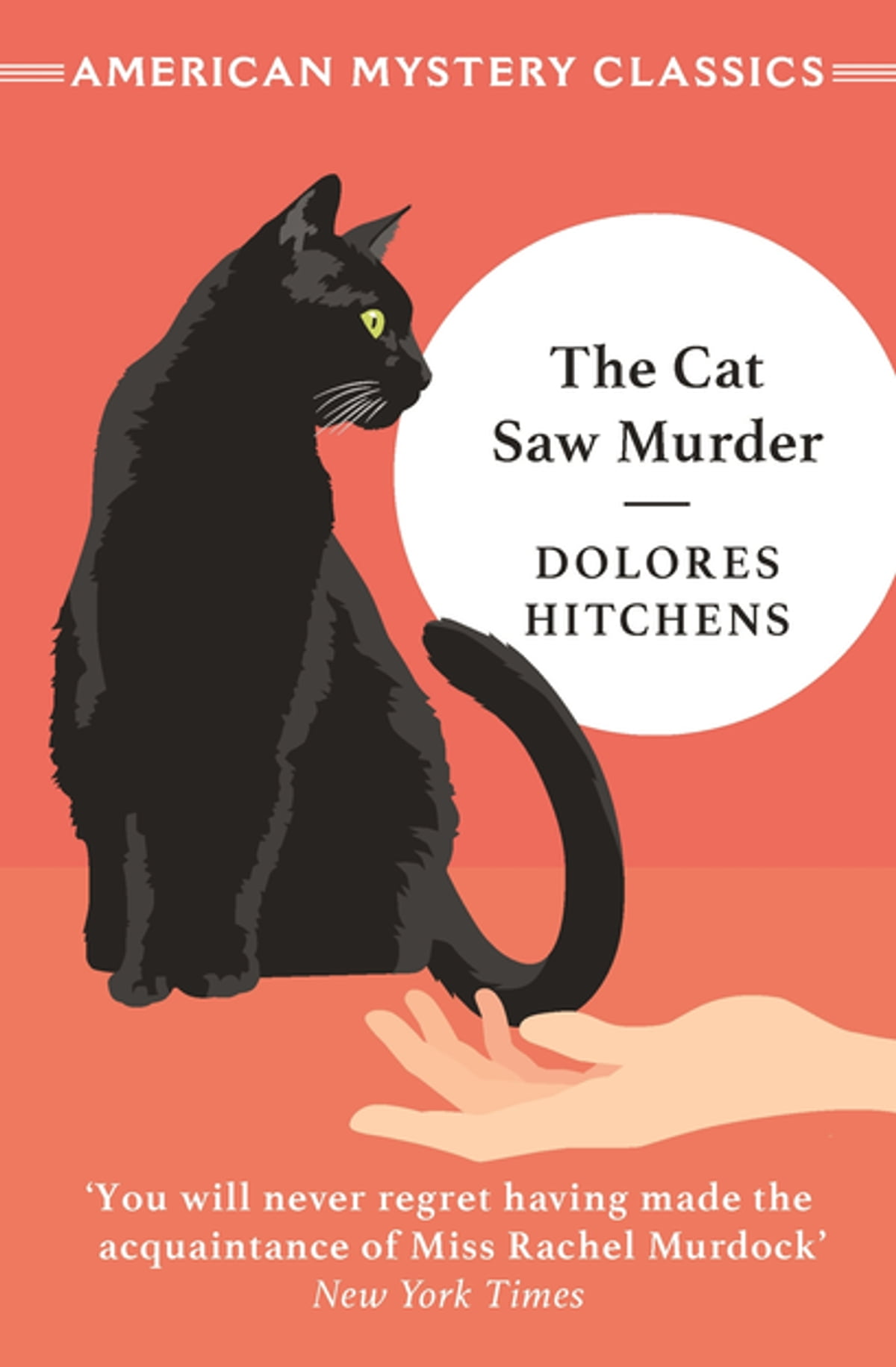
The Cat Saw Murder by Dolores Hitchens

This week, Mallika of Literary Potpourri is hosting Reading the Meow, a celebration of books featuring cats. When this event was first announced, I wasn’t sure if I had anything suitable; The Life and Opinions of the Tomcat Murr by ETA Hoffmann would have been perfect, if I hadn’t just read it last year. Then I came across a whole series of books with cats in them (or in the titles, at least): Dolores Hitchens’ Rachel Murdock mysteries, some of which have now been reissued as part of the American Mystery Classics imprint. The Cat Saw Murder, originally published in 1939, is the first and I hoped it would be a good choice for Reading the Meow.

The novel begins with elderly Miss Rachel Murdock going to stay with her adopted niece, Lily Sticklemann, who lives at Breakers Beach near Los Angeles. Lily has hinted that she’s in trouble and needs advice, so Miss Rachel has packed her case and set off by train to see if she can help. Her less adventurous sister Jennifer has stayed behind, but Miss Rachel is accompanied by Samantha, the black cat who once belonged to their other sister, Agatha. Agatha was an eccentric woman and on her death she left her fortune to the cat, meaning that Samantha is now a wealthy heiress in her own right. After meeting Lily and discovering that she is having financial difficulties, Miss Rachel becomes concerned for Samantha’s safety, suspecting that Lily has her eye on the cat’s inheritance. However, Lily herself is the one who is murdered – and it seems that Samantha may have been a witness.

There are plenty of suspects – Lily lives in a boarding house, Surf House, and is murdered in her bedroom, which means all of the other residents of the building immediately come under suspicion. Several also have a motive for the crime, as Lily owes gambling debts to some of them and is thought to have been romantically involved with another. Although this is not a locked-room mystery exactly (we know that the bedroom door opens and closes more than once during the night of the murder), it does share many elements of that kind of mystery, but thankfully never becomes too concerned with the puzzle-solving aspects at the expense of the characters and motives.

Miss Rachel is a great character; I found her very endearing and quite similar to Agatha Christie’s Miss Marple in many ways, although she’s more agile and energetic for her age than Miss Marple is and spends a portion of the book searching rooms and crawling around in the attic. She has a good relationship with the detective investigating the murder, Lieutenant Mayhew, and they both contribute, in their different ways, to the solving of the mystery.

The plot feels slightly disjointed at times and there are some confusing shifts between past and present tense (the book seems to be narrated by someone at an unspecified future date looking back on Mayhew and Miss Rachel’s first case), but otherwise I really enjoyed this book and it did turn out to be a good choice for Reading the Meow. Samantha the cat, although not the main focus of the story, does have a substantial part to play and provides some intriguing clues. The second book in the series is The Alarm of the Black Cat and I think I’ll be tempted to read it soon!

This is book 1/20 of my 20 Books of Summer 2023

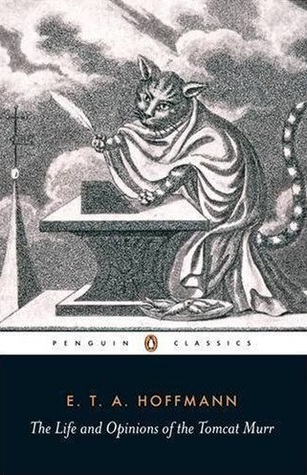
The Life and Opinions of the Tomcat Murr by ETA Hoffmann

Translated by Anthea Bell

Last year I read a book based on ETA Hoffmann’s The Nutcracker and although I wasn’t impressed, it left me longing to read something by Hoffmann himself. I wasn’t sure whether I really wanted to read The Nutcracker, so I decided to see whether one of his other books appealed to me more. That’s how I came across his 1819 novel, The Life and Opinions of the Tomcat Murr, which sounded absolutely fascinating!

This very unusual novel could almost be described as two books in one. First of all, it’s the autobiography of Murr, an exceptionally intelligent tomcat who lives with the magician and alchemist Master Abraham. As a kitten he secretly teaches himself to read and write and proceeds to educate himself from his master’s library. Having had a series of adventures, he decides it’s time to write his memoirs…but his pages accidentally become mixed up with pages from a very different book:

When Murr the cat was writing his Life and Opinions, he found a printed book in his master’s study, tore it up without more ado, and, thinking no ill, used its pages partly to rest his work on, partly as blotting paper. These pages were left in the manuscript – and were inadvertently printed too, as if they were part of it.

This other book turns out to be a biography of Kapellmeister (conductor) Johannes Kreisler, a musical genius and friend of Master Abraham’s. Kreisler’s story unfolds alongside Murr’s, with a few pages of one followed by a few pages of the other, often breaking off mid-sentence as the end of the page is reached. Murr’s sections are marked with ‘M. Cont’ while Kreisler’s are headed ‘W.P.’ (Waste Paper). However, despite the Kreisler biography being printed on ‘waste paper’ and seemingly finding its way into Murr’s book by chance, the two stories are linked by the character of Master Abraham and, towards the end, there are hints of a much stronger connection between the two.

I found Murr’s story great fun to read. He has a strong and unique narrative voice, being vain, precocious and over-confident, but still with the qualities of the cat he is and always will be – he has an instinctive wariness of dogs and is easily tempted by a bowl of milk. His memoirs are told in chronological order, describing his kittenhood, his self-education, his romance with a beautiful female cat and his uneasy but close friendship with Ponto the poodle, who is less well-read but wiser in the ways of the world.

Kreisler, by contrast, is a very different personality – quiet, nervous and melancholic. His story becomes very convoluted, being intertwined with the lives of German royalty as he finds himself at the fictitious court of Prince Irinaeus of Sieghartshof and is drawn to two young women, Princess Hedwiga and her friend Julia Benzon. I found this much less interesting to read than Murr’s story, although if I’d had more knowledge of early 19th century German society and its intricacies it’s possible that I would have appreciated it more. At times I struggled to stay engaged with the Kreisler sections of the book and found myself looking forward to rejoining Murr. I’ve read that Hoffmann apparently based Kreisler on himself and used him as a character in several of his other books – and again, maybe if I’d know more about Hoffmann himself this would have had more significance for me.

My Penguin Classics edition of the novel contains two volumes of The Tomcat Murr which were published between 1819-1821. Sadly, Hoffmann died in 1822 and a planned third volume was never completed. That’s not really a problem, because the second volume does have quite a satisfactory ending, but there are still a lot of loose ends that aren’t tied up and it’s slightly frustrating not knowing how the story would have concluded! If you’re interested in reading the book, I can recommend this particular edition – the translation by Anthea Bell is very readable and there’s an excellent introduction by Jeremy Adler (best read after finishing the book), as well as notes and suggestions for further reading.

Have you read this or anything else by Hoffmann? I would love to hear your thoughts!

This is book 34/50 from my second Classics Club list and also counts towards this year’s German Lit Month hosted by Lizzy’s Literary Life