 Cecelia Holland is an American historical novelist who has been writing since the 1960s and whose books cover a huge range of different time periods and geographical settings. To give an example of the variety of her work, I have previously read three of her novels and one was set in Borgia-ruled Rome, one in medieval England and one in 16th century Hungary! The Soul Thief, the first in a six-volume series published between 2002 and 2010, takes us back to Ireland in the 10th century, beginning on the eve of a Viking raid…
Corban Loosestrife has argued with his father and, having been threatened with banishment, has gone off to sleep outdoors in the hope that he will be forgiven the next day. However, when the sun rises in the morning and he heads back home, he finds the family farm burning to the ground, his parents’ dead bodies amongst the ruins and no sign at all of his twin sister, Mav. Making his way to the Viking settlement at Dubh Linn (Dublin), Corban learns that Mav may have been transported across the sea to Jorvik with the other healthy young women to be sold as slaves. Determined to do whatever is necessary to bring her home, Corban sets out on his sister’s trail – a trail that will take him first to Jorvik and then further afield to the Danish trading post of Hedeby.
I know from my earlier experience of Cecelia Holland’s novels that her ‘heroes’ are usually not particularly heroic – and in fact are often very unlikeable. Corban is easier to like than, for example, János Rákossy or Fulk, Earl of Stafford, but he is also another imperfect character. He makes mistakes, he lacks courage at times, and he is often easily distracted from his quest. There’s a lot of scope for character development, yet I felt that there was very little in this book; maybe as this is only the first of six novels we will see Corban grow and change as a person later in the series, although at this point I’m not sure whether I will be continuing. I enjoyed parts of Corban’s story, but this novel had neither the depth nor the level of emotional engagement I prefer and I don’t think I really liked it enough to want to commit to another five books.
I did find Mav’s story intriguing: after being captured during the Viking raid, she falls into the hands of the mysterious Lady of Hedeby, a sort of witch or sorceress who decides to use Mav’s psychic connection with her twin Corban for her own purposes. With this storyline, the novel begins to cross from straight historical fiction into the realms of historical fantasy – although the supernatural elements are really quite subtle and not fully explained (again, maybe this is developed further later in the series). Mav and the Lady interested me much more than Corban did and I would have preferred to have had more of the novel devoted to them.
My knowledge of this period of history is very limited, so I can’t really comment on the historical accuracy of anything that is described in the book. The focus is mainly on the fictional characters, but Corban does cross paths with some of the historical figures of the time, particularly in Jorvik (York), where he is drawn into the court of the Viking king, Eric Bloodaxe, and his wife, Gunnhild. Meanwhile, the Lady of Hedeby plots and schemes with another king, Harald Bluetooth (yes, the one Bluetooth technology is named after). I didn’t feel that I learned a lot about these historical men and women, although they have important roles in the plot, but as this is very much Corban’s story – the series is called The Life and Times of Corban Loosestrife – it’s understandable that he is given most of the attention.
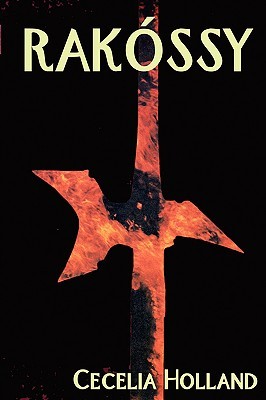
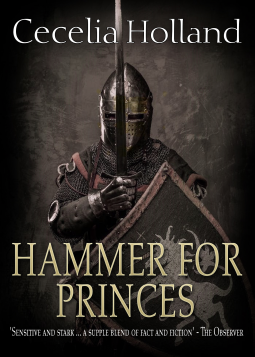
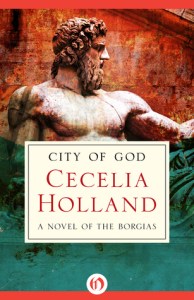
As I’ve said, I’m probably not going to read the second Corban book, but I will continue to read Cecelia Holland’s standalone novels. So far I have read Rákossy, Hammer for Princes and City of God, and am looking forward to reading more.
 Book 9/50 read for the Historical Fiction Reading Challenge.
 She Reads Novels