Nicholas Nickleby by Charles Dickens

Nicholas Nickleby was the book chosen for me to read in the Classics Club Spin back in October 2023. It has taken me until now to finish it, partly because it’s a book with over 800 pages and also because I started to find it a bit tedious halfway through and kept putting it aside to read something else. I’m sorry to have to say that, as I know a lot of people consider it a favourite and I really did want to love it, but I just couldn’t. However, I did still find a lot to like, so I certainly don’t feel that I wasted my time reading it!

Originally published as a serial from 1838 to 1839, this is one of Dickens’ earliest novels and is very episodic, lacking any real overarching plot, (which I think is probably one of the reasons I had problems staying engaged with it – and the reason I have so far been avoiding The Pickwick Papers!). Therefore it’s difficult to give a summary, but I think all you really need to know is that at the beginning of the book Nicholas Nickleby’s father dies, leaving Nicholas, his mother and his sister Kate penniless and dependent on Uncle Ralph for support. Ralph is a rich but cold, uncaring man who has little compassion for his late brother’s wife and children. He finds Nicholas a low-paid position as an assistant at Dotheboys Hall, a grim and unpleasant school in Yorkshire, while Kate remains under his own ‘protection’ in London…

The most compelling part of the novel, I thought, was the section set at Dotheboys Hall, where Nicholas finds himself working for the evil Wackford Squeers, who claims to be a ‘schoolmaster’, although it quickly becomes obvious that the establishment he is running is not so much a school as a home for unwanted, neglected boys and that Squeers treats them harshly, starving and beating them. Dickens always includes a lot of social commentary in his novels and here he is clearly drawing attention to the terrible conditions found in 19th century boarding schools; apparently he personally visited Yorkshire in early 1838 to do some background research. It’s interesting to compare his portrayal of Dotheboys to Charlotte Brontë’s Lowood School in Jane Eyre. I was sorry that this only formed a relatively small portion of the novel, although it’s important not only for the social history, but also because it introduces Smike, a frail, badly abused young man whom Nicholas rescues from the school and who becomes his loyal friend and the heart of the most emotional scenes in the book.

I also enjoyed the episode where Nicholas, having fled Yorkshire, travels to Portsmouth and joins an acting troupe, run by the actor-manager Vincent Crummles. A lot of time is devoted to introducing the other members of the company – including Crummles’ daughter, the ‘Infant Phenomenon’, who has been acting in child roles for so long she can’t possibly still be an infant! – and although none of this really has much relevance to the rest of the book, I always like theatrical settings so I found it entertaining. Unfortunately, there were other subplots and characters that didn’t interest me at all, such as the Kenwigs family, Mr Lillyvick and Miss Petowker, and the implausibly saintly Cheeryble brothers. This is a book where the good characters are very good and the bad ones are very bad – although Uncle Ralph at least does have some nuance. I liked both Kate and Nicholas (who definitely fall into the ‘good’ category) and while Dickens isn’t really known for writing strong female characters, Kate is more sensible than some of his others.

This hasn’t become a favourite Dickens, then, but I’m still pleased to have read it! Now I can move on to my next Classics Club Spin book, The Trumpet-Major by Thomas Hardy.

This is book 42/50 read from my second Classics Club list.
Classics Club Spin #35: The result

The result of the latest Classics Club Spin has been revealed today.

The idea of the Spin was to list twenty books from my Classics Club list, number them 1 to 20, and the number announced by the Classics Club represents the book I have to read before 3rd December 2023. The number that has been selected is…

2

And this means the book I need to read is…

Nicholas Nickleby by Charles Dickens

The hero of Dickens’s flamboyantly exuberant novel, Nicholas Nickleby, is left penniless after his father’s death and forced to make his own way in the world. His adventures give Dickens the opportunity to portray an extraordinary gallery of rogues and eccentrics: Wackford Squeers, the tyrannical headmaster of Dotheboys Hall; the tragic orphan Smike, rescued by Nicholas; and the gloriously theatrical Mr and Mrs Crummle and their daughter, the ‘infant phenomenon’. Nicholas Nickleby is characterized by Dickens’s outrage at social injustice, but it also reveals his comic genius at its most unerring.

~

I’ll confess that I was hoping for one of the shorter books on my list, but I’m still quite happy with my result. It’s been a few years since I last read anything by Dickens, so I’m looking forward to this one!

Have you read this book? What did you think of it?

Dombey and Son by Charles Dickens

Dealings with the Firm of Dombey and Son: Wholesale, Retail and for Exportation (I think we can see why the title is usually shortened) was originally published in monthly parts between 1846 and 1848. It’s the book I was supposed to read for a Classics Club Spin over a year ago, but I struggled to get into it at the time and decided to wait until I was more in the mood for Dickens. And you definitely need to be in the right mood for a book of this length – more than 900 pages in the edition I read! I’ve loved other very long Dickens novels, though, such as the wonderful Our Mutual Friend, so I hoped I would end up loving this one too. Unfortunately I didn’t, but I did still find a lot to enjoy.

The Dombey of the title is the wealthy owner of a shipping company who dreams of having a son and heir who will be able to continue the family business. Dombey gets his wish early in the novel when his wife gives birth to a son, Paul. However, she dies shortly after the birth, leaving Paul to become the sole focus of his father’s attention – even though Dombey already has a six-year-old daughter, Florence. Florence loves her father and does her best to please him, but no matter how hard she tries, it’s obvious that all of Dombey’s hopes and ambitions lie with Paul and that Florence is just a useless girl and an inconvenience.

Whether or not the proud and arrogant Dombey will ever come to love and value his daughter as she deserves is the question at the heart of the novel, but as you would expect from Dickens, there are also plenty of diversions and subplots and lots of larger than life characters to get to know. Of these, my favourites were Captain Cuttle, the kind-hearted retired sea captain with a hook for a hand, and Susan Nipper, Florence’s loyal nurse and one of the few people who will stand up to Dombey for his neglect of his daughter. There’s a great villain too: James Carker, the scheming manager of Dombey and Son, with gleaming white teeth and a devious brain. There are too many others I could have done without, though – mainly the ones who seem to be there purely for their comedy value, such as Major Bagstock, Sir Barnet Skettles and Cousin Feenix, without actually adding much to the central plot.

Dickens gets a lot of criticism for his treatment of female characters (I think Dora in David Copperfield is his worst), but the women in this book are well-drawn and interesting. Yes, Florence can be too good to be true at times, but her father’s rejection of her is so cruel and hurtful that it’s impossible not to have sympathy for her. Her stepmother, Edith Dombey, though, is one of the strongest female characters I’ve come across in a Dickens novel: a woman filled with self-loathing after being pushed into marriage by her mother, who then decides to take her fate into her own hands.

Although I really enjoyed parts of this book, other sections dragged and I’m afraid I can’t list it amongst my favourite novels by Dickens. Nicholas Nickleby is the next one I’m planning to read, so I’m hoping for better luck with that one.

This is book 17/50 read from my second Classics Club list.
Classics Club Spin #19: The Result

The result of the latest Classics Club Spin has been revealed today!

The idea of the Spin was to list twenty books from my Classics Club list, number them 1 to 20, and the number announced today (Tuesday) represents the book I have to read before 31st January 2019. The number that has been selected is…

1

And this means the book I need to read is…

Dombey and Son by Charles Dickens

To Paul Dombey, business is all and money can do anything. He runs his family life as he runs his firm: coldly, calculatingly and commercially. The only person he cares for is his frail son, grooming him for entry into the family business; his daughter Florence, abandoned and ignored, craves affection from her unloving father, who sees her only as a ‘base coin that couldn’t be invested’. As Dombey’s callousness extends to others – from his defiant second wife Edith, to Florence’s admirer Walter Gay – he sows the seeds of his own destruction. Can this heartless businessman be redeemed?

A compelling depiction of a man imprisoned by his own pride, Dombey and Son explores the devastating effects of emotional deprivation on a dysfunctional family and on society as a whole.

~

I’m glad I have until the end of January to read this book, as it was probably the longest on my list! I’m happy with this result as it’s been a while since I read any Dickens, but I was hoping for Nicholas Nickleby rather than this one.

Have you read Dombey and Son? Did you take part in the Classics Spin? What will you be reading?

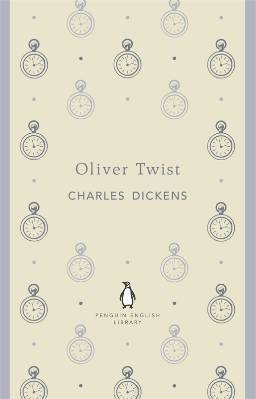
Oliver Twist by Charles Dickens

Oliver Twist I know it’s the middle of January, but I still have a few books that I read towards the end of 2015 to write about – and Oliver Twist is one of them. I’ve been trying to read at least one Dickens novel a year and having started 2015 with David Copperfield I decided to end it with another of his books. Of the two, I much preferred David Copperfield, but I did still enjoy Oliver Twist. As I’ve mentioned before, I find it difficult to think of anything new to say about books that are so well known and widely studied, so I’m just posting some general impressions of the novel here rather than attempting any sort of analysis.

I think most people, even without reading the book, probably have a basic idea of what it is about: an orphan boy who is raised in a workhouse in Victorian London – where he famously says, “Please, sir, I want some more” – and who later becomes involved with a gang of thieves and pickpockets. Maybe you have seen one of the many films, adaptations and musicals and so will know a little bit more, but the only way to discover the whole of Oliver’s story in the way Charles Dickens intended is to read the book!

This is the first time I have read Oliver Twist in its entirety and I was surprised by how much of it was completely unfamiliar to me. I had either forgotten or was unaware of whole chunks of the plot and of the roles played by characters such as Rose Maylie, Noah Claypole and Monks, so I was in the unusual position of reading a story that I both knew and didn’t know!

While this hasn’t become a favourite, I found Oliver Twist an enjoyable, entertaining read (one of the easiest to read and to follow of all the Dickens novels I’ve read so far) and as you would expect from Dickens, the pages are populated with colourful, larger than life characters, from Mr Bumble the beadle and the brutal Bill Sikes to the Artful Dodger and the villainous Fagin. The characters are mostly either ‘very good’ or ‘very bad’. Nancy, Bill Sikes’ lover, is the only one I found significantly more complex and she makes an interesting contrast with the novel’s other main female character, the pure, gentle Rose Maylie.

This is one of the earliest of Dickens’ major works, first published as a serial from 1837-1839, and it’s a relatively short novel by his standards (there are over 500 pages in the edition I read, but in comparison with books like Our Mutual Friend and Bleak House that’s not long at all). The amount of social commentary in the book is also particularly heavy; it was written just a few years after the Poor Law Amendment Act was passed by parliament in 1834, stating that relief for the poor would only be provided within the workhouse. The idea was that conditions inside the workhouse would be so harsh and unpleasant that only those people desperately in need of help would consider entering one. Telling Oliver’s story gave Dickens a chance to express his own views on the Poor Laws and related issues such as poverty and child labour.

Oliver Twist was the final novel by Dickens on my list for the Classics Club, but I will continue to work my way through his other books, as I have about half of them still to read. I think either Dombey and Son or Little Dorrit might be next.

David Copperfield by Charles Dickens

David Copperfield Since I started blogging I have been trying to read at least one Dickens novel a year – I read A Christmas Carol in 2009, Bleak House in 2010, Our Mutual Friend and The Mystery of Edwin Drood in 2011, Great Expectations in 2012 and A Tale of Two Cities in 2013. Unfortunately I didn’t manage to read any Dickens at all in 2014 so decided to make him a priority this year. With plenty of his books still to choose from, I picked up David Copperfield on the first day of January. It took me most of the month to read it – it’s a long book – and it has taken me almost as long to decide what to say about it!

How do you begin to write about a book like this? The plot is not the sort that you can sum up adequately in a paragraph or two. In fact, there really isn’t a central plot at all, but rather, lots of subplots all circling around the narrator, David Copperfield – or Trotwood, Trot, Daisy or Doady as he is called at various points in the novel…usually anything but David!

At the time of David’s birth, his father has already been dead for six months. Growing up in the small Suffolk town of Blunderstone, his early years are relatively peaceful and uneventful, until his mother marries again and David is sent away to boarding school. As he progresses through school and on into adulthood, a host of fascinating and eccentric characters pass in and out of David’s life. These include:

  • Betsey Trotwood, David’s formidable but kind-hearted great-aunt, who never quite recovers from the disappointment of David being a boy instead of the little girl she’d set her heart on.
  • Mr Murdstone, David’s cruel and brutal stepfather.
  • David’s beloved childhood nurse, Peggotty, her brother Daniel and his nephew and niece, Ham and Little Em’ly.
  • James Steerforth, a handsome, charming and manipulative schoolfriend of David’s.
  • The villainous ‘humble clerk’, Uriah Heep.
  • Wilkins Micawber, with whom David lodges in London, always in debt but never giving up hope that ‘something will turn up’.
  • And Dora Spenlow and Agnes Wickfield, two very different young women who enter David’s life.

All of these characters, as well as many others, have an important role to play in David’s story, helping to shape the man he grows up to be.

Of all of Dickens’ novels David Copperfield was apparently the author’s own favourite. In his own words, “like many fond parents, I have in my heart of hearts a favourite child. And his name is David Copperfield.” It’s also supposedly the most autobiographical of his novels – and having read Claire Tomalin’s Charles Dickens: A Life, I can see where he drew on some of his own personal experiences in writing David’s story. Even the style of David Copperfield is autobiographical, with David himself narrating the events of his life, sometimes in retrospect from an unspecified point in the future.

Although, as I’ve explained, the story is made up of a set of complex and closely linked subplots, this is very much a novel that is driven by the characters. As with any book with such a large cast of characters, there were some that I loved (such as Betsey Trotwood and Peggotty), and some I disliked (such as Steerforth and the Murdstones) but all were so well-drawn they seemed to jump out of the pages. The one character I really couldn’t stand, though, was Dora Spenlow! Dickens gets a lot of criticism for his female characters, but Dora is the worst I’ve encountered in any of his books so far: a woman who happily calls herself a ‘silly little thing’ and asks to be thought of as a ‘child-wife’. Thank goodness for Agnes Wickfield – I suppose she could also be criticised for representing the Victorian ideal, but I found her a much more likeable and far less infuriating character than Dora!

David Copperfield, as I mentioned at the start of this post, is a very long book. My edition had more than 900 pages, which seemed quite daunting at first, and I fully expected it to take much longer than a month to read, especially as I like to have one or two other books on the go at the same time. Once I started reading, though, I found it surprisingly addictive and it was actually a much quicker read than I imagined it would be. Of the seven Dickens novels I’ve now read, A Tale of Two Cities is still my favourite, but I think this one ties with Our Mutual Friend for second place.

A Tale of Two Cities by Charles Dickens

A Tale of Two Cities When I decided to take part in the Classics Club Spin last month, in which a book would be chosen for me from a list of twenty, A Tale of Two Cities was not one of the titles I was hoping would be picked. I have to be in the right mood to want to read Dickens and I wasn’t really in that mood. Expecting it to be a long and boring read, I thought it would be a good idea to start immediately so that I would have a chance of being finished by the end of December…

I actually finished it within a week and despite my lack of enthusiasm when the spin number was announced, A Tale of Two Cities is one of the best books I’ve read this year!

The novel is set before and during the French Revolution; Paris and London are the two cities of the title. The story begins with Doctor Manette being released from the Bastille after eighteen years as a political prisoner. Reunited with his daughter, Lucie, and returning with her to England, the lives of the Manettes become entwined with the lives of two young men who are both in love with Lucie. One of these is Charles Darnay, a former French aristocrat, and the other is Sydney Carton, an English lawyer. We follow these characters and others as they return to France where they become caught up in the dramatic events of the French Revolution – and the scheming of wine shop owner, Monsieur Defarge, and his sinister wife, who is never seen without her knitting!

This is the sixth Dickens novel I’ve read and my favourite so far. I find it interesting that everyone who reads Dickens has different favourites and least favourites; there doesn’t seem to be one book that is universally regarded as his best. I think part of the reason I loved this book so much was that in many ways it was very different from the others I’ve read but I know that some readers will probably dislike it for that same reason, so it’s really a matter of personal opinion.

One of the things that struck me about this book was the absence of humour, in comparison to the other Dickens novels I’ve read – and as Dickens and I don’t usually share the same sense of humour, this was definitely a positive thing for me! Of course, the French Revolution is a serious subject, so the more serious tone of the writing was quite appropriate. I also thought the characters felt more realistic and well-rounded than usual (if there is a comedy character in the novel, it’s probably Jerry Cruncher). My favourite character, which probably won’t surprise anyone else who has read this book, was Sydney Carton – although I didn’t fall in love with him until the last few chapters. I hadn’t guessed when we first met him that he would turn out to be so heroic and self-sacrificing.

I was also impressed by how tightly plotted the book is. The focus stays firmly on the main storyline which makes it easy to follow, unlike Bleak House or Our Mutual Friend which have more complex structures with lots of subplots and lots of long descriptive passages. In A Tale of Two Cities, everything feels relevant and helps to move the story forward. The novel begins with some of the most famous lines in literature (It was the best of times, it was the worst of times…) and closes with some that are almost as well known (It is a far, far better thing that I do, than I have ever done; it is a far, far better rest that I go to than I have ever known). I’ve seen those final lines quoted many times before but out of context they didn’t mean much to me; now that I know who and what they refer to they have much more significance. I don’t want to say too much and spoil the story for anyone who hasn’t read it yet, but the ending is heartbreaking. This is the first Dickens novel that has made me cry!

The Classics Club spin was a success for me this time, then. I do have some other Dickens novels on my Classics Club list and feel much happier about reading them now!