It was the best of times, it was the worst of times…

The Classics Club

The result of the Classics Club Spin has been announced today! The Spin number is…

Number 10!

This means I have to read the book at number 10 on the list I posted last week.

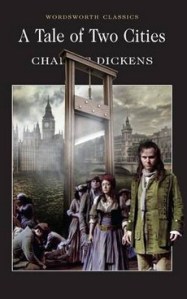
A Tale of Two Cities

A Tale of Two Cities by Charles Dickens

This is not one of the books I was hoping would be chosen, but I’m happy enough with this result as it’s been a while since I last read anything by Dickens.

Have you read it? What did you think of it?

If you participated too, I hope the Spin has selected something you’ll love!

Memories of A Christmas Carol: a Classics Club meme

The Classics Club monthly meme question for December asks us for our thoughts and memories of A Christmas Carol by Charles Dickens:

What is your favorite memory of Dickens’ A Christmas Carol? Have you ever read it? If not, will you? Why should others read it rather than relying on the film adaptations?

A Christmas Carol I was given a copy of A Christmas Carol as a Christmas present when I was a child, though I don’t know exactly how old I was. I can’t remember who gave it to me either, but I suspect it was probably an aunt or uncle. I remember taking the book with me to my grandmother’s a few days after Christmas and reading those famous opening lines for the first time:

Marley was dead, to begin with. There is no doubt whatever about that.

The last time I re-read the book was in 2009, shortly after I started blogging, and it was still a pleasure to read – both the story itself and this particular edition. It’s a beautiful hardback book with colour illustrations and black and white line drawings by Arthur Rackham. Reading a book that looks and feels beautiful can really enhance the experience! Rackham’s twelve colour plates, originally published in 1915, can be seen here. I’ve always liked the one of Bob Cratchit sliding down the icy street.

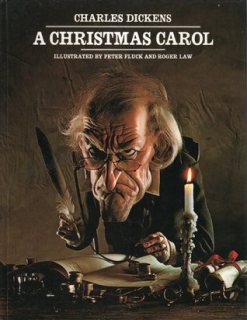
I received a different edition of the book a few years later from another family member (again I’ve forgotten who it was). I’m not sure where I’ve put this one, though I know I must still have it somewhere. After a lot of searching online – which wasn’t easy, as there are literally hundreds of different versions of A Christmas Carol and I couldn’t recall the names of either the illustrators or the publisher – I managed to find a picture of the front cover for you:

A Christmas Carol - Peter Fluck and Roger Law This edition, which I’ve discovered was published by Viking, was illustrated by Peter Fluck and Roger Law (who were also the creators of Spitting Image) with pictures of grotesque puppet-like caricatures, like the one of Scrooge pictured on the cover.

There have been so many adaptations of A Christmas Carol, but although the story and the sentiment might be the same, if you only watch them instead of reading the novel you will be missing out on so much. As I said in my 2009 post on the book, even if you already know the story it’s still worth reading it for the richness and humour of Dickens’ writing and for his wonderful descriptions and imagery.

You can see how other Classics Club members responded to this month’s meme here.

Have a great Christmas and I’ll be back later in the week with my Best Books of 2012!

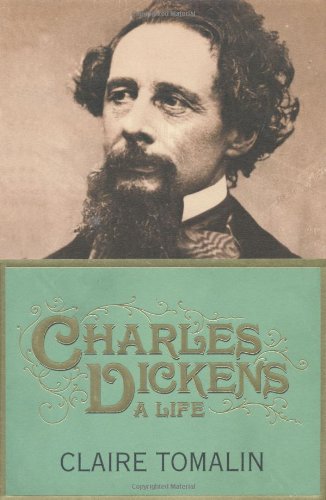
Charles Dickens: A Life by Claire Tomalin

I’ve only read one of Claire Tomalin’s other biographies (Samuel Pepys: The Unequalled Self) but having read that one, Charles Dickens: A Life was everything I was expecting: well researched, thorough and very readable. It took me a long time to finish it but that’s just because I was reading other books at the same time and is no reflection on how much I was enjoying it. Charles Dickens is an ideal subject for a biography as he had such an eventful life and career. One of the things I liked about Tomalin’s Samuel Pepys book was the way she attempted to give us a balanced view of Pepys, looking at both his good points and his bad points, and she does the same here with Dickens.

There are plenty of positive things about Dickens that we can take away from this biography: his incredible energy, his literary talent and the amount of hard work and effort he was prepared to put in to achieve his ambitions. But Tomalin also shows us Dickens’ flaws, particularly the insensitive and cruel way he treated his wife Catherine Hogarth and sometimes his children too. And of course, she discusses his affair with the actress Nelly Ternan (this is the subject of one of Tomalin’s other biographies, The Invisible Woman: The Story of Nelly Ternan and Charles Dickens, which I haven’t read).

It was interesting to read about the progress of Dickens’ career as a writer, and how he went from writing character sketches of the people around him to developing longer stories and eventually producing his famous novels. I enjoyed reading what Tomalin had to say about the Dickens novels that I’ve read – it seems that she admires most of his work though not all of it – but be aware that if you haven’t read all of his books she does include some spoilers. I can understand this, as many of the plot points and characters in Dickens’ novels give us insights into the mind of Dickens himself, and it would be hard to discuss the man without discussing his work. However, I’m sure there will be a lot of people like myself who will read this biography without having read Dickens’ complete works first, so I thought I should warn you that you might come across things you would prefer not to know!

Overall I was left with a negative impression of Dickens rather than a positive one. I can admire the motivation, ambition and talent of someone who worked his way up from a job in a boot blacking factory to become first a journalist and then one of the most famous and successful writers in the world. But the way he treated people in his personal life, as well as the high opinion he seemed to have of himself, makes it hard for me to like him.

I’m not sure how this book compares with other Dickens biographies as this is the only one I’ve ever read, but I enjoyed it, learned a lot from it and was left with a much better understanding of the complex person Dickens was. And as well as the huge amount of information this book contains about the life and work of Dickens himself, as someone who loves reading about the Victorian period in general I was fascinated by all the little details of 19th century life! The book also comes with plenty of additional material including maps, illustrations, a bibliography and a list of the important people in Dickens’ life.

Finally, this has nothing to do with this biography but I was surprised to find how much of Dickens’ life story was already familiar to me through reading novels like Drood and The Last Dickens. This shows that although historical fiction may not always be completely accurate it’s often a good way to absorb historical facts while being entertained at the same time!

Great Expectations by Charles Dickens

Despite my love of Victorian literature, Charles Dickens has never appealed to me as much as other 19th century writers and until recently the only Dickens novel I had actually read was A Christmas Carol. A couple of years ago I decided to give him another chance and although I still don’t think Dickens will ever be one of my favourite Victorians, I’m pleased to say that my opinion of his work is rapidly improving with every book of his I read!

Great Expectations is narrated by Pip, a young orphan who is brought up by his sister and her husband, Joe Gargery, a blacksmith. Near the beginning of the book two important incidents occur: first Pip meets an escaped convict in the graveyard near his home, and then soon after this he is invited to visit the eccentric Miss Havisham who lives at Satis House. When Pip unexpectedly receives a large sum of money he moves to London to become a gentleman and leaves his old friends behind. But who is the mysterious benefactor and will Pip’s ‘great expectations’ really change his life for the better?

I won’t go into the plot in any more detail for two reasons: firstly, because I suspect many of you will already be familiar with the story even if you haven’t read the book, and also because I wouldn’t want to spoil any of the surprises and plot twists the novel contains. But as well as the wonderful plot, Great Expectations is also full of strong and memorable characters. Miss Havisham, hidden away in her ruined mansion wearing her wedding dress, is probably the one most people will think of when they think of this book, but from the convict Abel Magwitch and Pip’s best friend Herbert Pocket to the lawyer Mr Jaggers and Miss Havisham’s adopted daughter Estella, the book is full of unforgettable characters. I posted a few weeks ago about one of my favourites, Joe Gargery, and how sad it is to see the way Pip’s relationship with Joe changes after he is given his great expectations.

If you’ve never read any Dickens before, I think this might be a good place to start. I’ve read four of his other novels (A Christmas Carol, Bleak House, Our Mutual Friend and The Mystery of Edwin Drood) and in comparison to some of those, I thought this one was much easier to read and understand. And I loved all the observations on life and human nature that Dickens scatters throughout his writing, like this:

“That was a memorable day to me, for it made great changes in me. But, it is the same with any life. Imagine one selected day struck out of it, and think how different its course would have been. Pause you who read this, and think for a moment of the long chain of iron or gold, of thorns or flowers, that would never have bound you, but for the formation of the first link on one memorable day.”

Or this:

“So, throughout life, our worst weaknesses and meannesses are usually committed for the sake of the people whom we most despise.”

Now I just need to decide which of Dickens’ books I should try next. I have three of his novels on my list for the Classics Club: David Copperfield, A Tale of Two Cities and Oliver Twist. Have you read any of those or is there another one you would recommend?

A Classics Challenge – February: Joe Gargery

This year I am taking part in a Classics Challenge hosted by Katherine of November’s Autumn. The goal is to read seven classics in 2012 and every month, Katherine will be posting a prompt to help us discuss the book we are reading.

The novel I’m currently reading for the challenge is Great Expectations by Charles Dickens and this month Katherine is asking us to answer some questions about a character from the book we are reading. As you would expect from any Dickens novel there are plenty of memorable characters in Great Expectations to choose from – Miss Havisham, Pip, Estella, Mr Jaggers, Abel Magwitch and many others – but the character I’ve decided to write about is one of my favourites, Joe Gargery.

Level 1
What phrases has the author used to introduce this character? What are your first impressions of them? Find a portrait or photograph that closely embodies how you imagine them.

Joe is the brother-in-law of the novel’s narrator, Pip, and one of the biggest influences on his early life. Joe and his wife (Pip’s sister, referred to throughout the novel as Mrs Joe Gargery) have brought Pip up since he was orphaned as a child. Mrs Joe is a hard, overbearing woman who is often cruel to Pip, but Joe is a kind and loving father figure.

Here is our first introduction to Joe, as seen through Pip’s eyes:

Joe was a fair man, with curls of flaxen hair on each side of his smooth face, and with eyes of such a very undecided blue that they seemed to have somehow got mixed with their own whites. He was a mild, good-natured, sweet-tempered, easy-going, foolish, dear fellow – a sort of Hercules in strength, and also in weakness.

Level 2
How has the character changed? Has your opinion of them altered? Are there aspects of their character you aspire to? or hope never to be? What are their strengths and faults? Do you find them believable? If not, how could they have been molded so? Would you want to meet them?

I haven’t finished the book yet but based on what I’ve read so far, Joe doesn’t really change over the course of the book and my opinion of him hasn’t altered. The thing that does change is the way Pip views him. After Pip meets Miss Havisham and Estella he starts to feel ashamed of Joe because of his lack of education and refinement. Joe doesn’t have much interest in money, property or any of the other things that are so important to most of the other characters in the novel – he seems happy with his simple way of life and doesn’t have any ‘great expectations’, unlike Pip.

Who are your favourite characters from Great Expectations? What do you think of Joe Gargery?

From one to six…

Before I started blogging I only ever used to read one book at a time. Now I’ve somehow found myself in the middle of six!

Here are the books I’m currently reading:
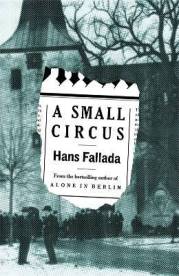
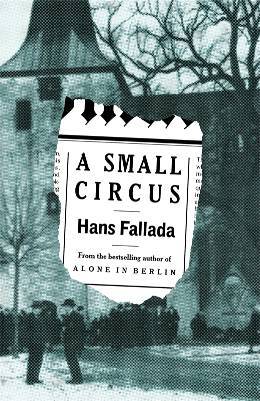
A Small Circus by Hans Fallada

Alone in Berlin was one of the best books I read last year, so I was excited about reading another of Hans Fallada’s novels. So far though, this one is not as good and I’m finding the plot quite confusing. I’m trying to decide whether or not I want to continue with it but will give it at least a few more chapters.
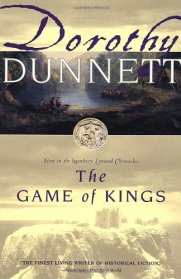
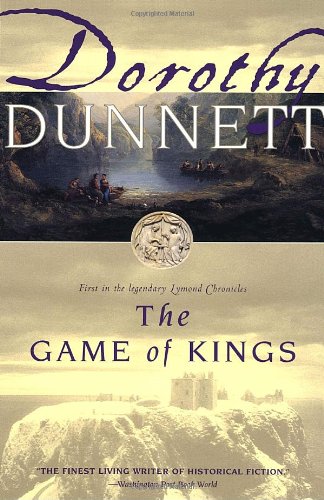
The Game of Kings by Dorothy Dunnett

This is the first of the Lymond Chronicles and the first Dorothy Dunnett book I’ve read. Dunnett fans will be pleased to know that I’m absolutely loving this book and have already ordered the next one in the series!
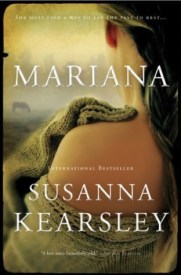
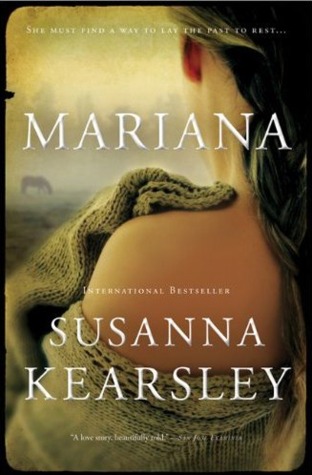
Mariana by Susanna Kearsley

After reading The Rose Garden a few months ago I wanted to read another Susanna Kearsley book and was delighted to receive this one through Netgalley. I’m still near the beginning but I can already tell it’s going to be as good, or maybe even better, than The Rose Garden.
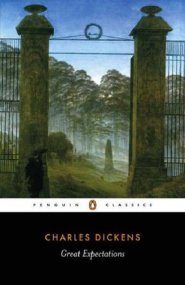
Great Expectations by Charles Dickens

With February marking the 200th anniversary of Dickens’ birth, I wanted to read one of his novels this month. I’m enjoying Great Expectations so far and finding it surprisingly easy to read compared to some of the other Dickens novels I’ve read. I’m reading a few chapters a day on my Kindle which I’ve found is a good way to get through some of these long classics.
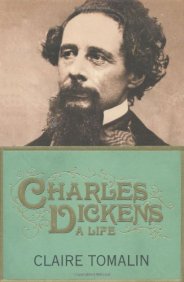
Charles Dickens: A Life by Claire Tomalin

I started this Dickens biography in January. Not being a big non fiction fan, it’s taking me a long time to read this one as I’m only picking it up when I’m in the right mood for it.
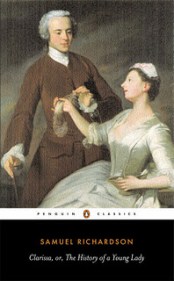
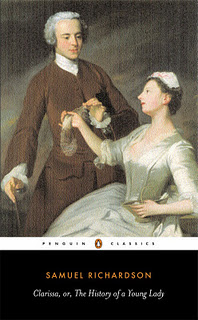
Clarissa by Samuel Richardson

As I mentioned in a previous post I’m reading Clarissa as part of a year-long group read so I’m not expecting to finish it before December. This is another one I decided to read as an ebook as the paperback is just too big!

***

The six books that I’m reading at the moment are all different enough that I’m not having any trouble keeping them separate in my mind, but I do feel as if it’s been a long time since I actually finished a book!

How many books do you usually have on the go at the same time? Do you always finish one book before you start another or do you like to have a variety to choose from?
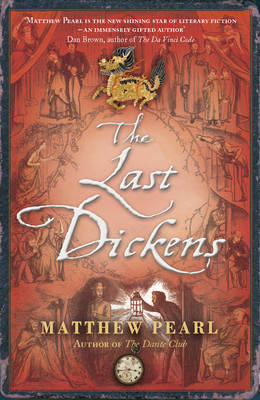
The Last Dickens by Matthew Pearl

The Last Dickens is a literary mystery involving a search for the missing manuscript of the final, unfinished Charles Dickens novel, The Mystery of Edwin Drood. This book didn’t appeal to me when it was published a couple of years ago because at that time I had only read one Charles Dickens book and didn’t have much interest in reading a historical fiction novel about him. Since then, though, I’ve read a few more of Dickens’ books (including Edwin Drood) and so I thought I would give The Last Dickens a try now.

In 1870, the new Dickens novel, The Mystery of Edwin Drood, is being serialised by his American publisher Field, Osgood & Company, who are based in Boston. When Field and Osgood send their young office clerk, Daniel Sand, to the docks to collect the latest instalment which has been sent from England, Daniel is later found dead under suspicious circumstances. With the shocking news that Dickens has also died and left his novel incomplete, James R Osgood travels to England in search of clues as to how the story may have been going to end. Osgood is accompanied by Daniel Sand’s sister, Rebecca, another employee of the publishing house. Can they uncover the truth about Daniel’s death and at the same time find the remaining chapters of The Mystery of Edwin Drood?

Just when Osgood and Rebecca’s adventures start to get exciting, the story is interrupted with a very long flashback to Dickens’s American tour several years earlier. Some of this was interesting (it’s such a shame there was no recording equipment in those days as it would have been fascinating to have been able to hear Dickens reading his books on stage to an audience!), but there was a lot of detail that I didn’t think was absolutely necessary and by the time we returned to Rebecca and Osgood the flow of the story had been completely lost. There were also some shorter sections set in India, where Dickens’s son Frank, serving with the Bengal Mounted Police, is on the trail of opium thieves, but I didn’t think this sub-plot really added anything to the book and I admit I didn’t quite understand what was going on.

One aspect of the book I did enjoy was the insight into the American publishing industry in the 19th century, a time when copyright laws appeared to be virtually non-existent. There are some entertaining descriptions of the lengths publishers would go to in order to obtain manuscripts and be the first to publish them.

Another similar book which was released around the same time as this one was Drood by Dan Simmons. I read Drood last year and although I had a couple of problems with that book too, I think I probably enjoyed it more than The Last Dickens. It’s interesting to see how two different authors can use the same historical material to create such very different books.