The Last Handmaid by Clare Whitfield

I was drawn to this book for two reasons: first, it’s about Countess Erzsébet Báthory – I read about her in Sonia Velton’s The Nightingale’s Castle a few years ago and have been meaning to explore further – and also, I enjoyed Clare Whitfield’s previous novel, Poor Girls, and hoped this one would be just as good.

The Last Handmaid is set in the early 17th century and is narrated by Catalina, a young woman who finds herself alone in the world after losing first her mother and then Varga, the monk who raises her and whom she considers as close as an uncle. Rejecting Varga’s dying wish that she should become a nun and enter a convent, Catalina instead takes a job in the laundry of a castle belonging to Countess Erzsébet Báthory. No sooner has she begun to settle into her new position and make friends, her life is disrupted again when she plays a part in foiling an assassination attempt against the countess. This is the start of a close but uneasy relationship with the countess, who takes Catalina with her when she flees to Csejte Castle (now Čachtice Castle in Slovakia).

As you may know, Erzsébet Báthory – sometimes anglicised to Elizabeth Báthory – was allegedly a prolific Hungarian serial killer accused along with several of her servants of torturing and murdering hundreds of girls. She is also often said to have been an inspiration for the character of Bram Stoker’s Dracula, although there’s no direct evidence of this. In The Last Handmaid, we see Erzsébet through Catalina’s eyes, which can be frustrating at times as Catalina sees only what she wants to see and is determined that her beloved ‘Lady Erzie’ can do no wrong. It’s a good illustration of how easily people can be mistaken and how a vulnerable person who just wants to feel liked and valued can be manipulated and controlled, but still, it’s so obvious to the reader that the countess is a cruel, terrible woman that Catalina’s blindness becomes difficult to believe.

I found this book slightly different from The Nightingale’s Castle which portrayed Erzsébet more sympathetically and included some magical realism elements. This is a darker, more brutal novel and Whitfield doesn’t shy away from describing how the countess’s servants, Anna and Helena, beat and torture young women. The countess herself suffers from epilepsy, known as ‘the falling sickness’, and believes that drinking human blood is the cure. You can see where the comparisons with Dracula come from! It’s not a book for the squeamish or the faint-hearted, then. Even when Catalina begins a romantic relationship, it’s with the town executioner.

I enjoyed the book overall, apart from when I found myself losing patience with Catalina for continually making excuses for the countess and rejecting opportunities to escape and keep herself safe. I was interested to read in the author’s notes at the end of the book that she specifically chooses to write from the weakest, most vulnerable person’s perspective as they are the stories that most intrigue her. Now I need to find time to go back and read her first book, People of Abandoned Character.

Thanks to Head of Zeus for providing a copy of this book for review via NetGalley.
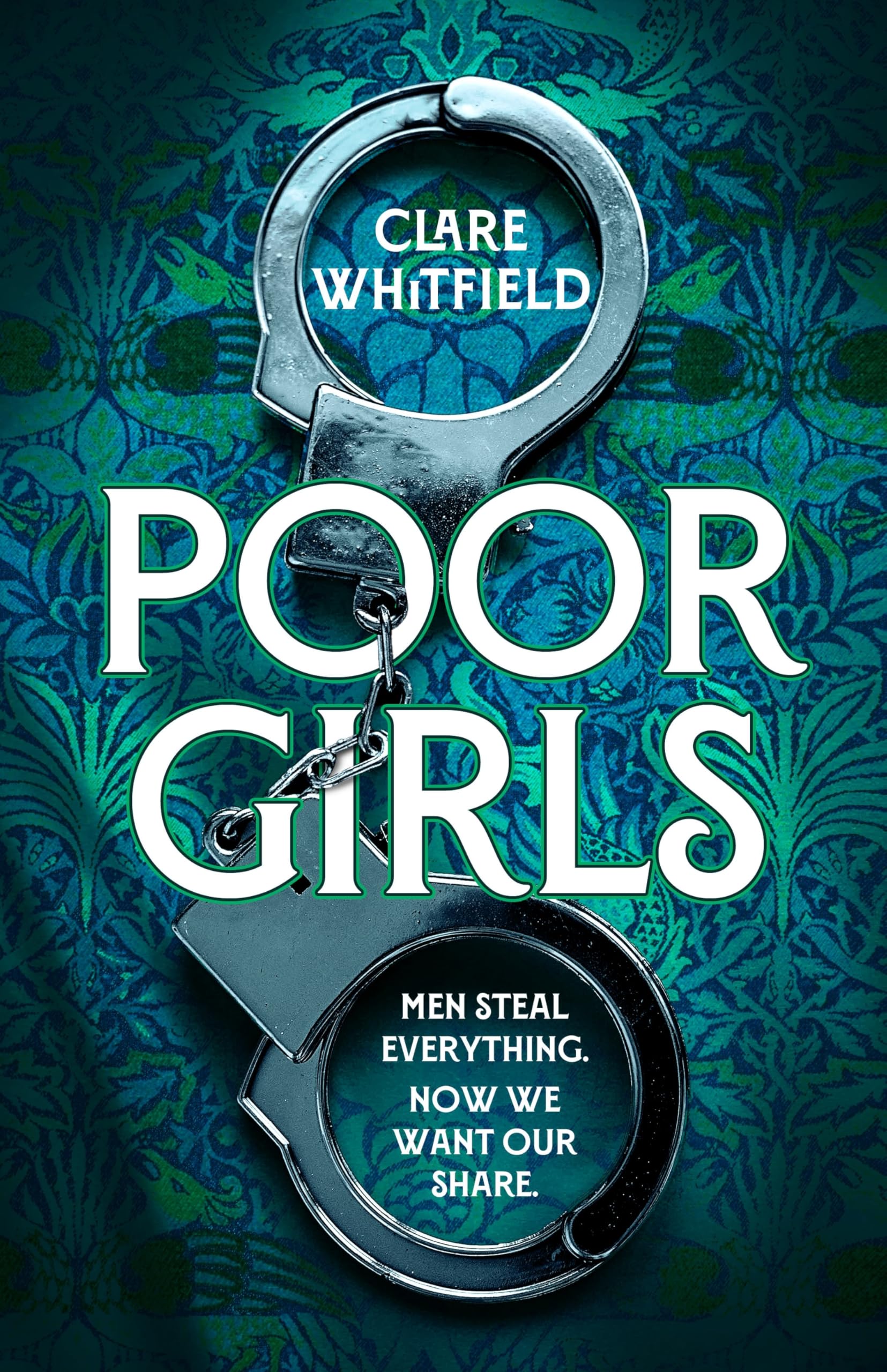
Poor Girls by Clare Whitfield

It’s 1922 and Eleanor Mackridge, like many women, is finding it difficult to adjust to ‘normal life’ now that the war has ended. Compared to working in a munitions factory and feeling that she was doing something important for her country, her new job waitressing at a Brighton hotel is dull and boring. Marriage could offer an escape route, but that doesn’t sound very appealing either, so when Eleanor crosses paths with a member of the all-female crime gang, the Forty Elephants, the temptation to join them is too strong to resist.

Now known as Nell, she moves to London where she is assigned to a cell – a group of four gang members who live and work together – and begins her education in the art of theft. Soon she knows how to steal expensive furs and jewels from London’s grandest department stores, how to conceal her loot in hidden pockets and, most importantly, how to avoid being arrested. Although her conscience troubles her at first, she soon learns to love her new life and her new friends. But what will Nell’s family say when they discover what she is doing? And what will happen if her luck runs out and she gets caught?

Poor Girls is an enjoyable, fast paced novel rooted in historical fact. I wasn’t aware until I finished the book and read the author’s note that the Forty Elephants really existed (the name comes from the Elephant and Castle area of London, where they were based). Although the gang leader, Alice Diamond – known as Queen Alice – was a real person, Nell Mackridge seems to be a fictional character. However, through the stories of Nell and her friends, Whitfield explores some of the factors that may have driven young women like them to turn to a life of crime.

It was fascinating to see how the gang operated and to watch Nell learning all the tricks of the trade – all the cons, deceptions and disguises she needed to be able to avoid detection. Interestingly, women had an advantage when it came to shoplifting as store security were reluctant to stop and search female customers. Also, all those layers of clothing they wore were useful for hiding stolen goods! The success of their operations depended on working together as a team, so trust was necessary between the members of each cell and Nell formed strong bonds with Effie, Lily and Charlie, her partners in crime.

I did have one or two minor criticisms of the book: I felt that the characters of Nell’s three friends could have been more clearly defined – Charlie and Lily, in particular, seemed interchangeable – and there were times when the language felt more 2020s than 1920s. Otherwise, this was a very entertaining novel with a plot not quite like any other I’ve read. I also liked the fact that, although crime is obviously not something we should admire or find glamorous and Whitfield does make the consequences clear, at the same time she isn’t trying to push a moral message onto the reader. The ending of the book isn’t quite what you would expect either, but it’s probably more realistic that way.

It seems that Alice Diamond and the Forty Elephants have been the subject of several recent novels and there’s a non-fiction book available as well. I’m not sure how I’ve missed them all, but will investigate them now. I would also like to read Clare Whitfield’s earlier novel, People of Abandoned Character.

Thanks to the publisher for making a copy of this book available for review via The Pigeonhole.

Book 51 for the Historical Fiction Reading Challenge 2024