Rebecca by Daphne du Maurier (re-read)

Sometimes re-reading a favourite book can be a disappointment; perhaps you’ve changed too much as a person since the last time you read it and the story and characters no longer have the appeal they used to have – or maybe it just loses some of its magic because you’ve read other books in the meantime that are similar and better. Luckily, I experienced none of that disappointment when I picked up Rebecca for a re-read recently. I fell in love with it all over again!

For those of you who have not yet read Rebecca, I’ll give a brief summary of the plot – and the first thing I should probably say is that we never actually meet Rebecca herself. She dies a year before the novel opens, although with her bright and vibrant personality she is a very strong presence throughout. Our narrator, in contrast, is a shy and awkward young woman who remains nameless from beginning to end; our only clue is that she has a ‘lovely and unusual’ name and one which is difficult to spell. It is while working as a companion to the overbearing Mrs Van Hopper in Monte Carlo that the narrator meets and falls in love with Rebecca’s widowed husband, Maxim de Winter, who is thought still to be grieving for his wife. The last thing she expects, then, is to receive a proposal of marriage from Maxim and to be whisked off back to England to his house in Cornwall.

Although the narrator is captivated by the magnificence of her new home, Manderley, and its beautiful surroundings, she also feels intimidated and out of place. She knows that Rebecca lived here with Maxim for years and that Rebecca was so much better at everything than she will ever be – something the housekeeper, Mrs Danvers, won’t let her forget. It’s not long before the narrator begins to tell herself that her marriage is a mistake…she’s convinced that Maxim still loves Rebecca, but is there more to this situation than meets the eye?

I’m not sure whether this is the third or the fourth time I have read Rebecca, but I do know that it must be at least ten years since I read it last – long enough that I can remember the outline of the plot but not every little detail. Reading it again was a wonderful experience, right from the famous opening line, “Last night I dreamt I went to Manderley again”. As I’ve said before, du Maurier is one of the most atmospheric writers I’ve ever come across; she makes it so easy to picture every scene in vivid detail. All of her novels are beautifully written, but this one particularly so.

I know a lot of readers find the second Mrs de Winter frustrating, but I have never had a problem with her, probably because when I first read this book as a teenager I was also a shy, sensitive person so I found it easy to understand and sympathise with her. It’s worth remembering that she is only twenty-one, completely alone in the world (to the point where, when she sits down at her new writing desk at Manderley, she can think of no one to write to but Mrs Van Hopper) and has never been taught to manage servants, host a party or do any of the other things that are suddenly required of her. Not everyone can be as confident as Rebecca, after all, and it is the narrator’s sense of inferiority whenever Rebecca is mentioned which drives the plot forward and adds to the feeling of tension and claustrophobia.

I didn’t care for Maxim this time round, though. I know his distant, brooding nature is as important to the plot as his wife’s uncertainty and paranoia – and if they had been different people the story would not have worked – but I thought he could have been much more supportive of her, particularly after (trying not to spoil too much here) the white dress scene. It’s sad that she seems so much more comfortable and at ease with Maxim’s friend, Frank Crawley, than she does with her own husband. On the other hand, I felt slightly more sympathetic towards Mrs Danvers this time; I can see that she’s much more complex than I’d thought on my earlier reads.

Finally, I want to say that this is one of the few cases where I think the film (the 1940 one with Joan Fontaine and Laurence Olivier) is as good as the book. What do you think?

This re-read means that I’m coming to the end of a little project I have been working on over the last few years. In 2009, having previously only read Rebecca and Jamaica Inn, I decided I wanted to read the rest of du Maurier’s novels and I have now read all of them, with the exception of Castle Dor which I’m hoping to read soon (after I’ve read that one I’ll do a round-up post and pick out some of my favourites). I do still have some of her short story collections and most of her non-fiction books to look forward to, though!

This is book 8/20 of my 20 Books of Summer – and also book 99/100 from my Classics Club list.
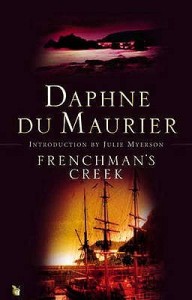
Frenchman’s Creek by Daphne du Maurier

frenchmans-creek Daphne du Maurier’s Rebecca has been one of my favourite books since I first read it as a teenager, but it’s only relatively recently that I started to explore the rest of her work. Since 2010, I have now read several of her short story collections and one of her non-fiction books, as well as working through almost all of her novels, saving Frenchman’s Creek until near the end (as it sounded like one that I would particularly enjoy and I wanted to have something to look forward to).
Set in the 17th century, Frenchman’s Creek is the story of Dona St Columb who, at the beginning of the novel, is growing disillusioned with her marriage and bored with life in London. To alleviate her boredom, she has been joining her husband Harry and his friends in some increasingly wild escapades, but as the mother of two young children she has started to feel ashamed of her behaviour. Unable to bear it any longer, she decides that what she needs is to spend some time away from her husband and London society – and so she takes the children and heads for Navron, Harry’s estate in Cornwall.

On arriving at the house, Dona is surprised to find that only one servant is present; his name is William, a quiet but perceptive man with whom Dona forms an immediate bond. Despite signs that suggest someone has been sleeping in her bedroom while the house stood empty, she soon begins to feel relaxed and refreshed in the peaceful surroundings of Navron. Her new neighbours, however, seem to be less at ease and it’s not long before Dona hears tales of a French pirate who is said to be terrorising the coast of Cornwall. On a walk through the woods one day, she discovers a ship resting in a creek and suddenly everything makes sense.

The Frenchman (who, you will have guessed, is the owner of the ship), dispels all of Dona’s – and probably the reader’s – preconceived ideas of what a pirate should be. Polite, cultured and intelligent, he couldn’t be more different from Harry and his friends, and it’s no surprise that Dona falls in love with him. I couldn’t quite believe that a man like the Frenchman would have chosen to be a pirate (the reasons he gives for his way of life didn’t seem very convincing) but I thought he was an intriguing character and I enjoyed watching Dona’s relationship with him develop. And yet I didn’t become fully engaged with the story until halfway through, when Dona and the Frenchman embark on an adventure together and the consequences of this threaten to bring their happiness to an end. From this point on, I found the book unputdownable, right through to its poignant ending.

Du Maurier’s writing is beautifully atmospheric and evocative, more so than almost any other author I can think of. The description of Dona’s first walk along the banks of the creek, where it widens into a pool and she comes upon the pirate ship for the first time, is so vivid I could nearly see the scene laid out in front of me. The whole book has a dreamy, almost hypnotic feel. Although we are told once or twice that our hero’s name is Jean-Benoit Aubéry, he is referred to throughout the novel as simply the Frenchman – it’s little things like these which really add to the air of mystery and haziness.

Although I did enjoy this book very much, particularly the second half, it couldn’t quite equal my top four du Mauriers, Rebecca, My Cousin Rachel, The Scapegoat and The House on the Strand. I’m planning a re-read of Rebecca soon and then I would like to read Castle Dor, the only du Maurier novel I still haven’t read.

Ross Poldark by Winston Graham

Ross PoldarkI’ve often thought about reading the Poldark novels but there was always some reason why I didn’t; it never felt like the right time to start a twelve volume series or I could only find copies of the later books and not the first one. I had been aware that the BBC were making a new adaptation to be shown this year but I had forgotten about it until seeing a trailer a few weeks ago. That left me with a dilemma as the first episode is being shown on Sunday and obviously I wouldn’t have time to read the whole series by then. But I could at least read the first book and that is what I’ve done.

Ross Poldark is set in 18th century Cornwall (in fact, it is subtitled A Novel of Cornwall 1783-1787). At the beginning of the novel, Ross Poldark returns home from fighting in America to discover that things have changed in his absence. His father has died, leaving his estate, Nampara, to Ross – and Elizabeth, the woman he loves, has just become engaged to his cousin, Francis. With his heart broken, Ross devotes his time to restoring Nampara, which has fallen into disrepair having been left in the hands of the servants, and investigating the possibility of opening a new copper mine.

Life is not easy for Ross – as well as managing his father’s lazy, drunken servants, Jud and Prudie, and dealing with the problems of the tenants and workers who live on the estate, he also has to cope with seeing Francis and Elizabeth together at family gatherings. Then one day, Ross rescues fourteen-year-old Demelza Carne from a brawl at the fair and brings her home to work in his kitchen. With an age difference of ten years, the relationship between Ross and Demelza is at first one of master and servant, but as time goes by a friendship forms and Ross will eventually discover whether or not he is able to love again.

When I began to read Ross Poldark last weekend I thought I might have started it too late to finish by Sunday, but I needn’t have worried; I found it so easy to get into and the story so compelling that it turned out to be a very quick read. I loved the Cornish setting; I won’t comment on the accuracy of the descriptions or the dialect, not being from Cornwall myself, but I thought the overall sense of time and place was very strong. Although they’re quite different stories, the setting and the mining element made me think of another book I enjoyed: Penmarric by Susan Howatch.

As the title character, this is very much Ross Poldark’s story (and Ross is the sort of hero I could immediately like and care about, right from the moment he arrives home to find that the woman to whom he was planning to propose is marrying his cousin) but I found Demelza an even more intriguing character. She changes quite a lot over the four or five years the novel covers and she does slowly grow in confidence, yet never quite shakes off her insecurities and her feeling that the Poldarks are looking down on her because of her background. She is still just in her teens when the novel ends and I’m sure there will be more development to come in the second book. I also liked Verity, Ross’s cousin, and found her personal storyline as interesting as Ross and Demelza’s.

As well as the main characters, there are also lots of memorable secondary characters representing all different levels of society, from the Poldarks and their friends to the farmers and miners who work for them. Quite a lot of time is devoted to the servants Jud and Prudie, and also to one of Ross’s young tenants, Jinny Martin, and two rivals for her love, farm boy Jim Carter and the villainous Reuben Clemmow. Whenever the focus switches to these characters, it provides a diversion from the main plot, sometimes funny, sometimes moving, as well as showing us how Ross handles the problems on his estate and interacts with the people around him.

At the end of this book there are still a lot of unresolved storylines and loose ends and I’m looking forward to continuing the series with the second book, Demelza.

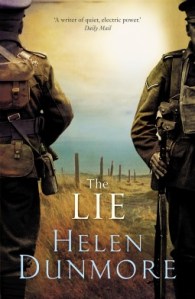
The Lie by Helen Dunmore

The Lie With 2014 being the centenary of the First World War, I had intended to read lots of war-related books this year. For some reason, though, that hasn’t happened; this is only the second or third I’ve read. Actually, I did start to read The Lie in January but wasn’t in the right mood for it and decided to leave it and try again later. That was obviously the correct decision because this time I was drawn into the story from the beginning.

The Lie is set in Cornwall in 1920 and tells the story of Daniel, a young man who has just returned from the war to the village where he grew up. Things have changed during his absence and both of his parents are now dead. Homeless and alone, Daniel is grateful for an offer of food and shelter from Mary Pascoe, a reclusive elderly woman who had known his mother. As Daniel works on Mary’s land in return for the help she is giving him, he has plenty of time to think and reminisce.

Some of his memories are of his childhood, growing up with Frederick and Felicia, the children from the big house where his mother worked as a cleaner. Others are more recent memories – terrible, haunting memories of the war, where he witnessed Frederick’s death in the trenches. Struggling to come to terms with what has happened to his friend, Daniel is reunited with Frederick’s sister, Felicia, now a young war widow with a little girl of her own. Felicia is also grieving, having lost both her husband and her brother, and she and Daniel are able to offer each other some comfort. But when Mary Pascoe asks Daniel to do something for her, a lie is told which could threaten his chance of future happiness.

This is a quiet, slow-paced novel and requires some patience from the reader, but Daniel is an interesting character who is worth getting to know. While the story jumps backwards and forwards in time, covering three different periods in Daniel’s life, the transitions from one to the other feel smooth and natural and each strand of the story explores several different aspects of the Great War. First there are the childhood sections which depict the class divide that existed in pre-war Britain: the intelligent, literary Daniel has to leave school at eleven to start working, while the less academic Frederick is sent to private school. The scenes that are actually set during the war describe all the horrors of life in the trenches, and finally, the parts of the story set in 1920 show us how the war has changed Daniel, his community and the wider world forever.

Daniel is our narrator but Frederick is a constant presence in the book and in Daniel’s mind. The relationship between the two men forms a big part of the story and the circumstances of Frederick’s death (leading to another lie being told) haunt Daniel to the point where he imagines he sees his old friend standing by his bed covered in the mud of the trenches. But I particularly liked the portrayal of Frederick’s sister, Felicia, and can only imagine how difficult life must have been for a young woman, widowed and alone with a baby to raise amid the aftermath of war.

Although I did find a lot to like about The Lie, it didn’t quite have the emotional impact on me that I would have expected from a novel dealing with such a tragic subject and for that reason I can’t say that I loved this book. It’s the first Helen Dunmore book I’ve read, though, and I’m hoping I might enjoy one of her others more than this one.

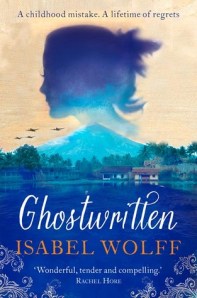
Ghostwritten by Isabel Wolff

Ghostwritten As a ghostwriter, Jenni’s job involves writing books for people who are unable or unwilling to do the writing themselves. Many of her projects include celebrity biographies and self-help guides, but some of her clients are ordinary people with extraordinary tales to tell. At a friend’s wedding she is introduced to a man who tells her about his mother, Klara, a Dutch woman who survived the Japanese internment camps in Java during World War II. Klara has said very little to her family about her wartime experiences, but as she approaches her eightieth birthday she has decided that the time has come for her story to be told. Intrigued, Jenni agrees to visit Klara at her home in Cornwall and help to put her memories down on paper.

The only problem with this new project is that the little Cornish town of Polvarth where Klara lives is a place that holds traumatic memories for Jenni, but although she is not very happy about returning to Polvarth, the temptation of hearing Klara’s story is impossible to resist. After meeting Klara and listening to her talk about her childhood, her family’s rubber plantation in Java, and the unimaginable horrors of the internment camps, Jenni is both moved and inspired. She has been going through a difficult time with her boyfriend, Rick (he wants children and she doesn’t), and she is still haunted by her own tragic past – but being with Klara gives her the strength to start facing up to her problems.

I enjoyed Ghostwritten and while I was initially drawn to it because of the Java storyline, I thought the balance of the contemporary and the historical was just right. I did prefer Klara’s storyline to Jenni’s, but ghostwriting sounds like an interesting career and I loved reading about Jenni’s work. I was also curious to find out more about the secret Jenni had spent her whole life trying to hide and her connection with a little girl called Evie who visited Polvarth years earlier in 1987.

Klara’s story, though, was fascinating, especially as I knew very little about Japanese internment camps and what conditions were like for people in Java during the war. As you would expect, some of Klara’s tales of the suffering she and the other prisoners experienced are quite upsetting to read. There are descriptions of what it was like being packed onto an overcrowded train for twenty-eight hours to be transported from one camp to another, living crammed into a house with up to one hundred other women and children, being made to stand outside in the relentless heat of the sun for hours with no shelter and nothing to drink, and worst of all finding yourself separated from a parent, a spouse or a child with no idea where they are and whether they are alive or dead.

I’ve never read anything by Isabel Wolff before, but looking at her previous work it seems that this book is a bit different from her others. I was so impressed by it. It’s not just a book about ghostwriting or Japanese internment camps, but also a book about friendship and love, about learning to forgive and to move on with life.

Ghostwritten will be published in the UK on 27th March 2014 and I hope it will be available elsewhere very soon.

The King’s General by Daphne du Maurier

The Kings General If you asked me to name my favourite author I wouldn’t be able to give a definitive answer; there are so many that I love and I would find it hard to single one out. But one name that would always be high on my list is Daphne du Maurier. I’ve read twelve of her books now, including this one, and I can honestly say I’ve enjoyed all of them.

The King’s General is set in seventeenth century Cornwall, during the English Civil War. Our narrator is Honor Harris, whose family are Royalists fighting for the King against the Parliamentarians. Honor is eighteen years old when she meets and falls in love with Richard Grenvile but on the day before their wedding tragedy strikes and the marriage never takes place. As the years go by, Richard rises through the ranks of the army, marries another woman and has children, while Honor stays in the Harris family home and remains single.

As the war intensifies and the fighting spreads throughout Cornwall, Honor joins her sister and brother-in-law in the safety of their home, Menabilly, and here she meets Richard again for the first time in fifteen years. He has left his wife, bringing their fourteen-year-old son, Dick, with him, and is now commanding the Royalist forces as the King’s General in the West. Richard and Honor discover they still love each other as much as before and although she refuses to marry him, they begin an unusual relationship that withstands the war, betrayal and rebellion going on around them.

I wasn’t sure at first that I was going to like this book. The first chapter was very confusing – it’s narrated by an older Honor looking back on her life and reflecting on people and events that we know nothing about yet, before going back in time in the next chapter to tell her story from the beginning. But as soon as Honor and Richard had their first meeting on the battlements of Plymouth Castle I knew I needn’t have worried! After I finished the book I went back to re-read the first chapter and it did make a lot more sense.

The King’s General is historical fiction rather than the gothic suspense Daphne du Maurier is probably better known for, but there are still elements of the gothic here, mainly in the atmospheric descriptions of Menabilly with its secret tunnels, hidden chambers and mysterious noises in the night. Menabilly (the inspiration for Manderley in Rebecca) was du Maurier’s home in Cornwall and previously belonged to the Rashleighs, one of the families featured in The King’s General. It was apparently the story of a discovery at Menabilly by William Rashleigh in the 19th century that inspired the writing of this novel.

But while this book could be described as historical romance, as you might expect from du Maurier the romance between Richard and Honor is not a conventional one and neither of the two main characters is a typical romantic hero or heroine. Even people who like flawed characters (and I usually do) might have trouble with Richard as he is not a very pleasant person at all. He’s ruthless, arrogant and cruel and the way he treats his shy, nervous son Dick is particularly horrible. I couldn’t help thinking that his relationship, or lack of it, with Dick reminded me of Heathcliff’s with his son, Linton, in Wuthering Heights and of course, many of du Maurier’s books do have a strong Brontë influence. The only point in Richard’s favour is that he does seem to truly love Honor and in the scenes where they are alone we sometimes see a more human side to him. Honor herself is another strong and complex person. I didn’t always agree with the decisions she made but I admired her courage in helping to protect her family and friends throughout the war and her strength in dealing with the disaster that befell her early in the story. I deliberately haven’t told you exactly what this disaster was because if you can manage to avoid knowing before you start to read the book, it will probably have more impact!

Du Maurier had obviously put a lot of effort into her research for the novel. Although this is a fictional story, the various battles and other historical events in the book did take place as described and most of the characters were real people recorded in history, including both Richard Grenvile and Honor Harris. The Civil War (actually three separate wars between 1642 and 1651) is not a period of English history I have read much about. I know the basics that we were taught at school – that the Royalists (Cavaliers) were defeated by the Parliamentarians (Roundheads), and King Charles I was beheaded and replaced by the Lord Protector, Oliver Cromwell – but beyond that, I don’t know very much at all. That wasn’t necessarily a bad thing, because my total lack of knowledge of the Battle of Lostwithiel, for example, or the Siege of Plymouth Castle, meant that I never knew what was going to happen next.

While The King’s General doesn’t rank as one of my top three or four Daphne du Maurier novels I still loved it and am looking forward to the remaining du Maurier books I still haven’t read.

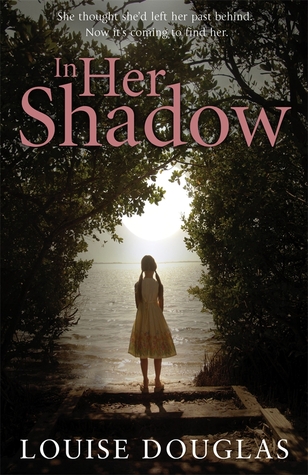
In Her Shadow by Louise Douglas

After reading The Secrets Between Us last year as part of the Transworld Book Group, I’ve been looking forward to reading another book by Louise Douglas and I was pleased to find that her new novel, In Her Shadow, has the same combination of suspense, mystery and psychological drama that I loved in The Secrets Between Us.

The story is narrated by Hannah Brown who works at the Brunel Memorial Museum in Bristol. When Hannah glimpses her best friend Ellen Brecht in the museum one day, she is left feeling shocked and frightened…because Ellen died almost twenty years ago. Is Hannah imagining things or has her friend really come back from the dead?

In alternating chapters, Hannah tells her present day story and also shares with us her memories of growing up in the 1980s with both Ellen and another friend, a boy called Jago who was adopted by Hannah’s family. She remembers the day Ellen moved to their quiet Cornish village with her glamorous parents – her handsome, charismatic German father Pieter and her mother Anne, a former pianist. At first Hannah is captivated by the Brecht family but as time goes by she learns that things might not be quite as they seem. And so Hannah’s happy, nostalgic childhood memories are mixed with other, more disturbing ones that she would rather forget.

I really like the way Louise Douglas writes and the way she creates atmosphere. There are some lovely pieces of descriptive writing in this book, especially when she is writing about the area of Cornwall where Hannah, Jago and Ellen lived, but despite the beautiful, idyllic setting, there’s also a mood of darkness and foreboding that hangs over the story. We know from very early in the novel that something had happened between Hannah and Ellen that damaged their friendship and left Hannah with feelings of guilt, but we aren’t told what it was. We don’t know the circumstances surrounding Ellen’s death, what Jago’s involvement was, or why Hannah is still affected by it all so many years later. And we are kept wondering whether or not Ellen is really dead or whether her appearances are just a figment of Hannah’s imagination. As the novel progresses, the truth is gradually revealed and we can eventually start to piece the story together.

I didn’t find any of the three main characters – Hannah, Ellen and Jago – very easy to like, yet I could still have sympathy for all three of them and could care about what happened to them. They make mistakes, do the wrong things, make poor decisions and act on impulses, but their flawed, unpredictable behaviour only makes them feel more believable and human.

The construction of the novel, with the chapters alternating between Hannah’s current story and her childhood story, means that we learn a little bit more in every chapter, but some of the biggest surprises remain hidden until the very end of the book. Sometimes this type of structure can feel disjointed and confusing, but in this case I thought it worked perfectly and it helped maintain the right levels of tension and suspense throughout the book. I enjoyed In Her Shadow as much as I enjoyed The Secrets Between Us and I’ll be looking out for any future books by Louise Douglas!

I received a review copy of In Her Shadow from Transworld