My commonplace book: May 2016

A summary of this month’s reading, in words and pictures.

commonplace book
Definition:
noun
a notebook in which quotations, poems, remarks, etc, that catch the owner’s attention are entered

Collins English Dictionary

~

He could put the young king aside as some nameless bastard; he could take England into his hand to shape to what greatness he would. In that moment, he never questioned his power. It was his to claim kingship or forgo it. On the strains of the dirge drifted to him a sound of King Edward’s voice: “Richard hath failed me never; him I do well to trust!”

The Confession of Richard Plantagenet by Dora Greenwell McChesney (1913)

~
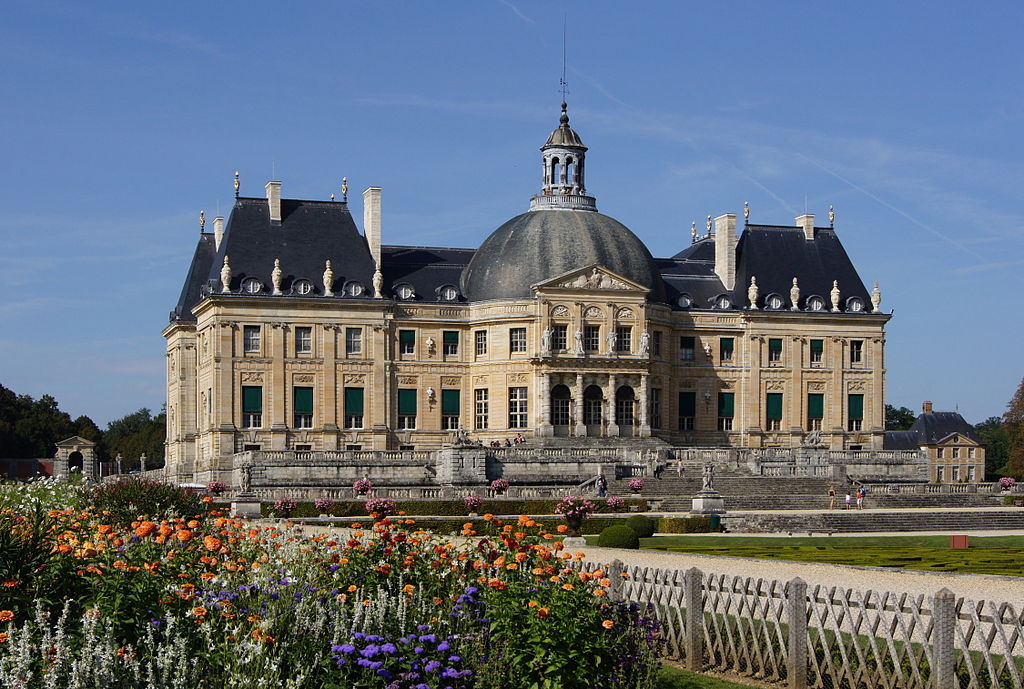
Vaux le Vicomte

The scaffolding had disappeared, flowers and shrubs were gradually covering the bare earth, bringing the flowerbeds to life, and Vaux was slowly taking shape, little by little revealing its full majesty.

The Sun King Conspiracy by Yves Jégo and Denis Lépée (2016)

~

Thus at two on a Sunday morning, on the second day of September, in the year of our Lord, also the year of the Beast, 1666, London begins to burn.

Fire by C.C. Humphreys (2016)

~

Phileas Fogg

The mansion in Savile Row, though not sumptuous, was exceedingly comfortable. The habits of its occupant were such as to demand but little from the sole domestic, but Phileas Fogg required him to be almost superhumanly prompt and regular. On this very 2nd of October he had dismissed James Forster, because that luckless youth had brought him shaving-water at eighty-four degrees Fahrenheit instead of eighty-six.

Around the World in Eighty Days by Jules Verne (1873)

~

Even after all this time, grief threatens to overwhelm me when I think about my family…so powerful, so vigorous, yet all destroyed in a few short years. But still, we left our mark on history; never again will the world see our equal.

The Sons of Godwine by Mercedes Rochelle (2016)

~
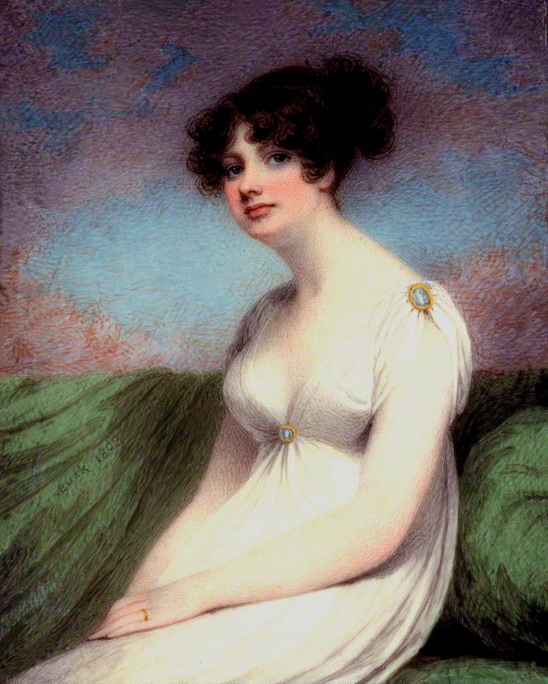
Mary Anne Clarke

This was what they remembered in after years. The rest was forgotten. Forgotten the lies, the deceit, the sudden bursts of temper. Forgotten the wild extravagance, the absurd generosity, the vitriolic tongue. Only the warmth remained, and the love of living.

Mary Anne by Daphne du Maurier (1954)

~

“The worst of it is, I’ll have to tell him so myself. He’ll never dare to mention the subject again, after what I said to him that night he proposed last. I wish I hadn’t been so dreadful emphatic. Now I’ve got to say it myself if it is ever said. But I’ll not begin by quoting poetry, that’s one thing sure!”

Love and Other Happy Endings edited by M.R. Nelson (2016)

~

She could not even recall his features properly nor remember the colour of his eyes, but she could recall how her heart had leaped when he looked at her. She could remember the sound of his voice but not the words he had spoken, as one remembers the perfume of a flower long after it has been pressed out of shape between the pages of a book.

The Queenmaker by Maureen Peters (1975)

~
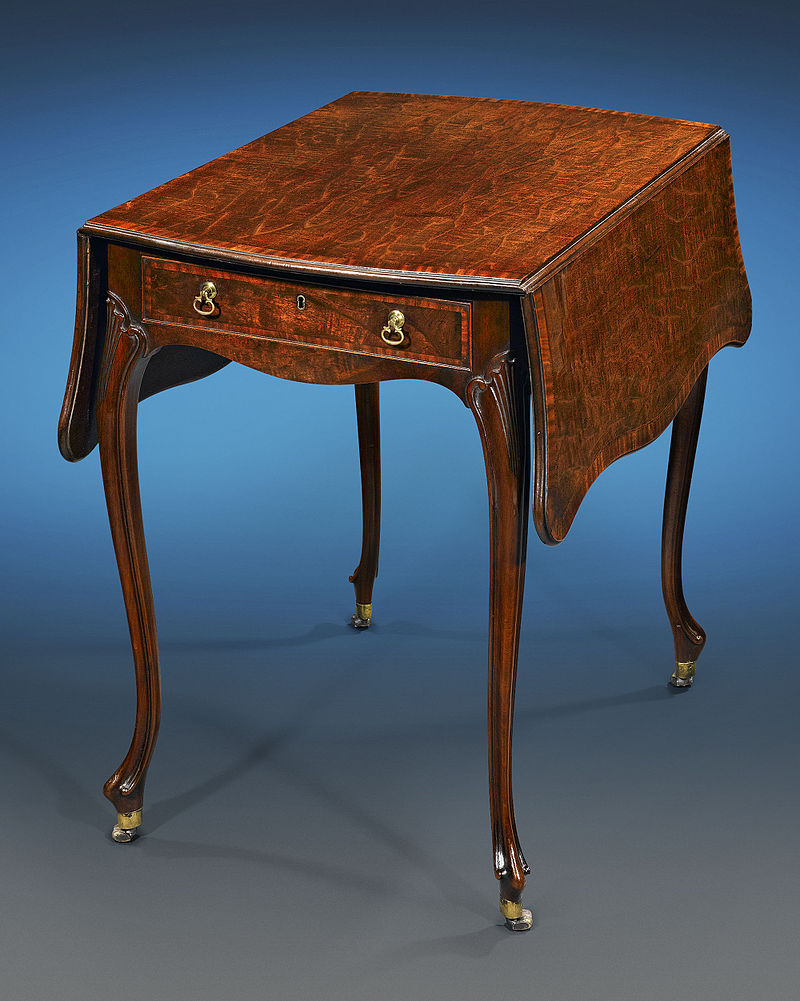
Pembroke_Table_by_Chippendale

Sometimes the apprentice fainted with exertion and had to be revived with a cup of water dashed in his face. Thomas often thought, when a veneered surface had been subsequently polished to a satin-like shine, that it was doubtful if the future owner of the piece would ever have the least idea what sweaty, strength-wrenching effort went into the making of it. Hell held no fears for him. It could be no worse than a veneering shop.

Gilded Splendour by Rosalind Laker (1982)

~

“Jack, Jack,” cried Stephen, running in. “I have been sadly remiss. You are promoted, I find. You are a great man – you are virtually an admiral! Give you joy, my dear, with all my heart. The young man in black clothes tells me you are the greatest man on the station, after the Commander-in-chief.”

The Mauritius Command by Patrick O’Brian (1977)

~

Favourite book this month: Around the World in Eighty Days
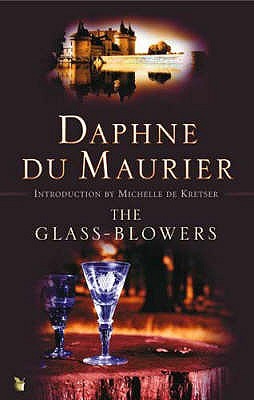
The Glass-Blowers by Daphne du Maurier

A glass blower, remember, breathes life into a vessel, giving it shape and form and sometimes beauty; but he can, with that same breath, shatter and destroy it.

The Glass-Blowers The Glass-Blowers was the book selected for me in the last Classics Spin at the end of August. The deadline for reading our Spin book is this Friday, so I’ve finished just in time! Although it has taken me a while to actually pick this novel up and read it, that’s not because I wasn’t looking forward to it. Daphne du Maurier is one of my favourite authors and I fully expected to love this book as I’ve loved most of her others. That didn’t really happen, unfortunately, but I did still find things to enjoy.

Published in 1963, The Glass-Blowers is historical fiction based on the lives of du Maurier’s own ancestors who lived in France during the Revolution. The story is narrated by Sophie Duval, an elderly woman writing her family history in the form of a letter to send to her nephew. Sophie begins by looking back on her childhood growing up in the Loir-et-Cher region of France as the daughter of master glass-blower Mathurin Busson. Most of her early memories revolve around her eldest brother, Robert, who is constantly getting into debt and finding himself in trouble. It is Robert who will eventually move to England and provide the link to Daphne du Maurier herself.

In France, meanwhile, Sophie and her other siblings – Pierre, Michel and Edmé – become swept up in the drama of the French Revolution. So much of what I’ve read about the Revolution is focused on Paris, so it was fascinating to read about the ways in which it affected the lives of those living in the countryside and in other cities such as Le Mans. The section set during the War in the Vendée is particularly gripping and vivid – probably because Sophie herself is caught up in the uprising and experiences it directly. Other major events happen in the background and Sophie only hears thirdhand accounts, which takes away some of the emotional impact of the story (I kept thinking of The Brethren by Robert Merle, another novel set in France which is written in a similarly passive style).

The distance between narrator and reader meant that I never became fully engaged in the lives of the Bussons and never felt that I had really got to know Sophie. Her brother and sisters were stronger characters, particularly Michel, who becomes a political activist and joins the National Guard, and Robert, who repeatedly reinvents himself as one business venture after another ends in failure. Robert infuriated me at first but he eventually became my favourite character and I found myself looking forward to his scenes as they added a spark of life to what I was beginning to find quite a tedious story.

One of the things I usually love about du Maurier is her descriptive writing and the way she creates a strong sense of time and place – and this is something that I thought was missing from The Glass-Blowers (apart from in the Vendée scenes, as I mentioned above). This hasn’t become a favourite du Maurier book, then, but in my opinion even her weaker novels are still worth reading. Now that I’ve read this one I’m planning to read Mary Anne, another fictional account of one of du Maurier’s ancestors, this time on the English side of the family. After that I’ll only have Frenchman’s Creek and Castle Dor left to read.

Classics Spin Result!

On Saturday I decided to take part in the tenth Classics Club Spin. The rules were simple – list twenty books from your Classics Club list, number them 1 to 20, and the number announced today (Monday) represents the book you have to read before 23rd October 2015.

The number that has been selected this time is 5, which means the book I’ll be reading is:

The Glass-Blowers

The Glass-Blowers by Daphne du Maurier

I couldn’t be happier with this result as Daphne du Maurier is one of my favourite authors. I have been working my way through all of her novels over the last few years and this is one of only four that I still have left to read.

Here is the synopsis (taken from Goodreads):

The world of the glass-blowers has its own traditions, it’s own language – and its own rules. ‘If you marry into glass’ Pierre Labbe warns his daughter, ‘you will say goodbye to everything familiar, and enter a closed world’. But crashing into this world comes the violence and terror of the French Revolution, against which the family struggles to survive.

Years later, Sophie Duval reveals to her long-lost nephew the tragic story of a family of master craftsmen in eighteenth-century France. Drawing on her own family’s tale of tradition and sorrow, Daphne du Maurier weaves an unforgettable saga of beauty, war, and family.

Have you read this book? Did you enjoy it?

If you’re taking part in the spin too, I hope you’ve got a book you’re happy with!

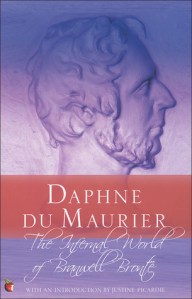
The Infernal World of Branwell Brontë by Daphne du Maurier

The Infernal World of Branwell Bronte I’ve been interested in reading this book since I read Daphne by Justine Picardie in 2011. In Daphne, among other storylines, the fictional du Maurier is researching a biography of Branwell Brontë, hoping to find evidence of his talent and the possibility that he may have contributed to his sisters’ famous novels. This book, The Infernal World of Branwell Brontë, published in 1960, is the result of that research.

Even without reading Justine Picardie’s novel, I would have known du Maurier was a fan of the Brontës as their influence is obvious in some of Daphne’s own novels, particularly Rebecca and Jamaica Inn. I can understand why she may have been fascinated by Branwell, whom she probably saw as a tragic and misunderstood figure. His story is certainly quite a sad one, though a lot of his problems were self-inflicted. As the only boy in a family of girls his father had high hopes for him (to the Victorians it was probably unthinkable that a brother would be outshone by three of his sisters, but with the Brontës that was exactly what happened) and du Maurier suggests that this put him under a lot of pressure to succeed.

As a child, Branwell, like Charlotte, Emily and Anne, was bright and imaginative. He and Charlotte worked together on a set of stories set in the imaginary world of Angria, while Anne and Emily created the fictional land of Gondal. His future seemed full of promise, but as he grew older everything he did seemed to end unhappily. Unlike his sisters he was not sent to school (possibly because his father thought he was too sensitive) and plans for him to study painting at the Royal Academy never came to anything. He tried repeatedly to have some of his poems accepted by Blackwood’s Magazine and was ignored every time; du Maurier tells us that he even wrote to William Wordsworth but didn’t receive a reply. After being dismissed from his job as a clerk at the railway station and then his next job as a tutor (where he possibly had an affair with his employer’s wife), he descended into alcohol and opium addictions and died in 1848 aged thirty-one.

This doesn’t feel like a particularly academic biography and I’m sure there will be more up to date information about Branwell that has come to light since 1960, so I can’t really comment on its accuracy. Du Maurier was a novelist first and foremost and I get the impression her main concern was to capture the essence of Branwell’s character and explore the reasons why he failed where his sisters succeeded and why all his hopes and dreams came to nothing. She also spends a lot of time discussing and analysing Branwell’s work. I was surprised that so many examples of his writing have survived – a lot of his poems are included in this book and some of his prose and letters.

Du Maurier clearly has a lot of sympathy for Branwell, which is not surprising as she has obviously set out to try to restore his reputation and help him gain the recognition he never had during his lifetime. I always think it helps when you can tell that a biographer is genuinely interested in the person he or she is writing about! However, even with du Maurier’s enthusiasm for her subject she never tries to claim that Branwell’s writing was something it wasn’t and she comes to the conclusion that although he did have some talent, his poems were nothing special. His biggest contribution to the literary world may have been the influence he had on the writing of his three sisters.

Daphne du Maurier is one of my favourite authors, but this is the first of her non-fiction books I have read. Since I also love all three Brontë sisters (Wuthering Heights and Jane Eyre are two of my favourite Victorian novels with The Tenant of Wildfell Hall not far behind) this seemed a good choice to begin with. I did find it interesting and the style of the writing is not too different from du Maurier’s novels. I’m not sure how much appeal it would have to people who don’t share my interest in both du Maurier and the Brontës, but for those of you who do want to know more about Branwell and the other Brontës, I definitely think it’s worth reading. I would also highly recommend Jude Morgan’s novel The Taste of Sorrow – it’s a fictional account of the Brontë family (including Branwell and the two older sisters who died as children) but it sticks very closely to the known facts.

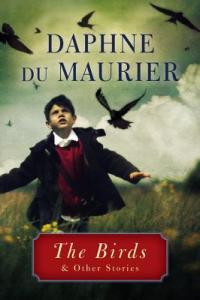
The Birds and Other Stories by Daphne du Maurier

The Birds and Other Stories I have never enjoyed reading short stories as much as full length novels and my various attempts over the years at increasing the number of short stories I read have generally failed. However, one of the few authors whose short stories I do enjoy is Daphne du Maurier (in fact, I’ve loved almost everything I’ve ever read by du Maurier, whatever the format). I have actually read The Birds before (soon after reading Rebecca for the first time as a teenager) but I never went on to read the other stories in this collection so when I saw that this book was available through NetGalley, it seemed a good opportunity to rectify this.

I read another du Maurier collection a few years ago – The Rendezvous & Other Stories – which contained some of the earliest examples of her work, but I found the stories in The Birds and Other Stories much stronger – the work of an accomplished author rather than a beginner. There are six stories in the book, including The Birds, and all of them are excellent, although I felt that two were slightly weaker than the other four.

The Birds, made famous by Alfred Hitchcock’s film of the same name, is the first story in the book and one of my favourites. For those of you not familiar with the plot, this is the story of Nat Hocken, a farm worker who lives with his wife and two young children. When Nat notices an unusually large number of birds in the skies above him, he senses that the weather must be about to change. The next day a national emergency is declared: Britain is under attack from huge flocks of birds. Nat begins to board up the windows and doors, but will he and his family survive the night?

This is such an atmospheric story; you can feel the claustrophobia inside Nat’s house, you can hear the sounds of pecking and tapping at the windows, and you can see the birds gathering in the sky:

He walked down the path, halfway to the beach and then he stopped. He could see the tide had turned. The rock that had shown in midmorning was now covered, but it was not the sea that held his eyes. The gulls had risen. They were circling, hundreds of them, thousands of them, lifting their wings against the wind. It was the gulls that made the darkening of the sky. And they were silent.

I loved this story and it was certainly worth re-reading, but the next two that followed were also very enjoyable. Monte Verita is a haunting tale of a lonely monastery high in the mountains, an isolated community of priestesses and a village of superstitious peasants. The Apple Tree is a great little story about a man who becomes obsessed by the old apple tree in his garden, believing that it is taking on the characteristics of his dead wife, Midge. Whether this is really happening or whether it’s all in his imagination you will have to read the story to decide.

Stories four and five were the ones I didn’t like as much as the others. The Little Photographer tells the story of a beautiful married woman who has a summer affair with a photographer and gets a lot more than she bargained for when she tries to end the relationship. In Kiss Me Again, Stranger, the narrator remembers a girl he once met and fell in love with, only to have his heart broken when he makes a macabre discovery. There was nothing wrong with either of these stories, but they didn’t have the eerie, otherworldly feel of the previous three.

Finally, The Old Man is the shortest story in the book, but also the cleverest. I’m not going to give any more details except to say that when I reached the end of this particular story, I was so surprised and delighted that I had to go straight back to the beginning and read it again!

So, a very impressive selection of stories! They contain many of the same elements that du Maurier uses in her full-length novels, such as the male narrative voice, the unnamed characters, the ambiguous endings, the wonderful use of atmosphere and the vivid sense of place. They are the ideal length too – each one is long enough to allow the reader to be fully drawn into the story, but short enough to read in one sitting. I would highly recommend this collection even to those readers who, like me, don’t often choose to read short stories.

Thanks to Little, Brown and Company for providing a review copy via NetGalley

Hungry Hill by Daphne du Maurier

“I have cursed your father tonight, and your brother, and now I curse you, John Brodrick,” he cried, “and not only you, but your sons after you, and your grandsons, and may your wealth bring them nothing but despair and desolation and evil, until the last of them stands humble and ashamed amongst the ruins of it, with the Donovans back again in Clonmere on the land that belongs to them.”

Hungry Hill Hungry Hill is the story of five generations of the Brodricks, a family of rich landowners who live at Clonmere Castle in Ireland. It begins in 1820 when ‘Copper John’ Brodrick decides to open a copper mine on Hungry Hill, land which once belonged to the Donovan family, who have been feuding with the Brodricks for many years. As soon as Morty Donovan hears about the new mine he becomes determined to destroy it and places a curse on Copper John and his descendants.

Hungry Hill, as you can probably tell from the brief summary I’ve given, is a very dark and depressing novel. Its pages are filled with deaths, accidents, illnesses and every sort of bad luck you could imagine. As we move down through the generations we meet characters such as the lazy, irresponsible ‘Greyhound John’, wild and beautiful Fanny-Rosa Flower and spoiled, selfish Johnnie, and we watch as they suffer one tragedy after another, sometimes not entirely undeserved.

It’s not unusual for a du Maurier book to be dark and depressing, but this one is particularly relentless in its portrayal of utter misery, unhappiness and despair. It’s true that most of the characters are very flawed and often bring their misfortunes on themselves (I disliked a few of them so much I wasn’t sorry at all when they came to an unpleasant end!) but it was still frustrating and painful to see them making such huge mistakes. There are also some good, decent people who become caught up in the Brodricks’ web of disaster and it’s very sad to see them suffering too.

Although this is historical fiction, the story has that strangely timeless feel that so many of du Maurier’s books have. We know that it’s the nineteenth century (dates are given in the section headings) but the historical events of the time don’t play any significant part in the novel; the potato famine, the Crimean War and other important events are barely mentioned or alluded to at all. Similarly, although it’s not difficult to work out that the book is set in Ireland, I don’t think the name ‘Ireland’ is ever specifically used – there are just vague references to ‘this country’ or ‘over the water’. This story of a cursed family could almost have been set in any time and any place. And maybe that is the point, because the themes of the novel are universal: coping with the loss of a parent or a spouse, addictions to gambling or alcohol, unemployment and poverty, and whether we have the right to spoil natural beauty in the name of progress.

This is not one of my favourite du Maurier novels and I can’t imagine that I would want to read it again – once was enough for me – but I still enjoyed it (if enjoyed is the right word for such a bleak and unhappy story). I would recommend it not just to du Maurier fans but also to anyone looking for a good, well written family saga similar to Susan Howatch’s Penmarric or Cashelmara.

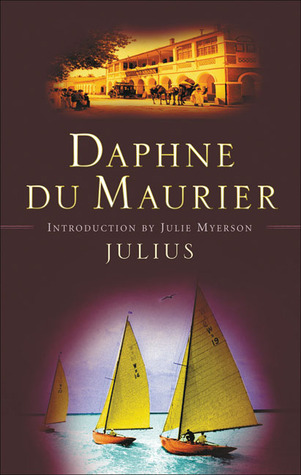
Julius by Daphne du Maurier

Julius This book was originally published under the title The Progress of Julius and is the chilling story of an ambitious and ruthless man who goes through life determined to get “something for nothing” and not caring who gets hurt in the process.

The novel begins in 1860 when Julius Levy is born into a family of French peasants who live in a small village on the banks of the Seine. The biggest influences on Julius’s early life are his loud, coarse grandfather and irresponsible mother, but he later grows closer to his father, Paul, a quiet Jewish man. With the outbreak of the Franco-Prussian war the Levys take refuge in Paris until a tragedy results in Julius and his father fleeing for the safety of Paul’s home country, Algeria.

At first, Julius plans to follow a religious life, but he soon finds that buying and selling in the marketplace holds more attraction for him and that he enjoys cheating people out of their money. When life in Algeria starts to bore him, Julius travels to England where he begins to build up a huge business empire. But even as Julius becomes one of the richest and most successful men in the world, he continues to show a complete lack of regard for the people around him, using and manipulating them to get what he wants…until his daughter Gabriel is born.

This was Daphne du Maurier’s third novel, published in 1933 when she was only twenty six years old and it amazes me that she was able to write such a sophisticated, powerful novel at such an early stage of her career. I’ve found that all of du Maurier’s books have some dark and disturbing elements, but this must surely be the darkest and most disturbing of them all – though not in a gothic way like Rebecca or Jamaica Inn. The main reason I found this book so disturbing is because Julius Levy is one of the most horrible, despicable characters I’ve ever come across in literature.

He’s completely heartless, cruel and callous with no redeeming features at all. Early in the story when the Levy family are forced to leave their village for Paris, Julius drowns his beloved cat rather than leave her with a neighbour, because if he can’t have her he doesn’t want anyone else to have her. This is an early indication of what Julius is like and as the story continues there are dozens of other examples of his selfishness and cruelty. And yet, for some reason, he still inspires feelings of love and friendship in other people, which is hard to understand as he rarely, if ever, shows any consideration or compassion for anybody but himself – they always come second to his latest money-making schemes.

As usual, du Maurier’s settings are wonderfully atmospheric, from the small French village of Puteaux to the dusty marketplaces of Algeria to the area of London in which Julius gets his first job in a bakery. The historical setting, beginning with the Franco-Prussian War and the Siege of Paris, is interesting too. This was not one of my favourite du Maurier novels (it was much too uncomfortable and unpleasant for that) but, like all of her books, it kept me gripped and fascinated from the first page to the last.