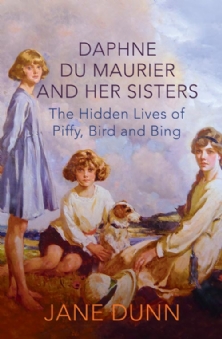
Daphne du Maurier and her Sisters: The Hidden Lives of Piffy, Bird and Bing by Jane Dunn

Daphne du Maurier and Her Sisters I don’t read a lot of biographies but I was pleased to have the opportunity to read this one as Daphne du Maurier is one of my favourite authors. Jane Dunn has previously written a book on Virginia Woolf and her sister Vanessa Bell and another about Elizabeth I’s relationship with Mary Queen of Scots, but this is the first time I’ve read any of her work.

Daphne du Maurier and Her Sisters, as the title suggests, tells the story of not just Daphne, but also her two sisters, Angela and Jeanne – or Piffy, Bird and Bing as they were nicknamed. Rather than looking at each of the sisters’ lives separately, Dunn blends their three stories together and shows us the different ways they reacted to the same experiences and the influence they had on each other both as people and as writers or artists.

The three girls were born into a family of celebrities at the turn of the 20th century. Their father, Gerald, was a famous actor and theatre manager and their mother, Muriel Beaumont, was also an actress, while their grandfather, George du Maurier, was a successful writer. Angela (Piffy), Daphne (Bing) and Jeanne (Bird) had a rich and privileged childhood, but not always a very happy one. With a mother who could often be very distant, it was the flamboyant, theatrical Gerald who was the biggest influence on his daughters’ lives – sometimes in a good way and sometimes bad. He was a popular, charismatic man but also a selfish and spoiled one who liked to be the centre of attention and Daphne, who was less outgoing than her sisters, soon grew to resent the non-stop parties and socialising.

As Daphne is by far the most famous of the du Maurier sisters, it’s natural that most people who pick up this book will do so because they want to learn more about Daphne’s life. Having read Justine Picardie’s novel, Daphne, I already knew some of the basic facts – her difficult marriage to the soldier, Tommy ‘Boy’ Browning; her obsession with Menabilly, the house in Cornwall that became the model for Manderley in Rebecca – but I was keen to find out more about the author whose books I love so much. As a fan of Daphne’s novels I was hoping there would be more information on her work, so I was slightly disappointed that Dunn devotes no more than one or two pages to most of her novels, although it was enough to show me how Daphne’s writing related to various aspects of her life and I can now see how autobiographical many of her books were, particularly The Parasites and I’ll Never Be Young Again.

Yet despite my interest in Daphne, of the three du Maurier sisters the one I found I really liked and sympathised with was Angela. Dunn portrays Angela as a passionate, romantic and naïve girl who was eager to please but often felt inadequate and inferior, aware that she was not as pretty as Daphne and not her parents’ favourite. After a failed acting career, Angela wrote several novels but again found herself overshadowed by the success of her younger sister. Whenever she was mistaken for Daphne and asked if she was the novelist she would reply “I’m only the sister” which even became the title of her autobiography. The youngest sister, Jeanne, is not given as much attention in this book as Daphne and Angela, though this is understandable as less is known about her. Daphne and Angela both left behind a legacy of written work which Dunn is able to quote from, but in Jeanne’s case there is less material to work with especially as her life-long partner, the poet Noël Welch, chose not to cooperate.

I was completely gripped by the first few chapters of this book. I loved reading about the du Mauriers’ early years and meeting these three creative, imaginative little girls who enjoyed re-enacting their favourite scenes from Peter Pan and creating their own games and fantasy worlds. The descriptions of life after World War I – the Jazz Age of the 1920s and the lifestyles of the ‘Bright Young Things’ – were also fascinating. But as the sisters grew older and Dunn began to focus on constant holidays to France and Italy, and an endless cycle of friendships and love affairs, I thought the book started to become more repetitive and less interesting.

While I didn’t find this book as enthralling as the first few chapters led me to expect, I did still enjoy getting to know Piffy, Bird and Bing and have been left wanting to read the remaining Daphne du Maurier novels I still haven’t read, as well as maybe trying to find one of Angela’s.

I received a copy of this book for review via Netgalley

The King’s General by Daphne du Maurier

The Kings General If you asked me to name my favourite author I wouldn’t be able to give a definitive answer; there are so many that I love and I would find it hard to single one out. But one name that would always be high on my list is Daphne du Maurier. I’ve read twelve of her books now, including this one, and I can honestly say I’ve enjoyed all of them.

The King’s General is set in seventeenth century Cornwall, during the English Civil War. Our narrator is Honor Harris, whose family are Royalists fighting for the King against the Parliamentarians. Honor is eighteen years old when she meets and falls in love with Richard Grenvile but on the day before their wedding tragedy strikes and the marriage never takes place. As the years go by, Richard rises through the ranks of the army, marries another woman and has children, while Honor stays in the Harris family home and remains single.

As the war intensifies and the fighting spreads throughout Cornwall, Honor joins her sister and brother-in-law in the safety of their home, Menabilly, and here she meets Richard again for the first time in fifteen years. He has left his wife, bringing their fourteen-year-old son, Dick, with him, and is now commanding the Royalist forces as the King’s General in the West. Richard and Honor discover they still love each other as much as before and although she refuses to marry him, they begin an unusual relationship that withstands the war, betrayal and rebellion going on around them.

I wasn’t sure at first that I was going to like this book. The first chapter was very confusing – it’s narrated by an older Honor looking back on her life and reflecting on people and events that we know nothing about yet, before going back in time in the next chapter to tell her story from the beginning. But as soon as Honor and Richard had their first meeting on the battlements of Plymouth Castle I knew I needn’t have worried! After I finished the book I went back to re-read the first chapter and it did make a lot more sense.

The King’s General is historical fiction rather than the gothic suspense Daphne du Maurier is probably better known for, but there are still elements of the gothic here, mainly in the atmospheric descriptions of Menabilly with its secret tunnels, hidden chambers and mysterious noises in the night. Menabilly (the inspiration for Manderley in Rebecca) was du Maurier’s home in Cornwall and previously belonged to the Rashleighs, one of the families featured in The King’s General. It was apparently the story of a discovery at Menabilly by William Rashleigh in the 19th century that inspired the writing of this novel.

But while this book could be described as historical romance, as you might expect from du Maurier the romance between Richard and Honor is not a conventional one and neither of the two main characters is a typical romantic hero or heroine. Even people who like flawed characters (and I usually do) might have trouble with Richard as he is not a very pleasant person at all. He’s ruthless, arrogant and cruel and the way he treats his shy, nervous son Dick is particularly horrible. I couldn’t help thinking that his relationship, or lack of it, with Dick reminded me of Heathcliff’s with his son, Linton, in Wuthering Heights and of course, many of du Maurier’s books do have a strong Brontë influence. The only point in Richard’s favour is that he does seem to truly love Honor and in the scenes where they are alone we sometimes see a more human side to him. Honor herself is another strong and complex person. I didn’t always agree with the decisions she made but I admired her courage in helping to protect her family and friends throughout the war and her strength in dealing with the disaster that befell her early in the story. I deliberately haven’t told you exactly what this disaster was because if you can manage to avoid knowing before you start to read the book, it will probably have more impact!

Du Maurier had obviously put a lot of effort into her research for the novel. Although this is a fictional story, the various battles and other historical events in the book did take place as described and most of the characters were real people recorded in history, including both Richard Grenvile and Honor Harris. The Civil War (actually three separate wars between 1642 and 1651) is not a period of English history I have read much about. I know the basics that we were taught at school – that the Royalists (Cavaliers) were defeated by the Parliamentarians (Roundheads), and King Charles I was beheaded and replaced by the Lord Protector, Oliver Cromwell – but beyond that, I don’t know very much at all. That wasn’t necessarily a bad thing, because my total lack of knowledge of the Battle of Lostwithiel, for example, or the Siege of Plymouth Castle, meant that I never knew what was going to happen next.

While The King’s General doesn’t rank as one of my top three or four Daphne du Maurier novels I still loved it and am looking forward to the remaining du Maurier books I still haven’t read.

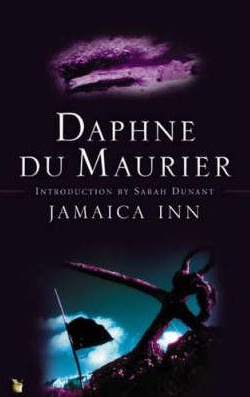
Jamaica Inn by Daphne du Maurier (re-read)

After her mother’s death, Mary Yellan goes to live with her Aunt Patience and Uncle Joss at their inn on Bodmin Moor in Cornwall. But during the coach journey to her new home, Mary hears some disturbing things about Jamaica Inn and its landlord. Soon Mary makes her own shocking discoveries about Joss Merlyn’s activities and finds herself drawn into his villainous schemes while trying to protect her frightened, nervous Aunt Patience. And when Mary is befriended by two very different men – one of them her uncle’s horse thief brother, Jem Merlyn, and the other Francis Davey, the albino vicar of Altarnun – she must decide which, if either, she can trust.

This was actually a re-read for me, although it’s been so long since I first read it that all the details of the plot had completely faded from my mind. What I did remember was being disappointed. When I read it for the first time it was immediately after finishing Rebecca (which I loved – and which is still one of my favourite books ever) and Jamaica Inn just wasn’t as good. This was more than ten years ago though, so I recently decided to give it a second chance. And I did enjoy the book much more this time than I did the first time, maybe because now that I’ve read so many of du Maurier’s other novels it meant I could consider Jamaica Inn in the context of a wider body of work rather than solely in comparison with Rebecca.

Like many of du Maurier’s other books, this one is dark, gothic and atmospheric. Published in 1936 but set in the early 1800s, it has a lot of the traditional elements you would expect to find in a gothic novel (stormy weather, smugglers, locked rooms, shipwrecks, desolate moors, a remote, lonely inn). There are also some memorable characters – Mary herself is an intelligent and courageous heroine, and I know I said that I couldn’t remember much from my previous read, but I certainly hadn’t forgotten the character of her violent, brutal Uncle Joss!

So, Jamaica Inn is not one of my favourite du Maurier novels but not my least favourite either. It does not have the depth and complexity of Rebecca or some of her later novels, but then this one was written near the beginning of her career and is a good early example of her work. The plot is not particularly complicated and I found it quite predictable but du Maurier’s skill at creating tension and suspense meant that I still enjoyed reading it.

The Loving Spirit by Daphne du Maurier

If you’ve been following my blog for a while you’ll know that Daphne du Maurier is one of my favourite authors, so when I saw that Simon of Savidge Reads and Polly of Novel Insights were hosting a Discovering Daphne event throughout October I knew I’d have to read at least one du Maurier book this month. There are still plenty of her books that I haven’t read yet, but I decided I wanted to go back to the start of her career and read her first novel from 1931, The Loving Spirit.

The Loving Spirit is a family saga spanning four generations of the Coombe family. It begins in 1830 with the story of Janet Coombe, a passionate young woman who is forced to abandon her dreams of going to sea when she marries and settles down to start a family with her husband, a boat builder. We then move forward through the decades, ending one hundred years later in the 1930s. Along the way we meet Janet’s son, Joseph, her grandson, Christopher, and finally her great-granddaughter, Jennifer. The book is divided into four parts, one devoted to each of the main characters, but I won’t go into any plot details here as each story has its own set of dramas and surprises which I’ll leave you to discover for yourself.

Although this is a family story and doesn’t have the gothic feel of some of du Maurier’s other books, there are hints of the supernatural in the way the stories of the four Coombes are connected, particularly Janet’s and Joseph’s. The link between the four sections of the novel is the ‘loving spirit’ of Janet Coombe which seems to be watching over each successive generation. And this is probably a good place to mention the Emily Brontë poem, Self-Interrogation, which inspired the title of this novel:

“Alas! The countless links are strong
That bind us to our clay;
The loving spirit lingers long,
And would not pass away!”

Du Maurier had a real talent for giving her novels atmosphere and a strong sense of place, and this book is no exception. The Coombe family live in Plyn, a fictional shipbuilding town on the coast of Cornwall, and you can expect some beautiful, vivid descriptions of the Cornish coastline, the sea and Plyn itself. I’m really not a fan of books about boats and sailing, but luckily the actual seafaring action and terminology is kept to a minimum here. Instead, the focus is on the passion Janet, Joseph and other members of the Coombe family feel for the sea – and the ways in which sailing and the shipping industry become an intrinsic part of their lives.

There are some interesting supporting characters too, including one of my favourites, Jennifer’s grandmother. Du Maurier’s wonderful sense of humour comes through here in some of the dialogue in which the grandmother, who is starting to lose her hearing, constantly misinterprets what Jennifer is saying. For this reason, and also because Jennifer was the character who felt the most real to me, this final section of the novel was probably my favourite.

The Loving Spirit is not one of the better du Maurier novels I’ve read, but as a debut novel published when she was only twenty-four years old I did still find it quite impressive. It’s interesting to be able to compare it with her later novels and see how her writing developed throughout her career.

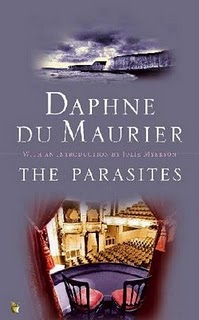
The Parasites by Daphne du Maurier

After reading the first few chapters of Daphne du Maurier’s The Parasites I had a feeling I wasn’t going to enjoy this book. I was finding the story very difficult to get into and I didn’t like any of the characters. But because Du Maurier is one of my favourite authors I decided I didn’t want to give up on the book just yet…and guess what? I ended up loving it! I should have known Daphne wouldn’t let me down.

The Parasites is a study into the lives of the Delaney family: Mama, a famous dancer, and Pappy, a successful singer, and their three children, Maria, Niall and Celia. The story begins one day in the 1940s when Niall and Celia, now adults, are spending the weekend at the home of Maria and her husband, Charles. It’s Charles, losing his temper with them, who refers to the three siblings as ‘parasites’…

“You always have been and you always will be. Nothing can change you. You are doubly, triply parasitic; first, because you’ve traded ever since childhood on that seed of talent you had the luck to inherit from your fantastic forebears; secondly, because you’ve none of you done a stroke of ordinary honest work in your lives, but batten upon us, the fool public who allow you to exist; and thirdly, because you prey upon each other, the three of you, living in a world of fantasy which you have created for yourselves and which bears no relation to anything in heaven or on earth.”

He then leaves the house in a rage, and Maria, Niall and Celia are left alone to wonder what his words meant and if it’s true that they really are ‘parasites’. Through a series of flashbacks and memories, the Delaneys spend the rest of the novel looking back at their childhoods and the things that turned them into the adults they are today.

One of the striking things about this book was the lack of one distinct narrator. Sometimes the three siblings seem to be narrating together, all speaking with one single voice, which was very unusual. It’s difficult to explain, but if you read the book you’ll see what I mean! As I read, I couldn’t help thinking that Maria, Niall and Celia must represent three different sides to Daphne du Maurier’s own personality; she writes so convincingly about all three characters and really gets inside their heads. And of course, her own father was the actor Gerald du Maurier and her mother the actress Muriel Beaumont, so she would have known what it was like to be the child of famous parents and could bring some of her personal experiences into this novel.

Maria, who becomes a famous actress, and Niall, who finds success as a songwriter, are stepbrother and stepsister and have a very strong bond. In her introduction to the book, Julie Myerson compares Maria and Niall with Cathy and Heathcliff from Wuthering Heights. I don’t think this would have occurred to me, but after it was pointed out I could definitely see the parallels.

Celia is half-sister to the other two, sharing a mother with Niall and a father with Maria. Although she also has a strong bond with them both, Celia often feels left behind. Despite her own talent for drawing and writing, she puts other people before herself and stays at home while her brother and sister go off to pursue their dreams. Of the three main characters in the book Celia was the only one who I liked and understood; some of the chapters where she takes a central role are very moving. I really disliked both Maria and Niall, who seemed to me to be very selfish characters who only ever thought about themselves. I found it difficult to feel any sympathy for either of them.

The Parasites may sound like a very serious novel, but there’s actually a good balance of drama and comedy. Some of the scenes are quite funny – in one of my favourite chapters, the Delaney family visit Charles and his parents at their country estate for the first time after Maria’s wedding and completely embarrass themselves! It was nice to see du Maurier’s sense of humour really shining through in this novel.

There are other du Maurier books that I’ve enjoyed more than this one, but after a slow start The Parasites turned out to be much better than I expected. It reminded me a lot of I’ll Never Be Young Again, one of her earlier novels, which was also very character-driven and personal. If you prefer her gothic, suspense-filled novels you may be disappointed, but if you want to try a different type of du Maurier book then hopefully you’ll enjoy this one as much as I did.

The Flight of the Falcon by Daphne du Maurier

Having read most of Daphne du Maurier’s more popular books I’m now slowly working through her lesser known novels (though I’m saving Frenchman’s Creek for last as I’m expecting to love that one and want to have something to look forward to). Published in the 1960s, The Flight of the Falcon was one of her final novels and although I didn’t think it was one of her best, I did still enjoy it. If you’re new to du Maurier I would recommend reading some of her other books first, but this one is definitely worth reading too.

Our narrator, Armino Fabbio, works for Sunshine Tours and at the beginning of the book he is showing a group of British and American tourists the sights of Rome. By chance he becomes indirectly involved in the murder of an elderly peasant woman, who he believes he recognises as his childhood nurse, Marta. Deciding to visit Ruffano, the town of his birth, in an attempt to find out what had happened to Marta, Armino begins to uncover some shocking family secrets.

After Armino’s arrival in Ruffano (which is based on the real Italian city of Urbino), the story begins to revolve around the city’s university and the rivalry between the Arts students and the Commerce & Economics students. The battle between these two groups reaches its climax during the preparations for a festival re-enacting the final moments of the city’s fifteenth-century ruler, the evil Duke Claudio – also known as The Falcon.

As I think I’ve said every time I’ve written about a du Maurier book, one of the things I love most about her writing is the atmosphere she creates. In The Flight of the Falcon she succeeds in making Ruffano, with its medieval streets, historic churches and ducal palace, seem beautiful and picturesque but claustrophobic and forbidding at the same time. Whether she’s writing about Cornwall, Italy, France or any other part of the world, her settings always feel vivid and real.

Not everything about this book worked for me, though. I found I didn’t really care about the university politics and rival student groups, which formed such a big part of the plot. I was much more interested in Armino’s personal story. Armino himself is not the strongest of characters, but I was fascinated by his relationship with his elder brother, Aldo. And I hadn’t realised how many of du Maurier’s novels have male narrators! My Cousin Rachel, The Scapegoat, The House on the Strand, I’ll Never Be Young Again and now this one. Are there any others?

In October, Simon from Savidge Reads and Polly of Novel Insights are hosting a ‘Discovering Daphne’ season, so if you still haven’t read any of Daphne’s books that could be a good time to start.

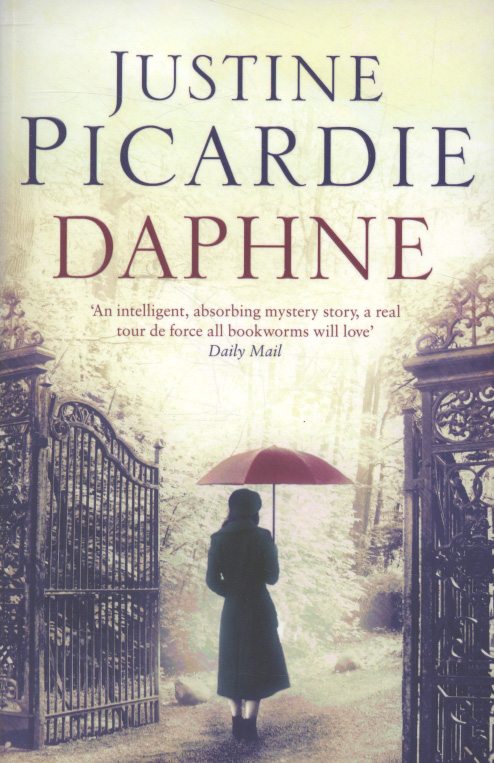
Daphne by Justine Picardie

Justine Picardie’s novel Daphne features one of my favourite authors, Daphne du Maurier, as the main character. We first meet Daphne in 1957, an eventful time in her life. Having discovered that her husband has been having an affair, she throws herself into her current project: a biography of Branwell Brontë. Daphne is convinced that Branwell has been unfairly treated by literary historians. She believes that he may have been capable of writing a novel to rival Wuthering Heights or Jane Eyre and that he may even have been the author of some of the works attributed to his more famous sisters. As part of the research for her new biography Daphne begins corresponding with Alex Symington, a Brontë scholar who shares her views on Branwell. But Symington has some secrets in his past. Can he be trusted?

Another thread of the novel takes place in the present day and is narrated by a student who is busy writing her PhD thesis on Daphne and the Brontes. The story of the shy, naïve student and her difficult relationship with her older husband, Paul, is clearly supposed to mirror the story of Maxim de Winter and his young wife in du Maurier’s Rebecca. Paul even has a glamorous ex-wife, reminiscent of Rebecca herself.

Whenever I read a novel with multiple time frames I usually find that I’m more interested in the historical parts than in the modern day sections, but with Daphne I thought all three strands of the story were equally interesting. The chapters which deal with the characters of Daphne and Symington seemed to be well-researched and were very informative. We learn a lot about Daphne’s relationship with her father, the actor Gerald du Maurier. We are also shown how Daphne was feeling the pressures of being a famous author, how she felt haunted by the ghost of Rebecca and could only truly relax when she was at Menabilly, her Cornwall home. And Picardie explores the link between Daphne and the Llewelyn Davies brothers, particularly Peter, who was the inspiration for J.M. Barrie’s Peter Pan.

I should warn you that if you haven’t read any of Daphne du Maurier’s novels yet you may come across some spoilers, particularly for Rebecca, so you might want to read that one first. I would highly recommend reading Rebecca anyway – it’s a fantastic novel and one that I’ve read and loved several times. I thought Daphne lacked the magic of du Maurier’s own novels and I don’t feel the desire to read it again and again as I have with Rebecca, but it was still an enjoyable book. If you’re interested in du Maurier, the Brontes or literary mysteries with a gothic feel, I’d suggest giving Daphne a try.