 This week Karen of Kaggsy’s Bookish Ramblings and Simon of Stuck in a Book are hosting another of their very popular clubs in which we all read and write about books published in the same year. It’s 1940 Club this time and I’ve decided to start with a book by an author I already know and love – Elizabeth Goudge. The Bird in the Tree is the first in her trilogy of books about the Eliot family who live at Damerosehay, a house on the south coast of England.
It was the widowed Lucilla Eliot who had first chosen to make her home here, in this little shipbuilding village in Hampshire, but Damerosehay has now become a sanctuary for the whole family. As the novel opens, in the autumn of 1938, Lucilla’s son George has separated from his wife and their three young children have been sent to stay with their grandmother. Lucilla’s maid and beloved companion Ellen, her middle-aged daughter Margaret, and two very different dogs – Pooh-Bah and the Bastard – complete the household, while nearby lives Lucilla’s son, Hilary, the village parson.
At the beginning of the novel, the family are awaiting the arrival of another of Lucilla’s grandsons, twenty-five-year-old David. David’s father, Lucilla’s favourite son, died at the end of the Great War and he and his grandmother have always been very close. George’s children love David too and are excited about their cousin coming home to Damerosehay. However, David’s visit is destined to be an unhappy one this time. He has fallen in love with George’s ex-wife, Nadine – his aunt by marriage – and plans to marry her. David is dreading breaking the news to Lucilla, let alone his three little cousins, and knows he will be forced to choose between his feelings for Nadine and his love for his home and family.
Although this is a book for adults, Goudge writes about children with a lot of depth and understanding. In this book, we have nine-year-old Ben, gentle, sensitive, with a vivid imagination; his younger brother, the robust and mischievous Tommy, his complete opposite in every way; and five-year-old Caroline, a quiet, withdrawn child who sucks her thumb and wants only to feel loved by her mother. The adult characters are equally well drawn. I particularly liked Lucilla’s two unmarried children, Margaret and Hilary, dismissed by their mother for being a ‘dowdy frump’ and ‘stout and bald’, respectively, but who have both decided that even though their lives haven’t gone quite the way they had hoped, they’re going to make the best of things and find happiness wherever they can. Nadine is another character who interested me; she is also disapproved of by Lucilla for being too independent and worldly, but the two begin to find some common ground by the end of the book.
Goudge’s descriptive writing is always beautiful and in this novel she brings the fictional Hampshire village of Fairhaven to life with details of local customs, history and legends, basing it on the real village of Buckler’s Hard on the banks of the Beaulieu River. She makes the setting feel almost dreamlike, especially as there are a few elements of the story that are nearly, but not quite, supernatural. Several of the family members, including Lucilla, David, Ben and Caroline, have such a close affinity with Damerosehay and Fairhaven that they begin to experience visions and ghostly encounters, but these appear to be within their imaginations rather than real. There’s also a recurring motif of birds, particularly blue birds, which explains the novel’s title.
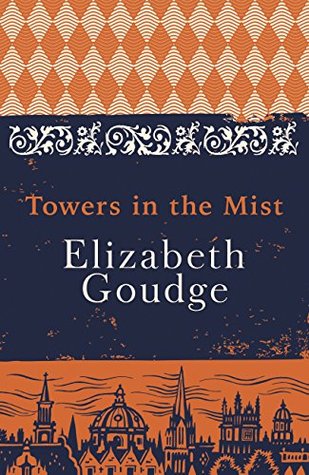
This novel, like Goudge’s others, feels very sentimental and quite dated, especially in its views on subjects like divorce and marriage, but I enjoyed it anyway. Towers in the Mist is still my favourite of her books – I loved the beautiful depiction of Elizabethan Oxford – but I’m looking forward to reading the other two books in this trilogy, The Herb of Grace and The Heart of the Family.

 She Reads Novels