The Girl in the Glass Tower by Elizabeth Fremantle

the-girl-in-the-glass-tower One of the things I like about Elizabeth Fremantle’s historical novels is that they deal with women whose stories aren’t told very often: Penelope Devereux in Watch the Lady, Katherine and Mary Grey in Sisters of Treason and Katherine Parr in Queen’s Gambit. In this, her fourth novel, she writes about two more – Arbella Stuart and Aemilia Lanyer.

The Girl in the Glass Tower is set towards the end of the Elizabethan period, with England waiting anxiously for Elizabeth I, growing old with no children of her own, to name her heir. Born in 1575, Lady Arbella Stuart is the granddaughter of Margaret Douglas, Henry VIII’s niece, and therefore a possible claimant to the throne. Her other grandmother, the formidable and ambitious Bess of Hardwick, Countess of Shrewsbury, is determined to make this possibility a reality – and so Arbella grows up in isolation at Hardwick Hall, sheltered and protected from those who might try to plot against her.

Being close to the throne, however, doesn’t bring Arbella happiness and when her cousin, James VI of Scotland, is finally named as Elizabeth’s successor, she feels that her whole life has been wasted waiting for something that now looks unlikely to happen. Sadly, though, there is still more trouble ahead and when she makes the decision to marry William Seymour, who himself has Tudor blood, Arbella finds herself imprisoned again, this time in the Tower of London.

Arbella’s story alternates with the story of the poet Aemilia Lanyer, author of the poetry collection Salve Deus Rex Judaeorum. Aemilia (whom I have read about previously in Dark Aemilia by Sally O’Reilly) is sometimes considered to have been the ‘Dark Lady’ of Shakespeare’s sonnets, but this theory is not the focus of this novel, which concentrates on other aspects of Aemilia’s life instead: how she coped financially after the end of her affair with her rich lover, Lord Hunsdon, and the death of her husband, Alfonso; her work as a poet and as a teacher; and her relationship with her son, Henry.

For both women’s stories, Elizabeth Fremantle sticks to the known historical facts as far as possible, but where details are not known – particularly where Aemilia is concerned – she takes the opportunity to use her imagination. There is no evidence that the two women were friends, for example (although they would probably have been at court at the same time and Aemilia did dedicate one of her poems to Arbella), but Fremantle imagines that they were and that their lives became closely linked.

I loved following Arbella’s story – I’d only read about her once before, in Maureen Peters’ The Queenmaker, which is written from Bess of Hardwick’s perspective, so it was interesting to see things from another point of view, with Bess almost as a villain, controlling and manipulating her granddaughter’s life. I found Aemilia’s sections of the book slightly less absorbing, maybe because I didn’t like the device Fremantle uses of having Aemilia looking back on her relationship with Arbella from a point several years into the future. Still, I thought her story worked well alongside Arbella’s and provided an interesting contrast; unlike Arbella, whose destiny is always in the hands of other people, Aemilia has a much greater degree of freedom, her own struggle being mainly for financial independence and the respect of her son.

I also appreciated the way Fremantle pulls aspects of her previous novels together in this one – Penelope Devereux, the Earl of Essex’s sister from Watch the Lady, has a role to play, and the memory of Katherine Grey from Sisters of Treason is a strong presence in Arbella’s life. The Girl in the Glass Tower is a sad novel, but one that I enjoyed reading – and now I’m wondering who Elizabeth Fremantle will choose to write about next.
Watch the Lady by Elizabeth Fremantle

watch-the-lady I’ve fallen behind with Elizabeth Fremantle’s books; having read Queen’s Gambit and Sisters of Treason shortly after they came out, the publication of her next book – Watch the Lady – seemed to escape my notice and now there’s also a fourth novel, The Girl in the Glass Tower. I discovered that my library had both and decided that Watch the Lady, her novel about the 16th century noblewoman Penelope Devereux, would be the next one I read.

Penelope’s story is one that is not often told; she has appeared as a minor character in other books I’ve read set during the Elizabethan period, such as Elizabeth I by Margaret George, but this is the first novel I’ve come across in which she is the main character.

Penelope is related to Elizabeth I through her mother, Lettice Knollys, a granddaughter of Mary Boleyn, Elizabeth’s aunt. Lettice has incurred the Queen’s displeasure by secretly marrying Robert Dudley, the man said to be Elizabeth’s own love interest, and has been exiled from court. Lettice’s children, however, are still welcome and Penelope’s handsome, dashing brother, Robert Devereux, Earl of Essex, has become a particular favourite of Elizabeth’s. As Essex rises higher and higher in the Queen’s favour, his enemies plot to pull him down and Penelope must do everything in her power to protect her brother and keep the family’s ambitions alive.

While Essex’s turbulent career, which is marked by military defeats, trials and banishments and ends in the Essex Rebellion of 1601, is followed in detail, Penelope herself is the real focus of the novel. Penelope is considered to be one of the beauties of the Elizabethan court and the inspiration for the poet Philip Sidney’s Astrophil and Stella sonnet sequence. The real nature of her relationship with Sidney is uncertain, but Fremantle gives one interpretation here. Penelope’s unhappy marriage to Lord Rich and her later love for Charles Blount are also described, but I was less interested in these parts of the story and I don’t think the balance between the romance and the politics in this book was quite right for me.

I did like the way Penelope is portrayed – a strong, intelligent and ambitious woman, but one who is still convincing as an Elizabethan woman, rather than feeling like a modern day character dropped into a historical setting – and Essex, if not very likeable, is always interesting to read about. Elizabeth’s adviser, Robert Cecil, however, is very much the villain of the novel; there are several chapters written from his perspective and from the beginning he is shown to be working against Essex and his family, acting on his father’s advice that people need someone to hate and that if he can learn to be that hated person he will be indispensable. I think Cecil does a good job of making himself hated, and it wasn’t until near the end of the book that I began to have some sympathy for him.

I enjoyed reading Watch the Lady and getting to know Penelope Devereux, but this is not my favourite of the three Elizabeth Fremantle novels I’ve read so far, partly because, as I’ve mentioned, Penelope’s love life didn’t interest me all that much, and also because I prefer the periods of Tudor history covered in Queen’s Gambit and Sisters of Treason. I’ve now moved on to The Girl in the Glass Tower and am finding it a much stronger novel; my full thoughts on that one should be coming soon.

Two from Maureen Peters

Maureen Peters (1935-2008) was a Welsh historical novelist and yet another forgotten author whose work is being reissued for a modern audience by Endeavour Press. It seems that Peters was very prolific, writing over one hundred books under several different pseudonyms; most of them were fictional biographies of historical royalty, but she also wrote romances, Gothic novels, family sagas and mysteries. Having now had the opportunity to read two of her books I thought I would combine my thoughts on both of them into one post.

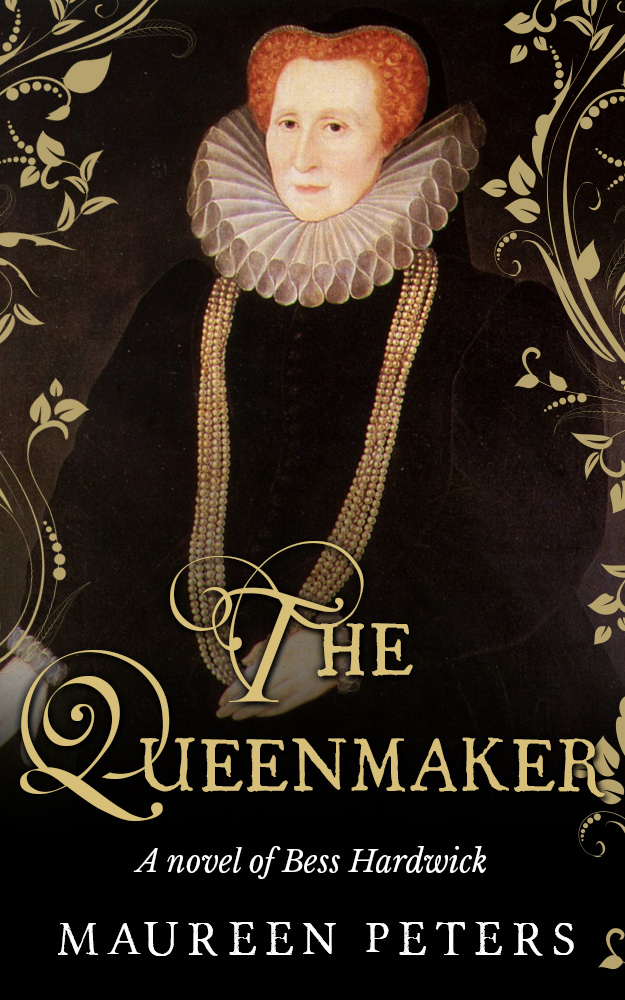
The Queenmaker The first book I’m going to talk about, The Queenmaker (1975), tells the story of Bess Hardwick, one of the richest and most notable women of the Elizabethan court, responsible for the building of great houses such as Chatsworth and Hardwick Hall. Born in Derbyshire, Bess is married at an early age to Robert Barlow, the heir of a neighbouring family, and finds herself a widow within a year. She will marry three more times over the course of her life and with each marriage her wealth increases and her position in society advances. She becomes a friend of Elizabeth I (the queen acts as godmother to her first son), and also has the opportunity to get to know Mary, Queen of Scots during her captivity in England.

With power and influence, though, comes the threat of danger. When Bess arranges a marriage for her daughter with Charles Stuart (son of the Countess of Lennox, Henry VIII’s niece), the family instantly come under suspicion because the child of this marriage, a little girl called Arbella, has Tudor blood and therefore a claim to the crown. As the years go by and Arbella grows into a woman, Bess becomes more and more convinced that her granddaughter will be named heir to the throne and that she – Bess Hardwick – will go down in history as a queenmaker.

Before reading this book I knew very little about Bess; I had come across her name several times in books set at Elizabeth’s court, but I couldn’t have told you any details of her personal life or her accomplishments. Because so much in this novel was new to me, I found it quite an enjoyable read. Obviously I knew that Bess wouldn’t achieve her ambition and Arbella wouldn’t become queen, but I was still interested to see how the story would unfold. However, I thought this book was too short to be completely satisfying. Trying to give an account of an entire life in under 200 pages means leaving big gaps in the story and jumping forward by several years at the start of every chapter. A longer novel would have allowed characters and events to be explored more thoroughly.

The Virgin Queen The Virgin Queen (1972) is another quick and fairly entertaining read which, as the title suggests, focuses on the life of Elizabeth I herself this time. Our narrator is Tomasin Drew, Elizabeth’s friend and companion, who first meets the future queen when Elizabeth is still a young girl living in the household of her stepmother, Katherine Parr. Tomasin remains with the queen for more than fifty years, offering support and friendship throughout the key moments of her life and reign.

Elizabeth is portrayed as a spirited, flirtatious and capricious woman, if not a very likeable one: a strong character, who jumps out of the pages of this novel, unlike Tomasin who stays in the background. Tomasin’s role is as an observer, reporting and commenting on events for the reader; her own personal story is left undeveloped, putting the spotlight firmly on Elizabeth. As with The Queenmaker, though, the approach Maureen Peters takes is disappointingly simplistic. This is another very short novel – too short to look at Elizabeth’s life in any real depth – and there’s nothing new here for those of us who have read about Elizabeth I many times before.

I think both The Virgin Queen and The Queenmaker might be good choices for younger readers or those who simply want a quick introduction to the Elizabethan period (while being aware that not everything in these books will be completely accurate – I spotted at least a few statements for which there is no historical proof, such as Anne Boleyn having six fingers on one hand). I haven’t ruled out reading more of Maureen Peters’ novels, but I’m not in any hurry to do so while there are so many other authors still to discover.

I received copies of both of the above novels via NetGalley for review.

Shadow of Night by Deborah Harkness

Shadow of Night This is the second book in the All Souls Trilogy by Deborah Harkness. I read the first, A Discovery of Witches, earlier this year and the third, The Book of Life, has just been published, which is what made me decide to pick up the middle book last week.

Shadow of Night follows witch Diana Bishop and vampire Matthew Clairmont as they travel back in time to the year 1590 with two goals in mind. The first is to hunt down Ashmole 782, an elusive manuscript which they hope will provide important information on the origins of their species – witches, vampires and daemons (known collectively as ‘creatures’). The second is to find another witch who can help Diana to understand and control her magical powers. Another benefit of leaving the present day behind is that Matthew and Diana will be able to escape the clutches of the other witches, vampires and daemons who have also been trying to get their hands on Ashmole 782.

Arriving in Elizabethan England, Diana discovers that Matthew is one of a group of writers, artists and scientists known as the School of Night, whose other members include Sir Walter Raleigh and Christopher (Kit) Marlowe. Reunited with his old friends again, Matthew also resumes one of his other occupations – spying for Elizabeth I. Meanwhile, Diana’s mission to find a witch willing to train her in the use of magic proves more difficult than expected in a time when public fear and suspicion of witches is increasing. Discovering that life in the past is no less complicated than it was in the present, Diana’s and Matthew’s adventures take them first into the heart of Elizabethan London, then to Matthew’s family estate at Sept-Tours in France and to the court of Rudolf II in Prague.

This book should have been perfect for me as I usually enjoy both historical fiction and time travel, but I think I actually preferred A Discovery of Witches. There were some parts of this book that I loved, but for such a long novel (nearly 600 pages) I found the pace very slow and uneven. It seemed that most of the book’s major developments all took place in the final 50-100 pages.

There are a lot of characters to keep track of in Shadow of Night and the character list at the back of the book was very useful. Diana and Matthew meet a huge number of real historical figures as they travel between London, Sept-Tours and Prague, but while some of these were very intriguing, such as the Rabbi Judah Loew who created the Golem of Prague, many of them had little or no relevance to the story. I couldn’t help thinking that they had been included just for the sake of it; I would rather have had fewer characters so that we could spend more time getting to know each one. I also really disliked the portrayal of Kit Marlowe in the book. I’m sure the real Marlowe would have been a fascinating character to write about in his own right; making him a daemon (a very spiteful, petulant daemon) added nothing to the story.

Matthew began to stretch my belief to its limits. Not only does he belong to the School of Night, he is also a member of at least one other secret organisation and an order of chivalry, a spy for Elizabeth I and a close personal friend of numerous famous historical figures from all over Europe. You may think that as I’m happy to accept that he’s a vampire I should be able to accept the rest of it too, but it all felt too convenient and just not believable in the context of the story. I do like Diana, partly because as she’s the narrator the reader naturally feels closer to her, but I would still like to see her take the lead more often when it comes to decision-making.

The time travel aspect of the book didn’t quite make sense to me either – it seemed that as Matthew was returning to an earlier period in his own life, he simply replaced his previous self for a while, but I’m not sure what was supposed to have happened to the 16th century Matthew in the meantime or what would happen when he came back. Time travel is always confusing, though, so I tried not to think about it too much! I did like the way each section of the book ended with a chapter set in the present day, showing how Matthew and Diana’s actions in the past affect the future. This also gave us a chance to briefly catch up with characters from the previous book such as Diana’s aunts, Sarah and Emily, and Matthew’s mother, Ysabeau.

Although I didn’t find this book as enjoyable as A Discovery of Witches, I think it maybe suffered from being the middle book in a trilogy. I will still be reading The Book of Life and hoping I don’t have any of the problems I had with this one!

Thanks to Headline for providing a copy of this book for review.

Dark Aemilia by Sally O’Reilly

Dark Aemilia Dark Aemilia is a fictional account of the life of Aemilia Lanyer, one of several women whose names have been suggested as possible candidates for the ‘Dark Lady’ of Shakespeare’s sonnets. She was also one of the first women in England to have a book of poetry published.

Born Aemilia Bassano, the illegitimate daughter of a Venetian musician at the court of Elizabeth I, Aemilia becomes the mistress of the much older nobleman Lord Hunsdon. When she discovers that she is pregnant, she is forced to leave court and is married off to another court musician, Alfonso Lanyer. However, the father of her child (according to Sally O’Reilly) is probably not Hunsdon, but a young playwright by the name of William Shakespeare.

Aemilia first meets Shakespeare at a performance of The Taming of the Shrew where she confronts him over his negative portrayal of women in the play. Not the best of starts to their relationship, but a brief affair follows – despite the fact that Shakespeare is already married. Aemilia finds a kindred spirit in William, a man who shares her love of poetry, literature and the theatre, before their affair comes to an end after a misunderstanding. Aemilia resigns herself to life away from court with Alfonso Lanyer and her beloved baby boy, Henry, but she is reunited with Shakespeare during an outbreak of plague in London. And when Henry becomes seriously ill, Aemilia is prepared to do anything to save his life.

My feelings about Dark Aemilia are very mixed. I would like to be able to say that I loved it, but that wouldn’t be true; in fact I came very close to abandoning it several times during the first half of the book. I felt that I was reading about nothing but Aemilia’s love affairs and at the risk of sounding like a prude, I thought the language was unnecessarily vulgar. I don’t always have a problem with that sort of thing, but in this case I didn’t feel that it was adding anything to the story. I kept reading, though, and somewhere in the middle of the book I found that I was finally being drawn in. The language remained bold and lively (and appropriate to the Elizabethan setting) but not as explicit as it was earlier on in the novel and the plot moved away from Aemilia’s love life to focus on other storylines.

As Sally O’Reilly states in her author’s note, the real Aemilia would not have been a feminist in the modern sense of the word, but her surviving poetry (such as the poem Eve’s Apology in Defense of Women) shows that she felt strongly about the roles of men and women. The fictional Aemilia speaks up on behalf of the female sex whenever she can, challenging the views of the men around her. As an intelligent and talented woman, she doesn’t have the opportunities that would have been open to her if she had lived today and she finds it very difficult to gain any recognition for her work. This leads to an interesting interpretation of the question of who actually wrote the plays attributed to Shakespeare – there’s no evidence that Aemilia had any involvement in them, but Sally O’Reilly’s theories work in the context of this novel.

Aemilia is a fascinating character and I was left wanting to know more about the real woman. William Shakespeare, though, is not really shown in a very good light and the portrayal of his romance with Aemilia didn’t feel completely convincing to me. They didn’t actually have many scenes together and when they did meet I didn’t sense much love or passion between the two of them – not until very near the end. There were other characters in the book who interested me more than Shakespeare did; I was particularly intrigued by Simon Forman, the astrologer who was said to have cured himself of the plague. And this is where I need to mention another aspect of Dark Aemilia: black magic and the occult. I won’t spoil the story by telling you exactly how this is woven into the plot, but I think this will be something you’ll either love or hate!

While I did have my problems with Dark Aemilia, in the end my lasting impression of the book is of the wonderfully vivid portrayal of Elizabethan England. The writing is very atmospheric and there are some great descriptions of dark, dirty streets, crowded marketplaces, the sights and sounds of the Globe Theatre, the frozen River Thames in winter and a London ravaged by plague. I’m pleased I persevered and followed Aemilia’s story through to the end and I would happily read more books by Sally O’Reilly.

I received a copy of this book from NetGalley for review.

The Lost Duchess by Jenny Barden

The Lost Duchess With a title like The Lost Duchess and an opening chapter set at the court of Elizabeth I, describing an encounter between one of the Queen’s ladies and Lord Hertford, you may think this sounds like just another Elizabethan court romance – but you would be mistaken. With the arrival of Sir Francis Drake bringing stories of his adventures in the New World comes the first hint of what this book is actually about. And when Emme Fifield, the lady who had that confrontation with Hertford, decides to join Governor John White’s expedition to establish a new colony at Chesapeake, it becomes clear that The Lost Duchess is going to be something fresh and different.

Emme is desperate to leave England and sail to the New World so that she can avoid the disgrace she knows she will face when her involvement with Lord Hertford is made public. In order to convince the Queen to let her go, she promises to return with reports on the colonies for Elizabeth and her spymaster, Sir Francis Walsingham, but Emme’s real intention is to stay in Chesapeake and build a new life there…especially when she begins to fall in love with one of her fellow travellers, the mariner Kit Doonan. But while Emme is trying to keep the truth about her past hidden from Kit, we learn that Kit also has some secrets of his own.

Emme and Kit are great characters and I enjoyed getting to know both of them, but the aspect of this book that I found the most interesting was the fate of the lost colony of Roanoke – the English settlement established by Sir Walter Raleigh in the 1580s before being abandoned with no trace of the colonists. The explanation for the colony’s disappearance is still a mystery today, but Jenny Barden suggests one possible theory which I thought was very convincing. And if you’re wondering why all of this is significant to the story told in The Lost Duchess, although the ship on which Kit and Emme set out from England is originally heading for Chesapeake, Roanoke is where they end up.

The voyage itself provides lots of exciting action as Emme and the other colonists face dangerous seas and the loss of their supplies, while finding themselves at the mercy of their Portuguese navigator, Simon Ferdinando, who may or may not be trying to betray them. Life becomes no easier when they land at Roanoke – poisonous fruit being one hazard and conflicts with the native people another. Having befriended Chief Manteo of the Croatoans, the settlers are hopeful that they can negotiate with the Native Americans but it seems that things have happened in the past which will make it difficult for them to live peacefully alongside each other.

Roanoke and its mysteries is a fascinating, unusual setting and I’m sure you’ll agree that it makes a change from the majority of Tudor/Elizabethan novels which tend to focus on royalty and life at court. Jenny Barden’s previous novel, Mistress of the Sea, sounds wonderful too and is linked with this one through the character of Kit Doonan’s brother, Will. I’m looking forward to reading it.

The Lost Duchess_Tour Banner_FINAL

I read The Lost Duchess as part of a blog tour. For more reviews, interviews and giveaways please see the tour schedule at Historical Fiction Virtual Book Tours.

Philippa Carr’s Daughters of England, Volumes 1-3

The Daughters of England Philippa Carr is one of the pseudonyms of the author also known as Jean Plaidy, Victoria Holt and others. As Victoria Holt she wrote gothic romance/suspense novels, as Jean Plaidy she wrote more serious historical fiction and it seems that her Philippa Carr books are somewhere between the two. The Daughters of England is a long series of twenty novels following successive generations of one family from the sixteenth century to the twentieth, where the narrator of each book is the daughter of the narrator from the previous one. The series was originally published between 1972 and 1995 but has now been released in ebook format by Open Road Media and I received the first three volumes from the publisher through Netgalley in the form of a 3-in-1 book, which is why I’ve waited until I’ve finished all three before writing my review.

The Miracle at St Bruno’s is where it all begins. Our narrator is Damask Farland, the daughter of a rich lawyer, who grows up in Tudor England during the reigns of Henry VIII, Edward VI and Queen Mary I, a time of political and religious change. The story revolves around Damask’s relationship with Bruno, a boy from the neighbouring St Bruno’s Abbey who believes he must be a miracle child because he was found as a baby in the Abbey’s Christmas crib.

This was a good introduction to the series and an excellent portrayal of what life was like during this time period. While Damask and her family may have been secure and prosperous during the reign of one monarch, as soon as the next one came to the throne with his or her different religious views, their safety was no longer guaranteed. I did find the plot very predictable and could see every ‘surprising’ revelation and dramatic twist coming a mile away, but maybe I’ve just read too many of this type of book!

Book Two, The Lion Triumphant, is the story of Damask’s daughter, Cat Kingsman, and is an exciting historical adventure novel. The setting this time is Elizabethan England and with the country preparing to defend itself against the Spanish Armada, England’s brave sailors are the heroes of the day. One of these sailors, Jake Pennlyon, captain of the Rampant Lion, is determined to make Cat his wife. Cat does everything in her power to convince him that she will never marry him, but when she is captured and taken aboard a Spanish galleon bound for Tenerife she finds herself at the mercy of Don Felipe, the Governor of the Canary Islands, who has sworn revenge against Jake and the woman he loves.

This was a great story and my favourite of the three books, though I actually felt guilty for enjoying it so much because the ‘hero’ is such a violent, arrogant man. Despite the female protagonists and the focus on history from a woman’s perspective, these really aren’t good books from a feminist point of view. Even by sixteenth century standards I’m not sure Jake’s behaviour (and Colum Casvellyn’s in the next volume) would have been considered acceptable! Still, at least Jake does have some redeeming qualities, unlike Colum…

The third book in the series, The Witch from the Sea, is narrated by Cat’s daughter, Linnet. With the Armada defeated and the Elizabethan era coming to an end, Linnet’s father is planning to set up a trading company with a friend, Fennimore Landor. It is expected that Linnet will marry Fennimore…until the night she is abducted by local squire Colum Casvellyn. Colum is a character who makes Jake Pennlyon seem like a saint, yet Linnet is attracted to him and eventually agrees to marry him.

Settling into Colum’s home, Castle Paling in Cornwall, Linnet gradually discovers exactly how her husband has made his fortune and is horrified by what she learns. Life at the castle becomes even more difficult for Linnet after a beautiful woman is found shipwrecked on the shore nearby and becomes part of the household. It will be left to Linnet’s daughter, Tamsyn, to solve the mysteries of Castle Paling and uncover the truth about the ‘witch from the sea’.

This book has a darker, more gothic feel than the first two, with descriptions of the castle and its haunted towers, shipwrecks, ghost stories, and the mysterious Halloween appearances and disappearances of the ‘witch’ Maria. It’s also a sad story at times, as we have to say goodbye to some of the characters who have been around for two or three books. Not as good as The Lion Triumphant, but I still enjoyed this one.

My verdict on the Daughters of England series:

These books will be too melodramatic and romance-based to appeal to everyone (especially if you can’t deal with the chauvinistic male characters and the way the women react to them), but I found them to be interesting, entertaining historical fiction novels and there’s no doubt that Philippa Carr has a good knowledge of the time periods she is writing about. While all three of these books focus on fictional characters and their personal stories, they have a strong historical background covering all the major events of the sixteenth and early seventeeth centuries. I had fun reading these three novels, particularly The Lion Triumphant, though I suspect I would probably have enjoyed them more when I was younger and just starting to get into historical fiction.

I would definitely like to continue with the series – but not immediately as even with their different settings the books do all seem to be very similar and reading three in such a short space of time was a bit too much for me. I’ll probably wait a while before picking up the fourth one, Saraband for Two Sisters.