Pamela Belle: Wintercombe and Herald of Joy

Having read and loved Pamela Belle’s wonderful Heron series, I knew I would also have to try her other series, of which Wintercombe (originally published in 1988) is the first. Although I was looking forward to reading it, I have to admit that after being so captivated by the adventures of the Heron family, I doubted whether I could possibly enjoy this book as much. Of course, I was wrong. What I found was another beautifully depicted setting, another moving story to become absorbed in and another set of characters to fall in love with (or to hate, as the case may be).

Our heroine this time is Silence St. Barbe, whose unusual first name was bestowed on her by her strict Puritan father as it represented one of the qualities he valued in a woman. When we meet Silence at the beginning of the novel, she has been married for several years to another Puritan – George St. Barbe, a man much older than Silence and with little love or compassion for his young wife. With the outbreak of England’s Civil War, George has gone off to fight with the Roundheads, while Silence stays safely behind at Wintercombe, the family’s country estate in Somerset, with her three children and two step-children.

When a troop of Cavaliers descend upon Wintercombe, however, it seems that it is not such a safe haven after all and soon the house is full of noisy, drunken soldiers under the command of the vicious and ruthless Lieutenant-Colonel Ridgeley. As she struggles to keep her family and servants safe and her lovely home intact, Silence is grateful for the help of Captain Nick Hellier who is able to provide some protection from the worst of his Colonel’s cruelty and violence. But much as Silence comes to value Nick’s friendship, she still isn’t sure whether she can trust him…he is one of the enemy, after all.

I have read a lot of novels set during the Civil War but one of the things I liked about Wintercombe (and also The Moon in the Water and The Chains of Fate) is that, although the progress of the war is followed and battles and significant political events are mentioned, the focus is on the lives of ordinary people, showing how, in one way or another, the effects of war eventually touch even those who have stayed at home and aren’t directly involved. A Parliamentarian house being garrisoned by the Royalist army is an aspect of the war that I haven’t read about in fiction before and I really felt for Silence and her family as they tried to prevent their beloved house and gardens from being destroyed. According to the author’s note, the model for Wintercombe is Great Chalfield in Wiltshire. I have never been there but it looks beautiful and is now on my list of places to visit if I’m in that area of the country.

There is also a romantic thread to the story, although I won’t say too much about it other than that I loved both hero and heroine and enjoyed watching their relationship slowly develop, giving them time to get to know each other – and the reader time to get to know both characters. But there are also other relationships which I found it interesting to follow, particularly the ones Silence has with her two teenage stepchildren, the difficult, troubled Rachael and the gentle, loyal Nat.
After finishing Wintercombe I couldn’t wait to continue with the story, so I moved straight on to the second book in the series, Herald of Joy. *Spoiler warning – you may wish to avoid reading the next few paragraphs until you’ve read Wintercombe.*

Herald of Joy takes up the story about six years after Wintercombe ended. Death is approaching for George St. Barbe, Silence’s husband, but it seems that his eldest daughter, Rachael, is the only person at Wintercombe who will truly grieve for him. Silence’s marriage to George has never been a happy one and even in death he manages to cause more problems for her. She and her stepson Nat are dismayed by the contents of his will, which leaves Silence reliant on Nat’s goodwill and Rachael faced with marrying a man who, as the rest of the family can see, is completely unsuitable. To complicate things further, Silence’s younger sister, the inappropriately named Patience, has recently been involved in a plot to restore Charles II to the throne and has been packed off to Wintercombe by their brother, where he hopes she will be kept out of trouble.

For Silence, George’s death means she is now free to be with her lover, Nick Hellier, after six years of separation – but Nick is fighting in Charles’ army at Worcester and is unaware of events at Wintercombe. When the battle ends in defeat for the Royalists, Nick is forced to go on the run. Will he and Silence be reunited at last?

Following Wintercombe’s emotional final chapter, I was hopeful that this novel would have a happier ending. But although some of our characters do find happiness by the end of the book (I’m not saying any more than that, of course) they have to endure more drama, betrayal, heartache and danger before they get to that point! While the story of Silence and Nick is at the heart of the novel again, I also enjoyed catching up with the rest of the St. Barbe family, their servants and friends, and seeing how they had developed and changed during the intervening years. The new characters are great too, particularly the lively, irrepressible Patience, the aristocratic Mervyn Touchet, who bears a striking resemblance to the King, and, best of all, the children’s ‘profane and Royalist’ parrot.

*End of spoilers*

I loved both of these books and will definitely read the other two in the series, A Falling Star and Treason’s Gift. However, I’m aware that they deal with the next generations of the St. Barbe family so I will wait a little while before reading them as at the moment I would probably just want more of Silence and Nick!

Dora Greenwell McChesney’s Civil War

Rupert by the Grace of God I have not just one book but two to tell you about today. Dora Greenwell McChesney is an author from the late 19th/early 20th century whose work I discovered a few months ago when I read her Richard III novel from 1913, The Confession of Richard Plantagenet. I love reading about Richard III, but I also enjoy reading about the English Civil War, so when I spotted reissues of two of her Civil War novels on NetGalley recently I was curious to see what they were like.

Rupert, by the Grace of God, originally published in 1899, was the first one I read. I was attracted to this book by the title; it refers, of course, to Prince Rupert of the Rhine, nephew of Charles I and commander of the Royalist cavalry. When I read a biography of Rupert earlier in the year, I said that I was interested in reading more about him (and was given a few suggestions in the comments, which I will get around to reading eventually – I promise!) so that was definitely part of the appeal of this particular novel for me.

The story is narrated by Will Fortescue, a young man who has defied his father to join the Royalist army. Taking refuge in a church to hide from enemy soldiers one day, Will finds an unusual golden coin on the floor and picks it up, unaware that in doing so he is changing the whole course of his life. The coin is recognised by Cosmas, an elderly man whom some say is a wizard, and Will finds himself drawn into a secret plot to put Rupert on the throne in place of Charles. Rupert himself, however, is loyal to his king and wants no part in such a treacherous scheme!

There were parts of this novel that I enjoyed, but it wasn’t really what I’d been expecting. Being part historical adventure novel and part gothic melodrama, it was entertaining at times, but I have to admit, I can see why it was allowed to go out of print for so long. I was interested in Will Fortescue’s personal story and in his involvement in the battles and key moments of the Civil War, but there was too much focus on secret conspiracies and black magic rituals for my taste and after a few chapters I felt my attention starting to wander.

Cornet Strong of Iretons Horse The second McChesney novel I read was Cornet Strong of Ireton’s Horse, published several years later in 1903. This is a different sort of story, concentrating on the relationship between two soldiers within the Parliamentarian army: Nathan Standish, a young captain, and Reuben Strong, who is promoted to the rank of cornet after capturing Prince Rupert’s banner. Throughout the novel, Strong and Standish cross paths on several occasions with a young Irish Cavalier, Roy O’Neil, and his sister, Eileen.

Strong is a dedicated, inflexible person who believes very strongly in carrying out God’s work. When another character tells him “we are all somewhat more than mere engines of soldiership,” Strong answers “I am no more! I am a sword, a sword tempered to this work and to no other use.” Standish is a more likeable character and plays such a prominent part in the story, I wondered, at least for a while, why the author had chosen to put Strong’s name in the title.

Of these two books, I preferred Cornet Strong. Although it was still quite reliant on coincidences, chance encounters and last-minute escapes, it felt like a more ‘serious’ historical novel, telling a more straightforward story. Instead of the magic and mystery of Rupert, by the Grace of God, this one deals with battles, military campaigns and army life. Again, though, I never really felt fully absorbed – not until near the end, when something was revealed which made me think differently about everything I’d read up to that point.

Dora Greenwell McChesney’s writing style won’t appeal to everyone – the language used in her dialogue is archaic and her prose in general feels old-fashioned, even for books published in 1899 and 1903. These two novels haven’t won a place on my list of favourite Civil War books, but they were interesting in parts and were fairly quick reads, particularly the shorter Cornet Strong, so I did find them worth reading.

The Rider of the White Horse by Rosemary Sutcliff

The Rider of the White Horse Rosemary Sutcliff is an author I’ve been meaning to read for years, having heard only good things about her work. I wasn’t planning to start with this particular book (The Eagle of the Ninth and Sword at Sunset are the ones which have been recommended to me most often) but as I had the opportunity to read The Rider of the White Horse via NetGalley and have been enjoying other books set in the same time period recently, I thought I would give it a try.

Many of Rosemary Sutcliff’s books were written for younger readers, but this is one of her adult novels, published in 1959. The ‘rider’ of the title is Sir Thomas Fairfax, also known as Black Tom, commander-in-chief of the Parliamentarian army during the English Civil War, and the ‘white horse’ refers to his stallion, White Surrey. Sutcliff’s novel tells Fairfax’s story, from the events leading up to the conflict, to his exploits on the battlefield and the formation of the New Model Army. But this is also the story of Anne Fairfax, the devoted wife who – along with their daughter, Little Moll – follows her husband to war.

Written largely from Anne’s perspective, The Rider of the White Horse is a moving portrayal of the relationship between husband and wife. It’s not so much a sweeping romance as a quiet, poignant tale of a woman with a passionate love for a man whom she knows does not – and probably never will – feel the same way about her. Despite this, Anne wants to be there for Thomas whenever he needs her; she wants to help in any way she can. Following him on campaign, travelling from one town to another, a lot of time is spent anxiously awaiting news of Thomas, but Anne also has adventures of her own – including one episode in which she is captured by the Royalist commander, Lord Newcastle.

NPG D27098; Thomas Fairfax, 3rd Baron Fairfax of Cameron possiby by Francis Engleheart, after Edward Bower As for Thomas Fairfax himself, I have to admit that he’s someone I previously knew very little about. Although I’ve read other books (both fiction and non-fiction) about the Civil War, Fairfax tends to be overshadowed by Oliver Cromwell. In this novel, he comes across as a decent, humble, honourable man who loves his daughter and – even if he is unable to return her feelings – appreciates and respects his wife. He is portrayed very sympathetically, which I hadn’t really expected as from the little I’d read about him I had picked up a more negative impression. Of course, that could be partly because I tend to be drawn more to the Royalist side anyway (not for any good reason, I have to confess, but purely because from a fictional point of view, they seem more colourful and interesting). I have no idea how accurate this portrait of Thomas is – or how much of Anne’s story is based on fact – but I did like this version of both characters.

I’ve never been a fan of battle scenes as I often find them boring and difficult to follow. There are several in this novel and while I could see that they were detailed and well-written, they didn’t interest me as much as the domestic and family scenes. Luckily for me, there are plenty of these too. What I’ll remember most, though, is the character of Anne and her love for a man who is simply not able to give her what she wants, cherishing each moment of happiness, however brief and fleeting…“You could not hold a winged thing; you could not even perfectly remember it afterwards, for that, too, was a kind of holding.”

Elizabeth Goudge Day: The White Witch

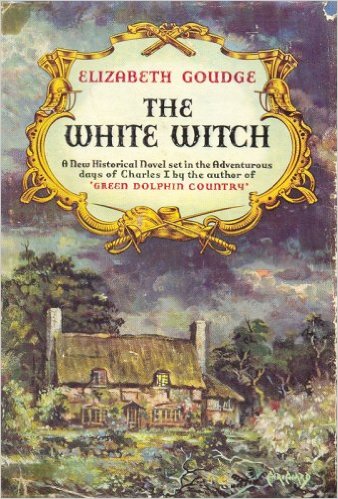
The White Witch A year ago I read The Child from the Sea as part of Lory of The Emerald City Book Review’s birthday celebrations for Elizabeth Goudge. This year, Lory is hosting another day devoted to the same author and this seemed like a good time to read my second book by Goudge. There were plenty to choose from – some historical and some contemporary, some for adults and some for children – but I decided on The White Witch. I loved The Child from the Sea, which was set in the seventeenth century and told the story of Lucy Walters, a mistress of Charles II, so as The White Witch is set in the same period the chances were good that I would love this book too – and I did.

The English Civil War forms the historical backdrop to the story, but the focus of the novel is on the inhabitants of a small Oxfordshire village and the ways in which their lives are touched by the greater changes taking place in the country as a whole. The ‘white witch’ of the title is Froniga, a healer and herbalist who has family ties with both the Puritan household of Robert Haslewood, the village squire, and with the band of Romany gypsies who camp nearby. Caught between both of these worlds while fully belonging to neither, Froniga is the character around whom all the others revolve.

Froniga is a fascinating character, but there were others whose stories interested me too, particularly Francis Leyland, the secretive stranger who offers to paint a portrait of Haslewood’s two young children, and the mysterious Yoben, who is in love with Froniga. There’s a ‘black witch’ too – and a parson who tries to save her soul – and a vengeful gypsy woman who causes trouble wherever she goes. Whether Parliamentarian or Royalist, Puritan or Catholic, nobleman or gypsy, in the hands of Elizabeth Goudge each of these characters becomes a well-rounded, believable human being – a person we can sympathise with even if we don’t necessarily agree with their views or their choices.

In this novel, the conflicts that take place in an individual’s heart or soul are as important as those which take place on the battlefield, though we do get to see some military action as several of our characters become involved in the major battles and events of the Civil War. But what I loved most about this book were the details of daily village life in the seventeenth century, the beautiful descriptions of the English countryside, and the undercurrents of magic, mystery and mythology which run throughout the story.

The White Witch, although never boring, has a slow pace and – as it was originally published in 1958 – it is written in a style which may not appeal to readers who prefer more modern historical novels and as with The Child from the Sea, there are strong religious and spiritual elements. I love Goudge’s writing style, though; it’s warm and gentle and comforting. I’m looking forward to working through the rest of her novels…and would like to thank Lory for introducing me to her work!

Shadow on the Highway by Deborah Swift

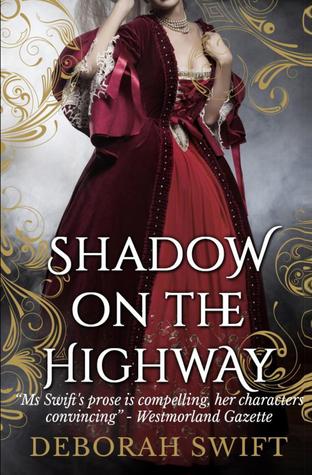
Shadow on the Highway Since reading Katherine Clements’ The Silvered Heart last year, I have been interested in reading more about Lady Katherine Fanshawe (or Ferrers), the seventeenth century highwaywoman known in legend as ‘the Wicked Lady’. On discovering that Deborah Swift had written a trilogy of novels about Lady Katherine, I had made a note to look out for the first one, Shadow on the Highway, so I was delighted to be offered a copy by Endeavour Press after signing up for their Virtual Historical Festival (taking place next week, 18-22 April).

Shadow on the Highway is aimed at young adults but can be enjoyed by readers of all ages; I certainly enjoyed it and thought it had a lot to offer an adult reader, as well as being a good choice for teenagers who are just starting to get into historical fiction. The story is set during the English Civil War and Deborah Swift does a good job of describing the history and politics of the period in a way that is easy to understand.

The novel is narrated by Abigail Chaplin, a young deaf girl who lost her hearing as a result of childhood measles. The Chaplin family has fallen on hard times and Abigail finds herself sent to work as a maid at Markyate Manor, home to Lady Katherine Fanshawe, a young woman not much older than Abigail herself. Katherine sees little of her husband, Thomas, and lives in fear of her hated stepfather, Sir Simon, who can be brutal, violent and controlling, so she quickly comes to value Abigail as a friend as well as a maid.

Desperate to escape from the manor for a while, Katherine persuades Abigail to help her dress as a servant and walk into the village with her so she can see how other people live. By chance she meets Ralph Chaplin, Abigail’s brother, while still in disguise and the two are instantly drawn to one another. This puts Abigail in a difficult position: should she tell Ralph that ‘Kate’ the servant is not what she appears to be? To make things worse, the Fanshawes are a Royalist household whereas the Chaplins are Parliamentarians. And then there’s the matter of the pistols Abigail has found inside Katherine’s writing desk and the worrying tales of a ‘Silent Highwayman’ holding up coaches on the London Road.

I found Shadow on the Highway a quick and entertaining read, although I was slightly disappointed that there wasn’t more actual action on the highway. Instead, the focus is on the family at Markyate Manor, the romance between Ralph and Katherine, and Abigail’s own personal story. It took me a while to warm to Katherine, but I liked Abigail from the beginning. Her deafness adds another intriguing angle to the story; as Deborah Swift explains in her Historical Note, the seventeenth century was a time of great advances in methods of communication for deaf people, including the beginnings of sign language.

As this is the second novel I’ve read featuring Lady Katherine, it was noticeable that Shadow on the Highway differs from The Silvered Heart in many ways. Although both books are based on the same legend, there are several different versions of that legend, leaving plenty of scope for an author to use her imagination. In particular, almost nothing is known of Katherine’s lover, except that the name Ralph or Rafe Chaplin is usually associated with the legends. In this novel, Deborah Swift creates an interesting story surrounding Ralph, making him a Digger – a member of a Protestant movement who believed in equality for all and who took their name from the fact that they attempted to settle and farm on common land:

“They’ll not stop us,” Ralph said. “Right is on our side. How far down do they own this land?” He grabbed up a handful of wet earth, showed it round in front of us. “To here? Or further down to where our spades reach? Does a mole recognise these boundaries? No, he can go where he wishes on God’s land. Are we less than a mole? We who are made in God’s likeness? No. We will persevere.”

The second book in the trilogy, Spirit of the Highway, is written from the perspective of Ralph rather than Abigail, which should be interesting. I’m looking forward to reading it – as well as the third book, when it becomes available.

The Silvered Heart by Katherine Clements

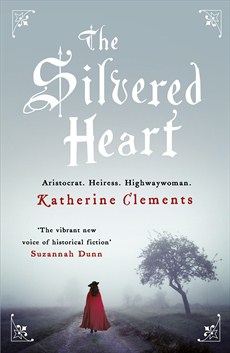
The Silvered Heart This is Katherine Clements’ second novel, following her debut The Crimson Ribbon, which I read last year. Both books are set during the English Civil War, but while The Crimson Ribbon is written from a Parliamentarian perspective (the main character is a servant in the household of Oliver Cromwell), The Silvered Heart takes us into the Hertfordshire countryside and shows us what life was like for the Royalists after they found themselves on the losing side. Our heroine this time is Katherine Ferrers, a legendary seventeenth century highwaywoman, known as “the Wicked Lady”.

The story begins in 1648 in an England divided by war – a war which seems to be entering its final stages following a series of Royalist defeats and the imprisonment of the King at Carisbrooke Castle. Orphaned heiress Lady Katherine Ferrers is on her way to Ware Park, home of Thomas Fanshawe to whom she is being married off, when her carriage is attacked by a band of highwaymen. She survives this encounter, but what she experiences that day will go on to shape the course of her life.

Katherine’s marriage to Thomas is not a happy one, even after the war ends. Her husband spends most of his time in London plotting with his friends and dreaming of the day the monarchy will be restored, while Katherine struggles to get by at Ware Park, now impoverished and neglected, like many of the once great Royalist estates. With her own inheritance – her childhood home, Markyate Cell – lost to her, Katherine’s future looks bleak, especially as she is unable to give Thomas the child he so desperately wants. It’s only after meeting Rafe Chaplin, brother of her maid Rachel, and learning about his way of life, that Katherine discovers another option is open to her…if she chooses to take it.

I enjoyed The Silvered Heart – I thought it was a better book than The Crimson Ribbon – but it wasn’t quite what I’d expected. I had imagined lots of scenes involving moonlit roads, coaches appearing out of the mist, and shouts of “stand and deliver”. There was a little bit of that, but not as much as I was hoping for. I was disappointed that I was almost two hundred pages into the book before there was any hint of Katherine’s new career as a highwaywoman – and when it did happen, I wasn’t entirely convinced that the woman I had been getting to know in the first half of the novel would have chosen to turn to a life of crime.

Where The Silvered Heart does excel is in its portrayal of England in the aftermath of civil war, during the period known as the Interregnum: a time when those who had been loyal to their king find that they have their homes taken from them or are so heavily taxed and fined they can no longer afford to live in the manner they are used to; a time when men with Royalist sympathies risk exile or imprisonment in the Tower of London, and when networks of spies and double agents are formed as loyalties shift and allegiances change. This is the world in which Katherine finds herself and the backdrop against which her story is played out.

While the highway robbery aspect of the novel isn’t given as much attention as I would have liked, there is a lot of focus on Katherine’s romantic entanglements and relationships with the other main characters in the novel. I have already mentioned her unhappy marriage to Thomas Fanshawe and her partnership with Rafe Chaplin, but there are two more characters whom I found particularly interesting: Rachel, Katherine’s maid, whose relationship with her mistress is much more complex than it appeared to be at first, and Richard Willis, a scheming Royalist officer who knows more about Katherine than she is comfortable with.

I enjoyed reading the author’s note at the end of the book in which Clements tells us about the real life Lady Katherine Ferrers and shares with us a picture of the only known portrait of our heroine. It seems that there is a lack of actual evidence to link the real woman with the Wicked Lady of legend – Clements has drawn on both the historical facts and the details of the legend to create her version of events – but it’s interesting to consider the circumstances that may have led to these stories springing up around Katherine.

It appears that Katherine Ferrers has inspired a number of other novels (Deborah Swift’s recent young adult novel, Shadow on the Highway, is one) and also some films, including a 1945 adaptation starring James Mason and Margaret Lockwood. I’m surprised that I had never heard of her before reading The Silvered Heart, but I’m pleased to have been introduced to this fascinating woman at last!

The Child from the Sea by Elizabeth Goudge

The Child from the Sea “To show you Roch would be such happiness,” she said. “I would show you the bay where the seals come, and perhaps they would sing to you, and the Valley of Roses at St Davids, where the stream is so cool. We would stand on the cliffs when the wind was blowing and hear the gulls screaming and the waves roaring all along the coast.”

“You love the sea?”

“I belong to it.”

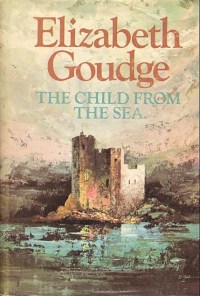
Elizabeth Goudge is an author I would probably never have thought about trying if it hadn’t been for Lory of The Emerald City Book Review who is hosting a reading week devoted to Goudge’s work this week. Not knowing much about Elizabeth Goudge’s novels, I read the descriptions of some of them and The Child from the Sea sounded the most appealing to me. Although it seems to be out of print at the moment, I was able to borrow a copy from Open Library.

Goudge wrote a mixture of contemporary novels, short stories, children’s books and historical fiction; The Child from the Sea, published in 1970, is one of her historical fiction novels. It tells the story of Lucy Walter, a mistress – and possibly secret wife – of King Charles II and mother of his eldest son, the Duke of Monmouth.

The novel begins in Wales and introduces us to a young Lucy who is growing up at Roch Castle, the home of the Walter family near the Pembrokeshire coast. The story gets off to a slow start, with lots of descriptions of the scenery and countryside, Welsh customs and traditions, and some of the old myths and legends Lucy learns as a child. We also meet some of the people who live in and around Roch Castle: Lucy’s brothers, the handsome, aloof Richard and the loyal, warm-hearted Justus; her beloved nurse Nan-Nan; and Old Parson and his friend, the mysterious Sin Eater.

This first section of the book could probably have been cut a lot shorter without losing anything important, but it does all add to our understanding of who Lucy is and what a 17th century Welsh childhood may have been like. The story really picks up, though, when the action switches to London on the eve of Civil War and Lucy has her first encounter with the young Charles. Fate brings Lucy and Charles together again several years later and they fall in love, marrying secretly, but it’s not long before they are separated once more by the war raging around them.

The rest of the novel is set during Charles’s period of exile in The Hague following the Parliamentarian victory and the execution of his father, Charles I. We follow Lucy as she travels around Europe awaiting the restoration of the monarchy and hoping that one day she will be acknowledged as Charles’s wife.

Lucy Walter is a woman who really existed and really was one of Charles II’s mistresses, but very little is known about her and there doesn’t appear to be any evidence to prove whether or not she and Charles were legally married. Doing some quick research after finishing this book, it seems that the real Lucy is generally considered by historians to be a very different type of character to the gentle, loving woman portrayed in the novel. But even if this is a romanticised version of her life and her relationship with Charles, and even if it isn’t accurate in every detail, I still found it a very moving, emotional story.

Not knowing anything about Lucy before I read this book meant that I was kept in suspense wondering how the story would play out and what her eventual fate would be. I had a feeling this wasn’t going to be a book with a happy ending, and I was right. There were some heartbreaking moments in the final chapters of Lucy’s story and I had tears in my eyes at the end of the book.

I’m pleased that I gave myself plenty of time to finish this book in time for the reading week! The writing is lovely but the pace of the story is very slow and this is not a book you can rush through in a few days. You need to take your time to be able to appreciate the beauty of the writing and the insights the author is giving us into history and life in general. For this reason, and because it is quite a romantic, sentimental story, The Child from the Sea probably isn’t a book I would recommend to everyone. There’s also a spiritual aspect to the book that grows stronger as the story progresses and may not be to every reader’s taste.

I loved The Child from the Sea, though, and am pleased I chose this one as my first Elizabeth Goudge book. I will definitely be reading more!