Historical Musings #90 – Reading the French Revolution

You may have seen my recent review of The Woman in the Wallpaper by Lora Jones, set during the French Revolution. It has inspired the theme of this month’s Musings post as I take a look at other books I’ve read set during the same period of history, as well as some I still intend to read. Let me know if you can suggest any more!

Books I’ve read and reviewed on my blog:

Many of the French Revolution novels I’ve read are classics, including A Tale of Two Cities by Charles Dickens. This is my favourite book by Dickens, partly because I found it quite different from most of his others – less humorous and more tightly plotted – and also because it has such a beautiful, heartbreaking ending. Baroness Orczy’s The Scarlet Pimpernel is another famous one and I’m sure many of you will know the story even if you haven’t read the book. The mysterious and elusive Scarlet Pimpernel is rescuing aristocrats from the guillotine and smuggling them to safety, but who is he and will he ever be caught? I’m slowly working my way through the sequels and although they’re all enjoyable, none of them are quite as good as the original.
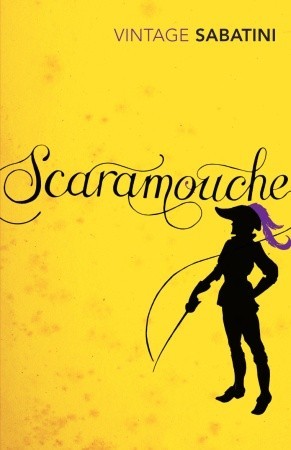
In Rafael Sabatini’s Scaramouche, Andre-Louis Moreau becomes caught up in the events of the French Revolution after taking the role of Scaramouche the clown in a Commedia dell’Arte troupe as part of an elaborate plan to avenge his murdered friend. From the wonderful opening line (“He was born with a gift of laughter and a sense that the world was mad”) I could tell I was going to love this book!

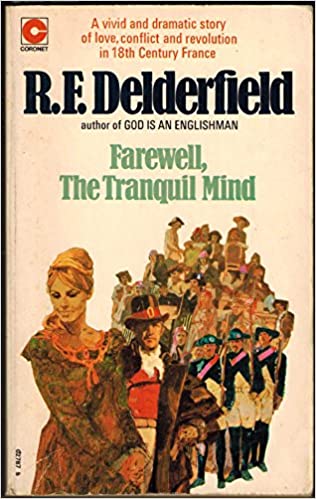
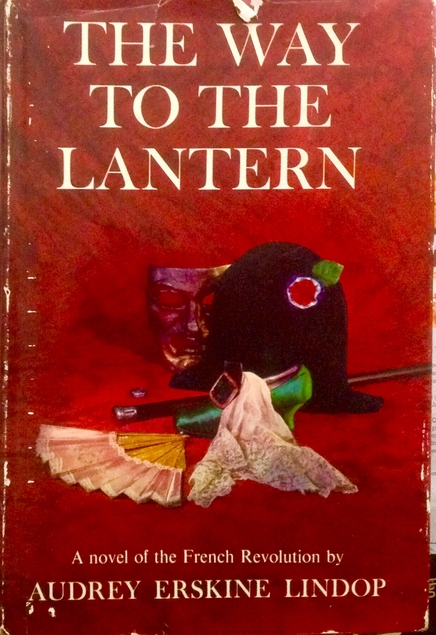
Audrey Erskine Lindop’s 1961 novel, The Way to the Lantern, sadly seems to be out of print, along with the rest of her books. It’s the story of a disreputable young actor who is accused of being both a French aristocrat and an English spy, despite being neither. It’s great fun and if you can find a copy, I highly recommend it. Farewell, the Tranquil Mind by RF Delderfield is also currently out of print, one of his only novels not to have recently been reissued. It follows David Treloar, who flees England after a failed smuggling operation and arrives in France in the middle of the Revolution.
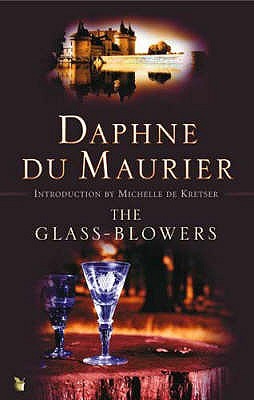
I love most of Daphne du Maurier’s books, but The Glass-Blowers – based loosely on du Maurier’s own ancestors and set during the French Revolution – isn’t one of my favourites. I felt that it didn’t have such a strong sense of time and place as some of her other books, which was surprising considering the setting. Another author I love is Andrew Taylor, but again his French Revolution novel isn’t my favourite. The Silent Boy features a ten-year-old boy who witnesses a murder on the night the Tuileries Palace is stormed and the French monarchy falls.

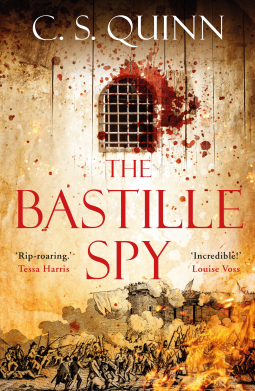
The final two books I’m going to mention here are books that weren’t entirely to my taste, but were still quite entertaining. The Time of Terror by Seth Hunter is a nautical novel set during the Reign of Terror, while The Bastille Spy by CS Quinn is a fast-paced historical thriller which I described as ‘a cross between The Scarlet Pimpernel, James Bond and Pirates of the Caribbean‘.

To read:

I’ve enjoyed some of Hilary Mantel’s other novels, including the Thomas Cromwell trilogy, so I’m sure I’ll try A Place of Greater Safety eventually, but the length looks so daunting!

Everyone seems to have enjoyed Little by Edward Carey, about Anne Marie Grosholtz, better known as Madame Tussaud. I’m not sure why I still haven’t got round to reading it – possibly because I tried to read Madame Tussaud by Michelle Moran and didn’t get on with it. Maybe Little will be more to my taste.

I’m also planning to continue with the Pimpernel series; Lord Tony’s Wife is the next one on my list!

~

Have you read any of the books I’ve mentioned here? Which other books about the French Revolution can you recommend?
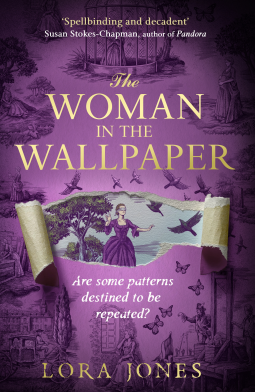
The Woman in the Wallpaper by Lora Jones

The French Revolution is a fascinating subject and I’ve read several novels set during that period. The Woman in the Wallpaper, Lora Jones’ debut novel, is another and is written from the unusual perspective of two sisters working at a wallpaper factory in northern France.

Sofi and Lara Thibault are the daughters of a stonemason who dies suddenly under tragic circumstances early in the book. In need of work to support themselves, the sisters and their mother move to Jouy-en-Jouvant, a town near Paris, where all three have been offered employment at the Oberst factory. The factory produces wallpaper with a unique design featuring a woman thought to be the late Mrs Oberst, who died several years ago and may or may not have been murdered. As they settle into their new jobs, both girls are drawn to Josef Oberst, the heir to the factory, but Josef is soon to be a married man, with an aristocratic young wife due to arrive from Versailles.

With political turmoil brewing in France, Sofi finds herself caught up with the revolutionaries and longs to play a part in shaping her country’s future. Lara, however, has other things to worry about – like the resemblance between herself and Mrs Oberst and the way incidents from her own life seem to be replicated in the pictures on the factory wallpaper. Meanwhile, Josef’s new wife, Hortense, discovers that as a member of the aristocracy she could be in the most danger of them all as the revolution picks up pace.

I enjoyed The Woman in the Wallpaper, although I wish authors would stop writing in present tense! I’ve never read a book set in a wallpaper factory before and it was fascinating to read about the process of making the paper and preparing the coloured pigments, as well as the work carried out in the printhouse, where the designs are carved onto the wooden blocks which are then coated with ink and pressed onto the paper. The parts of the novel dealing with the French Revolution are also interesting. Some of the key events, such as the storming of the Bastille and the arrival of the guillotine, are included, but the main focus is on the role of women and how the Revolution seemed unlikely to bring about the level of change they were hoping for.

The novel is narrated by both of the Thibault sisters and at first, even though the name of the narrator is given at the start of each chapter, I found myself forgetting which one I was reading about as their voices felt very similar. Later in the book, as their stories began to diverge, the two became easier to distinguish and this wasn’t a problem anymore. Lara is the gentler, quieter, more mature sister but Sofi, the impetuous younger sister, was my favourite. However, there’s also a third narrator – Hortense, Josef’s selfish, entitled wife from Versailles. Hortense makes no attempt to adapt to the changes in society or to endear herself to the people of Jouy; in one memorable scene, she deliberately hosts an elaborate birthday party for her pet dog, knowing that peasants are starving and workers are protesting. I thought perhaps I would warm to her as the book went on, but that didn’t happen – I found her cruel and heartless right to the end.

As for the central mystery surrounding the images in the wallpaper and their connection with Lara’s life, I found it easy to guess what was really going on, but it was still quite unsettling! This is an impressive first novel and I hope Lora Jones will be writing more.

Thanks to Sphere for providing a copy of this book for review via NetGalley.

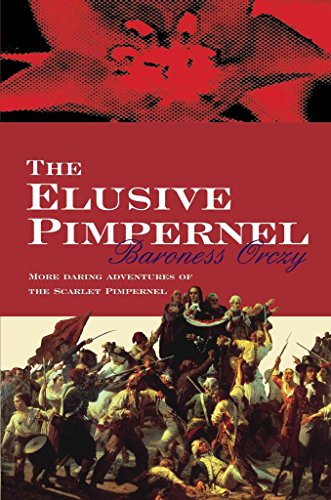
The Elusive Pimpernel by Baroness Orczy

Since reading Baroness Orczy’s The Scarlet Pimpernel several years ago, I have been slowly working my way through the rest of the Pimpernel series. There are various recommended reading orders – some following publication dates and others attempting to follow an internal timeline – and I’m not sure if I’ve chosen the best route through the series, but The Elusive Pimpernel is the fifth book I’ve read. Like the others, this one revolves around the efforts of the English adventurer known as the Scarlet Pimpernel to rescue aristocrats from the guillotine during the French Revolution.

*If you have not read the first book and would prefer not to know the identity of the Scarlet Pimpernel, you may want to avoid the rest of this review as I can’t really discuss this book without naming him!*

First published in 1908, the novel begins in September 1793 with Citizen Chauvelin, the Scarlet Pimpernel’s arch-enemy, receiving orders from Robespierre in Paris. Having failed to capture the Pimpernel in the past, Chauvelin is being given one last chance. He must go to England as a representative of the Committee of Public Safety, responsible for the interests of French citizens who have settled in England. The real reason for his mission, however, is to hunt down the Scarlet Pimpernel and bring him back to France dead or alive.

As the action switches temporarily to England, we meet a French actress, Désirée Candeille, who has been befriended by Marguerite Blakeney, wife of Sir Percy, the Scarlet Pimpernel himself. Unknown to Marguerite, Désirée is in league with Chauvelin and part of the scheme to lure Sir Percy to France. Will their scheme be successful – and could Marguerite unintentionally be the one to lead her husband into the trap?

Although it’s not quite as good as the original book, The Elusive Pimpernel is probably the best of the sequels I’ve read so far. The plot Chauvelin comes up with to capture Sir Percy is so fiendishly clever I couldn’t see how he was going to find a way out of it. Of course, I knew that he probably would find a way out, because he’s the Scarlet Pimpernel, after all, and there are more books in the series, but it seemed to me that he was well and truly trapped this time! One of the things I like about these books is that Chauvelin is by no means portrayed as a bumbling idiot who is easily outwitted; his plan would almost certainly have succeeded against anybody less brilliant than Sir Percy.

We don’t see very much of the other members of the League of the Scarlet Pimpernel, although we are briefly reunited with some characters from the previous book, I Will Repay (so I would recommend reading that book before this one, if you can). Marguerite, though, plays a big part in the story and is one of our main viewpoint characters. It’s frustrating to see how easily she is manipulated, but she does mean well and her love for Percy isn’t in doubt, so I can forgive her!

Continuing chronologically, the next book for me to read will be Lord Tony’s Wife. Have you read that one – or any of the others in the series?

This is book 14/20 of my 20 Books of Summer 2024.

Book 31/50 for the Historical Fiction Reading Challenge 2024

This is also book 44/50 from my second Classics Club list

Farewell, the Tranquil Mind by RF Delderfield

Farewell the tranquil mind! Farewell content!
Farewell the plumed troops and the big wars
That make ambition virtue! O, farewell!

These lines from Othello inspired the title of Ronald Frederick Delderfield’s 1950 novel about a period of history that was anything but tranquil – the French Revolution. Having loved Delderfield’s A Horseman Riding By trilogy (which begins with Long Summer Day), I’ve been keen to read more of his books. This one wouldn’t necessarily have been my first choice – it’s currently out of print and with very few reviews online – but I came across a copy in a charity shop and thought I would give it a try.

Farewell, the Tranquil Mind is narrated by David Treloar, a young man from a family of Devon smugglers. From an early age, David has been different from the other male Treloars; while his brothers work with their father, bringing in shipments of contraband cargo, David stays at home and helps his mother run the family farm, Westdown. He is also the only one who has learned to read and write, having been taken under the wing of the agent, Saxeby, who introduces him to French politics through Thomas Paine’s Rights of Man. However, when a smuggling operation goes wrong and an exciseman is shot dead, the blame falls on David and he is forced to flee England.

Arriving in France in the middle of the Revolution, he is befriended by André Lamotte, the nephew of a Parisian wigmaker and perfumier known as Papa Rouzet. It is through his friendship with André and the Rouzet family that David becomes involved with various revolutionary groups including the Brissotins and the Cordeliers – and falls in love with Charlotte, Rouzet’s niece. With the situation in France becoming increasingly dangerous, David and Charlotte consider escaping to England – but not only is David still wanted for the murder of Exciseman Vetch, the English also now suspect him of being a French spy.

I found this book interesting, but certainly not as enjoyable as the Horseman Riding By trilogy, and I can see why it hasn’t been reissued like most of his other novels. The blurb made it sound quite exciting – and it is, in places, but in between there’s lots of exposition and political detail and this slows the plot down, making it less entertaining than I’d expected. Despite having read other books set during the French Revolution, I had to concentrate to keep track of all the different groups and who was on which side. It wasn’t just a case of royalists versus republicans; within the republican movement there were many separate factions – as well as the two I’ve mentioned above, there were Jacobins, Girondins, Montagnards, Dantonists and several others, each with their own ideas on the goals of the Revolution and how the country should be run.

I liked David, but I felt that Charlotte’s role in the book was too small and understated for me to get a clear sense of who she was or what she was like and this meant that I didn’t feel fully invested in the romance element of the book. It’s disappointing when I think of how well defined even the minor characters were in the other books of Delderfield’s I’ve read. This novel was written very early in his career, though, which maybe explains why it doesn’t feel as accomplished. It’s worth hunting down and reading if you’re particularly interested in learning more about the political side of the French Revolution, but otherwise probably not the best place to start with Delderfield! I’m still looking forward to reading more of his books and would welcome any suggestions as to which one I should read next.

This is book 18/50 read for the 2023 Historical Fiction Reading Challenge.

I Will Repay by Baroness Emmuska Orczy

I haven’t been very successful recently at finishing the books chosen for me by the Classics Club Spins, so I decided to make an early start on my current Spin book, I Will Repay by Baroness Orczy – and have finished it three weeks before the 22nd August deadline! It helped that it was a relatively short book, as well as a light and entertaining one that I found easy to read.

First published in 1906, this was the first sequel to The Scarlet Pimpernel to be published, but if you’re reading the series in chronological order, as I am, it’s the fourth. I have previously read Sir Percy Leads the Band and The League of the Scarlet Pimpernel and found them both disappointing in comparison to the original book, but I’m pleased to say that this one was more enjoyable. Not everyone will agree, as we do see very little of the Scarlet Pimpernel and nothing at all of his wife Marguerite, but I thought it was quite an exciting and gripping story in its own right.

The novel opens in 1783 with Paul Déroulède and the young Vicomte de Marny fighting a duel in a Paris tavern. When the Vicomte is accidentally killed, his father, devastated at losing his son and heir, forces his other child, fourteen-year-old Juliette, to swear an oath promising to avenge her brother’s death: “May my brother’s soul remain in torment until the final Judgment Day if I should break my oath, but may it rest in eternal peace the day on which his death is fitly avenged.”

Ten years later, the Revolution is underway and Paris has become a dangerous place for a young noblewoman like Juliette:

And the afternoons were very lively. There was always plenty to see: first and foremost, the long procession of tumbrils, winding its way from the prisons to the Place de la Révolution. The forty-four thousand sections of the Committee of Public Safety sent their quota, each in their turn, to the guillotine. At one time these tumbrils contained royal ladies and gentlemen, ci-devant dukes and princesses, aristocrats from every county in France, but now this stock was becoming exhausted…

Walking through the streets one day, Juliette’s expensive lace-trimmed clothes draw the attention of a mob and she escapes from them by hammering on the door of the nearest house, which happens to be the home of Paul Déroulède. Paul, who has made himself popular with the citizens of Paris despite his own royalist sympathies, protects her from the mob and takes her into his household. As Juliette gets to know her brother’s enemy, she finds herself falling in love – so when a chance comes to send Paul Déroulède to the guillotine, she faces a very difficult decision.

You’re probably wondering where the Scarlet Pimpernel himself comes into the story; as I’ve said, we don’t see very much of him, but he does have an important role to play towards the end. However, the absence of the Pimpernel for most of the novel probably explains why this book was not more popular on its publication as people who were expecting a Scarlet Pimpernel book would have been disappointed. Personally, this didn’t really bother me as I was so caught up in the story of Juliette and Déroulède, and all the detail of this period of the French Revolution. The novel is set shortly after the assassination of Jean-Paul Marat, during the ‘Reign of Terror’, and Orczy does a wonderful job of recreating the atmosphere on the streets of Paris where anyone with a drop of noble blood risks being denounced and sent to their death. Orczy makes no secret of the fact that she is clearly on the side of the aristocrats, while the ordinary citizens of Paris are portrayed as brutal and bloodthirsty, but I suppose you would expect bias from someone who was a baroness!

Having enjoyed this one, I’m planning to continue with the next book in the series, The Elusive Pimpernel, which I’ve been told is one of the best.

This is book 21/50 from my second Classics Club list.

Book 33/50 read for the 2021 Historical Fiction Reading Challenge.

The Bastille Spy by CS Quinn

Set during the French Revolution and featuring an almost super-human female spy and a handsome, charismatic pirate, this book feels like a cross between The Scarlet Pimpernel, James Bond and Pirates of the Caribbean. As the first in a new series – Revolutionary Spy – I’m not sure whether I really liked it enough to want to continue with the next one, but it was certainly entertaining.

Our heroine Attica Morgan is the illegitimate daughter of a British nobleman and an African slave. Raised and educated in England, Attica wants to make the most of the opportunities she has been given and do everything she can to help relieve the suffering of others, whether they are those who are born or sold into slavery, or those who have become political prisoners. With her impressive range of skills and abilities, as well as her intelligence and fearlessness, Attica has been admitted to the secret society known as the Sealed Knot and as the novel opens in 1789, she is preparing to head to France on a new mission.

Armed with her deadly Mangbetu knife and her quick wits, Attica arrives in a Paris where revolution is brewing. A diamond necklace intended for Marie Antoinette has gone missing, something which could have serious repercussions for the monarchy if the jewels are not found. Attica’s task is to locate the necklace, but more important to her is the safety of her cousin Grace, who was sent to Paris on a mission of her own and has disappeared as thoroughly as the diamonds. Meanwhile, a prisoner has been murdered inside the notorious Bastille, but who was he and who was responsible for his death?

As if all of that wasn’t enough, Attica crosses paths with some of the leading figures of the Revolution, including Maximilien Robespierre who is on the trail of an elusive British spy known only by the codename ‘Mouron’, or ‘Pimpernel’. If she is to evade Robespierre’s clutches and survive long enough to complete her mission, Attica needs someone she can trust, but there’s only the pirate Captain Jemmy Avery – and it’s impossible to tell which side he is on and for whom he is really working.

The story moves along at a whirlwind pace, never slowing down for a second as Attica and her friends rush from one adventure to another, trying to stay one step ahead of their enemies. There’s plenty of historical detail in between, but something about the writing style, the language and the characters made the book feel more ‘modern’ than I would have preferred. Attica herself isn’t very believable as an 18th century woman – but then, she wouldn’t be very believable in any other time period anyway! It seems there is nothing she can’t do, from picking locks and wielding weapons to speaking a multitude of foreign languages and decoding secret messages. This makes her fun to spend time with, but I would have liked to have seen a few more flaws and vulnerabilities to round out her character.

Only part of the story is told from Attica’s point of view. There are also some chapters which focus on Robespierre, as well as some in which we follow the adventures of Attica’s cousin Grace. Next to the larger-than-life Attica, Grace is a quieter, less memorable character, but I enjoyed the occasional change of perspective.

I might be tempted to read the next book in this series, but at the moment I don’t think so. However, I’m determined that 2020 will be the year I read Hilary Mantel’s French Revolution novel, A Place of Greater Safety, which I’ve only been putting off reading because of the length.

Thanks to Corvus for providing a copy of this book for review via NetGalley.

The Way to the Lantern by Audrey Erskine Lindop

It’s 1793 and Philippe Roberts is in one of the most notorious prisons in Paris awaiting the decision that could send him to the guillotine. The only reason it hasn’t happened already is that nobody seems able to establish his identity. According to the Committee of General Security, he is Philippe-Jean-Baptiste-Raoul, Vicomte de Lambrière, a French aristocrat and therefore a counter-revolutionary. The Committee of Public Safety, however, insist that he is an English gentleman, Anthony Buckland of Sandgate, and that he has been spying on behalf of the British government. Nobody will believe him when he tries to explain that his name is actually Roberts and both de Lambrière and Buckland are fake identities that he has used at various times for reasons entirely unconnected with the French Revolution.

How has Roberts ended up in this ridiculous situation? In his own words:

Some of my more disagreeable friends suggest that in my case there’s no need to look any further for the cause of my present predicament than my own character. I’m inclined to think that’s unjust. After all, there have been thieves, liars, and murderers who have ended up on thrones before now. The fact that I have been all three with less success needn’t necessarily account for my situation.

As Roberts sits in his dungeon and waits, he remembers the events that have led him to this point and shares his memories with the reader. His story begins in England where, as an aspiring young actor, he is taken under the wing of the man he calls Manager Smith (or ‘M.S.’), from whom he learns ‘scraps of history, Latin, astrology, fencing, how to be a gentleman, mathematics, doctoring, geography – everything, in fact, from tips on farming to how to beat the law’. M.S. believes Roberts is destined for a great career on the stage and invests a huge amount of time and effort in his training, but success is slow to come and most of their ‘acting’ is limited to picking pockets and finding creative ways to escape from inns without paying.

Eventually, though, the two acquire their own small theatre, the Little Apollo. Their luck seems about to change – especially when the wealthy and eccentric Lizzie Weldon approaches Roberts after one of his performances and offers to pay him to carry out a simple task. It sounds like an easy way to make money, but Roberts soon regrets saying yes. His involvement with Lizzie and her ludicrous schemes gets him into so much trouble that he and M.S. are forced to flee the country, arriving in France at the worst possible time…the beginning of the Revolution.

The Way to the Lantern was published in 1961 and is the first book I’ve read by Audrey Erskine Lindop. Why it has been allowed to go out of print and fade into obscurity is a mystery to me. I thought it was a wonderful book and I thoroughly enjoyed it from beginning to end! I can’t really say that I loved our narrator – after all, as he admits himself, he is a thief, a liar and a murderer, and his attitude towards women leaves a lot to be desired too – but I did love the way he tells his story, in the style of the picaresque novels of the 18th century, never losing his sense of humour no matter how bad things get. And they do get very bad! It seems that everything that can go wrong does go wrong for Roberts and he spends the entire novel stumbling from one disastrous situation straight into another. Sometimes he only has himself to blame, but often he is simply the victim of bad luck or bad timing.

Roberts’ relationship with M.S. was one of my favourite aspects of the book. From the beginning, M.S. fills the role not just of manager, but of mentor, friend and father figure and this never really changes, even as Roberts grows into a man and their disagreements and differences of opinion become more profound. One way in which they differ is in their political views – M.S. is a royalist while Roberts, whose mother was a French laundress, takes the side of the working classes (the sans-culottes) and the revolutionaries – and another is over Roberts’ romance with the beautiful Marie-Clarice, a woman he meets shortly after they arrive in Paris.

M.S. sees Marie-Clarice as a distraction which could ruin Roberts’ acting career, as well as a danger as Marie-Clarice is a countess (actually a ci-devant, or former, countess, since the nobility have had their titles removed during the Revolution). Roberts knows that she could be denounced at any moment and that he could also fall under suspicion because of his association with her, but he is sure that her true sympathies are with the revolutionaries and so he refuses to abandon her to her fate. At first I was inclined to agree with M.S. about Marie-Clarice, but I warmed to her later in the book; it would have been difficult not to, I think. The real star of the novel for me, though, was Suzon Dupont – or as Roberts nicknames her, the Puce (the flea). We first meet the Puce as a dirty, impoverished urchin of thirteen who proves to be a better pickpocket than Roberts himself, but over the course of the novel we see her blossom into a pretty and intelligent young woman with a fierce loyalty towards M.S. and Roberts.

Loyalty is something to be valued during the Revolution, at a time when there are spies around every corner and you can never be sure who may be about to denounce you as a supporter of the ancien régime. Although all of the major events are covered in the novel, such as the storming of the Bastille, the abolition of the monarchy and the execution of Louis XVI, the focus of the story is on the lives of the ordinary people and I was given a real sense of what it was like to live in Paris during that period. The balance between the historical detail and Roberts’ fictional adventures is perfect; it’s the sort of book where you learn a lot as you go along, while being entertained by a great story at the same time.

I’m sorry for the length of this post, but I did really enjoy The Way to the Lantern and found that I had a lot to say about it! It’s disappointing that none of Audrey Erskine Lindop’s books are in print, but I will definitely try to read some of her others – although they do all sound very different from this one.