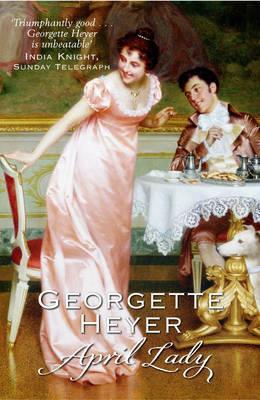
April Lady by Georgette Heyer

April Lady I first tried to read April Lady five years ago but didn’t get very far with it, so when it was one of the ten books I chose at random for my Ten from the TBR project I didn’t feel very enthusiastic about trying it again. It seems, though, that it had probably just been the wrong book at the wrong time (I was very new to Heyer then and had previously only read The Talisman Ring) and on my second attempt I found it much more enjoyable.

April Lady is one of Heyer’s Regency romances – although the couple in this novel are already married at the beginning of the book and the romantic aspect of their story centres around learning to love and trust each other. Nell Irvine, our heroine, is only seventeen when she marries the Earl of Cardross in what she believes to be a marriage of convenience. Nell does love her husband, but he is much older than she is and – as her new sister-in-law informs her – he has had a mistress until very recently, so Nell isn’t sure exactly why he has chosen to marry her.

Cardross (Giles) is also very rich, but his new wife has no experience of managing money and quickly finds herself in trouble. Cardross helps her to pay off her debts, but when Nell discovers another outstanding dressmaker’s bill that she had forgotten about she decides to keep it hidden from her husband. She is sure he will be angry with her and the last thing she wants is for him to think she only married him for his money. To make matters worse, Nell has also been giving money to her brother, Dysart, to cover his gambling debts and she knows Giles won’t be happy about that either!

April Lady follows Nell as, with the help of Dysart, she tries to obtain the three hundred pounds she needs to pay the dressmaker – while ensuring that her husband is kept in blissful ignorance. It’s obvious to the reader from the beginning that Giles does love Nell and that all they need to do is talk to each other, but each is unaware of the other’s feelings and their lack of communication leads to a whole series of misunderstandings. But Nell is not the only woman with a secret in the Cardross household. Her young sister-in-law, Letty, is determined to marry the man she loves, Jeremy Allandale…but Giles disapproves. Will Letty be tempted to elope against her brother’s will?

This book reminded me very much of an earlier Heyer novel, The Convenient Marriage, which I read about a year ago. It seemed to me that the characters of Nell, Cardross and Dysart (and the relationships between them) were very similar to Horry, Rule and Pelham in The Convenient Marriage and large parts of the plot were almost the same too, right down to a scene in which Nell’s carriage is held up by highwaymen on the way to a ball. However, I didn’t find April Lady as entertaining to read as The Convenient Marriage; the dialogue wasn’t as funny and although Nell didn’t annoy me as much as Horry did, I preferred Rule to Cardross and Pelham to Dysart. Maybe I would have felt differently about this book if it had been the one I’d read first, as I found it difficult not to make comparisons.

I did enjoy April Lady but I didn’t love it and I wouldn’t rank it very highly on my list of Heyer novels read so far. I still have plenty of her books left to read, though, including some that I’m particularly looking forward to as I know they’re big favourites with Heyer fans. I’m also wondering if I could find time to read another one of her mysteries before the end of October for this year’s RIP challenge, having enjoyed Envious Casca a few years ago.
The Quiet Gentleman by Georgette Heyer

The Quiet Gentleman When Gervase Frant, 7th Earl of St Erth, returns to his family estate of Stanyon Castle after fighting in the Peninsular War, he doesn’t receive quite the welcome he’d hoped for. His cousin Theo seems pleased to see him but his stepmother and younger half-brother, Martin, give the impression that they would have been happier if he’d never come home at all. Soon after his arrival, a series of accidents start to befall the Earl – but are they really just accidents or are they attempts on his life?

I still have a lot of Georgette Heyer’s books left to read (I haven’t even read half of them yet) but this is one of my favourites so far. It’s probably not what most people would consider a typical Heyer novel, being more of a mystery than a romance, but I think that’s one of the reasons I enjoyed it so much. I didn’t find the mystery particularly difficult to solve (there were really only two or three people who could have had a motive for wanting St Erth dead) and I guessed the culprit quite early in the book, but this didn’t affect my enjoyment of the story as there was still a chance that I could have been wrong! I think this would be a good book to re-read as I’m sure there must have been lots of little clues that I missed.

The romantic element may not be as strong in this book as in some of Heyer’s others but it is still there and I actually thought it was all the more convincing for being slow, subtle and understated. In fact, it’s so slow, subtle and understated that even the hero and heroine don’t acknowledge their love for each other until near the end of the book, although it was obvious to me that they were perfectly suited. She is my favourite type of heroine – intelligent, sensible and practical – and the only problem is that we don’t see enough of her as she tends to stay in the background throughout most of the novel. This is in contrast to the other main female character, a lively, pretty girl who has every man from miles around fighting over her (sometimes literally).

While I’m on the subject of female characters, I should also mention St Erth’s stepmother, the Dowager Countess, who could almost have come straight from the pages of a Jane Austen novel! As for the men, the Earl himself is another great character: with his calm, softly-spoken manner and slim build, fair hair and love of fashion he may at first appear to be ‘nothing but a curst dandy’ as Martin describes him, but his family soon discover that appearances can be deceptive and that there is much more to Gervase than meets the eye.

I loved the setting too. Most of the action takes place within Stanyon Castle (a mansion complete with ‘Great Halls, Minstrels’ Galleries, Armouries, Towers and Moats’) and in the surrounding Lincolnshire countryside – which proves to be a very dangerous place for the Earl! The setting, together with the air of mystery, is what made this book feel slightly different from most of the other Heyers I’ve read (I thought there were some similarities with Cousin Kate, though that one is more gothic). However, there are still all the other elements you would expect to find in one of her Regency novels: balls, horses and carriages, fencing, men with snuff boxes and quizzing glasses, women dressed in satin and lace – as well as the usual humour and witty dialogue.

Now I’m wondering which of Heyer’s novels I should read next. I still have so many to choose from it can sometimes feel overwhelming!

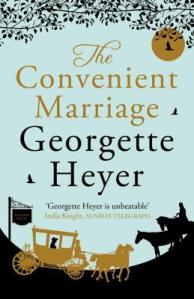
The Convenient Marriage by Georgette Heyer

The Convenient Marriage My library has very few Georgette Heyer books and I’ve read most of the titles they do have, so on a recent visit I was delighted to see this one on the shelf – one that I hadn’t read and in such a pretty edition. I think I still prefer the older Arrow covers with the historical portraits, but this one does look very attractive and I’m pleased to say that I thought the story inside lived up to the promise of the cover. Heyer’s novels are always fun to read and this one was no exception.

When the Earl of Rule proposes marriage to the eldest Winwood daughter, Elizabeth, she is faced with a dilemma. Her brother Pelham’s gambling debts are mounting up and she knows that the Winwoods are in need of Rule’s money. However, the man she really loves is Edward Heron, a humble soldier, and the thought of having to marry Rule instead breaks her heart. It is left to Elizabeth’s youngest sister, Horatia, to come up with the perfect solution – she’ll propose to Rule herself, leaving Elizabeth free to marry Edward.

Surprisingly, the Earl agrees to marry Horatia, not put off by her stammer, lack of height and eyebrows that won’t arch. But will the seventeen-year-old Horry and the thirty-five-year-old Rule be happy with their marriage of convenience or will the age difference prove too great to overcome? With a trio of enemies (Rule’s cousin and heir-presumptive, a jealous former mistress, and the vengeful Lord Lethbridge) determined to cause trouble and Horry’s brother Pelham equally determined to defend his sister’s honour, the plot soon descends into a series of farcical misunderstandings and moments of comedy.

Although I have read better Heyer novels and this one hasn’t become a favourite, I did really enjoy it. It was so entertaining, with never a dull moment – there are card games, duels, balls and masquerades, trips to the opera and to the circus, and encounters with highwaymen. This book is set in the Georgian period rather than the slightly later Regency and I loved the descriptions of the flamboyant Georgian fashions – powdered wigs, patches, silk stockings, blue velvet and puce satin, not to mention Crosby Drelincourt’s ill-fated straw hat with pink roses!

My only problem with the book, really, was that I didn’t like Horatia very much. I loved her opening encounter with the Earl of Rule and I warmed to her again by the end, but throughout the middle of the book she irritated me with her stubbornness and immature behaviour. I had to keep reminding myself that she was only seventeen after all.

I did love Rule. He’s one of my favourite Heyer heroes so far. He kept reminding me of the Scarlet Pimpernel, with his ‘sleepy eyes’ and lazy manner hiding a shrewd brain and quick wit. I loved the way he stayed so calm and patient with Horry, always trusting that she would do the right thing in the end. Horry’s brother Pelham, Viscount Winwood, was another great character. Some of the scenes involving the drunken Pel and his friend, Sir Roland Pommeroy were absolutely hilarious. I would have loved to include some examples here, but they really need to be read in context to be able to appreciate how funny they are!

Reading this book has reminded me of how much I love Georgette Heyer and how many of her books I still haven’t read yet!

Envious Casca by Georgette Heyer

Envious Casca “Joseph, having lived for so many years abroad, hankered wistfully after a real English Christmas. Nathaniel, regarding him with a contemptuous eye, said that a real English Christmas meant, in his experience, a series of quarrels between inimical persons bound to one another only by the accident of relationship, and thrown together by a worn-out convention which decreed that at Christmas families should forgather.”

It’s Christmas Eve and at Lexham Manor the family and friends of Nathaniel Herriard are gathering for a Christmas party arranged by the old man’s brother, Joseph. The guests include Nat’s nephew Stephen and his fiancée Valerie, his niece Paula and her playwright friend Willoughby Roydon, a distant cousin, Mathilda Clare, and a business partner, Edgar Mottisfont. Putting up decorations as the snow falls outside, Joseph is looking forward to a good old-fashioned family Christmas. Unfortunately Nat doesn’t like the festive season, doesn’t want to have a party, and finds himself arguing with almost everyone present – which means that when he is found stabbed to death in his room later that evening there are plenty of suspects, all with motives for wanting him dead. The problem, as Inspector Hemingway quickly discovers, is that Nat’s door was locked from the inside. How could the murderer have entered a locked room? What happened to the murder weapon? And where could Aunt Maud’s library book, The Life of the Empress of Austria, have disappeared to?

I have read some of Heyer’s historical novels and loved most of them, but this is the first of her contemporary mysteries I’ve read (contemporary for the time in which they were published, that is – 1941 in this case). I had no idea which one to start with, but when I came across Envious Casca in the library and saw that it was set at Christmas, it seemed the perfect choice for a December read.

I wasn’t sure I was going to like this book at first. It took me a while to really get into the story and it didn’t help that most of the characters were completely unsympathetic. I have rarely read a novel with so many nasty, rude, unpleasant characters and I couldn’t think of anything worse than being a guest at the Herriards’ party, even without a murder taking place! From the obnoxious, sarcastic Stephen and the haughty butler Sturry to the cantankerous, bad-tempered Nathaniel, they were all so annoying I was surprised only one murder was committed. I did understand, though, that it was vital to the plot that the group of people gathered at the house disliked each other and that there had been so much friction and conflict directly before the murder. The clashing personalities did lead to some very funny conversations and situations too – the scene where everyone assembles in the drawing room to listen to Roydon read his play, for example.

The story really picked up for me after Inspector Hemingway was called in from Scotland Yard. I didn’t find Hemingway a very interesting character in comparison to other fictional detectives and I felt I never really got to know him or anything about his background, but I still enjoyed following his investigations and his discussions with his assistant, Sergeant Ware. I was quite proud of myself because I worked out how the murder was committed long before Hemingway did and my suspicion as to the identity of the murderer was proved to be right too. Luckily this didn’t take away any of the pleasure of reading the book and it was still fun looking out for more clues that might confirm I had the right solution. As a classic locked-room mystery with lots of suspects, red herrings and an English country house setting, it was maybe not a very original novel but the plot was well constructed and interesting. I liked the way the title of the book cleverly relates to the story too (if you don’t know what it means, wait until you’ve read the book before looking it up).

As my first introduction to Heyer’s mysteries, I enjoyed this one and am looking forward to reading the others.

Five recent reads that I couldn’t finish

How often do you start a book and find that you can’t finish it? Maybe you didn’t like the writing, maybe you couldn’t connect with the characters, or maybe it was just the wrong book at the wrong time. I hate leaving books unfinished, but sometimes it’s the right thing to do. Luckily it doesn’t happen to me very often, but there have still been quite a few books that I’ve started reading recently and for one reason or another have had to abandon. If you’ve read any of these, do you think they’re worth trying again?


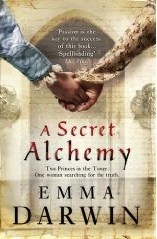
A Secret Alchemy by Emma Darwin

What’s it about?
A present day historian, Una Pryor, researches the lives of Elizabeth Woodville, wife of King Edward IV, and her brother Anthony, and begins to uncover the mystery of the Princes in the Tower.
What was the problem?
With my interest in the Wars of the Roses I really wanted to like this book, but I just couldn’t. There were three different threads of the story, one narrated by Una, one by Elizabeth and one by Anthony – and they were all set in different time periods, which I found very confusing. The historical sections didn’t feel very atmospheric and the modern section seemed too disconnected. I’m sure that if I’d kept reading the three storylines would probably have been brought together eventually, but I gave up after almost 100 pages.
Would I try it again?
Probably not.

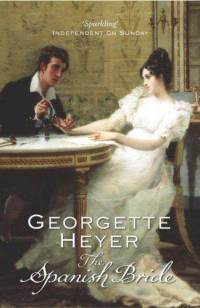
The Spanish Bride by Georgette Heyer

What’s it about?
Set during the Peninsular War, this is the story of Brigade-Major Harry Smith and his Spanish wife, Juana.
What was the problem?
This wasn’t a bad book but it wasn’t really what I’ve come to expect from Georgette Heyer. I read nearly a third of the book and it was very heavy on historical detail, particularly descriptions of army life and battles, which I wasn’t in the right mood for.
Would I try it again?
Maybe, but there are plenty of other Georgette Heyer books I’d like to read first.

Kidnapped by Robert Louis Stevenson

What’s it about?
This is a classic historical adventure novel about seventeen-year-old David Balfour, whose uncle has him kidnapped in an attempt to steal his inheritance.
What was the problem?
I wanted to read some of the children’s classics I’d missed out on when I was younger and started reading this one on my ereader. I loved the opening chapters but when I reached a long section set at sea I started to lose interest.
Would I try it again?
Probably not.

Love and Summer by William Trevor

What’s it about?
Set during one summer in the 1950s, this is a story about the small Irish town of Rathmoye and the people who live there.
What was the problem?
I think it was probably just the wrong time for me to read this book. I had recently finished reading Brooklyn by Colm Toibin and this one seemed to have a very similar feel. I wasn’t in the mood for another quiet, gentle story so I set this book aside after a few chapters.
Would I try it again?
Yes.

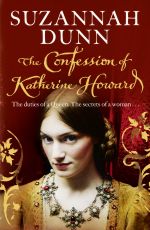
The Confession of Katherine Howard by Suzannah Dunn

What’s it about?
The story of Henry VIII’s wife, Katherine Howard, as seen through the eyes of her lady-in-waiting, Cat Tilney.
What was the problem?
I couldn’t get into this book at all and abandoned it after a couple of chapters. The dialogue was too modern and the characters didn’t feel like real people to me. Maybe if I’d kept reading I would have started to enjoy it more, but my instincts told me this wasn’t the right book for me.
Would I try it again?
No.

Have you read any of these books? Did you have better luck with them than I did?

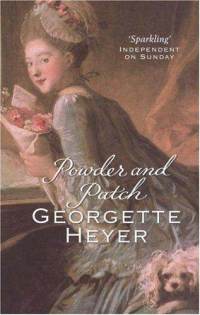
Powder and Patch by Georgette Heyer

Philip Jettan has grown up in the country on his family estate and has never shown any interest in fashionable society. As he grows older he falls in love with his childhood friend and neighbour, Cleone Charteris, but Cleone is unimpressed by Philip’s simple country ways and makes it clear she’s looking for a man with better manners and nicer clothes. And so, with the help of his Uncle Tom, Philip goes to Paris to learn how to be a gentleman…but when ‘le petite Philippe’ returns wearing powder and patches, writing French poetry and fighting duels, Cleone starts to wish she could have the old Philip back.

Powder and Patch is a very early Georgette Heyer novel and in my opinion not an example of her best work. If this had been my first experience of Heyer I think I would have been disappointed, but because I’ve read and enjoyed some of her other novels I’m prepared to accept that I’ll come across the occasional book that’s not as good. And having read some of her later books, it was interesting to see an early indication of her storytelling ability and talent for witty dialogue. There’s a lot of humour in the story but I didn’t find it as amusing as it was obviously intended to be – although I have to say, the final few chapters were quite funny and redeemed the book for me.

None of the characters in this book seemed to have much depth, with Cleone being particularly silly, especially in comparison to some of the stronger, more complex heroines in the other Heyer books I’ve read. I found it difficult to warm to her from the start because I thought Philip was fine the way he was: sincere, honest and reliable, and Cleone’s inability to accept him made me feel annoyed with her. The moral of the story is obvious: that outward appearances can be deceiving and it’s what’s inside that counts.

This book is set in the Georgian era, rather than the Regency period which Heyer is more famous for, and this gives the story a slightly different feel, although I don’t personally have any preference for one period over the other. I should point out that if you’re like me and have only a very basic knowledge of the French language (or none at all) be warned that there are a lot of French phrases scattered throughout the book, including an entire poem written in French. I don’t think it actually affected my understanding of the plot at all but I did keep wondering if I might be missing something.

Powder and Patch is a short novel but just the right length really because I don’t think the plot would have been strong enough to sustain a longer book. I found it a very quick and easy read which kept me entertained for a while, but definitely the weakest of the Heyer novels I’ve read so far.

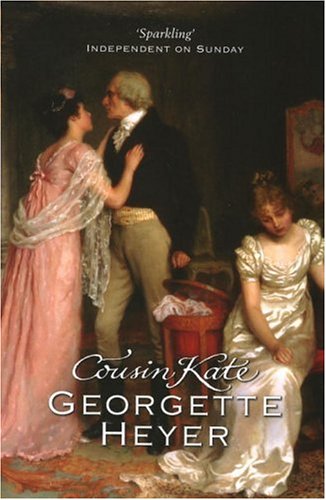
Cousin Kate by Georgette Heyer

I enjoyed my first forays into Georgette Heyer’s historical fiction novels last year and decided it was time to try some more. Cousin Kate, published in 1968, is one of her later novels and one that appears to really divide opinion – possibly because it’s not what people tend to expect from Heyer. Although there’s still some humour and some romance, it’s a lot darker than the other Heyer novels I’ve read. It also has a gothic feel and I couldn’t help being reminded of Jane Austen’s Northanger Abbey.

Our heroine, Kate Malvern, is a young woman who has been left orphaned and penniless following the deaths of both her parents and who has been working as a governess to support herself. At the beginning of Cousin Kate, she has lost her position and has returned to the London home of her former nurse, Sarah Nidd. Worried about Kate’s future, Sarah writes to Kate’s Aunt Minerva, who invites her to stay at the family mansion, Staplewood.

On her arrival at Staplewood, Kate remarks that the big house is not very homelike. Aunt Minerva, Lady Broome, is a manipulative woman, obsessed with the family lineage; her husband, the elderly Sir Timothy Broome, lives in a separate part of the house; and then there’s Kate’s handsome young cousin Torquil, who can be charming one minute, violent and aggressive the next. As Kate begins to learn exactly why Minerva was so keen to welcome her into the family, the only person she can turn to for help is Sir Timothy’s nephew, Philip.

The gothic elements of the book come in the form of the descriptions of the house and its grounds, locked doors and strange sounds in the night, the ruthless scheming of Aunt Minerva, family secrets – and Torquil, who is considered ‘mad’ and spends much of his time isolated in a distant wing of the mansion where he is attended by his doctor and faithful servant. It’s always sad to read how people with mental illness were treated in the past, in a time when it wasn’t properly understood, and I could sympathise with Torquil’s situation.

I also really liked both Kate and Philip and enjoyed watching their relationship develop. Kate has a kind heart and an ability to always see the best in people, but she is also a strong, courageous woman who values her independence. Philip is a pleasant, sensible person and felt to me like a realistic character, if not a particularly interesting or memorable one. I thought he and Kate made a believable couple.

I love Heyer’s use of language in the dialogue between her characters and I thought there was just the right amount of slang in this book to set the story in its period without becoming too difficult to understand. In fact, the only character who used an excessive amount of Regency-period slang was Sarah’s father-in-law, Mr Nidd, and this really suited his personality, making him an amusing, vibrant character who seemed to leap out of the pages!

Although, as I’ve said, this was quite a dark Heyer novel which deals with some serious themes, I still thought it was an entertaining read. I can see that it might not be to everyone’s taste but I loved it.