This House is Haunted by John Boyne

A lonely mansion, a young governess, two young children in white nightgowns, servants who seem to vanish into thin air, villagers who refuse to answer any questions, gusts of wind that blow up out of nowhere and disappear as suddenly as they came…

“You are not there, Father,” I cried. “I wake up at Gaudlin Hall, I spend most of my day there, I sleep there at night. And throughout it all there is but one thought running through my mind.”

“And that is?”

“This house is haunted.”

This House is Haunted This House is Haunted is a wonderful Victorian-style ghost story and a perfect October read.

It begins in London with a public reading by Charles Dickens, attended by young schoolteacher Eliza Caine and her invalid father, a big admirer of Dickens. As they walk home in the cold after the reading, her father’s health worsens and he dies shortly after, leaving Eliza blaming Dickens for his death. Alone in the world, Eliza decides to answer an advertisement in the newspaper and finds herself being offered the position of governess at Gaudlin Hall in Norfolk.

Arriving at the train station, she experiences what will be the first in a series of unexplained and increasingly sinister incidents when she feels a pair of ghostly hands try to push her under a moving train. Eliza survives this attack and continues to her destination where she meets her two young charges, twelve-year-old Isabella and eight-year-old Eustace Westerley, but it soon becomes obvious that something is wrong. Isabella and Eustace appear to be alone in the house and won’t tell Eliza where their parents are or when she will be able to speak to them. As she slowly pieces together the truth about Gaudlin Hall and learns the fates of the previous governesses, Eliza begins to fear for her own life.

I loved this book. It reminded me of The Séance by John Harwood, though there were shades of lots of other novels too, from Jane Eyre to The Turn of the Screw. Dickens is another big influence; as well as the author himself appearing in the book’s opening scenes, the characters also have suitably Dickensian names, such as Mr Raisin the lawyer, who has a clerk called Mr Cratchett. I really liked the narrator, Eliza, and it was a pleasure to spend 300 pages in her company. The author has obviously made an effort to create an authentic Victorian narrative voice and it worked well, though I did notice a few inaccuracies and words that felt too modern.

Although this is a very atmospheric book, I didn’t find it a very scary one – it’s too predictable and the ghostly manifestations are a bit too ridiculous (the tone of the novel seemed to be somewhere between serious ghost story and parody). But this didn’t make the book any less enjoyable, entertaining and fun to read and once I got past the first few chapters I didn’t want to put it down.

I highly recommend This House is Haunted if you’re looking for something ghostly and Victorian to read as we approach Halloween – I enjoyed this much more than The Woman in Black!

I received a copy of this book for review via Netgalley.

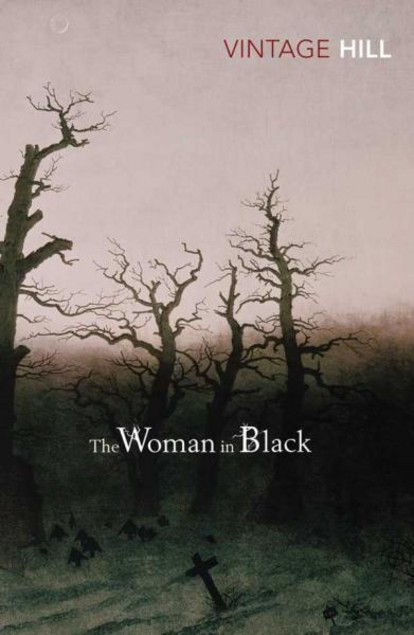
The Woman in Black by Susan Hill

The Woman in Black - Susan Hill The Woman in Black begins on Christmas Eve, when Arthur Kipps’ family gather round the fire to tell ghost stories. To the surprise and disappointment of his wife and stepchildren, Arthur refuses to join in and leaves the room, not wanting to explain that the only ghost story he knows is a true story that’s too terrifying to be told. Standing outside in the cold, Arthur decides to write his story down instead. The rest of the novel consists of Arthur’s account of something that happened to him many years earlier.

As a young lawyer, Arthur was sent to attend the funeral of a client, Mrs Alice Drablow, in the town of Crythin Gifford. Before her death, the elderly Mrs Drablow lived alone in lonely Eel Marsh House, which can only be reached from the mainland by the Nine Lives Causeway which becomes flooded at high tide. At the funeral Arthur sees a woman dressed in black but when he tries to find out who she is he discovers that nobody will answer his questions. Arthur’s work takes him to Eel Marsh House where he decides to stay for a few days sorting through Mrs Drablow’s papers – and alone in the isolated house, cut off by the tide from the rest of Crythin Gifford, Arthur has a series of encounters with the mysterious woman in black, each one more frightening than the one before.

The Woman in Black is a book I’ve wanted to read for a long time. I put it on my list for the RIP challenge last year but didn’t have time for it, so added it again to this year’s list, determined to read it this time. I’m glad I’ve read it at last and I did enjoy it, but I didn’t love it as much as I hoped to. I didn’t find the book as scary as I thought it would be either. There were a few scenes that sent a shiver down my spine, but it wasn’t quite the terrifying story I’d been expecting. I wonder whether the fact that I had to read the book in two sittings with a break in the middle made it have less impact; my advice to anyone else reading this book for the first time is to make sure you give yourself enough time to read it in one sitting if possible (it’s only a short book so it would be quite manageable).

Although this book didn’t really succeed in scaring me, it does still have everything you would expect from a traditional ghost story: there’s a creepy old house in a remote and lonely setting, lots of bad weather including storms and thick fog, a sense of mystery created by the villagers’ reluctance to talk to Arthur or to go anywhere near Eel Marsh House, and of course the ghostly manifestations of the woman in black herself. I am starting to get impatient with characters who insist on staying in houses that they know are haunted, though – Kate in Midnight is a Lonely Place which I read recently was exactly the same. I know it would spoil the story if they ran away at the first sign of trouble but I think I would have more sympathy if they weren’t voluntarily choosing to spend the night in a haunted house!

There’s not really much more I can say about this book without starting to give too much away. It’s written in a Victorian style, which I loved, but I kept wondering when the story was supposed to be set. It was obviously not the Victorian period as there were mentions of cars and electric lights, so I’m assuming it was set in the early decades of the twentieth century. I loved Spider the dog – she was my favourite character! And I thought the ending of the book worked perfectly – it wasn’t entirely unexpected but I was still shocked by it!

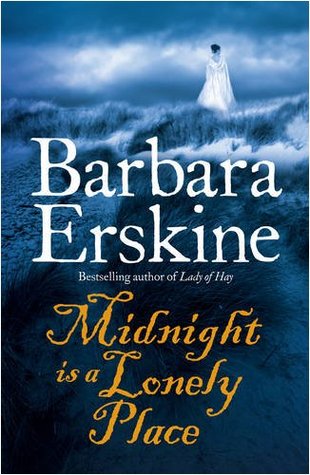
Midnight is a Lonely Place by Barbara Erskine

Midnight is a Lonely Place My first introduction to Barbara Erskine’s work last year, River of Destiny, left me unimpressed but I was assured by Erskine fans that her earlier books were better, so when I found this one at the library I decided to give her another chance. I also thought it sounded like an ideal book to read for the RIP challenge, even though it wasn’t on my original list.

When author Kate Kennedy’s relationship with her boyfriend, Jon, comes to an end and she is forced to move out of their London home, she decides to rent a cottage on the Essex coast where she can spend the winter working on her new biography of Byron. The owners of the cottage, Diana and Roger Lindsey, live in a farmhouse nearby and do their best to make Kate feel welcome, but unfortunately not all the members of the Lindsey family are happy to see her. The eldest son, Greg, an aspiring artist, had been using the cottage for his painting and resents Kate for pushing him out. His fifteen-year-old sister, Alison, is an amateur archaeologist and is furious when she discovers that Kate has been interfering with her dig at what she believes is an ancient Roman grave.

When strange things start to happen at Redall Cottage, Kate suspects Greg and Alison of trying to frighten her away, but after several encounters with ghostly figures she begins to accept that she is being haunted by the ghosts of the Roman soldier Marcus Severus Secundus, his wife Claudia, and the Druid prince, Nion. It seems that Kate has stumbled upon a two thousand-year-old love triangle that ended in a murder and a curse – and secrets that have been buried under the earth for centuries are about to be revealed at last.

Midnight is a Lonely Place was much better than River of Destiny, but still not a book that I can say I loved. I was right about it being a perfect RIP choice, though. It has all the elements of a classic ghost story: a lonely, isolated cottage, an ancient burial site, ghostly apparitions, strange smells and unexplained noises, relentless snow, sleet and blizzards. It’s quite scary in places and you might not want to read it late at night if you’re on your own (while I was finishing the book on Friday evening the real-life weather outside obliged with heavy rain and strong winds which made it even more atmospheric).

While Marcus Severus Secundus, Claudia and Nion do have a strong presence in this novel, the story is set entirely in the early 1990s (which actually feels surprisingly dated from a 2013 perspective) and we only learn about the Roman characters’ lives in brief flashbacks at the start of the chapters. I would have liked their storyline to have been more fully developed as I felt I didn’t get to know them well enough to really care about them or their secrets and this meant that, for me, the novel wasn’t as effective as it would have been with a stronger historical element.

The second half of the book is suspenseful and action packed, as the level of paranormal activity increases and more and more of Kate’s friends and neighbours become involved (at one point it felt as if the whole population of Essex were wandering about getting lost in the snow) but I found the ending disappointingly abrupt. I’m not sure I correctly interpreted the final page and after reading what was quite a long book (more than 400 pages) I had expected a more satisfying conclusion. I certainly enjoyed this book a lot more than River of Destiny but I’m not sure I’ll be looking for any more of Barbara Erskine’s books – though I might still be interested in reading Lady of Hay, her first and best known book.

Three nurses, a ghost and a computer genius

The Nightingale Girls by Donna Douglas / For One More Tomorrow by Elizabeth Bailey / Goodbye for Now by Laurie Frankel

Happy New Year! With a backlog of books read near the end of 2012 still to write about, I am starting 2013 with reviews of not just one book but three. Apologies in advance for the length of this post…I thought these were going to be mini-reviews but they turned out to be longer than I expected!
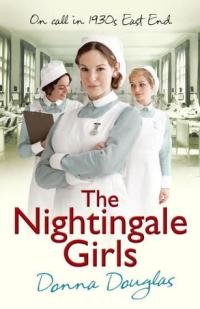
The Nightingale Girls The Nightingale Girls by Donna Douglas

The Nightingale Girls is set in the 1930s and follows the stories of three student nurses at one of London’s top teaching hospitals, the Nightingale.

Life is not easy for Dora Doyle, who comes from a poor, working class family from the East End of London. Dora sometimes feels out of place among the other, richer girls at the Nightingale and is struggling to find money to buy the books she needs, but she is determined to succeed, partly because she’s passionate about nursing but also because she’s desperate to get away from her abusive stepfather. The aristocratic Lady Amelia Benedict, known as Millie, is from a very different social background to Dora, with whom she shares a room. Millie wants to build a life for herself away from her luxurious home and glamorous friends, but as she is constantly finding herself in trouble and has already failed her preliminary training exams once, it’s going to be difficult to prove that she’s serious about her nursing. The third girl we meet is Helen Tremayne, a second year student. Her domineering mother is on the hospital’s board of trustees and her brother is a doctor, so expectations are high. Helen works hard, but has trouble making friends, especially as the other girls don’t trust her because of her mother.

At first it seems that Dora, Helen and Millie have nothing in common but as they get to know each other during their long, hard days at the Nightingale, a bond begins to form between the three of them. I didn’t feel I got to know Helen as well as the other two but I loved both Dora and Millie. Dora was completely inspirational and a perfect example of someone managing to fulfil her dreams through sheer determination and hard work. And the rebellious but warm-hearted Millie was so endearing. Through her story we see that money and possessions are not everything and that true happiness can come through doing something that we love. There are some great secondary characters too, including the spiteful and snobby but bitterly unhappy Lucy Lane, and the Doyles’ neighbour, Nick, who is desperately trying to make enough money to take his little brother to America. Dora’s grandmother, Nanna Winnie, was another favourite.

It was so interesting to see what was involved in being a trainee nurse in the 1930s. The book shows us the hardships of nursing, but there are also lots of moments of fun and humour, including one hilarious scene involving false teeth. As a historical novel, the setting of 1930s London is wonderful, whether we’re reading about the streets in the East End where the Doyle family live or an afternoon eating cakes and drinking tea at Lyons’ Corner House! The Nightingale Girls is the first in a series of novels about the Nightingale Hospital and I will look forward to reading the others.

Thanks to Random House for sending me a review copy of The Nightingale Girls
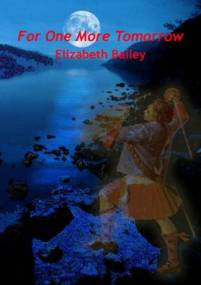
For One More Tomorrow For One More Tomorrow by Elizabeth Bailey

For One More Tomorrow, currently available as an ebook, tells the story of Sadie Grey, who is directing a production of Shakespeare’s play, Macbeth. Growing frustrated and disillusioned with some of the actors in the play and their inability to inject real passion into their roles, Sadie is stunned when she meets the ghost of Macbeth himself. Soon Mac, as Sadie calls him, seems to be invading her thoughts and taking over her life, and as her relationship with the ghost develops there are some surprises in store for both Sadie and the reader!

At first Sadie wonders whether Macbeth’s ghost has been produced from her own imagination – he looks and sounds exactly as she had pictured him in her mind, even wearing tartan like the characters in Sadie’s play despite the fact that she knows the real Macbeth would not have done so. And yet it seems that Mac does have an existence of his own outside of her imagination, and some sections of the story are seen from his point of view, as he roams the streets alone or watches rehearsals from the shadows at the side of the stage. Through his own thoughts and his conversations with Sadie, we see that he is not very pleased at the way the story of his life has been distorted by Shakespeare; he’s angry and hurt that his reputation has been damaged and history has been altered in the name of entertainment.

I haven’t read all of Shakespeare’s plays but I have read Macbeth more than once and it’s probably the play I’m most familiar with. I could sympathise with Sadie, who clearly has a real understanding and love of the play; she knows how she wants the actors and actresses to play their roles and it annoys her when they do not portray their characters as she wants to see them portrayed…especially Curtis, the man who is playing Macbeth. I did enjoy the parts of the book that deal with the rehearsals for the play and the problems Sadie encounters as director, but my favourite scenes were those in which Sadie is interacting with the ghost. For One More Tomorrow was an unusual and imaginative story and I’m sure the next time I read Macbeth I’ll remember Mac and how he felt about Shakespeare’s words.

Thanks to the author for sending me a review copy of this book
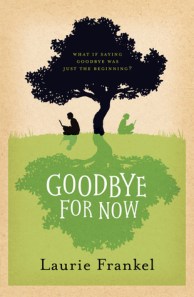
Goodbye for Now Goodbye for Now by Laurie Frankel

Sam Elling is a computer software engineer who works for an online dating company based in Seattle. Sam has created a new computer algorithm to help people find their perfect partner, but it proves to be too successful as people are meeting their soulmates too quickly and don’t need to use the dating agency anymore. As a result he loses his job but it’s not long before he comes up with another invention.

When Sam’s girlfriend Meredith loses her beloved grandmother, Livvie, she tells him she wishes she could speak to Livvie one more time. Wanting to help in any way he can, Sam creates a computer program based on the online presence Livvie has left behind, including emails, texts and videos. Meredith is shocked but overjoyed to discover that she can now continue to chat to Livvie and exchange emails just as she used to when her grandmother was alive. Soon Sam and Meredith decide to give other bereaved people the same opportunity to communicate with loved ones who are no longer with them, but they are not prepared for the number of moral issues they will have to face.

Different people have different ways of dealing with grief and what works for one person will not necessarily work for everyone. I can’t imagine ever wanting to use this type of technology myself and I tend to agree with the characters in the story who found the whole idea creepy and disturbing. However, I still thought it was fascinating to read about. There’s nothing paranormal involved and the software Sam invents sounds completely believable from a scientific point of view.

With death and grief forming such a big part of this book I had expected something very sad and emotional, but the story was actually not as moving as I had thought it might be. That could be because the main characters – Sam, Meredith, her cousin Dashiell and their clients – are all so ‘nice’ that I had difficulty believing in them as real people and didn’t manage to fully connect with them. What I did love about this novel was the number of thought-provoking questions it raises by showing us how the world reacts to Sam’s controversial new technology and telling the stories of the people who decide to use it.

Is chatting to a computer generated image of a friend or relative who has died really a good idea or is it better to let the grieving process take its natural course? Can social media actually be isolating rather than social? Are there things that our loved ones may have said or done online that we would be better off not knowing about? What about privacy? Nobody seemed to have any problems with allowing Sam to access their family member’s emails, blog, internet browsing history or Facebook and Twitter accounts, but I know I wouldn’t feel comfortable with that. Goodbye for Now may not have been a perfect novel but has left me musing on all of these questions and more.

Thanks to Headline for the review copy of Goodbye for Now
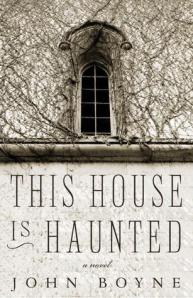
The Seance by John Harwood

When Constance Langton’s little sister Alma dies, she takes her grieving mother to a séance. She has her doubts as to whether it’s really possible to summon spirits, but she hopes it might offer her mother some comfort. Unfortunately though, Constance’s decision has tragic consequences that she couldn’t have foreseen. Alone in the world, Constance is contacted by solicitor John Montague and learns of an inheritance connecting her with Wraxford Hall, a crumbling manor house surrounded by gloomy woods. The dark secrets of the Hall’s sinister past are revealed to the reader through the narratives of Constance, Montague and another young woman, Eleanor Unwin, whose fate also becomes linked with the house. It’s not surprising that Constance is advised to “sell the Hall unseen; burn it to the ground and plough the earth with salt if you will; but never live there…”

The Séance is a wonderfully atmospheric gothic mystery set in Victorian England. The book was published in 2008 but has everything you’d expect to find in a Victorian ghost story or sensation novel: a derelict mansion said to be haunted, bad weather (complete with thick fog, heavy rain, howling winds and dramatic thunderstorms), wills and inheritances, dangerous scientific experiments, mesmerism, spiritualism, mysterious disappearances, ghostly apparitions and family secrets. There’s even a haunted suit of armour! The story is told in the form of the various characters’ narratives, letters and journal entries – a style reminiscent of The Woman in White by Wilkie Collins, for example. I would be very surprised if Collins is not one of John Harwood’s influences, but there are shades of other Victorian gothic/sensation fiction writers too. Harwood’s writing is not as flowery and descriptive as a typical Victorian author but at the same time he perfectly captures the mood and tone of a piece of 19th century writing.

The plot does start to become very complicated – much more complicated than it needed to be, in my opinion – but it does keep the reader guessing and wondering what the next plot twist will be. The villain was very easy to identify though! The changing viewpoints were handled well, and the author chose the right points to end one character’s narrative and move onto the next – although there was such a long gap between Constance’s two narratives that by the time I came to the second one I’d almost forgotten about her. This made Constance feel slightly disconnected from the other two narrators and she didn’t seem such a vital part of the novel as Montague and Eleanor. I also thought the voices of the different narrators could have been more distinctive (this is an area where Wilkie Collins really excels but where so many other authors seem to have difficulties). But although the characters could have been stronger, the real heart of the novel is the house, Wraxford Hall, which is almost a character in itself.

About thirty yards from the house I stumbled over the remnant of a low stone wall, where I settled myself with my tablet and pencils. The air was still and cold; somewhere in the distance a fox barked, but no answering cry arose from the blackness opposite. Minute by minute, the clearing brightened; the Hall seemed to be inching its way upward out of darkness. As the moon rose higher, the proportions of the house appeared to alter until it loomed above me like a precipice. I reached down for my tablet and, as I straightened, saw a light spring up in the window immediately above the main entrance

The Séance is the second book I’ve read by John Harwood; the first was The Ghost Writer, which I read almost exactly a year ago. Of the two, I enjoyed The Ghost Writer more (I loved the ghost stories in that one) but both are very creepy, very gothic and perfect books to read at this time of year.

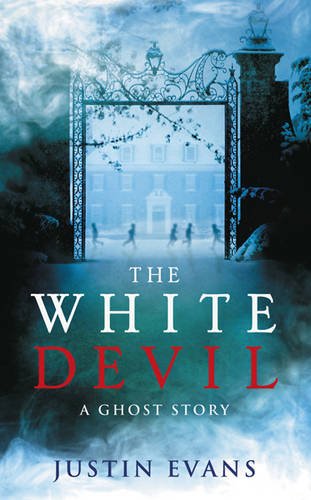
The White Devil by Justin Evans

When seventeen-year-old Andrew Taylor gets into trouble at his school in Connecticut his parents decide to send him to Britain’s prestigious Harrow School to finish his education. On Andrew’s arrival at Harrow, people begin to remark on his resemblance to the poet, Lord Byron, who also attended Harrow two centuries earlier. This makes Andrew the perfect choice for the role of Byron in the school play, which is being written by his housemaster, Piers Fawkes. But when Andrew witnesses the death of one of his new friends and starts to experience terrifying visions and ghostly sightings, he becomes convinced that Harrow is haunted and that the death is connected with something that happened during Byron’s time at the school. With the help of Persephone Vine, the only girl at Harrow, Andrew and Fawkes begin to investigate, but can they discover the truth behind the hauntings before someone else dies?

I was excited about reading The White Devil as it really sounded like a book I would enjoy. And I did enjoy it, though maybe not as much as I was hoping to. I would describe the book as part ghost story, part literary mystery (though not a particularly scary ghost story, in my opinion – while it was certainly very atmospheric and unsettling, the scenes where Andrew encountered the ghost didn’t scare me very much). The Byron element of the novel was what really interested me and the main reason why I wanted to read this book. I admit I wasn’t sure exactly how much of this story was based on historical fact and how much was pure fiction, but I did enjoy watching Andrew and the other characters researching Byron’s life and attempting to solve the mystery surrounding him.

I also loved the Harrow setting, which was very vividly portrayed, and the descriptions of the old buildings, fog and rain gave it a slightly gothic feel. Justin Evans himself spent a year at Harrow and this obviously helped to make his descriptions of the school feel authentic and believable, with insights into many aspects of life at a boys’ public school including school uniforms, traditions and slang. And in making Andrew Taylor an American, this allowed the author to draw on his own experiences to show how Andrew had to adapt not only to a new school but also to a new country and culture.

The one thing that disappointed me about The White Devil was the lack of strong, well-developed characters. The only character I really liked was Piers Fawkes, who had once been a famous poet and now suffering from alcoholism and at risk of losing his job at Harrow. Persephone, as the book’s main female character, never really came to life for me – and apart from Andrew himself, none of the other boys at Harrow had any depth either. If the characters had been stronger I think I would have enjoyed this book more than I did, but it was still a good, atmospheric read.

The Ghost of Lily Painter by Caitlin Davies

When Annie Sweet and her daughter Molly move into their new home in the Holloway area of London, Annie becomes obsessed with researching the lives of the people who previously lived in the house. Looking at the 1901 census records she discovers a list of the former residents of 43 Stanley Road, including William George, a police inspector, and one of his lodgers, a young music hall star whose name was Lily Painter. As Annie begins to investigate Lily’s story, she uncovers a scandal involving two notorious ‘baby farmers’, Nurse Sach and Mrs Walters – and at the same time, she becomes aware of a ghostly presence at 43 Stanley Road.

The book has four different narrators: Annie Sweet in the present day, Lily Painter and Inspector William George in Edwardian London, and another character who narrates some later sections set during World War II. This could have become confusing, but it didn’t – it was actually very easy to follow what was going on and is an example of multiple time periods and narrators being handled perfectly! I found all the different threads of the story equally interesting and everything seemed relevant to the overall plot. And I appreciated the way the author had made an effort to change her writing style to suit the voice of each narrator: Inspector George’s journal has a formal feel, for example, while the wartime narrator uses a lot of slang. My only criticism is that the plot relies heavily on coincidences and the way in which all the parts of the story are brought together at the end is both predictable and hard to believe.

As well as being a great story, I was also able to learn something from this book. I didn’t know anything about baby farmers and had never heard of Amelia Sach and Annie Walters, but they were real people and you can read about their crimes online. Baby farmers were people who advertised for pregnant women, offering to care for them before and during the birth and to arrange for adoption of the child if necessary. Many of these mothers were desperate young women who knew they would be unable to keep their child for financial reasons or because it was illegitimate. Of course, the young mother had to pay the baby farmer for their services and while some baby farmers may have genuinely tried to find an adoptive home for the child, others would just take the money and murder the baby. As you can probably imagine, this is all very disturbing to read about and I did have tears in my eyes once or twice!

Finally, I should point out that although the book is called The Ghost of Lily Painter, and yes there is a ghost, this is not really a traditional ‘ghost story’. Although a few scenes were slightly creepy, I was never actually frightened so if you’re looking for something scary and chilling you might be disappointed. I would recommend this book to people who enjoy historical fiction set in the Edwardian period and World War II, and despite the baby farming storyline this is a light, entertaining read.