Murder at the Spirit Lounge by Jess Kidd

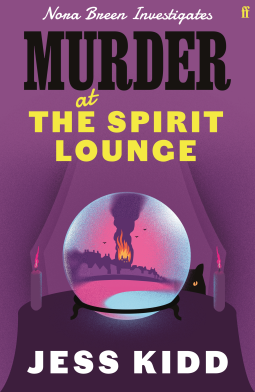
This is the second book in Jess Kidd’s new 1950s mystery series, Nora Breen Investigates. I enjoyed the first one, Murder at Gulls Nest, but I thought this one was even better. It’s not essential to read them in order as they are completely separate mysteries, but you’ll have a better understanding of some of the characters and their relationships if you do.

In the previous book, former nun Nora Breen arrives in the English seaside town of Gore-on-Sea to investigate a friend’s disappearance. With that mystery now solved, she has decided to stay on at the Gulls Nest guest house for the winter so she can look for a job and build a new life for herself in the town. Soon, though, Nora finds herself caught up in another mystery – the murder of medium Doreen Chimes during a séance at her Gore-on-Sea ‘spirit lounge’. The séance had been attended by a small group of guests including Nora’s new friend, Detective Inspector Rideout, and there’s reason to believe that all of their lives could now be in danger.

With Rideout himself a possible target, along with the other séance attendees, he and Nora need to track down the murderer as quickly as possible. The only clue they have are the letters E.V.E. – part of a message Mrs Chimes was supposedly receiving from the spirit world at the moment of her death. Who is Eve and who was the message intended for? To find out, Nora will need to ask a lot of questions – and, fortunately, she’s just been offered a job as reporter for the Gore-on-Sea Herald, which gives her the perfect excuse to speak to people and hunt for information.

One of my favourite things about the first book was Nora’s relationship with Rideout and I was pleased to see it develop further in this book (although if you’re hoping for a great romance, I think there’s still a long way to go). Nora also has another suitor, the photographer Hosmer, so I suspect someone is going to be disappointed! There are plenty of other colourful characters as well, such as Irene, the Gulls Nest housekeeper, whose cooking leaves a lot to be desired, eight-year-old Dinah, who doesn’t speak but watches and listens, and even Father Conway, the seagull who taps at Nora’s bedroom window every morning.

The mystery is an interesting one and with this being the second book in the series, I felt that we got straight into the action more quickly than in the first book as less time needed to be spent introducing the main characters and setting the scene. I had my suspicions about the identity of the culprit early on and I was right, but there were still other things that I didn’t guess and I enjoyed watching Nora and Rideout carrying out their investigations. With Rideout’s life at risk, a lot of the detective work falls to Nora, much to his frustration! This also gives his assistant, Constable Griggs, a chance to get more involved and his help proves invaluable to Nora towards the end. Another important clue is provided by one of Doreen Chimes’ cats, whom Nora rescues from the medium’s house and brings home to Gulls Nest.

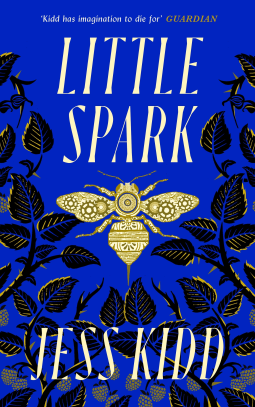
Overall, I found this an entertaining novel, slightly stronger than the first one. I love the 1950s seaside setting and will be looking out for more books in the series. First, though, I’m looking forward to reading Jess Kidd’s new standalone novel, Little Spark, which is being published in July.

Thanks to Faber and Faber Ltd for providing a copy of this book for review via NetGalley.
Murder at Gulls Nest by Jess Kidd

I’ve read three books by Jess Kidd and so far they’ve all been completely different. This new one, though, is described by the publisher as ‘the first in a sparkling new 1950s seaside mystery series’, so presumably she’s going to stick with one style and genre for her next few books. The series stars Nora Breen, a former nun who has left the convent that has been her home for the last thirty years. She’s an interesting and unusual character and I enjoyed meeting her in this first novel, Murder at Gulls Nest.

Gulls Nest is a guest house in the seaside town of Gore-on-Sea on the southeast coast of England. It’s also the last known address of Frieda, who was once a novice at Nora’s convent before leaving the order and promising to keep in touch. Frieda had been a good friend of Nora’s and when her letters stop arriving, Nora becomes so worried that she also decides to leave and travel to Gore-on-Sea to find out what has happened. Once at Gulls Nest, Nora learns that Frieda disappeared one night without explanation, yet no one else seems to be concerned about it, including the police. Convinced that something bad must have happened to her friend, Nora takes the room that was once Frieda’s and begins to investigate.

As Nora gets to know the other lodgers, she discovers that some of them are not what they seem and appear to be hiding secrets. Then a murder takes place, which may or may not be linked to Frieda’s disappearance. Nora is sure that if she can solve one crime it could provide clues to the other, but Inspector Rideout makes it clear that the police don’t want or need the assistance of a middle-aged ex-nun. Of course, Nora isn’t going to give up that easily!

Murder at Gulls Nest is as entertaining as I’ve come to expect from Jess Kidd’s books, with her usual array of colourful, quirky characters. Some of the most memorable are Professor Poppy, an elderly puppeteer who runs a Punch and Judy show; Dinah, the young daughter of the Gulls Nest landlady, who never speaks but sees everything that’s going on; and the exasperated Inspector Rideout, who wants Nora kept away from his investigation at all costs. I loved Nora’s relationship with Rideout and look forward to seeing how it continues to develop in the next book. As for Nora herself, although I couldn’t quite believe that she had until recently been a nun, I did like her as a character and enjoyed seeing her interacting with the other residents of Gore-on-Sea. I particularly loved the chapter where she’s invited to afternoon tea with the vicar and his ‘family’ – and I won’t spoil the fun by telling you what happens there!

At times this felt like a parody of a mystery novel rather than one to be taken too seriously, but at other times it became surprisingly dark, which kept things interesting all the way through. There’s also a good sense of time and place, bringing the 1950s British seaside setting to life. I hope we don’t have to wait too long for the second book.

Thanks to Faber & Faber for providing a copy of this book for review via NetGalley.

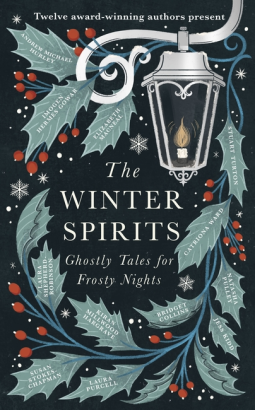
The Winter Spirits: Ghostly Tales for Frosty Nights

The Winter Spirits: Ghostly Tales for Frosty Nights is a collection of twelve new ghost stories written by popular authors of historical and Gothic fiction, all with a Christmas or Advent theme. It’s a follow-up to The Haunting Season, which I haven’t read but which includes eight of the same authors. This is the perfect time of year for ghost stories, so maybe I’ll look for the previous book next winter.

Back to The Winter Spirits and most of the stories are set in the 19th or early 20th centuries, giving them a traditional feel. More variety would have been nice – not just in the time periods, but also in the geographical settings, as the majority take place in Britain, with one or two in America or elsewhere in Europe – but otherwise I really enjoyed this collection. I’ve previously read full-length novels by most of the featured authors, but three of them were new to me: Andrew Michael Hurley, Catriona Ward and Susan Stokes-Chapman. I felt that Hurley’s The Old Play and Stokes-Chapman’s Widow’s Walk were two of the weaker stories, but looking at other reviews, some readers have singled them out as favourites, so I think it’s just a case of different stories appealing to different people! Ward’s contribution, Jenkin, was completely bizarre but added some diversity as it felt quite unlike any of the others.

The biggest surprise, for me, was Natasha Pulley’s The Salt Miracles; I really didn’t get on with her writing style in her novel The Bedlam Stacks, so I wasn’t expecting too much from this tale of disappearing pilgrims on a remote Scottish island (based on St Kilda). However, I ended up loving it – it’s such an unusual and chilling story! Inferno by Laura Shepherd-Robinson, one of my current favourite historical fiction authors, is another I particularly enjoyed – a wonderfully eerie story set in 18th century Italy, where a man is forced to confront his sins. Even better than both of these is Stuart Turton’s creepy and imaginative The Master of the House, in which a young boy who is being neglected by his father makes a deal with the devil. This one feels almost like a very dark fairytale and is one of the highlights of the book.

Of the twelve authors, Laura Purcell is probably the most well established as a writer of horror fiction and she doesn’t disappoint here with Carol of the Bells and Chains, in which a governess trying to deal with two unruly children tells them the story of the Krampus, with unintended consequences. Imogen Hermes Gowar’s A Double Thread, where a woman gets her comeuppance after badly treating her hardworking seamstress, is another I really enjoyed – it made me long for another novel by Gowar, as it’s been a few years since The Mermaid and Mrs Hancock!

The remaining stories are by Elizabeth Macneal, Bridget Collins, Jess Kidd and Kiran Millwood Hargrave. With a range of different styles and subjects, unless you just don’t like ghost stories I think this collection should contain something to please almost every reader.

Thanks to Sphere for providing a copy of this book for review via NetGalley.
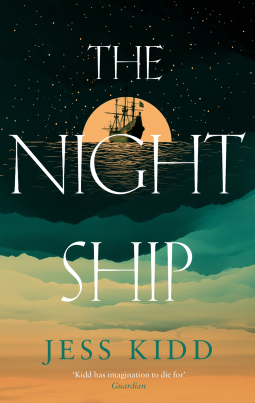
The Night Ship by Jess Kidd

Jess Kidd’s Things in Jars was one of my books of the year in 2019. I don’t think her new novel, The Night Ship, will achieve the same honour this year, but it’s still a book that I enjoyed very much. It takes as its starting point a real historical event – a 17th century shipwreck – and uses it to tell the stories of two children whose lives are separated by more than three hundred years.

In 1629, a nine-year-old Dutch girl, Mayken, is sailing to the Dutch East Indies aboard the Batavia, accompanied by her nursemaid. It’s a long journey and Mayken occupies herself by exploring the ship and getting to know some of the passengers and crew. When one of her new friends tells her about the legendary eel-like monster known as Bullebak, Mayken becomes convinced that Bullebak is the cause of everything bad that is happening aboard the ship and she sets out to capture the monster in a jug.

In 1989, nine-year-old Gil arrives on an island off the west coast of Australia to live with his grandfather following the death of his mother. Gil is a lonely child who has never fit in and he struggles to settle into his new life on the island. He finds some comfort in playing with his best friend, the tortoise Enkidu, and in watching the work of the scientists who have come to the island to investigate the wreck of the Batavia.

The stories of Gil and Mayken alternate throughout the novel so that we spend about the same amount of time with each of them. It soon becomes clear that although the two children are leading very different lives, there are also some parallels between them. Not only will Mayken’s ship be wrecked on Gil’s island, both children have recently lost their mother and are trying to come to terms with this. They are also both drawn to the tales of monsters who appear in their national folklore – for Mayken, it’s Bullebak, and for Gil, the Bunyip. However, I had expected the two storylines to tie together more closely at the end and was slightly disappointed that this didn’t really happen.

I knew nothing about the fate of the people on board the Batavia before I read this book and if you’re not familiar with it either I recommend not looking it up until you’ve finished. It wasn’t actually the shipwreck story that interested me the most, though – I found that I was drawn much more to Gil than to Mayken, despite Mayken’s storyline being more dramatic. Poor Gil has such a difficult time and parts of his story are heartbreaking. I should probably point out here that although both protagonists are young children, this is not a children’s book and is quite harrowing even for an adult to read! I must go back and read Jess Kidd’s earlier novels now; I meant to do that after finishing Things in Jars and never did.

Thanks to Canongate for providing a copy of this book for review via NetGalley.
This is book 39/50 read for the Historical Fiction Reading Challenge 2022.

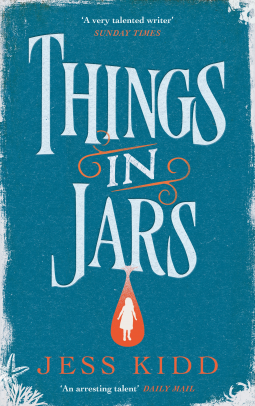
Things in Jars by Jess Kidd

What an unusual book! Not having read anything by Jess Kidd before, I didn’t know what to expect from this new Victorian mystery, but I immediately fell in love with the playful writing and imaginative plot. I knew as soon as the ghost of a tattooed boxer arose from a tomb in Highgate Cemetery that this was going to be no ordinary detective novel.

The story takes place in 1863 and our heroine is Bridie Devine, a former surgeon’s apprentice from Dublin who, since arriving in London, has built a new career for herself as a private investigator. At the beginning of the novel, Bridie – ‘A small, round upright woman of around thirty, wearing a shade of deep purple that clashes (wonderfully and dreadfully) with the vivid red hair tucked (for the most part) inside her white widow’s cap’ – is asked to look into the disappearance of Christabel Berwick, a little girl whose strange physical characteristics make her a valuable prize for those who collect curiosities and oddities. With the ghost of boxer Ruby Doyle by her side, Bridie must try to find Christabel before she becomes a ‘thing in a jar’.

Things in Jars is one of the most enjoyable books I’ve read so far this year. It reminded me, in different ways and at different times, of The Mermaid and Mrs Hancock, The Essex Serpent and Once Upon a River, but written in a style that makes it all Jess Kidd’s own. Bridie is a wonderful character; I admired her for her independence and intelligence but had a lot of sympathy for her as well, as the story of her troubled childhood unfolds in parallel with the 1860s one. Her romance with Ruby (as far as you can have a romance with a man who isn’t alive) is both moving and mystifying. Ruby claims to have known her for years, but Bridie can’t remember him. Who is he – and why has he come into her life again?

The secondary characters are excellent too, all described with Dickensian detail, from Bridie’s seven foot tall housemaid Cora Butter with the ‘unnerving glare’ to her landlord, the elderly bell maker Mr Wilks, who has the look of ‘something that has been carefully varnished and then put away for a long time’. The descriptions of London – sometimes written from the perspective of a raven flying over the rooftops – wouldn’t be out of place in a Dickens novel either:

The raven levels off into a glide, flight feathers fanned. Slick on the rolling level of rising currents and down-draughts, she turns her head, this way and that. To her black eyes, as blacked as pooled tar, London is laid out – there is no veil of fog or mist or smoke-haze her gaze cannot pierce!

Below her, streets and lanes, factories and workhouses, parks and prisons, grand houses and tenements, roofs, chimneys and tree tops. And the winding, sometimes shining, Thames – the sky’s own dirty mirror.

As for the mystery of Christabel’s disappearance, it really takes second place to the setting and the characters and the humour, but it was interesting enough to keep me gripped until the end, wondering what the little girl’s fate would be. I also enjoyed the way legends of the mythical Irish being known as the merrow were worked into the plot.

I would love Jess Kidd to write another book about Bridie Devine but, failing that, I will have to look for her previous novels, Himself and The Hoarder. Although they sound very different from this one, I am looking forward to reading more of her work!

Thanks to Canongate Books for providing a copy of this book for review via NetGalley.