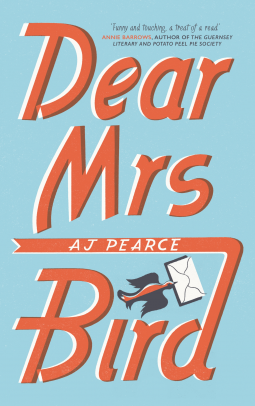
Dear Mrs Bird by AJ Pearce

It’s 1941 and Britain is at war. Emmeline Lake has always wanted to be a journalist and is thrilled when she sees an advertisement in the newspaper for a job at the London Evening Chronicle. This could be her opportunity to become a Lady War Correspondent. How exciting!

To her delight, Emmy is offered the job and arrives at the Chronicle offices ready to ‘sniff out Political Intrigue, launch Difficult Questions at Governmental Representatives, or best of all, leap onto the last plane to a far-off country in order to send back Vital Reports of resistance and war’. Unfortunately, it soon becomes clear that there has been a misunderstanding. Emmy isn’t going to be a War Correspondent – she won’t even be working for the newspaper at all. Her new job actually involves typing up letters for Mrs Henrietta Bird’s problem page in the weekly women’s magazine Woman’s Friend, which happens to be based in the same building as the Chronicle. Emmy does her best to pretend that Everything Is Absolutely Tip Top (as you can see, she likes to think in capital letters), but really she is devastated. This is not what she had expected at all!

Trying to make the best of things, Emmy begins sorting through the letters, picking out some for Mrs Bird to reply to. She quickly discovers, though, that Mrs Bird has a whole list of words and topics which she considers unsuitable for publication in the magazine. Any letters which mention love, marriages, pregnancies, affairs or romantic relationships of any kind – almost all of them, in other words – must be rejected and thrown away immediately. Emmy can’t bear to see so many readers’ problems being ignored; if only there was something she could do to help…

Dear Mrs Bird was an absolute joy to read from start to finish! I loved Emmy from the beginning and her friendly, enthusiastic narrative voice pulled me straight into her world. She’s such a kind-hearted, well-meaning person, yet she doesn’t always say or do the right thing, which makes her feel very human. The language is perfect for the time period too and I could easily have believed that I was reading a much older book – and as I usually complain about language feeling too ‘modern’, that’s high praise from me!

At first, much as I was enjoying following Emmy’s adventures at Woman’s Friend and meeting the other characters in the story – who include her best friend Bunty, her fellow typist Kathleen, and the formidable Mrs Bird herself – I thought this was going to be a very light-hearted, cheerful novel despite the wartime setting. However, in the second half of the book there’s a noticeable change in the tone, as the bombing raids on London become more frequent and more ferocious. There’s drama, there’s tension and there’s heartbreak…but there’s never too much of any of these things and the book never loses its charm and its warmth.

Dear Mrs Bird is a lovely book and I was pleased to discover that there is already the possibility of a television adaptation. It will be perfect for a Sunday evening, I think. Meanwhile, I highly recommend finding yourself a copy of this book and getting to know Emmy and her friends.

Thanks to Pan Macmillan for providing a review copy via NetGalley.

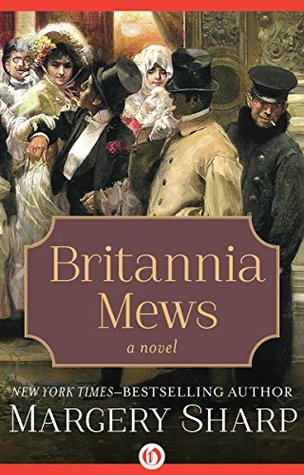
Britannia Mews by Margery Sharp

I discovered Margery Sharp through Jane of Beyond Eden Rock who, for the last few years, has been hosting an annual Margery Sharp Day on the author’s birthday. This year, Jane is doing something slightly different: she has put together a Birthday Book of Underappreciated Lady Authors to celebrate the work of some of her favourite writers throughout the year. Margery Sharp is first on the list and as I’ve enjoyed her books in the past, I wanted to join in.

Britannia Mews (1946) is my fourth Margery Sharp novel and probably my favourite so far. Beginning in the 1870s and taking us through to the 1940s, it follows the story of Adelaide Culver from childhood to old age. We first meet Adelaide as a curious ten-year-old exploring Britannia Mews, a London street inhabited by servants and coachmen – a street which is considered less than respectable and off limits to middle-class children like Adelaide. Returning to the Culver’s comfortable townhouse in nearby Albion Place, Adelaide has no idea that in just a few years’ time Britannia Mews will be her home.

It’s all cousin Alice’s fault; if she hadn’t been suffering from a cold and missed their drawing lesson, Adelaide would never have been left alone with their drawing master, Henry Lambert, and then he might never have told her that he loved her. But Alice does have a cold and Mr Lambert does declare his love for Adelaide – and Adelaide, despite knowing that her parents will disapprove, does agree to marry him.

Their marriage takes place on the day the rest of the Culver family move away to a lovely new house in the countryside. Adelaide, meanwhile, is moving into Mr Lambert’s rooms above a coach house in Britannia Mews. Estranged from her family, living in what is rapidly becoming a slum and finding that her new husband is not quite the person she thought he was, married life proves to be very challenging for Adelaide. When she finally has the opportunity to escape from Britannia Mews, however, she must decide whether she really wants to leave the street that has become her home.

Britannia Mews is very different from the other books I’ve read by Margery Sharp – The Nutmeg Tree, The Flowering Thorn and Cluny Brown. All three of those are lovely novels but they are much lighter in tone and, although Britannia Mews is not entirely without its moments of wit and humour, in general this is a darker and more serious story. I don’t want to give the impression that it’s a depressing one, though, because it isn’t. Yes, Adelaide’s life is difficult, at least at first, but it’s her own life – she has made her own choices and had to live with them, made her own mistakes and had to find her own solutions. Unlike her cousin Alice, who represents the ideal of what a Victorian woman should be, Adelaide is unconventional, independent and, by the time the twentieth century arrives, an inspiration to the younger generation.

One woman in particular who belongs to the younger generation is Dorothy – Dodo – Baker, daughter of Adelaide’s cousin Alice. Like Adelaide before her, Dodo feels stifled by the middle-class circles in which her parents move and she knows she wants something different out of life. Britannia Mews, which by the 1920s has become a lively and fashionable address, is, for Dodo as well as for Adelaide, a symbol of freedom and the opportunity to be who you want to be. The second half of the novel is very much Dodo’s story rather than Adelaide’s; it took me a while to adjust to the change of heroine but once I did I found Dodo just as interesting to read about. I enjoyed watching her get to know the Lamberts and waiting to see whether she would uncover the secret they had kept hidden for so many years.

Of course, the most important character of all is Britannia Mews itself, a street which seems to cast a spell over those who live there, pulling them back every time they might think about leaving. I loved reading about the changing nature of the street over the years and the people who inhabited it at various times in its history. I was also fascinated by the descriptions of the Puppet Theatre which Adelaide opens in one of the old coach-houses and the magnificent hand-made puppets created by Henry Lambert.

This was a wonderful choice of book to celebrate Margery Sharp’s birthday this year and I’m hoping to join in with some of Jane’s other Birthday Book authors in the months to come.

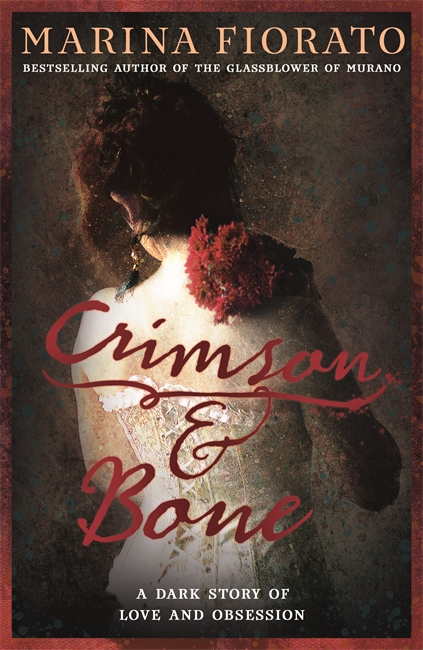
Crimson and Bone by Marina Fiorato

It’s January 1853 and seventeen-year-old Annie Stride is standing on Waterloo Bridge looking down at the River Thames, contemplating suicide. Having grown up in the East End of London as part of a large and impoverished family, Annie has drifted into a life of prostitution. Her only friend, Mary Jane, drowned in the Thames the previous year and now, pregnant and homeless, Annie has decided she has no choice but to do the same. Just as she gets ready to jump from the bridge, she is rescued at the last minute by a handsome young man who introduces himself as Francis Maybrick Gill.

Francis is a talented Pre-Raphaelite artist who is planning a new series of paintings on the subject of the ‘Fallen Woman’ – and he wants Annie to be his model. And so Annie, who had been only moments away from death, finds herself living with Francis in his large and luxurious Gower Street home, posing for portraits of Eve, Rahab and Jezebel. As well as using Annie as his muse, Francis also takes steps to improve her mind, to correct her East End speech and to help her with her reading and writing. She has no idea why he is taking so much interest in her, but she is so grateful she doesn’t care – until late one night two visitors come to call and Annie begins to wonder whether Francis Maybrick Gill is really the man she thought he was.

Crimson and Bone, Marina Fiorato’s latest novel, is divided into three parts and everything I have described above happens in the first part alone. The action also moves away from London for a while to Florence and Venice; Fiorato, who is half-Venetian herself, always writes beautifully about Italy and we are given some lovely, vivid descriptions of the country. The author’s love of art also shines through, with lots of information on the Pre-Raphaelite approach to art, exhibitions at the Royal Academy, the symbolism in the paintings for which Annie models, and, through the character of a mysterious ‘rainbow man’, the origins of the paints and pigments Francis uses.

From the beginning, the reader is kept in the dark as to Francis’s motives. What are his true plans for Annie? Does he really just want to paint her or does he have some other reason for his sudden interest in her? And what is the significance of his obsession with white camellias? A series of diary entries written by Annie’s friend Mary Jane appear at the start of each chapter which eventually shed some light on things, while also raising more questions along the way. It’s obvious that something is not quite right with the whole situation, but we don’t know what or why and the tension builds slowly throughout the novel.

However, there are a few inaccuracies and anachronisms which do spoil the book somewhat – for example, Annie tries to improve her speech by listening to gramophone records (several decades before they would have been available) and is taken to the theatre to see performances of Pygmalion (not staged until 1913) and Adelaide Neilson in Measure for Measure (more than twenty years too early). Admittedly, not knowing anything about Adelaide Neilson, I wasn’t aware of the third one until someone else pointed it out in their review, but it makes me wonder what else I might have been too caught up in the story to notice.

And the fact that I became so caught up in the story and the atmosphere – and that I cared about what happened to Annie – meant that I did enjoy this novel overall, despite its flaws.

This is book 15/20 of my 20 Books of Summer challenge.

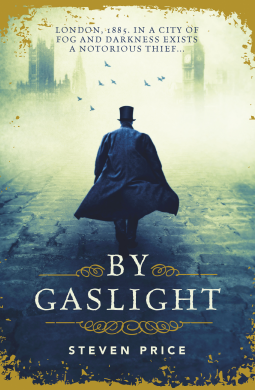
By Gaslight by Steven Price

Well, this was a long book! Not only does it have over 700 pages, it’s also the sort of book that requires a lot of concentration, which makes it a very slow read. I’ve been reading it for the whole of August, which is one of the reasons why I’m not going to complete my 20 Books of Summer challenge by the deadline now. Was it worth so much time and effort? I’m actually not sure; it wasn’t a complete success with me – there were times when I found myself really enjoying it and others when I couldn’t wait to be finished – but on the whole I think I’m glad I read it.

This is the second novel by Canadian author and poet Steven Price. Set in the 19th century, it follows the stories of two men – William Pinkerton and Adam Foole – who are bound together by tales of a shadowy figure known, appropriately, as Edward Shade. Pinkerton is a famous American detective who is in London assisting Scotland Yard with an investigation into the death of a woman, possibly Charlotte Reckitt, whose severed head has been found in the Thames. He believes Charlotte has links with Edward Shade, an elusive criminal whom his father had devoted twenty years of his life to hunting down, without success. But who is Shade? A real person…a ghost…or just an obsession?

Adam Foole, a thief and swindler, has also recently returned to England with his two accomplices – the giant Japheth Fludd, and Molly, a young pickpocket. Foole has received a letter from a woman he once knew asking for help, but on his arrival in London he is unable to find her. Soon his path will cross with William Pinkerton’s; it seems that both of their fates are linked with Charlotte Reckitt and the mysterious Edward Shade.

By Gaslight takes us on a tour of the darker side of London as Foole and Pinkerton (separately or together) visit Millbank Prison, an opium den, a séance and the underground sewer system. However, there are long interludes set in South Africa and in America during the Civil War and these are essential to understanding the backgrounds to our characters and therefore to understanding the mysteries at the heart of the novel. These sections have quite a different tone from the London parts and, to me, they didn’t really feel as though they belonged in the same book; had the whole novel been devoted to the Civil War or had it been purely a Victorian murder mystery I think I would probably have been happier. This is just my opinion, though, and I’m sure other readers will love the variety of settings and changes in atmosphere.

By Gaslight is the perfect title for this book – not only are gaslights mentioned frequently, the whole novel (or the London chapters, at least) feels misty and murky and everything seems to happen either at night or in the fog and rain. Although most of the action takes place in 1885 and any long flashbacks are usually given their own chapters, eventually the borders between past, present and future start to blur, all adding to the sense of mystery and of facts being hidden or obscured.

The author has also made the decision not to use correct punctuation – commas are used sporadically and quotation marks not at all. Again, whether or not you will feel comfortable with this is a matter of personal taste; you could see it as a clever way of trying to immerse the reader more fully in the fogs and mists of the story or, like me, you could just find it annoying and distracting. I should add, though, that at no point did I actually struggle with it; I could always tell how a sentence was intended to be read and who was speaking to whom.

On the whole, though, this is an atmospheric and unusual novel and, despite the length and my reservations about the writing style, I never thought about abandoning it. It’s unlike any other Victorian novel I’ve read and if anyone else has read it, I would be interested to hear what you thought of it.

Thanks to the publisher, Oneworld Publications, for providing a copy of this book for review via NetGalley.

This is book 14/20 of my 20 Books of Summer challenge.

A trio of books: London Roses; The Hurlyburly’s Husband; The King’s Favourite

I’ve been struggling to keep up to date with my reviews recently – I seem to go into each new month with at least four or five books still to write about from the month before – so I thought I would try putting together the occasional multi-book post with slightly shorter reviews than normal.

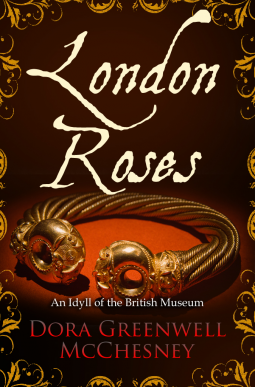
London Roses by Dora Greenwell McChesney, first published in 1903, follows the stories of a group of people who meet in the Manuscript Room at the British Museum. Rhoda Comstock is a young American woman who has come to London to stay with her English cousin, Una Thorpe, and the two strike up a friendship one day with journalist Stephen Fulford and his brother Thomas, getting together to discuss their research and to engage in lighthearted debate about the differences between life in Britain and America. When Stephen makes the sudden decision to go to South Africa to report on the Boer War, he leaves behind a scandal which puts Thomas in a difficult position and poses a threat not only to the bond between the two brothers but also to their newly formed relationships with Rhoda and Una.

London Roses is packed with interesting ideas and themes – loyalty and friendship; the importance of trust; adjusting to life in a different country – although none of these things are explored in as much depth as they could have been. The characters also had the potential to be a lot more complex and well-developed than they actually were. None of the main four ever came fully to life and I was much more intrigued by the character of Anthony Pettigrew, an old man Rhoda nicknames the Moth, who has spent thirty years coming to the British Museum to research books that he’s never written.

Far too much of the novel is spent discussing the English Civil War, which is apparently a passion of several of the characters (and also of the author – as I know, having read her historical novels Rupert, by the Grace of God and Cornet Strong of Ireton’s Horse), but which felt a bit strange as it had very little to do with the rest of the plot. On a more positive note, there are some nice descriptions of London and the Museum, but overall I was disappointed by this book and was thankful that it was such a short one!

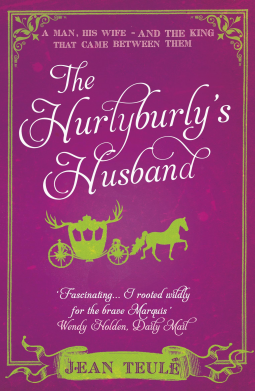
The Hurlyburly’s Husband is an English translation by Alison Anderson of Jean Teulé’s 2008 French novel. Set in 17th century France, it tells the story of the often forgotten husband of Madame de Montespan (mistress of the Sun King, Louis XIV). Louis-Henri, Marquis de Montespan, marries Athénaïs, as she becomes known, after her fiancé flees following a duel. He loves his new wife and believes that she loves him, but it’s not long before Athénaïs goes to court as a lady-in-waiting and takes the place of Louise de la Valliere in the king’s affections. Unlike many cuckolded husbands of the period, Montespan is not interested in using his wife’s position to gain money and titles at court; instead, when it becomes obvious that Athénaïs is lost to him, he chooses to defy the king and take revenge in any small way he can.

A lot has been written about Madame de Montespan, her relationship with the king and her involvement in the Affair of the Poisons, but her husband is usually ignored. It was good to have the chance to read his side of the story and to see how he may have felt about all of this. As Athénaïs is absent from her husband’s life for most of the novel, the focus is always on Montespan himself: his attempts at winning glory on the battlefield, his relationships with his children, and his acts of defiance against the king (adding horns to his coat of arms, for example).

This is an entertaining little novel, as lively, colourful and scandalous as the French court it describes. There are even some illustrations, which are always a nice addition to any book. And in case you’re wondering, the hurlyburly of the title refers to the hairstyle popular in the 17th century known as the hurluberlu.

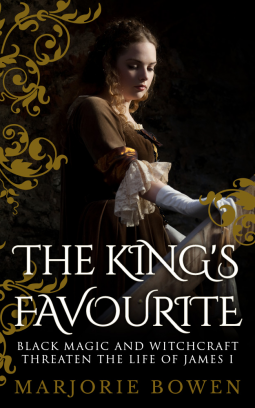
The final book I want to talk about here is The King’s Favourite by Marjorie Bowen (originally published in 1938 under the pseudonym George R Preedy). The King of the title is King James I of England and VI of Scotland – and the Favourite is Robin Carr, a young man who catches the King’s eye when he falls and breaks his leg in the tilt yard. Henry Howard, Earl of Northampton, sees his chance to gain influence at court by pushing his pretty, seventeen-year-old great-niece Frances into an affair with Robin. But Howard is not the only one who is plotting and scheming; Robin’s friend, Tom Overbury, is also keen to encourage the romance between Robin and Frances in the hope of gaining more power for himself.

Nobody expected the two to actually fall in love, but that is what happens. With his plans thrown into disarray, Overbury finds himself caught in the middle of another plot – but this one is directed at himself. The King’s Favourite is based on real events from history, but I was unfamiliar with the details of this particular story. My lack of knowledge meant I had no idea what was going to happen and could enjoy this as a suspenseful true crime novel before looking up the facts after I’d finished and comparing them with Marjorie Bowen’s version.

While the plot (after a slow start) is an exciting, dramatic one, the characters are not particularly strong and not at all sympathetic either! I can’t say that I liked any of them – although I was interested to see that the astrologer and physician Simon Forman plays a prominent part in the story. I remember being intrigued by his appearances in Sally O’Reilly’s Dark Aemilia, so it was good to learn more about him here.

I see that there have been several other novels written over the years that also deal with the Overbury case, including one by Rafael Sabatini (The Minion) which I’m now very interested in reading. The TBR continues to grow!

The Unseeing by Anna Mazzola

the-unseeingIt’s Christmas 1836 and Hannah Brown is looking forward to her wedding to James Greenacre. However, the marriage will never take place; instead, Hannah is brutally murdered and in the weeks that follow, the parts of her dismembered body are discovered in various locations around London. Her fiancé, Greenacre, is arrested and found guilty – but although he admits to disposing of the body, he claims that Hannah was already dead when he found her. This makes no difference to the judge and jury and Greenacre is sentenced to hang, along with his mistress, Sarah Gale, who is accused of concealing the murder.

Sarah had been living with Greenacre as his housekeeper before being asked to leave so he could marry Hannah. She insists that she knew nothing about the murder and Greenacre also denies that she had any involvement, but this is not enough to save her. As she sits in a cell in Newgate Prison, Sarah’s only hope is the petition she has submitted asking for clemency. The lawyer appointed by the Home Secretary to look again at Sarah’s case is Edmund Fleetwood, young, idealistic and principled. After speaking to Sarah and hearing her talk about her life, Edmund is convinced that she should be freed, but how can he prove it? And is it possible that he is becoming too emotionally involved in the case to be able to see the facts clearly?

Anna Mazzola’s debut novel, The Unseeing, is based on a true crime; the Edgware Road Murder, as it became known, really did take place and James Greenacre really was found guilty and was sentenced to death. Sarah Gale was also arrested, but I won’t tell you what her eventual fate would be. I didn’t know and that meant I was kept in suspense wondering what would happen to her. It’s important to remember, though, that this is fiction and not everything in the book is taken from historical fact – which could explain why some of the developments towards the end of the novel didn’t completely convince me.

Edmund Fleetwood, who plays such a major role in the novel, is a fictional character and the author has created a fictional story for him running alongside Sarah’s. I thought the two stories worked well together – I did like Edmund and I shared his frustration as Sarah repeatedly refused to provide any information which could have helped her defence – but there were times when I felt I was being distracted from the central plot and I just wanted to get back to Sarah in the Newgate. The portrayal of prison life is one of the novel’s strong points and reminded me of other prison-based historical novels such as Antonia Hodgson’s The Devil in the Marshalsea and Sarah Waters’ Affinity.

The most interesting aspect of the book, though, is the exploration of what it meant to be a woman accused of a crime in the 19th century: the unfairness of the law, the way in which evidence against a woman was considered, the possible bias that could arise from a verdict being reached by an all-male jury, and whether the punishments handed out were in proportion to the crime. The fact that many of these women had children – like Sarah’s little boy, George – added another complication. Sarah is lucky enough to have a sister, Rosina, who takes care of George while she is in prison, but what will happen to him if the worst happens and she can never come home?

The Unseeing is an interesting blend of fact and fiction; I did enjoy it, but I felt that there wasn’t enough to make this book stand out from others of its type. I couldn’t quite love it, but I liked it and will be looking out for more from Anna Mazzola.

Thanks to Sourcebooks Landmark for providing a review copy via NetGalley.

A Chelsea Concerto by Frances Faviell

a-chelsea-concerto I had a nice surprise a few months ago when I unexpectedly received two ebooks from Dean Street Press who were launching their new imprint, Furrowed Middlebrow (in conjunction with Scott from the Furrowed Middlebrow blog). The first one I chose to read was A Chelsea Concerto, a Second World War memoir originally published in 1959.

Frances Faviell lived at 33 Cheyne Place in Chelsea – one of the most heavily bombed areas of London during the war due to its location, close to the Royal Hospital and to several bridges over the River Thames. Her memoir opens in the early days of the war, a period known as the Phoney War because it seemed as though very little was actually happening. During this time, as well as continuing her work as an artist, Frances becomes a Red Cross volunteer, taking part in air-raid drills and trying to ensure that the people of Chelsea are as fully prepared as they can possibly be for whatever may follow.

What follows, of course, is the Blitz, which Faviell describes in vivid detail. Night after night, people living in Chelsea are subjected to one bombing raid after another, emerging from the shelters each morning in fear of what they might find: their home destroyed; a friend or neighbour dead; the roads blocked; an unexploded bomb in the street. With her work as a volunteer, Frances is often at the centre of the action, experiencing and witnessing the most horrifying things, while throughout it all, the Green Cat – her most treasured possession – sits in her window as a symbol of safety and prosperity.

Serene and aloof he sat in the window in the sunlight, surveying with contempt the activities in the street. Everyone begged me to put him down in the cellar with some of the paintings which I had stored there now. But I would not move him. Was he not the Guardian of the Home? He must be treated with respect.

Before the war, Frances had travelled widely and learned to speak several languages, something which enables her to offer help and support to the refugees who have fled to Britain as the Nazis sweep across Europe. There are some real characters amongst the refugees – in particular ‘The Giant’, a large and outspoken Belgian fisherman – and some funny moments, such as the story of Monsieur D, who is suspected of being a spy when mysterious lights show from his window during a blackout. Many of these people, though, are frightened and traumatised and look to Frances for advice and protection. She becomes particularly close to Ruth, a Jewish refugee from Germany, who attempts to kill herself, leaving her young daughter in need of Frances’ care. Nineteen-year-old Catherine, who arrives in London pregnant and unmarried, is another troubled young woman whom Frances finds herself taking under her wing.

Despite the terrible things going on around her – and the terrible things she experiences herself – Frances keeps her sense of humour and often manages to see the funny side (when she remembers a government information leaflet on what to do if German parachutists land, for example, or when she talks about her dachshund, Vicki, known as Miss Hitler).

The wording of the pamphlet which we knew was designed to try and avoid the same panic flight as in Belgium and France caused such hilarity everywhere that every current show included some skit on the arrival of parachutists. In the FAP we went about chivvying one another with the words of the clauses about seeing anything suspicious and “Be calm, be quick, be exact” became a joke in every place of work or exercise which we had to carry out with the Civil Defence.

Most of her memories are quite harrowing, though, such as when she describes the horrors of trying to reassemble pieces of bodies blown apart by bombs and the time she was lowered headfirst into a hole in a collapsed building to assist an injured man. But the most vivid and dramatic episode of all comes near the end when Faviell’s own home is bombed – and although we know that Frances must have survived to be able to write this book, the tension and the sense of danger come across so strongly in her writing that we worry for her anyway.

I haven’t read many wartime memoirs and I couldn’t help comparing this one to the few that I have read. It didn’t have quite the emotional impact that Vera Brittain’s Testament of Youth had on me, for example, but I still found it a fascinating and moving read. Frances Faviell wrote several other books which are also available from Dean Street Press; has anyone read any of them, and if so, which would you recommend?