The Hidden Girl by Lucinda Riley

When Lucinda Riley died in 2021, it seemed that there would be no new books from her, but since then her son Harry Whittaker has completed her final, unfinished Seven Sisters novel, Atlas, and now has reworked one of her earliest novels which was originally published as Hidden Beauty in 1993 under the name of Lucinda Edmonds. Retitled The Hidden Girl, it’s not clear exactly how much input Harry has had, but he states in the foreword that he has ‘refreshed and updated the text’.

After a brief prologue, we meet our heroine Leah Thompson as a shy teenage girl living with her parents in 1970s Yorkshire. Leah has no big plans for the future – her time is filled with schoolwork and assisting her mother with her job as housekeeper at the big farmhouse owned by Rose Delancey – and she doesn’t consider herself to be anything special. She does have natural beauty, but is overshadowed by more confident girls, like Mrs Delancey’s adopted daughter, Miranda. Yet it’s Leah, not Miranda, who is spotted by a London modelling agency and within a few years has become one of the world’s top models.

In a second timeline, we join the young Rose – or Rosa as she was previously known – and her brother David, who are children in Poland during the Second World War. Rose and David are from a Jewish family and like many Polish Jews they experience some terrible things and are very lucky to survive the war. Some of the tension is lost because we already know that Rose and David are still alive in the late 1970s – we meet Rose in the very first chapter, a semi-retired artist living in Yorkshire with Miranda and her older son, Miles, and we learn that David is a wealthy businessman and a widower with a teenage son, Brett. However, it’s still harrowing to read about the things they had to go through before reaching a more settled status in life.

Although the wartime narrative does have relevance to the lives of the younger generation – in ways that they themselves don’t understand until much later – most of the novel is devoted to the ‘present day’ storyline (the 70s and 80s). At first I thought it was going to be a bit of a shallow story about celebrities leading glamorous lifestyles, but I soon discovered there was more depth to it than that. Riley explores the dark side of stardom and the fashion industry, including the temptations of drugs and alcohol, the pressure to succeed, the internal rivalries and competitiveness, and the men who just want to take advantage of beautiful young women. Some of the things that happen to Leah’s friend, Jenny, in particular, are horrible and I think anyone who picks up this book expecting a light read may be surprised by the topics it covers.

This is actually the third Lucinda Edmonds book to be reissued under a new title, after The Italian Girl and The Love Letter, but those two were rewritten by Lucinda herself and published during her lifetime. I wonder whether any of her other Edmonds novels will be reworked by Harry now as well – or whether he’ll decide to write a book of his own.

Thanks to Pan Macmillan for providing a copy of this book for review via NetGalley.
Atlas: The Story of Pa Salt by Lucinda Riley and Harry Whittaker

In 2014, Lucinda Riley published The Seven Sisters, the first of a seven book series, with each book telling the story of one of the seven daughters of a mysterious billionaire they know only as Pa Salt. Six of the girls were adopted by Pa Salt as babies and although they came from different countries and cultures, they all grew up together at Atlantis, Pa’s beautiful estate by Lake Geneva in Switzerland. They are each named after one of the stars in the Pleiades, or ‘Seven Sisters’, star cluster – Maia, Alycone (Ally), Asterope (Star), Celaeno (CeCe), Taygete (Tiggy) and Electra D’Aplièse. The seventh sister, Merope, was never brought home to Atlantis and we found out why in the seventh book of the series, The Missing Sister.

Shortly after the publication of The Missing Sister in 2021 came the sad news that Lucinda Riley had died following a long battle with cancer…and then the happier news that she had been planning an eighth book about the D’Aplièse family and had left her notes with her son, Harry Whittaker, to be completed after her death. Atlas: The Story of Pa Salt is the result. This book should definitely be read after the other seven, but I think I’ve managed to review it here without spoiling anything, so if you’re new to the series it’s safe to read on!

Most of the earlier books in the series started in the same way, with the D’Aplièse sisters mourning the death of Pa Salt in 2007 and learning that he had left each of them a set of clues to point them in the direction of their biological parents. Each novel would then focus on one sister as she traced her family history and discovered her own heritage. In Atlas: The Story of Pa Salt, it’s now 2008 and all of the sisters and their partners have gathered on board Pa’s yacht, the Titan, to sail out into the Aegean to mark the anniversary of his death. However, Pa’s lawyer, Georg Hoffman, has one more surprise for them – a copy of Pa Salt’s diary, intended to be read by his daughters after his death.

The novel alternates between the modern day storyline set on the Titan and the story that unfolds through the diary of a little boy called Atlas who is found sheltering under a hedge in a Paris garden one day in 1928, starving and exhausted. He is taken in by the kind-hearted Landowski family who provide him with a home and an education, but it is not until many years later that he is able to begin to open up about the traumas of his past and his fear that he is still being pursued by a man who wants to kill him. It is this fear that eventually leads him to leave Paris and flee once again, but he quickly discovers that nowhere is safe and his pursuer will manage to track him down no matter where he hides. As he takes refuge in first one country then another, Atlas forms friendships with the ancestors of the girls he will later come to adopt and who will know him as their beloved Pa Salt.

This is a book where a lot of suspension of disbelief is necessary, from the number of characters with names that are ridiculous anagrams from Greek myth – including Atlas Tanit (Titan) and his enemy Kreeg Eszu (Greek Zeus), whose parents happen to be Cronus and Rhea – to the idea that so many people with connections to Pa Salt have babies in need of adoption. The events that lead to his adoptions of Electra and CeCe are particularly hard to believe. The earlier books in the series are also scattered with metaphors, symbolism and coincidences, but they are much more heavy-handed in this book. Still, I managed to overlook those things because at this stage of the series I just wanted to know how everything would be resolved and whether the theories I had been forming about Pa Salt and the other characters were correct.

I’m not sure exactly how much input Lucinda Riley and Harry Whittaker each had into this book, but I do think Whittaker does a good job of capturing his mother’s writing style; there are only a few occasions where it feels obvious that it’s not the same author, mainly where the dialogue between the sisters doesn’t feel quite right. I don’t want to be too critical, though, because we’re lucky to have this book at all and I’m sure it must have been a difficult task for Harry. Although there are some plot holes and some questions that aren’t answered very satisfactorily, overall I was impressed by how well all the separate threads from the previous seven books are brought together in this one. My only real complaint is that there wasn’t a happier ending for one particular character. Anyone who reads this book will know who I mean!

Have you read any books completed by a different author after the original author’s death? What did you think?

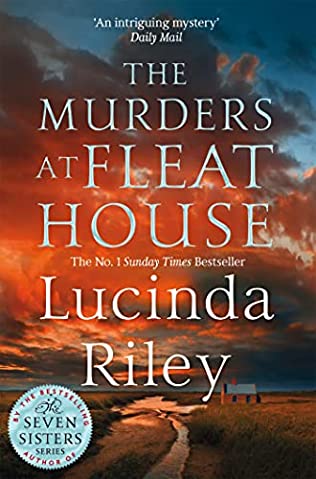
The Murders at Fleat House by Lucinda Riley

Lucinda Riley is best known for her Seven Sisters series and her other standalone dual time period novels, so The Murders at Fleat House – a contemporary crime novel – is something very different. It would have made an excellent start to a new series, but sadly that’s not to be as Lucinda passed away in 2021, leaving this book as the only example of her crime writing. It’s one of several novels she wrote early in her career, without a publisher, and it was finally published posthumously in 2022.

The novel begins with the sudden death of Charlie Cavendish, a student at St Stephen’s, a private boarding school in rural Norfolk. The cause of death is found to be aspirin, to which Charlie was allergic – a fact known to everyone else who boarded with him in Fleat House. The school headmaster, concerned about the reputation of St Stephen’s, is keen to have the incident declared a tragic accident, but the police suspect there’s more to it than that. It seems that someone switched the medication Charlie took to control his epilepsy with aspirin – but who did it and why?

Detective Inspector Jazmine ‘Jazz’ Hunter happens to be in Norfolk at the time of the death, having attempted to walk away from her police career in London for personal reasons, but she is persuaded to return to work and lead the investigation. As she begins to look into the circumstances surrounding Charlie’s death, events take an unexpected turn with the discovery of a second dead body and the disappearance of another of the Fleat House boys. The clues all seem to point towards one culprit, but Jazz is not convinced. Can she solve the mystery before the wrong person is found guilty?

Schools often make interesting settings for murder mysteries and this is no exception. However, we only get to know one or two of the children; it’s the adults – the detectives, the teachers, the staff and the parents – who are at the forefront of the story here. Jazz herself is an engaging protagonist and could have been the star of a whole series, if the author had lived to write more books. A lot of time is spent on personal storylines – a difficult relationship with her Irish ex-husband, a father ill in hospital – which sometimes detracts from the central mystery, but would be understandable if Riley was trying to round out Jazz’s character with future books in mind.

I really enjoyed The Murders at Fleat House – the worst I can say about it is that it was a bit too long and could have used some editing. Having said that, Harry Whittaker (Lucinda Riley’s son) explains in his foreword to the book why he made the decision to leave his mother’s work in its original form and largely unedited. Otherwise, I found this a very entertaining and compelling murder mystery, with a classic feel; rather than lots of blood and gore, which you often get in modern crime novels, the focus is on looking for clues, interviewing suspects and trying to unravel family secrets and complex relationships. The ending came as a surprise – I certainly hadn’t guessed the identity of the murderer or their motive!

Although I’m sorry that we won’t have a chance to meet Jazz Hunter again, I’m now looking forward to the final Seven Sisters book, Atlas: The Story of Pa Salt, which has been completed by Harry Whittaker and will be published in May. Only another month to wait!

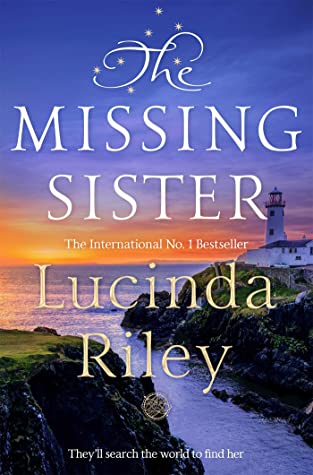
The Missing Sister by Lucinda Riley

The Missing Sister is the seventh book in the Seven Sisters series inspired by the mythology surrounding the star cluster known as the Pleiades or ‘the seven sisters’. Looking at other reviews of this book, it seems that a lot of people were expecting this to be the final book in the series and were disappointed to find that it’s not; it didn’t bother me as I’d seen Lucinda Riley’s announcement on Twitter regarding an eighth book, but if you weren’t already aware, it’s probably best to know before you start that you will need to wait another year for all of the series’ mysteries to finally be resolved.

The first six Seven Sisters novels each tell the story of one of the adopted daughters of a mysterious billionaire known as Pa Salt who dies at the beginning of the series, leaving the sisters some clues to help them trace their biological parents. The girls all grew up together at Atlantis, Pa Salt’s estate by Lake Geneva in Switzerland, but they were born in different countries and come from a diverse range of cultures and backgrounds. They are each named after one of the stars in the cluster – Maia, Alycone (Ally), Asterope (Star), Celaeno (CeCe), Taygete (Tiggy) and Electra D’Aplièse. There should have been a seventh sister, whose name would have been Merope, but only six girls were actually brought home to Atlantis by Pa Salt.

In this seventh volume, the D’Aplièse sisters have decided to find Merope and invite her to join them to mark the anniversary of Pa Salt’s death. However, the only clue they have to her identity is a picture of a star-shaped emerald ring. Their search will lead them first to a vineyard in New Zealand and then right across the world to a farmhouse in West Cork, Ireland, but I can’t really say too much about who and what they discover, as to do so would risk spoiling the story and I would prefer to allow other readers to enjoy the hunt for the missing sister without knowing too much in advance.

Although I think the previous six books could probably be read in any order, I would recommend saving this one until you’ve read the others and are already familiar with the D’Aplièse sisters and their stories. All six of them have important parts to play in this book and while some of the methods they use in trying to track down Merope are a bit far-fetched and not always very kind, it was nice to see all of the sisters getting involved (with some help from other characters from earlier in the series – I particularly enjoyed meeting Star’s eccentric friend Orlando again).

The search for Merope is set in the modern day, but as some possible clues to her identity and background emerge, we also spend some time in the past, particularly in Ireland in 1920 where we follow the story of Nuala Murphy, a young woman who has joined her country’s struggle for independence. I found the historical sections of the book fascinating and completely gripping, as well as educational. For example, I knew nothing about the work of Cumann na mBan, the Irish republican women’s association who played a part in the rebellion and the subsequent civil war of 1922. It isn’t clear at first how Nuala’s story will be connected to Merope’s, but things do start to come together later in the book.

As for the overall story arc of the seven sisters, this book has left me with more questions than I started with! I’ve been forming a few theories of my own, but will have to wait for the publication of Atlas: The Story of Pa Salt for everything to be revealed.

Thanks to Macmillan for providing a copy of this book for review

Book 26/50 read for the 2021 Historical Fiction Reading Challenge.

Edited 11th June 2021: I was so sorry to hear the sad news today that Lucinda Riley has died after a four-year battle with cancer. Maybe we will never get to know Pa Salt’s secrets now, but Lucinda has left a wonderful legacy of work behind for her fans to treasure and new readers to discover.

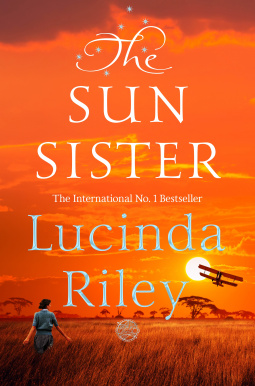
The Sun Sister by Lucinda Riley

This is the sixth book in Lucinda Riley’s Seven Sisters series inspired by the mythology of the star cluster known as the Pleiades or ‘the seven sisters’. Each novel tells the story of one of the adopted daughters of a mysterious billionaire known as Pa Salt who dies at the beginning of the series, leaving each sister some clues to help them trace their biological parents.

The girls all grew up together at Atlantis, Pa Salt’s estate by Lake Geneva in Switzerland, but they were born in different countries and came from a diverse range of cultures and backgrounds. They are each named after one of the stars in the cluster – Maia, Alycone (Ally), Asterope (Star), Celaeno (CeCe), Taygete (Tiggy) and Electra. There should have been a seventh sister, whose name would have been Merope, but for some reason which hasn’t yet been revealed, only six girls were actually brought home to Atlantis by Pa Salt.

In the previous books in the series, we have heard Maia’s story, Ally’s, Star’s, CeCe’s and Tiggy’s. This latest novel, The Sun Sister, tells the story of Electra, and I will admit that I was not particularly looking forward to this one. Whenever Electra briefly appeared in one of the other sisters’ books, she came across as a very unattractive personality and I wasn’t really relishing the thought of following her throughout an entire novel. On the other hand, I had initially felt the same about CeCe and ended up liking her once I had read The Pearl Sister, so I hoped the same would happen here.

At the beginning of The Sun Sister, which opens in 2008, shortly after Pa Salt’s death, Electra is living in New York City, where she has built a successful career for herself as a model. Yet despite her beauty, fame and wealth, we quickly discover that Electra is not a very happy young woman. For a while now, she has been relying on drugs and alcohol to get through the day and the loss of her adoptive father, whom she feels was disappointed in her, has left her struggling to cope. To make things worse, she is aware that all five of her older sisters have by now traced their own origins and come to terms with who they really are. Then, just as she is reaching her absolute lowest ebb, she is visited by Stella Jackson, the grandmother she didn’t know she had – and the story Stella tells her will literally help to save her life.

Stella’s story involves another of Electra’s ancestors – Cecily Huntley-Morgan, a young American woman who, in the 1930s, goes to stay with her godmother in Kenya after having her heart broken not once but twice. Living amongst the notorious Happy Valley set, by the shores of Lake Naivasha, Cecily falls in love with the landscape and the way of life. She ends up staying in Kenya for much longer than she had planned, until she meets a troubled Maasai girl and agrees to help her – a decision that will change the course of Cecily’s life once again.

The two storylines alternate with each other throughout the book, but each section is long enough that we can become fully immersed in one character’s story before moving on to the next. Of the two, Cecily’s was my favourite; in fact, it might even be my favourite of all the historical storylines in this series so far. I loved the descriptions of Kenya and the way some of the real incidents and people from the Happy Valley society were woven into the story. Although I didn’t agree with all of Cecily’s decisions (and I was disappointed in her treatment of a certain person in her life towards the end of the book), I did like her and sympathised with some of the situations she found herself in.

But I also enjoyed reading about Electra and despite my dislike of her at the beginning, I soon began to warm to her and to understand why she behaved the way she did. It was clear that Electra had always felt slightly out of place in her family, so it was good to see her bonding with her eldest sister, Maia, in this book. Now I hope she can resolve her differences with CeCe in the final book!

After not really looking forward to this book, it turned out to be one of the best in the series. Now I’m very curious about the seventh one, which is going to have to provide answers to all of the questions and mysteries raised in the previous six. I hope we don’t have to wait too long for it.

The Butterfly Room by Lucinda Riley

It’s 2006 and Posy Montague has made the difficult decision to put her Suffolk home, Admiral House, up for sale. She doesn’t want to – it has belonged to her family for generations and holds lots of memories – but as she is approaching the age of seventy she has had to accept that the house is too big and too expensive to maintain. There is a chance that it could still be kept in the family, as her eldest son Sam is interested in acquiring the house for his new property development company, but Posy is not too hopeful as she knows that all of Sam’s previous business ventures have ended in failure. Then a face from her past reappears – Freddie – and gives Posy something else to think about. Why did Freddie break off their relationship without explanation so many years ago? Is it too late for them to try again?

To find the answers, we have to go back in time to the 1940s, when Posy is a child growing up at Admiral House. She shares a close bond with her father, a butterfly collector who instils in her a lifelong love of nature, but when he goes away to fly a Spitfire in the war, Posy’s idyllic childhood is destroyed. Exploring the gardens one day, she enters her father’s private ‘butterfly’ room in the Folly, where she makes the upsetting discovery that he has not been setting his specimens free as she believed, but preserving them behind glass. But does Admiral House hide an even darker secret – and if so, what is it?

Like most of Lucinda Riley’s novels, The Butterfly Room moves between two time periods, so that the story unfolding in the past sheds light on the story taking place in the present. Usually I would prefer the one set in the past, but in this case I felt that it existed mainly to provide some background for the characters rather than being an interesting historical storyline in its own right unlike, for example, the wartime espionage thread in The Light Behind the Window.

Surprisingly for me, then, it was the modern day narrative that I found myself drawn into more fully. I was particularly interested in the story of Amy, trapped in an unhappy and abusive marriage to Posy’s son Sam, and not sure how to get herself and her children out of it. Meanwhile, Tammy, the girlfriend of Posy’s other son, Nick, is also having doubts about her relationship, but for a different reason: she’s convinced that Nick is hiding something from her. It’s obvious to the reader what his secret is (or at least, it was obvious to this reader) and that was my main problem with this book – that too much of the plot was predictable. However, the revelation of Freddie’s secret came as a surprise to me, which I was pleased about; I’d had a few guesses but didn’t get it completely right!

This is not a favourite Lucinda Riley novel – apart from the points I’ve mentioned above, I thought the book was too long for the story that was being told – but in general it kept me entertained and was a change from her Seven Sisters books. I have the next book in that series, The Sun Sister, waiting to be read soon.

The Moon Sister by Lucinda Riley

This is the fifth book in Lucinda Riley’s Seven Sisters series based loosely on the mythology of the star cluster known as Pleiades or ‘the seven sisters’. Each novel tells the story of one of the adopted daughters of a mysterious millionaire known as Pa Salt.

The girls come from different cultures and backgrounds, but all grew up together on Pa Salt’s estate in Switzerland. They are each named after one of the stars in the cluster – Maia, Alycone (Ally), Asterope (Star), Celaeno (CeCe), Taygete (Tiggy) and Electra D’Aplièse. You may have noticed that there are only six sisters; for some reason, which we don’t yet know, a seventh was never adopted. This is one of many mysteries running throughout the series.

At the beginning of the first novel, The Seven Sisters, Pa Salt died, leaving each sister some clues to help them trace their biological parents. So far we have heard Maia’s story, Ally’s, Star’s and CeCe’s; now, in The Moon Sister, it’s the turn of Tiggy. All of the books in the series work as standalones and it’s not essential to read them in order, but this book does overlap with one or two of the others and advances some of the storylines begun earlier in the series.

The Moon Sister follows Tiggy as she begins a new job in the Scottish Highlands, where she has been employed by Charlie Kinnaird to establish a colony of wildcats on his estate. With her degree in zoology and her love of nature, Tiggy is perfect for the job and quickly settles in, getting to know the animals on the Kinnaird estate and forming a close friendship with Cal, the man whose cottage she shares. The peace is disturbed, however, when Charlie arrives with his troubled teenage daughter and his spiteful, vindictive wife.

Away from the problems in the Kinnaird household, Tiggy meets Chilly, an elderly gypsy who lives alone on the estate. It seems that fate must have brought them together, because Chilly is the one person who knows the truth of Tiggy’s origins and can point her in the direction of her birth family. From Chilly, Tiggy learns of her ancestor, Lucia Albaycin, a famous Spanish flamenco dancer. But Chilly doesn’t know everything, so to discover the rest of her family’s story, Tiggy must travel to Spain and visit the gypsy community in the caves of Sacromonte.

Like the others in the series, this book is divided between the modern day storyline and the historical one. We spend a decent amount of time with each character before switching to the other, which means we can become absorbed in both stories. Lucia’s story is fascinating – I can’t say that I liked her, as I found her very self-centred and driven by ambition at the expense of everything else – but she is certainly a strong character, whose power and passion as a person is matched by the power and passion of her dancing. It was interesting to watch as she (along with her equally selfish and irresponsible father) start from nothing to build a successful career in flamenco which takes them all over the world. Meanwhile, in Sacromonte near Granada, we follow the sad story of how the lives of the other gitanos (Spanish gypsies) are affected by first the Spanish Civil War and then the onset of the Second World War, leaving their community changed beyond recognition.

It was good to get to know Tiggy better too – and she is much easier to like than Lucia. The other d’Aplieses think of her as the sensitive, spiritual sister…the sort of person who wants to help everyone around her, whether human or animal, and who cares deeply about nature and the environment, trying hard to resist temptation and stick to her vegan diet! Of all her sisters, Tiggy is particularly close to Ally, whom we met in The Storm Sister, and it was lovely to see her again in this book. The one part of Tiggy’s story that didn’t really work for me was the romance. I felt that she and the man concerned hadn’t spent enough time together for their love for each other to develop, so I didn’t become as emotionally invested in their relationship as I would have liked.

The next book is going to tell Electra’s story and I have to admit I’m very apprehensive about that one. From the little we’ve seen and heard of Electra so far, her personality strikes me as very unappealing. However, we are given lots of intriguing clues in The Moon Sister regarding Pa Salt, his death and some strange occurrences at his home, Atlantis, so I’m hoping Electra will fill in some more of the gaps for us. I’m also curious about the rich businessman Zed, who keeps popping up throughout the series, trying to worm his way into the lives of first Maia, then Tiggy and now, it seems, Electra. For those reasons, I will be looking out for the next book, which I’m hoping will be published later this year.